More like Vindication's Path
anchored on:secondary world
but
- Malazan
universe36 books1999
Start hereMalazan Book of the Fallen · Start here
similar bydarksecondary world+1 more
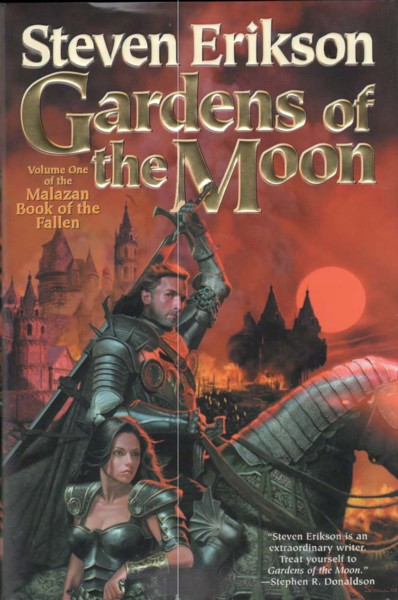
Pity the historian who tries to map this world; pity more the god who thinks he rules it. The Malazan Empire marches across continents on the boots of its common soldiers, and above them move Ascendants — mortals grown into something like gods, and gods worn thin as old coin. Magic is drawn from Warrens, roads of power threaded through reality; the dead keep their grudges; and every empire, however vast, is a wager against time. This is epic fantasy told from the mud, where a sapper cracking a joke weighs as much as an immortal settling a feud older than the human race. The world began as a tabletop campaign two friends built in the 1980s, and it still moves by two hands. Steven Erikson's ten-volume Malazan Book of the Fallen is the spine — Gardens of the Moon, Deadhouse Gates, Memories of Ice, on through The Crippled God — each book a near-standalone campaign that only later reveals how it locks together. Ian C. Esslemont walks the same years from a different vantage in his Novels of the Malazan Empire (Night of Knives, Return of the Crimson Guard onward). Around them stand the prequels: Erikson's Kharkanas Trilogy, archaic and elegiac, chronicling a doomed elder people, and Esslemont's brisker Path to Ascendancy, following two adventurers before they became legends. Erikson's Witness sequence carries the tale forward, and novellas of the genial necromancers Bauchelain and Korbal Broach supply the gallows comedy. Nothing is explained to you; comprehension is earned, and that is the pleasure. The themes run deep — compassion set against cruelty, the toll empires charge, civilizations that fall and are mourned. Begin where the saga does, with Erikson's Gardens of the Moon, and read the ten in publication order; the prequels are for the already-initiated. Trust that confusion is the price of entry.
- Malazan Book of the Fallen
series20 books1999
part of Malazan
similar byfantasydarksecondary world+1 more
The Malazan Book of the Fallen is a series of epic fantasy novels written by the Canadian author Steven Erikson. The series, published by Bantam Books in the U.K. and Tor Books in the U.S., consists of ten volumes, beginning with Gardens of the Moon (1999) and concluding with The Crippled God (2011). Erikson's series presents the narratives of a large cast of characters spanning thousands of years across multiple continents.
- A Song of Ice and Fire
series14 books1996
part of World of Ice and Fire
similar byfantasydarksecondary world
A Song of Ice and Fire is a series of high fantasy novels by the American author George R. R. Martin. Martin began writing the first volume, A Game of Thrones, in 1991, and published it in 1996. Martin, who originally envisioned the series as a trilogy, has released five out of seven planned volumes. The most recent entry in the series, A Dance with Dragons, was published in 2011. Since then, Martin has been working on the sixth novel, titled The Winds of Winter. A seventh novel, A Dream of Spring, is planned to follow.
- Thomas Covenant the Unbeliever
series11 books1977
similar byfantasydarksecondary world
The Chronicles of Thomas Covenant is a series of ten high fantasy novels written by American author Stephen R. Donaldson. The series began as a trilogy, The Chronicles of Thomas Covenant the Unbeliever. This was followed by another trilogy, The Second Chronicles of Thomas Covenant, and finally a tetralogy, The Last Chronicles of Thomas Covenant.
- The Old Kingdom / Abhorsen milieu
series11 books1995
similar byfantasysecondary world+2 more
The Old Kingdom, or Abhorsen in North America and the UK, is a fantasy series written by Australian author Garth Nix. It originated in 1995 with the novel Sabriel and has continued in the novels Lirael (2001), Abhorsen (2003), Goldenhand (2016), and Terciel & Elinor (2021), as well as a prequel novel titled Clariel (2014). The Old Kingdom also consists of the novella The Creature in the Case (2005) and various other short fiction.
- Narnia
series26 books1950
part of Narnia Universe
similar byfantasysecondary world
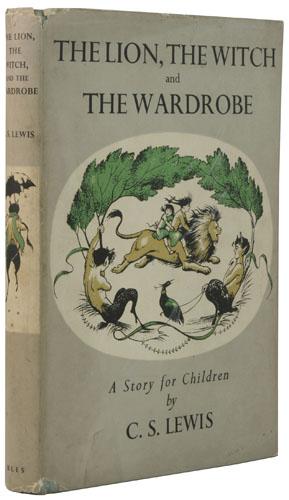
The Chronicles of Narnia is a series of seven portal fantasy novels by British author C. S. Lewis. Illustrated by Pauline Baynes and originally published between 1950 and 1956, the series is set in the fictional realm of Narnia, a fantasy world of magic, mythical beasts, and talking animals. It narrates the adventures of various children who play central roles in the unfolding history of the Narnian world. Except in The Horse and His Boy, the protagonists are all children from the real world who are magically transported to Narnia, where they are sometimes called upon by the lion Aslan to protect Narnia from evil. The books span the entire history of Narnia, from its creation in The Magician's Nephew to its eventual destruction in The Last Battle.
- Earthsea Cycle
series18 books1964
completed
part of Earthsea
similar byfantasysecondary world
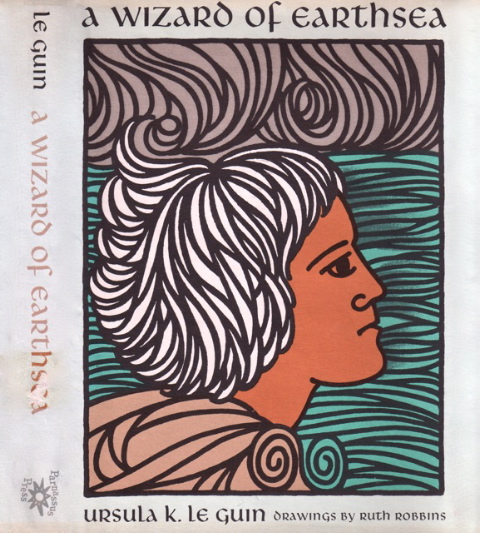
The Earthsea Cycle, also known as Earthsea, is a series of high fantasy books written by American author Ursula K. Le Guin. Beginning with A Wizard of Earthsea (1968), The Tombs of Atuan (1970), and The Farthest Shore (1972), the series was continued in Tehanu (1990), and Tales from Earthsea and The Other Wind. In 2018, all the novels and short stories were published in a single volume, The Books of Earthsea: The Complete Illustrated Edition, with artwork by Charles Vess.
- The Drenai Saga
series15 books1984
completed
similar byfantasysecondary worldredemption+1 more
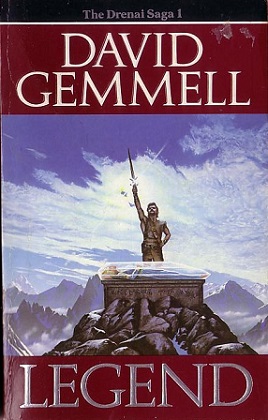
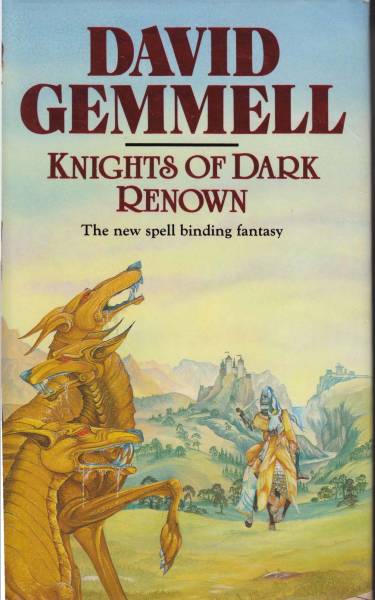
David Andrew Gemmell was a British author of heroic fantasy, best known for his debut novel, Legend. A former journalist and newspaper editor, Gemmell had his first work of fiction published in 1984. He went on to write over thirty novels. Gemmell's works display violence, yet also explore themes of honour, loyalty and redemption. There is always a strong heroic theme but nearly always the heroes are flawed in some way. With over one million copies sold, his work continues to sell worldwide.
- Winterlands
series7 books1986
similar byfantasysecondary world+1 more
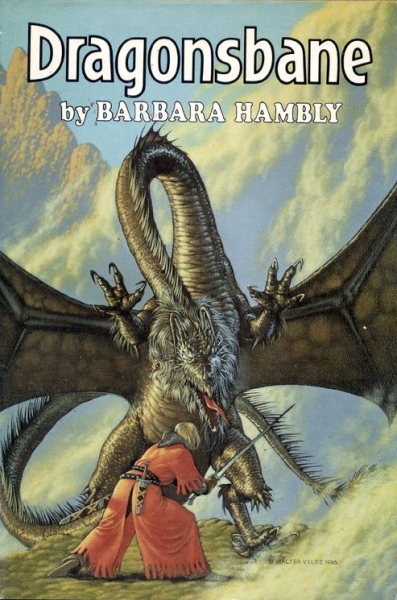
Winterlands follows John Aversin, a practical, unglamorous dragon-slayer, and Jenny Waynest, the self-taught village witch he loves, as their small corner of a forgotten kingdom keeps getting dragged into magic far bigger than either of them wanted. Barbara Hambly's series opens with Dragonsbane (1985), which deliberately undercuts the 'brave knight slays dragon' story it seems to promise, and continues across Dragonshadow, Knight of the Demon Queen, and Dragonstar as Jenny pursues real magical training. It favors domestic detail and moral complexity over conventional high-fantasy grandeur.
- Dragon King (Stephen R. Lawhead)
series3 books1982
similar bysecondary world+1 more
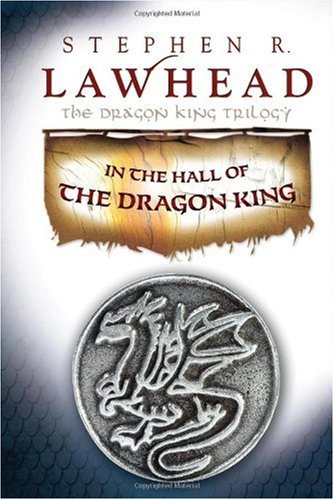
Stephen Lawhead's Dragon King trilogy opens with young temple acolyte Quentin sheltering a dying knight who begs him to carry on a quest to protect the Dragon King's realm of Mensandor. In the Hall of the Dragon King, The Warlords of Nin, and The Sword and the Flame follow Quentin's growth from reluctant helper into a central figure of the kingdom's fate, in a fantasy world shaped by Lawhead's Christian themes.
- Black Jewels
series23 books1998
similar bydarksecondary world+1 more
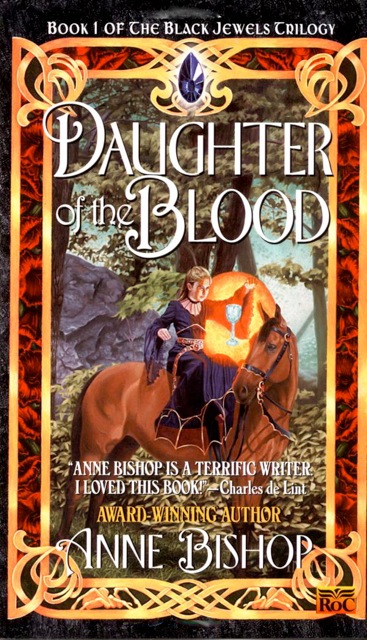
Anne Bishop's Black Jewels series is set in a matriarchal fantasy world ruled by hierarchies of magical 'Jewels,' beginning with the trilogy Daughter of the Blood, Heir to the Shadows, and Queen of the Darkness, for which Bishop won the 2000 Crawford Award. She continued expanding the world across more than a dozen further novels and story collections, including The Invisible Ring, Dreams Made Flesh, and The Shadow Queen.
- Thomas Cale
series4 books2010
similar bydarksecondary world+1 more
Paul Hoffman's Thomas Cale series opens with The Left Hand of God, following a boy raised by a brutal religious military order who escapes into a wider world he's been kept ignorant of. The subsequent books, The Last Four Things, The Beating of His Wings, and The White Devil, follow Cale as the skills that order trained into him make him useful, and dangerous, to larger powers. It's a bleak, war-driven coming-of-age arc rather than a conventional chosen-one fantasy.
- The Nikolai Duology
series2 books2019
part of Grishaverse
similar byfantasydarksecondary world
Leigh Bardugo's Nikolai Duology picks up Nikolai Lantsov and Zoya Nazyalensky from her earlier Grishaverse trilogy set in Ravka, now dealing with the kingdom's fallout as king and general, and adds Nina Zenik from the Six of Crows spin-off working a mission out of Ketterdam. King of Scars and its sequel Rule of Wolves tie together threads from across the wider Grishaverse rather than starting fresh, raising the stakes to a hidden threat inside Nikolai himself. It functions as the convergence point for Bardugo's separate Grishaverse story lines.
- Gormenghast
series6 books1946
completed
similar byfantasydarksecondary world
Gormenghast is a fantasy series by British author Mervyn Peake, about the inhabitants of Castle Gormenghast, a sprawling, decaying, Gothic structure. Originally conceived as a single on-going novel, the series was ended by Peake's death and comprises three novels: Titus Groan (1946), Gormenghast (1950) and Titus Alone (1959); and a novella, Boy in Darkness (1956). Peake was writing a fourth novel, Titus Awakes, at the time of his death in 1968. The book was completed by Peake's widow Maeve Gilmore in the 1970s, but was not published until 2011 after it was discovered by their family.
- The Circle of the World
universe29 books2006
Start hereThe Blade Itself · Start here
similar byfantasysecondary world+1 more
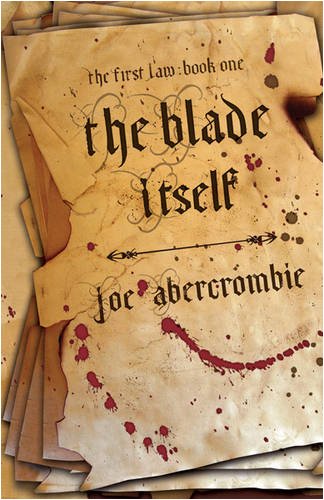
You want heroes? Best look elsewhere. The Circle of the World has kings and wizards and famous barbarians enough, but scratch any of them and you'll find a coward, a schemer, or a killer who's simply better at it than the rest. This is Joe Abercrombie's fantasy world: a grimy, blood-soaked continent where the fat and corrupt Union squats between the savage North and the scheming South, and where every noble cause turns out to have a knife hidden behind it. It opens with the First Law trilogy — The Blade Itself, Before They Are Hanged, Last Argument of Kings — following a crippled torturer with a razor wit, a weary Northman who would dearly like to stop fighting and can't, and a bald old wizard whose plans run older and colder than anyone guesses. Three self-contained standalones share the same ground and a familiar face or two: Best Served Cold takes its revenge across sunlit, murderous Styria; The Heroes crushes a whole war into three days over one worthless hill; Red Country rides the frontier. Short pieces (Sharp Ends) fill the gaps, and a generation on, the Age of Madness trilogy drags the old survivors into an age of factories, mobs, and revolution. What sets it apart is the honesty of its cynicism — close, sardonic points of view, gallows humour, and a flat refusal to let anyone stay clean. Violence carries a cost here; victory rarely settles anything; the wheel just turns and grinds someone new under it. Abercrombie recommends reading in publication order, and it's the right call: begin with The Blade Itself and let the world curdle around you. You have to be realistic about these things.
- Morningstar
David Gemmellstandalone novel1992
similar bysecondary world+1 more
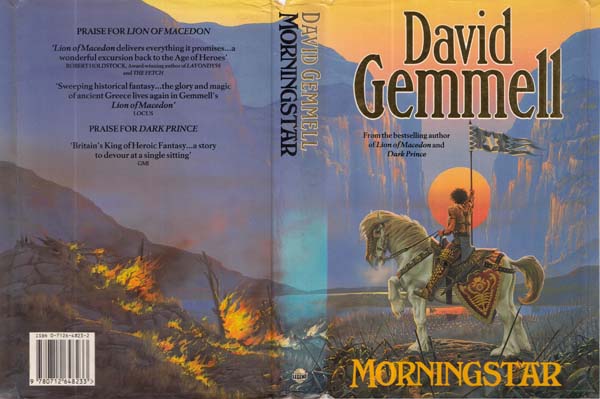
As the Angostin battle hordes surge over the Southern Borders of the Highlands, the bandit, Jarek Mace, and his friend, the magicker and bard Owen Odell find themselves in a country in desperate need of heroes. The invaders have no respect for persons or places, stealing and laying waste everything in their path. Behind them evil sorcery is unleashed as a mad necromancer brings back to halflife the eons dead Vampyer Kings.
- Tales from the Sinister City
series4 books2007
similar byfantasysecondary world+1 more
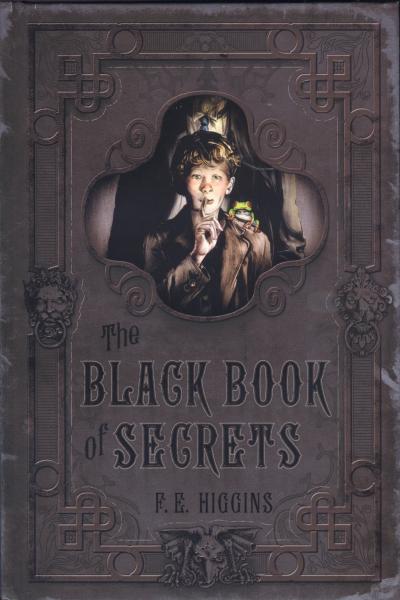
F. E. Higgins's four Sinister City novels, opening with the Bisto Honour-winning The Black Book of Secrets, follow a rotating cast of apprentices, runaways, and pawnbrokers through a fog-bound, Victorian-flavored world built on secrecy and betrayal. Each book stands as its own dark, fairy-tale-style mystery rather than continuing a single plot, unified by setting and tone more than by recurring characters. Higgins, an Irish children's author, writes in a tradition closer to gothic fable than epic fantasy.