More like Vortex
anchored on:science fictionfar futurehard science fictionother star systemsreflective
but
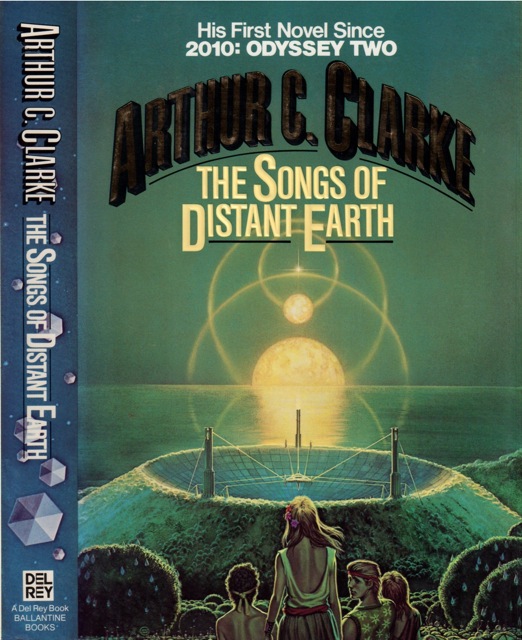
- The Songs of Distant Earth
Arthur C. Clarkestandalone novel1986
similar bysurvivalreflectivefar futurescience fictionhard science fictionother star systems
The Songs of Distant Earth is a 1986 science fiction novel by British writer Arthur C. Clarke, based upon his 1958 short story of the same title. Of all of his novels, Clarke stated that this was his favourite. Prior to the publishing of the novel, Clarke also wrote a short step outline with the same title, published in Omni magazine and anthologised in The Sentinel in 1983.
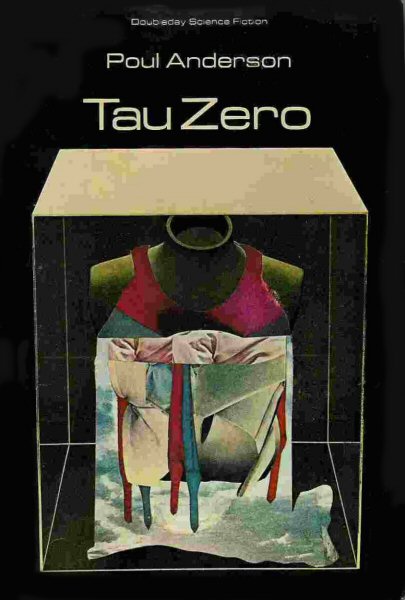
- Tau Zero
Poul Andersonstandalone novel1970
similar bysurvivalreflectivefar futurescience fictionhard science fiction
During an epic voyage to a planet 30 light years away, the engines of the starship the 'Leonora Christine' are damaged. Unable to slow down, it attains light speed (the tau zero of the title). The disparity between time for those on board and external time becomes impossibly great. Eons and galaxies hurtle by, as the crew speed helplessly into the great unknown.
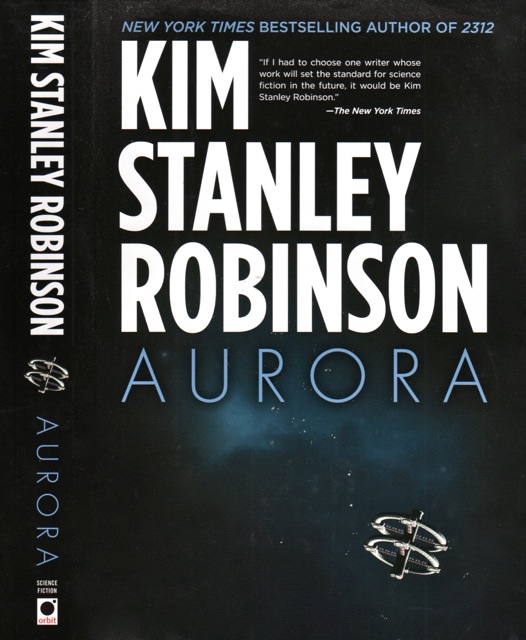
- Aurora
Kim Stanley Robinsonstandalone novel2015
similar bysurvivalreflectivefar futurescience fictionhard science fictionother star systems
Aurora is a 2015 novel by American science fiction author Kim Stanley Robinson. The novel concerns a generation ship built in the style of a Stanford torus, traveling to Tau Ceti to start a human colony. The novel's primary narrative voice is that of the starship's artificial intelligence. Aurora was well received by critics.
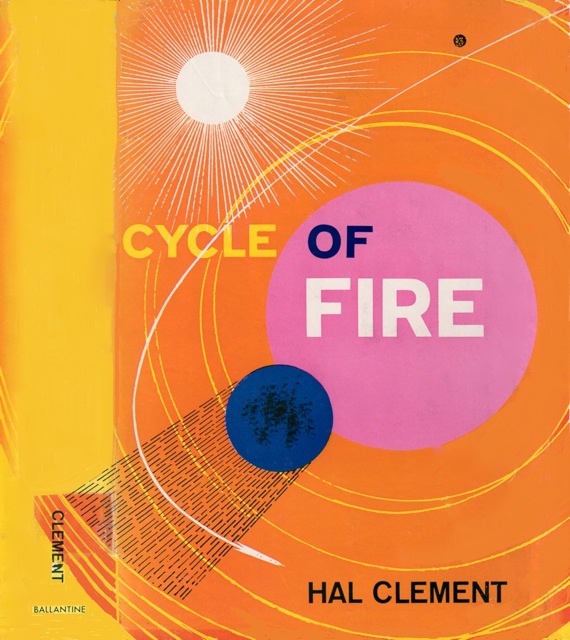
- Cycle of Fire
Hal Clementstandalone novel1957
similar bysurvivalreflectivefar futurescience fictionhard science fictionother star systems
After his ship crashed on the inhospitable planet Abyorman, Nils Kruger had spent weeks wandering across the face of the planet.suffering from blistering heat, the searing cold of an alien climate. Now he had found a fellow wanderer, Dar, an alien castaway. They may both die. The human opts to do something about it. Dar, who knows the time of his death in advance, opts to do nothing. Which of them is right? Perhaps both
- The Chrysalids
John Wyndhamstandalone novel1955
similar bysurvivalreflectivefar futurescience fiction
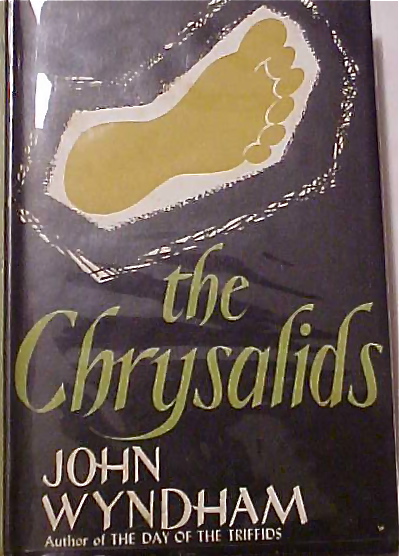
The Chrysalids is a science fiction novel by British writer John Wyndham, first published in 1955 by Michael Joseph. It is the least typical of Wyndham's major novels, but regarded by some as his best. An early manuscript version was entitled Time for a Change.
- Remnant Population
Elizabeth Moonstandalone novel1996
similar bysurvivalreflectivefar futurescience fictionother star systems+1 more
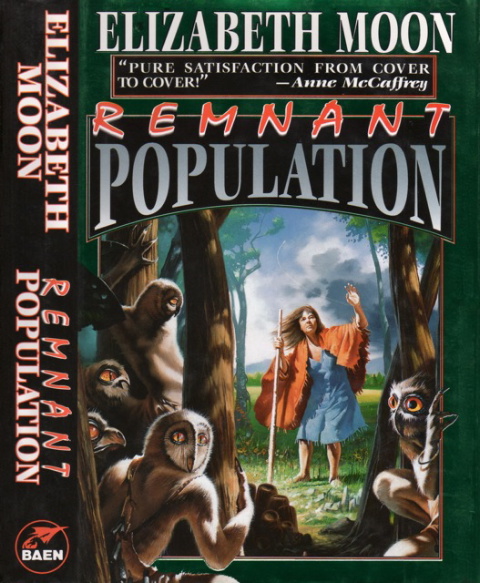
From the dust jacket front flap of the Baen first edition: Alone at last... People had always told Ofelia what to do; for once she was going to do what she wanted. She refused to get on the cryo ships, refused to leave the only world she could call home. And when they finally came for her, she hid, not that the authorities looked all that hard for one crazy old woman. Now Ofelia is alone, content to live with no more demands on her self or her time, the only remaining settler on an abandoned planet. The new settlers arrive. At first she fears that they have come to reoccupy the settlement she has come to think of as hers - but they land far away. And as Ofelia secretly listens, they are slaughtered to the last child by stone-age aliens no one knew were there. Now it will be up to Ofelia to save the aliens from Earth's wrath...
- The Face of the Waters
Robert Silverbergstandalone novel1991
similar bysurvivalreflectivefar futurescience fictionother star systems
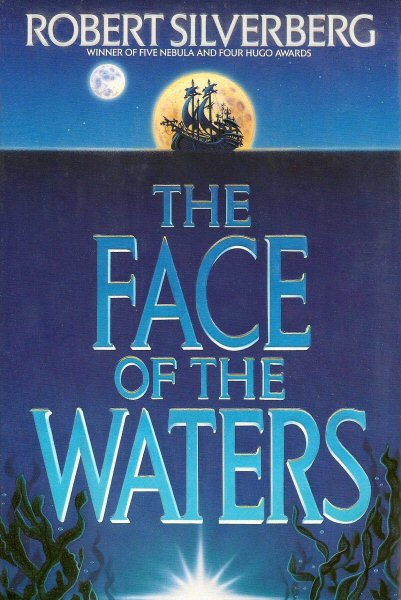
On the ocean world of Hydros -- a planet with no land beyond a scatter of artificial floating islands -- the human settlers of Sorve commit an offense against the native aquatic Hydrans serious enough to get their community banished, forbidden from settling on any other island. With nowhere else to go, Sorve's people set out across the water in a makeshift flotilla, chasing rumors of a mythical island called the Face of the Waters that may or may not exist, forced to reckon with what they owe the world they've spent generations treating as theirs. A Robert Silverberg novel of exile and search, told through Sorve's displaced islanders.
- Saint Leibowitz
series6 books1955
completed
similar byfar futurescience fiction+2 more
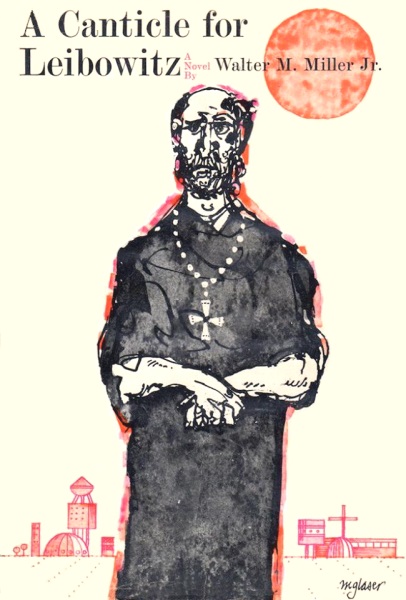
Walter M. Miller Jr.'s A Canticle for Leibowitz (1959), assembled from three novellas he had published earlier in the decade, follows the monks of a Catholic monastery in the post-nuclear American Southwest as they preserve fragments of scientific knowledge across centuries, watching civilization slowly rebuild itself and edge back toward the mistakes that destroyed it. Miller's posthumous sequel, Saint Leibowitz and the Wild Horse Woman, completed by Terry Bisson from his notes after his death and published in 1997, returns to the same abbey and its world decades later. Together the two novels form a sparse, decades-spanning series about memory, faith, and the cycles of civilization.
- Destiny's Road
Larry Nivenstandalone novel1997
similar bysurvivalfar futurescience fictionhard science fictionother star systems+1 more
Destiny's Road is a science fiction novel by American writer Larry Niven, first published in 1998. It follows Jemmy Bloocher's exploration of Destiny's Road, a long scar of once-melted rock seared onto the planet's surface by a spaceship's fusion drive. Jemmy is descended from the original Destiny colonists, who were stranded when their landing craft deserted them.
- Pushing Ice
Alastair Reynoldsstandalone novel2005
similar bysurvivalfar futurescience fictionhard science fictionother star systemsspace
When Saturn's moon Janus suddenly takes off into interstellar space, an ice mining spaceship sent to investigate finds itself swept along into distant space until it ends up trapped in a gigantic alien structure, wherein the crew must prepare to reside for the foreseeable future.
- Hainish
series33 books1964
completed
similar byreflectivefar futurescience fictionother star systems
The Hainish Cycle consists of a number of science fiction novels and stories by Ursula K. Le Guin. The cycle is set in a future history that features civilizations of human beings on planets orbiting a number of nearby stars, including Terra ("Earth"); these humans are contacting each other for the first time and establishing diplomatic relations, as well as setting up a confederacy under the guidance of the oldest of the human worlds, the peaceful planet Hain. In this history, human beings did not evolve on Earth, but they were instead the result of interstellar colonies planted by Hain in the distant past, after which interstellar travel ceased for an extended period. Some of the human races have new genetic traits, a result of ancient Hainish experiments in genetic engineering; this includes people who can dream while awake, and a world of hermaphroditic people who only enter active sexuality once per month, not knowing which sex will manifest in them. In keeping with Le Guin's narrative approach, she uses varied social and environmental settings to explore the anthropological and sociological outcomes of human evolution in those environments. The author often discounted the characterization of a so-called "Hainish Cycle".
- A World Called Solitude
Stephen Goldinstandalone novel1981
similar bysurvivalreflectivefar futurescience fictionother star systems
Birk Aaland is a refugee from Earth's tyrannical government. He finds himself stranded on an uncharted planet, which seems to be inhabited. His explorations reveal long-deserted cities perfectly maintained by the robot servants of their former inhabitants. Thus he becomes the marooned king of an isolated kingdom of machines. His life is a painfully lonely one and he spends eleven years without any human contact or companionship, tortured by memories of his former life on Earth and increasingly unable to imagine returning to it. Then his fitful peace is shattered when a spaceship crashes on his planet, and the sole survivor is a woman named Michi Nakamura. But she is not about to accept a fate in Birk's solitary world.
- The Long Tomorrow
Leigh Brackettstandalone novel1955
similar bysurvivalreflectivefar futurescience fiction
The Long Tomorrow is a post-apocalyptic science fiction novel by American writer Leigh Brackett, originally published by Doubleday & Company, Inc in 1955. Set in the aftermath of a nuclear war, it portrays a world where scientific knowledge is feared and restricted. It was nominated for a Hugo Award in 1956.
- 2312
Kim Stanley Robinsonstandalone novel2012
similar byreflectivefar futurescience fictionhard science fictionother star systemsspace
In the eponymous year, when Earth's ecology is degraded and humanity has settled throughout the solar system by terraforming and genetic engineering, mysterious disasters strike some human communities and an assortment of human types from throughout the system seek to find and eliminate the cause.
- The Stars My Destination
Alfred Besterstandalone novel1956
similar bysurvivalfar futurescience fictionother star systemsspace
When a passing spaceship refuses to rescue the lone survivor from the drifting wreck of another ship, he dedicates his life to discovering who made that decision and exacting his revenge, in the process altering human history and his own character.
- David Ryerson
series2 books1958
completed
similar bysurvivalfar futurescience fictionspace+2 more
The Enemy Stars follows the crew of a faster-than-light survey ship stranded far from home after their matter-transmission drive is damaged, forced to keep the vessel and each other going across a voyage that will outlast some of them. Poul Anderson's 1959 novel was originally serialized as We Have Fed Our Sea-, a title drawn from Kipling. It stands alone rather than part of a series; David Ryerson is one of the ship's crew.
- Tunnel in the Sky
Robert A. Heinleinstandalone novel1955
similar bysurvivalfar futurescience fictionother star systems+1 more
As the final test of a survivalist/explorer class, teenagers are dumped on an alien planet to use their skills while awaiting pickup. But something has gone wrong, and they find they are on their own.
- Dune
series20 books1963
part of Dune Universe
similar byfar futurescience fictionother star systems+1 more
Frank Herbert's Dune Chronicles opens with 1965's Dune, set on the desert planet Arrakis where House Atreides takes control of the only source of the vital spice melange and young Paul Atreides is pulled into a struggle over its politics and religion. Herbert carried the story forward across five further novels — Dune Messiah, Children of Dune, God Emperor of Dune, Heretics of Dune, and Chapterhouse: Dune — following Paul's line over the following millennia, before Brian Herbert and Kevin J. Anderson later extended the saga. Many other editions of these six novels are omnibus and box-set repackagings rather than separate stories.
- Heorot
series4 books1987
similar byfar futurescience fictionother star systems+2 more
Larry Niven, Jerry Pournelle and Steven Barnes's The Legacy of Heorot strands human colonists on an idyllic-seeming alien world where they discover apex predators -- grendels -- hidden beneath the surface, forcing them to fight for survival. Beowulf's Children continues the colony a generation later as the children born on the planet clash with their parents over how to live alongside the grendels, and a fourth book, Starborn and Godsons, returns to the settlement decades further on. It's hard-SF creature-horror crossed with generational colony drama.
- Earth Abides
George R. Stewartstandalone novel1949
similar bysurvivalreflectivescience fiction
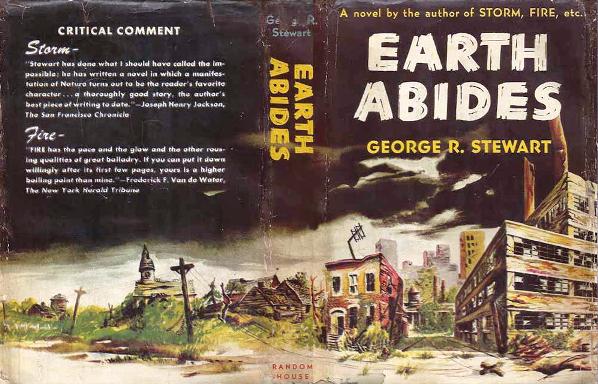
The novel tells the story of the fall of civilization from deadly disease and the emergence of a new culture with simpler tools. Set in the 1940s in Berkeley, California, the story is told by Isherwood Williams, who emerges from isolation in the mountains to find almost everyone dead. en.wikipedia.org
- Pandora
series4 books1966
similar bysurvivalfar futurescience fictionother star systems
The Pandora Sequence opens with Frank Herbert's solo novel Destination: Void, in which a starship crew must jury-rig a working artificial consciousness after their vessel's control systems fail. Bill Ransom co-writes the three novels that follow, carrying the survivors to the world Pandora, where they must contend with both a manipulative machine intelligence and the planet's own hostile ecology. Across its four books the series moves from a claustrophobic ship-bound crisis to a generations-long struggle over faith, control, and survival on a dangerous new world.
- Pantropy
series6 books1942
completed
similar byfar futurescience fictionother star systemshard science fiction+1 more
Pantropy collects James Blish's linked stories about adapting humans genetically to survive unaltered on alien worlds, rather than terraforming those worlds to suit humans — a concept the stories helped popularize under the name 'pantropy.' The stories were assembled into the 1957 collection The Seedling Stars.
- Sweetwater
Laurence Yepstandalone novel1973
similar bysurvivalreflectivefar futurescience fictionother star systems
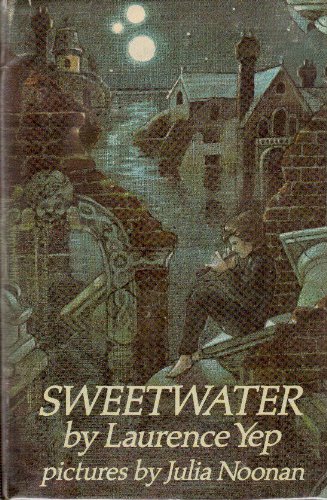
A boy and his people, colonists on the planet Harmony, try to save their way of life.