More like Wall
anchored on:post-apocalypticsurvivalour worldnear futuretensethriller & suspense+3 more
but
- The Fireman
Joe Hillstandalone novel2016
similar byour worldnear futurepost-apocalypticsurvivaldarktenseplague and pandemic
The Fireman is a novel set in a post-apocalyptic time by American author Joe Hill. The novel, Hill's fourth, tells the tale of a deadly spore that has infected most of the world's population. Hill first spoke of the novel in 2013 in promotional interviews for his then-new novel NOS4A2. The novel was released on May 17, 2016.
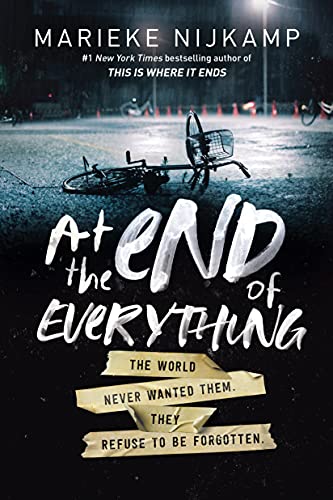
- At the End of Everything
Marieke Nijkampstandalone novel2022
similar byour worldnear futurepost-apocalyptictensesurvivalthriller & suspensedarkplague and pandemic
The Hope Juvenile Treatment Center is ironically named. No one has hope for the delinquent teenagers who have been exiled there; the world barely acknowledges that they exist. Then the guards at Hope start acting strange. And one day…they don't show up. But when the teens band together to make a break from the facility, they encounter soldiers outside the gates. There's a rapidly spreading infectious disease outside, and no one can leave their houses or travel without a permit. Which means that they're stuck at Hope. And this time, no one is watching out for them at all. As supplies quickly dwindle and a deadly plague tears through their ranks, the group has to decide whom among them they can trust and figure out how they can survive in a world that has never wanted them in the first place.
- I Am Legend
Richard Mathesonstandalone novel1954
similar byour worldpost-apocalypticsurvivaldarktenseplague and pandemic
The last human survivor of the vampire epidemic has to maintain his defences against their onslaught, while attempting to research the cause and possibly solution to the plague. Robert Neville is the last living man on Earth... but he is not alone. Every other man, woman and child on the planet has become a vampire, and they are hungry for Neville's blood. By day he is the hunter, stalking the undead through the ruins of civilization. By night, he barricades himself in his home and prays for the dawn. How long can a man survive like this?
- Cell
Stephen Kingstandalone novel2006
similar byour worldpost-apocalyptictensesurvivaldarkplague and pandemic
In Cell, King taps into readers fears of technological warfare and terrorism. Mobile phones deliver the apocalypse to millions of unsuspecting humans by wiping their brains of any humanity, leaving only aggressive and destructive impulses behind. Those without cell phones, like illustrator Clayton Riddell and his small band of "normies," must fight for survival, and their journey to find Clayton's estranged wife and young son rockets the book toward resolution.
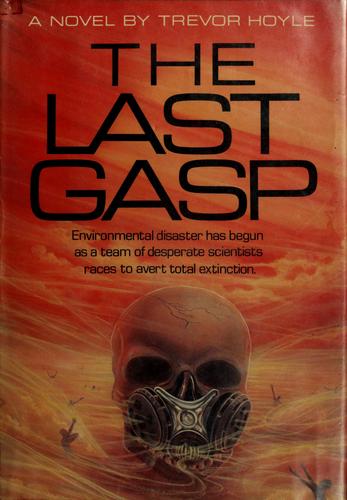
- The Last Gasp
Trevor Hoylestandalone novel1983
similar byour worldnear futuretensethriller & suspensedarksurvivalplague and pandemic
From the flaps of the Crown first edition: "When British marine biologist Gavin Chase stepped out into the windswept wastes at the Halley Bay antarctic research station one morning, the last thing he expected to see was a sled team coming out of nowhere carrying a half-mad, half-frozen Russian scientist babbling an incomprehensible warning. But that warning would threaten the future of the human race and force Chase to make some of the hardest decisions of his life. Months later, at a Geneva environmental conference, Chase meets Cheryl Detrick, the daughter of Theo Detrick, the grand old man of diatom research. Chase, the Detricks, and Soviet scientist Boris Stanovnik theorize that the oxygen-producing microscopic plants of the world's oceans are dying and the level of atmospheric pollutants has finally exceeded the ability of the planet's ecology to recycle them. There is also good reason to believe that the superpowers are planning to wage a new type of environmental warfare. Sooner or later there will be nothing left to breathe. So begins a race against the future. Chase and Cheryl, now lovers, struggle to avert ecological catastrophe as agents of the military-industrial complex hunt them down... and as a growing belt of unbreathable gases spreads outward from the equator, uprooting millions. Their enemies are Lloyd Madden, an insane military mastermind planning to seed the earth with poison and then repopulate it with a race of mutants, and Joseph Earl Gelstrom, a wealthy chemical manufacturer who has Cheryl's father killed to hide his involvement. But Gelstrom himself falls victim to pollution sickness, and he repents. To raise money to finance a research team, Chase must make an unholy alliance with the dying Gelstrom, but this is too much for Cheryl, who leaves him. As more and more of the world becomes uninhabitable, as industries and governments collapse and chaos reigns, as the oceans fill up with dioxin, as the climate changes and mutant life-forms encroach upon the last refuges of humankind, Chase leads a last desperate mission to find and rescue Cheryl and to lead his team of scientists to safety."
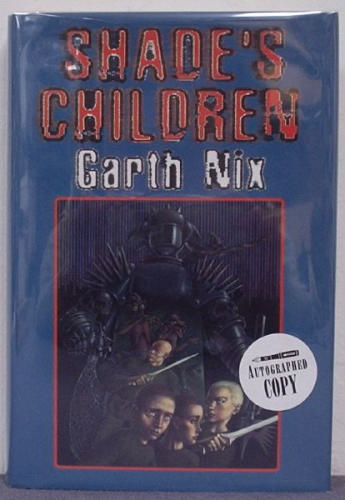
- Shade's Children milieu
series2 books1997
similar bynear futurepost-apocalypticdarktensesurvivalrebellion and revolution+1 more
Shade's Children is set on an Earth where all adults vanished overnight fourteen years earlier, leaving children to be harvested at puberty by the machines that now run the world, unless they escape into hiding with Shade, a mysterious AI-like protector. Garth Nix's 1997 novel is a single, self-contained book rather than a series, though its bleak post-apocalyptic premise has drawn comparisons to his other work.
- Down to a Sunless Sea
David Grahamstandalone novel1979
similar byour worldnear futurepost-apocalypticsurvivaldarktense
David Graham's Down to a Sunless Sea (1979) is a post-apocalyptic novel about a planeload of people during and after a short nuclear war, set in a near-future world where the USA is critically short of oil. The title of the book is taken from a line of the poem Kubla Khan by Samuel Taylor Coleridge.
- Aftermath (Charles Sheffield)
series2 books1998
completed
similar bynear futuretenseour worlddarksurvival+3 more
Charles Sheffield's Aftermath duology opens with a near-future Earth devastated by a nearby supernova's radiation, which knocks out electronics and forces survivors to rebuild without most modern technology. Starfire continues years later as a second, larger stellar threat approaches and humanity must recover enough capability to respond. Sheffield, a physicist by training, grounds both books in hard-science consequences of the disaster rather than treating it as mere backdrop.
- The Children of Men
P. D. Jamesstandalone novel1992
similar byour worldnear futuredarktensepost-apocalypticrebellion and revolution
"The human race has become infertile, and under the despotic rule of Xan Lyppiatt, the Warden of England the old are despairing and the young cruel. Theo Faren, a cousin of the Warden, lives a solitary life in this ominous atmosphere. That is, until a chance encounter with a young woman leads him into contact with a group of dissenters. Suddenly his life is changed irrevocably, as he faces agonising choices which could affect the future of mankind." (pdjames.co.uk)
- Z for Zachariah
Robert C. O'Brienstandalone novel1975
similar byour worldnear futurepost-apocalypticsurvivaltense
Sixteen-year-old Ann Burden, on an Amish family farm in an isolated valley, believes she is the only survivor of nuclear war and nerve gas. One day a man arrives in a "safe-suit" that he and others have recently developed.
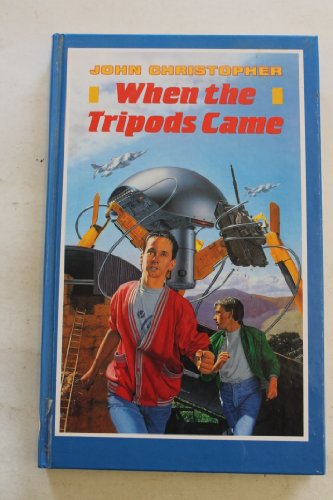
- Tripods
series4 books1967
completed
similar bypost-apocalypticour worldnear futuretenserebellion and revolution+1 more
The Tripods is a series of young adult science fiction novels by John Christopher. The series takes place in a post-apocalyptic world where humanity is enslaved by "Tripods"—gigantic three-legged walking machines piloted by an alien race later identified as the "Masters". The first two books were the basis of a science fiction TV series, produced in the United Kingdom in the 1980s.
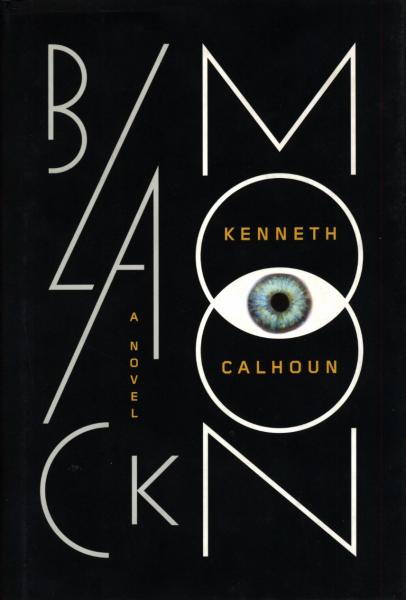
- Black Moon
Kenneth Calhounstandalone novel2014
similar byour worldnear futurepost-apocalypticdarktensesurvivalplague and pandemic
Insomnia has claimed everyone Biggs knows. Even his beloved wife, Carolyn, has succumbed to the telltale red-rimmed eyes, slurred speech and cloudy mind before disappearing into the quickly collapsing world. Yet Biggs can still sleep, and dream, so he sets out to find her.
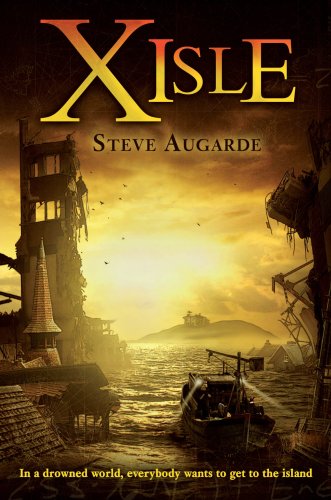
- X-Isle
Steve Augardestandalone novel2009
similar byour worldnear futurepost-apocalypticsurvivaldarktense
X Isle is a young adult novel by Steve Augarde first published in 2009. It is set in the future, after floods have destroyed civilization. The novel follows the experiences of a boy named Baz on his arrival at "X Isle" from the equally miserable "mainland". The book has been nominated for the Carnegie Medal.
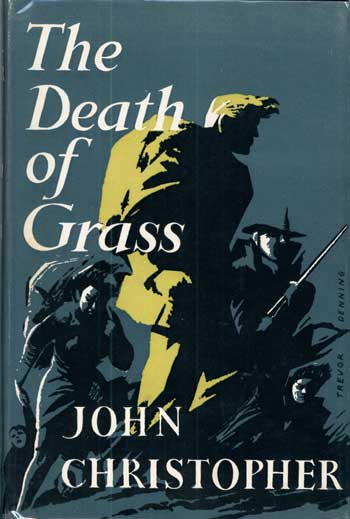
- The Death of Grass
John Christopherstandalone novel1956
similar byour worldpost-apocalypticdarktensesurvivalplague and pandemic
The Death of Grass is a 1956 post-apocalyptic science fiction novel written by the English author Sam Youd under the pen name John Christopher. The plot concerns a virus that kills off grass species, including rice and wheat. The Death of Grass was the first of several post-apocalyptic novels written by Youd. The novel was written in a matter of weeks and liberated him from his day job.
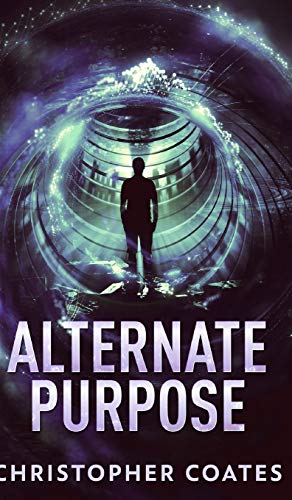
- Alternate Purpose
Christopher Coatesstandalone novel2019
similar byour worldnear futurepost-apocalyptictensesurvivalplague and pandemic
• "A global pandemic has devastated the world. Facing a rebuilding time of generations, two scientists come up with a solution: send someone back in time to prevent the horrible accident that released the deadly pathogen on the world. The problem with their discovery? The time travel process is fatal to anyone trying it." ― quoted from this book's product page on Amazon.com as of 2020-05-28.
- Mother of Storms
John Barnesstandalone novel1994
similar byour worldnear futuretensepost-apocalypticsurvival+1 more
From the flaps of the Tor first edition: "It is 2028. A strike to destroy an illegal Arctic weapons cache has a catastrophic side effect. Massive amounts of energy are liberated from the polar ice, suddenly warming the Earth's climate. In the middle of the Pacific, a gigantic hurricane thousands of miles across is forming, larger than any in human history. A storm with winds of supersonic speed. A storm that changes direction at whim. A storm that refuses to die. A storm so vast it spawns dozens more in its wake... Blinded by intrigue, expedience, and greed, the world's politicians and power brokers have ignored the killer storms threat until it is too late. Already the death toll is in the tens of millions, as it savages the Pacific coast, while its devil's brood of smaller storms are wreaking havoc across the face of the planet. While the survivors scramble for advantage, a handful of courageous men and women undertake a daring, desperate plan to save humanity from total destruction - a plan so visionary it may alter forever the future of the human race."
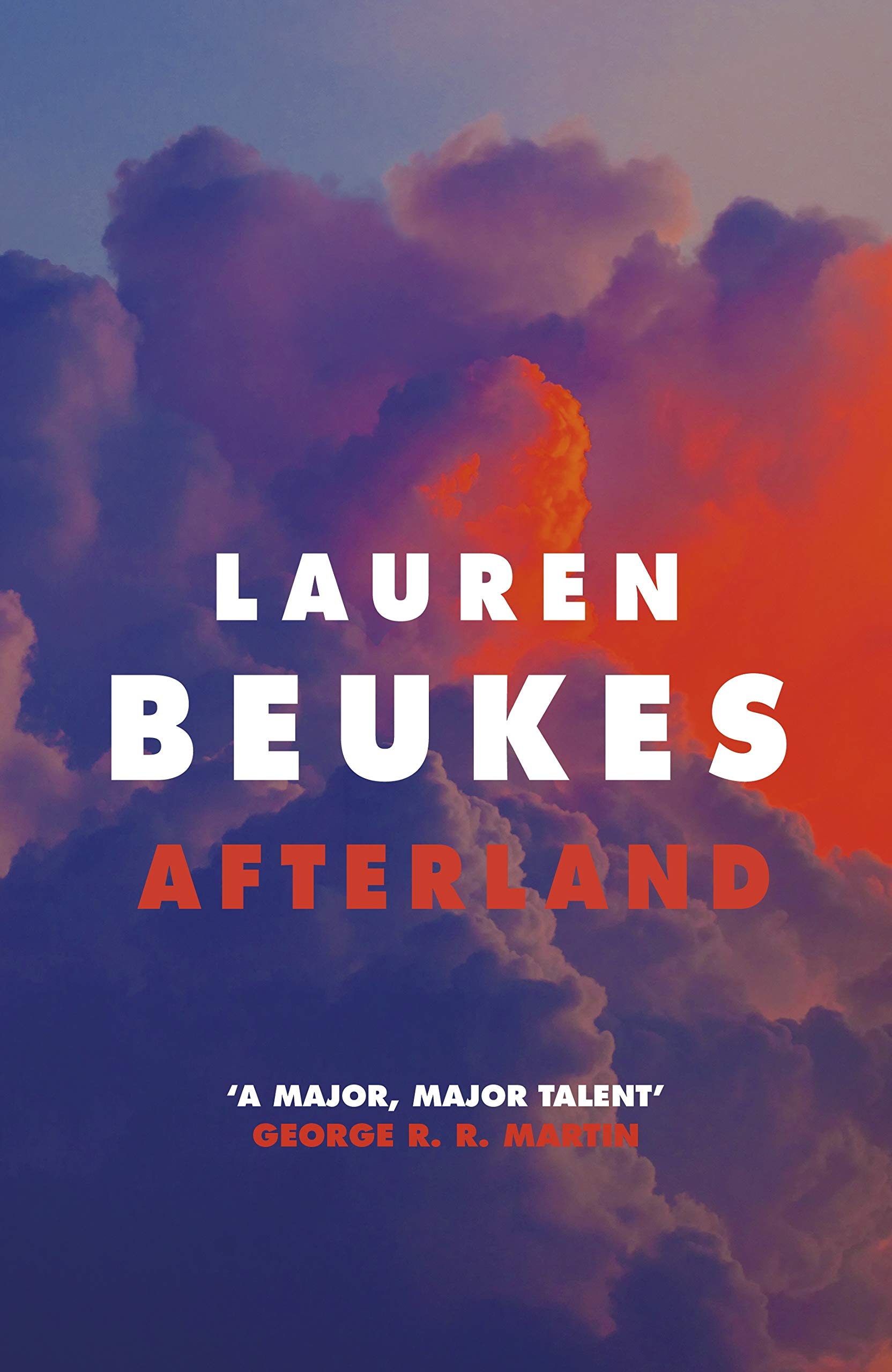
- Afterland
Lauren Beukesstandalone novel2020
similar bynear futuretensesurvivalpost-apocalypticthriller & suspensedarkplague and pandemic
Afterland is a 2020 science fiction novel by South African writer Lauren Beukes. It takes place during "Manfall", a 2020 pandemic which has killed off almost all the world's men. Three years later In the United States, Cole and her twelve-year-old son, Miles are trying to flee to their home in South Africa. Miles is one of the few surviving males, and is sought after by US government researchers and boy traffickers.
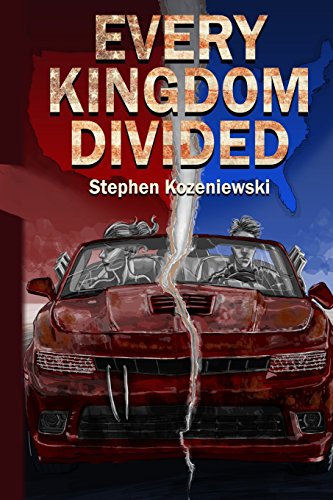
- Every Kingdom Divided
Stephen Kozeniewskistandalone novel2015
similar byour worldnear futurepost-apocalyptictensethriller & suspensedarksurvival
"2035 A.D. After The 2nd American Civil War. Jack Pasternak, a laid-back California doctor, receives a garbled distress call from his fiancée in Maryland before her transmissions stop altogether. Unfortunately for Jack, citizens of the Blue States are no longer allowed to cross Red America. He is faced with an impossible choice: ignore his lover's peril or risk his own life and sanity by venturing into the dark heart of the Red States. When the armies of the Mexican Reconquista come marching into Los Angeles, Jack's hand is forced and he heads east in an old-fashioned gas guzzling car." — quoted from the book's product page on Amazon.com as of 2016-04-19.
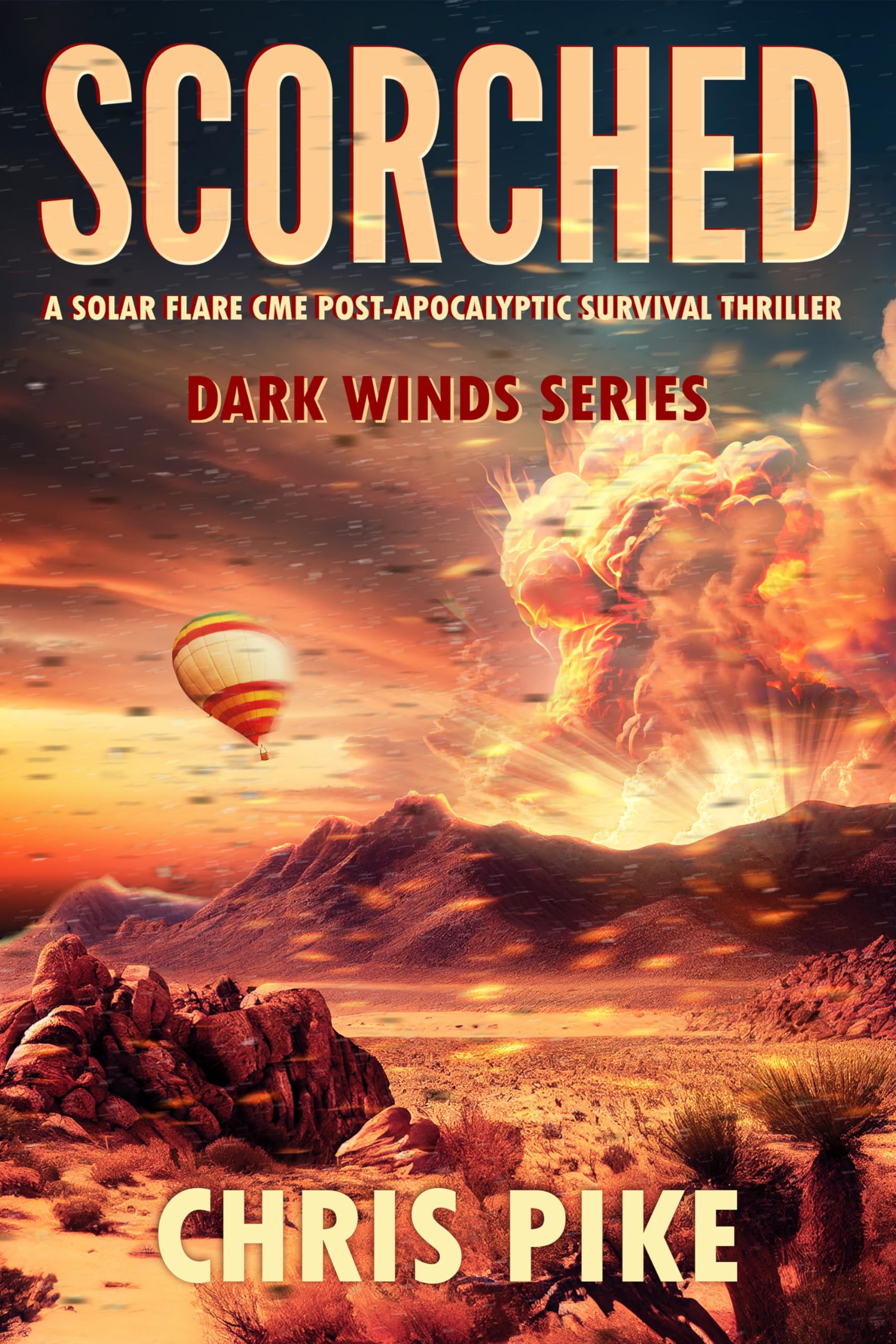
- Dark Winds (Chris Pike)
series1 book2024
similar byour worldnear futuretensesurvivalpost-apocalypticthriller & suspensedark
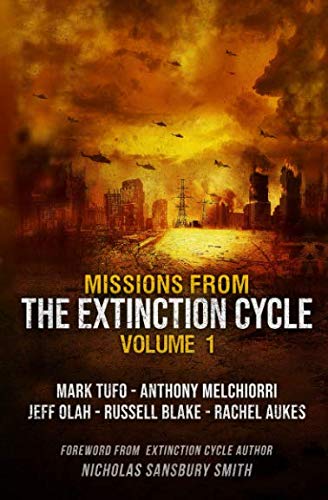
- Missions from the Extinction Cycle
series2 books2019
part of Extinction Cycle
similar byour worldnear futurepost-apocalypticdarktensesurvival
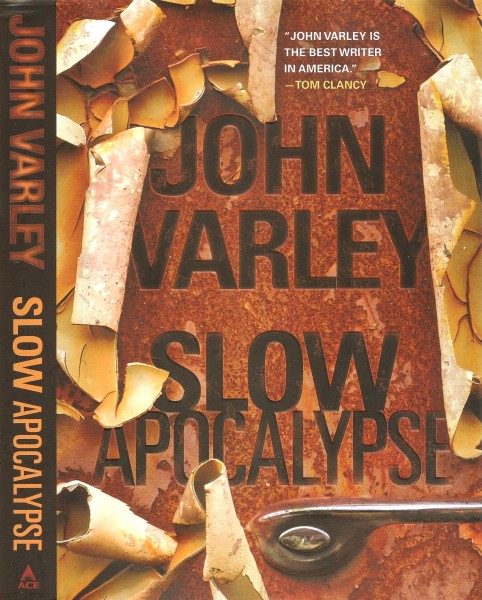
- Slow Apocalypse
John Varleystandalone novel2012
similar bynear futurepost-apocalyptictensethriller & suspensedarksurvivalplague and pandemic
"Despite wars with Iraq and Afghanistan, as well as 9/11, the United States' dependence on foreign oil has kept the nation tied to the Middle East. A scientist has developed a cure for America's addiction--a slow-acting virus that feeds on petroleum, turning it solid. But he didn't consider that his contagion of an Iraqi oil field would spread to infect the fuel supply of the entire world ... In Los Angeles, screenwriter Dave Marshall heard this scenario from a retired U.S. Marine and government insider who acted as a consultant on Dave's last film. It sounded as implausible as many of his scripts, but the reality is much more frightening than anything he can envision. An ordinary guy armed with extraordinary information, Dave hopes his survivor's instinct will kick in so he can protect his wife and daughter from the coming apocalypse that will alter the future of Earth--and humanity ..."--
- The Passage
series3 books2010
similar bynear futurepost-apocalypticdarktensesurvival+1 more
The Passage is a novel series by Justin Cronin. There are three published books in the series. The film rights were acquired by Fox Entertainment Group in 2007 for adaptation into a film trilogy, but after 12 years of development and planning, it was changed to a television series, which premiered in January 2019 and was canceled after the first season.
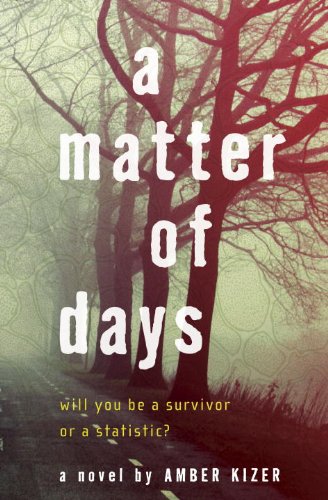
- A Matter of Days
Amber Kizerstandalone novel2013
similar byour worldnear futurepost-apocalypticsurvivaltenseplague and pandemic+1 more
In the not-too-distant future when a global pandemic kills most of humanity, a teenaged girl and her younger brother struggle to survive.
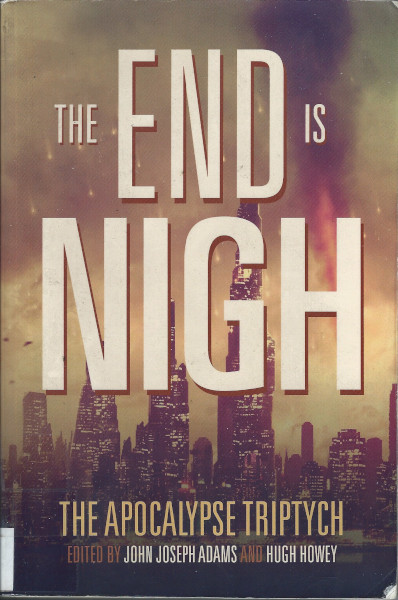
- The Apocalypse Triptych
series4 books2014
similar byour worldnear futurepost-apocalypticdarktensesurvivalplague and pandemic