Loreful
HomeDiscover
Search series, authors…⌘K
Loreful

Reading orders for SF/F series and shared universes — with your place kept in every one.

Explore

UniversesSeriesWorksAuthorsAtlas

Help

FAQAboutSite map

Account & legal

Sign inCreate accountPrivacyTerms

Data

Built on ISFDB, Wikipedia, Wikidata and Open Library. Curated reading orders carry their reasoning on the page; the rest follow publication order. Data sources & licenses

© Loreful · data: ISFDB · CC BY

More like Ward 9

anchored on:literary & general

but

Mood

The mood the book leaves you in.

  • The reading experience is propelled by journeys, exploration, and physical risk; excitement and forward momentum dominate over dread or introspection.
  • Joy and loss are deliberately mixed; the resolution grants characters something real while taking something else away, leaving warmth and sorrow together.
  • The book demands work from the reader — dense prose, difficult structure, unfamiliar ideas, or morally uncomfortable material — as part of its intended effect.
  • Grim events, cruelty, or despair dominate the atmosphere, and the book does not soften them with comfort or comic relief.
  • The atmosphere is quietly unsettling — wrongness, unease, and the uncanny pervade the book without necessarily escalating into overt horror.
  • The book is built to move the reader; character feeling is foregrounded and major scenes aim at a strong emotional response.
  • Humor is a primary aim and the prose plays for laughs — comic situations, wit, or dialogue produce sustained comedy, not occasional levity.
  • The book insists that things can improve; effort and decency are shown to matter, and the arc bends toward better outcomes even through hardship.
  • The book teaches as it goes — real facts, history, science, or craft are conveyed in enough depth that learning is part of the reading experience.
  • The book is designed to uplift and motivate, presenting perseverance or achievement in a way that invites the reader to aspire or act.
  • The overall register is cheerful and easygoing; stakes are kept gentle and the book avoids dwelling on pain or dread.
  • Withheld information drives the experience; the book sustains enigmas and secrets the reader wants resolved, whatever its genre.
  • The book is contemplative and inward-looking, giving more weight to thought, memory, and meaning than to external events.
  • The book works as comfort reading — low tension, a soothing pace, and an atmosphere the reader can unwind in.
  • Grief, loss, or melancholy set the dominant register, and the book lets sorrow stand rather than resolving it into comfort.
  • Sustained suspense is the point; the book keeps the reader braced for what happens next through danger, pressure, or impending revelation.
  • Playful invention and charm define the register — fanciful conceits, light absurdity, and a narration that delights in its own oddity.

About

What the story runs on.

  • Stories in which extraterrestrial beings are central — as characters, cultures, or the object of the plot.
  • Stories structured as a quest — a journey undertaken to find, deliver, or destroy something of great import.
  • Stories in which staying alive against nature, catastrophe, or scarcity is the central problem.
  • Stories in which a friendship — its making, testing, or loss — is the emotional center.
  • Stories of growing up — a young protagonist crossing from childhood into adult knowledge and responsibility.
  • Stories about who a character truly is — self-discovery, doubled lives, and the search for a self.
  • Stories about mental unraveling — descent into madness, delusion, and minds at war with themselves.
  • Stories about mourning — living through the death of a loved one and what loss does to the survivors.
  • Stories in which a buried family truth — hidden parentage, crimes, or shames — surfaces and reorders the present.
  • Stories driven by maneuvering for power — factions, conspiracies, and statecraft conducted in shadow.
  • Stories in which war itself is the subject — combat, occupation, and what warfare does to soldiers and civilians.
  • Stories organized around investigating a killing — the case, the clues, and the pursuit of the killer, in any genre's clothing.

Shelf

Where it sits in the library.

    • Fiction built on magic or other supernatural elements that have no scientific explanation.
    • Secondary-world fantasy at large scale, where the fate of nations or the world turns on the protagonists' struggle.
    • Fantasy set in a recognizably modern city or contemporary world where the supernatural intrudes on everyday life.
    • Fantasy that blends in horror's atmosphere and imagery, keeping a fantastical frame around grim or frightening material.
    • Action-driven fantasy following warriors or rogues with personal stakes against sorcerous threats, rather than world-spanning conflicts.
    • Fantasy set in a real historical period or a close analogue of one, with magic woven into the era.
    • Fantasy in which protagonists cross from the ordinary world into another world through a portal or similar passage.
    • Fiction that retells or reworks a traditional fairy tale in a new form or setting.
    • Fantasy drawing directly on myths, legends, and folklore, retelling them or building on their figures and logic.
    • Fantasy of ghosts, vampires, shapeshifters, psychics, and similar phenomena, usually set in an otherwise ordinary world.
    • Fiction mixing science-fictional trappings with overtly magical or impossible elements in one setting.
    • Low-stakes fantasy emphasizing comfort, community, and everyday pleasures over conflict and peril.
    • Speculative fiction of pervasive moral ambiguity, violence, and cynicism that rejects heroic conventions — fantasy and SF alike.
      • Fiction that extrapolates from science and technology — future societies, space travel, or speculative inventions — within at least nominally natural laws.
      • Science fiction of interstellar scope — starships, galactic polities, and adventure across star systems.
      • Science fiction committed to scientific rigor, where technical plausibility constrains the story.
      • Science fiction centered on armed forces and warfare, told largely from a military point of view.
      • Science fiction of networked, corporate-dominated near futures, pairing high technology with social decay.
      • Science fiction styled on nineteenth-century steam-powered technology, often in a Victorian or pseudo-Victorian setting.
      • Fiction depicting an oppressive or catastrophic society, presented as a warning.
      • Fiction set after civilization's collapse, following survivors in the ruins of the old world.
      • Fiction in which characters move between past and future, and the mechanics or consequences of that travel drive the plot.
      • Fiction exploring a world where a historical event went differently and history diverged from ours.
      • Science fiction about humanity's first encounter and communication with an alien intelligence.
      • Science fiction in which extraterrestrial forces attack or occupy Earth and humanity resists.
      • Fiction whose primary aim is to frighten or unsettle the reader through dread, menace, or the monstrous.
      • Horror of vast, indifferent, incomprehensible entities before which humanity is insignificant, in the Lovecraft tradition.
      • Horror of decaying houses, buried family secrets, and oppressive atmosphere in the Gothic literary tradition.
      • Horror centered on hauntings and the returning dead.
      • Horror located in the mind — paranoia, obsession, and unreliable perception rather than external monsters.
      • Horror built around the reanimated dead and survival amid their outbreaks.
      • Horror defined by explicit, transgressive gore that refuses to cut away from violence.
      • Speculative fiction of the strange and uncanny that resists both natural explanation and standard genre categories.
      • Fiction organized around solving a crime or puzzle, typically following an investigator toward the identification of a culprit.
      • A puzzle-first mystery that lays out clues so the culprit's identity can be deduced before the reveal.
      • Crime fiction of moral ambiguity, fatalism, and hard-edged style, set among the corrupt and the doomed.
      • A mystery following the realistic routines of police work — forensics, interviews, and case-building.
      • A gentle mystery with an amateur sleuth, a small community, and violence kept off the page.
      • A mystery set in a past era, where the investigation works within that period's methods and society.
      • Fast-paced fiction driven by imminent danger, pursuit, or high-stakes conspiracy, built to sustain tension.
      • A thriller of espionage — agents, tradecraft, and intelligence services in conflict.
      • A thriller centered on lawyers and the courtroom, where litigation carries the suspense.
      • A thriller driven by detailed contemporary or near-future technology, often military or scientific.
      • A thriller whose tension comes from mental states and manipulation between characters rather than external action.
      • Fiction whose central plot is a romantic relationship and its development toward an emotionally satisfying resolution.
      • Romance in which one or both partners are supernatural beings, blending fantasy elements into the love story.
      • A fantasy-romance hybrid in which the romantic arc and the fantasy plot carry equal weight.
      • Romance set in a past era, with courtship shaped by the period's society and manners.
      • Romance set in the present day, without supernatural or historical elements.
      • Fiction set in a real past period, where the historical setting materially shapes characters and events.
        • General and literary fiction emphasizing prose style, character interiority, or formal ambition over genre plot conventions.
        • Fiction in a realistic world where magical events occur and are treated as ordinary, in the tradition of Latin American literature.
        • Fiction that ridicules people, institutions, or society in order to criticize them.
        • Fiction of dreamlike, irrational imagery and logic that breaks from realistic representation.
        • Fiction that plays with narrative convention through metafiction, fragmentation, and self-reference.
        • Fiction propelled by journeys, exploration, and physical peril, where action and survival carry the plot.
        • Adventure fiction of ships and seafaring — naval engagements, voyages, and life at sea.
        • Fiction of the American frontier West — gunmen, ranchers, and lawmen, typically in the late nineteenth century.
        • Fiction centered on soldiers, campaigns, and the experience of warfare, historical or imagined.
          • Fiction written primarily to amuse, using comedic situations, wit, or parody as its organizing principle.
            • Multi-generational fiction following a family or dynasty across decades, with inheritance and kinship as the through-line.
              • Fiction whose world runs on explicit game mechanics — levels, stats, and skills that characters can see and exploit.
                • Fiction about costumed or superpowered heroes and their conflicts with comparable villains.

                Practical

                How long a commitment, whether it stands alone, and whether it has finished.

                Tap a chip to ask for it · tap again to rule it out · once more to clear. Numbers show what would be left.

                • Cover of Crash
                  Crash

                  J. G. Ballard · standalone novel · 1973

                  similar bymadnessliterary & generalour worldcontemporarychallengingdark

                  Crash is a novel by J. G. Ballard, first published in 1973 with a cover designed by Bill Botten. It follows a group of car-crash fetishists who, inspired by the famous crashes of celebrities, become sexually aroused by staging and participating in car accidents.

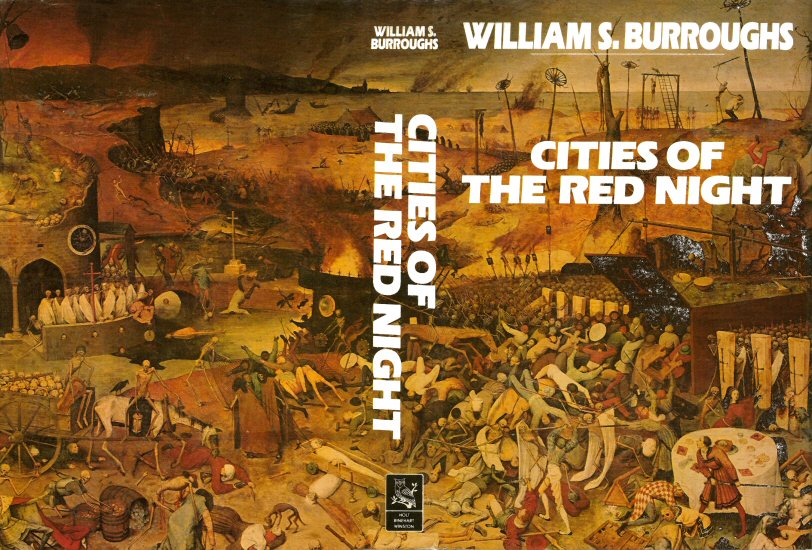
                • Cover of Cities of the Red Night
                  Cities of the Red Night

                  series · 3 books · 1981

                  completed

                  similar byliterary & generalchallenging+3 more

                  William S. Burroughs's Cities of the Red Night opens his final trilogy with two interwoven stories: a pirate utopia loosely modeled on the historical Captain Mission, and a present-day detective's investigation into a ritual killing, both shadowed by a plague spreading from a set of lost cities. The Place of Dead Roads and The Western Lands continue in the same fragmented, cut-up-influenced style rather than a conventional through-line. The three books are linked more by recurring imagery and obsessions, control, contagion, alternate history, than by a shared cast.

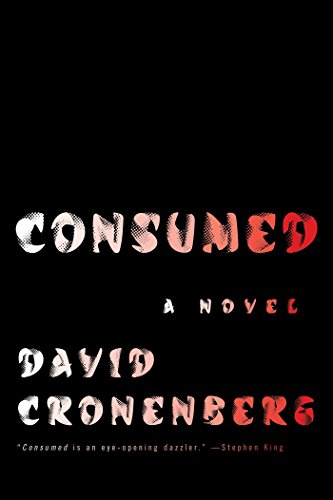
                • Cover of Consumed
                  Consumed

                  David Cronenberg · standalone novel · 2014

                  similar bymadnessliterary & generalour worldcontemporarydark+1 more

                  Consumed is the first novel by the Canadian filmmaker, screenwriter and actor David Cronenberg.

                • Cover of Great Apes
                  Great Apes

                  Will Self · standalone novel · 1997

                  similar byliterary & generalour worldcontemporarychallengingdark+1 more

                  Great Apes is a 1997 novel by Will Self.

                • Cover of Nova Trilogy
                  Nova Trilogy

                  series · 3 books · 1961

                  completed

                  similar byliterary & generalour worldchallenging+1 more

                  William S. Burroughs's Nova Trilogy -- The Soft Machine, The Ticket That Exploded, and Nova Express -- extends the fragmented cut-up and fold-in techniques he developed with Brion Gysin into a paranoid, hallucinatory sequence about control itself. Across the three books, the shadowy Nova Mob, personified as viral, parasitic forces of language and image, is opposed by an equally strange Nova Police, in an allegory for how societies are manipulated through media and addiction. It continues directly from the world and method of Naked Lunch rather than telling a conventional linear story.

                • Cover of Naked Lunch
                  Naked Lunch

                  William S. Burroughs · standalone novel · 1959

                  similar bymadnessliterary & generalour worldchallengingdark

                  Naked Lunch is a 1959 antinovel by American author William S. Burroughs. The novel does not follow a clear linear plot, but is instead structured as a series of non-chronological "routines". Many of these routines follow William Lee, an opioid addict who travels to the surreal city of Interzone and begins working for the organization "Islam Inc."

                • Cover of Love
                  Love

                  Angela Carter · standalone novel · 1971

                  similar bymadnessliterary & generalour worldcontemporarydark

                  Love is a 1971 novel by Angela Carter. Her fifth novel, it follows the destructive love triangle between a psychologically unstable woman, her charming husband, and her volatile brother-in-law. Effectively exploring themes of infidelity, self-loathing, suicide, and emotional disconnection, the novel depicts three characters so alienated from society and reality, that they depend solely on each other. This unhealthy fixation slowly eats away at their individual relationships and themselves, until eventually culminating in despair and tragedy.

                • Cover of Fifth Child
                  Fifth Child

                  series · 2 books · 1988

                  completed

                  similar byliterary & generalcontemporary+2 more

                • Cover of VALIS
                  VALIS

                  series · 4 books · 1981

                  completed

                  similar bychallenging+4 more

                  The VALIS trilogy is a set of science fiction/philosophical novels by author Philip K. Dick which include VALIS (1981), The Divine Invasion (1981), and The Transmigration of Timothy Archer (1982). Dick's first novel about the VALIS concept originally titled "VALISystem A", was published as Radio Free Albemuth after Dick's death in 1985.

                • Cover of Briefing for a Descent Into Hell
                  Briefing for a Descent Into Hell

                  Doris Lessing · standalone novel · 1971

                  similar bymadnessliterary & generalour worldcontemporarychallenging

                  Briefing for a Descent into Hell is a 1971 psychological novel by British novelist Doris Lessing. It was shortlisted for that the 1971 Booker Prize.

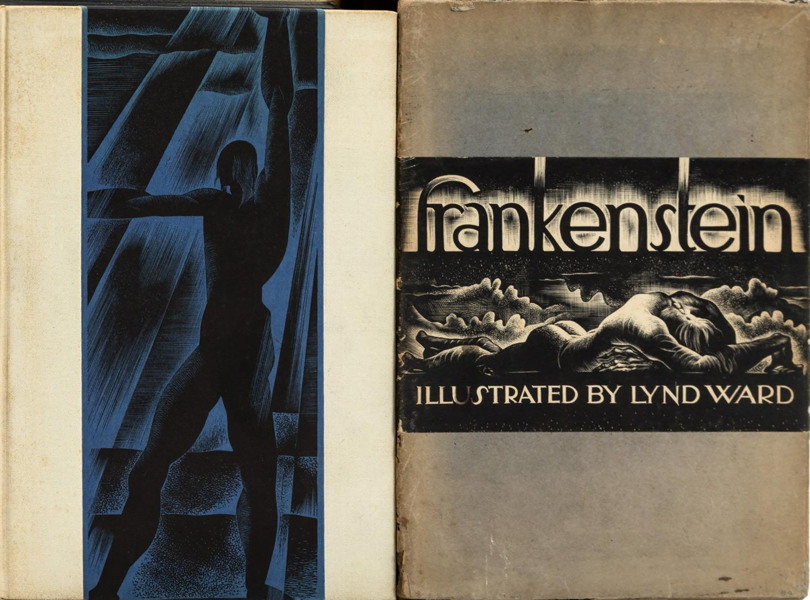
                • Cover of Frankenstein
                  Frankenstein

                  universe · 128 books · 1818

                  Start hereFrankenstein, or, The Modern Prometheus · Start here

                  Light a candle against the November dark and consider what a single spark, rightly applied to dead matter, might wake. In a laboratory at Ingolstadt a student named Victor Frankenstein learns the secret of animating lifeless flesh, assembles a being from the harvest of charnel houses and graves, and, at the moment it draws breath, flees the thing he has made. What he abandons does not stay abandoned. This is the world Mary Shelley opened in 1818 with Frankenstein; or, The Modern Prometheus: the story of a maker and his unmothered creation, and the long ruin each works upon the other. Shelley's novel arrives as a nest of confessions, an explorer's letters from the frozen north enclosing Victor's account, which in turn encloses the Creature's own, an articulate and wounded voice that has read Milton and wants only not to be alone. From that single volume two centuries of other hands have built outward, not as one continuity but as a gathering of independent returns to the same fire. Dean Koontz transplants the myth to modern New Orleans across a five-book cycle, Prodigal Son through The Dead Town, where the original Creature, now called Deucalion, hunts a Victor who never died. Donald F. Glut's New Adventures and Frank Schildiner's Quest of Frankenstein run the monster through pulp adventure; the mid-century French novels published as Benoit Becker chase him across a ruined Europe; Scott Sonneborn's Frankenstein Journals and the comic Frankenstein's Aunt turn the legend toward younger and lighter readers. What binds them is the question the book asks and never settles: which is the monster, the forsaken creature who kills, or the man whose ambition and cowardice made and abandoned him? Expect little comfort and few clean villains; the abiding note is grief, sublime and articulate, set against Alpine ice and candlelit hubris. Begin where it began, with Shelley's own novel; the later cycles reward you only once you have heard the Creature speak for himself.

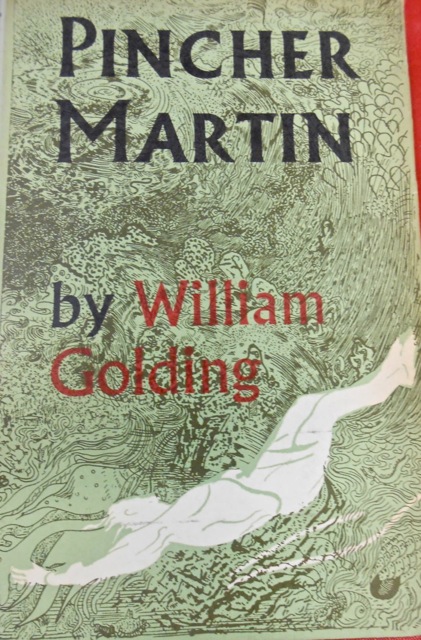
                • Cover of Pincher Martin
                  Pincher Martin

                  William Golding · standalone novel · 1956

                  similar bymadnessliterary & generalour worldchallengingdark

                  Pincher Martin is a novel by British writer William Golding, first published in 1956. It is Golding's third novel, following The Inheritors and his debut Lord of the Flies. It is one of Golding's best-known novels, noted for being existential and minimalistic in setting.

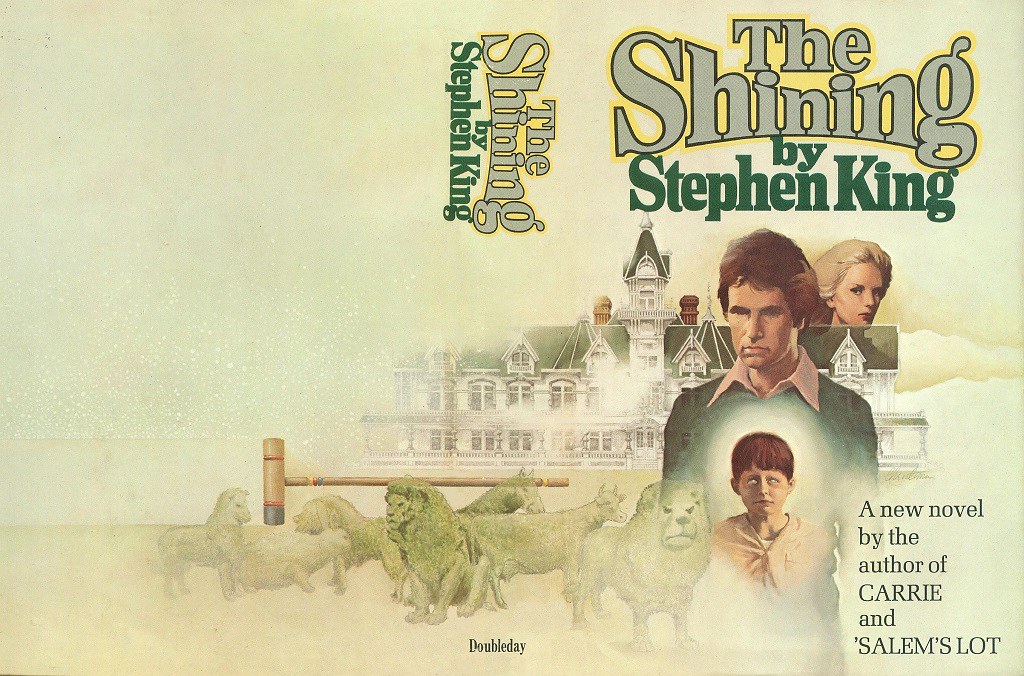
                • Cover of The Shining
                  The Shining

                  series · 5 books · 1977

                  similar bycontemporarydark+1 more

                  Stephen King's 1977 novel The Shining follows the Torrance family as winter caretakers of the isolated, malevolent Overlook Hotel, where father Jack is gradually consumed by the hotel's influence while his young son Danny's psychic "shining" draws its attention. Doctor Sleep (2013) picks up the story decades later, following Danny as an adult still marked by that childhood ordeal. Together the two form a horror duology spanning nearly forty years of real-world publication.

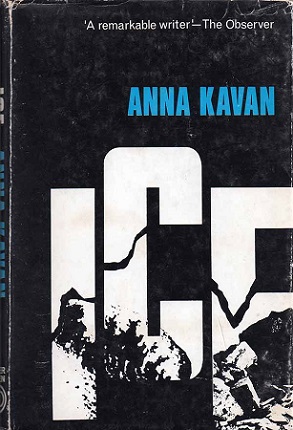
                • Cover of Ice
                  Ice

                  Anna Kavan · standalone novel · 1967

                  similar bymadnessliterary & generalour worlddark

                  Ice is a novel by British writer Anna Kavan, published in 1967. Ice was Kavan's last work to be published before her death, the first to land her mainstream success, and remains her best-known work. Generally regarded as genre-defying, it has been labelled a work of science fiction, Nouveau roman, and slipstream fiction.

                • Cover of A Clockwork Orange
                  A Clockwork Orange

                  series · 4 books · 1962

                  completed

                  similar byour worldchallengingdark+1 more

                  Anthony Burgess's 1962 novel is narrated by Alex, a teenage gang leader in a near-future Britain gripped by a youth subculture of extreme violence, recounting his crimes in Nadsat, an invented slang blending English with Russian-derived words. After his crimes catch up with him, Alex is made the subject of a controversial state program meant to forcibly reform his behavior, and the novel uses his ordeal to question whether imposed goodness is worth the loss of free will. It is a standalone novel.

                • Cover of High-Rise
                  High-Rise

                  J. G. Ballard · standalone novel · 1975

                  similar bymadnessliterary & generalour worlddark

                  High-Rise is a 1975 novel by British writer J. G. Ballard. The story describes the disintegration of a luxury high-rise building as its affluent residents gradually descend into violent chaos. As with Ballard's previous novels Crash (1973) and Concrete Island (1974), High-Rise inquires into the ways in which modern social and technological landscapes could alter the human psyche in provocative and hitherto unexplored ways. It was adapted into a film of the same name, in 2015, by director Ben Wheatley.

                • Cover of Breakfast of Champions
                  Breakfast of Champions

                  Kurt Vonnegut & Jr. · standalone novel · 1973

                  similar bymadnessliterary & generalcontemporarychallenging

                  The author decides to liberate the characters he created, including an author who decides to try to help a mentally ill reader who was driven over the edge by the book's assertion that he was the only creature with free will in a universe of preprogrammed automatons.

                • Cover of Rushing to Paradise
                  Rushing to Paradise

                  J. G. Ballard · standalone novel · 1994

                  similar byliterary & generalcontemporarychallengingdark+1 more

                  Rushing to Paradise is a novel by British author J. G. Ballard, first published in 1994.

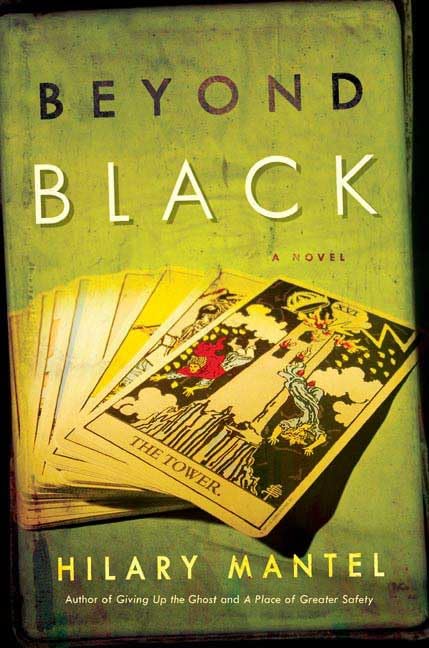
                • Cover of Beyond Black
                  Beyond Black

                  Hilary Mantel · standalone novel · 2005

                  similar bymadnessliterary & generalour worldcontemporarydark

                  Beyond Black is a 2005 novel by English writer Hilary Mantel. It was shortlisted for the 2006 Orange Prize for Fiction.

                • Cover of Broken Light
                  Broken Light

                  Joanne Harris · standalone novel · 2023

                  similar byliterary & generalcontemporary+1 more

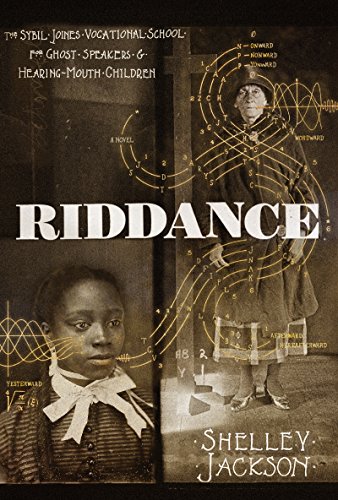
                • Cover of Riddance
                  Riddance

                  Shelley Jackson · standalone novel · 2018

                  similar byliterary & generalcontemporary+2 more

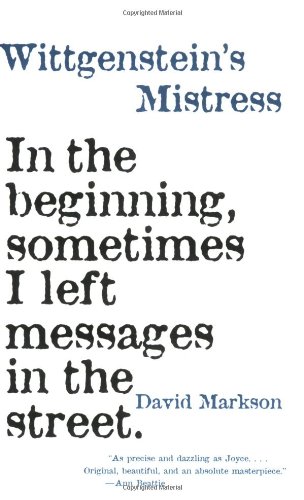
                • Cover of Wittgenstein's Mistress
                  Wittgenstein's Mistress

                  David Markson · standalone novel · 1988

                  similar bymadnessliterary & generalour worldcontemporarychallenging

                  Wittgenstein's Mistress is a 1988 experimental novel written by David Markson. A highly stylized work in the tradition of Samuel Beckett, the novel is mainly a series of statements made in the first person. The protagonist is a woman named Kate who believes herself to be the last human on earth; though her statements shift quickly from topic to topic, the topics often recur, and often refer to Western cultural icons, ranging from Zeno to Beethoven to Willem de Kooning. Readers familiar with Ludwig Wittgenstein's Tractatus Logico-Philosophicus will recognize stylistic similarities to that work.

                • Cover of House of Leaves
                  House of Leaves

                  series · 2 books · 2000

                  similar bymadnessliterary & generalcontemporarychallenging+1 more

                  House of Leaves is the debut novel by American author Mark Z. Danielewski, published in March 2000 by Pantheon Books. A bestseller, it has been translated into a number of languages, and is followed by a companion piece, The Whalestoe Letters.

                • Cover of HARM
                  HARM

                  Brian W. Aldiss · standalone novel · 2007

                  similar bymadnessliterary & generalour worldcontemporarychallenging

                  "... a young writer of light fiction with a Muslim heritage has been arrested for no compelling reason. He is held as Prisoner B, in HARM ... and isolated. To evade this misery Prisoner B escapes - through his split personality - to a science fiction-like planet ruled by insects. But gradually the two worlds start to converge ..."