More like Warrior
anchored on:post-apocalypticnorth americafar futurescience fictionpolitical intriguewar+1 more
but
- The Hunger Games
series3 books2008
part of The Hunger Games Universe
similar bynorth americafar futurescience fictionpost-apocalypticdarktensesurvivalrebellion and revolution+1 more
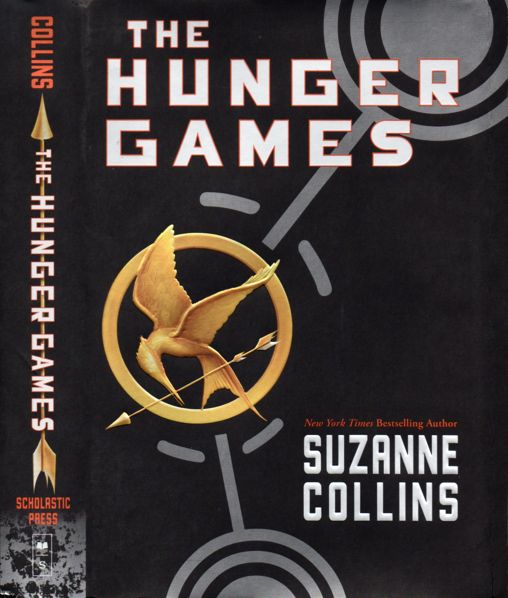
The Hunger Games is a series of young adult dystopian novels written by American author Suzanne Collins. The series consists of a trilogy that follows teenage protagonist Katniss Everdeen, as well as two prequels. The Hunger Games universe is a dystopia set in Panem, a post-apocalyptic North American country consisting of the wealthy Capitol and 12 districts in varying states of poverty. As punishment for rebellion, the Capitol hosts an annual battle royale competition called The Hunger Games. Each of the 12 districts must send two children between the ages of 12 and 18 to participate, and the last surviving child is dubbed the victor.
- The Hunger Games Universe
universe5 books2008
Start hereThe Hunger Games · Start here
similar byfar futurenorth americascience fictiondarktensesurvivalrebellion and revolution+3 more
Panem, they call it now — a nation raised on the drowned bones of North America, a glittering Capitol ringed by twelve districts it once starved into obedience. Every year the Capitol collects its debt in children: two tributes from each district, drawn by lottery, dropped into an engineered arena, and made to kill one another on live television while the whole country is required to watch. This is the Hunger Games — entertainment, punishment, and government at once. Suzanne Collins tells it in a compact, unified body of work. The founding trilogy — The Hunger Games, Catching Fire, and Mockingjay — follows Katniss Everdeen, a girl from the coal-mining District 12 who volunteers in her sister's place and becomes something the Capitol never scripted. Two prequels reach back into the same machinery: The Ballad of Songbirds and Snakes traces a young Coriolanus Snow long before he is President, and Sunrise on the Reaping returns to District 12 a generation ahead of Katniss. Begin with the trilogy, in order — it is Katniss's voice, close and present-tense, that makes Panem breathe, and the prequels land hardest once you know how her story ends. Beneath the spectacle sits one steady, uncomfortable question: who profits when we agree to look away.
- The Gate to Women's Country
Sheri S. Tepperstandalone novel1988
similar bynorth americafar futurepost-apocalypticscience fictionwardark+1 more
The Gate to Women's Country is a post-apocalyptic novel by American writer Sheri S. Tepper, published in 1988. It describes a world set three hundred years into the future after a catastrophic war which has fractured the United States into several nations.
- Hungry City Chronicles / Mortal Engines
series5 books2001
part of Mortal Engines Universe
similar byfar futurepost-apocalypticscience fictionadventurouswarsurvival+1 more
The Mortal Engines Quartet, also known as the Predator Cities Quartet, is a series of epic young adult science fiction novels by the English novelist and illustrator Philip Reeve. He began the first volume of the series, Mortal Engines, in the 1980s, and it was published in 2001. Reeve then published three further novels, Predator's Gold (2003), Infernal Devices (2005), and A Darkling Plain (2006).
- Hello America
J. G. Ballardstandalone novel1981
similar bynorth americafar futurepost-apocalypticadventurousscience fictionsurvival+1 more
Hello America is a science fiction novel by British writer J. G. Ballard, published in 1981. First edition cover designed by Bill Botten. The plot follows an expedition to a North America rendered uninhabitable by an ecological disaster following an energy crisis.
- Maurai
series6 books1959
completed
similar byfar futurepost-apocalypticscience fictionpolitical intrigue+5 more
The Maurai series is a series of short stories and a novel by Poul Anderson set in a resource depleted, post-apocalyptic earth several centuries in the future. The series is named after its most frequent protagonists, citizens of the Maurai Federation. The Maurai dominate the Pacific and Indian Oceans. Fearful of the social and ecological implications of a return to large-scale industrial society, they use their considerable might and covert resources to prevent other nations from developing nuclear power.
- Saint Leibowitz
series6 books1955
completed
similar byfar futurepost-apocalypticscience fictionnorth america+2 more
Walter M. Miller Jr.'s A Canticle for Leibowitz (1959), assembled from three novellas he had published earlier in the decade, follows the monks of a Catholic monastery in the post-nuclear American Southwest as they preserve fragments of scientific knowledge across centuries, watching civilization slowly rebuild itself and edge back toward the mistakes that destroyed it. Miller's posthumous sequel, Saint Leibowitz and the Wild Horse Woman, completed by Terry Bisson from his notes after his death and published in 1997, returns to the same abbey and its world decades later. Together the two novels form a sparse, decades-spanning series about memory, faith, and the cycles of civilization.
- City at World's End
Edmond Hamiltonstandalone novel1951
similar byfar futurepost-apocalypticnorth americascience fictiondarktensesurvival
An experimental atomic weapons test in small-town America goes catastrophically wrong, hurling the entire town of Middletown, buildings, streets and all, untold ages into Earth's future, to a time when the sun is dying and humanity's last city struggles on beneath a darkening sky. Cut off from everything and everyone they knew, the townspeople have to find a way to survive in a world that has nothing left to spare for latecomers. Edmond Hamilton's novel strands a slice of mid-century America at the literal end of the world.
- One Second After / John Matherson
series4 books2009
similar bynorth americapost-apocalypticscience fictionwardarktensesurvival+1 more
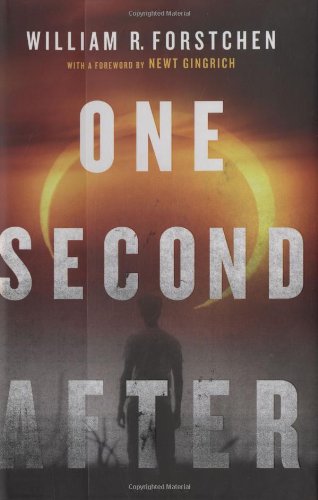
Retired army colonel and college professor John Matherson is living an ordinary life in a small North Carolina town when every piece of modern electronics around him dies at once -- the opening move of an electromagnetic pulse attack on the United States. William R. Forstchen's One Second After follows Matherson and his neighbors as they try to hold their community together with no power, no vehicles, and no outside help, and the sequels track the same slow, grinding rebuilding over the following years. The series leans hard into plausible, granular detail about what actually happens to a country when its grid goes down.
- The Moon Is a Harsh Mistress
Robert A. Heinleinstandalone novel1966
similar byfar futureadventurousscience fictionpolitical intriguerebellion and revolution+1 more
A technician discovers that the massive computer that operates everything on Luna (a prison colony) has become self-aware. He befriends it, but when he accompanied a beautiful girl to a dissident meeting, he encounters people who want to throw off the yoke of their Earth rulers.
- The Vampire Earth
series12 books2003
similar bynorth americapost-apocalypticscience fictionwardarktense+3 more
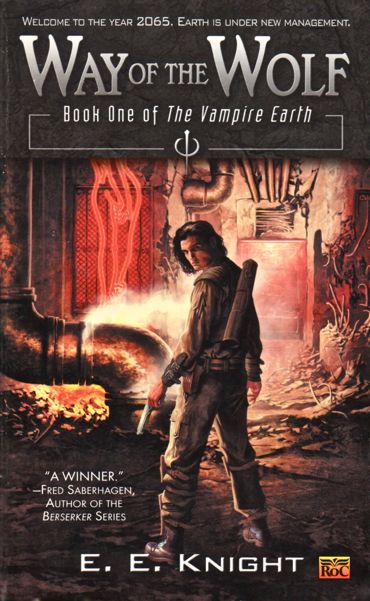
Vampire Earth is a series of science fiction/dark fantasy novels by American writer E. E. Knight.
- The Change / The Event
series41 books1998
similar bypost-apocalypticnorth americaadventurousscience fiction+5 more
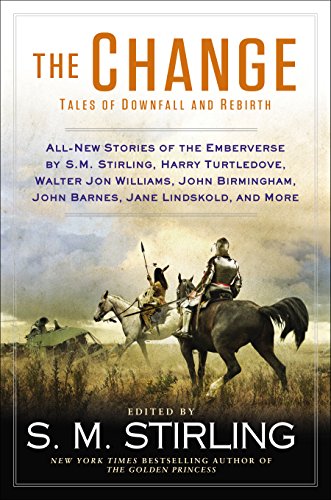
The Change: Tales of Downfall and Rebirth is a shared-world anthology of stories set in the years right after a mysterious global event instantly disables gunpowder, electricity, and combustion engines, the founding premise of S. M. Stirling's Emberverse. Sixteen different authors, coordinated by Stirling, each contribute stories set in various corners of the suddenly de-industrialized world as survivors scramble to rebuild. It's a companion volume to the Change/Emberverse novels rather than a novel itself.
- Damnation Alley
Roger Zelaznystandalone novel1969
similar bynorth americapost-apocalypticadventurousscience fictionsurvival+1 more
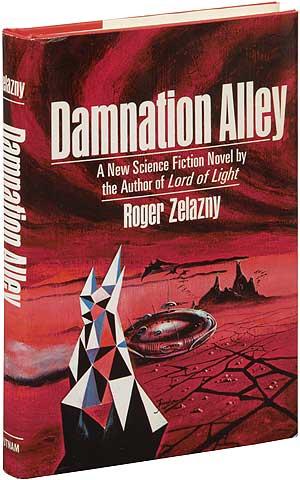
Damnation Alley is a 1969 science fiction novel by American writer Roger Zelazny, based on a novella of the same name published in 1967. A film adaptation of the novel was released in 1977.
- Dune
series20 books1963
part of Dune Universe
similar byfar futurescience fictionpolitical intrigue+2 more
Frank Herbert's Dune Chronicles opens with 1965's Dune, set on the desert planet Arrakis where House Atreides takes control of the only source of the vital spice melange and young Paul Atreides is pulled into a struggle over its politics and religion. Herbert carried the story forward across five further novels — Dune Messiah, Children of Dune, God Emperor of Dune, Heretics of Dune, and Chapterhouse: Dune — following Paul's line over the following millennia, before Brian Herbert and Kevin J. Anderson later extended the saga. Many other editions of these six novels are omnibus and box-set repackagings rather than separate stories.
- Janissaries
series4 books1979
similar byfar futureadventurousscience fictionpolitical intriguewartense
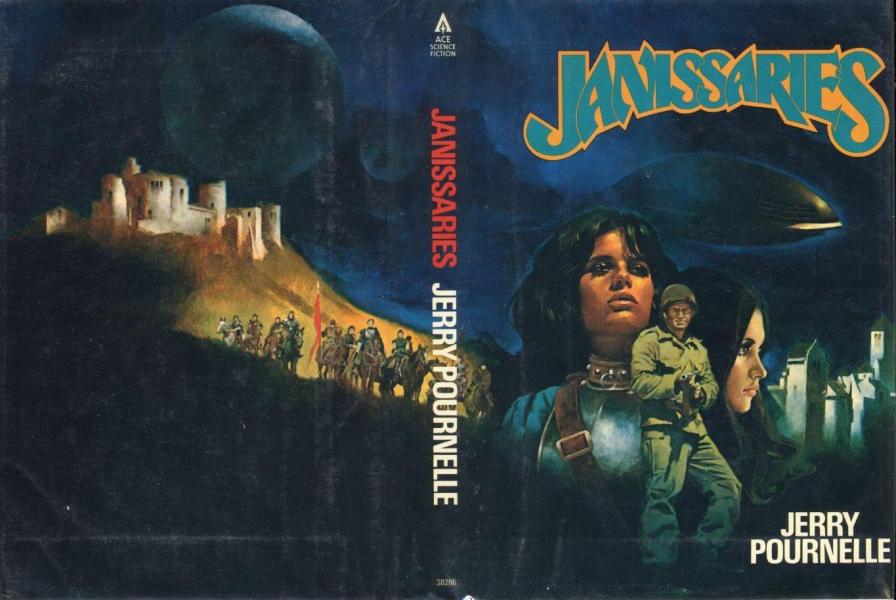
Janissaries are an American series of military and political-based science fiction novels are set in an interstellar confederation of races, in which humans are a slave race entrusted with military affairs and law enforcement. They were written by Jerry Pournelle, with Roland J. Green co-authoring the second two books.
- Dune Universe
universe78 books1963
Start hereDune · Start here
similar byfar futurescience fictionpolitical intrigue+2 more
Arrakis. Dune. The desert planet, where empire runs on a single substance: the spice melange, which folds space, prolongs life, and unlocks prescience, and which exists nowhere else in the known universe. Frank Herbert's saga is a meditation dressed as an adventure — feudal houses and a secret sisterhood, engineered messiahs and the patient ecology of a world without water, all turning on the terrible gravity of who commands the spice. It reads like scripture and schemes like a war room, ten thousand years hence, among people who have outlawed the thinking machine and made instruments of themselves instead. At its heart stand Herbert's original six — Dune, Dune Messiah, Children of Dune, God Emperor of Dune, Heretics of Dune, Chapterhouse: Dune — a single deepening arc across millennia, arguing the whole way between prophecy and free will. Around that spine his son Brian Herbert and Kevin J. Anderson have raised a vast prequel architecture: Prelude to Dune, tracing the great houses a generation before Paul; Legends of Dune, reaching back to the crusade that broke the machines; the Schools of Dune cycle on the founding of Bene Gesserit, Mentat, and Navigator; the Caladan Trilogy and Heroes of Dune filling years the originals left in shadow. Many hands, dozens of volumes, one desert. What sets Dune apart is its refusal of the simple: religion is manufactured, heroes are hazards, and the sand itself — worm, water, ecology — acts as a political power. Begin where the universe did, with Frank Herbert's Dune (1965), and read the original six in order; you need nothing else to feel the full weight. The prequels are a country to explore afterward, taken by era. Beginnings are delicate times.
- Vatta's War
series6 books2003
part of Vatta
similar byfar futureadventurousscience fictionwarpolitical intriguetense
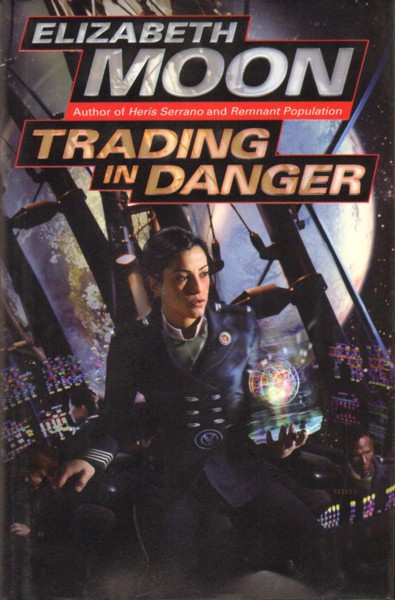
Vatta's War is a science fiction series by American writer Elizabeth Moon, comprising five books: Trading in Danger (2003), Marque and Reprisal, Engaging the Enemy (2006), Command Decision (2007), and Victory Conditions (2008). They have been characterized as military science fiction similar in style to the works of Lois McMaster Bujold, David Weber and Walter Jon Williams.
- Sten
series11 books1982
completed
similar byfar futureadventurousscience fictionpolitical intriguewar+2 more
The Sten Chronicles, also called The Sten Adventures, are a series of eight military science fiction and space opera novels by Chris Bunch and Allan Cole published from 1982 to 1993. The series was originally published by Del Rey and then re-released by Orbit.
- The Long Tomorrow
Leigh Brackettstandalone novel1955
similar bynorth americafar futurepost-apocalypticscience fictionsurvival+1 more
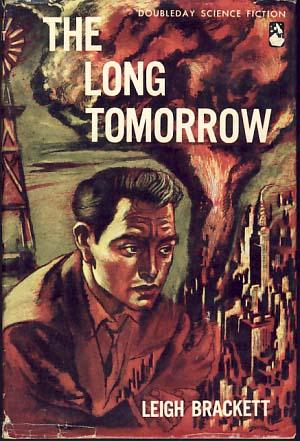
The Long Tomorrow is a post-apocalyptic science fiction novel by American writer Leigh Brackett, originally published by Doubleday & Company, Inc in 1955. Set in the aftermath of a nuclear war, it portrays a world where scientific knowledge is feared and restricted. It was nominated for a Hugo Award in 1956.
- Survivalist
series41 books1981
similar bypost-apocalypticnorth americascience fictionwartensesurvival+1 more
The Survivalist is the generic title of Jerry Ahern's long-lived series of 29 pulp novels centering around John Rourke, an ex-CIA officer turned weapons and survival expert, in the aftermath of a nuclear war.
- Ship Breaker
series3 books2010
similar bypost-apocalypticscience fictionnorth americadarktensesurvival+3 more
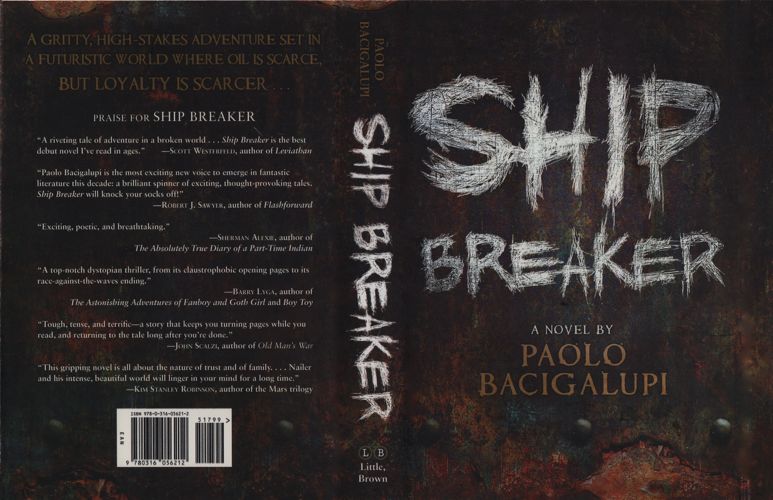
Nailer works a light-crew scavenging copper wire and scrap from beached oil tankers on a Gulf Coast reshaped by rising seas and vanished order, until a wrecked clipper ship washes ashore carrying a half-drowned girl from the wealthy world he'll never belong to. Paolo Bacigalupi's Ship Breaker follows Nailer as helping her pulls him out of his abusive father's orbit and into a much larger, more dangerous game involving her family's fortune. The sequels The Drowned Cities and Tool of War widen the same flooded, resource-scavenging future to new characters and coastlines.
- Directive 51 / Daybreak
series3 books2010
similar bynorth americapost-apocalypticscience fictionpolitical intriguedarktensesurvival+1 more
Directive 51 opens John Barnes's near-future thriller trilogy with government analyst Heather O'Grainn as anti-technology extremists unleash a nanotech plague called Daybreak that destroys petroleum-based materials, rubber, and electrical systems worldwide. The resulting collapse triggers mass death, a crisis over presidential succession, and mysterious Moon-launched fusion strikes on Washington and Chicago, while a shadowy neofeudalist movement moves into the vacuum. Daybreak Zero and The Last President carry the same unraveling-civilization story through the rest of the trilogy.
- Alas, Babylon
Pat Frankstandalone novel1959
similar bynorth americapost-apocalypticscience fictiontensesurvival+1 more
Classic novel of nuclear war and aftermath in rural Florida. From the back cover of a Bantam Pathfinder edition: "The day that the bomb dropped the thousands of years of "progress" that had covered the treacheries and weaknesses of ordinary man with a thin veneer of civilization were dissolved and melted like snow on the desert's dusty face. Then - the law of the jungle reigned but in the wreckage a few courageous survivors, men and women with the guts to have hope, were determined to build a new and better world on the ruins of the old. This is their story."
- Honor Harrington
series14 books1993
part of Honorverse
similar byfar futurescience fictionwarpolitical intriguetense+1 more
David Weber's Honor Harrington novels follow the title character's rise through the Manticoran navy in the 'Honorverse,' a space-opera setting built around Age-of-Sail-style naval combat, interstellar politics and a decades-long war between rival star nations. Beginning with On Basilisk Station, the core series runs to fourteen books, alongside spin-off subseries, prequels and shared-world anthologies also set in the Honorverse. It's one of the longest-running modern military science fiction series, published by Baen.