Loreful
HomeDiscover
Search series, authors…⌘K
Loreful

Reading orders for SF/F series and shared universes — with your place kept in every one.

Explore

UniversesSeriesWorksAuthorsAtlas

Help

FAQAboutSite map

Account & legal

Sign inCreate accountPrivacyTerms

Data

Built on ISFDB, Wikipedia, Wikidata and Open Library. Curated reading orders carry their reasoning on the page; the rest follow publication order. Data sources & licenses

© Loreful · data: ISFDB · CC BY

More like 'Was ... '

anchored on:literary & generalnorth americaemotionalmultiple povfantasyhistorical fiction+5 more

but

Mood

The mood the book leaves you in.

  • The reading experience is propelled by journeys, exploration, and physical risk; excitement and forward momentum dominate over dread or introspection.
  • Joy and loss are deliberately mixed; the resolution grants characters something real while taking something else away, leaving warmth and sorrow together.
  • The book demands work from the reader — dense prose, difficult structure, unfamiliar ideas, or morally uncomfortable material — as part of its intended effect.
  • Grim events, cruelty, or despair dominate the atmosphere, and the book does not soften them with comfort or comic relief.
  • The atmosphere is quietly unsettling — wrongness, unease, and the uncanny pervade the book without necessarily escalating into overt horror.
  • The book is built to move the reader; character feeling is foregrounded and major scenes aim at a strong emotional response.
  • Humor is a primary aim and the prose plays for laughs — comic situations, wit, or dialogue produce sustained comedy, not occasional levity.
  • The book insists that things can improve; effort and decency are shown to matter, and the arc bends toward better outcomes even through hardship.
  • The book teaches as it goes — real facts, history, science, or craft are conveyed in enough depth that learning is part of the reading experience.
  • The book is designed to uplift and motivate, presenting perseverance or achievement in a way that invites the reader to aspire or act.
  • The overall register is cheerful and easygoing; stakes are kept gentle and the book avoids dwelling on pain or dread.
  • Withheld information drives the experience; the book sustains enigmas and secrets the reader wants resolved, whatever its genre.
  • The book is contemplative and inward-looking, giving more weight to thought, memory, and meaning than to external events.
  • The book works as comfort reading — low tension, a soothing pace, and an atmosphere the reader can unwind in.
  • Grief, loss, or melancholy set the dominant register, and the book lets sorrow stand rather than resolving it into comfort.
  • Sustained suspense is the point; the book keeps the reader braced for what happens next through danger, pressure, or impending revelation.
  • Playful invention and charm define the register — fanciful conceits, light absurdity, and a narration that delights in its own oddity.

About

What the story runs on.

  • Stories centered on witches and the practice of witchcraft — covens, hedge magic, familiars, and the witch's place in her community.
  • Stories structured as a quest — a journey undertaken to find, deliver, or destroy something of great import.
  • Stories in which staying alive against nature, catastrophe, or scarcity is the central problem.
  • Stories of lovers kept apart by law, family, faith, or station, where the obstacle to love is the plot.
  • Stories in which a friendship — its making, testing, or loss — is the emotional center.
  • Stories of growing up — a young protagonist crossing from childhood into adult knowledge and responsibility.
  • Stories about who a character truly is — self-discovery, doubled lives, and the search for a self.
  • Stories about mourning — living through the death of a loved one and what loss does to the survivors.
  • Stories in which a buried family truth — hidden parentage, crimes, or shames — surfaces and reorders the present.
  • Stories driven by maneuvering for power — factions, conspiracies, and statecraft conducted in shadow.
  • Stories in which war itself is the subject — combat, occupation, and what warfare does to soldiers and civilians.
  • Stories organized around investigating a killing — the case, the clues, and the pursuit of the killer, in any genre's clothing.

Shelf

Where it sits in the library.

    • Fiction built on magic or other supernatural elements that have no scientific explanation.
    • Secondary-world fantasy at large scale, where the fate of nations or the world turns on the protagonists' struggle.
    • Fantasy set in a recognizably modern city or contemporary world where the supernatural intrudes on everyday life.
    • Fantasy that blends in horror's atmosphere and imagery, keeping a fantastical frame around grim or frightening material.
    • Action-driven fantasy following warriors or rogues with personal stakes against sorcerous threats, rather than world-spanning conflicts.
    • Fantasy set in a real historical period or a close analogue of one, with magic woven into the era.
    • Fantasy in which protagonists cross from the ordinary world into another world through a portal or similar passage.
    • Fiction that retells or reworks a traditional fairy tale in a new form or setting.
    • Fantasy drawing directly on myths, legends, and folklore, retelling them or building on their figures and logic.
    • Fantasy of ghosts, vampires, shapeshifters, psychics, and similar phenomena, usually set in an otherwise ordinary world.
    • Fiction mixing science-fictional trappings with overtly magical or impossible elements in one setting.
    • Low-stakes fantasy emphasizing comfort, community, and everyday pleasures over conflict and peril.
    • Speculative fiction of pervasive moral ambiguity, violence, and cynicism that rejects heroic conventions — fantasy and SF alike.
      • Fiction that extrapolates from science and technology — future societies, space travel, or speculative inventions — within at least nominally natural laws.
      • Science fiction of interstellar scope — starships, galactic polities, and adventure across star systems.
      • Science fiction committed to scientific rigor, where technical plausibility constrains the story.
      • Science fiction centered on armed forces and warfare, told largely from a military point of view.
      • Science fiction of networked, corporate-dominated near futures, pairing high technology with social decay.
      • Science fiction styled on nineteenth-century steam-powered technology, often in a Victorian or pseudo-Victorian setting.
      • Fiction depicting an oppressive or catastrophic society, presented as a warning.
      • Fiction set after civilization's collapse, following survivors in the ruins of the old world.
      • Fiction in which characters move between past and future, and the mechanics or consequences of that travel drive the plot.
      • Fiction exploring a world where a historical event went differently and history diverged from ours.
      • Science fiction about humanity's first encounter and communication with an alien intelligence.
      • Science fiction in which extraterrestrial forces attack or occupy Earth and humanity resists.
      • Fiction whose primary aim is to frighten or unsettle the reader through dread, menace, or the monstrous.
      • Horror of vast, indifferent, incomprehensible entities before which humanity is insignificant, in the Lovecraft tradition.
      • Horror of decaying houses, buried family secrets, and oppressive atmosphere in the Gothic literary tradition.
      • Horror centered on hauntings and the returning dead.
      • Horror located in the mind — paranoia, obsession, and unreliable perception rather than external monsters.
      • Horror built around the reanimated dead and survival amid their outbreaks.
      • Horror defined by explicit, transgressive gore that refuses to cut away from violence.
      • Speculative fiction of the strange and uncanny that resists both natural explanation and standard genre categories.
      • Fiction organized around solving a crime or puzzle, typically following an investigator toward the identification of a culprit.
      • A puzzle-first mystery that lays out clues so the culprit's identity can be deduced before the reveal.
      • Crime fiction of moral ambiguity, fatalism, and hard-edged style, set among the corrupt and the doomed.
      • A mystery following the realistic routines of police work — forensics, interviews, and case-building.
      • A gentle mystery with an amateur sleuth, a small community, and violence kept off the page.
      • A mystery set in a past era, where the investigation works within that period's methods and society.
      • Fast-paced fiction driven by imminent danger, pursuit, or high-stakes conspiracy, built to sustain tension.
      • A thriller of espionage — agents, tradecraft, and intelligence services in conflict.
      • A thriller centered on lawyers and the courtroom, where litigation carries the suspense.
      • A thriller driven by detailed contemporary or near-future technology, often military or scientific.
      • A thriller whose tension comes from mental states and manipulation between characters rather than external action.
      • Fiction whose central plot is a romantic relationship and its development toward an emotionally satisfying resolution.
      • Romance in which one or both partners are supernatural beings, blending fantasy elements into the love story.
      • A fantasy-romance hybrid in which the romantic arc and the fantasy plot carry equal weight.
      • Romance set in a past era, with courtship shaped by the period's society and manners.
      • Romance set in the present day, without supernatural or historical elements.
      • Fiction set in a real past period, where the historical setting materially shapes characters and events.
        • General and literary fiction emphasizing prose style, character interiority, or formal ambition over genre plot conventions.
        • Fiction in a realistic world where magical events occur and are treated as ordinary, in the tradition of Latin American literature.
        • Fiction that ridicules people, institutions, or society in order to criticize them.
        • Fiction of dreamlike, irrational imagery and logic that breaks from realistic representation.
        • Fiction that plays with narrative convention through metafiction, fragmentation, and self-reference.
        • Fiction propelled by journeys, exploration, and physical peril, where action and survival carry the plot.
        • Adventure fiction of ships and seafaring — naval engagements, voyages, and life at sea.
        • Fiction of the American frontier West — gunmen, ranchers, and lawmen, typically in the late nineteenth century.
        • Fiction centered on soldiers, campaigns, and the experience of warfare, historical or imagined.
          • Fiction written primarily to amuse, using comedic situations, wit, or parody as its organizing principle.
            • Multi-generational fiction following a family or dynasty across decades, with inheritance and kinship as the through-line.
              • Fiction whose world runs on explicit game mechanics — levels, stats, and skills that characters can see and exploit.
                • Fiction about costumed or superpowered heroes and their conflicts with comparable villains.

                Practical

                How long a commitment, whether it stands alone, and whether it has finished.

                Tap a chip to ask for it · tap again to rule it out · once more to clear. Numbers show what would be left.

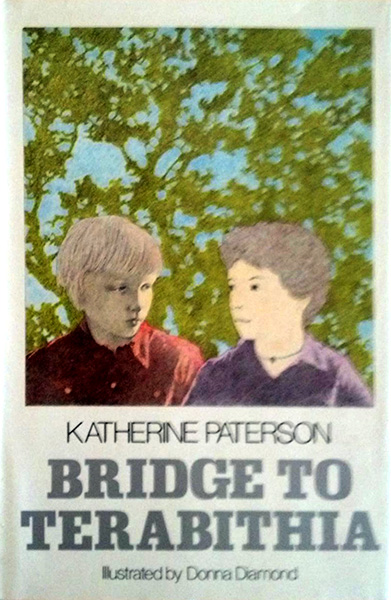
                • Cover of Bridge to Terabithia
                  Bridge to Terabithia

                  Katherine Paterson · standalone novel · 1977

                  similar bynorth americaemotionalgrief and lossbittersweetlate 20th centuryfantasyliterary & general

                  Bridge to Terabithia is a children's novel written by American author Katherine Paterson. The book was originally published in 1977 by Thomas Crowell, and won a Newbery Medal the year after.

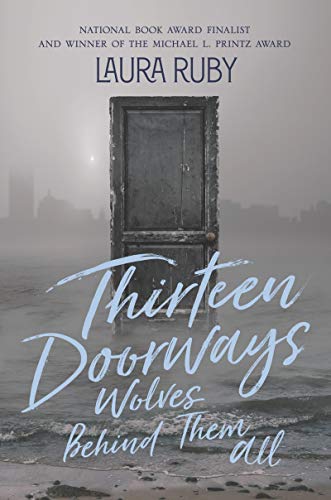
                • Cover of Thirteen Doorways, Wolves Behind Them All
                  Thirteen Doorways, Wolves Behind Them All

                  Laura Ruby · standalone novel · 2019

                  similar bynorth americaemotionalidentitygrief and lossliterary & generalhistorical fiction

                  Thirteen Doorways, Wolves Behind Them All is a young adult novel by Laura Ruby, published October 1, 2019, by Balzer + Bray.

                • Cover of Beloved
                  Beloved

                  Toni Morrison · standalone novel · 1987

                  similar bynorth americaidentitygrief and lossemotional19th centuryhistorical fiction

                  Beloved is a 1987 novel by American novelist Toni Morrison. Set in the period after the American Civil War, the novel tells the story of formerly enslaved people whose Cincinnati home is haunted by a malevolent spirit. Sethe, a formerly enslaved mother of four, grapples with her traumatic past. Morrison sought to depict the limitations that enslaved women faced and to present a physical manifestation that was lacking in the world of literature. Moreover, Beloved explores the interior life of the formerly enslaved.

                • Cover of The Green Mile
                  The Green Mile

                  Stephen King · standalone novel · 1996

                  similar bynorth americaemotionalgrief and lossliterary & general+1 more

                  The Green Mile is a 1996 serial novel by American writer Stephen King. It tells the story of death row supervisor Paul Edgecombe's encounter with John Coffey, an unusual inmate who displays inexplicable healing and empathetic abilities. The serial novel was released in six volumes before being republished as a single-volume work. The book is an example of magical realism. The subsequent film adaptation was a critical and commercial success. The Green Mile won the Bram Stoker Award for Best Novel in 1996. In 1997, The Green Mile was nominated as Best Novel for the British Fantasy Award and the Locus Award. In 2003 the book was listed on the BBC's The Big Read poll of the UK's "best-loved novel".

                • Cover of The Leftovers
                  The Leftovers

                  Tom Perrotta · standalone novel · 2011

                  similar bynorth americagrief and lossbittersweetemotionalliterary & generalmultiple pov

                  The Leftovers is a 2011 satirical supernatural novel by American author Tom Perrotta. Set in the aftermath of a Rapture-like event in which 2% of Earth's human population vanished into thin air, it chronicles the lives of several individuals from a small New York town attempting to adjust to the significant cultural shift brought about by the event, while also navigating their personal trauma and losses.

                • Cover of The Catch Trap
                  The Catch Trap

                  series · 2 books · 1961

                  completed

                  similar bynorth americaemotionalbittersweetliterary & generalhistorical fiction+1 more

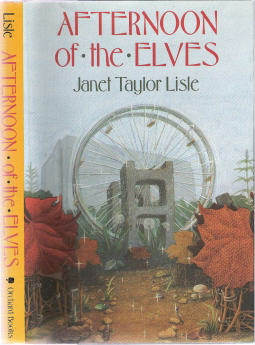
                • Cover of Afternoon of the Elves
                  Afternoon of the Elves

                  Janet Taylor Lisle · standalone novel · 1989

                  similar bynorth americaidentityemotionallate 20th centuryfantasyliterary & general

                  Afternoon of the Elves is a 1989 children's novel by author Janet Taylor Lisle. Afternoon of the Elves was a Newbery Medal Honor Book in 1990. The plot centers around the budding friendship between a popular elementary-school student named Hillary, and her misanthropic next-door neighbor Sarah-Kate. The two investigate a tiny village in Sarah-Kate's back yard, and as the story progresses, more of Sarah-Kate's personal life is revealed.

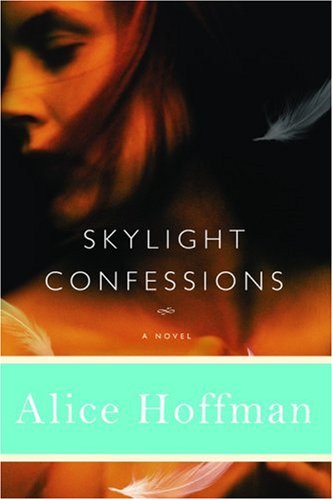
                • Cover of Skylight Confessions
                  Skylight Confessions

                  Alice Hoffman · standalone novel · 2007

                  similar bynorth americaemotionalidentitygrief and lossliterary & general

                  Writing at the height of her powers, Alice Hoffman conjures three generations of a family haunted by love. Cool, practical, and deliberate, John is dreamy Arlyn's polar opposite. Yet the two are drawn powerfully together even when it is clear they are bound to bring each other grief. Their difficult marriage leads them and their children to a house made of glass in theConnecticut countryside, to the avenues of Manhattan , and to the blue waters of Long Island Sound. Glass breaks, love hurts, and families make their own rules. Ultimately, it falls to their grandson, Will, to solve the emotional puzzle of his family and of his own identity.

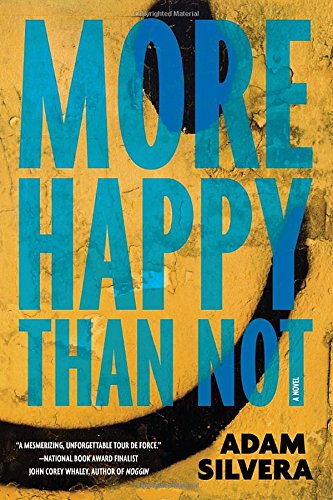
                • Cover of More Happy Than Not
                  More Happy Than Not

                  Adam Silvera · standalone novel · 2015

                  similar bynorth americaemotionalidentitygrief and lossliterary & general

                  When it first gets announced, the Leteo Institute's memory-alteration procedure seems too good to be true to Aaron Soto-miracle cure-alls don't tend to pop up in the Bronx projects. Aaron can't forget how he's grown up poor, how his friends all seem to shrug him off, and how his father committed suicide in their one bedroom apartment. He has the support of his patient girlfriend, if not necessarily his distant brother and overworked mother, but it's not enough. Then Thomas shows up. He doesn't mind Aaron's obsession over the Scorpius Hawthorne books and has a sweet movie set-up on his roof. There are nicknames. Aaron's not only able to be himself, but happiness feels easy with Thomas. The love Aaron discovers may cost him what's left of his life, but since Aaron can't suddenly stop being gay Leteo may be the only way out.

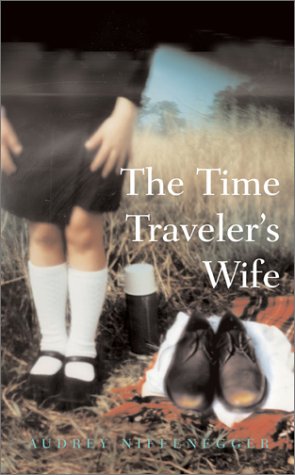
                • Cover of The Time Traveler's Wife
                  The Time Traveler's Wife

                  Audrey Niffenegger · standalone novel · 2003

                  similar byemotionalgrief and lossnorth americabittersweet+1 more

                  The Time Traveler's Wife is the debut novel by American author Audrey Niffenegger, published in 2003. It is a love story about Henry, a man with a genetic disorder that causes him to time travel unpredictably, and about Clare, his wife, an artist who has to cope with his frequent absences. Niffenegger, who was frustrated with love when she began the novel, wrote the story as a metaphor for her failed relationships. The tale's central relationship came to Niffenegger suddenly and subsequently supplied the novel's title. The novel has been classified as both science fiction and romance.

                • Cover of Flowers for Algernon
                  Flowers for Algernon

                  Daniel Keyes · standalone novel · 1966

                  similar bynorth americaemotionalidentity+1 more

                  A man with a low IQ becomes the subject of an experimental medical procedure which raises his IQ well over genius level.

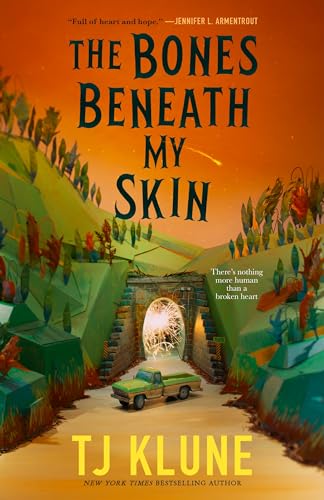
                • Cover of The Bones Beneath My Skin
                  The Bones Beneath My Skin

                  TJ Klune · standalone novel · 2022

                  similar bynorth americaemotionalgrief and losslate 20th centuryfantasy+1 more

                  There's nothing more human than a broken heart. In the spring of 1995, Nate Cartwright has lost his parents are dead, his only brother wants nothing to do with him, and he's been fired from his job as a journalist in Washington, DC. With nothing left to lose, he returns to his family's summer cabin outside the small mountain town of Roseland, Oregon, to try and find some sense of direction. The cabin should be empty. It's not. Inside is a man named Alex. And with him is an extraordinary ten-year-old girl who calls herself Artemis Darth Vader. Artemis, who isn't exactly as she appears. Soon it becomes clear that Nate must make a let himself drown in the memories of his past, or fight for a future he never thought possible. Because the girl is special. And forces are descending upon them who want nothing more than to control her.

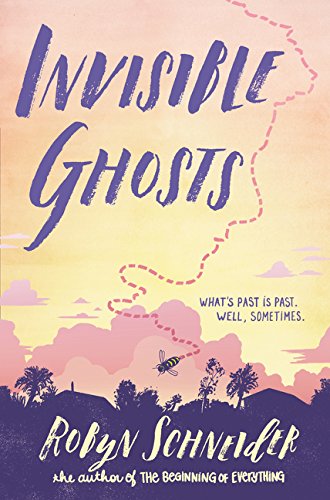
                • Cover of Invisible Ghosts
                  Invisible Ghosts

                  Robyn Schneider · standalone novel · 2018

                  similar bynorth americaemotionalgrief and lossbittersweetliterary & general+1 more

                  Rose Asher believes in ghosts. She should, since she has one for a best friend: Logan, her annoying, Netflix-addicted brother, who is forever stuck at fifteen. But Rose is growing up, and when an old friend moves back to Laguna Canyon and appears in her drama class, things get complicated. Jamie Aldridge is charming, confident, and a painful reminder of the life Rose has been missing out on since her brother's death. She watches as Jamie easily rejoins their former friends--a group of magnificently silly theater nerds--while she struggles to choose between the boy who makes her feel alive and the brother she isn't ready to lose.

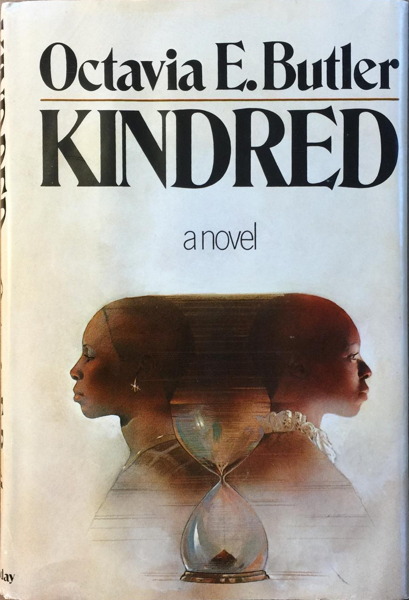
                • Cover of Kindred
                  Kindred

                  Octavia E. Butler · standalone novel · 1979

                  similar bynorth americaemotional19th centuryhistorical fiction+2 more

                  Kindred (1979) is a novel by American writer Octavia E. Butler that incorporates time travel and is modeled on slave narratives. Widely popular, it has frequently been chosen as a text by community-wide reading programs and book organizations, and for high school and college courses.

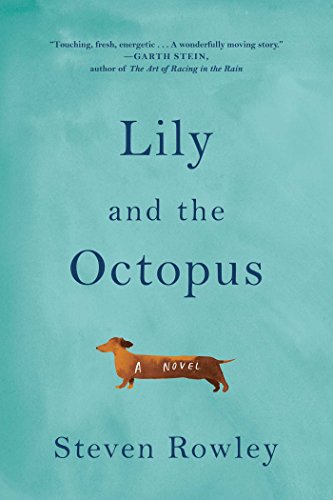
                • Cover of Lily and the Octopus
                  Lily and the Octopus

                  Steven Rowley · standalone novel · 2016

                  similar bynorth americaemotionalgrief and lossbittersweetliterary & general

                  Lily and the Octopus is the 2016 debut novel of Steven Rowley.

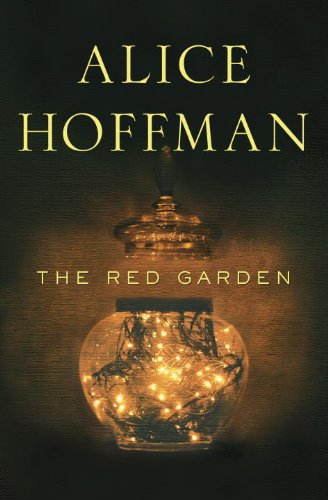
                • Cover of The Red Garden
                  The Red Garden

                  Alice Hoffman · standalone novel · 2011

                  similar bynorth americagrief and lossliterary & general19th centuryhistorical fiction+2 more

                  Traces the multi-generational story of wintry Blackwell town through the experiences of such characters as a wounded Civil War solider who is saved by a passionate neighbor and a woman who meets a fiercely human historical figure.

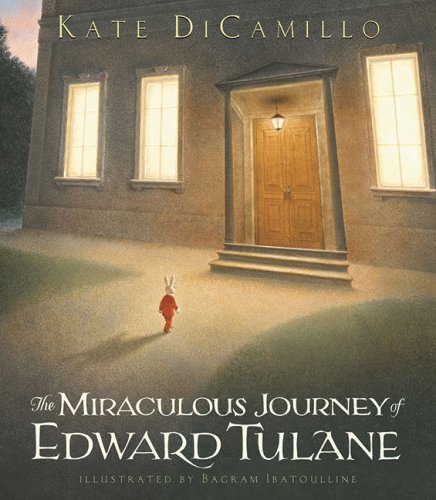
                • Cover of The Miraculous Journey of Edward Tulane
                  The Miraculous Journey of Edward Tulane

                  Kate DiCamillo · standalone novel · 2006

                  similar byemotionalidentitygrief and lossbittersweetfantasy

                  The Miraculous Journey of Edward Tulane is a 2006 children's novel by American author Kate DiCamillo and illustrated by Bagram Ibatoulline. Following the life of a china rabbit, the book won the 2006 Boston Globe-Horn Book Award in the Fiction category. Scholarly readings of this novel have examined the work from the lens of spirituality and Christian religious studies, human development, and clinical psychology.

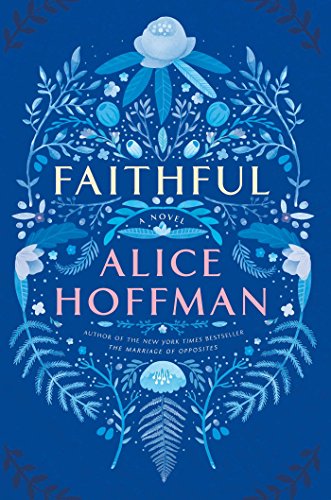
                • Cover of Faithful
                  Faithful

                  Alice Hoffman · standalone novel · 2016

                  similar bynorth americaemotionalidentitygrief and lossliterary & general

                  Growing up on Long Island, Shelby Richmond is an ordinary girl until one night an extraordinary tragedy changes her fate. Her best friend's future is destroyed in an accident, while Shelby walks away with the burden of guilt. What happens when a life is turned inside out? When love is something so distant it may as well be a star in the sky? Faithful is the story of a survivor, filled with emotion--from dark suffering to true happiness--a moving portrait of a young woman finding her way in the modern world. A fan of Chinese food, dogs, bookstores, and men she should stay away from, Shelby has to fight her way back to her own future. In New York City she finds a circle of lost and found souls--including an angel who's been watching over her ever since that fateful icy night.

                • Cover of Phases of Gravity
                  Phases of Gravity

                  Dan Simmons · standalone novel · 1989

                  similar byidentitygrief and lossnorth americaliterary & generallate 20th century

                  Follows Richard Baedecker, an Apollo astronaut who walked on the moon, through his midlife crisis. He meanders through India, Glen Oak Illinois, the mountains of Colorado, and the coastline of Oregon, checking up on his son and his former Apollo crewmates.

                • Cover of Replay
                  Replay

                  Ken Grimwood · standalone novel · 1987

                  similar byidentitygrief and lossbittersweetlate 20th centuryfantasy

                  Replay is a fantasy novel by American writer Ken Grimwood, first published by Arbor House in 1987. It won the 1988 World Fantasy Award for Best Novel.

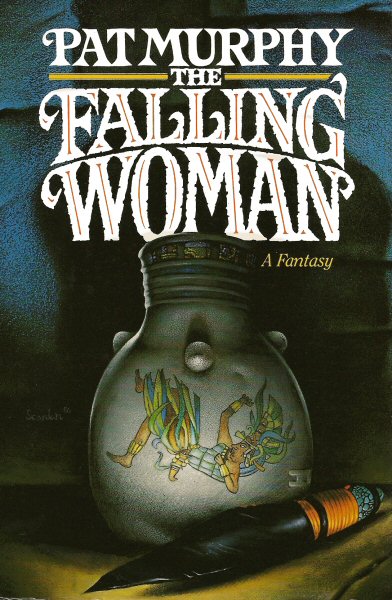
                • Cover of The Falling Woman
                  The Falling Woman

                  Pat Murphy · standalone novel · 1986

                  similar bynorth americaidentitygrief and lossfantasyliterary & general

                  The Falling Woman is a 1986 contemporary psychological fantasy novel by Pat Murphy. The book won the Nebula Award for Best Novel in 1987.

                • Cover of Dr. Heidenhoff's Process
                  Dr. Heidenhoff's Process

                  Edward Bellamy · standalone novel · 1880

                  similar bynorth americaidentitygrief and loss19th centuryliterary & general+1 more

                  Dr. Heidenhoff's Process is an early novel by American author Edward Bellamy. The book was first published by D. Appleton & Company in 1880.

                • Cover of Lincoln in the Bardo
                  Lincoln in the Bardo

                  George Saunders · standalone novel · 2017

                  similar bynorth americagrief and lossliterary & general19th centurymultiple povhistorical fiction

                  Lincoln in the Bardo is a 2017 experimental novel by American writer George Saunders. It is Saunders's first full-length novel and was The New York Times hardcover fiction bestseller for the week of March 5, 2017.

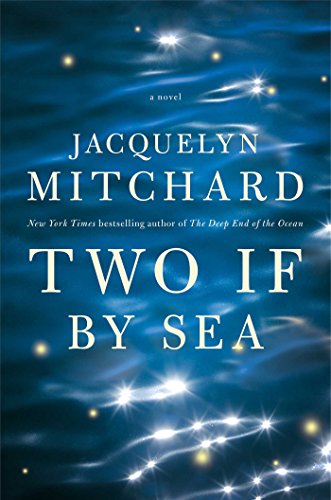
                • Cover of Two If by Sea
                  Two If by Sea

                  Jacquelyn Mitchard · standalone novel · 2016

                  similar bynorth americaemotionalgrief and lossbittersweetliterary & general

                  "Just hours after his wife and her entire family perish in the Christmas Eve tsunami in Brisbane, American expat and former police officer Frank Mercy goes out to join his volunteer rescue unit and pulls a little boy from a submerged car, saving the child's life with only seconds to spare. In that moment, Frank's own life is transformed. Not quite knowing why, Frank sidesteps the law, when, instead of turning Ian over to the Red Cross, he takes the boy home to the Midwestern farm where he grew up. Not long into their journey, Frank begins to believe that Ian has an extraordinary, impossible telepathic gift; but his only wish is to protect the deeply frightened child. As Frank struggles to start over, training horses as his father and grandfather did before him, he meets Claudia, a champion equestrian and someone with whom he can share his life and his fears for Ian. Both of them know that it will be impossible to keep Ian's gift a secret forever. Already, ominous coincidences have put Frank's police instincts on high alert, as strangers trespass the quiet life at the family farm"--Goodreads.com.