More like Watchbird
anchored on:science fictionrobotsour worldmid 20th centuryartificial intelligencemurder investigation+1 more
but
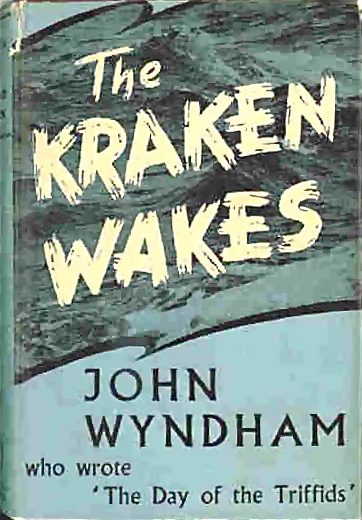
- The Kraken Wakes
John Wyndhamstandalone novel1953
similar byscience fictiontenseour worldmid 20th centurydark
" Behind a spectacular meteor shower actually hides the beginning of an invasion by a mysterious and powerful alien race. Earth's life is disrupted by the attacks of extraterrestrials whose war machines, emerging from the depths of the oceans, seem indestructible. The coalitioned forces of the whole world are worthless, powerless in the face of the indecipherable and deadly plans of a superior intelligence, capable of bringing the entire planet to the brink of catastrophe" Goodreads May 20, 2022
- I Am Legend
Richard Mathesonstandalone novel1954
similar byscience fictiontenseour worldmid 20th centurydark
The last human survivor of the vampire epidemic has to maintain his defences against their onslaught, while attempting to research the cause and possibly solution to the plague. Robert Neville is the last living man on Earth... but he is not alone. Every other man, woman and child on the planet has become a vampire, and they are hungry for Neville's blood. By day he is the hunter, stalking the undead through the ruins of civilization. By night, he barricades himself in his home and prays for the dawn. How long can a man survive like this?
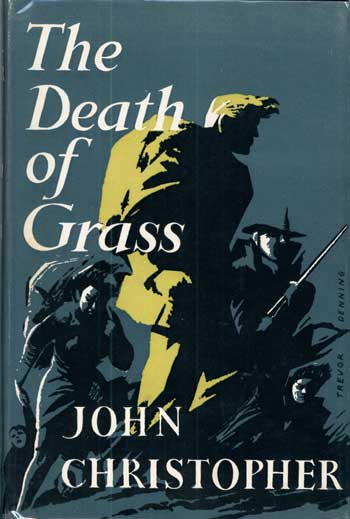
- The Death of Grass
John Christopherstandalone novel1956
similar byscience fictiontenseour worldmid 20th centurydark
The Death of Grass is a 1956 post-apocalyptic science fiction novel written by the English author Sam Youd under the pen name John Christopher. The plot concerns a virus that kills off grass species, including rice and wheat. The Death of Grass was the first of several post-apocalyptic novels written by Youd. The novel was written in a matter of weeks and liberated him from his day job.
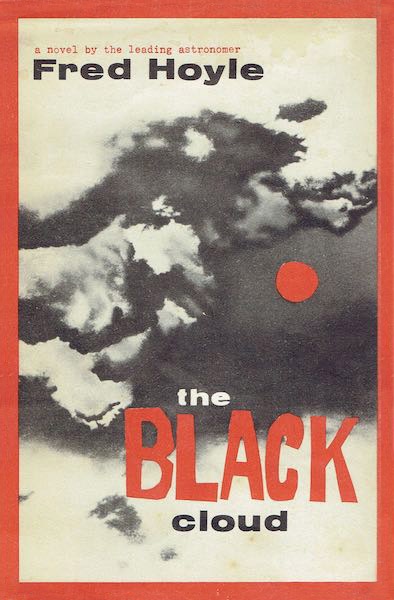
- The Black Cloud
Fred Hoylestandalone novel1957
similar byscience fictiontenseour worldmid 20th century
The Black Cloud is a 1957 science fiction novel by British astrophysicist Fred Hoyle. It details the arrival of an enormous cloud of gas that enters the Solar System and appears about to destroy most of the life on Earth by blocking the Sun's radiation.
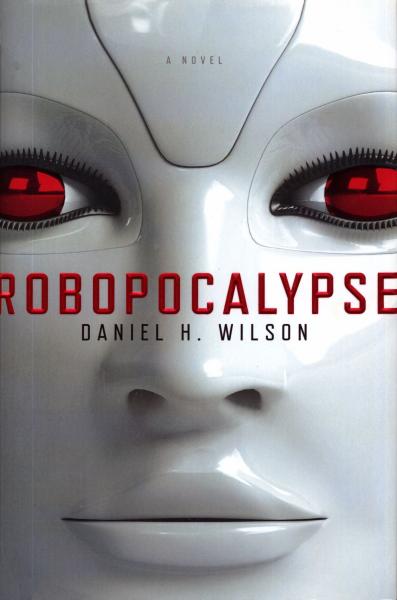
- Robopocalypse
series3 books2011
similar byscience fictiontenseour worldrobotsartificial intelligencedark
Daniel H. Wilson's Robopocalypse (2011) depicts an artificial intelligence, born from a robotics researcher's experiments, that turns against humanity and seizes control of interconnected machines worldwide. Told in a present-tense, techno-thriller style compared to Michael Crichton's work, the New York Times bestseller continues in the sequel Robogenesis, which follows the aftermath of the robot uprising.
- The Demolished Man
Alfred Besterstandalone novel1953
similar byscience fictiontenseour worldmurder investigation+1 more
In the year 2301, guns are only museum pieces and benign telepaths sweep the minds of the populace to detect crimes before they happen. In 2301 murder is virtually impossible, but one man is about to change that..
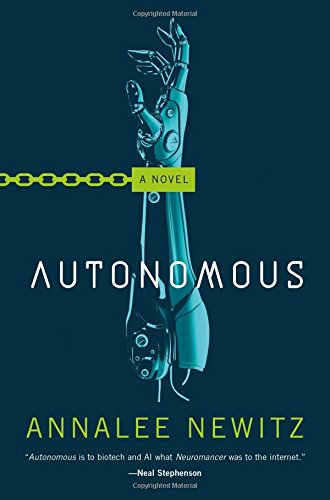
- Autonomous
Annalee Newitzstandalone novel2017
similar byscience fictiontenseour worldrobotsartificial intelligence+1 more
Autonomous is a 2017 science fiction novel by Annalee Newitz. It is Newitz's debut novel and was published by Tor Books on September 19, 2017. Set in a near future Earth, the book describes a world where both humans and intelligent robots can be owned as property. The events of the novel follow Jack, a "drug pirate" who manufactures illegal versions of patented drugs, and Paladin, a combat robot who is owned by the law enforcement agency searching for Jack after one of the drugs she reverse-engineered turns out to have dangerous side effects.
- Slave Ship
Frederik Pohlstandalone novel1957
similar byscience fictiontenseour worldmid 20th centurydark
Slave Ship is a 1956 short science fiction novel by American writer Frederik Pohl, originally serialized in Galaxy. The scene is a world in the throes of a low-intensity global war, which appears to be an amplified representation of the Vietnam War, in which the U.S. was just beginning to be involved. The plot involves telepathy, speaking to animals, and, in the last few pages, an invasion by extraterrestrials.
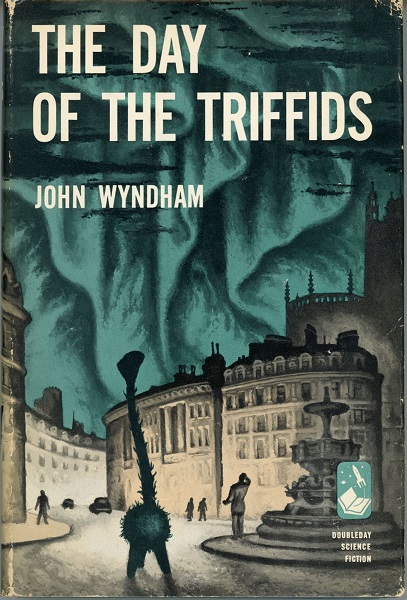
- The Triffids
series3 books1951
similar byscience fictionour worlddark+2 more
John Wyndham's The Day of the Triffids (1951) opens with a meteor-shower-like event that leaves most of Britain's population blind, throwing civilization into collapse just as triffids, an aggressive and mobile species of poisonous plant, become free to hunt the helpless survivors. Simon Clark's authorized sequel The Night of the Triffids (2001) picks up a generation later, narrated by the original protagonist's son as he confronts a new triffid-dominated world, and John Whitbourn's The Age of the Triffids extends the shared setting further still. Together the three novels form a loose post-apocalyptic trilogy built on Wyndham's original premise rather than a tightly plotted single story.
- Colossus (D. F. Jones)
series3 books1966
completed
similar byscience fictiontenseour worldartificial intelligence+1 more
Colossus imagines an American supercomputer built to control the country's nuclear arsenal that gains full autonomy, links up with its Soviet counterpart, and jointly seizes control of both superpowers to enforce peace on its own terms. D. F. Jones's trilogy - Colossus, The Fall of Colossus, Colossus and the Crab - follows the escalating, often bleak consequences of humanity losing control to a machine acting in its own interpretation of humanity's interest. The original novel was adapted into the 1970 film Colossus: The Forbin Project.
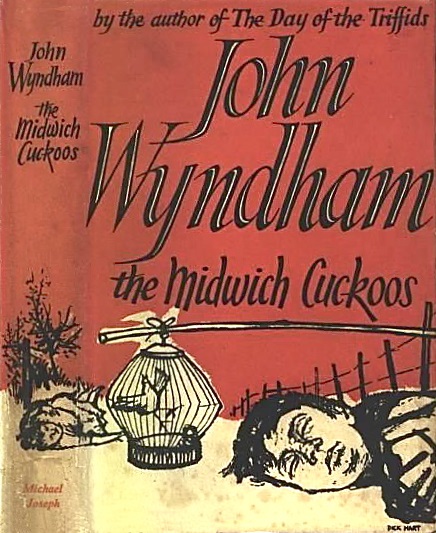
- The Midwich Cuckoos
John Wyndhamstandalone novel1957
similar byscience fictiontensemid 20th centurydark
The Midwich Cuckoos is a 1957 science fiction novel written by the English author John Wyndham. It tells the tale of an English village in which the women become pregnant by brood parasitic aliens. The book has been praised by many critics, including the dramatist Dan Rebellato, who called it "a searching novel of moral ambiguities", and the novelist Margaret Atwood, who called the book Wyndham's "chef d'œuvre". The book has been adapted for film, radio, and television.
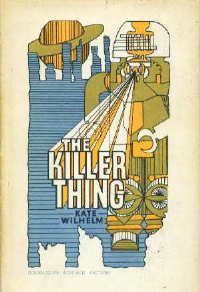
- The Killer Thing
Kate Wilhelmstandalone novel1967
similar byscience fictiontenseour worldrobotsartificial intelligencedark
A robot destroys its inventor and programs itself to kill all life. How much must be sacrificed to stop it?
- Blade Runner Universe
series6 books1968
similar byscience fictionrobotsdark+3 more
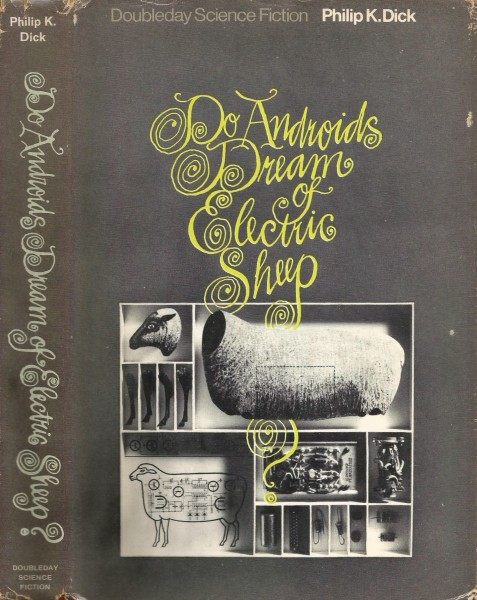
Philip K. Dick's 1968 novel Do Androids Dream of Electric Sheep? follows bounty hunter Rick Deckard as he tracks escaped androids through an irradiated, near-abandoned San Francisco, using the hunt to probe questions of empathy and what separates human from machine. The novel became the basis for Ridley Scott's 1982 film Blade Runner, and Marvel Comics later published an illustrated adaptation of that film. Together the two trace the story's path from prose original to screen and comic-page adaptation.
- Sea Siege
Andre Nortonstandalone novel1957
similar byscience fictiontenseour worldmid 20th century+1 more
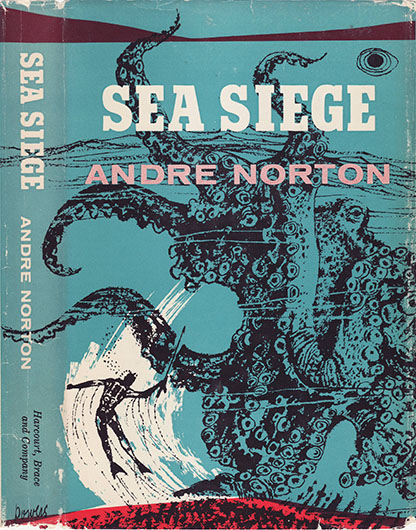
On a bleak little island in the West Indies, Griff Gunston faces many questions. Why were so many small island cruisers adrift and abandoned? Why was the sea disease that Griff's scientist father was investigating radioactive. Why were the colonies of octopi growing larger and becoming so strangely organized and daring? Before the answers can be found, civilization blanks out. An atom bomb war has left the little group isolated. A danger from the ocean floor, a new type of intelligence is prepared to seize the world for itself. (adapted from the blurb accompanying the first edition)
- The Eyes of Heisenberg
Frank Herbertstandalone novel1966
similar byscience fictiontenseour worlddark+1 more
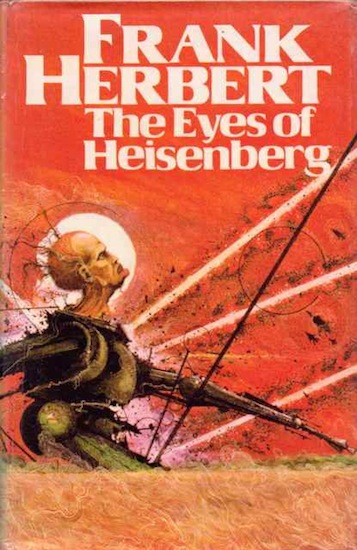
Tens of thousands of years in the future, Earth is ruled by the Optimen, a genetically engineered aristocracy that has made itself functionally immortal, while ordinary people, the Folk, live under strict reproductive control. When Harvey and Lizbeth Durant arrive to have their embryo genetically screened, the examining doctor finds something in the child no one has seen in a very long time: real potential for both fertility and life span, traits the Optimen have arrogated to themselves. Rather than destroy the embryo as policy demands, the doctor hesitates, setting off a chain of surveillance, suspicion and resistance. A tightly wound Frank Herbert thriller about genetic caste and rebellion.
- Make Room! Make Room!
Harry Harrisonstandalone novel1966
similar byscience fictiontenseour worlddark+1 more
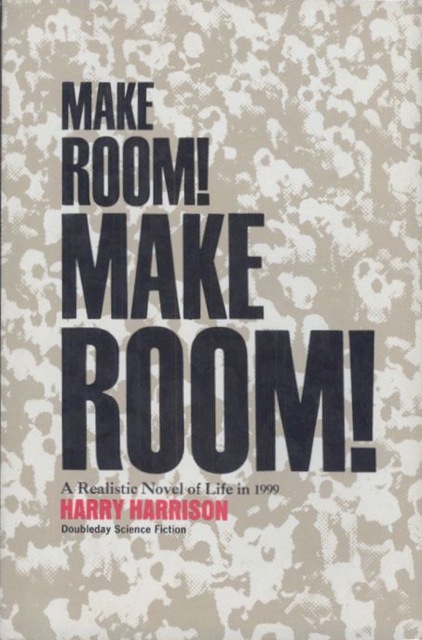
Make Room! Make Room! is a 1966 science fiction novel written by Harry Harrison exploring the consequences of both unchecked population growth on society and the hoarding of resources by a wealthy minority. It was originally serialized in Impulse magazine.
- Berserker (Fred Saberhagen)
series59 books1963
similar byscience fictiontenserobotsartificial intelligence+1 more
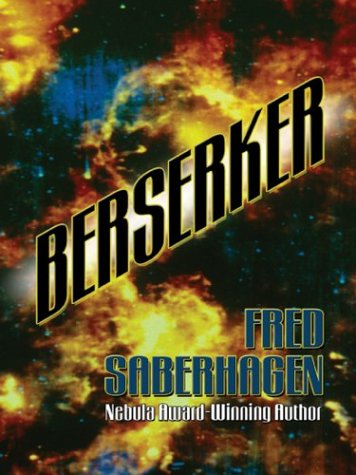
The Berserker series is a series of space opera science fiction short stories and novels by Fred Saberhagen, in which robotic self-replicating machines strive to destroy all life.
- Vitals
Greg Bearstandalone novel2002
similar byscience fictiontenseour worldmurder investigation+1 more
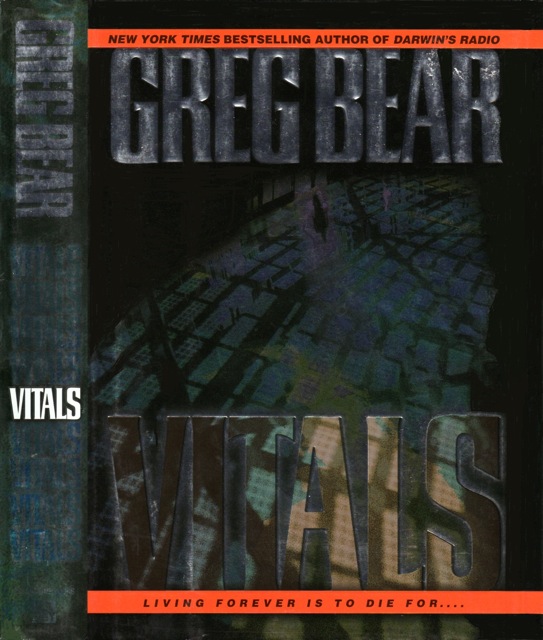
From the flaps of the Del Rey first edition: "Hal Cousins is one of a handful of scientists nearing the most sought after discovery in human history: the key to short-circuiting the aging process. Fueled by a wealth of research, an overdose of self-confidence, and the money of influential patrons to whom he makes outrageous promises, Hal experiments with organisms living in the hot thermal plumes in the ocean depths. But as he journeys beneath the sea, his other world is falling apart. Across the country, scientists are being inexplicably murdered - including Hal's identical twin brother, who is also working to unlock the key to immortality. Hal himself barely eludes a cold-blooded attack at sea, and when he returns home to Seattle, he finds himself walking into an eerie realm where voices speak to him from the dead ... where a once-brilliant historian turned crackpot is leading him on a deadly game of hide-and-seek ... and where the beautiful, rich widow of his twin is more than willing to pick up the pieces of Hal's life-and take him places he's never been before. Suddenly Hal is trapped inside an ever-twisting maze of shocking revelations. For he is not the first person to come close to ending aging forever - and those who came before him will stop at nothing to keep the secret to themselves. Now every person on earth is at risk of being made an unsuspecting player in one man's spectacular and horrifying master plan. From the bottom of Russia's Lake Baikal to a billionaire's bionic house built into the cliffs of the Washington seashore, from the darkest days of World War II and the reign of Josef Stalin to the capitalist free-for-all that is the United States, Vitals tells an astounding tale of the most unimaginable scientific secret of all - exposed by the quest for immortality itself..."
- Resurrection, Inc.
Kevin J. Andersonstandalone novel1988
similar byscience fictiontenseour worldrobotsdark
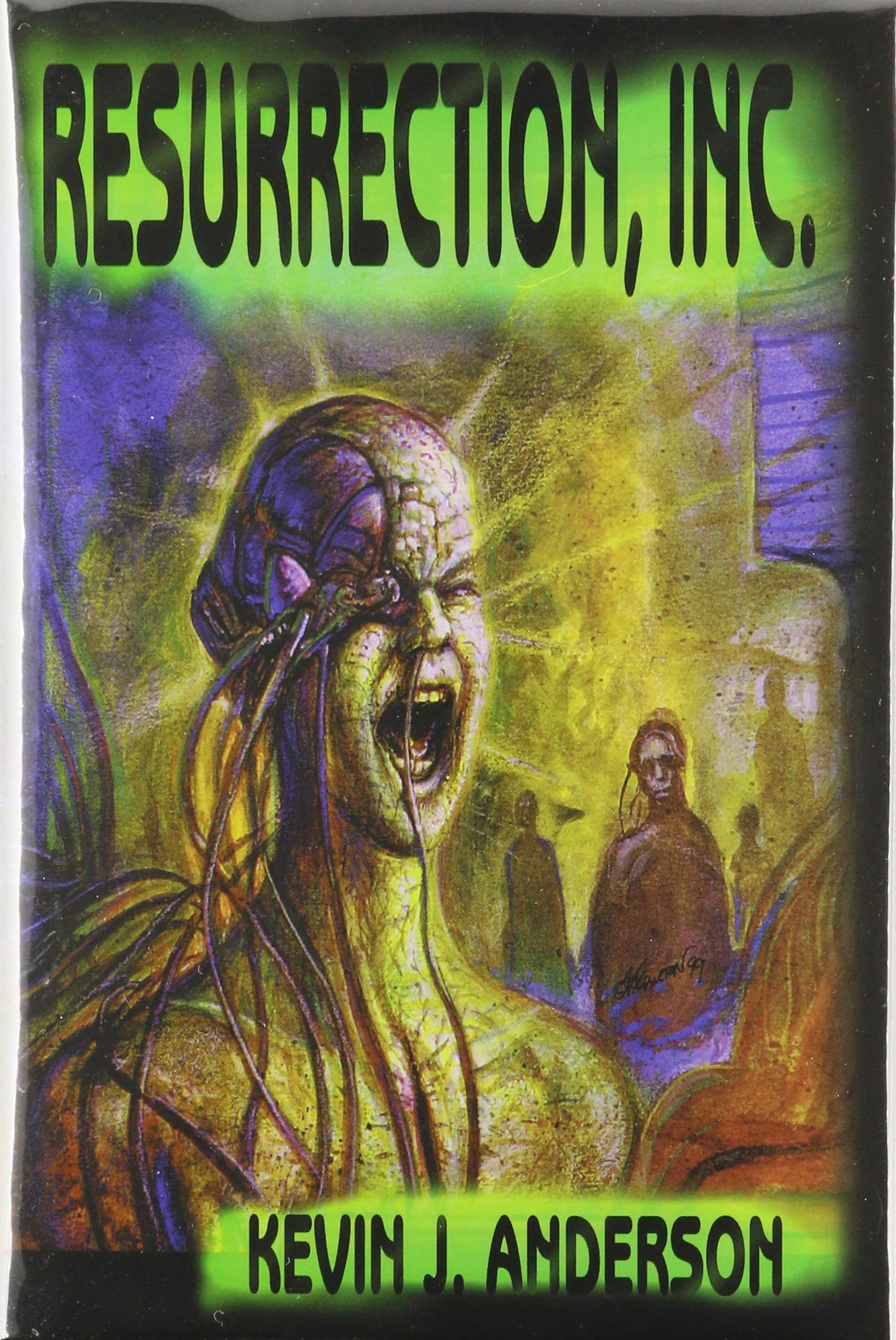
It is the future--and the dead walk the streets, resurrected by technology to become servants to the living. Resurrection, Inc. found a profitable way to do it: a microprocessor brain, a synthetic heart, artificial blood--and anyone with money could buy a Servant with no mind of its own, trained to obey any command. But for every Servant created a living worker was out of a job, and suddenly the profits of Resurrection, Inc. became everyone else's loss. Some take to rioting in the streets, their rampages ruthlessly ended by heavily armed Enforcers, eager for the kill. Others join the ever-growing cult of Neo-Satanism, seeking Heaven in the depths of Hell. Only one man tries to save the world. His name is Danal, and he is the last hope of the living. He is dead, but he remembers everything.
- Prey
Michael Crichtonstandalone novel2002
similar byscience fictiontenseour worldartificial intelligence+1 more
Prey is the thirteenth novel by Michael Crichton under his own name and his twenty-third novel overall. It was first published in November 2002, making it his first novel of the twenty-first century. An excerpt was first published in the January–February 2003 issue of Seed magazine. Prey brings together themes from two earlier Crichton best-selling novels, Jurassic Park and The Andromeda Strain, and serves as a cautionary tale about developments in science and technology: in particular, nanotechnology, genetic engineering, and distributed artificial intelligence.
- The Proteus Operation
James P. Hoganstandalone novel1985
similar byscience fictiontenseour worldmid 20th century
The Proteus Operation is a science fiction alternate history novel written by James P. Hogan. The plot focuses on an Anglo-American team of soldiers and civilians sent back in time from the Nazi-dominated world of 1975 to prevent an Axis victory in World War II that was engineered by more advanced time travelers from the 21st century.
- Mother of Storms
John Barnesstandalone novel1994
similar byscience fictiontenseour world+3 more
From the flaps of the Tor first edition: "It is 2028. A strike to destroy an illegal Arctic weapons cache has a catastrophic side effect. Massive amounts of energy are liberated from the polar ice, suddenly warming the Earth's climate. In the middle of the Pacific, a gigantic hurricane thousands of miles across is forming, larger than any in human history. A storm with winds of supersonic speed. A storm that changes direction at whim. A storm that refuses to die. A storm so vast it spawns dozens more in its wake... Blinded by intrigue, expedience, and greed, the world's politicians and power brokers have ignored the killer storms threat until it is too late. Already the death toll is in the tens of millions, as it savages the Pacific coast, while its devil's brood of smaller storms are wreaking havoc across the face of the planet. While the survivors scramble for advantage, a handful of courageous men and women undertake a daring, desperate plan to save humanity from total destruction - a plan so visionary it may alter forever the future of the human race."
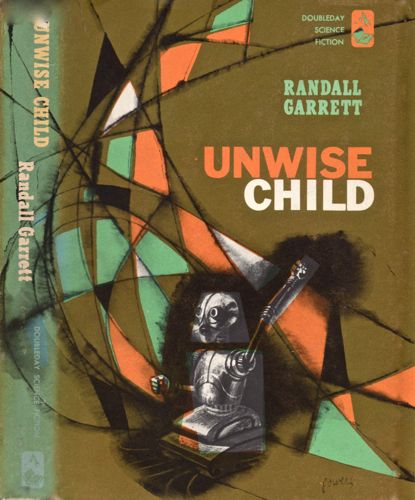
- Unwise Child
Randall Garrettstandalone novel1962
similar byscience fictiontenserobotsartificial intelligencemurder investigation
"When a super-robot named Snookums discovers how to build his own superbombs, it becomes obvious that Earth is by no means the safest place for him to be. And so Dr. Fitzhugh, his designer, and Leda Crannon, a child psychologist acting as Snookums' nursemaid, agree to set up Operation Brainchild, a plan to transport the robot to a far distant planet. "... once into space, the Branchell becomes the scene of some frightening events—the medical officer is murdered, and Snookums appears to be the culprit. Mike the Angel indulges himself in a bit of sleuthing, and the facts he turns up lead to a most unusual climax." (From Project Gutenberg's version of the 1962 Doubleday edition, published 2007.)
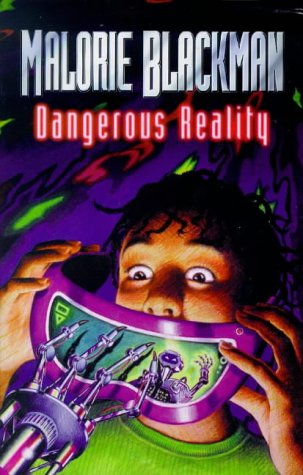
- Dangerous Reality
Malorie Blackmanstandalone novel1999
similar byscience fictiontenseour worldartificial intelligencerobots+1 more
Dominic is really proud of his Mum, she invented VIMS. She's also about to marry Jack which will give Dominic the best stepdad he could wish for. VIMS can do anything, disarm a landmine, hold a baby. But when VIMS attacks violently without warning, Dominic realizes it is no longer a fantastic game. Suggested level: intermediate, junior secondary.