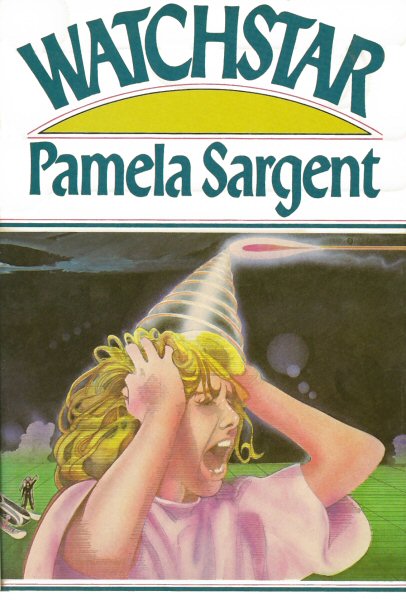
More like Watchstar
anchored on:science fictionother star systemsfar futuresurvivalcoming of ageidentity+1 more
but
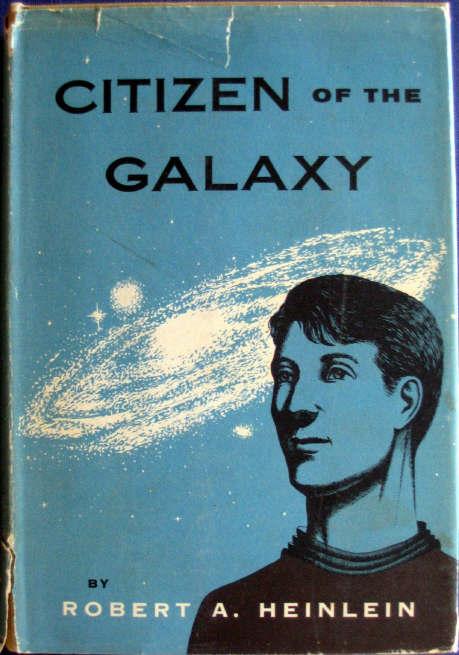
- Citizen of the Galaxy
Robert A. Heinleinstandalone novel1957
similar byscience fictionfar futureother star systemscoming of ageidentity+1 more
On a planet far distant from Earth, a lame beggar buys a young boy slave who has forgotten his origins. The beggar is more than he seems, and gives the boy an extensive education while employing him as an observer of activity in their city. Years later, the beggar is captured by the government, and the youth must escape the planet.
- The Einstein Intersection
Samuel R. Delanystandalone novel1967
similar byscience fictioneeriefar futureidentity+1 more
The Einstein Intersection is a 1967 science fiction novel by Samuel R. Delany. The title is a reference to Einstein's Theory of Relativity connecting to Kurt Gödel's Constructible universe, which is an analogy to science meeting philosophy. The original publisher, Ace Books, changed Delany's originally intended title from A Fabulous, Formless Darkness for commercial reasons.
- Dune
series20 books1963
part of Dune Universe
similar byscience fictionfar futureother star systemsdesert+1 more
Frank Herbert's Dune Chronicles opens with 1965's Dune, set on the desert planet Arrakis where House Atreides takes control of the only source of the vital spice melange and young Paul Atreides is pulled into a struggle over its politics and religion. Herbert carried the story forward across five further novels — Dune Messiah, Children of Dune, God Emperor of Dune, Heretics of Dune, and Chapterhouse: Dune — following Paul's line over the following millennia, before Brian Herbert and Kevin J. Anderson later extended the saga. Many other editions of these six novels are omnibus and box-set repackagings rather than separate stories.
- Tunnel in the Sky
Robert A. Heinleinstandalone novel1955
similar byscience fictionfar futureother star systemsyoung adultsurvivalcoming of age
As the final test of a survivalist/explorer class, teenagers are dumped on an alien planet to use their skills while awaiting pickup. But something has gone wrong, and they find they are on their own.
- Stations of the Tide
Michael Swanwickstandalone novel1991
similar byscience fictioneeriefar futureother star systems+1 more
Stations of the Tide is a science fiction novel by American author Michael Swanwick. Prior to being published in book form in 1991, it was serialized in Isaac Asimov's Science Fiction Magazine in two parts, starting in mid-December 1990.
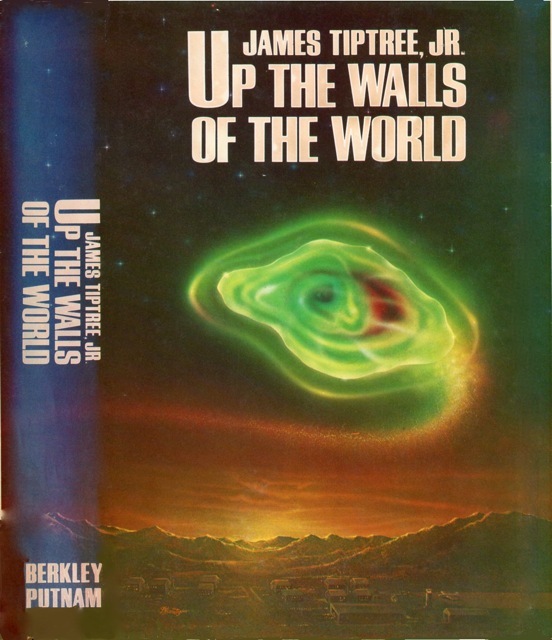
- Up the Walls of the World
James Tiptree & Jr.standalone novel1978
similar byscience fictionfar futureother star systemspsychic powers+2 more
Up the Walls of the World is a 1978 science fiction novel by American author Alice Sheldon, who wrote under the pen name of James Tiptree, Jr. It was the first novel she published, having until then worked and built a reputation only in the field of short stories.
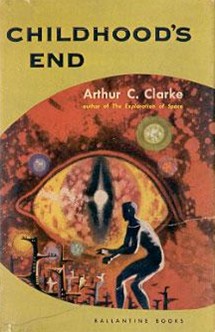
- Childhood's End
Arthur C. Clarkestandalone novel1953
similar byscience fictionidentity+2 more
Childhood's End is a 1953 science fiction novel by the British author Arthur C. Clarke. The story follows a peaceful alien invasion of Earth by mysterious Overlords, whose arrival begins decades of apparent utopia under indirect alien rule, at the cost of human identity and culture.
- Creatures of Light and Darkness
Roger Zelaznystandalone novel1969
similar byscience fictioneeriefar futureother star systems
Creatures of Light and Darkness is a 1969 science fiction novel by American writer Roger Zelazny. Long out of print, it was reissued in April 2010. The novel is set in the far future, with humans on many worlds. Some humans have god-like powers or perhaps are actually gods—the names and aspects of various Egyptian gods are used. Elements of horror and technology are mixed, and the novel shares elements with cyberpunk.
- Kefahuchi Tract Trilogy
series3 books2002
similar byscience fictionfar futureother star systems+2 more
M. John Harrison's Kefahuchi Tract trilogy circles a strange, physics-breaking anomaly in deep space that draws scientists, smugglers, and drifters into its pull across different eras. Light moves between a near-future timeline and a far-future one drawn to the Tract itself; its sequel Nova Swing stays within one future period, where a fragment of the anomaly's altered space bleeds into the run-down port city of Saudade, giving the book a noir, Roadside-Picnic-like atmosphere; Empty Space concludes the sequence. The three novels share a setting and mood more than a continuous plot or cast.
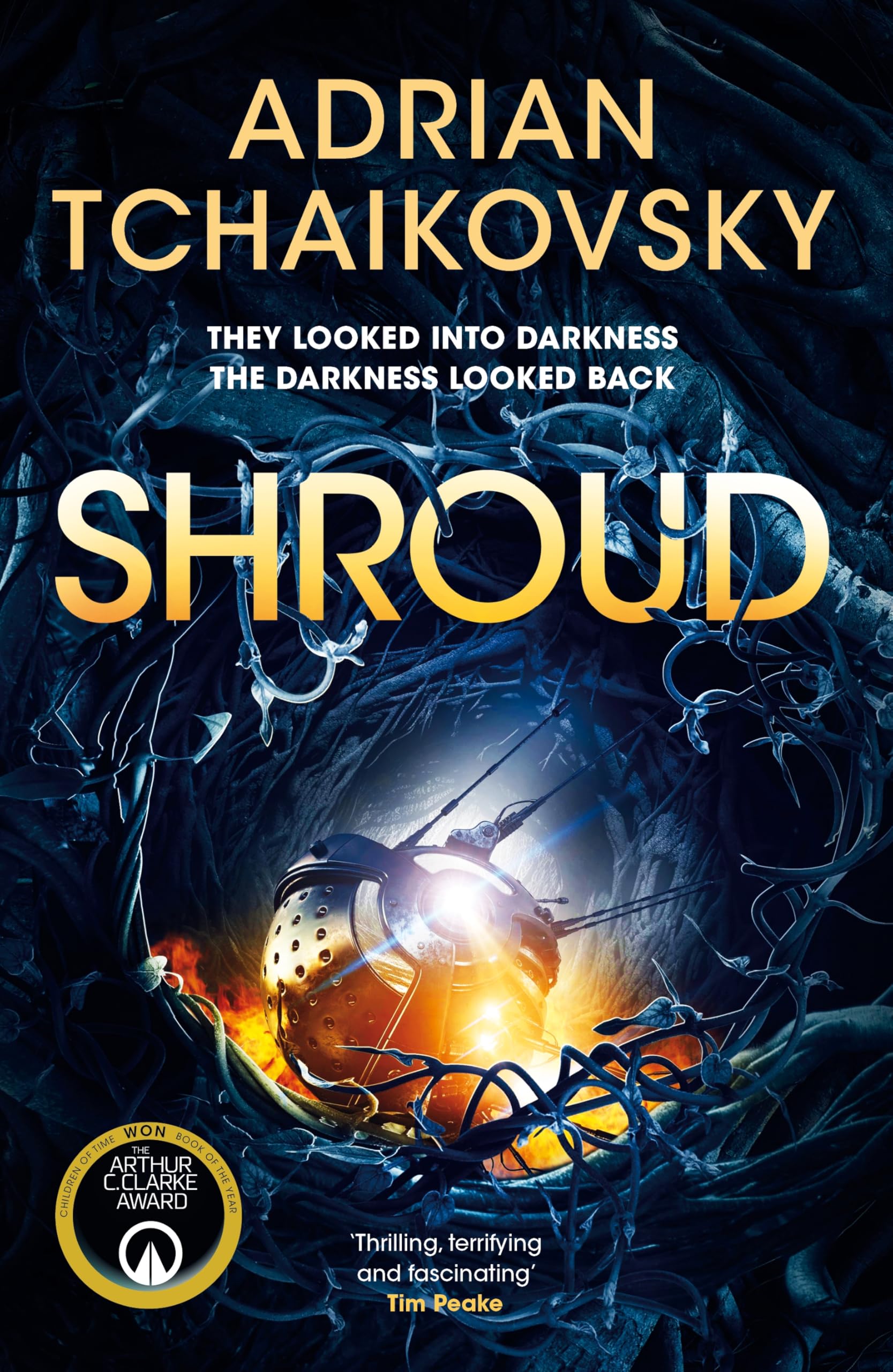
- Shroud (Adrian Tchaikovsky)
series2 books2024
similar byscience fictionfar futureother star systemssurvival+1 more
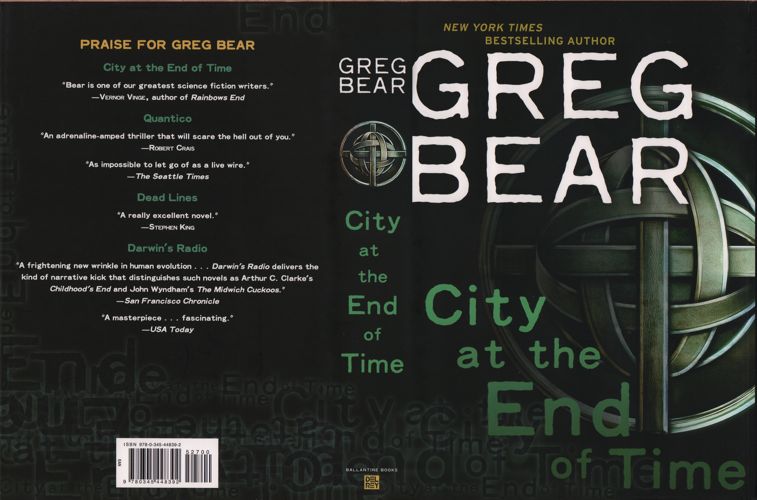
- City at the End of Time
Greg Bearstandalone novel2008
similar byscience fictioneeriefar future+2 more
City at the End of Time is a 2008 science fiction novel by American writer Greg Bear. It was published in August 2008 by Del Rey in the United States, and Gollancz in the United Kingdom. The story follows three drifters in present-day Seattle who are tormented by strange dreams of the Kalpa, a city one hundred trillion years in the future. The Kalpa is attempting to ward off the Typhon, an inexplicable entity that has consumed the rest of the ancient universe and broken down the laws of physics.
- The Werewolf Principle
Clifford D. Simakstandalone novel1967
similar byscience fictionfar futureidentity+1 more
From the back cover of the first DAW printing: "Andrew Blake, found in a space capsule on a distant planet, was brought back to an unfamiliar Earth, where antigravity devices had replaced the wheel and houses talk and even fly! Yet nothing was as strange as Blake's own feelings. Tormented by eerie sensations and a loss of memory, he didn't know who he really was nor exactly where he came from. His destiny only began to grow frighteningly clear when he met a weird, tassel-eared creature who darkly hinted at the truth about Blake's origins. Slowly Blake became aware of the long hushed-up "Werewolf Principle," a scientific theory buried in the past, which held the key to Blake's own fate - and the future of the human race..."
- Dune Universe
universe78 books1963
Start hereDune · Start here
similar byscience fictionfar futureother star systems+1 more
Arrakis. Dune. The desert planet, where empire runs on a single substance: the spice melange, which folds space, prolongs life, and unlocks prescience, and which exists nowhere else in the known universe. Frank Herbert's saga is a meditation dressed as an adventure — feudal houses and a secret sisterhood, engineered messiahs and the patient ecology of a world without water, all turning on the terrible gravity of who commands the spice. It reads like scripture and schemes like a war room, ten thousand years hence, among people who have outlawed the thinking machine and made instruments of themselves instead. At its heart stand Herbert's original six — Dune, Dune Messiah, Children of Dune, God Emperor of Dune, Heretics of Dune, Chapterhouse: Dune — a single deepening arc across millennia, arguing the whole way between prophecy and free will. Around that spine his son Brian Herbert and Kevin J. Anderson have raised a vast prequel architecture: Prelude to Dune, tracing the great houses a generation before Paul; Legends of Dune, reaching back to the crusade that broke the machines; the Schools of Dune cycle on the founding of Bene Gesserit, Mentat, and Navigator; the Caladan Trilogy and Heroes of Dune filling years the originals left in shadow. Many hands, dozens of volumes, one desert. What sets Dune apart is its refusal of the simple: religion is manufactured, heroes are hazards, and the sand itself — worm, water, ecology — acts as a political power. Begin where the universe did, with Frank Herbert's Dune (1965), and read the original six in order; you need nothing else to feel the full weight. The prequels are a country to explore afterward, taken by era. Beginnings are delicate times.
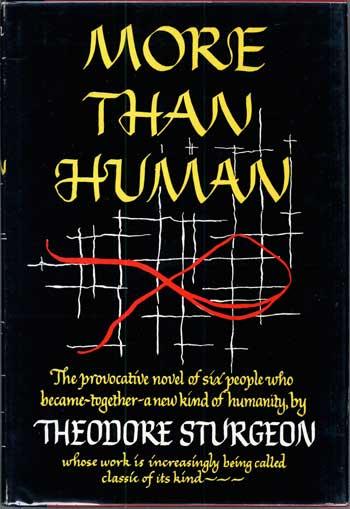
- More Than Human
Theodore Sturgeonstandalone novel1953
similar byscience fictionidentitypsychic powers+1 more
More Than Human is a 1953 science fiction fix-up novel by American writer Theodore Sturgeon. It is a revision and expansion of his 1952 novella Baby Is Three, which is bracketed by two additional parts written for the novel, "The Fabulous Idiot" and "Morality". It won the 1954 International Fantasy Award, which was also given to works in science fiction. It was additionally nominated in 2004 for a "Retro Hugo" award for the year 1954. Science fiction critic and editor David Pringle included it in his book Science Fiction: The 100 Best Novels.
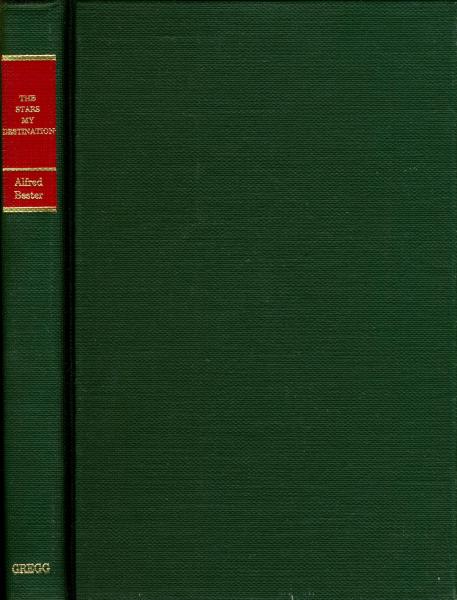
- The Stars My Destination
Alfred Besterstandalone novel1956
similar byscience fictionfar futuresurvivalidentityother star systems+1 more
When a passing spaceship refuses to rescue the lone survivor from the drifting wreck of another ship, he dedicates his life to discovering who made that decision and exacting his revenge, in the process altering human history and his own character.
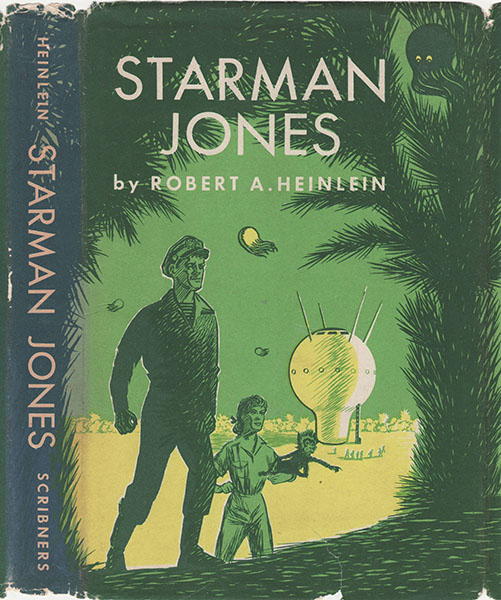
- Starman Jones
Robert A. Heinleinstandalone novel1953
similar byscience fictionfar futureyoung adultcoming of ageother star systems
Starman Jones, a 1953 science fiction novel by Robert A. Heinlein, features a farm boy who wants to go to the stars. Charles Scribner's Sons published the book as part of the Heinlein juveniles series.
- The Giver
series5 books1993
similar byscience fictionfar futureyoung adult+2 more
The Giver Quartet is a series of four books about a dystopian world by American author Lois Lowry, which consists of The Giver (1993), Gathering Blue (2000), Messenger (2004), and Son (2012). The first book won the 1994 Newbery Medal and has sold more than 50 million copies. The story takes place at an unknown point of time within the future. Each book has a different protagonist but is set in the same futuristic era.
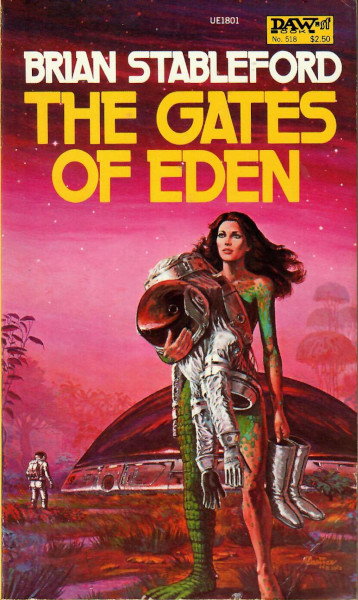
- The Gates of Eden
Brian Stablefordstandalone novel1983
similar byscience fictionfar futureother star systems+2 more
From the back cover of the DAW first edition: "Before the hyper-space vessels could go from planet to planet, stations had to be set up. And that meant manned spaceships cut off from Earth for decades. The explorer vessel Ariadne had gone toward galactic center and was considered lost - until its call was heard appealing for a xeno-biologist. Their new world was all swamp. As far as could be seen there was no intelligent species. Yet this was alarming because all inhabitable planets so far discovered had thinking inhabitants. But the nature of the planet's "people" turned out to be an enigma that had to be solved. For the alien biology there could spell doom to all the civilization of the stars... doom or a terrible unity!"
- Voorloper
Andre Nortonstandalone novel1980
similar byscience fictionfar futureother star systemssurvival+1 more
An embittered wanderer, his son, and a young girl with healing gifts explore the wastelands of a new planet, risking their lives to learn its horrible secret.
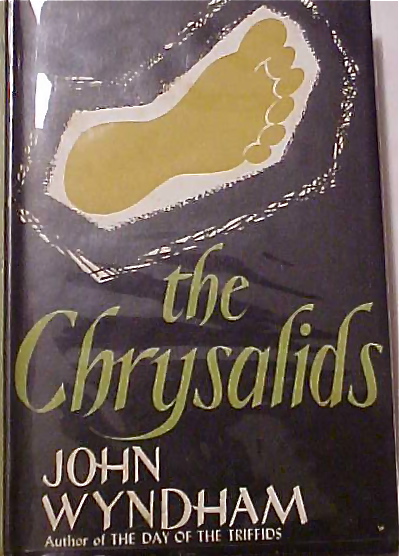
- The Chrysalids
John Wyndhamstandalone novel1955
similar byscience fictionfar futuresurvivalcoming of agepsychic powers
The Chrysalids is a science fiction novel by British writer John Wyndham, first published in 1955 by Michael Joseph. It is the least typical of Wyndham's major novels, but regarded by some as his best. An early manuscript version was entitled Time for a Change.
- Schild's Ladder
Greg Eganstandalone novel2002
similar byscience fictionfar future+2 more
Schild's Ladder is a 2002 science fiction novel by Australian author Greg Egan. The book derives its name from Schild's ladder, a construction in differential geometry, devised by the mathematician and physicist Alfred Schild.