Loreful
HomeDiscover
Search series, authors…⌘K
Loreful

Reading orders for SF/F series and shared universes — with your place kept in every one.

Explore

UniversesSeriesWorksAuthorsAtlas

Help

FAQAboutSite map

Account & legal

Sign inCreate accountPrivacyTerms

Data

Built on ISFDB, Wikipedia, Wikidata and Open Library. Curated reading orders carry their reasoning on the page; the rest follow publication order. Data sources & licenses

© Loreful · data: ISFDB · CC BY

More like Waysider

but

Mood

The mood the book leaves you in.

  • The reading experience is propelled by journeys, exploration, and physical risk; excitement and forward momentum dominate over dread or introspection.
  • Joy and loss are deliberately mixed; the resolution grants characters something real while taking something else away, leaving warmth and sorrow together.
  • The book demands work from the reader — dense prose, difficult structure, unfamiliar ideas, or morally uncomfortable material — as part of its intended effect.
  • Grim events, cruelty, or despair dominate the atmosphere, and the book does not soften them with comfort or comic relief.
  • The atmosphere is quietly unsettling — wrongness, unease, and the uncanny pervade the book without necessarily escalating into overt horror.
  • The book is built to move the reader; character feeling is foregrounded and major scenes aim at a strong emotional response.
  • Humor is a primary aim and the prose plays for laughs — comic situations, wit, or dialogue produce sustained comedy, not occasional levity.
  • The book insists that things can improve; effort and decency are shown to matter, and the arc bends toward better outcomes even through hardship.
  • The book teaches as it goes — real facts, history, science, or craft are conveyed in enough depth that learning is part of the reading experience.
  • The book is designed to uplift and motivate, presenting perseverance or achievement in a way that invites the reader to aspire or act.
  • The overall register is cheerful and easygoing; stakes are kept gentle and the book avoids dwelling on pain or dread.
  • Withheld information drives the experience; the book sustains enigmas and secrets the reader wants resolved, whatever its genre.
  • The book is contemplative and inward-looking, giving more weight to thought, memory, and meaning than to external events.
  • The book works as comfort reading — low tension, a soothing pace, and an atmosphere the reader can unwind in.
  • Grief, loss, or melancholy set the dominant register, and the book lets sorrow stand rather than resolving it into comfort.
  • Sustained suspense is the point; the book keeps the reader braced for what happens next through danger, pressure, or impending revelation.
  • Playful invention and charm define the register — fanciful conceits, light absurdity, and a narration that delights in its own oddity.

About

What the story runs on.

  • Stories about minds with paranormal abilities — telepathy, telekinesis, precognition, empathy — and how societies handle those who have them.
  • Stories structured as a quest — a journey undertaken to find, deliver, or destroy something of great import.
  • Stories in which staying alive against nature, catastrophe, or scarcity is the central problem.
  • Stories of lovers kept apart by law, family, faith, or station, where the obstacle to love is the plot.
  • Stories in which a friendship — its making, testing, or loss — is the emotional center.
  • Stories of growing up — a young protagonist crossing from childhood into adult knowledge and responsibility.
  • Stories about who a character truly is — self-discovery, doubled lives, and the search for a self.
  • Stories about mourning — living through the death of a loved one and what loss does to the survivors.
  • Stories in which a buried family truth — hidden parentage, crimes, or shames — surfaces and reorders the present.
  • Stories driven by maneuvering for power — factions, conspiracies, and statecraft conducted in shadow.
  • Stories in which war itself is the subject — combat, occupation, and what warfare does to soldiers and civilians.
  • Stories organized around investigating a killing — the case, the clues, and the pursuit of the killer, in any genre's clothing.

Shelf

Where it sits in the library.

    • Fiction built on magic or other supernatural elements that have no scientific explanation.
    • Secondary-world fantasy at large scale, where the fate of nations or the world turns on the protagonists' struggle.
    • Fantasy set in a recognizably modern city or contemporary world where the supernatural intrudes on everyday life.
    • Fantasy that blends in horror's atmosphere and imagery, keeping a fantastical frame around grim or frightening material.
    • Action-driven fantasy following warriors or rogues with personal stakes against sorcerous threats, rather than world-spanning conflicts.
    • Fantasy set in a real historical period or a close analogue of one, with magic woven into the era.
    • Fantasy in which protagonists cross from the ordinary world into another world through a portal or similar passage.
    • Fiction that retells or reworks a traditional fairy tale in a new form or setting.
    • Fantasy drawing directly on myths, legends, and folklore, retelling them or building on their figures and logic.
    • Fantasy of ghosts, vampires, shapeshifters, psychics, and similar phenomena, usually set in an otherwise ordinary world.
    • Fiction mixing science-fictional trappings with overtly magical or impossible elements in one setting.
    • Low-stakes fantasy emphasizing comfort, community, and everyday pleasures over conflict and peril.
    • Speculative fiction of pervasive moral ambiguity, violence, and cynicism that rejects heroic conventions — fantasy and SF alike.
      • Fiction that extrapolates from science and technology — future societies, space travel, or speculative inventions — within at least nominally natural laws.
      • Science fiction of interstellar scope — starships, galactic polities, and adventure across star systems.
      • Science fiction committed to scientific rigor, where technical plausibility constrains the story.
      • Science fiction centered on armed forces and warfare, told largely from a military point of view.
      • Science fiction of networked, corporate-dominated near futures, pairing high technology with social decay.
      • Science fiction styled on nineteenth-century steam-powered technology, often in a Victorian or pseudo-Victorian setting.
      • Fiction depicting an oppressive or catastrophic society, presented as a warning.
      • Fiction set after civilization's collapse, following survivors in the ruins of the old world.
      • Fiction in which characters move between past and future, and the mechanics or consequences of that travel drive the plot.
      • Fiction exploring a world where a historical event went differently and history diverged from ours.
      • Science fiction about humanity's first encounter and communication with an alien intelligence.
      • Science fiction in which extraterrestrial forces attack or occupy Earth and humanity resists.
      • Fiction whose primary aim is to frighten or unsettle the reader through dread, menace, or the monstrous.
      • Horror of vast, indifferent, incomprehensible entities before which humanity is insignificant, in the Lovecraft tradition.
      • Horror of decaying houses, buried family secrets, and oppressive atmosphere in the Gothic literary tradition.
      • Horror centered on hauntings and the returning dead.
      • Horror located in the mind — paranoia, obsession, and unreliable perception rather than external monsters.
      • Horror built around the reanimated dead and survival amid their outbreaks.
      • Horror defined by explicit, transgressive gore that refuses to cut away from violence.
      • Speculative fiction of the strange and uncanny that resists both natural explanation and standard genre categories.
      • Fiction organized around solving a crime or puzzle, typically following an investigator toward the identification of a culprit.
      • A puzzle-first mystery that lays out clues so the culprit's identity can be deduced before the reveal.
      • Crime fiction of moral ambiguity, fatalism, and hard-edged style, set among the corrupt and the doomed.
      • A mystery following the realistic routines of police work — forensics, interviews, and case-building.
      • A gentle mystery with an amateur sleuth, a small community, and violence kept off the page.
      • A mystery set in a past era, where the investigation works within that period's methods and society.
      • Fast-paced fiction driven by imminent danger, pursuit, or high-stakes conspiracy, built to sustain tension.
      • A thriller of espionage — agents, tradecraft, and intelligence services in conflict.
      • A thriller centered on lawyers and the courtroom, where litigation carries the suspense.
      • A thriller driven by detailed contemporary or near-future technology, often military or scientific.
      • A thriller whose tension comes from mental states and manipulation between characters rather than external action.
      • Fiction whose central plot is a romantic relationship and its development toward an emotionally satisfying resolution.
      • Romance in which one or both partners are supernatural beings, blending fantasy elements into the love story.
      • A fantasy-romance hybrid in which the romantic arc and the fantasy plot carry equal weight.
      • Romance set in a past era, with courtship shaped by the period's society and manners.
      • Romance set in the present day, without supernatural or historical elements.
      • Fiction set in a real past period, where the historical setting materially shapes characters and events.
        • General and literary fiction emphasizing prose style, character interiority, or formal ambition over genre plot conventions.
        • Fiction in a realistic world where magical events occur and are treated as ordinary, in the tradition of Latin American literature.
        • Fiction that ridicules people, institutions, or society in order to criticize them.
        • Fiction of dreamlike, irrational imagery and logic that breaks from realistic representation.
        • Fiction that plays with narrative convention through metafiction, fragmentation, and self-reference.
        • Fiction propelled by journeys, exploration, and physical peril, where action and survival carry the plot.
        • Adventure fiction of ships and seafaring — naval engagements, voyages, and life at sea.
        • Fiction of the American frontier West — gunmen, ranchers, and lawmen, typically in the late nineteenth century.
        • Fiction centered on soldiers, campaigns, and the experience of warfare, historical or imagined.
          • Fiction written primarily to amuse, using comedic situations, wit, or parody as its organizing principle.
            • Multi-generational fiction following a family or dynasty across decades, with inheritance and kinship as the through-line.
              • Fiction whose world runs on explicit game mechanics — levels, stats, and skills that characters can see and exploit.
                • Fiction about costumed or superpowered heroes and their conflicts with comparable villains.

                Practical

                How long a commitment, whether it stands alone, and whether it has finished.

                Tap a chip to ask for it · tap again to rule it out · once more to clear. Numbers show what would be left.

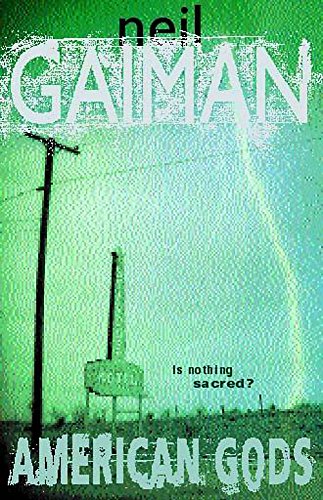
                • Cover of American Gods
                  American Gods

                  series · 10 books · 1999

                  similar byfantasyour world+1 more

                  Neil Gaiman's American Gods (2001) follows Shadow Moon, an ex-convict who takes a job as bodyguard to a mysterious drifter who is secretly the Norse god Odin, and is drawn into a brewing conflict between the old immigrant gods of myth and the new gods of media, technology, and modern American life. Gaiman's 2005 novel Anansi Boys is set in the same mythological world and shares the trickster god Mr. Nancy, but follows a different protagonist and story, making it a loose companion rather than a direct sequel.

                • Cover of The Vampire Chronicles
                  The Vampire Chronicles

                  series · 15 books · 1976

                  completed

                  similar byour world+2 more

                  The Vampire Chronicles is a series of Gothic vampire novels and a media franchise, created by American author Anne Rice, that revolves around the fictional character Lestat de Lioncourt, a French nobleman turned into a vampire in the 18th century.

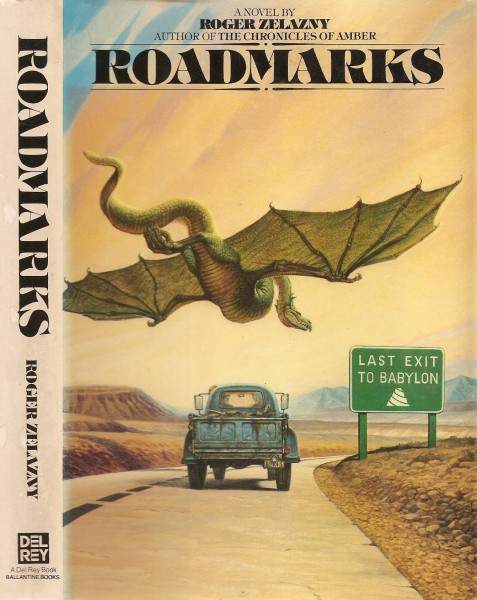
                • Cover of Roadmarks
                  Roadmarks

                  Roger Zelazny · standalone novel · 1979

                  similar byour world+2 more

                  Roadmarks is a science fantasy novel by American author Roger Zelazny, written during the late 1970s and published in 1979.

                • Cover of Legion / Stephen Leeds
                  Legion / Stephen Leeds

                  series · 5 books · 2012

                  similar byidentityour worldpsychic powers

                  Legion, or the Stephen Leeds series, is a series of science fiction novellas created by American author Brandon Sanderson. Sanderson authored the first three stories : Legion, first published on August 31, 2012, Legion: Skin Deep in November 2014, and Legion: Lies of the Beholder in September 2018. Death and Faxes, co-authored by Max Epstein, David Pace, and Michael Harkins, was released in June 2022. The books have received favorable reviews.

                • Cover of Replay
                  Replay

                  Ken Grimwood · standalone novel · 1987

                  similar byfantasyidentityour world

                  Replay is a fantasy novel by American writer Ken Grimwood, first published by Arbor House in 1987. It won the 1988 World Fantasy Award for Best Novel.

                • Cover of The Midnight World
                  The Midnight World

                  series · 2 books · 2020

                  similar byfantasyidentity+1 more

                • Cover of Darker Than You Think
                  Darker Than You Think

                  Jack Williamson · standalone novel · 1948

                  similar byfantasy+1 more

                  Darker Than You Think is a science fantasy and horror novel by American writer Jack Williamson. Originally a novelette, it was expanded into novel length and published by Fantasy Press in 1948. The short version was published in Unknown in 1940.

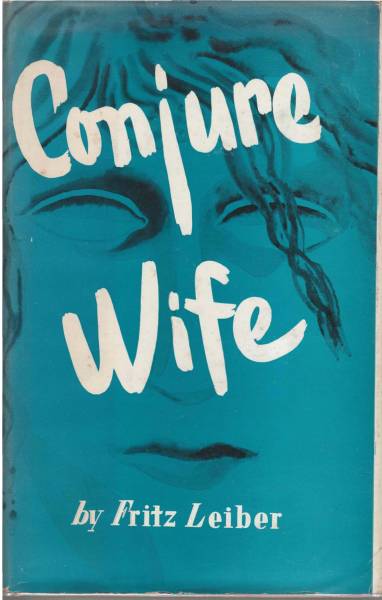
                • Cover of Conjure Wife
                  Conjure Wife

                  Fritz Leiber · standalone novel · 1943

                  similar byour world+2 more

                  From the front cover of the Lion first paperback: "Potions in the house... evil in the air... and a witch in his bed." From the back cover of the Lion first paperback: ""Conjure Wife... is easily the most frightening (and necessarily) the most thoroughly convincing of all modern horror stories. Its premise is that witchcraft still flourishes, or at any rate survives, an open secret among women, a closed book to men. Under the rational overlay of 20th-century civilization this sickly growth, uncultivated, unsuspected, still manages to propagate itself. Leiber develops this theme with the utmost dexterity, piling up alternate layers of the mundane and outre, until at the story's real climax, the shocker at the end of chapter 14, I am not ashamed to say that I jumped an inch out of my seat. From that point onward the story anticlimax so skillfully managed that I am not really certain I touched the slipcover again until after the last page. Leiber has never written anything better... which perhaps is all that needed to be said." Damon Knight, Science Fiction Adventures"

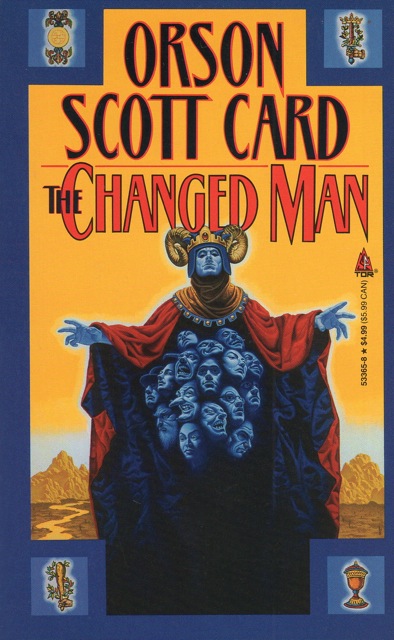
                • Cover of Maps in a Mirror: The Short Fiction of Orson Scott Card
                  Maps in a Mirror: The Short Fiction of Orson Scott Card

                  series · 9 books · 1979

                  similar by+3 more

                  Maps in a Mirror (1990) is a collection of short stories by American writer Orson Scott Card. Like Card's novels, most of the stories have a science fiction or fantasy theme. Some of the stories, such as "Ender's Game", "Lost Boys", and "Mikal's Songbird" were later expanded into novels. Each of the smaller volumes that make up the larger collection as a whole are centered on a theme or genre. For instance, Volume 1, The Changed Man, reprints several of Card's horror stories. The collection won the Locus Award for Best Collection in 1991.

                • Cover of Mythago Wood
                  Mythago Wood

                  series · 7 books · 1984

                  completed

                  similar byfantasy+1 more

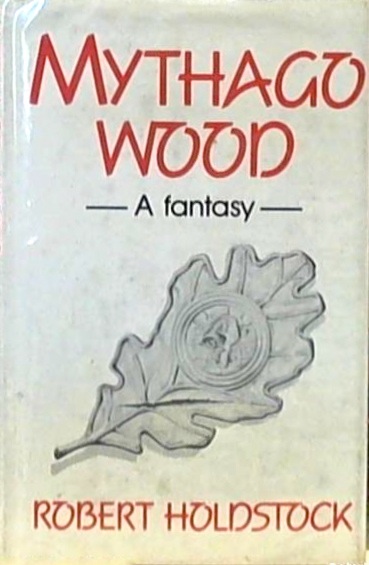
                  Robert Holdstock's Mythago Wood is set around Ryhope Wood, a small patch of ancient British woodland that is somehow far larger on the inside, generating 'mythagos' -- physical embodiments of myth and legend drawn from visitors' own collective unconscious. The first novel follows Stephen Huxley investigating his family's obsession with the wood after his father's death; Holdstock continued the cycle across further novels and stories exploring different characters and eras. It blends fantasy with psychology and British folklore rather than a conventional quest structure.

                • Cover of Cloud Atlas
                  Cloud Atlas

                  David Mitchell · standalone novel · 2004

                  similar byidentityour world+1 more

                  Cloud Atlas, published in 2004, is the third novel by British author David Mitchell. The book combines metafiction, historical fiction, contemporary fiction and science fiction, with interconnected nested stories in different writing styles that take the reader from the remote South Pacific in the 19th century to the island of Hawaii in a distant post-apocalyptic future. Its title references a piece of music by Toshi Ichiyanagi.

                • Cover of The Book of Ptath
                  The Book of Ptath

                  A. E. van Vogt · standalone novel · 1947

                  similar byour world+2 more

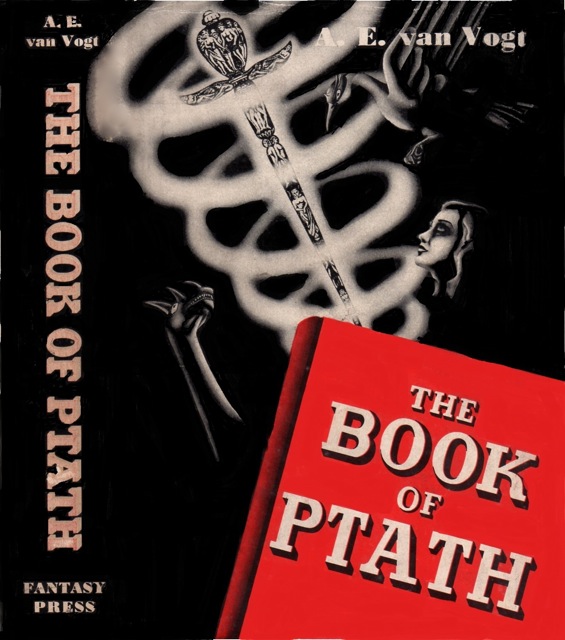
                  Ptath, a very powerful god, is throwing by his deadly rival, the goddess Ineznia, on Earth, around 200,000,000 AD, in the form of a mortal, where he has to face numerous dangers to survive.

                • Cover of The Prestige
                  The Prestige

                  Christopher Priest · standalone novel · 1995

                  similar byidentityour world+1 more

                  A magician called Borden (at least in private) writes his own version of his life as a magician. There's a lot of focus on a trick, where he seems to move across any width of stage in an instant, and on a feud with another magician, Angier. The account includes passages, where he can't decide what exactly to write, arguing with himself. 3 generations later a Borden (at least biologically) learns about his ancestor. He's also convinced, he somehow has a twin brother, who's happy about this development.

                • MD
                  Mara Dyer Universe

                  series · 5 books · 2011

                  similar by+4 more

                • Cover of Piper McCloud
                  Piper McCloud

                  series · 3 books · 2008

                  similar byfantasyour worldpsychic powers+1 more

                • Cover of Fledgling
                  Fledgling

                  Octavia E. Butler · standalone novel · 2005

                  similar byfantasyidentityour world

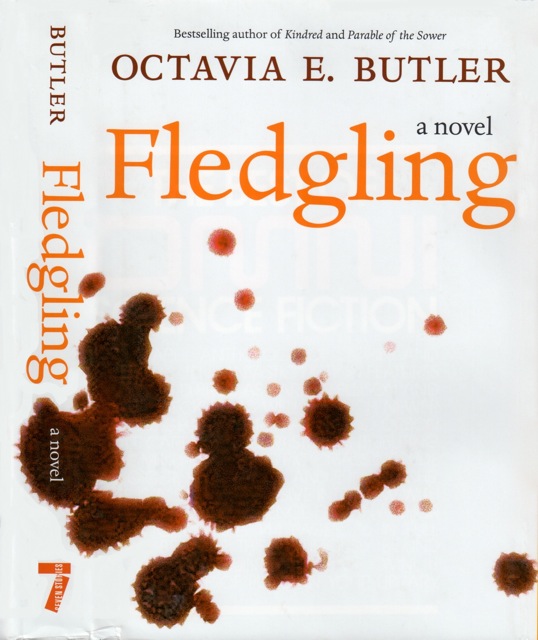
                  Fledgling is a science fiction vampire novel by American writer Octavia E. Butler, published in 2005. It was the author's final book published before her death in 2006.

                • Cover of Twilight Zone Collections
                  Twilight Zone Collections

                  series · 8 books · 1960

                  part of Twilight Zone

                  similar byour world+2 more

                • Cover of Southern Reach Trilogy
                  Southern Reach Trilogy

                  series · 4 books · 2014

                  similar byour world+2 more

                  The Southern Reach Series is a series of novels by the American author Jeff VanderMeer first published in 2014—Annihilation, Authority, Acceptance, and Absolution. The series takes its name from the secret agency that is central to the plot. In 2013, Paramount Pictures bought the movie rights for the series, and a film adaptation of Annihilation was made with Alex Garland as writer-director. The film was released in 2018. The most recent book in the series, Absolution, was released on 22 October 2024.

                • Cover of Aden Stone
                  Aden Stone

                  series · 3 books · 2009

                  similar byour world+2 more

                • Cover of Fluke
                  Fluke

                  James Herbert · standalone novel · 1977

                  similar byfantasyidentityour world

                  A dog named Fluke is barely more than a puppy when fragments of a life that isn't his own surface in his mind -- memories of a wife, a daughter, a job, an entire human existence he can't reconcile with the body he's now living in. Driven by those memories, Fluke sets out to find the family he half-remembers, aided by Rumbo, another dog going through the same impossible transformation. James Herbert follows the journey from a dog's-eye view of the world, using Fluke's confusion and determination to ask what, if anything, survives of a person after death. A standalone novel by James Herbert, better known for straightforward horror.

                • Cover of The Complete Stories of Theodore Sturgeon
                  The Complete Stories of Theodore Sturgeon

                  series · 24 books · 1947

                  completed

                  similar byour world+1 more

                • Cover of Our Lady of Darkness
                  Our Lady of Darkness

                  Fritz Leiber · standalone novel · 1977

                  similar byfantasyour world+1 more

                  Our Lady of Darkness (1977) is an urban fantasy novel by American author Fritz Leiber. The novel is distinguished for three elements: the heavily autobiographical elements in the story, the use of Jungian psychology that informs the narrative, and its detailed description of "megapolisomancy", a fictional occult science. It was originally published in shorter form as The Pale Brown Thing.

                • Cover of Hush, Hush
                  Hush, Hush

                  series · 5 books · 2009

                  similar byidentity+2 more

                  The Hush, Hush quartet is a series of four novels by Becca Fitzpatrick that follow teenager Nora Grey as she falls in love with the fallen angel Patch and discovers her own angelic heritage. The first book in the series, Hush, Hush, was released on October 13, 2009 through Simon & Schuster, with the final novel in the series, Finale, releasing on October 23, 2012. The series was initially promoted as a trilogy, with later announcements stating that the series would comprise four books.

                • Cover of Emma / Charlotte
                  Emma / Charlotte

                  series · 3 books · 1962

                  similar byfantasyidentity+1 more

                  Penelope Farmer's Aviary Hall books follow the Makepeace sisters, Emma and Charlotte, across three novels: The Summer Birds, Emma in Winter, and the best-known Charlotte Sometimes (1969), in which a boarding-school girl swaps places nightly with a counterpart living forty years earlier. The books blend everyday childhood settings with subtle fantasy and time-slip elements.