More like We Spread
anchored on:literary & generalour worldcontemporaryeerieunreliable narratorpsychological horror+5 more
but
- I'm Thinking of Ending Things
Iain Reidstandalone novel2016
similar byour worldcontemporaryeerieidentitymadnesstenselonelinesspsychological thriller+2 more
I'm Thinking of Ending Things is the 2016 debut novel of Canadian writer Iain Reid. It was first published in June 2016 in the United States by Simon & Schuster. The book has been described as a psychological thriller and horror fiction, and it is about a young woman who has many doubts about her relationship with her boyfriend. In spite of her reservations, she takes a road trip with him to meet his parents.
- Death in Her Hands
Ottessa Moshfeghstandalone novel2020
similar byour worldcontemporaryeerieidentitymadnessliterary & generallonelinessunreliable narrator
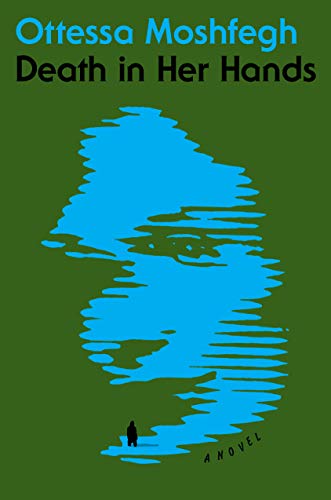
Death in Her Hands is a 2020 novel by Ottessa Moshfegh.
- Fear
L. Ron Hubbardstandalone novel1951
similar byour worldcontemporarymadnesseerietensepsychological horrorpsychological thrillerhorror
Fear is a psychological thriller-horror novella by American writer L. Ron Hubbard, which first appeared in the magazine Unknown Fantasy Fiction in July 1940.
- Southern Reach Trilogy
series4 books2014
similar byour worldcontemporaryeeriemadnesshorror+2 more
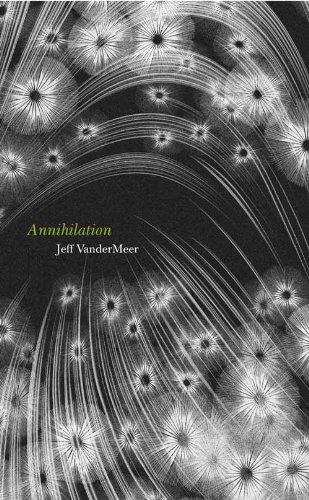
The Southern Reach Series is a series of novels by the American author Jeff VanderMeer first published in 2014—Annihilation, Authority, Acceptance, and Absolution. The series takes its name from the secret agency that is central to the plot. In 2013, Paramount Pictures bought the movie rights for the series, and a film adaptation of Annihilation was made with Alex Garland as writer-director. The film was released in 2018. The most recent book in the series, Absolution, was released on 22 October 2024.
- In the Night Room
Peter Straubstandalone novel2004
similar byour worldcontemporaryidentitymadnesstensepsychological horrorhorror
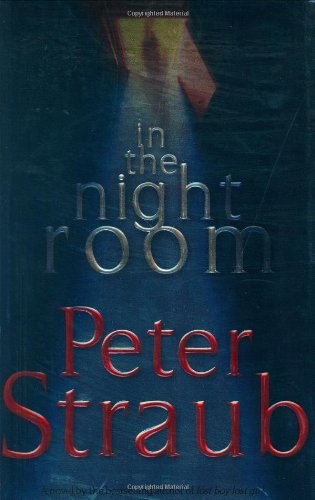
In the Night Room is a 2004 horror-thriller novel by American author Peter Straub, a sequel to his 2003 book Lost Boy, Lost Girl. The work was first published in hardback on October 26, 2004, through Random House and it won the 2004 Bram Stoker Award for Novel. Straub encountered some difficulties while writing In the Night Room and had written several different passages for the work before growing bored with each version before writing it using the same technique he used for its predecessor in which he "reached down inside the book and turned it inside out."
- Dead Ringers
Christopher Goldenstandalone novel2015
similar byour worldcontemporaryeerieidentitytensepsychological horrorhorror+1 more
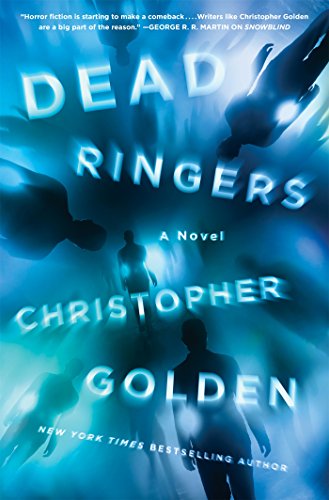
"When Tess Devlin runs into her ex-husband Nick on a Boston sidewalk, she's furious at him for pretending he doesn't know her. She calls his cell to have it out with him, only to discover that he's in New Hampshire with his current girlfriend. But if Nick's in New Hampshire...who did she encounter on the street? Frank Lindbergh's dreams have fallen apart. He wanted to get out of the grim neighborhood where he'd grown up and out of the shadow of his alcoholic father. Now both his parents are dead and he's back in his childhood home, drinking too much himself. As he sets in motion his plans for the future, he's assaulted by an intruder in his living room...an intruder who could be his twin. In an elegant hotel, Tess will find mystery and terror in her own reflection. Outside a famed mansion on Beacon Hill, people are infected with a diabolical malice...while on the streets, an eyeless man, dressed in rags, searches for a woman who wears Tess's face"--
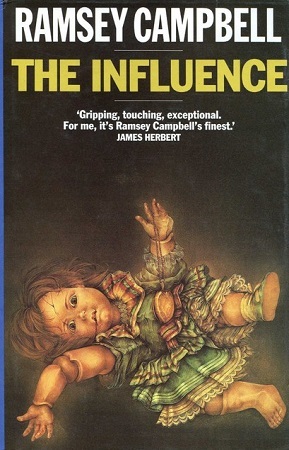
- The Influence
Ramsey Campbellstandalone novel1988
similar byour worldcontemporaryeeriemadnesspsychological horrorhorror+1 more
A young girl begins to take on the characteristics of her departed grandmother, an evil and oppressive woman.
- Dhalgren
Samuel R. Delanystandalone novel1975
similar bycontemporaryidentitymadnesseerielonelinessliterary & general+1 more
Dhalgren is a 1975 science fiction novel by American writer Samuel R. Delany. It features an extended trip to and through Bellona, a fictional city in the American Midwest cut off from the rest of the world by an unknown catastrophe. It is number 33 on the 20th Century's Greatest Hits: 100 English-Language Books of Fiction list.
- The Hollow City
Dan Wellsstandalone novel2012
similar bycontemporaryidentitymadnessour worldeerietensepsychological horrorunreliable narrator+1 more
Paranoid schizophrenic Michael Shipman has hallucinations and complex horror fantasies that are complicated by his discovery of what may or may not be real monsters.
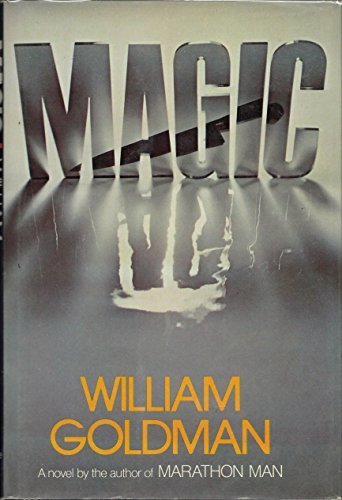
- Magic
William Goldmanstandalone novel1976
similar byour worldcontemporaryidentitymadnesseerietensepsychological horrorhorror
Magic is a psychological horror novel written by William Goldman. It was published in the United States in August 1976 by Delacorte Press. In 1978 Richard Attenborough directed a feature film adaptation of the story that starred Anthony Hopkins and Ann-Margret.
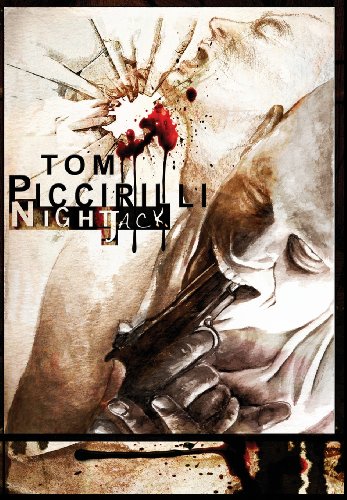
- Nightjack
Tom Piccirillistandalone novel2010
similar byour worldcontemporaryidentitymadnesstensepsychological horrorhorror+1 more
A horror/thriller about people with the multiple personality disorder and touches of surrealism.
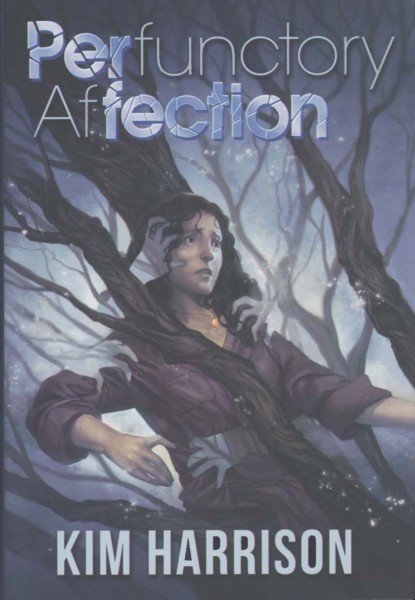
- Perfunctory Affection
Kim Harrisonstandalone novel2019
similar byour worldcontemporarymadnesstensepsychological thrillerliterary & generalunreliable narrator+1 more
Is it better to live a lie of perfection when the truth is too ugly to survive? Meg wants a normal life. Her new artistic style, born in the depression of her mother’s death, is poised to take the art world by storm, if she could just overcome the debilitating anxiety caused by the car accident that scarred her boyfriend, Austin. Encouraged by her therapist, Meg pushes outside her comfort zone to befriend Haley, a guest instructor at the university where Meg teaches. Haley is everything Meg wants to be: charismatic, confident, and perfect, but when Austin expresses his worry that Haley is changing Meg too fast and leads her to realize that Austin is trying to keep her afraid and needing him, Meg kicks him out of her life. Or at least, she tries. Kim Harrison, author of the number one bestselling Urban Fantasy Hollows series, brings to life a world terrifyingly near to our own, where what’s real and what shouldn’t exist twine together in the madness of a troubled mind desperate for a way out. But when the truth is revealed, the question remains, is it better to live a lie of perfection, or cleave to an ugly reality that will destroy you?
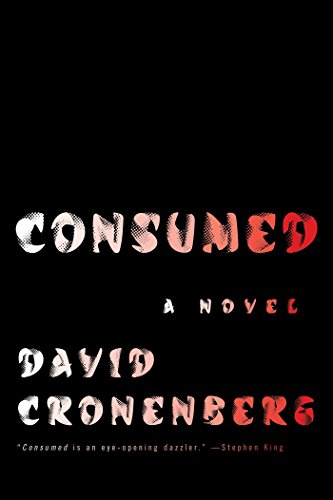
- Consumed
David Cronenbergstandalone novel2014
similar byour worldcontemporarymadnesseerieliterary & general+2 more
Consumed is the first novel by the Canadian filmmaker, screenwriter and actor David Cronenberg.
- Vision
N. D. Hansen-Hillstandalone novel2001
similar byour worldcontemporaryidentityeerietense+1 more
Dustin Mallory is a man trapped by the past - on a daily basis. He is no more a victim than his friends, whose reach at times extends beyond the grave, or whose thoughts take unwanted strolls through other people's minds. If the past can come forward enough to taunt Mallory's present, is there a chance he can influence it? Alter a fate that's too harsh to accept? Or will he spend the rest of his life hovering between reality and revelation? Dependent on strangers for his personal salvation? It is what he now fears most - that he has no future. That he'll become a victim of his own aberrant genes, to spend his days forever lost in visions...
- Strangers
Dean R. Koontzstandalone novel1986
similar byour worldcontemporaryidentityeerietensehorror
Strangers is a horror novel written by Dean Koontz, released in 1986.
- The House on Moon Creek Avenue
E. Reyesstandalone novel2020
similar byour worldcontemporarymadnesseerietensehorror
● "Cindy is a twenty-one-year-old single mother, retail worker, and college student. She inherits her grandmother's home on Moon Creek Avenue after she passes away. At first, the home is comfortable, nostalgic of Cindy's childhood at nana's, and her daughter enjoys the home, too. But soon, ghosts randomly appear day and night, doors open and close, a streak of bad luck begins, Cindy and her daughter have unsettling nightmares, and Cindy's mental state is pushed to the edge. When Cindy's video recording of paranormal activity goes viral on social media, she gets the attention of famous ghost hunters. Without anywhere else to turn, Cindy accepts their help." ― paraphrased from this book's product page on Amazon.com as of 2024-09-26.
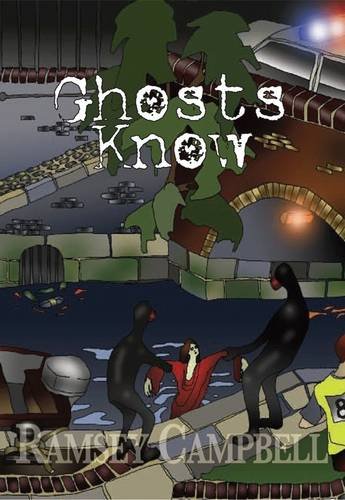
- Ghosts Know
Ramsey Campbellstandalone novel2011
similar byour worldcontemporarymadnesseerietensepsychological horror+2 more
"Ghosts Know is a fascinating exploration of the twists and turns of reality-media personalities, the line between the dead and the living...and how the truth can be twisted to serve all manner of reality. Graham Wilde is a contentious, bombastic host of the talk radio program Wilde Card. His job, as he sees it, is to stir the pot, and he is quite good at it, provoking many a heated call with his eccentric and often irrational audience. He invites Frank Jasper, a purported psychic, to come on the program. He firmly believes that the man is a charlatan, albeit a talented one. When Jasper appears on his show, Wilde draws upon personal knowledge about the man to embarrass him on air, using patter similar to that which Jasper utilizes in his act. Wilde's attack on Jasper earns him the enmity of his guest and some of the members of his audience. He next encounters Jasper when the psychic is hired by the family of a missing adolescent girl to help them find her. Wilde is stunned and then horrified when Jasper seems to suggest that he might be behind the girl's disappearance. Thus begins a nightmarish journey as circumstantial evidence against Wilde begins to mount, alienating his listeners, the radio station, and eventually, his lover. As Wilde descends into a pit of despair, reality and fantasy begin to blur in a kaleidoscope of terror..."--
- Briefing for a Descent Into Hell
Doris Lessingstandalone novel1971
similar byour worldcontemporaryidentitymadnessliterary & general+1 more
Briefing for a Descent into Hell is a psychological novel by British novelist Doris Lessing. It was first published in 1971 and shortlisted for that year's Booker Prize.
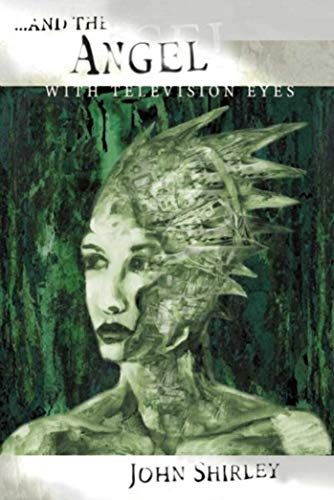
- ...And the Angel with Television Eyes
John Shirleystandalone novel2001
similar byour worldcontemporaryeerieidentitymadnesshorror
WorldCat: "As a star in a popular soap opera, Max Whitman desires to expand his acting abilities to include serious parts. A series of strange occurrences, however, sidetracks Max's ambitions and sets him on an eeries path toward insight or insanity as the boundaries of reality collapse and he receives glimpses of a hidden reality populated with monsters and heroes."
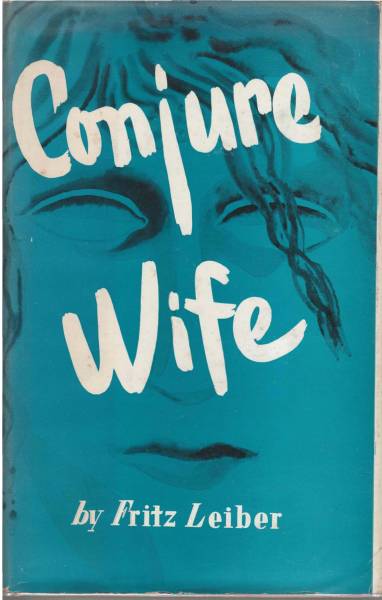
- Conjure Wife
Fritz Leiberstandalone novel1943
similar byour worldeerietensepsychological horrorhorror+2 more
From the front cover of the Lion first paperback: "Potions in the house... evil in the air... and a witch in his bed." From the back cover of the Lion first paperback: ""Conjure Wife... is easily the most frightening (and necessarily) the most thoroughly convincing of all modern horror stories. Its premise is that witchcraft still flourishes, or at any rate survives, an open secret among women, a closed book to men. Under the rational overlay of 20th-century civilization this sickly growth, uncultivated, unsuspected, still manages to propagate itself. Leiber develops this theme with the utmost dexterity, piling up alternate layers of the mundane and outre, until at the story's real climax, the shocker at the end of chapter 14, I am not ashamed to say that I jumped an inch out of my seat. From that point onward the story anticlimax so skillfully managed that I am not really certain I touched the slipcover again until after the last page. Leiber has never written anything better... which perhaps is all that needed to be said." Damon Knight, Science Fiction Adventures"
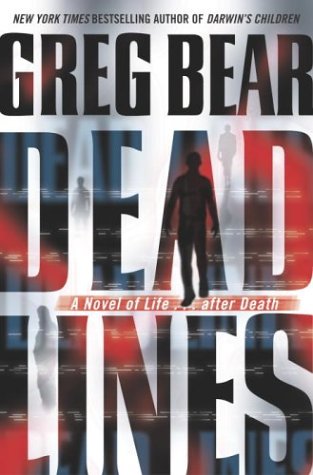
- Dead Lines
Greg Bearstandalone novel2004
similar byour worldcontemporarymadnesseeriehorror+1 more
From the flaps of the Ballantine first edition: "For the last two years, Peter Russell has mourned the death of one of his twin daughters - who was just ten when she was murdered. Recent news of his best friend's fatal heart attack has now come as another devastating blow. Divorced, despondent, and going nowhere in his career, Peter fears his life is circling the drain. Then Trans comes along. The brainchild of an upstart telecom company, Trans is (as its name suggests) a transcendent marvel, a sleek, handheld interpersonal communication device capable of flawless operation anywhere in the world, at any time. "A cell phone, but not" - transmitting with crystal clarity across a newly discovered, never-utilized bandwidth... and poised to spark a new-technology revolution. When its creators offer Peter a position on their team, it should be a golden opportunity for him. If only he wasn't seemingly going mad. Everywhere Peter turns, inexplicable apparitions are walking before him or reaching out in torment. After a chilling encounter with his own lost child he begins to grasp the terrifying truth: Trans is a Pandora's box that has tapped into a frequency not of this world... but of the next. And now, via this open channel to oblivion, the dead have gained access to the living. For Peter, and for humankind, a long shadowy night of the soul has descended, bringing with it the stuff of a horrifying nightmare from which they may never awaken."
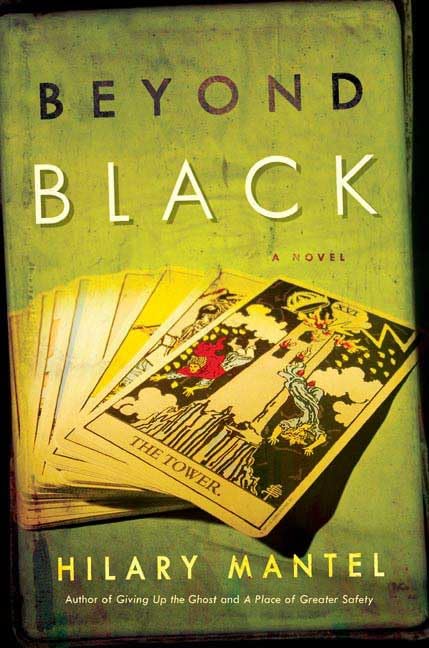
- Beyond Black
Hilary Mantelstandalone novel2005
similar byour worldcontemporaryidentitymadnesseerieliterary & general
Beyond Black is a 2005 novel by English writer Hilary Mantel. It was shortlisted for the 2006 Orange Prize for Fiction.
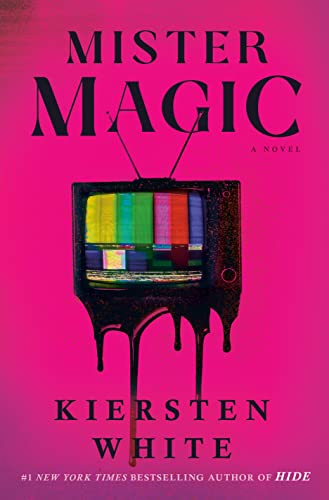
- Mister Magic
Kiersten Whitestandalone novel2023
similar byour worldcontemporaryeeriemadnesspsychological horrorhorror
Mister Magic is a 2023 horror novel by American writer Kiersten White. Published by Del Rey, the novel centers upon the five survivors of a children's television series that got cancelled due to a tragic accident.
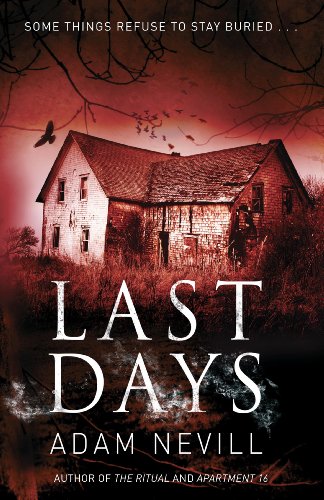
- Last Days
Adam Nevillstandalone novel2012
similar bycontemporarymadnessour worldeerietensepsychological horrorhorror
Last Days is a 2012 horror novel by the British author Adam Nevill. The book was first published in the United Kingdom on 24 May 2012 by Pan Macmillan and was published in the United States on 26 February 2013 through St. Martin's Griffin. It won the 2013 British Fantasy Award for Best Horror Novel and film rights for Last Days were first optioned by Adam Storke in early 2014. The option has subsequently passed to another film production company.