Loreful
HomeDiscover
Search series, authors…⌘K
Loreful

Reading orders for SF/F series and shared universes — with your place kept in every one.

Explore

UniversesSeriesWorksAuthorsAtlas

Help

FAQAboutSite map

Account & legal

Sign inCreate accountPrivacyTerms

Data

Built on ISFDB, Wikipedia, Wikidata and Open Library. Curated reading orders carry their reasoning on the page; the rest follow publication order. Data sources & licenses

© Loreful · data: ISFDB · CC BY

More like Weight

but

Mood

The mood the book leaves you in.

  • The reading experience is propelled by journeys, exploration, and physical risk; excitement and forward momentum dominate over dread or introspection.
  • Joy and loss are deliberately mixed; the resolution grants characters something real while taking something else away, leaving warmth and sorrow together.
  • The book demands work from the reader — dense prose, difficult structure, unfamiliar ideas, or morally uncomfortable material — as part of its intended effect.
  • Grim events, cruelty, or despair dominate the atmosphere, and the book does not soften them with comfort or comic relief.
  • The atmosphere is quietly unsettling — wrongness, unease, and the uncanny pervade the book without necessarily escalating into overt horror.
  • The book is built to move the reader; character feeling is foregrounded and major scenes aim at a strong emotional response.
  • Humor is a primary aim and the prose plays for laughs — comic situations, wit, or dialogue produce sustained comedy, not occasional levity.
  • The book insists that things can improve; effort and decency are shown to matter, and the arc bends toward better outcomes even through hardship.
  • The book teaches as it goes — real facts, history, science, or craft are conveyed in enough depth that learning is part of the reading experience.
  • The book is designed to uplift and motivate, presenting perseverance or achievement in a way that invites the reader to aspire or act.
  • The overall register is cheerful and easygoing; stakes are kept gentle and the book avoids dwelling on pain or dread.
  • Withheld information drives the experience; the book sustains enigmas and secrets the reader wants resolved, whatever its genre.
  • The book is contemplative and inward-looking, giving more weight to thought, memory, and meaning than to external events.
  • Grief, loss, or melancholy set the dominant register, and the book lets sorrow stand rather than resolving it into comfort.
  • Sustained suspense is the point; the book keeps the reader braced for what happens next through danger, pressure, or impending revelation.
  • Playful invention and charm define the register — fanciful conceits, light absurdity, and a narration that delights in its own oddity.

About

What the story runs on.

  • Stories in which a machine intelligence — an AI, computer mind, or sentient program — is a central character or the story's driving problem.
  • Stories in which extraterrestrial beings are central — as characters, cultures, or the object of the plot.
  • Stories about venturing into space to explore — survey missions, astronauts, and the frontier of the unknown beyond Earth.
  • Stories in which staying alive against nature, catastrophe, or scarcity is the central problem.
  • Stories of growing up — a young protagonist crossing from childhood into adult knowledge and responsibility.
  • Stories about who a character truly is — self-discovery, doubled lives, and the search for a self.
  • Stories about mental unraveling — descent into madness, delusion, and minds at war with themselves.
  • Stories about mourning — living through the death of a loved one and what loss does to the survivors.
  • Stories in which a buried family truth — hidden parentage, crimes, or shames — surfaces and reorders the present.
  • Stories driven by maneuvering for power — factions, conspiracies, and statecraft conducted in shadow.
  • Stories in which war itself is the subject — combat, occupation, and what warfare does to soldiers and civilians.
  • Stories organized around investigating a killing — the case, the clues, and the pursuit of the killer, in any genre's clothing.

Shelf

Where it sits in the library.

    • Fiction built on magic or other supernatural elements that have no scientific explanation.
    • Secondary-world fantasy at large scale, where the fate of nations or the world turns on the protagonists' struggle.
    • Fantasy set in a recognizably modern city or contemporary world where the supernatural intrudes on everyday life.
    • Fantasy that blends in horror's atmosphere and imagery, keeping a fantastical frame around grim or frightening material.
    • Action-driven fantasy following warriors or rogues with personal stakes against sorcerous threats, rather than world-spanning conflicts.
    • Fantasy set in a real historical period or a close analogue of one, with magic woven into the era.
    • Fantasy in which protagonists cross from the ordinary world into another world through a portal or similar passage.
    • Fiction that retells or reworks a traditional fairy tale in a new form or setting.
    • Fantasy drawing directly on myths, legends, and folklore, retelling them or building on their figures and logic.
    • Fantasy of ghosts, vampires, shapeshifters, psychics, and similar phenomena, usually set in an otherwise ordinary world.
    • Fiction mixing science-fictional trappings with overtly magical or impossible elements in one setting.
    • Low-stakes fantasy emphasizing comfort, community, and everyday pleasures over conflict and peril.
    • Speculative fiction of pervasive moral ambiguity, violence, and cynicism that rejects heroic conventions — fantasy and SF alike.
      • Fiction that extrapolates from science and technology — future societies, space travel, or speculative inventions — within at least nominally natural laws.
      • Science fiction of interstellar scope — starships, galactic polities, and adventure across star systems.
      • Science fiction committed to scientific rigor, where technical plausibility constrains the story.
      • Science fiction centered on armed forces and warfare, told largely from a military point of view.
      • Science fiction of networked, corporate-dominated near futures, pairing high technology with social decay.
      • Science fiction styled on nineteenth-century steam-powered technology, often in a Victorian or pseudo-Victorian setting.
      • Fiction depicting an oppressive or catastrophic society, presented as a warning.
      • Fiction set after civilization's collapse, following survivors in the ruins of the old world.
      • Fiction in which characters move between past and future, and the mechanics or consequences of that travel drive the plot.
      • Fiction exploring a world where a historical event went differently and history diverged from ours.
      • Science fiction about humanity's first encounter and communication with an alien intelligence.
      • Science fiction in which extraterrestrial forces attack or occupy Earth and humanity resists.
      • Fiction whose primary aim is to frighten or unsettle the reader through dread, menace, or the monstrous.
      • Horror of vast, indifferent, incomprehensible entities before which humanity is insignificant, in the Lovecraft tradition.
      • Horror of decaying houses, buried family secrets, and oppressive atmosphere in the Gothic literary tradition.
      • Horror centered on hauntings and the returning dead.
      • Horror located in the mind — paranoia, obsession, and unreliable perception rather than external monsters.
      • Horror built around the reanimated dead and survival amid their outbreaks.
      • Horror defined by explicit, transgressive gore that refuses to cut away from violence.
      • Speculative fiction of the strange and uncanny that resists both natural explanation and standard genre categories.
      • Fiction organized around solving a crime or puzzle, typically following an investigator toward the identification of a culprit.
      • A puzzle-first mystery that lays out clues so the culprit's identity can be deduced before the reveal.
      • Crime fiction of moral ambiguity, fatalism, and hard-edged style, set among the corrupt and the doomed.
      • A mystery following the realistic routines of police work — forensics, interviews, and case-building.
      • A gentle mystery with an amateur sleuth, a small community, and violence kept off the page.
      • A mystery set in a past era, where the investigation works within that period's methods and society.
      • Fast-paced fiction driven by imminent danger, pursuit, or high-stakes conspiracy, built to sustain tension.
      • A thriller of espionage — agents, tradecraft, and intelligence services in conflict.
      • A thriller centered on lawyers and the courtroom, where litigation carries the suspense.
      • A thriller driven by detailed contemporary or near-future technology, often military or scientific.
      • A thriller whose tension comes from mental states and manipulation between characters rather than external action.
      • Fiction whose central plot is a romantic relationship and its development toward an emotionally satisfying resolution.
      • Romance in which one or both partners are supernatural beings, blending fantasy elements into the love story.
      • A fantasy-romance hybrid in which the romantic arc and the fantasy plot carry equal weight.
      • Romance set in a past era, with courtship shaped by the period's society and manners.
      • Romance set in the present day, without supernatural or historical elements.
      • Fiction set in a real past period, where the historical setting materially shapes characters and events.
        • General and literary fiction emphasizing prose style, character interiority, or formal ambition over genre plot conventions.
        • Fiction in a realistic world where magical events occur and are treated as ordinary, in the tradition of Latin American literature.
        • Fiction that ridicules people, institutions, or society in order to criticize them.
        • Fiction of dreamlike, irrational imagery and logic that breaks from realistic representation.
        • Fiction that plays with narrative convention through metafiction, fragmentation, and self-reference.
        • Fiction propelled by journeys, exploration, and physical peril, where action and survival carry the plot.
        • Adventure fiction of ships and seafaring — naval engagements, voyages, and life at sea.
        • Fiction of the American frontier West — gunmen, ranchers, and lawmen, typically in the late nineteenth century.
        • Fiction centered on soldiers, campaigns, and the experience of warfare, historical or imagined.
          • Fiction written primarily to amuse, using comedic situations, wit, or parody as its organizing principle.
            • Multi-generational fiction following a family or dynasty across decades, with inheritance and kinship as the through-line.
              • Fiction whose world runs on explicit game mechanics — levels, stats, and skills that characters can see and exploit.
                • Fiction about costumed or superpowered heroes and their conflicts with comparable villains.

                Practical

                How long a commitment, whether it stands alone, and whether it has finished.

                Tap a chip to ask for it · tap again to rule it out · once more to clear. Numbers show what would be left.

                • Cover of The Passage
                  The Passage

                  series · 3 books · 2010

                  similar byhorrornear future

                  The Passage is a novel series by Justin Cronin. There are three published books in the series. The film rights were acquired by Fox Entertainment Group in 2007 for adaptation into a film trilogy, but after 12 years of development and planning, it was changed to a television series, which premiered in January 2019 and was canceled after the first season.

                • Cover of Forest of Hands and Teeth
                  Forest of Hands and Teeth

                  series · 9 books · 2009

                  similar bynear future+1 more

                  Carrie Ryan's debut trilogy is set generations after an apocalypse turned much of humanity into the mindless, cannibalistic "Unconsecrated," following young women in a small walled village whose protective fence keeps the undead out and its residents locked into a repressive, secretive society. The Forest of Hands and Teeth follows the first heroine's break from that village into the wider, undead-infested world; The Dead-Tossed Waves and The Dark and Hollow Places carry the aftermath forward through new narrators. It is YA horror more concerned with the fear and control inside the fences than with survivalist action.

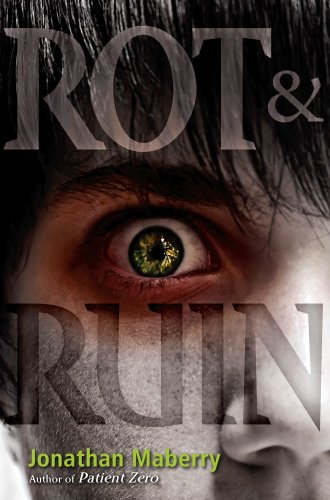
                • Cover of Rot & Ruin
                  Rot & Ruin

                  series · 22 books · 2010

                  part of Night

                  similar bynear future+1 more

                  Jonathan Maberry's Rot & Ruin is set fourteen years after a zombie plague, following fifteen-year-old Benny Imura, who reluctantly apprentices to his older half-brother as a bounty hunter clearing the dead beyond his fenced-in California town. The series follows Benny's growing understanding of both the zombies and the living people who prey on the fragile post-apocalyptic order, across four more novels and companion story collections.

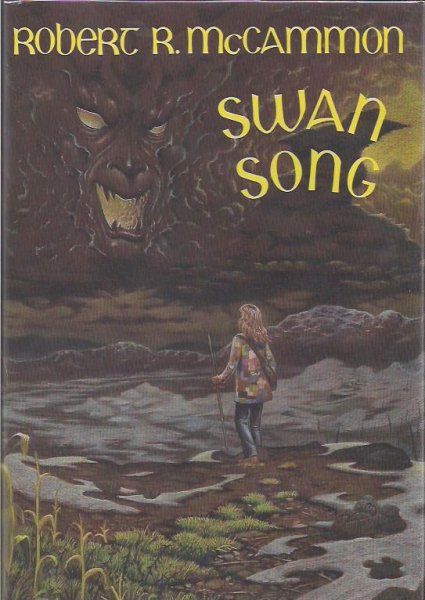
                • Cover of Swan Song
                  Swan Song

                  Robert R. McCammon · standalone novel · 1987

                  similar byhorrornear future

                  Swan Song is a 1987 post-apocalyptic horror novel by American novelist Robert R. McCammon. Published June 1, 1987, the novel describes the aftermath of a nuclear war that provokes an evolution in humankind. Swan Song won the 1987 Bram Stoker award, tying with Stephen King's Misery.

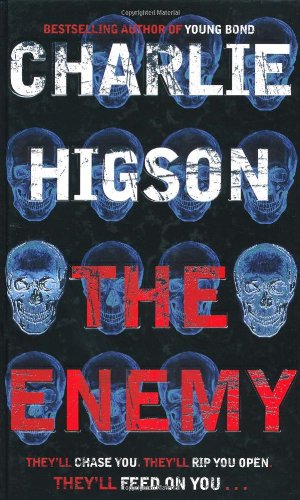
                • Cover of The Enemy (Charlie Higson)
                  The Enemy (Charlie Higson)

                  series · 7 books · 2009

                  similar byhorror+1 more

                  The Enemy opens Charlie Higson's seven-book YA horror series, set in London after a mysterious sickness turns every adult into a voracious, flesh-hungry threat and leaves children to fend for themselves in a city gone feral. Each subsequent book (The Dead, The Fear, The Sacrifice, The Fallen, The Hunted, The End) follows different groups of survivors as the outbreak's scope and cause slowly come into focus. Higson also wrote a short companion book, Geeks vs. Zombies, alongside the main series.

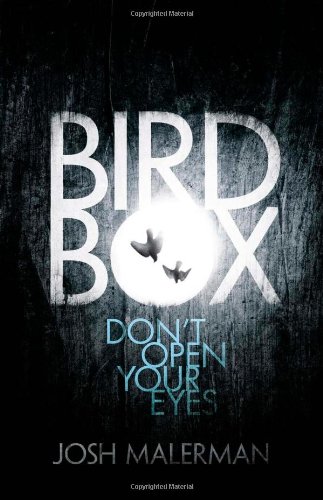
                • Cover of Bird Box
                  Bird Box

                  series · 2 books · 2014

                  similar byhorror+1 more

                • Cover of Dark Inside
                  Dark Inside

                  series · 3 books · 2011

                  similar bynear future+1 more

                • Cover of Hater
                  Hater

                  series · 6 books · 2006

                  similar by+2 more

                • Cover of Nod
                  Nod

                  Adrian Barnes · standalone novel · 2012

                  similar by+2 more

                • Cover of Zone One
                  Zone One

                  Colson Whitehead · standalone novel · 2011

                  similar byhorrornear future

                  Zone One is a 2011 novel by American author Colson Whitehead. Blending elements of genre fiction and literary fiction, the novel takes place in a post-apocalyptic United States ravaged by zombies. Whitehead has stated that the novel was partly an attempt to return to his adolescent fascination with horror writer Stephen King and science fiction icon Isaac Asimov.

                • Cover of Nineteen Eighty-Four
                  Nineteen Eighty-Four

                  series · 4 books · 1949

                  Nineteen Eighty-Four (1949) is George Orwell's novel of a totalitarian future Britain kept under constant surveillance and thought control, following Winston Smith's doomed attempt at a private rebellion against the ruling Party. Sandra Newman's Julia (2023), written with the Orwell estate's authorization, retells the same events from the point of view of Winston's lover Julia, filling in a life and set of motives the original largely left offstage.

                • Cover of The Long Walk
                  The Long Walk

                  Stephen King · standalone novel · 1979

                  similar byhorrornear future

                  The Long Walk is a dystopian horror novel by American writer Stephen King, published in 1979, under the pseudonym Richard Bachman. Set in a dystopian alternative version of the United States ruled by a totalitarian regime, the plot follows the contestants of a grueling annual walking contest. While not the first of King's novels to be published, The Long Walk was the first novel he wrote, having begun it in 1966–67 during his freshman year at the University of Maine, some eight years before his first published novel, Carrie, was released in 1974.

                • Cover of Brown Girl in the Ring
                  Brown Girl in the Ring

                  Nalo Hopkinson · standalone novel · 1998

                  similar bynear future+1 more

                  Brown Girl in the Ring is a 1998 novel written by Jamaican-Canadian writer Nalo Hopkinson. The novel contains Afro-Caribbean culture with themes of folklore and magical realism. The novel received critical acclaim, winning the 1999 Locus Award for Best First Novel. It was shortlisted for numerous other awards, including the Otherwise Award, Philip K. Dick Award, and Crawford Award.

                • Cover of The Overthrow
                  The Overthrow

                  series · 3 books · 2020

                  similar by+2 more

                • Cover of The Ashes Trilogy
                  The Ashes Trilogy

                  series · 3 books · 2011

                  similar bynear future+1 more

                  The Ashes Trilogy is Ilsa J. Bick's YA post-apocalyptic series: Ashes (2011), Shadows and Monsters. It follows a teenage girl who survives a catastrophic event that kills most adults and turns some of the afflicted into violent, feral 'Changed', forcing her to navigate a shattered wilderness alongside other young survivors. The trilogy follows one continuous crisis across its three volumes.

                • Cover of Dracula
                  Dracula

                  universe · 144 books · 1897

                  Start hereDracula · Start here

                  similar byhorror

                  "Come freely. Go safely. And leave something of the happiness you bring" — so the Count greets his guest at the threshold of the Carpathians, and the great door shuts behind. Bram Stoker's Dracula (1897) is the wellspring of the modern vampire: the account of a centuries-old Transylvanian nobleman who quits his crumbling castle for the crowded lodging-houses of London, and the handful of ordinary people — a young solicitor, a doctor of the mad, a professor of stranger learning — who must piece together what he is before he makes the whole city his fold. It is told wholly in fragments: journal entries, letters, telegrams, ships' logs, phonograph cylinders, each hand recording only its own sliver of the dark. Around that single novel a whole crypt of continuations has grown, raised by many writers across a century. Fred Saberhagen's Dracula Sequence hands the Count the microphone, retelling the old events from his own wry, aggrieved lips and following him into later intrigues. Robert Lory's brisk 1970s Dracula Horror Series revives him as a reluctant weapon turned against fouler things; Peter Tremayne's trilogy reaches back along his bloodline; and further sequels, a Quincey Morris spin-off, and Dracula's Children carry the shadow onward. This is a loose shared world built upon a public-domain figure, not one governed continuity — each author remakes him as villain, antihero, or sympathetic narrator. Begin, always, with Stoker's original; the letters and the mounting dread stand entirely on their own. From there follow whichever door tempts you — Saberhagen's The Dracula Tape for the monster's own confession, Lory or Tremayne for tales that never glance back at the Borgo Pass again.

                • Cover of Warm Bodies
                  Warm Bodies

                  series · 3 books · 2010

                  similar by+2 more

                  In an abandoned airport where the dead shuffle through half-remembered lives, a zombie known only as R feels something stir when he meets Julie, a survivor he chooses to protect instead of eat. Isaac Marion's Warm Bodies follows R's slow, contagious return to feeling -- reshaping the zombies around him along the way -- and continues through the novella The New Hunger and the sequel The Burning World.

                • Cover of Spider Legs
                  Spider Legs

                  Piers Anthony & Clifford A. Pickover · standalone novel · 1998

                  similar byhorrornear future

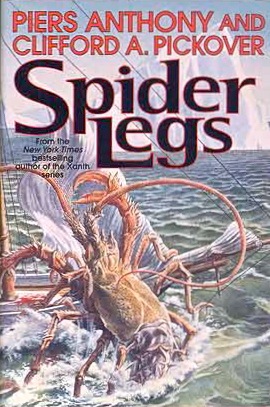
                  SpiderLegs tells us for thousands of years, mankind has simultaneously trusted in the sea's provibial generosity, and used it as a dumping ground, trusting that in its vastness his garbage will be swallowed up and forgotten. But that was never really true, and now, in an age when the overcrowded Earth swarms with hungry inhabitants whose waste chokes with even the sea, whose greedy demands overtax its seemingly endless bounty, strange things are born in the ocean's deeps-strange things that the ocean throws back upon the land.

                • Cover of Threshold Universe
                  Threshold Universe

                  series · 4 books · 2012

                  similar by+2 more

                • Cover of Ship Saga
                  Ship Saga

                  series · 3 books · 2021

                  similar bynear future+1 more

                • Cover of The Forbidden Zone
                  The Forbidden Zone

                  Whitley Strieber · standalone novel · 1993

                  similar bynear future+1 more

                • Cover of The Season of Passage
                  The Season of Passage

                  Christopher Pike · standalone novel · 1992

                  similar byhorrornear future

                  Dr. Lauren Wagner was a celebrity. She was involved with the most exciting adventure mankind had ever undertaken. The whole world admired and respected her. But Lauren knew fear. Inside--voices entreating her to love them. Outside--the mystery of the missing group that had gone before her. The dead group. But were they simply dead? Or something else? A terrifying novel of horror--and, surprisingly, of salvation--from one of America's bestselling writers. A novel you won't forget.

                • Cover of The Black
                  The Black

                  series · 4 books · 2014

                  similar by+2 more

                • Cover of Outpost Universe
                  Outpost Universe

                  series · 4 books · 2011

                  similar byhorrornear future