Loreful
HomeDiscover
Search series, authors…⌘K
Loreful

Reading orders for SF/F series and shared universes — with your place kept in every one.

Explore

UniversesSeriesWorksAuthorsAtlas

Help

FAQAboutSite map

Account & legal

Sign inCreate accountPrivacyTerms

Data

Built on ISFDB, Wikipedia, Wikidata and Open Library. Curated reading orders carry their reasoning on the page; the rest follow publication order. Data sources & licenses

© Loreful · data: ISFDB · CC BY

More like While Smoke Rolled

anchored on:westernshumornorth america

but

Mood

The mood the book leaves you in.

  • The reading experience is propelled by journeys, exploration, and physical risk; excitement and forward momentum dominate over dread or introspection.
  • Joy and loss are deliberately mixed; the resolution grants characters something real while taking something else away, leaving warmth and sorrow together.
  • The book demands work from the reader — dense prose, difficult structure, unfamiliar ideas, or morally uncomfortable material — as part of its intended effect.
  • Grim events, cruelty, or despair dominate the atmosphere, and the book does not soften them with comfort or comic relief.
  • The atmosphere is quietly unsettling — wrongness, unease, and the uncanny pervade the book without necessarily escalating into overt horror.
  • The book is built to move the reader; character feeling is foregrounded and major scenes aim at a strong emotional response.
  • Humor is a primary aim and the prose plays for laughs — comic situations, wit, or dialogue produce sustained comedy, not occasional levity.
  • The book insists that things can improve; effort and decency are shown to matter, and the arc bends toward better outcomes even through hardship.
  • The book teaches as it goes — real facts, history, science, or craft are conveyed in enough depth that learning is part of the reading experience.
  • The book is designed to uplift and motivate, presenting perseverance or achievement in a way that invites the reader to aspire or act.
  • The overall register is cheerful and easygoing; stakes are kept gentle and the book avoids dwelling on pain or dread.
  • Withheld information drives the experience; the book sustains enigmas and secrets the reader wants resolved, whatever its genre.
  • The book is contemplative and inward-looking, giving more weight to thought, memory, and meaning than to external events.
  • The book works as comfort reading — low tension, a soothing pace, and an atmosphere the reader can unwind in.
  • Grief, loss, or melancholy set the dominant register, and the book lets sorrow stand rather than resolving it into comfort.
  • Sustained suspense is the point; the book keeps the reader braced for what happens next through danger, pressure, or impending revelation.
  • Playful invention and charm define the register — fanciful conceits, light absurdity, and a narration that delights in its own oddity.

About

What the story runs on.

  • Stories in which extraterrestrial beings are central — as characters, cultures, or the object of the plot.
  • Stories about venturing into space to explore — survey missions, astronauts, and the frontier of the unknown beyond Earth.
  • Stories structured as a quest — a journey undertaken to find, deliver, or destroy something of great import.
  • Stories in which staying alive against nature, catastrophe, or scarcity is the central problem.
  • Stories of lovers kept apart by law, family, faith, or station, where the obstacle to love is the plot.
  • Stories in which a friendship — its making, testing, or loss — is the emotional center.
  • Stories of growing up — a young protagonist crossing from childhood into adult knowledge and responsibility.
  • Stories about who a character truly is — self-discovery, doubled lives, and the search for a self.
  • Stories in which a buried family truth — hidden parentage, crimes, or shames — surfaces and reorders the present.
  • Stories driven by maneuvering for power — factions, conspiracies, and statecraft conducted in shadow.
  • Stories in which war itself is the subject — combat, occupation, and what warfare does to soldiers and civilians.
  • Stories organized around investigating a killing — the case, the clues, and the pursuit of the killer, in any genre's clothing.

Shelf

Where it sits in the library.

    • Fiction built on magic or other supernatural elements that have no scientific explanation.
    • Secondary-world fantasy at large scale, where the fate of nations or the world turns on the protagonists' struggle.
    • Fantasy set in a recognizably modern city or contemporary world where the supernatural intrudes on everyday life.
    • Fantasy that blends in horror's atmosphere and imagery, keeping a fantastical frame around grim or frightening material.
    • Action-driven fantasy following warriors or rogues with personal stakes against sorcerous threats, rather than world-spanning conflicts.
    • Fantasy set in a real historical period or a close analogue of one, with magic woven into the era.
    • Fantasy in which protagonists cross from the ordinary world into another world through a portal or similar passage.
    • Fiction that retells or reworks a traditional fairy tale in a new form or setting.
    • Fantasy drawing directly on myths, legends, and folklore, retelling them or building on their figures and logic.
    • Fantasy of ghosts, vampires, shapeshifters, psychics, and similar phenomena, usually set in an otherwise ordinary world.
    • Fiction mixing science-fictional trappings with overtly magical or impossible elements in one setting.
    • Low-stakes fantasy emphasizing comfort, community, and everyday pleasures over conflict and peril.
    • Speculative fiction of pervasive moral ambiguity, violence, and cynicism that rejects heroic conventions — fantasy and SF alike.
      • Fiction that extrapolates from science and technology — future societies, space travel, or speculative inventions — within at least nominally natural laws.
      • Science fiction of interstellar scope — starships, galactic polities, and adventure across star systems.
      • Science fiction committed to scientific rigor, where technical plausibility constrains the story.
      • Science fiction centered on armed forces and warfare, told largely from a military point of view.
      • Science fiction of networked, corporate-dominated near futures, pairing high technology with social decay.
      • Science fiction styled on nineteenth-century steam-powered technology, often in a Victorian or pseudo-Victorian setting.
      • Fiction depicting an oppressive or catastrophic society, presented as a warning.
      • Fiction set after civilization's collapse, following survivors in the ruins of the old world.
      • Fiction in which characters move between past and future, and the mechanics or consequences of that travel drive the plot.
      • Fiction exploring a world where a historical event went differently and history diverged from ours.
      • Science fiction about humanity's first encounter and communication with an alien intelligence.
      • Science fiction in which extraterrestrial forces attack or occupy Earth and humanity resists.
      • Fiction whose primary aim is to frighten or unsettle the reader through dread, menace, or the monstrous.
      • Horror of vast, indifferent, incomprehensible entities before which humanity is insignificant, in the Lovecraft tradition.
      • Horror of decaying houses, buried family secrets, and oppressive atmosphere in the Gothic literary tradition.
      • Horror centered on hauntings and the returning dead.
      • Horror located in the mind — paranoia, obsession, and unreliable perception rather than external monsters.
      • Horror built around the reanimated dead and survival amid their outbreaks.
      • Horror defined by explicit, transgressive gore that refuses to cut away from violence.
      • Speculative fiction of the strange and uncanny that resists both natural explanation and standard genre categories.
      • Fiction organized around solving a crime or puzzle, typically following an investigator toward the identification of a culprit.
      • A puzzle-first mystery that lays out clues so the culprit's identity can be deduced before the reveal.
      • Crime fiction of moral ambiguity, fatalism, and hard-edged style, set among the corrupt and the doomed.
      • A mystery following the realistic routines of police work — forensics, interviews, and case-building.
      • A gentle mystery with an amateur sleuth, a small community, and violence kept off the page.
      • A mystery set in a past era, where the investigation works within that period's methods and society.
      • Fast-paced fiction driven by imminent danger, pursuit, or high-stakes conspiracy, built to sustain tension.
      • A thriller of espionage — agents, tradecraft, and intelligence services in conflict.
      • A thriller centered on lawyers and the courtroom, where litigation carries the suspense.
      • A thriller driven by detailed contemporary or near-future technology, often military or scientific.
      • A thriller whose tension comes from mental states and manipulation between characters rather than external action.
      • Fiction whose central plot is a romantic relationship and its development toward an emotionally satisfying resolution.
      • Romance in which one or both partners are supernatural beings, blending fantasy elements into the love story.
      • A fantasy-romance hybrid in which the romantic arc and the fantasy plot carry equal weight.
      • Romance set in a past era, with courtship shaped by the period's society and manners.
      • Romance set in the present day, without supernatural or historical elements.
      • Fiction set in a real past period, where the historical setting materially shapes characters and events.
        • General and literary fiction emphasizing prose style, character interiority, or formal ambition over genre plot conventions.
        • Fiction in a realistic world where magical events occur and are treated as ordinary, in the tradition of Latin American literature.
        • Fiction that ridicules people, institutions, or society in order to criticize them.
        • Fiction of dreamlike, irrational imagery and logic that breaks from realistic representation.
        • Fiction that plays with narrative convention through metafiction, fragmentation, and self-reference.
        • Fiction propelled by journeys, exploration, and physical peril, where action and survival carry the plot.
        • Adventure fiction of ships and seafaring — naval engagements, voyages, and life at sea.
        • Fiction of the American frontier West — gunmen, ranchers, and lawmen, typically in the late nineteenth century.
        • Fiction centered on soldiers, campaigns, and the experience of warfare, historical or imagined.
          • Fiction written primarily to amuse, using comedic situations, wit, or parody as its organizing principle.
            • Multi-generational fiction following a family or dynasty across decades, with inheritance and kinship as the through-line.
              • Fiction whose world runs on explicit game mechanics — levels, stats, and skills that characters can see and exploit.
                • Fiction about costumed or superpowered heroes and their conflicts with comparable villains.

                Practical

                How long a commitment, whether it stands alone, and whether it has finished.

                Tap a chip to ask for it · tap again to rule it out · once more to clear. Numbers show what would be left.

                • Cover of Breckinridge Elkins
                  Breckinridge Elkins

                  series · 40 books · 1934

                  completed

                  similar by19th centurynorth americawesternsfunnyhumor+1 more

                  Robert E. Howard's Breckinridge Elkins stories follow a hulking, guileless mountain man from Bear Creek, Nevada, whose earnest attempts to help his neighbors and court a girl reliably spiral into brawls, wrecked towns, and outsized tall-tale violence. Written as comic pulp westerns rather than the grim adventure fiction Howard is best known for, the stories were originally serialized in magazines during the 1930s. They've since been repackaged across many overlapping anthology and omnibus editions.

                • Cover of The War Chief
                  The War Chief

                  series · 3 books · 1927

                  completed

                  similar by19th centurynorth americawesternsadventurous

                • Cover of The Bandit of Hell's Bend
                  The Bandit of Hell's Bend

                  Edgar Rice Burroughs · standalone novel · 1925

                  similar by19th centurynorth americawesternsadventurous

                  The Bandit of Hell's Bend is a Western fiction novel by American writer Edgar Rice Burroughs, published in serial form in the Argosy All-Story Weekly in September and October 1924. The book version was first published by A. C. McClurg on June 4, 1925.

                • Cover of Drew Rennie
                  Drew Rennie

                  series · 2 books · 1961

                  completed

                  similar by19th centurynorth americawesterns+1 more

                  Andre Norton's Drew Rennie duology — Ride Proud, Rebel! and Rebel Spurs — is a Civil War-era historical adventure for young readers, following a young soldier through the war's final campaigns and into the postwar West. The two novels form a linked story grounded in Civil War history rather than Norton's more familiar science fiction and fantasy.

                • Cover of Buckskin Brigades
                  Buckskin Brigades

                  L. Ron Hubbard · standalone novel · 1937

                  similar by19th centurynorth americawesternsadventurous

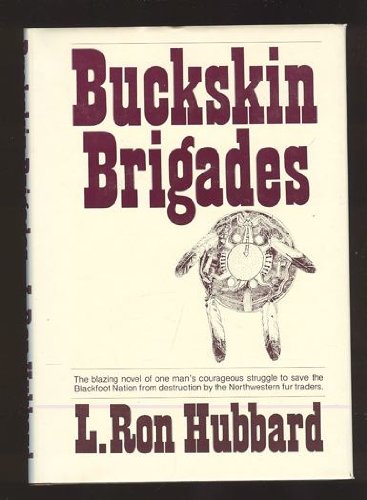
                  Buckskin Brigades is a Western novel written by L. Ron Hubbard, first published July 30, 1937. The work was Hubbard's first hard-covered book, and his first published novel. The next year he became a contributor to Astounding Science Fiction. Winfred Blevins wrote the introduction to the book. Some sources state that as a young man, Hubbard became a blood brother to the Piegan Blackfeet Native American tribe while living in Montana, though this claim is disputed. Hubbard incorporates historical background from the Blackfeet tribe into the book.

                • Cover of Captain Underpants
                  Captain Underpants

                  series · 15 books · 1989

                  similar bynorth americafunnyhumor+1 more

                  Captain Underpants is an American illustrated children's novel series and multimedia franchise created by author and illustrator Dav Pilkey. The series revolves around two fourth graders, George Beard and Harold Hutchins, living in Piqua, Ohio, and Captain Underpants, an aptly named superhero from one of the boys' homemade comic books, who accidentally becomes real when George and Harold hypnotize their cruel, bossy, and ill-tempered principal, Mr. Krupp.

                • Cover of The Works of Robert E. Howard (Bison Books)
                  The Works of Robert E. Howard (Bison Books)

                  series · 6 books · 1935

                  completed

                  similar bynorth americawesterns+2 more

                • Cover of The Ghost in the Noonday Sun
                  The Ghost in the Noonday Sun

                  Sid Fleischman · standalone novel · 1965

                  similar by19th centurynorth americaadventurousfunny

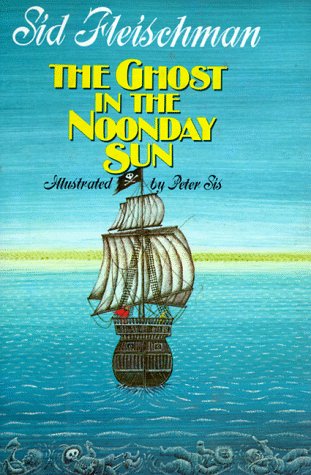
                  "Because Captain Scratch thinks Oliver Finch can see ghosts, he shanghais the boy abroad a pirate ship bound from Nantucket in search of buried treasure. Devious methods enable Oliver to outwit Scratch." --summary, Worldcat library record {{OCLC|429575904}} "firmly rooted in fantasy and exaggeration" --Mark Taylor LA Times 1965-12-26 m25 "this rollicking tale has more than enough humor and suspense" --Robert Berkvist NY Times 1965-10-24 pBR34

                • Cover of Weird West Tales
                  Weird West Tales

                  series · 5 books · 2010

                  completed

                  similar bynorth americawesterns+2 more

                • Cover of Highfire
                  Highfire

                  Eoin Colfer · standalone novel · 2020

                  similar bynorth americafunnyhumor+1 more

                  Wyvern, Lord Highfire of the Highfire Eyrie, is the last dragon on Earth and is hiding out in a Louisiana swamp. He strikes a deal with Cajun swamp rat Squib: Squib will keep him company and fetch supplies for him and Vern will protect Squib from the dirty cop that is chasing him. However, there will be soon be a firery reckoning, in which dragons wither finally become extinct or Ver's glory days are back.

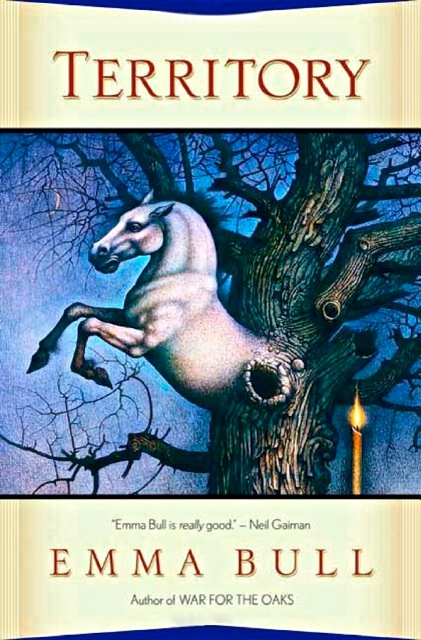
                • Cover of Territory
                  Territory

                  Emma Bull · standalone novel · 2007

                  similar by19th centurynorth americawesternsadventurous

                  Territory is a fantasy western or Weird West novel by Emma Bull, published in 2007. It placed 4th in the 2008 Locus Poll Award for Best Fantasy Novel. It was also nominated for a World Fantasy Award in the Best Novel category.

                • Cover of The Wolf Is My Brother
                  The Wolf Is My Brother

                  Chad Oliver · standalone novel · 1967

                  similar by19th centurynorth americawesternsadventurous

                  Western. Winner of the 1967 Golden Spur Award for Best Historical Novel.

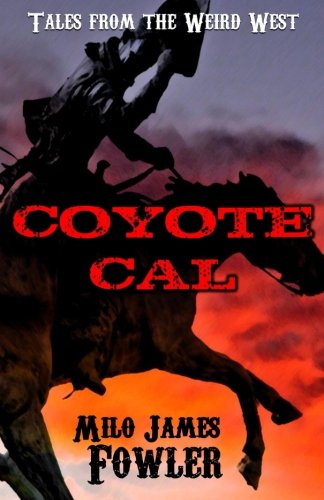
                • Cover of Coyote Cal Adventures
                  Coyote Cal Adventures

                  series · 10 books · 2011

                  similar by19th centurynorth americawesternsadventurous

                • Cover of The Heaven's Gate Chronicles
                  The Heaven's Gate Chronicles

                  series · 3 books · 2013

                  similar bynorth america+3 more

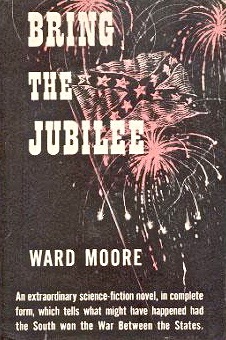
                • Cover of Bring the Jubilee
                  Bring the Jubilee

                  Ward Moore · standalone novel · 1953

                  similar by19th centurynorth america+1 more

                  From the flaps of the Farrar, Straus and Young first edition: ""Although I am writing this in the year 1877, I was not born until 1921." So Hodge Backmaker begins his story of the harsh and curious world he lived in, a world in which the South won the Civil War and the all-powerful Confederacy dominated the poor and backward North; a North that had neither a transcontinental railroad, and where television was undreamed of. Like most Northerners, Hodge was poor - but he had ambition. A printer's handyman in 1938, he had since become an eminent historian. Hodge's special interest was the American past, when the States had been united and had seemed to be on the brink of prosperity and technical progress. And then he was offered an opportunity no historian could resist - he could go back in time. Hodge chsoe to return to a certain field near Gettysburg on a day in July, 1863... Bring the Jubilee is a novel of curious events, of adventures and reflection, of passions and comment. It at time Hodge's world, its horse-carriages and gas-lights, minibles and tinugraphs and the Great Emperors' War of 1914 faintly resembles our own, it is perhaps, because that world might well become a reality: on the battlefield of Gettysburg there is a small hill called Little Round Top. One July morning in 1863 the Confederate Army made the tactical error of not occupying this hill. It was a mistake that cost them victory in a battle which - in the view of many historians - was the turning point of the Civil War."

                • Cover of Golgotha
                  Golgotha

                  series · 4 books · 2013

                  completed

                  similar by19th centurynorth americawesterns+1 more

                • Cover of Deadwood Dick
                  Deadwood Dick

                  series · 6 books · 2009

                  similar by19th centurynorth americawesternsadventurous

                • Cover of Cowboys & Aliens
                  Cowboys & Aliens

                  Joan D. Vinge · standalone novel · 2011

                  similar by19th centurynorth americawesternsadventurous

                  First contact/alien invasion novel set in the old west.

                • Cover of Magnus Bane
                  Magnus Bane

                  series · 14 books · 2013

                  part of The Mortal Instruments

                  similar bynorth america+1 more

                  The Bane Chronicles is a series of connected novellas featuring the character of Magnus Bane from Cassandra Clare's The Mortal Instruments series. The novellas are co-written by Clare, Maureen Johnson, and Sarah Rees Brennan. Release of the novellas began in April 2013 in e-book and audio versions, and were released in a combined print edition in November 2014. The Bane Chronicles has appeared on the New York Times Bestsellers list for Children's Books a number of times beginning in July 2013.

                • Cover of The Californios
                  The Californios

                  Louis L'Amour · standalone novel · 1974

                  similar by19th centurynorth americawesternsadventurous

                  A western with lost-race elements and mysticism.

                • Cover of Hell's Bounty
                  Hell's Bounty

                  Joe R. Lansdale & John L. Lansdale · standalone novel · 2016

                  similar by19th centurynorth americaadventurouswesterns

                  Hell's Bounty is a horror novel written by American brothers Joe R. Lansdale and John L. Lansdale. It takes place in the old western town of Falling Rock. Bounty hunter Smith sets off a chain of events as he searches for one bad hombre Quill. He is blown to hell, literally, where he makes a deal with a bartender Snappy, who is really Satan. He will save Smith from the bowels of hell if he returns to Falling Rock and stops Quill who has made a deal with the "Old Ones" who are so evil even Satan can't abide. Smith teams up with a whip snapping redhead whore named Payday, a legless man called Undertaker, and a whisky drinking doctor to stop Quill who has turned into a winged demon and has turned the people of the town into ghouls to try to stop Smith and his band from ruining his plans.

                • Cover of The Magic Wagon
                  The Magic Wagon

                  Joe R. Lansdale · standalone novel · 1986

                  similar by19th centurynorth americawesterns+1 more

                • Cover of The Alvin Maker Saga
                  The Alvin Maker Saga

                  series · 15 books · 1986

                  similar by19th centurynorth america+1 more

                  The Tales of Alvin Maker is a series of seven alternate history fantasy novels written by American novelist Orson Scott Card, published from 1987 to 2026. They explore the experiences of a young man, Alvin Miller, who realizes he has incredible powers for creating and shaping things around him.

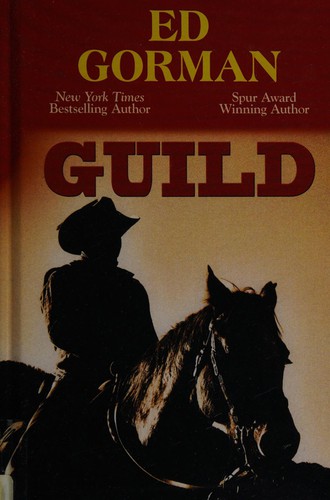
                • Cover of Guild
                  Guild

                  Ed Gorman · standalone novel · 1987

                  similar by19th centurynorth americawesternsadventurous

                  A weary bounty hunter, looking to collect his reward, rides into the dusty Dakota town of Denton one evening. He doesn't plan to stay long, until an old buddy and a beautiful woman convince him to change his mind. But some folks don't like his presence in Denton. They don't like the questions he's asking and the insinuations he's making. And they'll do everything they can to make sure he leaves mighty quick, whether it's on the back of a horse or in a narrow pine box.