More like Wicked Problems
anchored on:fantasy
but
- The Scholomance
series3 books2020
similar byfantasydarkwizardssecondary worldtense+2 more
The Scholomance Trilogy is a series of three fantasy novels written by American author Naomi Novik. The books follow the adventures of Galadriel "El" Higgins during and after attending a dangerous and magical boarding school for wizards named after the magic school Scholomance from Romanian folklore.
- The Old Kingdom / Abhorsen milieu
series11 books1995
similar byfantasysecondary world+2 more
The Old Kingdom, or Abhorsen in North America and the UK, is a fantasy series written by Australian author Garth Nix. It originated in 1995 with the novel Sabriel and has continued in the novels Lirael (2001), Abhorsen (2003), Goldenhand (2016), and Terciel & Elinor (2021), as well as a prequel novel titled Clariel (2014). The Old Kingdom also consists of the novella The Creature in the Case (2005) and various other short fiction.
- Darwath
series7 books1982
similar byfantasydarksecondary world+2 more
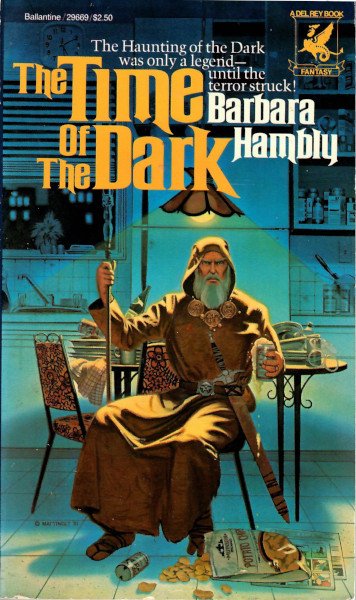
Darwath begins with two modern-day Californians pulled through a portal into a dying medieval world under siege from the Dark, shape-shifting monsters that hunt by night and are driving civilization underground. The Time of the Dark, The Walls of Air, and The Armies of Daylight make up the original trilogy; Barbara Hambly returned to the same characters decades later in Mother of Winter and Icefalcon's Quest. It's portal fantasy built around practical, unglamorous survival rather than chosen-one heroics.
- Magic Kingdom of Landover
series8 books1986
similar byfantasysecondary world+3 more
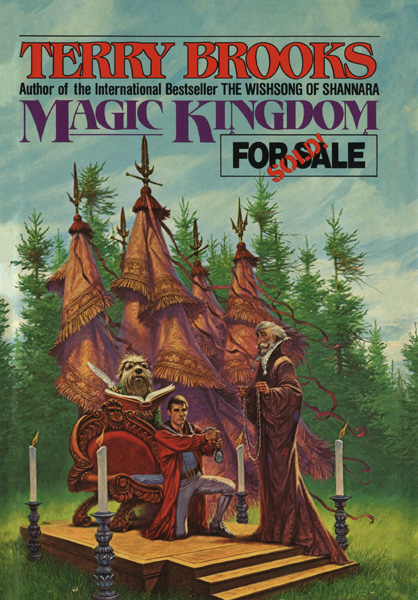
The Magic Kingdom of Landover is a series of six fantasy novels by Terry Brooks following the adventures of a former trial lawyer named Ben Holiday, who purchases a magical kingdom.
- Дозоры / Watch
series6 books1998
similar byfantasydarkpolitical intriguecontemporarytenseurban fantasy
Sergei Lukyanenko's Watch novels are set among the Others, humans with supernatural gifts who split into the Night Watch, policing dark forces, and the Day Watch, policing the light ones, under a truce that keeps their ancient war frozen in an uneasy bureaucratic peace. Each book follows the Night Watch magician Anton Gorodetsky through a case that keeps threatening to unbalance that truce for good. Starting in Moscow, the series expands across six novels into other cities and a wider view of how the truce actually works.
- A Song of Ice and Fire
series14 books1996
part of World of Ice and Fire
similar byfantasydarkpolitical intriguesecondary world+1 more
A Song of Ice and Fire is a series of high fantasy novels by the American author George R. R. Martin. Martin began writing the first volume, A Game of Thrones, in 1991, and published it in 1996. Martin, who originally envisioned the series as a trilogy, has released five out of seven planned volumes. The most recent entry in the series, A Dance with Dragons, was published in 2011. Since then, Martin has been working on the sixth novel, titled The Winds of Winter. A seventh novel, A Dream of Spring, is planned to follow.
- Dragon Age (Bioware RPG tie-in)
series21 books2009
similar byfantasypolitical intriguesecondary world+2 more
These tie-in novels expand BioWare's Dragon Age video game series into prose, mostly written by the games' own lead writers, and are set in the same dark-fantasy world of Thedas. The Stolen Throne and The Calling serve as prequels filling in the backstory of characters central to the first game, while later books such as Asunder and The Masked Empire tie more directly into the plots and politics of the sequels. They are written for players wanting deeper lore rather than as standalone entry points to the setting.
- Shannara
universe50 books1977
Start hereWord and the Void · The very beginning of the timeline
similar byfantasysecondary world+1 more
Long after the world we know has burned itself to slag in the Great Wars, the Four Lands rise green over the bones of the old age. Science is a forbidden memory; magic has come back into the world, and with it the old divisions — Men, Elves, Dwarves, Trolls, and Gnomes, each Race a splinter of what humanity became. This is the far-future Earth of Shannara, where the ruins buried beneath the soil are ours, and the only keepers of the vanished knowledge are the Druids of Paranor, who wake once a generation to meet the darkness rising again. Terry Brooks opened the Four Lands in 1977 with The Sword of Shannara and has charted its history for four decades since — a legendarium ordered not by throne but by a single bloodline, the Ohmsfords, each generation inheriting an Elfstone, a blade, or a wishsong when the age demands a hero. The original trilogy gives way to the Heritage of Shannara, the Voyage of the Jerle Shannara, the High Druid, Dark Legacy, Defenders, and the concluding Fall of Shannara; the Genesis of Shannara books reach back to the apocalypse itself, and the Word and the Void trilogy back further still, into a demon-haunted version of our own present that is the root of everything after. In 2025 Brooks passed the histories to Delilah S. Dawson to carry forward. What sets these books apart is their long memory: a world where every triumph is provisional, where the same evil returns wearing a fresh shape each age, and magic always exacts its price. The reading is warm and headlong — questing companies, old talismans, journeys across a mapped and named wilderness — shadowed by the knowledge that all of it stands on the wreckage of a former world. Enter as readers first did: with The Sword of Shannara, then onward in publication order. The chronological path, beginning with Word and the Void, rewards a second journey, once the Four Lands already feel like home.
- Forgotten Realms: The Legend of Drizzt
series39 books1988
part of Forgotten Realms
similar byfantasysecondary world+2 more
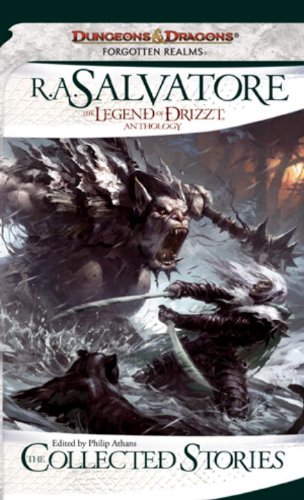
The Legend of Drizzt is a series of fantasy novels by R. A. Salvatore that began in 1988, and consists of 39 books as of August 15, 2023. They are based in the Forgotten Realms setting in the dimension of Abeir-Toril on the continent Faerûn in the Dungeons & Dragons universe currently published and owned by Wizards of the Coast. It combines the series The Dark Elf Trilogy, The Icewind Dale Trilogy, Legacy of the Drow, Paths of Darkness, The Hunter's Blades Trilogy, and other sets into an abridged compilation. Drizzt Do'Urden is the main character of most of the books.
- His Dark Materials Universe
universe13 books1995
Start hereHis Dark Materials · Start here
similar byfantasy+3 more
In a world like ours and unlike it, every human soul walks outside the body in the shape of an animal — a daemon, who speaks, who cannot be lied to, and who settles into one fixed form only when childhood ends. This is the country of His Dark Materials: a company of parallel worlds across which an invisible dust of consciousness drifts down upon the waking mind; where a Church that calls itself the Magisterium would sooner sever a child's soul than let that Dust be understood; and where a golden instrument, the alethiometer, answers true questions for anyone with the patience to read it. Philip Pullman's design stands in two trilogies and a scatter of shorter tales. His Dark Materials — Northern Lights (published in America as The Golden Compass), The Subtle Knife, and The Amber Spyglass — carries Lyra Belacqua from the rooftops of a shadow Oxford across the borders between worlds. The Book of Dust returns to that same territory: La Belle Sauvage looks back to Lyra as an infant carried through a great flood, while The Secret Commonwealth follows her grown and less certain into adulthood, with a concluding volume closing the arc. Around them sit slim companion books — Lyra's Oxford, Once Upon a Time in the North, Serpentine — and Nicholas Wright's stage adaptation, made with Pullman's blessing. The register is grave and luminous at once, its title lifted from Milton and its quarrel drawn from Blake: a story that takes the side of curiosity, love, and the physical world against any authority that would forbid them. It reads as adventure — armoured bears, aeronauts, knife-cut windows between skies — yet reasons like philosophy. Begin with Northern Lights / The Golden Compass and read the first trilogy through before turning to The Book of Dust, which deepens everything the first has already made you feel.
- The Riftwar Universe
universe44 books1982
Start hereRiftwar Saga · Start here
similar byfantasysecondary world+2 more
On the world of Midkemia a tear opens in the air itself, a rift hung between stars, and through it march the armies of an empire from another world entirely. So begins the chronicle Raymond E. Feist has kept for three decades: the tale of Pug, a castle kitchen boy apprenticed to a magician on the very day the invasion lands, and of Tomas, his friend, who inherits the armor and the ancient fury of a dead dragon-lord. Around these two the Riftwar Cycle turns, widening book by book from one besieged frontier keep into the whole history of a world of kingdoms, guilds, thieves' dens and mage-towers. The cycle runs to roughly thirty novels, gathered into arcs a newcomer can enter and finish on their own. The founding Riftwar Saga (Magician, Silverthorn, A Darkness at Sethanon) sets the board; the Serpentwar Saga, Krondor's Sons and the Conclave of Shadows carry the story down the generations; the Darkwar, Demonwar and Chaoswar sagas bring it toward its close. Crossing the rift to the rival world of Kelewan, Feist and Janny Wurts wrote the Empire trilogy, opening with Daughter of the Empire, a court intrigue told wholly from the invaders' side and for many the finest thing here. Shorter Legends of the Riftwar and the game-born Riftwar Legacy fill the corners; later still, Feist opens an altogether new world in the Firemane books. Feist writes fantasy in its most companionable key: apprentices who grow into archmages, tavern boys who become spies and dukes, a world you return to the way you return to an old inn. The mood is adventure before dread, friendship and rank and hard-won craft, wars that cost something, all of it rendered plainly and at a gallop. Begin where it began, with Magician, then follow the arcs in the order they were written, and the rift will carry you the rest of the way.
- Dragon Trilogies
series6 books1988
similar byfantasypolitical intriguesecondary worldtense
The Dragon Prince and Dragon Star trilogies comprise six connected fantasy novels written by Melanie Rawn. The Dragon Prince trilogy focuses on Prince Rohan of the Desert and his Sunrunner wife, Sioned, while the Dragon Star trilogy focuses on their son, Pol. The Dragon Prince trilogy consists of novels Dragon Prince, The Star Scroll, and Sunrunner's Fire. The books in the Dragon Star trilogy are Stronghold, The Dragon Token, and Skybowl.
- The Secret Texts
series4 books1998
completed
similar bydarkfantasysecondary worldtense+2 more
Holly Lisle was an American writer of fantasy, science fiction, paranormal romance and romantic suspense novels. She was also known for her work in educating writers, including her e-book Mugging the Muse: Writing Fiction for Love And Money, starting the Forward Motion Writers' Community web site, and her novel-writing and revision courses How to Think Sideways.
- The Magravandias Chronicles Universe
series7 books1999
completed
similar bydarkfantasysecondary world+2 more
- Forgotten Realms
universe526 books1987
Start hereForgotten Realms: The Legend of Drizzt · Start here
similar byfantasysecondary world
Come in from the cold and mind the door — the wind off the Sword Coast has teeth. Faerûn is a lived-in world, the best-charted of the many lands that share the sky of Toril: a continent of walled cities and haunted wilds where the gods are near enough to answer, magic is a craft with rules and a cost, and every tavern hearth throws light on someone with a blade, a grudge, or a tale worth the telling. Beneath it all lies the Underdark, that black underland where the drow raise their spider-city of Menzoberranzan; above, the merchant towers of Waterdeep, the frost of Icewind Dale, the ruin-strewn North. This is the sword-and-sorcery world of Dungeons & Dragons rendered into prose — grand, generous, and endlessly walkable. It is a world of many hands, and the shelf shows it: some five hundred novels across eighty-odd cycles, uneven as any long telling but rich past counting. R. A. Salvatore's dark-elf ranger Drizzt Do'Urden anchors the whole — the Icewind Dale and Dark Elf trilogies and the long saga that follows. Ed Greenwood, who first dreamed the Realms, chronicles the Old Mage in the Elminster books. Around them turn the god-walking Avatar cycle and its Time of Troubles, the six-author War of the Spider Queen, Salvatore's Cleric Quintet, and Elaine Cunningham's elf-and-drow songs; Troy Denning and a company of others fill the marches between. What holds it together is warmth — the register of a bard who wants you fed and seated before the tale turns. Newcomers should follow Drizzt first: read Homeland and the Dark Elf trilogy for his beginning, or The Crystal Shard as first readers met him. Either door opens the Realms; the other eighty cycles wait past it.
- The Dresden Files
series56 books2000
similar bywizardscontemporaryurban fantasy+2 more
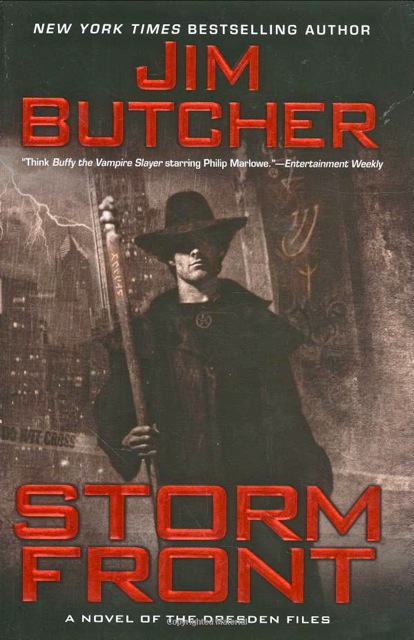
The Dresden Files is an urban fantasy series written by American author Jim Butcher. The novels are narrated from the first-person perspective of Harry Dresden, a private detective and wizard, as he investigates supernatural disturbances in contemporary Chicago. The first entry, Storm Front, was published in 2000 by Roc Books.
- Chronicles of the Deryni
series4 books1970
part of Deryni
similar byfantasywizardspolitical intriguesecondary worldtense
Katherine Kurtz's Chronicles of the Deryni trilogy (Deryni Rising, Deryni Checkmate, High Deryni, 1970-1973) follows the young King Kelson Haldane defending his throne in Gwynedd, a kingdom modeled on 10th-to-12th-century Britain, against ecclesiastical opposition and foreign invasion. Central to the conflict is the Deryni, a persecuted human-like people with inherited psychic and magical powers, whose presence in and around the crown makes Kelson's reign a lightning rod for religious and political tension.
- Magids
series2 books1997
completed
similar byfantasywizardscontemporary+2 more
Deep Secret follows Rupert Venables, a junior Magid — one of a hidden order of magical agents who quietly steer worlds toward or away from magic — tasked with finding Earth's replacement senior Magid at, of all places, a science-fiction convention, while also trying to restore an assassinated emperor's rightful heir in another world entirely. Diana Wynne Jones's Magids series continues with The Merlin Conspiracy, following a different young magic-user into the same multiverse of worlds under the Magids' watch.
- Divine Cities
series3 books2014
similar byfantasypolitical intriguesecondary world+2 more
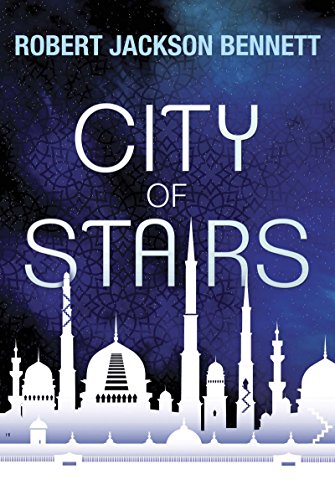
The Divine Cities is a trilogy of fantasy novels by the American writer Robert Jackson Bennett. It consists of the novels City of Stairs, City of Blades (2016) and City of Miracles (2017).