More like Wild Jack
anchored on:science fictiondystopiabritish islesfar futureyoung adultcoming of age+2 more
but
- Starman Jones
Robert A. Heinleinstandalone novel1953
similar byadventurousfar futurescience fictioncoming of ageyoung adult
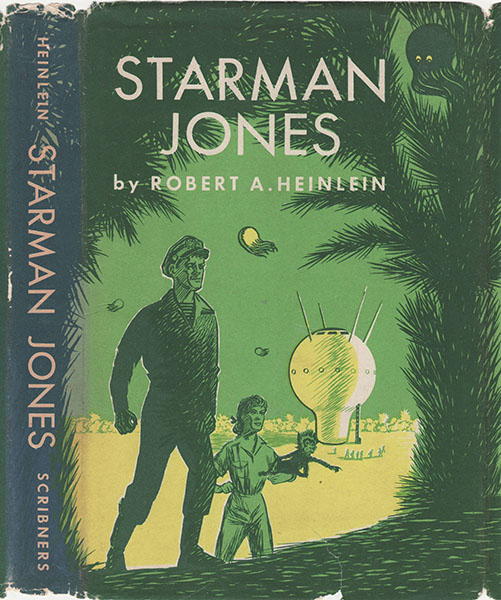
Starman Jones, a 1953 science fiction novel by Robert A. Heinlein, features a farm boy who wants to go to the stars. Charles Scribner's Sons published the book as part of the Heinlein juveniles series.
- The Hunger Games Universe
universe5 books2008
Start hereThe Hunger Games · Start here
similar byfar futuredystopiascience fictiondarkyoung adult+1 more
Panem, they call it now — a nation raised on the drowned bones of North America, a glittering Capitol ringed by twelve districts it once starved into obedience. Every year the Capitol collects its debt in children: two tributes from each district, drawn by lottery, dropped into an engineered arena, and made to kill one another on live television while the whole country is required to watch. This is the Hunger Games — entertainment, punishment, and government at once. Suzanne Collins tells it in a compact, unified body of work. The founding trilogy — The Hunger Games, Catching Fire, and Mockingjay — follows Katniss Everdeen, a girl from the coal-mining District 12 who volunteers in her sister's place and becomes something the Capitol never scripted. Two prequels reach back into the same machinery: The Ballad of Songbirds and Snakes traces a young Coriolanus Snow long before he is President, and Sunrise on the Reaping returns to District 12 a generation ahead of Katniss. Begin with the trilogy, in order — it is Katniss's voice, close and present-tense, that makes Panem breathe, and the prequels land hardest once you know how her story ends. Beneath the spectacle sits one steady, uncomfortable question: who profits when we agree to look away.
- The Hunger Games
series3 books2008
part of The Hunger Games Universe
similar byfar futurescience fictiondystopiadarkyoung adult+1 more
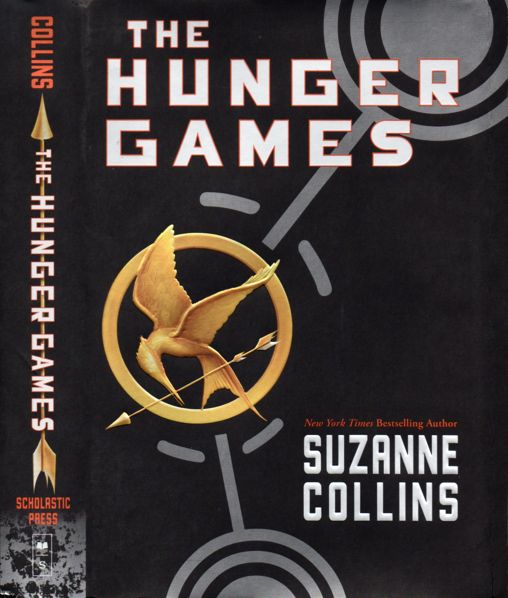
The Hunger Games is a series of young adult dystopian novels written by American author Suzanne Collins. The series consists of a trilogy that follows teenage protagonist Katniss Everdeen, as well as two prequels. The Hunger Games universe is a dystopia set in Panem, a post-apocalyptic North American country consisting of the wealthy Capitol and 12 districts in varying states of poverty. As punishment for rebellion, the Capitol hosts an annual battle royale competition called The Hunger Games. Each of the 12 districts must send two children between the ages of 12 and 18 to participate, and the last surviving child is dubbed the victor.
- Brave New World
series8 books1932
similar byscience fictiondystopiaclass conflictfar future+2 more
Aldous Huxley's 1932 novel imagines a future World State where reproduction, social caste, and desire are all engineered before birth, and the population is kept content through conditioning, sleep-hypnosis, and a mood-altering drug called soma. The story follows the disruption this seemingly stable order suffers when an outsider raised beyond its reach is brought into it, exposing what the society traded away for comfort and order. Some editions pair the novel with Huxley's own 1958 nonfiction essay collection, Brave New World Revisited, which reassesses the book's ideas rather than continuing its story.
- Tunnel in the Sky
Robert A. Heinleinstandalone novel1955
similar byadventurousfar futurescience fictioncoming of ageyoung adult
As the final test of a survivalist/explorer class, teenagers are dumped on an alien planet to use their skills while awaiting pickup. But something has gone wrong, and they find they are on their own.
- The Status Civilization
Robert Sheckleystandalone novel1960
similar byfar futurescience fictiondystopiaclass conflictdarkprison escape
"Will Barrent had no memory of his crime ... but he found himself shipped across space to a brutal prison-planet. On Omega, his only chance to advance himself -- and stay alive -- is to commit an endless series of violent crimes. The average inmate's life expectancy from time of arrival is three years. Can Barrett survive, escape, and return to Earth to clear his name?" - From the cover of the 2007 Wildside paperback edition.
- Hungry City Chronicles / Mortal Engines
series5 books2001
part of Mortal Engines Universe
similar byfar futureadventurousscience fictionyoung adult+2 more
The Mortal Engines Quartet, also known as the Predator Cities Quartet, is a series of epic young adult science fiction novels by the English novelist and illustrator Philip Reeve. He began the first volume of the series, Mortal Engines, in the 1980s, and it was published in 2001. Reeve then published three further novels, Predator's Gold (2003), Infernal Devices (2005), and A Darkling Plain (2006).
- Citizen of the Galaxy
Robert A. Heinleinstandalone novel1957
similar byadventurousfar futurescience fictioncoming of age+1 more
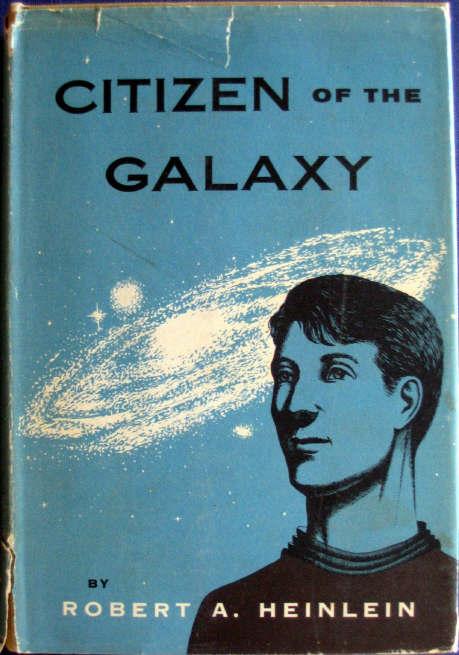
On a planet far distant from Earth, a lame beggar buys a young boy slave who has forgotten his origins. The beggar is more than he seems, and gives the boy an extensive education while employing him as an observer of activity in their city. Years later, the beggar is captured by the government, and the youth must escape the planet.
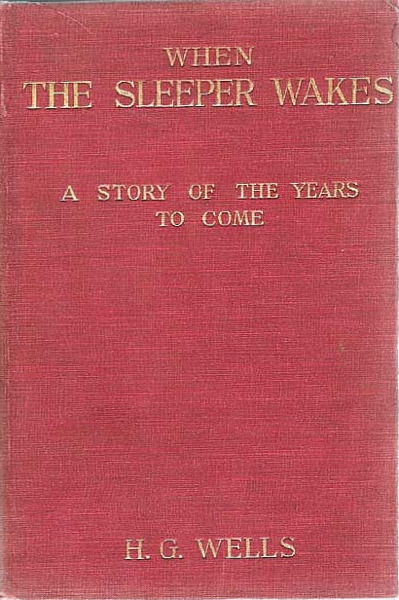
- When the Sleeper Wakes
H. G. Wellsstandalone novel1899
similar byfar futurescience fictiondystopiadarkbritish isles+1 more
Graham, an insomniac Englishman in 1890s London, takes a course of sleep-inducing drugs and falls into a coma that lasts two centuries. He wakes in the year 2100 to find his investments have compounded, through a ruling body called the White Council, into effective ownership of most of the world's wealth and power, making him, on paper, humanity's master, and in practice, its prisoner, held under guard while the Council governs in his name. A rebel faction led by a man named Ostrog frees him, hoping to use his symbolic authority to spark an uprising against the Council. An early H. G. Wells dystopia about inherited power and manufactured consent.
- The Giver
series5 books1993
similar byfar futuredystopiascience fictionyoung adult+1 more
The Giver Quartet is a series of four books about a dystopian world by American author Lois Lowry, which consists of The Giver (1993), Gathering Blue (2000), Messenger (2004), and Son (2012). The first book won the 1994 Newbery Medal and has sold more than 50 million copies. The story takes place at an unknown point of time within the future. Each book has a different protagonist but is set in the same futuristic era.
- Starship Troopers
Robert A. Heinleinstandalone novel1959
similar byadventurousfar futurecoming of agescience fiction+1 more
Starship Troopers is a military science fiction novel by American writer Robert A. Heinlein. Written in a few weeks in reaction to the US suspending nuclear tests, the story was first published as a two-part serial in The Magazine of Fantasy & Science Fiction as Starship Soldier, and published as a book by G. P. Putnam's Sons on November 5, 1959.
- Red Planet
Robert A. Heinleinstandalone novel1949
similar byadventurousfar futurescience fictioncoming of age
A boy colonist on Mars takes his bouncing ball Martian pet with him to boarding school, but the new Headmaster is a controlling tyrant. Things get worse when he discovers a plot that will jeopardize all of the colonists.
- Mortal Engines Prequels
series3 books2009
part of Mortal Engines Universe
similar byadventurousscience fictioncoming of agefar futureyoung adult+2 more
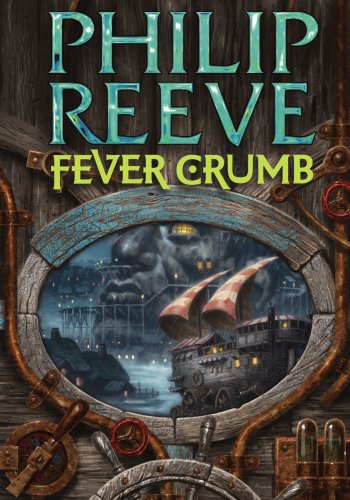
The Fever Crumb series is the title of a series of novels written by British author, Philip Reeve, and is the prequel series to his Mortal Engines Quartet. The series consists of three books: Fever Crumb (2009), A Web of Air (2010), and Scrivener's Moon (2011). The books follow a young woman known as Fever Crumb, and her adventures set around the time of the creation of the first traction cities that become prevalent in the Mortal Engines series. While Reeve stated in 2011 that he had always envisaged a quartet for the series, assuring readers of a fourth installment, by 2020 he said that "too much time has passed", making it difficult to revisit the series, and that he did not intend to finish and publish a fourth book.
- Imperial Galaxy
series2 books2012
similar byadventurousfar futurescience fictioncoming of ageyoung adult
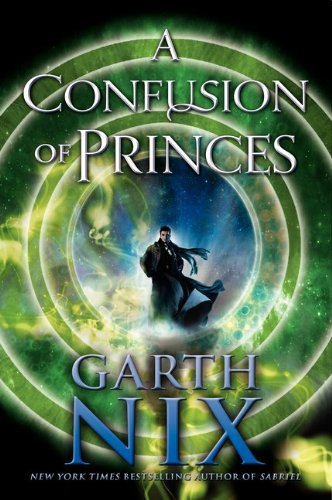
Prince Khemri has spent his life as one of ten thousand princes bred and trained by a sprawling galactic empire, expecting eventual rule -- until he learns just how disposable princes actually are, and how routinely they're assassinated by their own siblings. Garth Nix's A Confusion of Princes follows Khemri through the empire's ruthless military, its secret intelligence service, and a deadly, decades-long competition to determine who might one day take the throne. It's a single, self-contained space opera rather than an ongoing series.
- Time Trap
Nicholas Fiskstandalone novel1976
similar byadventurousfar futurescience fictioncoming of agedystopiayoung adult
"Dano was a hopeful, a Teen, with a skimmer that could do 100 mph and all the sports gear in the Catalogue, but it was not enough. He wanted to get out of Homebody Unit 362 and be responsible for his own life, and perhaps Uncle Lipton, with his secret long-life drug, Xtend, might have the answer." - From the back cover of the 1987 Penguin edition, via Google Books.
- Feed
M. T. Andersonstandalone novel2002
similar byscience fictiondystopiacoming of agedarkyoung adult+1 more
Feed (2002) is a cyberpunk, satirical, dystopian, young-adult novel by M. T. Anderson, focusing on issues such as American hegemony, corporate power, consumerism, information technology, data mining, and environmental decline, with a sometimes sardonic, sometimes somber tone. From the first-person perspective of a teenaged boy, the book takes place in a near-futuristic American culture completely dominated by advertising and corporate exploitation, corresponding to the enormous popularity of internetworking brain implants called feeds.
- The Ear, the Eye, and the Arm
Nancy Farmerstandalone novel1989
similar byadventurousfar futurescience fictioncoming of age+1 more
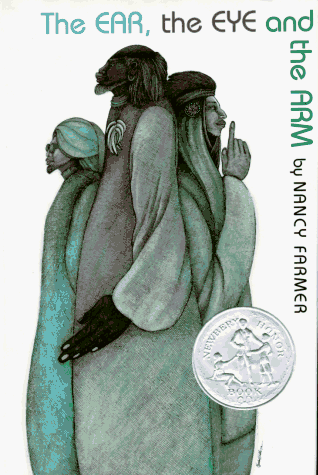
The Ear, the Eye, and the Arm is a children's science fiction novel by American writer Nancy Farmer. It was awarded a Newbery Honor. The novel is set in Zimbabwe in the year 2194, with a strong theme of Afrofuturism.
- Chaos Walking
series5 books2008
similar byfar futurescience fictiondystopiadarkyoung adult+1 more
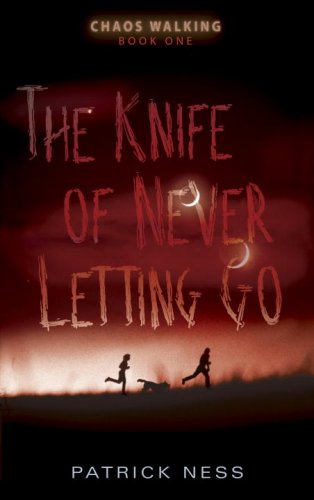
Chaos Walking is a young adult science fiction series written by American-British novelist Patrick Ness. It is set in a dystopian world where all living creatures can hear each other's thoughts in a stream of images, words, and sounds called Noise. The series is named after a line in the first book: "The Noise is a man unfiltered, and without a filter, a man is just chaos walking." The series consists of a trilogy of novels and three short stories.
- Jarra / Earth Girl
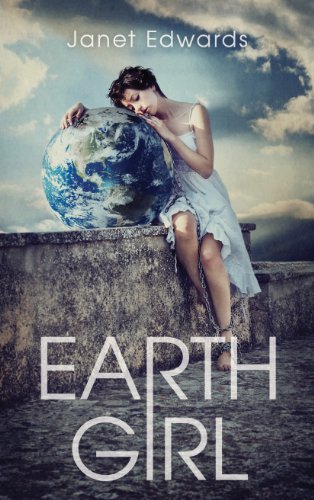
series3 books2012
part of Earth Girl
similar byadventurousfar futurescience fictionclass conflictyoung adult+1 more
- Our Friends from Frolix 8
Philip K. Dickstandalone novel1970
similar byfar futurescience fictionclass conflictdystopia+1 more
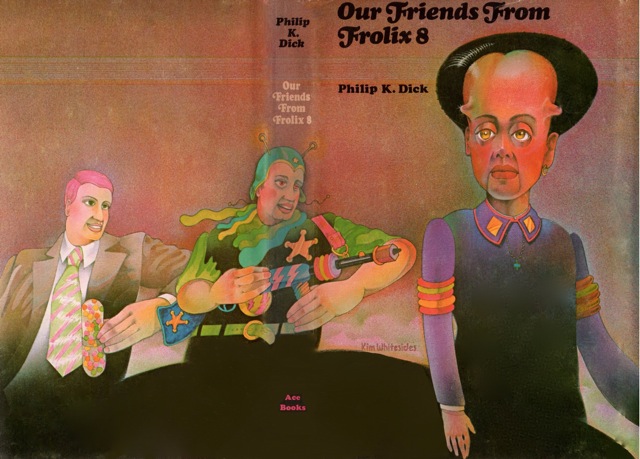
Our Friends from Frolix 8 is a science fiction novel by American writer Philip K. Dick. It was written from 1968 to 1969 and was published in 1970 by Ace Books. The novel is set in the 22nd century, when humanity is ruled by mutated humans, "New Men" and "Unusuals", while normal "Old Men" are discriminated against. The story follows Nick Appleton, a low-class Old Man worker who becomes a subversive to the system, and Willis Gram, the Unusual ruler of the Earth. Separately, resistance leader Thors Provoni has left the planet to find an ally to the Old Men, finally returning with an alien from far away in space. The novel is best known for a single scene where the characters discuss the dead body of God having been found in space.
- The Stars My Destination
Alfred Besterstandalone novel1956
similar byadventurousfar futurescience fictiondark
When a passing spaceship refuses to rescue the lone survivor from the drifting wreck of another ship, he dedicates his life to discovering who made that decision and exacting his revenge, in the process altering human history and his own character.
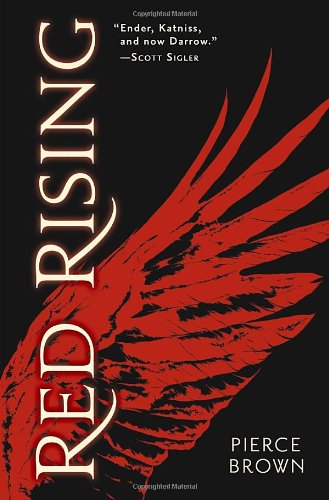
- Red Rising
series13 books2014
similar byfar futurescience fictionclass conflictdarkdystopia
Pierce Brown's Red Rising follows Darrow, a lowborn 'Red' miner on a colonized Mars who discovers his caste's suffering is a lie sustained by the ruling Gold elite, and infiltrates their ranks to destroy the system from within. The series expands from a single-protagonist revenge story into a sprawling multi-book war across the solar system, eventually following an ensemble cast beyond Darrow alone, and combines Roman-inspired factional politics with brutal, competition-driven action set pieces.
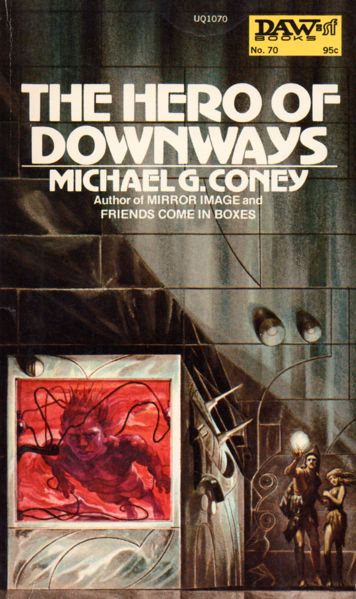
- The Hero of Downways
Michael G. Coneystandalone novel1973
similar byadventurousfar futurescience fictioncoming of age+2 more
Clone me courage - Once there was a Hero who confronted the dreaded Daggertooth and slew it. Unfortunately he was also slain by it - but the legend persisted. If it could be done once, then another Hero could be raised to do it again. Because the Daggertooth was dangerous to hibernating humanity. All people - all that anyone knew of - lived far underground in tunnels built for safety and hibernation. The Daggertooth was a mass killer - more so even than the hideous Oddlies, the outcasts of the darker tunnels. So this is the story of John-A, the "vatkid" who was trained to be a second Hero. And the story of "trukid" Shirl who taught John-A what to do. And Threesum, the Oddlies' leader, who scoffed at heroes. And the Elders who frowned at all the risky goings-on. This is the story of a mighty strange world and a mighty strange future... (from the back cover of the DAW Books first edition)
- The Last Man
Mary Shelleystandalone novel1826
similar byfar futurescience fictiondystopiadarkbritish isles
The Last Man is an apocalyptic, dystopian science fiction novel by Mary Shelley, first published in 1826. The narrative concerns Europe in the late 21st century, ravaged by the rise of a bubonic plague pandemic that rapidly sweeps across the entire globe, ultimately resulting in the near-extinction of humanity. It also includes discussion of the British state as a republic, for which Shelley sat in meetings of the House of Commons to gain insight to the governmental system of the Romantic era. The novel includes many fictive allusions to her husband Percy Bysshe Shelley, who drowned in a shipwreck four years before the book's publication, as well as their close friend Lord Byron, who had died two years previously.