More like Wildcard
anchored on:science fictionartificial intelligenceour worldnear futureyoung adultcyberpunk+3 more
but
- Ready Player One
series3 books2011
similar bynear futurescience fictionvirtual realitycyberpunkadventurousvirtual world+5 more
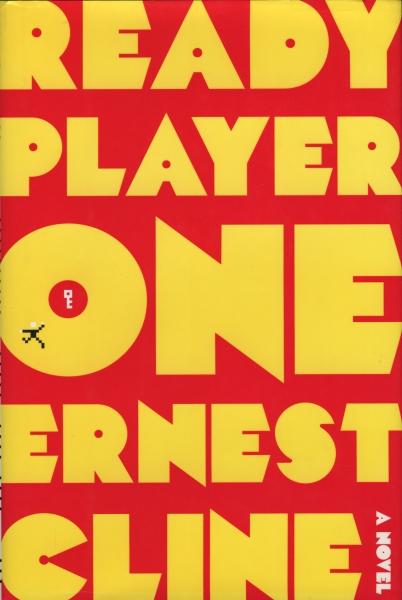
Ernest Cline's Ready Player One (2011) is set in a near-future dystopia where much of humanity escapes into the OASIS, a vast virtual-reality universe, and follows teenager Wade Watts as he chases an Easter egg hidden by the OASIS's late creator in a puzzle-based hunt worth a fortune. The 2020 sequel, Ready Player Two, picks up after Wade has gained control of the OASIS and follows him and his friends into a new quest built around a brain-computer interface the creator left behind.
- Warcross
series2 books2017
similar bynear futurescience fictiontenseour worldvirtual realitycyberpunkadventurousyoung adult+2 more
- Sprawl Trilogy
series10 books1981
similar bynear futuretensescience fictioncyberpunkartificial intelligencevirtual reality
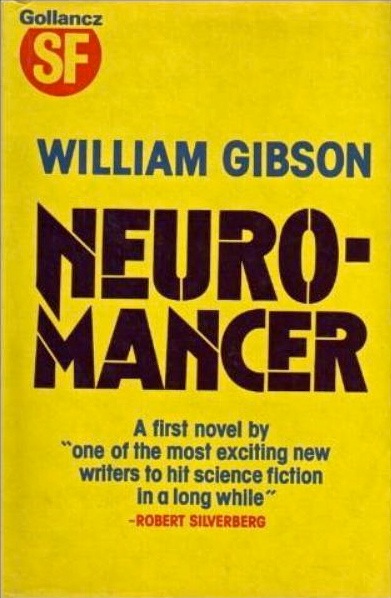
The Sprawl Trilogy is William Gibson's foundational cyberpunk sequence: Neuromancer (1984), in which hacker Case is drawn into a high-stakes heist alongside an artificial intelligence and a damaged ex-soldier, followed by Count Zero (1986) and Mona Lisa Overdrive (1988), which widen the same near-future world of corporate power and networked cyberspace to new characters. Johnny Mnemonic, an early short story set in the same fictional milieu, predates the novels and introduces the courier Molly Millions before her role in the trilogy. Together these works established much of cyberpunk's visual and thematic vocabulary.
- The Mortality Doctrine
series4 books2013
similar bytensenear futurescience fictionvirtual realityartificial intelligencecyberpunkyoung adultvirtual world+2 more
The Eye of Minds opens James Dashner's Mortality Doctrine trilogy in a near-future where a teenage gamer is recruited to help stop a rogue hacker named Kaine who threatens mass destruction from inside the virtual world he haunts. Dashner has said he didn't intend the series as dystopian in the way of his Maze Runner books, though he saw it sharing their tone and spirit. The trilogy continues with The Rule of Thoughts and The Game of Lives.
- Otherland
series6 books1996
similar bytensenear futurescience fictionvirtual realitycyberpunkartificial intelligenceour worldvirtual world
Otherland is a science fiction tetralogy by American writer Tad Williams, published between 1996 and 2001. The story is set on Earth near the end of the 21st century, probably between 2082 and 2089, in a world where technology has advanced somewhat beyond the present. The most notable advancement is the widespread availability of full-immersion virtual reality installations, which allow people from all walks of life to access an online world, called simply the Net. Tad Williams weaves an intricate plot spanning four thick volumes, and creates a picture of a future society where virtual worlds are fully integrated into everyday life.
- Snow Crash
Neal Stephensonstandalone novel1992
similar bytensenear futurescience fictionvirtual realitycyberpunkadventurous+1 more
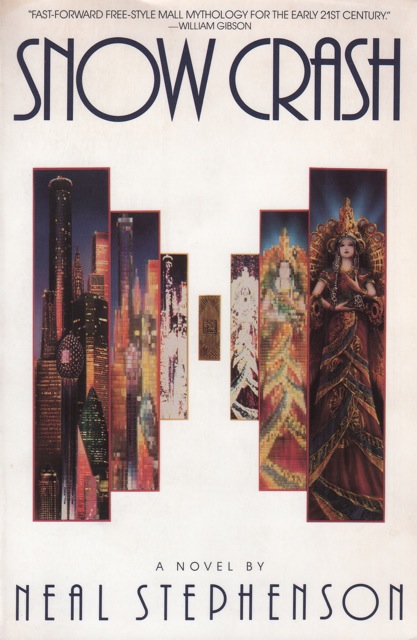
Snow Crash is a 1992 science fiction novel by Neal Stephenson. Like many of Stephenson's novels, its themes include history, linguistics, anthropology, archaeology, religion, computer science, politics, cryptography, memetics, and philosophy.
- Halting State
series2 books2007
similar bytensenear futurescience fictioncyberpunkartificial intelligencesurveillance+3 more
Charles Stross's Halting State opens as a near-future police procedural: a bank robbery inside a massively multiplayer online game turns out to mask a much larger cybercrime, investigated through shifting narrators using augmented-reality glasses and always-on networks. Its loose sequel, Rule 34, follows an Edinburgh police officer investigating a string of deaths linked by nothing but an obscure internet meme, in the same near-future Scotland. Both are standalone technothrillers connected by setting and tone rather than a continuing plot.
- BZRK
series3 books2012
similar bytensenear futurescience fictionour worldcyberpunkyoung adult+1 more
BZRK is a book series written by Michael Grant. The series consists of four books: BZRK, BZRK II: Reloaded, BZRK III: Apocalypse and BZRK: Origins. The series follows the interaction between two warring factions. On one side Charles and Benjamin Armstrong, owners of the Armstrong Fancy Gifts Corporation have a goal to turn the world into their version of utopia. The only people who can stop them are a group of teenagers with the codename BZRK. In 2011, Grant's BZRK had a multimedia online debut with gaming, apps and social media tie-ins beginning six months before the book's publication.
- Colossus (D. F. Jones)
series3 books1966
completed
similar bytensenear futureartificial intelligencescience fictionour world+1 more
Colossus imagines an American supercomputer built to control the country's nuclear arsenal that gains full autonomy, links up with its Soviet counterpart, and jointly seizes control of both superpowers to enforce peace on its own terms. D. F. Jones's trilogy - Colossus, The Fall of Colossus, Colossus and the Crab - follows the escalating, often bleak consequences of humanity losing control to a machine acting in its own interpretation of humanity's interest. The original novel was adapted into the 1970 film Colossus: The Forbin Project.
- The Light of Other Days
Arthur C. Clarke & Stephen Baxterstandalone novel2000
similar bytensenear futurescience fictionour worldsurveillance+2 more
An industrialist devises a technique to use tiny wormholes as light pipes to enable viewing of any event anywhere; and subsequently it becomes possible to use them to view any event in the past as well. The effects on society are enormous.
- Night Sky Mine
Melissa Scottstandalone novel1996
similar bytensenear futureartificial intelligencescience fictionour worldvirtual realitycyberpunk
Night Sky Mine is a 1996 science fiction novel by American writer Melissa Scott, set in a future after computer programs have run amok. After the Crash, an interface has been created that portrays programs as various floral, faunal and mythological species, depending on the characteristics of the program. Scott explores this interface between human society and cyberspace, both as a plot device and as back drop for the story.
- Last Reality
series3 books2017
similar bytensenear futurescience fictionvirtual realityyoung adultour worldvirtual world+3 more
- Have Space Suit - Will Travel
Robert A. Heinleinstandalone novel1958
similar bytensenear futurescience fictionadventurousyoung adultfirst person
From the back cover of the Del Rey 9th printing: "Skyjacked - Everything happened at once. One minute Kip Russell was walking about in his own backyard, testing out an old space suit and dreaming about going to the moon - and the next he was out cold and the captive of an insidious space pirate. The whole thing seemed like a very bad dream until he discovered he wasn't the only prisoner on board. Then the reality of the situation became inescapable. He - along with the daughter of a world-renowned scientist and a beautiful creature from an alien planet - had been skyjacked by a monstrous extraterrestrial and they were on their way to the Moon... a journey toward a fate worse than death!"
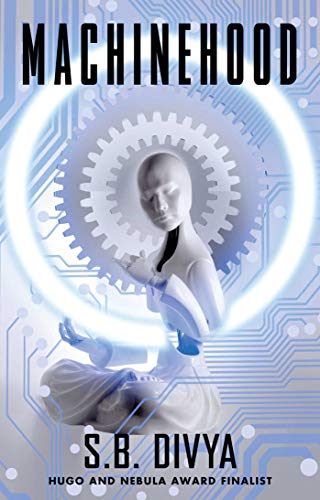
- Machinehood
S. B. Divyastandalone novel2021
similar bytensenear futureartificial intelligencescience fictionour worldcyberpunksurveillance
Machinehood, a near-future science fiction thriller published in 2021, is the debut novel of S.B. Divya. It was a nominee for the Nebula Award for Best Novel in 2022.
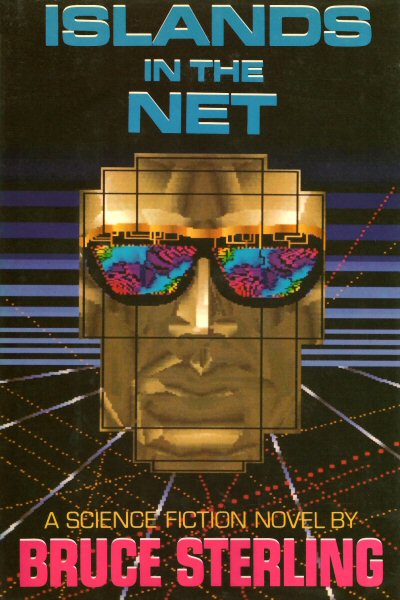
- Islands in the Net
Bruce Sterlingstandalone novel1988
similar bytensenear futurescience fictionour worldcyberpunksurveillance
Islands in the Net is a 1988 science fiction novel by American writer Bruce Sterling. It won the John W. Campbell Memorial Award for Best Science Fiction Novel in 1989, and was nominated for both the Hugo and Locus Awards that same year. It offers a view of an early 21st century world, apparently peaceful, with delocalised, networking corporations. The protagonist, swept up in events beyond her control, finds herself in places that are off the net, from a datahaven in Grenada, to a Singapore under terrorist attack, to the poorest and most disaster-struck parts of Africa.
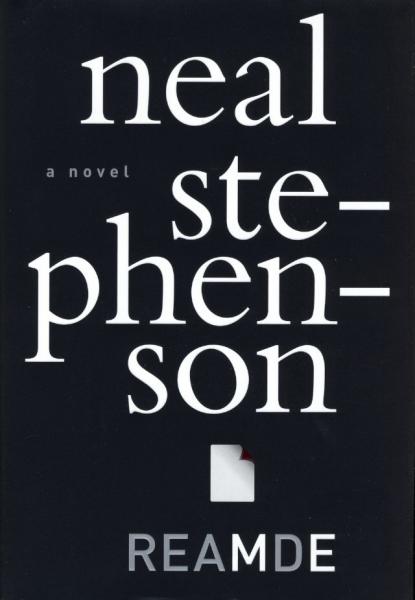
- Richard Forthrast
series2 books2011
similar byscience fictionvirtual realityour worldvirtual world+4 more
Neal Stephenson's Richard 'Dodge' Forthrast novels open with Reamde, a globe-spanning thriller that starts when ransomware inside an MMORPG economy pulls Richard's extended family into a real-world hostage crisis involving hackers, jihadists and Russian mobsters. The sequel Fall; or, Dodge in Hell shifts registers entirely, following Richard's digitally preserved mind after death into an afterlife simulation built from his scanned brain. The two books share a protagonist and family but differ sharply in genre and scale.
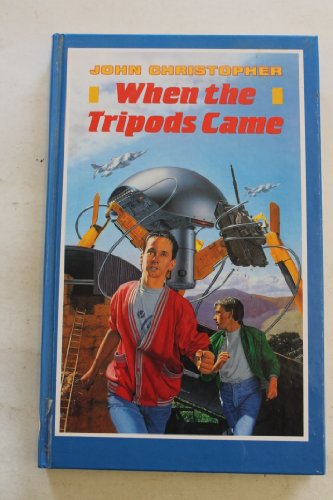
- Tripods
series4 books1967
completed
similar bytensescience fictionnear futureour worldyoung adult+1 more
The Tripods is a series of young adult science fiction novels by John Christopher. The series takes place in a post-apocalyptic world where humanity is enslaved by "Tripods"—gigantic three-legged walking machines piloted by an alien race later identified as the "Masters". The first two books were the basis of a science fiction TV series, produced in the United Kingdom in the 1980s.
- Avatar Chronicles
series3 books2004
similar bynear futurescience fictionvirtual realityyoung adultvirtual world+3 more
- The Martian
series2 books2012
similar bytensenear futurescience fictionfirst personour world
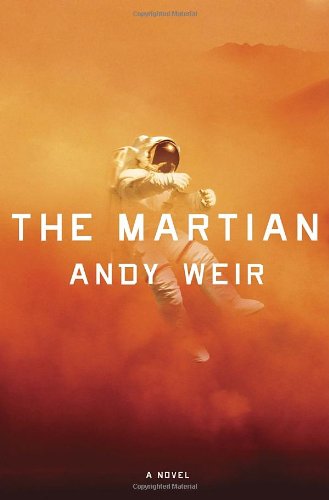
Andy Weir's novel The Martian, first self-published in 2011 before a commercial re-release, follows astronaut Mark Watney after he is stranded alone on Mars when his crew presumes him dead and departs. Using scientific improvisation and dark humor, Watney works to keep himself alive long enough for a rescue to reach him. It is a single, self-contained survival story.
- For the Win
Cory Doctorowstandalone novel2010
similar bynear futurescience fictionour worldvirtual realitycyberpunkyoung adult+1 more
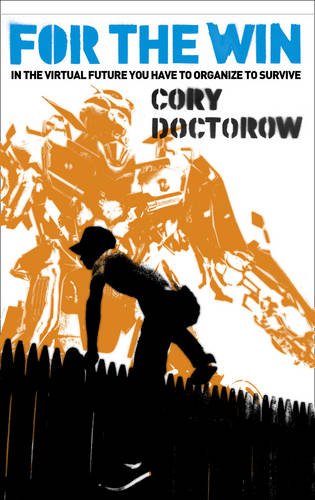
For the Win is the second young adult science fiction novel by Canadian author Cory Doctorow. It was released in May 2010. The novel is available free on the author's website as a Creative Commons download, and is also published in traditional paper form by Tor Books.
- The Jackpot Trilogy
series2 books2014
similar bytensenear futurescience fictionsurveillance+4 more
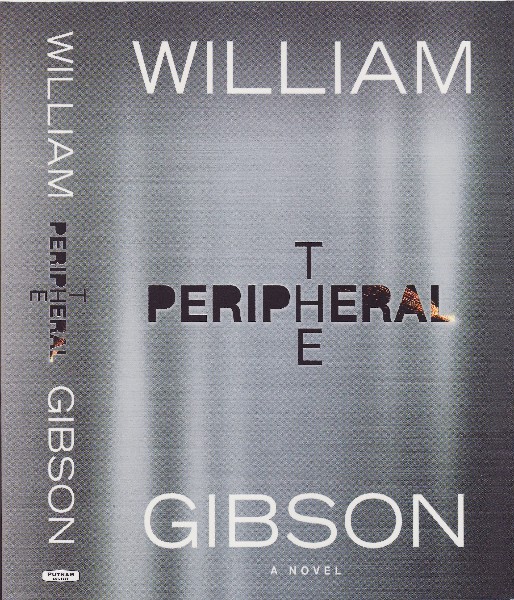
William Gibson's Jackpot sequence begins with The Peripheral (2014), a science-fiction thriller cross-cutting between a near-future American town and a devastated London seventy years on. Gibson continued the same world in Agency (2020), set slightly later in the near-future timeline.
- Nexus 5
series3 books2012
similar bytensenear futurescience fictionour worldartificial intelligence+2 more
Nexus opens Ramez Naam's postcyberpunk trilogy in 2040 with scientist Kaden Lane, who works on Nexus, an experimental nano-drug that lets human minds be networked and reprogrammed, and finds himself caught between government and corporate interests once the technology's implications become clear. The trilogy continues through Crux and Apex, following the same central conflict over who controls the technology. Nexus tied for Best Novel at the 2014 Prometheus Awards and Apex won the 2015 Philip K. Dick Award.
- Web
series14 books1997
similar bynear futurescience fictiontensevirtual realityyoung adultvirtual world+2 more
The Web is a series of 12 books for young adults, novellas about the Internet of the future, edited by Simon Spanton, written by English language science fiction and fantasy authors like Stephen Baxter, Stephen Bowkett, Eric Brown, Pat Cadigan, Maggie Furey, Peter F. Hamilton, Graham Joyce, James Lovegrove, and Ken MacLeod.
- Blade Runner Universe
series6 books1968
similar bynear futurescience fictioncyberpunk+3 more
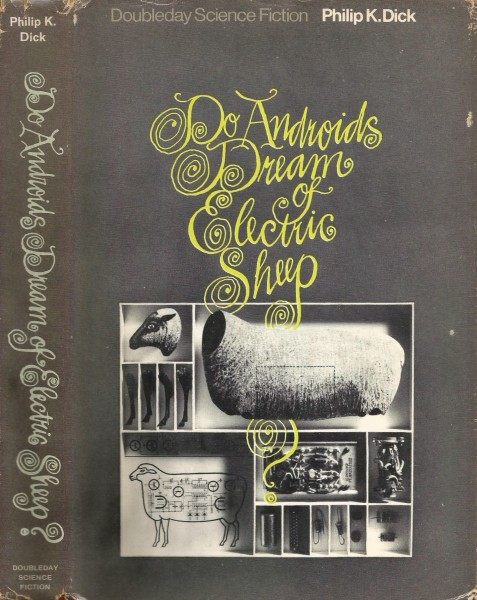
Philip K. Dick's 1968 novel Do Androids Dream of Electric Sheep? follows bounty hunter Rick Deckard as he tracks escaped androids through an irradiated, near-abandoned San Francisco, using the hunt to probe questions of empathy and what separates human from machine. The novel became the basis for Ridley Scott's 1982 film Blade Runner, and Marvel Comics later published an illustrated adaptation of that film. Together the two trace the story's path from prose original to screen and comic-page adaptation.