More like Willow
anchored on:north americacontemporary
but
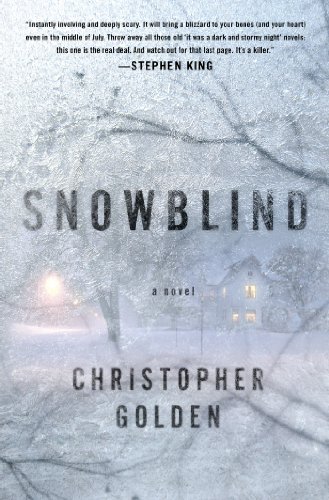
- Snowblind
Christopher Goldenstandalone novel2014
similar bythriller & suspensenorth americacontemporaryemotional+2 more
"SNOWBLIND is a thrilling contemporary ghost story with both horror and heart. The small New England town of Coventry is haunted by its memories of a deadly winter... in which loved ones were lost, families torn apart, and a town buried in a terrible blizzard. Now, twelve years later, the people plagued by their memories of that storm are haunted once again as a new storm approaches, promising to wreak new havoc. Old ghosts trickle back, and this storm will prove even more terrifying and deadly than the last. With richly textured characters, scarred and haunted by the ghosts of those they loved most, Snowblind reinvents the ghost story for today's world. Spellbinding in scope and rooted deeply in classic storytelling, Christopher Golden has written a chilling masterpiece that is the best work of his career and a standout supernatural thriller"--
- Kairos
series11 books1962
completed
similar by+3 more
The Time Quintet is a science fantasy series of five young adult novels written by American author Madeleine L'Engle and made up of A Wrinkle in Time (1962), A Wind in the Door (1973), A Swiftly Tilting Planet (1978), Many Waters (1986), and An Acceptable Time (1989).
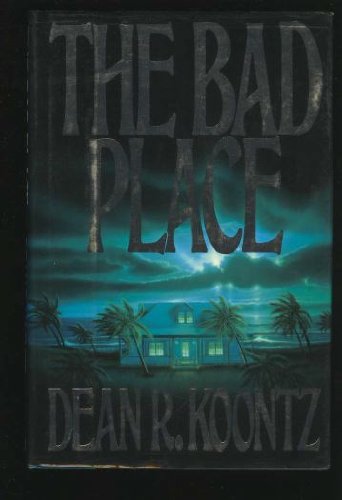
- The Bad Place
Dean R. Koontzstandalone novel1990
similar bythriller & suspensenorth americaidentitydark+1 more
The Bad Place is a horror novel by American writer Dean Koontz, released in 1990. It includes elements of horror, suspense, and mystery, and is presented partially as a twist on the private eye drama. The story follows Frank Pollard, a man who wakes up each night with no memory of where he has been or what he has done, only to find himself covered in injuries or in possession of strange items. As his condition worsens, private investigators Bobby and Julie Dakota are hired to track him and uncover the truth behind his blackouts. Their investigation leads them into a disturbing web of genetic experimentation, family secrets, and a hidden force manipulating human lives from the shadows. As the plot unfolds, the novel reveals that Frank and others are being pursued by powerful, almost inhuman figures connected to a twisted experiment involving selective breeding and enhanced abilities. The Dakotas become entangled in a struggle not only to save Frank but also to survive against forces that seem to operate beyond normal human limits. Themes in the novel include identity, memory loss, the abuse of science, and the nature of evil. Koontz blends psychological horror with fast-paced action, creating a narrative that shifts between detective fiction and supernatural thriller. The book received generally positive reception from readers who enjoyed Koontz’s signature suspense style, though some critics noted its complex and sometimes chaotic plot structure. Over time, it has remained one of his more memorable early-1990s works due to its unusual blend of genres and its dark, unsettling tone.
- Little Tall Island / In the Path of the Eclipse
series4 books1989
similar bynorth americadarkcontemporary+2 more
Stephen King set three otherwise separate books on or near the fictional Little Tall Island off the coast of Maine: Gerald's Game, about a woman handcuffed to a bed after her husband's fatal heart attack; Dolores Claiborne, a housekeeper's decades-spanning confession narrated in a single unbroken monologue; and Storm of the Century, a novelization of King's own miniseries about a stranger who arrives during a historic blizzard demanding a terrible price from the town. The first two novels share a real total solar eclipse as a pivotal, connecting event despite having otherwise unrelated plots and characters.
- Castle Rock
series16 books1978
similar bynorth americacontemporary+1 more
Castle Rock is the fictional Maine town that links a cluster of otherwise separate Stephen King novels and novellas, including The Dead Zone, Cujo, The Dark Half, Needful Things, and Elevation. Rather than telling one continuous story, the books share a setting and occasional recurring figures, such as Sheriff Alan Pangborn, while each follows its own self-contained plot and cast. Any title can be read on its own without needing the others.
- The Hellfire Club
Peter Straubstandalone novel1996
similar bythriller & suspensenorth america+1 more
They are dying, one by one: wealthy middle-aged women in an exclusive Connecticut suburb. Their murderer remains at large. Nora Chancel, wife of publishing scion Davey Chancel, fears she may be next. After all, her past has branded her a victim. . . . Then Davey tells Nora a surreal story about the Hellfire Club, where, years before, he met an obsessed fan of Chancel House's most successful book, Night Journey--a book that has a strange history of its own. . . . Suddenly terror engulfs Nora: She must defend herself against fantastic accusations even as a madman lies in wait. And when he springs, Nora will embark on a night journey that will put her fears to rest forever, dead or alive. . . .From the Paperback edition.
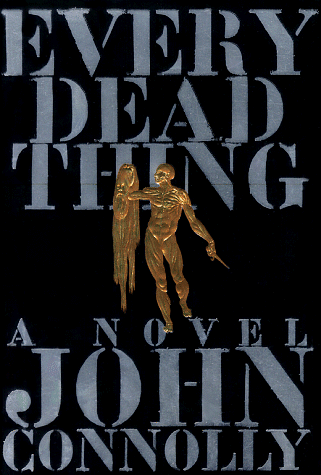
- Charlie Parker
series22 books1999
similar bycontemporarynorth americadark+1 more
John Connolly's long-running crime series follows Charlie Parker, a former New York police detective turned private investigator in Maine, whose cases repeatedly brush against the genuinely supernatural alongside conventional violence and grief. Every Dead Thing (1999) opens with Parker hunting his own wife and daughter's killer, establishing the series' recurring blend of hardboiled procedural and horror; later novels widen into recurring antagonists and a broader mythology of evil working through human agents. Now well over twenty books, the series has grown Parker's two associates, Louis and Angel, into major recurring characters.
- Locked in Time
Lois Duncanstandalone novel1985
similar bythriller & suspensenorth americacontemporaryidentityfamily secrets
Locked in Time is a 1985 suspense novel by Lois Duncan. The story centers around Nore, a seventeen-year-old girl who moves into a new home with her father and her new stepfamily. Soon after she meets her stepmother, stepbrother, and stepsister for the first time, Nore begins to suspect something is not quite right about her stepfamily. The author states that the novel explores some of the issues surrounding having eternal life. Duncan says she developed the idea for the novel when one of her daughters was thirteen years old and was having issues with her body image. Duncan mentions that her daughter was "taking everything out" on her, and she began to wonder what it would be like if her daughter never outgrew her adolescence.
- Frameshift
Robert J. Sawyerstandalone novel1997
similar bythriller & suspensenorth americacontemporaryfamily secrets+1 more
Winner of Japan's Seiun Award and Hugo Award finalist Pierre Tardivel is a scientist working on the Human Genome Project with the Nobel Prize winner, Dr. Burian Klimus. A driven man, Pierre works with the awareness that he may not have long to live: he has a fifty-fifty chance of dying from Huntington's disease, an incurable hereditary disorder of the central nervous system. While he still has his health, Pierre and his wife decide to have a child, and they search for a sperm donor. When Pierre informs Dr. Klimus of their plan, Klimus makes an odd but generous offer: to be the sperm donor as well as to pay for the expensive in vitro fertilization. Shortly thereafter it transpires that Klimus might be hiding a grim past: he may be Ivan Marchenko, the notorious Treblinka death-camp guard known as Ivan the Terrible. While digging into Klimus's past with the help of Nazi hunter Avi Meyer, Pierre and his wife discover that Pierre's insurance company has been illegally screening clients for genetic defects. The two lines of investigation begin to coverage in a sinister manner, while they worry about the possibility of bearing the child of an evil, sadistic killer.
- Tempest (Julie Cross)
series4 books2011
similar bycontemporary+4 more
Julie Cross' Tempest trilogy opens with Tempest (2012), a young-adult science-fiction novel published by St. Martin's Press that was nominated for a 2012 RT Book Reviews award and received a starred Kirkus review. It continues across Vortex and Timestorm, published through 2014.
- Adam Binder
series4 books2020
similar bycontemporaryfamily secretsnorth america+1 more
The Adam Binder novels are a series of urban fantasy novels by David R. Slayton. The series consists of four novels, White Trash Warlock (2020), Trailer Park Trickster (2021), Deadbeat Druid (2022), and Redneck Revenant (2025). The novels received critical praise for their depiction of poverty, LGBT issues, and family relationships in the setting of urban fantasy novels. A spin-off novel set between books three and four, Rogue Community College, was published in October, 2024.
- Dissolution
Nicholas Bingestandalone novel2025
similar bythriller & suspensecontemporaryfamily secretsemotional+1 more
Dissolution is a 2025 science fiction novel by Nicholas Binge, published in the UK by Harper Voyager, and in the US by Riverhead Books. It is published or forthcoming in multiple languages, including Spanish, German, Hungarian, and Arabic. The novel tells the story of Margaret (Maggie) Webb, who discovers that her husband Stanley’s Alzheimer’s is a false cover for the fact that his memories are being purposefully erased to keep something he did in his past hidden. The book alternates between Maggie and Stanley’s perspectives as they move through multiple decades of their relationship.
- Jumper
series6 books1992
similar bycontemporary+2 more
Jumper follows David Rice, a teenager who discovers he can teleport anywhere he's been and uses the power to escape an abusive home, only to find that ability alone doesn't solve the harder problems of finding his absent mother, building an honest relationship, or staying off the radar of people who'd exploit him. Steven Gould's series continues across Reflex, Impulse, and Exo, later following his and his wife's daughter as a second-generation jumper. A 2008 film loosely adapted the first novel.
- American Gods
series10 books1999
similar bycontemporary+3 more
Neil Gaiman's American Gods (2001) follows Shadow Moon, an ex-convict who takes a job as bodyguard to a mysterious drifter who is secretly the Norse god Odin, and is drawn into a brewing conflict between the old immigrant gods of myth and the new gods of media, technology, and modern American life. Gaiman's 2005 novel Anansi Boys is set in the same mythological world and shares the trickster god Mr. Nancy, but follows a different protagonist and story, making it a loose companion rather than a direct sequel.
- Bag of Bones
Stephen Kingstandalone novel1998
similar bynorth americacontemporarydarkemotional+1 more
Bag of Bones is a 1998 horror novel by American writer Stephen King. It focuses on an author who suffers severe writer's block and delusions at an isolated lake house four years after the death of his wife. It won the 1999 Bram Stoker Award for Best Novel, the 1999 British Fantasy Award for Best Novel, and the 1999 Locus Award for Best Dark Fantasy/Horror Novel.
- Effective Engineering Solutions
series37 books1995
similar bythriller & suspensecontemporarynorth america
The Ice Limit follows a team hired by an eccentric billionaire to recover what looks like the largest meteorite ever found, off a remote island near Cape Horn, only to discover, as they flee across the Antarctic seas aboard a retrofitted tanker, that they've actually excavated something alive. Douglas Preston and Lincoln Child wrote it as a standalone techno-thriller in 2000; it later fed into their separate Gideon Crew series rather than getting a direct sequel of its own.
- Finders Keepers (Stephen King)
series7 books2014
similar bythriller & suspensenorth americacontemporary+1 more
The books gathered here follow Holly Gibney, who first appeared as a supporting character in Stephen King's Bill Hodges trilogy (Mr. Mercedes, Finders Keepers, End of Watch) before graduating into her own strand of stories: a major role in The Outsider, then top billing in the novella If It Bleeds and the novels Holly and Never Flinch, where she works as a private investigator taking on cases with a supernatural edge. The mix of true-crime procedural instincts and creeping horror is a hallmark of King's later work with the character.
- Firestarter
Stephen Kingstandalone novel1980
similar bythriller & suspensenorth americacontemporarydark
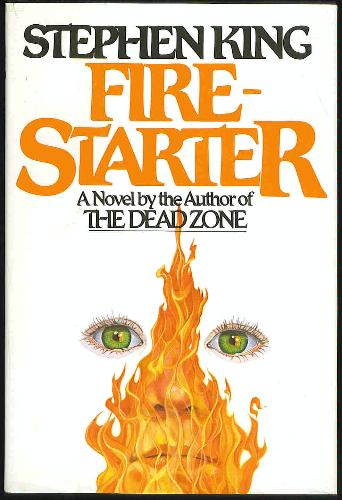
WorldCat: Innocence and beauty ignite with evil and terror... First, a man and a woman are subjects of a top-secret government experiment designed to produce extraordinary psychic powers. Then, they are married and have a child. A daughter. Early on the daughter shows signs of a wild and horrifying force growing within her. Desperately, her parents try to train her to keep that force in check, to 'act normal'. Now the government wants its brainchild back for its own insane ends.
- The Fury
series4 books1976
similar bythriller & suspensecontemporary+2 more
John Farris's The Fury centers on a teenage girl and boy with escalating psychic and telekinetic powers who become targets of a covert government program trying to weaponize them. The 1976 novel, adapted into Brian De Palma's 1978 film, gave rise to a string of later sequels following the same family's psychic bloodline across decades. Farris writes it as paranoid conspiracy thriller as much as horror, with the powers themselves treated as a violent, destabilizing force.
- In the Night Room
Peter Straubstandalone novel2004
similar bythriller & suspensecontemporaryidentitydarknorth america
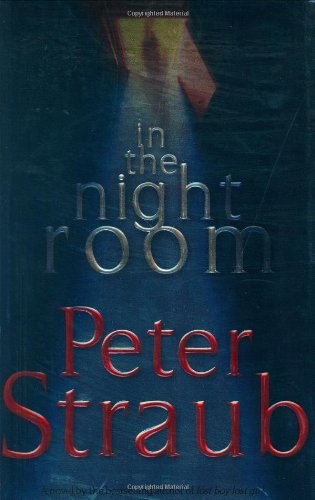
In the Night Room is a 2004 horror-thriller novel by American author Peter Straub, a sequel to his 2003 book Lost Boy, Lost Girl. The work was first published in hardback on October 26, 2004, through Random House and it won the 2004 Bram Stoker Award for Novel. Straub encountered some difficulties while writing In the Night Room and had written several different passages for the work before growing bored with each version before writing it using the same technique he used for its predecessor in which he "reached down inside the book and turned it inside out."
- Misery
Stephen Kingstandalone novel1987
similar bythriller & suspensenorth americacontemporarydark
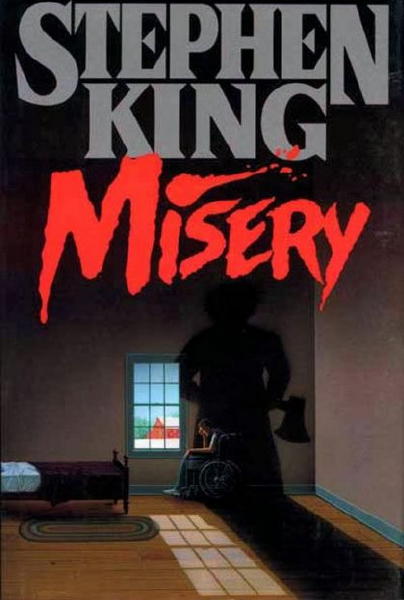
Novelist Paul Sheldon finishes the manuscript that will finally kill off Misery Chastain, the heroine who made his career, when a snowstorm sends his car off a Colorado road. He wakes with both legs shattered, in the care of Annie Wilkes, a former nurse and 'number one fan' with no intention of taking him to a hospital. Annie manages his pain with drugs he comes to depend on, and her moods swing between doting and violent. When she learns Misery doesn't survive his new manuscript, her reaction makes clear Paul isn't just her patient, he's her hostage. A Stephen King novel about a writer at his most devoted fan's mercy.
- The Merchant Princes
series14 books2004
similar bycontemporary+2 more
The Merchant Princes is a science fantasy and alternate history series of nine novels by British writer Charles Stross. In the series, there exist a number of parallel worlds, all of which are on the same geographical Earth but with different societies at different points of development. Members of a certain bloodline can travel between these worlds along with their immediate possessions. The series largely follows Miriam Beckstein, a technology journalist raised in a familiar "normal" Earth, who discovers she was born in a parallel world and is a member of this bloodline. She quickly becomes entangled in political maneuvering and assassination plots with her estranged family. Miriam uses modern technology and investigative journalism to attempt to stay a step ahead.