More like Win
anchored on:science fictionfar futureyoung adult
but
- Ender Wiggin
series14 books1977
part of Ender's Game Universe
similar byscience fictionother star systemsfar future+2 more
Orson Scott Card's Ender's Game (1985, expanded from his 1977 novella) follows child prodigy Andrew "Ender" Wiggin as he is recruited into a military training program built to prepare Earth's defenses for an anticipated third war against an insectoid alien species known as the Formics. The saga continues years later through Speaker for the Dead and Xenocide, following an older Ender as he confronts the moral weight of his role in that earlier conflict, and concludes the core arc in Children of the Mind, with Ender in Exile filling in the years between the first two books. Set within the wider Ender's Game universe, the series shifts from military coming-of-age story to slower, more philosophical science fiction as it progresses.
- Tunnel in the Sky
Robert A. Heinleinstandalone novel1955
similar bytensescience fictionsurvivalcoming of ageother star systemsfar futureyoung adult
As the final test of a survivalist/explorer class, teenagers are dumped on an alien planet to use their skills while awaiting pickup. But something has gone wrong, and they find they are on their own.
- Dune
series20 books1963
part of Dune Universe
similar byscience fictionother star systemsfar future+1 more
Frank Herbert's Dune Chronicles opens with 1965's Dune, set on the desert planet Arrakis where House Atreides takes control of the only source of the vital spice melange and young Paul Atreides is pulled into a struggle over its politics and religion. Herbert carried the story forward across five further novels — Dune Messiah, Children of Dune, God Emperor of Dune, Heretics of Dune, and Chapterhouse: Dune — following Paul's line over the following millennia, before Brian Herbert and Kevin J. Anderson later extended the saga. Many other editions of these six novels are omnibus and box-set repackagings rather than separate stories.
- Dune Universe
universe78 books1963
Start hereDune · Start here
similar byscience fictionother star systemsfar future+1 more
Arrakis. Dune. The desert planet, where empire runs on a single substance: the spice melange, which folds space, prolongs life, and unlocks prescience, and which exists nowhere else in the known universe. Frank Herbert's saga is a meditation dressed as an adventure — feudal houses and a secret sisterhood, engineered messiahs and the patient ecology of a world without water, all turning on the terrible gravity of who commands the spice. It reads like scripture and schemes like a war room, ten thousand years hence, among people who have outlawed the thinking machine and made instruments of themselves instead. At its heart stand Herbert's original six — Dune, Dune Messiah, Children of Dune, God Emperor of Dune, Heretics of Dune, Chapterhouse: Dune — a single deepening arc across millennia, arguing the whole way between prophecy and free will. Around that spine his son Brian Herbert and Kevin J. Anderson have raised a vast prequel architecture: Prelude to Dune, tracing the great houses a generation before Paul; Legends of Dune, reaching back to the crusade that broke the machines; the Schools of Dune cycle on the founding of Bene Gesserit, Mentat, and Navigator; the Caladan Trilogy and Heroes of Dune filling years the originals left in shadow. Many hands, dozens of volumes, one desert. What sets Dune apart is its refusal of the simple: religion is manufactured, heroes are hazards, and the sand itself — worm, water, ecology — acts as a political power. Begin where the universe did, with Frank Herbert's Dune (1965), and read the original six in order; you need nothing else to feel the full weight. The prequels are a country to explore afterward, taken by era. Beginnings are delicate times.
- Skyward
series9 books2018
part of Cytoverse
similar byscience fictionother star systemsfar futureyoung adult+3 more
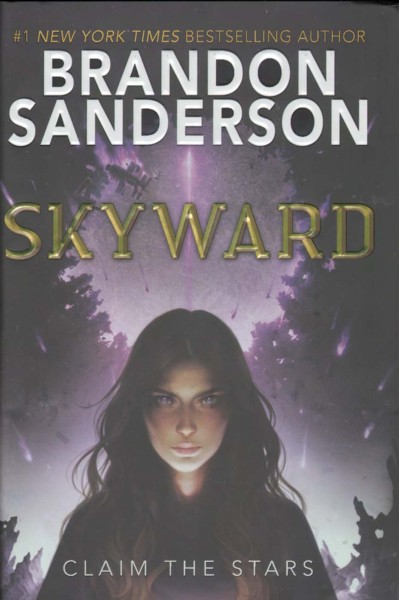
On the ruined world of Detritus, humanity lives underground beneath near-constant aerial bombardment from an alien force called the Krell, and Spensa Nightshade wants nothing more than to fly a starfighter, despite her father's reputation as a coward who fled battle. Brandon Sanderson's Skyward follows her fight to earn her wings and clear her father's name, uncovering secrets about her own strange abilities and the planet's buried past across Starsight, Cytonic, and Defiant. Co-author Janci Patterson contributes companion novellas that widen the view to supporting characters.
- The Hunger Games
series3 books2008
part of The Hunger Games Universe
similar bytensescience fictionsurvivalfar futureyoung adultdystopia+1 more
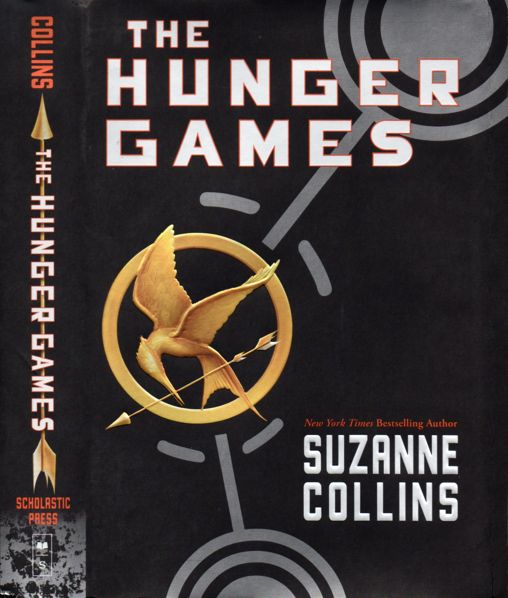
The Hunger Games is a series of young adult dystopian novels written by American author Suzanne Collins. The series consists of a trilogy that follows teenage protagonist Katniss Everdeen, as well as two prequels. The Hunger Games universe is a dystopia set in Panem, a post-apocalyptic North American country consisting of the wealthy Capitol and 12 districts in varying states of poverty. As punishment for rebellion, the Capitol hosts an annual battle royale competition called The Hunger Games. Each of the 12 districts must send two children between the ages of 12 and 18 to participate, and the last surviving child is dubbed the victor.
- Chaos Walking
series5 books2008
similar bytensescience fictionother star systemsfar futureyoung adultdystopia+2 more
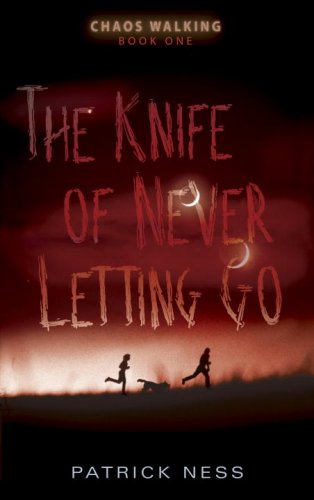
Chaos Walking is a young adult science fiction series written by American-British novelist Patrick Ness. It is set in a dystopian world where all living creatures can hear each other's thoughts in a stream of images, words, and sounds called Noise. The series is named after a line in the first book: "The Noise is a man unfiltered, and without a filter, a man is just chaos walking." The series consists of a trilogy of novels and three short stories.
- The Hunger Games Universe
universe5 books2008
Start hereThe Hunger Games · Start here
similar bytensescience fictionsurvivalfar futureyoung adultdystopia+1 more
Panem, they call it now — a nation raised on the drowned bones of North America, a glittering Capitol ringed by twelve districts it once starved into obedience. Every year the Capitol collects its debt in children: two tributes from each district, drawn by lottery, dropped into an engineered arena, and made to kill one another on live television while the whole country is required to watch. This is the Hunger Games — entertainment, punishment, and government at once. Suzanne Collins tells it in a compact, unified body of work. The founding trilogy — The Hunger Games, Catching Fire, and Mockingjay — follows Katniss Everdeen, a girl from the coal-mining District 12 who volunteers in her sister's place and becomes something the Capitol never scripted. Two prequels reach back into the same machinery: The Ballad of Songbirds and Snakes traces a young Coriolanus Snow long before he is President, and Sunrise on the Reaping returns to District 12 a generation ahead of Katniss. Begin with the trilogy, in order — it is Katniss's voice, close and present-tense, that makes Panem breathe, and the prequels land hardest once you know how her story ends. Beneath the spectacle sits one steady, uncomfortable question: who profits when we agree to look away.
- Heorot
series4 books1987
similar byscience fictionother star systemsfar future+2 more
Larry Niven, Jerry Pournelle and Steven Barnes's The Legacy of Heorot strands human colonists on an idyllic-seeming alien world where they discover apex predators -- grendels -- hidden beneath the surface, forcing them to fight for survival. Beowulf's Children continues the colony a generation later as the children born on the planet clash with their parents over how to live alongside the grendels, and a fourth book, Starborn and Godsons, returns to the settlement decades further on. It's hard-SF creature-horror crossed with generational colony drama.
- The Chrysalids
John Wyndhamstandalone novel1955
similar bytensescience fictionsurvivalcoming of agefar future+1 more
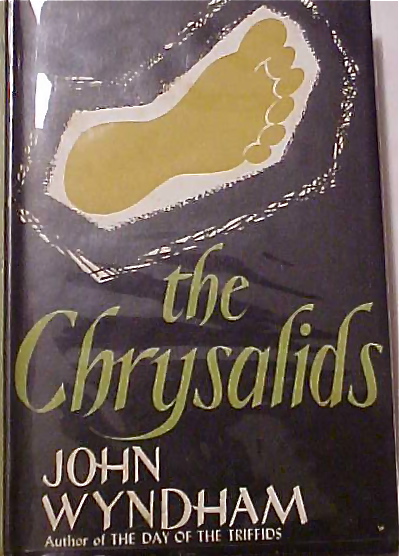
The Chrysalids is a science fiction novel by British writer John Wyndham, first published in 1955 by Michael Joseph. It is the least typical of Wyndham's major novels, but regarded by some as his best. An early manuscript version was entitled Time for a Change.
- Ender's Shadow
series5 books1999
part of Ender's Game Universe
similar bytensescience fictionfar future+2 more
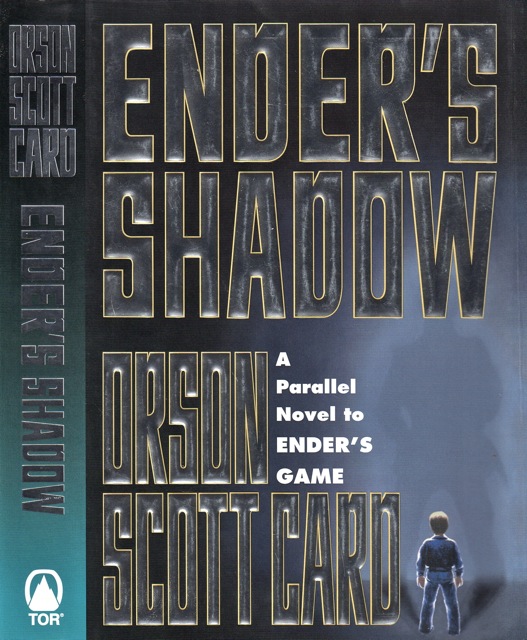
Orson Scott Card's Ender's Shadow retells the events of Ender's Game from the perspective of Bean, a physically stunted but ferociously intelligent street child recruited into the same Battle School program as Ender Wiggin. It launches the Shadow series, which follows Bean and other secondary Battle School characters into the political aftermath of the Formic Wars back on Earth, running parallel to and eventually past the timeline of Card's main Ender Quintet.
- Have Space Suit - Will Travel
Robert A. Heinleinstandalone novel1958
similar bytensescience fictionsurvivalyoung adult+2 more
From the back cover of the Del Rey 9th printing: "Skyjacked - Everything happened at once. One minute Kip Russell was walking about in his own backyard, testing out an old space suit and dreaming about going to the moon - and the next he was out cold and the captive of an insidious space pirate. The whole thing seemed like a very bad dream until he discovered he wasn't the only prisoner on board. Then the reality of the situation became inescapable. He - along with the daughter of a world-renowned scientist and a beautiful creature from an alien planet - had been skyjacked by a monstrous extraterrestrial and they were on their way to the Moon... a journey toward a fate worse than death!"
- Burl
series4 books1920
completed
similar byscience fictionsurvivalother star systemsfar future+2 more
Murray Leinster's Burl sequence is set on a planet deliberately seeded with insect and plant life for later human colonization, but the follow-up mission meant to introduce animal life never arrived; over centuries the surviving flora and insects grew to monstrous size, leaving the marooned descendants of a crashed expedition to survive among ant colonies, giant wasps, and spiders. Burl, born into this stranded, near-primitive community, has to out-think these giant predators to keep his people alive. The story began as two 1920s pulp novellas and a 1953 sequel before Leinster fused all three into the single fix-up novel The Forgotten Planet.
- Lunar Chronicles
series15 books2011
similar byscience fictionother star systemsfar futureyoung adult
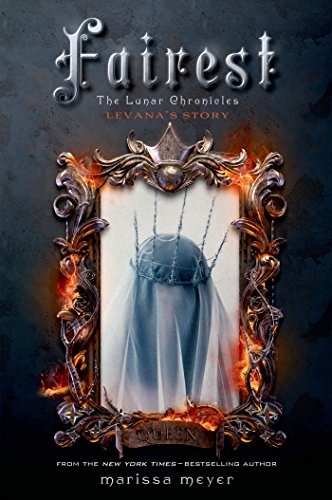
The Lunar Chronicles is a series of four young adult science fiction novels, a novella, and a short story collection written by American author Marissa Meyer and published by Feiwel & Friends. Each book entails a science fictional twist on a classic fairy tale, including "Cinderella", "Little Red Riding Hood", "Rapunzel", and "Snow White". Set in a futuristic world inhabited by various species and creatures, tensions are rising between Earth and its former colony Luna, while both attempt to manage an ongoing pandemic.
- Cities in Flight
series10 books1950
completed
similar byscience fictionfar future+2 more
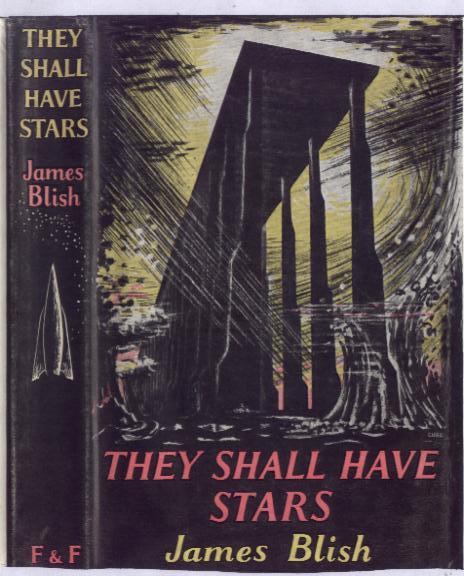
Cities in Flight is a four-volume series of science fiction novels and short stories by American writer James Blish, originally published between 1950 and 1962, which were first known collectively as the "Okie" novels. The series features entire cities that are able to fly through space using an anti-gravity device, the spindizzy. The stories cover roughly two thousand years, from the very near future to the end of the universe. One story, "Earthman, Come Home", won a Retro Hugo Award in 2004 for Best Novelette. Since 1970, the primary edition has been the omnibus volume first published in paperback by Avon Books. Over the years James Blish made many changes to these stories in response to points raised in letters from readers.
- Pip & Flinx
series18 books1972
part of Humanx Commonwealth
similar byscience fictionother star systemsfar future
The Pip & Flinx novels follow Flinx, a young man with an unusual, mysterious origin, and his ever-present animal companion Pip, across Alan Dean Foster's Humanx Commonwealth setting. Beginning with The Tar-Aiym Krang (1972) — chronologically the second entry, since Foster later filled in Flinx's earlier life — the series grew to fifteen novels published between 1972 and 2017, mixing planetary adventure with a slowly unfolding personal mystery.
- Last Legionary
series5 books1979
completed
similar byscience fictionother star systemsfar futureyoung adult+2 more
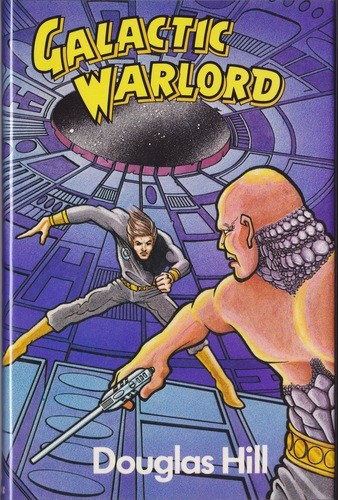
Douglas Hill's Last Legionary quartet follows Keill Randor, the sole survivor of the Morosians after his people are wiped out by a mysterious tyrant known as the Warlord. A twice-champion of his planet's martial arts and a trained mercenary bound by a code that limited his people to defensive contracts, Randor sets out for vengeance across Galactic Warlord, Deathwing Over Veynaa, Day of the Starwind, and Planet of the Warlord, with the prequel Young Legionary added later. Critics have noted the series' debt to E. E. Smith's Lensman space operas.
- Xenogenesis / Lilith's Brood
series4 books1987
completed
similar byscience fictionfar future+3 more
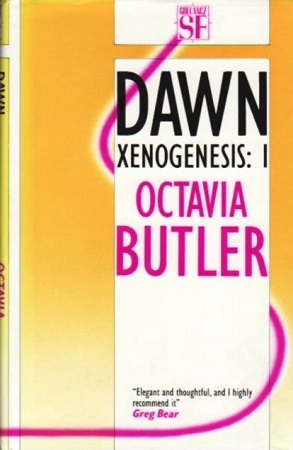
Lilith's Brood, previously known as the Xenogenesis Trilogy, is a collection of three science fiction works by Octavia E. Butler: Dawn, Adulthood Rites, and Imago.
- Patternist
series6 books1976
completed
similar byscience fiction+3 more
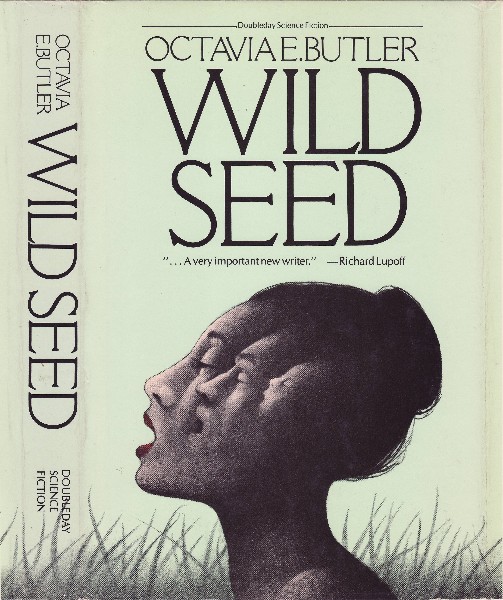
The Patternist series is a group of science fiction novels by Octavia E. Butler that detail a secret history continuing from the Ancient Egyptian period to the far future that involves telepathic mind control and an extraterrestrial plague. A profile of Butler in Black Women in America notes that the themes of the series include "racial and gender-based animosity, the ethical implications of biological engineering, the question of what it means to be human, ethical and unethical uses of power, and how the assumption of power changes people."
- Colsec
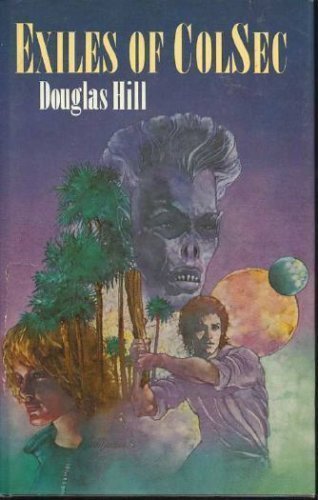
series3 books1984
completed
similar bytensescience fictionsurvivalother star systemsfar futureyoung adult+2 more
- Honorverse
universe83 books1993
Start hereHonor Harrington · Start here
similar byscience fictionother star systemsfar future+1 more
The wedge comes up, the sidewalls burn to life, and two walls of battle close across light-minutes of empty vacuum trading missile broadsides — because in the Honorverse, war is still fought by the doctrine of the age of sail, only the ocean is the interstellar void and the ships-of-the-line are dreadnoughts. This is David Weber's future, two millennia on: a galaxy of star nations bound by treaty, trade, and old grudges, where the small, wealthy Star Kingdom of Manticore holds a wormhole junction the commerce of humanity runs through, and the expansionist People's Republic of Haven means to take it. At the center stands one officer, Honor Harrington — captain, then something far larger — and the six-limbed empathic treecat who rides her shoulder. The spine is the Honor Harrington novels, more than a dozen books that carry her from an overlooked frontier picket up through fleet command and the knife-politics of a monarchy at war. Around that spine branch parallel lines, several written with collaborators: the Saganami Island books follow a younger generation of officers in the contested Talbott Cluster; the Wages of Sin novels, with Eric Flint, chase the genetic-slave trade to its source on Mesa; Manticore Ascendant, with Timothy Zahn, reaches back centuries to the Navy's shaky founding; and the Star Kingdom books, with Jane Lindskold, tell how humans and treecats first met. Anthologies fill the seams. Weber writes competence and consequence — dense hardware, denser politics, victories that cost, and a heroine whose defining virtue is her refusal to spend lives cheaply or duck the ones she must. Begin with On Basilisk Station: one ship, one thankless posting, one impossible situation. Read the main line in publication order; the collaborating branches reward you later, once the map of Manticore is yours.
- Hainish
series33 books1964
completed
similar byscience fictionother star systemsfar future
The Hainish Cycle consists of a number of science fiction novels and stories by Ursula K. Le Guin. The cycle is set in a future history that features civilizations of human beings on planets orbiting a number of nearby stars, including Terra ("Earth"); these humans are contacting each other for the first time and establishing diplomatic relations, as well as setting up a confederacy under the guidance of the oldest of the human worlds, the peaceful planet Hain. In this history, human beings did not evolve on Earth, but they were instead the result of interstellar colonies planted by Hain in the distant past, after which interstellar travel ceased for an extended period. Some of the human races have new genetic traits, a result of ancient Hainish experiments in genetic engineering; this includes people who can dream while awake, and a world of hermaphroditic people who only enter active sexuality once per month, not knowing which sex will manifest in them. In keeping with Le Guin's narrative approach, she uses varied social and environmental settings to explore the anthropological and sociological outcomes of human evolution in those environments. The author often discounted the characterization of a so-called "Hainish Cycle".
- Hungry City Chronicles / Mortal Engines
series5 books2001
part of Mortal Engines Universe
similar byscience fictionsurvivalfar futureyoung adult
The Mortal Engines Quartet, also known as the Predator Cities Quartet, is a series of epic young adult science fiction novels by the English novelist and illustrator Philip Reeve. He began the first volume of the series, Mortal Engines, in the 1980s, and it was published in 2001. Reeve then published three further novels, Predator's Gold (2003), Infernal Devices (2005), and A Darkling Plain (2006).