Loreful
HomeDiscover
Search series, authors…⌘K
Loreful

Reading orders for SF/F series and shared universes — with your place kept in every one.

Explore

UniversesSeriesWorksAuthorsAtlas

Help

FAQAboutSite map

Account & legal

Sign inCreate accountPrivacyTerms

Data

Built on ISFDB, Wikipedia, Wikidata and Open Library. Curated reading orders carry their reasoning on the page; the rest follow publication order. Data sources & licenses

© Loreful · data: ISFDB · CC BY

More like Winged Pharaoh

anchored on:historical fictionreincarnationmiddle eastancient worldreflective

but

Mood

The mood the book leaves you in.

  • The reading experience is propelled by journeys, exploration, and physical risk; excitement and forward momentum dominate over dread or introspection.
  • Joy and loss are deliberately mixed; the resolution grants characters something real while taking something else away, leaving warmth and sorrow together.
  • The book demands work from the reader — dense prose, difficult structure, unfamiliar ideas, or morally uncomfortable material — as part of its intended effect.
  • Grim events, cruelty, or despair dominate the atmosphere, and the book does not soften them with comfort or comic relief.
  • The atmosphere is quietly unsettling — wrongness, unease, and the uncanny pervade the book without necessarily escalating into overt horror.
  • The book is built to move the reader; character feeling is foregrounded and major scenes aim at a strong emotional response.
  • Humor is a primary aim and the prose plays for laughs — comic situations, wit, or dialogue produce sustained comedy, not occasional levity.
  • The book insists that things can improve; effort and decency are shown to matter, and the arc bends toward better outcomes even through hardship.
  • The book teaches as it goes — real facts, history, science, or craft are conveyed in enough depth that learning is part of the reading experience.
  • The book is designed to uplift and motivate, presenting perseverance or achievement in a way that invites the reader to aspire or act.
  • The overall register is cheerful and easygoing; stakes are kept gentle and the book avoids dwelling on pain or dread.
  • Withheld information drives the experience; the book sustains enigmas and secrets the reader wants resolved, whatever its genre.
  • The book is contemplative and inward-looking, giving more weight to thought, memory, and meaning than to external events.
  • The book works as comfort reading — low tension, a soothing pace, and an atmosphere the reader can unwind in.
  • Grief, loss, or melancholy set the dominant register, and the book lets sorrow stand rather than resolving it into comfort.
  • Sustained suspense is the point; the book keeps the reader braced for what happens next through danger, pressure, or impending revelation.
  • Playful invention and charm define the register — fanciful conceits, light absurdity, and a narration that delights in its own oddity.

About

What the story runs on.

  • Stories in which extraterrestrial beings are central — as characters, cultures, or the object of the plot.
  • Stories in which gods and deities act as characters — walking the world, meddling in mortal lives, or dying.
  • Stories structured as a quest — a journey undertaken to find, deliver, or destroy something of great import.
  • Stories in which staying alive against nature, catastrophe, or scarcity is the central problem.
  • Stories in which a friendship — its making, testing, or loss — is the emotional center.
  • Stories of growing up — a young protagonist crossing from childhood into adult knowledge and responsibility.
  • Stories about who a character truly is — self-discovery, doubled lives, and the search for a self.
  • Stories about mourning — living through the death of a loved one and what loss does to the survivors.
  • Stories in which belief, doubt, and religious life are the central subject, from crises of faith to life inside a religious community.
  • Stories in which a buried family truth — hidden parentage, crimes, or shames — surfaces and reorders the present.
  • Stories driven by maneuvering for power — factions, conspiracies, and statecraft conducted in shadow.
  • Stories in which war itself is the subject — combat, occupation, and what warfare does to soldiers and civilians.

Shelf

Where it sits in the library.

    • Fiction built on magic or other supernatural elements that have no scientific explanation.
    • Secondary-world fantasy at large scale, where the fate of nations or the world turns on the protagonists' struggle.
    • Fantasy set in a recognizably modern city or contemporary world where the supernatural intrudes on everyday life.
    • Fantasy that blends in horror's atmosphere and imagery, keeping a fantastical frame around grim or frightening material.
    • Action-driven fantasy following warriors or rogues with personal stakes against sorcerous threats, rather than world-spanning conflicts.
    • Fantasy set in a real historical period or a close analogue of one, with magic woven into the era.
    • Fantasy in which protagonists cross from the ordinary world into another world through a portal or similar passage.
    • Fiction that retells or reworks a traditional fairy tale in a new form or setting.
    • Fantasy drawing directly on myths, legends, and folklore, retelling them or building on their figures and logic.
    • Fantasy of ghosts, vampires, shapeshifters, psychics, and similar phenomena, usually set in an otherwise ordinary world.
    • Fiction mixing science-fictional trappings with overtly magical or impossible elements in one setting.
    • Low-stakes fantasy emphasizing comfort, community, and everyday pleasures over conflict and peril.
    • Speculative fiction of pervasive moral ambiguity, violence, and cynicism that rejects heroic conventions — fantasy and SF alike.
      • Fiction that extrapolates from science and technology — future societies, space travel, or speculative inventions — within at least nominally natural laws.
      • Science fiction of interstellar scope — starships, galactic polities, and adventure across star systems.
      • Science fiction committed to scientific rigor, where technical plausibility constrains the story.
      • Science fiction centered on armed forces and warfare, told largely from a military point of view.
      • Science fiction of networked, corporate-dominated near futures, pairing high technology with social decay.
      • Science fiction styled on nineteenth-century steam-powered technology, often in a Victorian or pseudo-Victorian setting.
      • Fiction depicting an oppressive or catastrophic society, presented as a warning.
      • Fiction set after civilization's collapse, following survivors in the ruins of the old world.
      • Fiction in which characters move between past and future, and the mechanics or consequences of that travel drive the plot.
      • Fiction exploring a world where a historical event went differently and history diverged from ours.
      • Science fiction about humanity's first encounter and communication with an alien intelligence.
      • Science fiction in which extraterrestrial forces attack or occupy Earth and humanity resists.
      • Fiction whose primary aim is to frighten or unsettle the reader through dread, menace, or the monstrous.
      • Horror of vast, indifferent, incomprehensible entities before which humanity is insignificant, in the Lovecraft tradition.
      • Horror of decaying houses, buried family secrets, and oppressive atmosphere in the Gothic literary tradition.
      • Horror centered on hauntings and the returning dead.
      • Horror located in the mind — paranoia, obsession, and unreliable perception rather than external monsters.
      • Horror built around the reanimated dead and survival amid their outbreaks.
      • Speculative fiction of the strange and uncanny that resists both natural explanation and standard genre categories.
      • Fiction organized around solving a crime or puzzle, typically following an investigator toward the identification of a culprit.
      • A puzzle-first mystery that lays out clues so the culprit's identity can be deduced before the reveal.
      • Crime fiction of moral ambiguity, fatalism, and hard-edged style, set among the corrupt and the doomed.
      • A mystery following the realistic routines of police work — forensics, interviews, and case-building.
      • A gentle mystery with an amateur sleuth, a small community, and violence kept off the page.
      • A mystery set in a past era, where the investigation works within that period's methods and society.
      • Fast-paced fiction driven by imminent danger, pursuit, or high-stakes conspiracy, built to sustain tension.
      • A thriller of espionage — agents, tradecraft, and intelligence services in conflict.
      • A thriller centered on lawyers and the courtroom, where litigation carries the suspense.
      • A thriller driven by detailed contemporary or near-future technology, often military or scientific.
      • A thriller whose tension comes from mental states and manipulation between characters rather than external action.
      • Fiction whose central plot is a romantic relationship and its development toward an emotionally satisfying resolution.
      • Romance in which one or both partners are supernatural beings, blending fantasy elements into the love story.
      • A fantasy-romance hybrid in which the romantic arc and the fantasy plot carry equal weight.
      • Romance set in a past era, with courtship shaped by the period's society and manners.
      • Romance set in the present day, without supernatural or historical elements.
      • Fiction set in a real past period, where the historical setting materially shapes characters and events.
        • General and literary fiction emphasizing prose style, character interiority, or formal ambition over genre plot conventions.
        • Fiction in a realistic world where magical events occur and are treated as ordinary, in the tradition of Latin American literature.
        • Fiction that ridicules people, institutions, or society in order to criticize them.
        • Fiction of dreamlike, irrational imagery and logic that breaks from realistic representation.
        • Fiction that plays with narrative convention through metafiction, fragmentation, and self-reference.
        • Fiction propelled by journeys, exploration, and physical peril, where action and survival carry the plot.
        • Adventure fiction of ships and seafaring — naval engagements, voyages, and life at sea.
        • Fiction of the American frontier West — gunmen, ranchers, and lawmen, typically in the late nineteenth century.
        • Fiction centered on soldiers, campaigns, and the experience of warfare, historical or imagined.
          • Fiction written primarily to amuse, using comedic situations, wit, or parody as its organizing principle.
            • Multi-generational fiction following a family or dynasty across decades, with inheritance and kinship as the through-line.
              • Fiction whose world runs on explicit game mechanics — levels, stats, and skills that characters can see and exploit.
                • Fiction about costumed or superpowered heroes and their conflicts with comparable villains.

                Practical

                How long a commitment, whether it stands alone, and whether it has finished.

                Tap a chip to ask for it · tap again to rule it out · once more to clear. Numbers show what would be left.

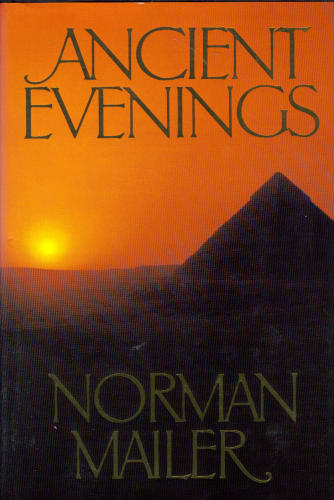
                • Cover of Ancient Evenings
                  Ancient Evenings

                  Norman Mailer · standalone novel · 1983

                  similar byreincarnationhistorical fictionreflectivemiddle eastancient world

                  Ancient Evenings is a 1983 historical novel by American author Norman Mailer. Set in ancient Egypt and dealing with the lives of the characters Menenhetet One and Meni, the novel received mixed reviews. Reviewers noted the historical research that went into writing it and considered Mailer successful at conveying the nature of ancient Egyptian life. However, they also criticized the novel's narration and questioned its literary merit. Ancient Evenings has been compared to the work of the poet James Merrill and the novelist Thomas Pynchon, as well as to Mailer's novel Harlot's Ghost (1991). Some have suggested that its opening passage is its strongest part. Ancient Evenings served as an inspiration for the artist Matthew Barney's operatic film River of Fundament (2014).

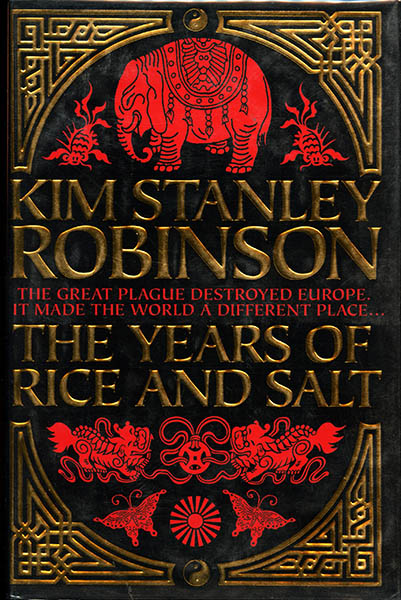
                • Cover of The Years of Rice and Salt
                  The Years of Rice and Salt

                  Kim Stanley Robinson · standalone novel · 2002

                  similar byreincarnationreflectivehistorical fiction

                  What if the Black Death had killed nearly everyone in Europe instead of a third of it? Kim Stanley Robinson opens on that premise with a Mongol scout named Bold, who finds a Hungarian city emptied by plague and only narrowly escapes execution meant to contain the contagion; sold into slavery, he ends up serving aboard a Chinese treasure fleet alongside a young African companion. From there the novel follows a recurring cast of souls, reincarnated across centuries and identifiable book to book by the first letter of their names, through an alternate history in which Islamic and Chinese civilizations, not a devastated Europe, shape the world's future.

                • Cover of Christ the Lord
                  Christ the Lord

                  series · 2 books · 2005

                  completed

                  similar byhistorical fictionreflectivemiddle eastancient world

                • Cover of Stone Tables
                  Stone Tables

                  Orson Scott Card · standalone novel · 1997

                  similar byhistorical fictionreflectivemiddle eastancient world

                  What would it be like to be Moses? To grow up as royalty, and then give it all up on principle? To go from palaces to wilderness? To go from being considered a god, to coming to know the real God?

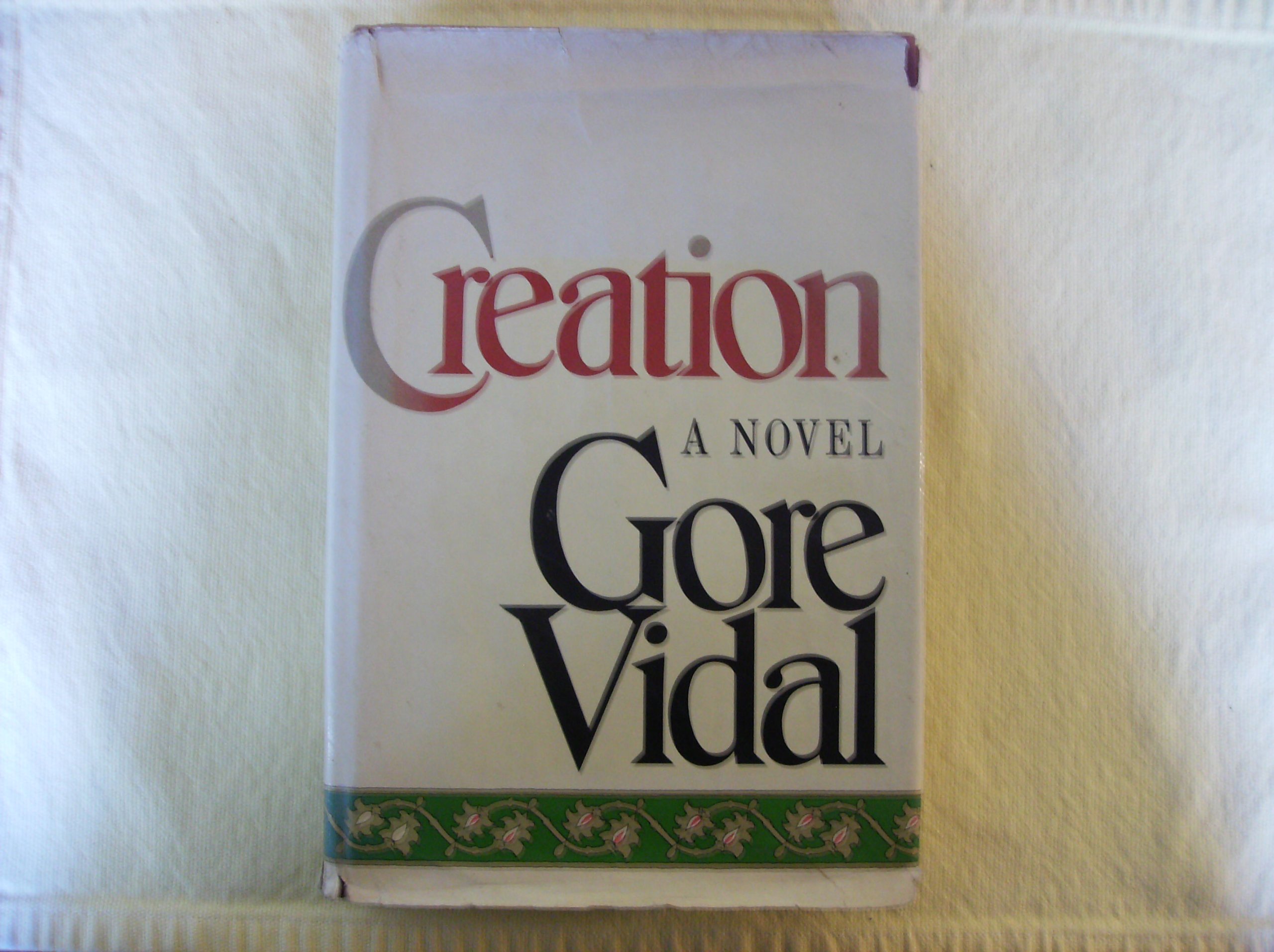
                • Cover of Creation
                  Creation

                  Gore Vidal · standalone novel · 1981

                  similar byhistorical fictionreflectiveancient worldmiddle east

                  Creation is an epic historical fiction novel by Gore Vidal published in 1981. In 2002 he published a restored version, reinstating four chapters that a previous editor had cut and adding a brief foreword explaining what had happened and why he had restored the cut chapters.

                • Cover of Alexander the Great (Mary Renault)
                  Alexander the Great (Mary Renault)

                  series · 1 book · 1972

                  completed

                  similar byhistorical fictionreflectivemiddle eastancient world

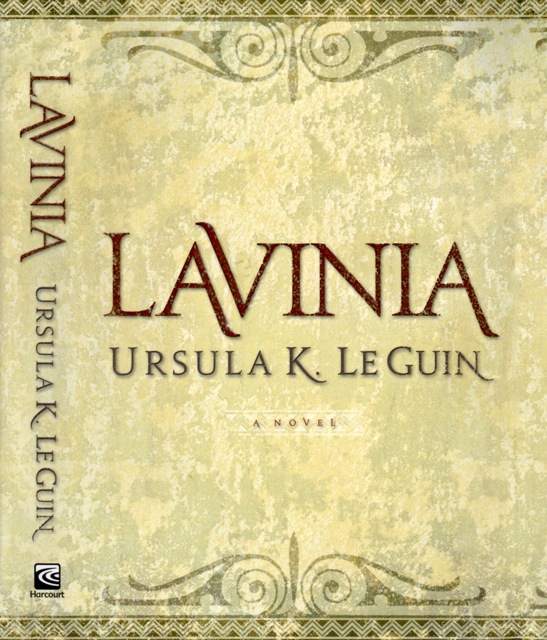
                • Cover of Lavinia
                  Lavinia

                  Ursula K. Le Guin · standalone novel · 2008

                  similar byhistorical fictionreflectiveancient world

                  Lavinia is a Locus Award-winning novel by American author Ursula K. Le Guin. Published in 2008, it was Le Guin's last novel. It is written in a first-person, self-conscious style that recounts the life of Lavinia, a minor character in Virgil's epic poem the Aeneid.

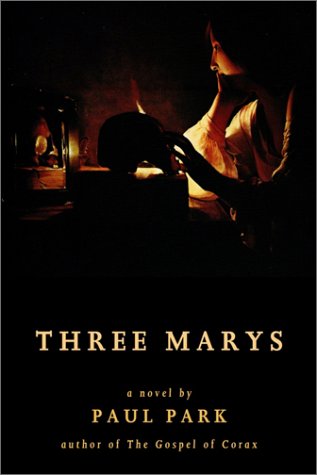
                • Cover of Three Marys
                  Three Marys

                  Paul Park · standalone novel · 2003

                  similar byhistorical fictionreflectivemiddle eastancient world

                  The exposition of the faith of Mary, the mother of Jesus; Mary, the sister of Martha and Lazarus of Bethany; and Mary Magdalene and their lives after the crucifixion.

                • Cover of Belshazzar
                  Belshazzar

                  H. Rider Haggard · standalone novel · 1930

                  similar byhistorical fictionmiddle eastancient world+1 more

                  Belshazzar is a historical novel by H. Rider Haggard set in Ancient Babylon. It was written in 1924, and was just finished at the time of his death.

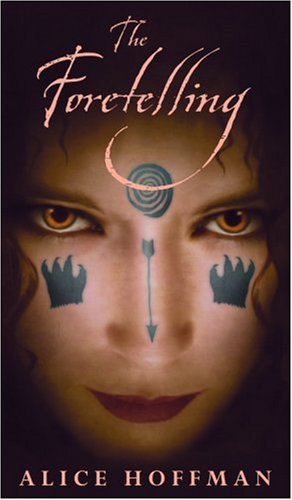
                • Cover of The Foretelling
                  The Foretelling

                  Alice Hoffman · standalone novel · 2005

                  similar byhistorical fictionreflectiveancient world

                  A coming-of-age story that pierces the soul and heals the spirit, this is the tale of the future leader of the Amazon women warriors. Rain must hold fast to her inner warrior, but she is startled and mystified by the first stirrings of mercy towards the enemy.

                • Cover of The Gospel of Corax
                  The Gospel of Corax

                  Paul Park · standalone novel · 1996

                  similar byhistorical fictionreflectiveancient worldmiddle east

                  The Gospel of Corax is a 1996 novel by Paul Park about an escaped Roman slave (Corax) who travels from Caesarea to India with a burly Essene man named Jeshua.

                • Cover of Women of Genesis
                  Women of Genesis

                  series · 3 books · 2000

                  similar byhistorical fictionmiddle eastancient world+1 more

                  Women of Genesis is a series of novels by Orson Scott Card that began in 2000. The novels in this series are centred on the wives of the Biblical Patriarchs of the Book of Genesis. As of December 2024, three books have been published, and the fourth and fifth books in the series are currently listed as works in progress on Card's website.

                • Cover of Pilgermann
                  Pilgermann

                  Russell Hoban · standalone novel · 1983

                  similar byhistorical fictionreflectivemiddle east

                  Pilgermann is a 1983 novel by Russell Hoban, set in the Middle Ages and depicting the journey of a Jew across Europe and North Africa on his way to the Holy Land. The novel was reissued in January 2002.

                • Cover of Ancient Egypt
                  Ancient Egypt

                  series · 4 books · 1986

                  completed

                  similar byhistorical fictionancient worldmiddle east+2 more

                • Cover of The Dovekeepers
                  The Dovekeepers

                  Alice Hoffman · standalone novel · 2011

                  similar byhistorical fictionmiddle eastancient world

                  The Dovekeepers is a 2011 historical novel by American writer Alice Hoffman. The novel tells a fictionalized account of the Siege of Masada by troops of the Roman Empire towards the end of the First Jewish–Roman War.

                • Cover of The Double Tongue
                  The Double Tongue

                  William Golding · standalone novel · 1995

                  similar byhistorical fictionreflectiveancient world

                  The Double Tongue is a novel by William Golding. It was found in draft form after his death and published posthumously.

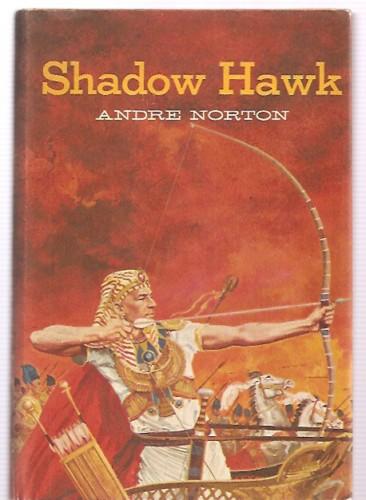
                • Cover of Shadow Hawk
                  Shadow Hawk

                  Andre Norton · standalone novel · 1960

                  similar byhistorical fictionmiddle eastancient world

                  When his position at court is usurped by his half brother, a young Egyptian nobleman seeks to regain his standing through military victories against the enemy.

                • Cover of Todd Family
                  Todd Family

                  series · 2 books · 2013

                  similar byreflectivehistorical fiction+1 more

                  Kate Atkinson's Life After Life gives Ursula Todd, born on a snowy night in 1910, a strange gift: whenever she dies, she's born again into a slightly altered version of the same life, gradually piecing together enough intuition across her many deaths to try to change the course of the twentieth century's worst events. The companion novel A God in Ruins turns to Ursula's brother Teddy, a bomber pilot, following his one, single life forward from the war through old age. The two books share a family and a set of preoccupations -- memory, war, chance -- without forming a conventional sequential series.

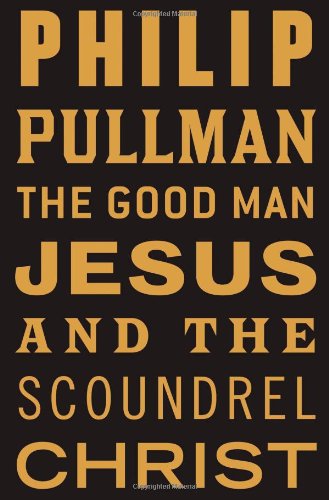
                • Cover of The Good Man Jesus and the Scoundrel Christ
                  The Good Man Jesus and the Scoundrel Christ

                  Philip Pullman · standalone novel · 2009

                  similar byreflectiveancient worldmiddle east

                  Philip Pullman retells the gospel story with one change: Mary gives birth to twin sons, not one. Jesus grows into the moral teacher and healer familiar from scripture, while his brother, given the name Christ, watches from the sidelines, recording and reshaping his brother's story with an eye toward the institution he believes should be built on it. As Jesus preaches humility and doubt, Christ is drawn into a bargain with a mysterious stranger who wants his account shaped into something more useful for the church that will one day claim to speak for both of them. Part of Canongate's Myth series, Pullman's short, provocative reworking of the New Testament.

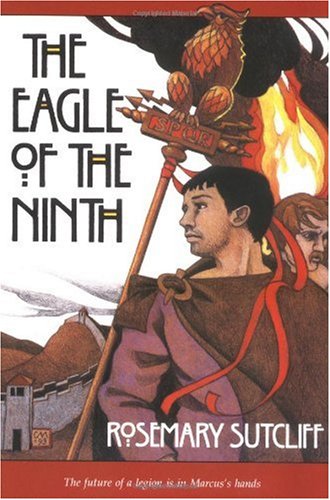
                • Cover of Marcus
                  Marcus

                  series · 4 books · 1954

                  completed

                  similar byhistorical fictionancient world+1 more

                  Rosemary Sutcliff's linked Roman Britain novels follow several generations of one family across centuries of the Roman occupation and its aftermath, opening with The Eagle of the Ninth, in which the young centurion Marcus Aquila sets out to recover his lost father's legion standard. Later books, including The Silver Branch and The Lantern Bearers, follow his descendants through Britain's slow slide out of the Empire.

                • Cover of Karl Glogauer
                  Karl Glogauer

                  series · 2 books · 1969

                  similar byreflective+3 more

                  Michael Moorcock's two Karl Glogauer novels share a character rather than a plot. In Behold the Man (1969), Glogauer travels back in time seeking the historical Jesus, discovers the real man is severely disabled, and takes on the role of Christ himself, engineering his own crucifixion to fulfill the story he grew up reading. Breakfast in the Ruins (1972) recasts him across seventeen variant lives spanning 1871 to 1990, each one crueler than the last, framed around a present-day encounter in London -- using the same protagonist for a different formal experiment rather than continuing a single narrative.

                • Cover of The Actual Star
                  The Actual Star

                  Monica Byrne · standalone novel · 2021

                  similar byreincarnationreflective

                  [Publisher:] The Actual Star takes readers on a journey over two millennia and six continents–telling three powerful tales a thousand years apart, all of them converging in the same cave in the Belizean jungle. Braided together are the stories of a pair of teenage twins who ascend the throne of a Maya kingdom; a young American woman on a trip of self-discovery in Belize; and two dangerous charismatics vying for the leadership of a new religion and racing toward a confrontation that will determine the fate of the few humans left on Earth after massive climate change. In each era, a reincarnated trinity of souls navigates the entanglements of tradition and progress, sister and stranger, and love and hate–until all of their age-old questions about the nature of existence converge deep underground, where only in complete darkness can they truly see. The Actual Star is a feast of ideas about where humanity came from, where we are now, and where we're going–and how, in every age, the same forces that drive us apart also bind us together.

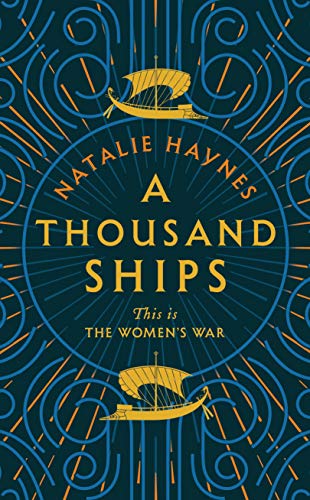
                • Cover of A Thousand Ships
                  A Thousand Ships

                  Natalie Haynes · standalone novel · 2019

                  similar byreflectivehistorical fictionancient world

                  A Thousand Ships is a 2019 novel by Natalie Haynes which retells the mythology of the Trojan War from the perspective of the women involved. It was shortlisted for the 2020 Women's Prize for Fiction.

                • Cover of The Wandering Jew
                  The Wandering Jew

                  Stefan Heym · standalone novel · 1981

                  similar byreflectivehistorical fictionancient world+1 more

                  Ahasver is a 1981 German-language novel by Stefan Heym. It was published in English as The Wandering Jew in 1984.