Loreful
HomeDiscover
Search series, authors…⌘K
Loreful

Reading orders for SF/F series and shared universes — with your place kept in every one.

Explore

UniversesSeriesWorksAuthorsAtlas

Help

FAQAboutSite map

Account & legal

Sign inCreate accountPrivacyTerms

Data

Built on ISFDB, Wikipedia, Wikidata and Open Library. Curated reading orders carry their reasoning on the page; the rest follow publication order. Data sources & licenses

© Loreful · data: ISFDB · CC BY

More like Winter Pruning

but

Mood

The mood the book leaves you in.

  • The reading experience is propelled by journeys, exploration, and physical risk; excitement and forward momentum dominate over dread or introspection.
  • Joy and loss are deliberately mixed; the resolution grants characters something real while taking something else away, leaving warmth and sorrow together.
  • The book demands work from the reader — dense prose, difficult structure, unfamiliar ideas, or morally uncomfortable material — as part of its intended effect.
  • Grim events, cruelty, or despair dominate the atmosphere, and the book does not soften them with comfort or comic relief.
  • The atmosphere is quietly unsettling — wrongness, unease, and the uncanny pervade the book without necessarily escalating into overt horror.
  • The book is built to move the reader; character feeling is foregrounded and major scenes aim at a strong emotional response.
  • Humor is a primary aim and the prose plays for laughs — comic situations, wit, or dialogue produce sustained comedy, not occasional levity.
  • The book insists that things can improve; effort and decency are shown to matter, and the arc bends toward better outcomes even through hardship.
  • The book teaches as it goes — real facts, history, science, or craft are conveyed in enough depth that learning is part of the reading experience.
  • The overall register is cheerful and easygoing; stakes are kept gentle and the book avoids dwelling on pain or dread.
  • Withheld information drives the experience; the book sustains enigmas and secrets the reader wants resolved, whatever its genre.
  • The book is contemplative and inward-looking, giving more weight to thought, memory, and meaning than to external events.
  • The book works as comfort reading — low tension, a soothing pace, and an atmosphere the reader can unwind in.
  • Grief, loss, or melancholy set the dominant register, and the book lets sorrow stand rather than resolving it into comfort.
  • Sustained suspense is the point; the book keeps the reader braced for what happens next through danger, pressure, or impending revelation.
  • Playful invention and charm define the register — fanciful conceits, light absurdity, and a narration that delights in its own oddity.

About

What the story runs on.

  • Stories centered on vampires — blood-drinking undead — whether as predators, love interests, or protagonists.
  • Stories centered on witches and the practice of witchcraft — covens, hedge magic, familiars, and the witch's place in her community.
  • Stories in which demons or devils — infernal beings, their bargains, possessions, and hierarchies — drive the plot.
  • Stories about the raised or restless dead — necromancers and their arts, liches, skeletons, and revenants.
  • Stories driven by a curse laid on a person, family, or place, and the struggle to live under it or break it.
  • Stories in which staying alive against nature, catastrophe, or scarcity is the central problem.
  • Stories of growing up — a young protagonist crossing from childhood into adult knowledge and responsibility.
  • Stories about who a character truly is — self-discovery, doubled lives, and the search for a self.
  • Stories about mental unraveling — descent into madness, delusion, and minds at war with themselves.
  • Stories about mourning — living through the death of a loved one and what loss does to the survivors.
  • Stories in which a buried family truth — hidden parentage, crimes, or shames — surfaces and reorders the present.
  • Stories organized around investigating a killing — the case, the clues, and the pursuit of the killer, in any genre's clothing.

Shelf

Where it sits in the library.

    • Fiction built on magic or other supernatural elements that have no scientific explanation.
    • Secondary-world fantasy at large scale, where the fate of nations or the world turns on the protagonists' struggle.
    • Fantasy set in a recognizably modern city or contemporary world where the supernatural intrudes on everyday life.
    • Fantasy that blends in horror's atmosphere and imagery, keeping a fantastical frame around grim or frightening material.
    • Action-driven fantasy following warriors or rogues with personal stakes against sorcerous threats, rather than world-spanning conflicts.
    • Fantasy set in a real historical period or a close analogue of one, with magic woven into the era.
    • Fantasy in which protagonists cross from the ordinary world into another world through a portal or similar passage.
    • Fiction that retells or reworks a traditional fairy tale in a new form or setting.
    • Fantasy drawing directly on myths, legends, and folklore, retelling them or building on their figures and logic.
    • Fantasy of ghosts, vampires, shapeshifters, psychics, and similar phenomena, usually set in an otherwise ordinary world.
    • Fiction mixing science-fictional trappings with overtly magical or impossible elements in one setting.
    • Low-stakes fantasy emphasizing comfort, community, and everyday pleasures over conflict and peril.
    • Speculative fiction of pervasive moral ambiguity, violence, and cynicism that rejects heroic conventions — fantasy and SF alike.
      • Fiction that extrapolates from science and technology — future societies, space travel, or speculative inventions — within at least nominally natural laws.
      • Science fiction of interstellar scope — starships, galactic polities, and adventure across star systems.
      • Science fiction committed to scientific rigor, where technical plausibility constrains the story.
      • Science fiction centered on armed forces and warfare, told largely from a military point of view.
      • Science fiction of networked, corporate-dominated near futures, pairing high technology with social decay.
      • Science fiction styled on nineteenth-century steam-powered technology, often in a Victorian or pseudo-Victorian setting.
      • Fiction depicting an oppressive or catastrophic society, presented as a warning.
      • Fiction set after civilization's collapse, following survivors in the ruins of the old world.
      • Fiction in which characters move between past and future, and the mechanics or consequences of that travel drive the plot.
      • Fiction exploring a world where a historical event went differently and history diverged from ours.
      • Science fiction about humanity's first encounter and communication with an alien intelligence.
      • Science fiction in which extraterrestrial forces attack or occupy Earth and humanity resists.
      • Fiction whose primary aim is to frighten or unsettle the reader through dread, menace, or the monstrous.
      • Horror of vast, indifferent, incomprehensible entities before which humanity is insignificant, in the Lovecraft tradition.
      • Horror of decaying houses, buried family secrets, and oppressive atmosphere in the Gothic literary tradition.
      • Horror centered on hauntings and the returning dead.
      • Horror located in the mind — paranoia, obsession, and unreliable perception rather than external monsters.
      • Horror built around the reanimated dead and survival amid their outbreaks.
      • Horror defined by explicit, transgressive gore that refuses to cut away from violence.
      • Speculative fiction of the strange and uncanny that resists both natural explanation and standard genre categories.
      • Fiction organized around solving a crime or puzzle, typically following an investigator toward the identification of a culprit.
      • A puzzle-first mystery that lays out clues so the culprit's identity can be deduced before the reveal.
      • Crime fiction of moral ambiguity, fatalism, and hard-edged style, set among the corrupt and the doomed.
      • A mystery following the realistic routines of police work — forensics, interviews, and case-building.
      • A gentle mystery with an amateur sleuth, a small community, and violence kept off the page.
      • A mystery set in a past era, where the investigation works within that period's methods and society.
      • Fast-paced fiction driven by imminent danger, pursuit, or high-stakes conspiracy, built to sustain tension.
      • A thriller of espionage — agents, tradecraft, and intelligence services in conflict.
      • A thriller centered on lawyers and the courtroom, where litigation carries the suspense.
      • A thriller driven by detailed contemporary or near-future technology, often military or scientific.
      • A thriller whose tension comes from mental states and manipulation between characters rather than external action.
      • Fiction whose central plot is a romantic relationship and its development toward an emotionally satisfying resolution.
      • Romance in which one or both partners are supernatural beings, blending fantasy elements into the love story.
      • A fantasy-romance hybrid in which the romantic arc and the fantasy plot carry equal weight.
      • Romance set in a past era, with courtship shaped by the period's society and manners.
      • Romance set in the present day, without supernatural or historical elements.
      • Fiction set in a real past period, where the historical setting materially shapes characters and events.
        • General and literary fiction emphasizing prose style, character interiority, or formal ambition over genre plot conventions.
        • Fiction in a realistic world where magical events occur and are treated as ordinary, in the tradition of Latin American literature.
        • Fiction that ridicules people, institutions, or society in order to criticize them.
        • Fiction that plays with narrative convention through metafiction, fragmentation, and self-reference.
        • Fiction propelled by journeys, exploration, and physical peril, where action and survival carry the plot.
        • Adventure fiction of ships and seafaring — naval engagements, voyages, and life at sea.
        • Fiction of the American frontier West — gunmen, ranchers, and lawmen, typically in the late nineteenth century.
        • Fiction centered on soldiers, campaigns, and the experience of warfare, historical or imagined.
          • Fiction written primarily to amuse, using comedic situations, wit, or parody as its organizing principle.
            • Multi-generational fiction following a family or dynasty across decades, with inheritance and kinship as the through-line.
              • Fiction whose world runs on explicit game mechanics — levels, stats, and skills that characters can see and exploit.
                • Fiction about costumed or superpowered heroes and their conflicts with comparable villains.

                Practical

                How long a commitment, whether it stands alone, and whether it has finished.

                Tap a chip to ask for it · tap again to rule it out · once more to clear. Numbers show what would be left.

                • Cover of Darker Than You Think
                  Darker Than You Think

                  Jack Williamson · standalone novel · 1948

                  similar bywitcheshorror

                  Darker Than You Think is a science fantasy and horror novel by American writer Jack Williamson. Originally a novelette, it was expanded into novel length and published by Fantasy Press in 1948. The short version was published in Unknown in 1940.

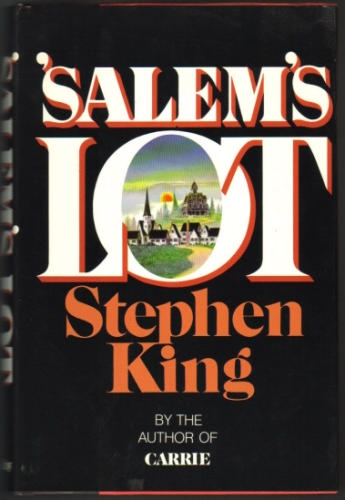
                • Cover of Jerusalem's Lot
                  Jerusalem's Lot

                  series · 3 books · 1975

                  similar byhorror+1 more

                  Stephen King's 1975 novel 'Salem's Lot follows writer Ben Mears as he returns to his childhood town of Jerusalem's Lot, Maine, only to discover that its residents are being turned into vampires by a newly arrived stranger. It transplants Gothic vampire horror into a small New England community, tracking that community's collapse under a supernatural siege. It is a single, self-contained novel.

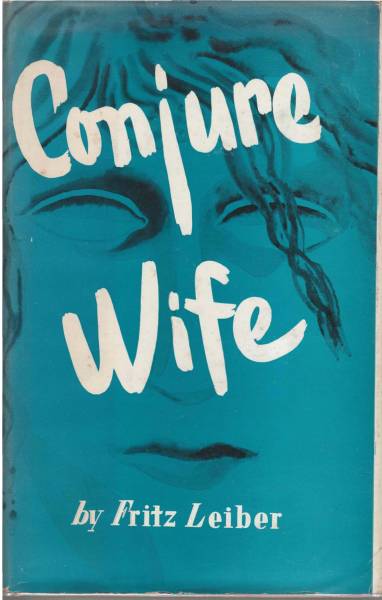
                • Cover of Conjure Wife
                  Conjure Wife

                  Fritz Leiber · standalone novel · 1943

                  similar bywitcheshorror

                  From the front cover of the Lion first paperback: "Potions in the house... evil in the air... and a witch in his bed." From the back cover of the Lion first paperback: ""Conjure Wife... is easily the most frightening (and necessarily) the most thoroughly convincing of all modern horror stories. Its premise is that witchcraft still flourishes, or at any rate survives, an open secret among women, a closed book to men. Under the rational overlay of 20th-century civilization this sickly growth, uncultivated, unsuspected, still manages to propagate itself. Leiber develops this theme with the utmost dexterity, piling up alternate layers of the mundane and outre, until at the story's real climax, the shocker at the end of chapter 14, I am not ashamed to say that I jumped an inch out of my seat. From that point onward the story anticlimax so skillfully managed that I am not really certain I touched the slipcover again until after the last page. Leiber has never written anything better... which perhaps is all that needed to be said." Damon Knight, Science Fiction Adventures"

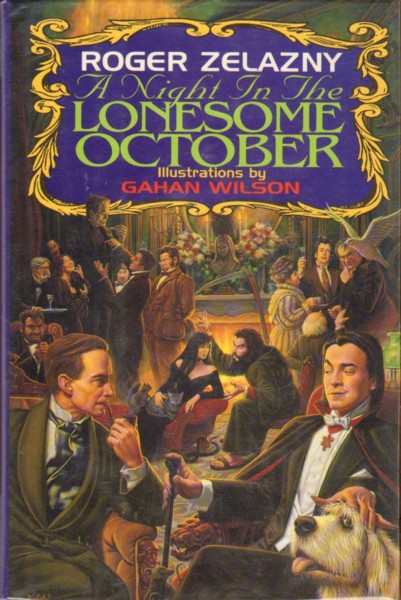
                • Cover of A Night in the Lonesome October
                  A Night in the Lonesome October

                  Roger Zelazny · standalone novel · 1993

                  similar byhorror+1 more

                  A Night in the Lonesome October is a novel by American writer Roger Zelazny published in 1993, near the end of his life. It was his final book, and one of his five personal favorites.

                • Cover of Harvest Home
                  Harvest Home

                  Thomas Tryon · standalone novel · 1973

                  similar byhorror+1 more

                  What is the dark secret the people (especially the women!) of Harvest Home are hiding? A family tries to get out of the City and finds the perfect home for their young daughter complete with folk remedies for her allergies and sensitivities in the local wisewoman. But is there something sinister under the surface of the charming little town?

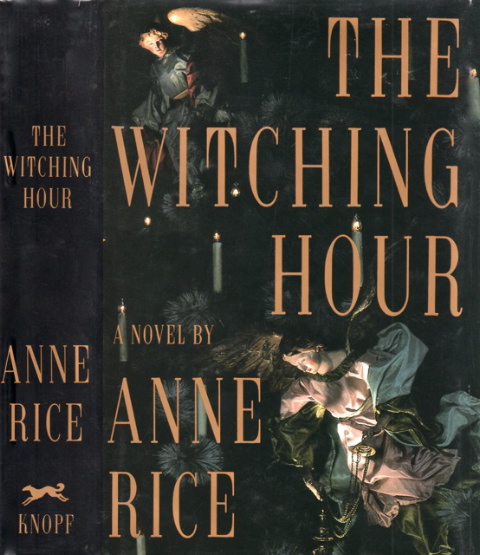
                • Cover of The Mayfair Witches Saga
                  The Mayfair Witches Saga

                  series · 3 books · 1990

                  completed

                  similar bywitcheshorror

                  Lives of the Mayfair Witches is a trilogy of Gothic supernatural horror fantasy novels by American author Anne Rice. It centers on a family of witches whose fortunes have been guided for generations by a spirit named Lasher. The series began in 1990 with The Witching Hour, which was followed by the sequels Lasher (1993) and Taltos (1994). All three novels debuted at No. 2 on The New York Times Best Seller list.

                • Cover of The Burning Court
                  The Burning Court

                  John Dickson Carr · standalone novel · 1937

                  similar bywitches+1 more

                  The Burning Court (1937) is a famous locked room mystery by John Dickson Carr. However, it contains neither Gideon Fell nor Henry Merrivale, Carr's two major detectives. It was published in the United States, and was highly controversial upon its first printing, due to its unorthodox ending. Today, it is hailed as Carr's best non-series novel.

                • Cover of Europa Suite
                  Europa Suite

                  series · 2 books · 2003

                  similar byhorror+1 more

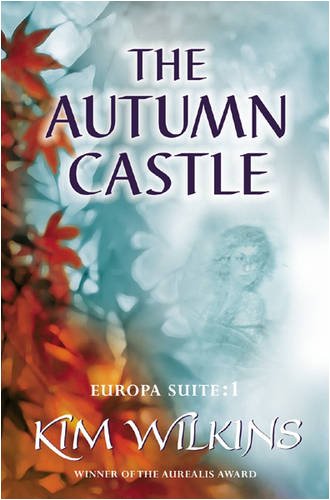
                  Kim Wilkins' Europa Suite opens with The Autumn Castle, in which a woman's ordinary life is upended when the childhood friend she lost — abducted as a girl into a realm of magic and myth — unexpectedly returns, bringing old jealousies and betrayals that threaten to destroy them both. Giants of the Frost continues the loosely linked suite in the same vein.

                • Cover of Nightmare Hour
                  Nightmare Hour

                  series · 1 book · 1999

                  similar byhorror+1 more

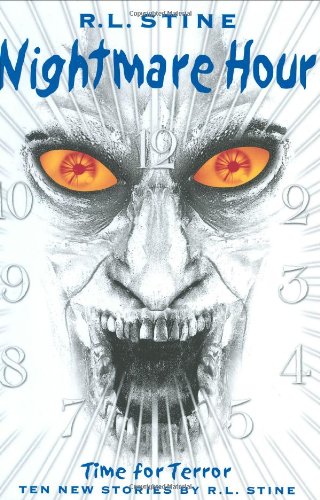
                  R. L. Stine's Nightmare Hour: Time for Terror collects ten of his scariest short stories, each followed by the author's own note on where its idea came from — from a boy forced to spend Halloween in the hospital to a ghost that wants to steal a child's skin. It stands as a standalone short-story collection rather than a serialized series.

                • Cover of The Ragwitch
                  The Ragwitch

                  Garth Nix · standalone novel · 1990

                  similar bywitches+1 more

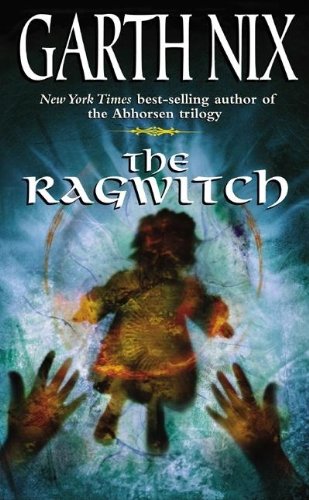
                  Publisher's description 1: When meddling with the contents of an ancient midden, two youngsters are drawn into a frightening mythical world. Publisher's description 2: When his sister Julia falls under the spell of the evil Ragwitch and her minions, Paul must journey across time to a distant dimension and rally the forces of good to rescue Julia and save the magical kingdom of Yendre.

                • Cover of Witchcraft for Wayward Girls
                  Witchcraft for Wayward Girls

                  Grady Hendrix · standalone novel · 2025

                  similar bywitcheshorror

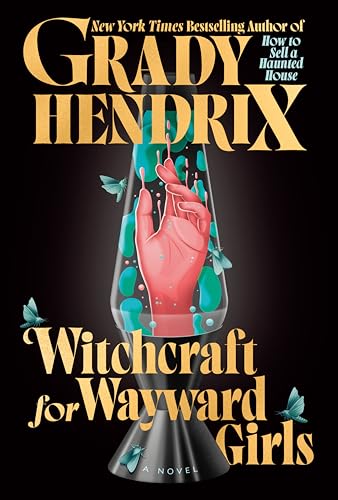
                  Witchcraft for Wayward Girls is a 2025 horror novel by American writer Grady Hendrix. It was first published in January 2025 in the United States by Berkley Books, an imprint of Penguin Random House, and in the United Kingdom by Tor Books. The novel is set in Florida in 1970, and is about a group of pregnant teenage girls living in a maternity home for unwed girls who discover a book on witchcraft.

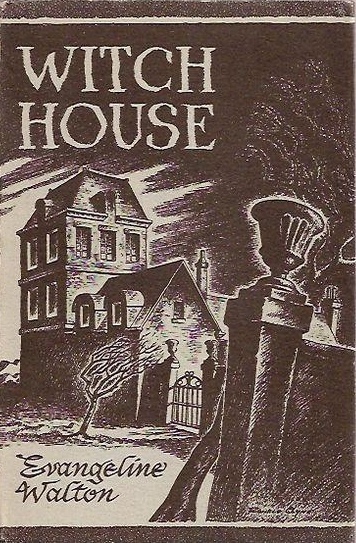
                • Cover of Witch House
                  Witch House

                  Evangeline Walton · standalone novel · 1945

                  similar bywitcheshorror

                  Witch House is a fantasy novel by American writer Evangeline Walton. It was published in 1945 by Arkham House in an edition of 3,000 copies. It was the first full-length novel to be published by Arkham House and was listed as the initial book in the Library of Arkham House Novels of Fantasy and Terror. An expanded version, with a newly written 20,000-word prologue, was published in England in 1950. In 2013, Centipede Press issued the first American edition of this revised version, also including previously unpublished writings by Walton and several of her short stories.

                • Cover of Supernatural Minnesota
                  Supernatural Minnesota

                  series · 4 books · 1984

                  completed

                  similar byhorror+1 more

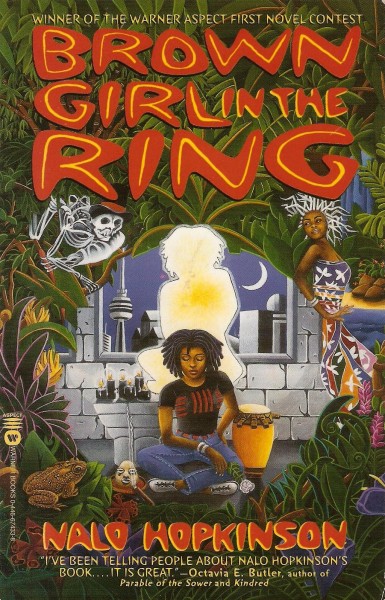
                • Cover of Brown Girl in the Ring
                  Brown Girl in the Ring

                  Nalo Hopkinson · standalone novel · 1998

                  similar bywitches+1 more

                  Brown Girl in the Ring is a 1998 novel written by Jamaican-Canadian writer Nalo Hopkinson. The novel contains Afro-Caribbean culture with themes of folklore and magical realism. The novel received critical acclaim, winning the 1999 Locus Award for Best First Novel. It was shortlisted for numerous other awards, including the Otherwise Award, Philip K. Dick Award, and Crawford Award.

                • Cover of The Changeling
                  The Changeling

                  Victor LaValle · standalone novel · 2017

                  similar byhorror+1 more

                  The Changeling is a 2017 fantasy horror novel by Victor LaValle. The novel received critical acclaim, winnings awards including the 2017 Dragon Award for Best Horror Novel, 2018 British Fantasy Award for Best Horror Novel, 2018 Locus Award for Best Horror Novel, and 2018 World Fantasy Award—Novel. The novel was adapted into a television show of the same name which premiered in 2023.

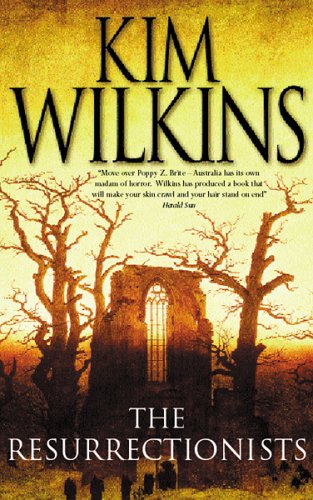
                • Cover of The Resurrectionists
                  The Resurrectionists

                  Kim Wilkins · standalone novel · 2000

                  similar bywitcheshorror

                  The Resurrectionists is a 2000 horror novel by Kim Wilkins. It is the story of Maisie Fielding who, bored with her job and family, returns to England to research her grandmother, who is a "white witch".

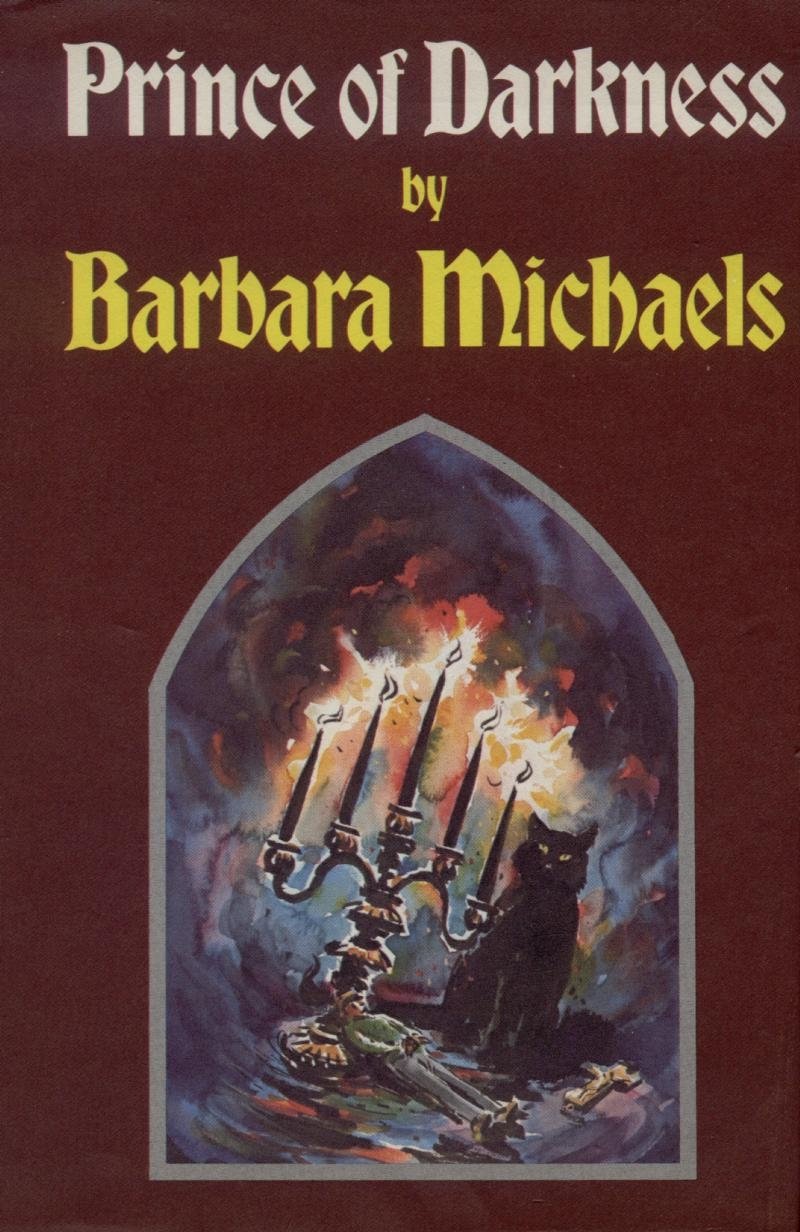
                • Cover of Prince of Darkness
                  Prince of Darkness

                  Barbara Michaels · standalone novel · 1969

                  similar byhorror+1 more

                  A stranger has come to Middleburg, Maryland, a visitor from abroad with a mysterious purpose. But this quaint, affluent community has dark secrets of its own. And when the interloper, Peter Stewart, becomes involved with the bewitching, seductive ward of noted local author Kate More, the townfolk fear the chilling past they are hiding will no longer be safe. For Middleburg has a colonial history of malevolent sorceries and obscene sacrifice. And when the terrible pot is stirred, murder may be the least of the evils to emerge from the unholy brew.

                • Cover of Brood of the Witch-Queen
                  Brood of the Witch-Queen

                  Sax Rohmer · standalone novel · 1918

                  similar bywitcheshorror

                  Brood of the Witch Queen is a 1918 supernatural horror novel by Arthur Henry Sarsfield Ward, known better under his pseudonym, Sax Rohmer.

                • Cover of Black Light
                  Black Light

                  Elizabeth Hand · standalone novel · 1999

                  similar bywitcheshorror

                  Two factions of magicians vie for control of the world in this horror fantasy in Maine. The events are seen through the eyes of a high-school girl and they play out during a film director's party.

                • Cover of Summer of Fear
                  Summer of Fear

                  Lois Duncan · standalone novel · 1976

                  similar bywitcheshorror

                  Summer of Fear is a 1976 American horror novel by Lois Duncan. The plot follows a teenaged girl who suspects her recently orphaned cousin is practicing witchcraft. The novel was adapted into a 1978 film by Wes Craven.

                • Cover of Rose of Jericho
                  Rose of Jericho

                  Alex Grecian · standalone novel · 2025

                  similar by+2 more

                • Cover of The Haunting of Willow House
                  The Haunting of Willow House

                  Anthony M. Strong · standalone novel · 2017

                  similar byhorror+1 more

                  ● "When author Andrew Whelan and his children move from Boston to a house in the country, they think it will be a new start. Grieving the loss of his wife in an auto accident the year before, Andrew hopes that the rural setting will help bring them together again and finally allow them to heal. But the old house hides a terrifying secret, an injustice perpetrated long ago during the time of the Salem witch trials. A restless spirit haunts Willow House, a supernatural force with one thing on its mind. Soon the family find themselves pitted against an evil entity that will stop at nothing to exact revenge for an age old grudge." ― quoted from this book's Amazon product page as of 2021-11-12.

                • Cover of LaZelle
                  LaZelle

                  series · 5 books · 1989

                  similar bywitches+1 more

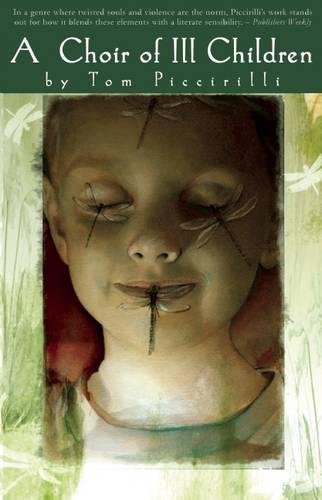
                • Cover of A Choir of Ill Children
                  A Choir of Ill Children

                  Tom Piccirilli · standalone novel · 2003

                  similar byhorror+1 more

                  This lyrical tale of evil, loss, and redemption is a stunning addition to the Southern gothic tradition of Flannery O'Connor and Harry Crews.A Choir of Ill Children is the startling story of Kingdom Come, a decaying, swamp backwater that draws the lost, ill-fated, and damned. Since his mother's disappearance and his father's suicide, Thomas has cared for his three brothers--conjoined triplets with separate bodies but one shared brain--and the town's only industry, the Mill.Because of his family's prominence, Thomas is feared and respected by the superstitious swamp folk. Granny witches cast hexes while Thomas's childhood sweetheart drifts through his life like a vengeful ghost and his best friend, a reverend suffering from the power of tongues, is overcome with this curse as he tries to warn of impending menace. All Thomas learns is that "the carnival is coming."Torn by responsibility and rage, Thomas must face his tormented past as well as the mysterious forces surging toward the town he loves and despises.From the Paperback edition.