Loreful
HomeDiscover
Search series, authors…⌘K
Loreful

Reading orders for SF/F series and shared universes — with your place kept in every one.

Explore

UniversesSeriesWorksAuthorsAtlas

Help

FAQAboutSite map

Account & legal

Sign inCreate accountPrivacyTerms

Data

Built on ISFDB, Wikipedia, Wikidata and Open Library. Curated reading orders carry their reasoning on the page; the rest follow publication order. Data sources & licenses

© Loreful · data: ISFDB · CC BY

More like Winterkill

anchored on:fantasysecondary worlddark fantasydark

but

Mood

The mood the book leaves you in.

  • The reading experience is propelled by journeys, exploration, and physical risk; excitement and forward momentum dominate over dread or introspection.
  • Joy and loss are deliberately mixed; the resolution grants characters something real while taking something else away, leaving warmth and sorrow together.
  • The book demands work from the reader — dense prose, difficult structure, unfamiliar ideas, or morally uncomfortable material — as part of its intended effect.
  • Grim events, cruelty, or despair dominate the atmosphere, and the book does not soften them with comfort or comic relief.
  • The atmosphere is quietly unsettling — wrongness, unease, and the uncanny pervade the book without necessarily escalating into overt horror.
  • The book is built to move the reader; character feeling is foregrounded and major scenes aim at a strong emotional response.
  • Humor is a primary aim and the prose plays for laughs — comic situations, wit, or dialogue produce sustained comedy, not occasional levity.
  • The book insists that things can improve; effort and decency are shown to matter, and the arc bends toward better outcomes even through hardship.
  • The book teaches as it goes — real facts, history, science, or craft are conveyed in enough depth that learning is part of the reading experience.
  • The book is designed to uplift and motivate, presenting perseverance or achievement in a way that invites the reader to aspire or act.
  • The overall register is cheerful and easygoing; stakes are kept gentle and the book avoids dwelling on pain or dread.
  • Withheld information drives the experience; the book sustains enigmas and secrets the reader wants resolved, whatever its genre.
  • The book is contemplative and inward-looking, giving more weight to thought, memory, and meaning than to external events.
  • The book works as comfort reading — low tension, a soothing pace, and an atmosphere the reader can unwind in.
  • Grief, loss, or melancholy set the dominant register, and the book lets sorrow stand rather than resolving it into comfort.
  • Sustained suspense is the point; the book keeps the reader braced for what happens next through danger, pressure, or impending revelation.
  • Playful invention and charm define the register — fanciful conceits, light absurdity, and a narration that delights in its own oddity.

About

What the story runs on.

  • Stories structured as a quest — a journey undertaken to find, deliver, or destroy something of great import.
  • Stories in which staying alive against nature, catastrophe, or scarcity is the central problem.
  • Stories of lovers kept apart by law, family, faith, or station, where the obstacle to love is the plot.
  • Stories in which a friendship — its making, testing, or loss — is the emotional center.
  • Stories of growing up — a young protagonist crossing from childhood into adult knowledge and responsibility.
  • Stories about who a character truly is — self-discovery, doubled lives, and the search for a self.
  • Stories about mental unraveling — descent into madness, delusion, and minds at war with themselves.
  • Stories about mourning — living through the death of a loved one and what loss does to the survivors.
  • Stories in which a buried family truth — hidden parentage, crimes, or shames — surfaces and reorders the present.
  • Stories driven by maneuvering for power — factions, conspiracies, and statecraft conducted in shadow.
  • Stories in which war itself is the subject — combat, occupation, and what warfare does to soldiers and civilians.
  • Stories organized around investigating a killing — the case, the clues, and the pursuit of the killer, in any genre's clothing.

Shelf

Where it sits in the library.

    • Fiction built on magic or other supernatural elements that have no scientific explanation.
    • Secondary-world fantasy at large scale, where the fate of nations or the world turns on the protagonists' struggle.
    • Fantasy set in a recognizably modern city or contemporary world where the supernatural intrudes on everyday life.
    • Fantasy that blends in horror's atmosphere and imagery, keeping a fantastical frame around grim or frightening material.
    • Action-driven fantasy following warriors or rogues with personal stakes against sorcerous threats, rather than world-spanning conflicts.
    • Fantasy set in a real historical period or a close analogue of one, with magic woven into the era.
    • Fantasy in which protagonists cross from the ordinary world into another world through a portal or similar passage.
    • Fiction that retells or reworks a traditional fairy tale in a new form or setting.
    • Fantasy drawing directly on myths, legends, and folklore, retelling them or building on their figures and logic.
    • Fantasy of ghosts, vampires, shapeshifters, psychics, and similar phenomena, usually set in an otherwise ordinary world.
    • Fiction mixing science-fictional trappings with overtly magical or impossible elements in one setting.
    • Low-stakes fantasy emphasizing comfort, community, and everyday pleasures over conflict and peril.
    • Speculative fiction of pervasive moral ambiguity, violence, and cynicism that rejects heroic conventions — fantasy and SF alike.
      • Fiction that extrapolates from science and technology — future societies, space travel, or speculative inventions — within at least nominally natural laws.
      • Science fiction of interstellar scope — starships, galactic polities, and adventure across star systems.
      • Science fiction committed to scientific rigor, where technical plausibility constrains the story.
      • Science fiction centered on armed forces and warfare, told largely from a military point of view.
      • Science fiction of networked, corporate-dominated near futures, pairing high technology with social decay.
      • Science fiction styled on nineteenth-century steam-powered technology, often in a Victorian or pseudo-Victorian setting.
      • Fiction depicting an oppressive or catastrophic society, presented as a warning.
      • Fiction set after civilization's collapse, following survivors in the ruins of the old world.
      • Fiction in which characters move between past and future, and the mechanics or consequences of that travel drive the plot.
      • Fiction exploring a world where a historical event went differently and history diverged from ours.
      • Science fiction about humanity's first encounter and communication with an alien intelligence.
      • Science fiction in which extraterrestrial forces attack or occupy Earth and humanity resists.
      • Fiction whose primary aim is to frighten or unsettle the reader through dread, menace, or the monstrous.
      • Horror of vast, indifferent, incomprehensible entities before which humanity is insignificant, in the Lovecraft tradition.
      • Horror of decaying houses, buried family secrets, and oppressive atmosphere in the Gothic literary tradition.
      • Horror centered on hauntings and the returning dead.
      • Horror located in the mind — paranoia, obsession, and unreliable perception rather than external monsters.
      • Horror built around the reanimated dead and survival amid their outbreaks.
      • Horror defined by explicit, transgressive gore that refuses to cut away from violence.
      • Speculative fiction of the strange and uncanny that resists both natural explanation and standard genre categories.
      • Fiction organized around solving a crime or puzzle, typically following an investigator toward the identification of a culprit.
      • A puzzle-first mystery that lays out clues so the culprit's identity can be deduced before the reveal.
      • Crime fiction of moral ambiguity, fatalism, and hard-edged style, set among the corrupt and the doomed.
      • A mystery following the realistic routines of police work — forensics, interviews, and case-building.
      • A gentle mystery with an amateur sleuth, a small community, and violence kept off the page.
      • A mystery set in a past era, where the investigation works within that period's methods and society.
      • Fast-paced fiction driven by imminent danger, pursuit, or high-stakes conspiracy, built to sustain tension.
      • A thriller of espionage — agents, tradecraft, and intelligence services in conflict.
      • A thriller centered on lawyers and the courtroom, where litigation carries the suspense.
      • A thriller driven by detailed contemporary or near-future technology, often military or scientific.
      • A thriller whose tension comes from mental states and manipulation between characters rather than external action.
      • Fiction whose central plot is a romantic relationship and its development toward an emotionally satisfying resolution.
      • Romance in which one or both partners are supernatural beings, blending fantasy elements into the love story.
      • A fantasy-romance hybrid in which the romantic arc and the fantasy plot carry equal weight.
      • Romance set in a past era, with courtship shaped by the period's society and manners.
      • Romance set in the present day, without supernatural or historical elements.
      • Fiction set in a real past period, where the historical setting materially shapes characters and events.
        • General and literary fiction emphasizing prose style, character interiority, or formal ambition over genre plot conventions.
        • Fiction in a realistic world where magical events occur and are treated as ordinary, in the tradition of Latin American literature.
        • Fiction that ridicules people, institutions, or society in order to criticize them.
        • Fiction of dreamlike, irrational imagery and logic that breaks from realistic representation.
        • Fiction that plays with narrative convention through metafiction, fragmentation, and self-reference.
        • Fiction propelled by journeys, exploration, and physical peril, where action and survival carry the plot.
        • Adventure fiction of ships and seafaring — naval engagements, voyages, and life at sea.
        • Fiction of the American frontier West — gunmen, ranchers, and lawmen, typically in the late nineteenth century.
        • Fiction centered on soldiers, campaigns, and the experience of warfare, historical or imagined.
          • Fiction written primarily to amuse, using comedic situations, wit, or parody as its organizing principle.
            • Multi-generational fiction following a family or dynasty across decades, with inheritance and kinship as the through-line.
              • Fiction whose world runs on explicit game mechanics — levels, stats, and skills that characters can see and exploit.
                • Fiction about costumed or superpowered heroes and their conflicts with comparable villains.

                Practical

                How long a commitment, whether it stands alone, and whether it has finished.

                Tap a chip to ask for it · tap again to rule it out · once more to clear. Numbers show what would be left.

                • Cover of Stonewater Kingdom
                  Stonewater Kingdom

                  series · 2 books · 2025

                  similar bydarksecondary worldfantasydark fantasy+1 more

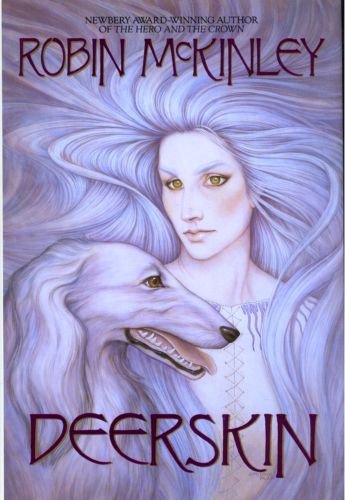
                • Cover of Deerskin
                  Deerskin

                  Robin McKinley · standalone novel · 1993

                  similar bydarksecondary worlddark fantasyfantasy+1 more

                  Deerskin is a dark fantasy novel by Robin McKinley, first published in 1993. It is based on an old French fairy tale by Charles Perrault called Peau d'âne. It was nominated for the Mythopoeic Fantasy Award for Adult Literature.

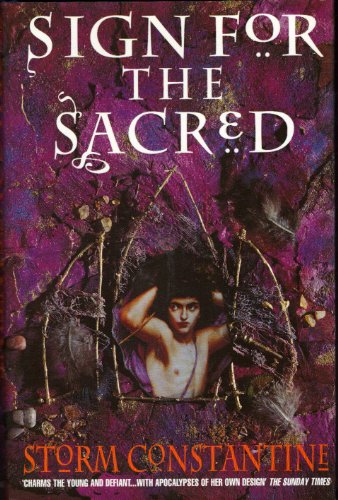
                • Cover of Sign for the Sacred
                  Sign for the Sacred

                  Storm Constantine · standalone novel · 1993

                  similar bycursesdarksecondary worldfantasydark fantasy

                  The Church of Ixmarity is under siege – the followers of the maverick prophet Resence Jeopardy are winning new converts daily and their heresy threatens the state itself, as well as the wealth and position of those who govern it, particularly the eccliesiarch, Wilfish Implexion. Implexion is determined to stamp out the Jeopardites by any means at his disposal, no matter how ruthless. But the Jeopardites are nomadic, flitting from sanctuary to sanctuary, constantly evading the forces of Ixmarity. Implexion is not alone in his determination to seek out the elusive heretic – four others are desperate in their desire to find Jeopardy... Lucein ... a former colleague of Resences Jeopardy, a vibrancer of the Church of Ixmarity, a man who would have dedicated his life to the dance in respectable slavery had it not been for the love of the prophet to be. Cleo...the child bride of a poisoner. When the beautiful Inky, one of Jeopardy’s illegitimate offspring, is brought to her house for disposal, she falls in love – with the boy and with his sire. Selilah and Trajan..brought together by death and disease. Delilah is orphaned by Rajan’s violent attack on her village, and she’s the only one ont prey to either his wrath or the pernicious plague he carries. Delilah promises to watch over Trajan as he returns to the sanctuary of the Jeopardite camp – he believes Resenence is his only possible saviour from the terrible curse he carries. But in finding Jeopardy all four questers are ultimately surprised by the nature of their success...

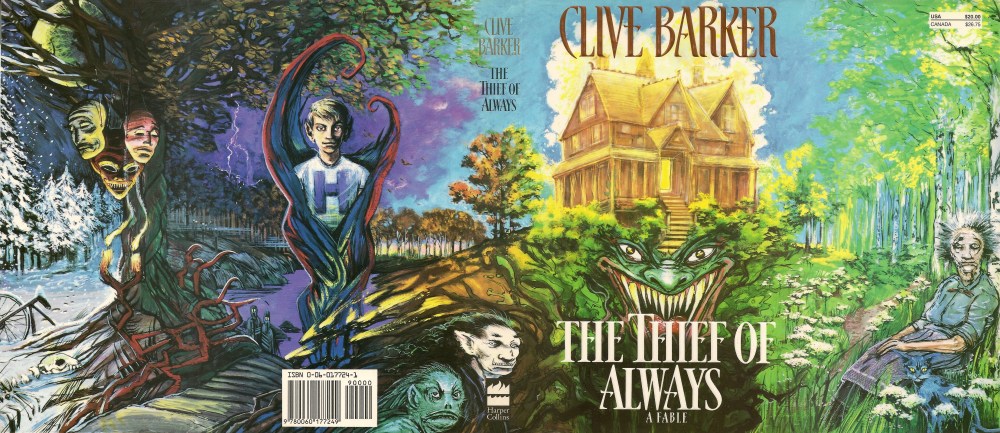
                • Cover of The Thief of Always
                  The Thief of Always

                  Clive Barker · standalone novel · 1992

                  similar bydarkfantasydark fantasy+1 more

                  Ten-year-old Harvey Swick is bored out of his mind when a stranger named Rictus offers him a way out: Holiday House, a place where every season of the year -- Christmas, Halloween, summer -- arrives in a single glorious day, one after another. Once inside, Harvey meets fellow children Wendell and Lulu, the elderly caretaker Mrs. Griffin and her cats, and settles into a routine of enchantment that starts to feel too perfect. Their host, the mysterious Mr. Hood, never appears, rumors about a figure called Carna keep surfacing, and something in the nearby lake is very wrong. One of Clive Barker's best-known standalone books, written for younger readers.

                • Cover of Hart's Hope
                  Hart's Hope

                  Orson Scott Card · standalone novel · 1983

                  similar bycursesdarksecondary worldfantasy

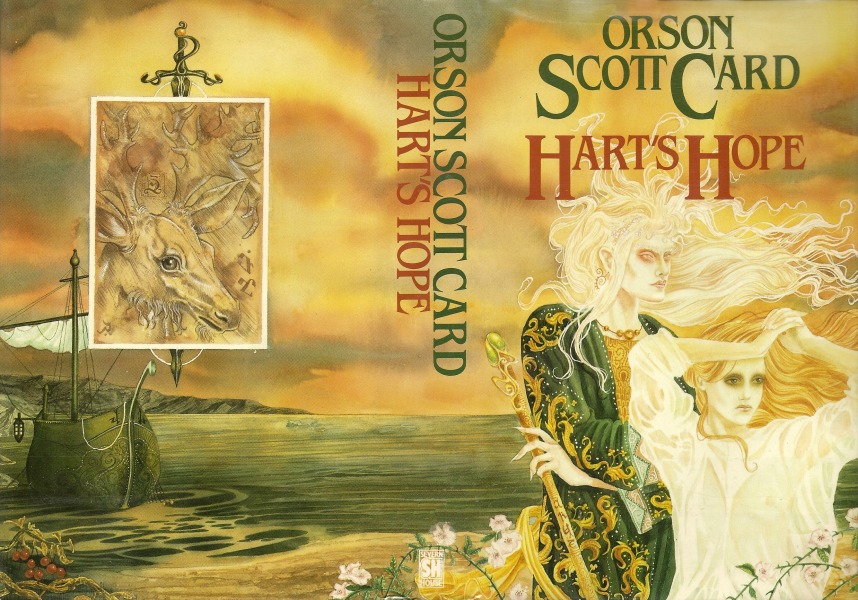
                  Hart's Hope (1983) is a fantasy novel by American writer Orson Scott Card. It is written in second person.

                • Cover of The Broken Sword
                  The Broken Sword

                  Poul Anderson · standalone novel · 1954

                  similar bycursesdarksecondary worldfantasy

                  The Broken Sword is a fantasy novel by American writer Poul Anderson, originally published on 5 November 1954. A revised edition was issued by Ballantine Books in January 1971 as the twenty-fourth volume of their Ballantine Adult Fantasy series. The original text was reissued by Gollancz in 2002. Set during the Viking Age, the novel features numerous references to Norse mythology.

                • Cover of The Devils
                  The Devils

                  series · 1 book · 2025

                  similar bydarksecondary world+2 more

                  Joe Abercrombie's The Devils (2025) opens a new grimdark fantasy series set in an alternate medieval Europe besieged by plague, famine, and monsters, following Brother Diaz as he's tasked by the Church with managing a squad of imprisoned monstrosities - a vampire, a werewolf, a cursed knight, a pirate, and others - for a mission nobody sane would volunteer for. Their job is to escort a former thief posing as a claimant to the throne of Troy safely to her coronation, through a landscape falling apart around them. It's Abercrombie's first work outside his First Law universe in a decade, pairing his usual morally compromised cast with a monster-squad premise.

                • Cover of Crimson Bound
                  Crimson Bound

                  Rosamund Hodge · standalone novel · 2015

                  similar bycursesdarksecondary worldfantasydark fantasy

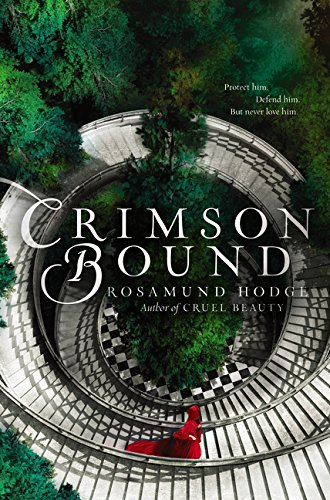
                  Crimson Bound is a fantasy novel inspired by Little Red Riding Hood and written by Rosamund Hodge. The book is set in a fae-dwelling land with Grimm-style magic and French names and inspired locations. "Crimson Bound" retells Little Red Riding Hood with a dark, magical twist.

                • Cover of The Sight
                  The Sight

                  series · 2 books · 2001

                  similar bydarksecondary worldfantasy+1 more

                  David Clement-Davies' The Sight follows Larka, a white wolf born with a rare prophetic power, within a pack shadowed by a curse laid by the embittered lone wolf Morgra. Larka's parents Huttser and Palla, and her adoptive brother Kar, share in the weight of a prophecy that marks her as central to the pack's fate. The sequel, Fell, continues the story of these wolves.

                • Cover of The Immortal Brothers
                  The Immortal Brothers

                  series · 4 books · 2015

                  similar bycursesdarkfantasysecondary world

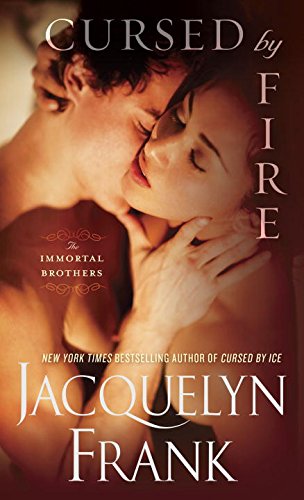
                  Jacquelyn Frank's The Immortal Brothers is a paranormal romance quartet -- Cursed by Fire, Cursed by Ice, Bound by Sin, and Bound in Darkness -- all published by Ballantine Books in 2015, following different brothers across linked romantic storylines.

                • Cover of Faery in Shadow
                  Faery in Shadow

                  C. J. Cherryh · standalone novel · 1993

                  similar bycursesdarksecondary worldfantasy

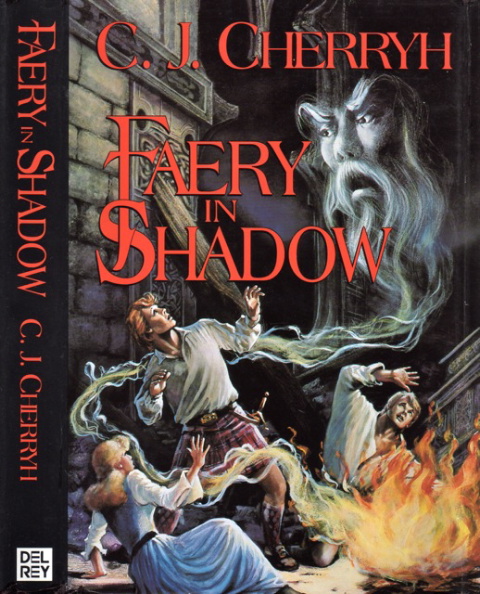
                  Faery in Shadow is a fantasy novel by American writer C. J. Cherryh. It was first published in the United Kingdom by Legend Books in August 1993 in trade paperback, and the first United States edition was published by Ballantine Books under its Del Rey Books imprint in November 1993 in hardcover. It was nominated for the Locus Award for Best Fantasy Novel in 1994.

                • Cover of Tinder
                  Tinder

                  Sally Gardner · standalone novel · 2013

                  similar bycursesdarksecondary worldfantasydark fantasy

                  Otto Hundebiss is tired of war, but when he defies Death he walks a dangerous path. A half beast half man gives him shoes and dice which will lead him deep into a web of dark magic and mystery. He meets the beautiful Safire - pure of heart and spirit, the scheming Mistress Jabber and the terrifying Lady of the Nail. He learns the powers of the tinderbox and the wolves whose master he becomes. But will all the riches in the world bring him the thing he most desires? This novel is inspired by the Hans Christian Anderson fairy tale, The tinderbox.

                • Cover of The Eating Woods
                  The Eating Woods

                  series · 2 books · 2024

                  similar bydarksecondary worlddark fantasyfantasy+1 more

                • Cover of A Song of Ice and Fire
                  A Song of Ice and Fire

                  series · 14 books · 1996

                  part of World of Ice and Fire

                  similar bydarksecondary worldfantasy+1 more

                  A Song of Ice and Fire is a series of high fantasy novels by the American author George R. R. Martin. Martin began writing the first volume, A Game of Thrones, in 1991, and published it in 1996. Martin, who originally envisioned the series as a trilogy, has released five out of seven planned volumes. The most recent entry in the series, A Dance with Dragons, was published in 2011. Since then, Martin has been working on the sixth novel, titled The Winds of Winter. A seventh novel, A Dream of Spring, is planned to follow.

                • Cover of Kingdoms of the Compass
                  Kingdoms of the Compass

                  series · 1 book · 2026

                  similar bycursesdarksecondary worldfantasydark fantasy

                • Cover of Deliciously Dark Fairytales
                  Deliciously Dark Fairytales

                  series · 6 books · 2021

                  similar bydarksecondary world+3 more

                • Cover of Thrice Bound
                  Thrice Bound

                  Roberta Gellis · standalone novel · 2001

                  similar bycursesdarksecondary worldfantasy

                  Hekate's father is the most powerful mage in Ka'anan, so when he commands her to murder the queen of Byblos and marry the king, she must obey or flee. When she learns from the seer Dionysos, who she had bound herself to protect when he was an infant, that her father has summoned an otherworldly being to bespell her, she flees to the Caves of the Dead, where her father's magic is powerless. But the Caves are barred by a spell of terror and revulsion. Enraged by her agony, Hekate swears she will punish her father - and is twice bound. Before despair destroys her, Kabeiros rescues her by breaking the terrible spell, but Hekate cannot remain in the Caves. Unsatisfied, her bindings will kill her, and she must learn new magic far from her father's influence to loose them. Yet when she learns that Kabeiros cannot accompany her because he changes into a black dog if he leaves the Caves, Hekate swears to free him from his curse - and is thrice bound. (from the back cover of the Baen Books first edition)

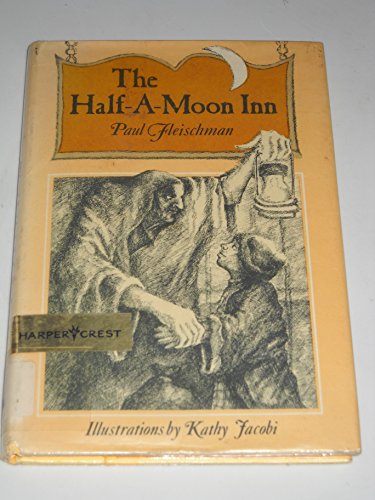
                • Cover of The Half-a-Moon Inn
                  The Half-a-Moon Inn

                  Paul Fleischman · standalone novel · 1980

                  similar bydarkfantasysecondary world+1 more

                  WorldCat: A mute boy is held captive by the strange proprietress of an inn. "The horrors endured by Dickens' most downtrodden characters are akin to what Aaron has to endure at the hands of evil Miss Grackle in The Half-A-Moon Inn". Aaron's mother fails to return home with his 12th birthday present and he sets out in a blizzard to find her. [He gets lost in the woods and snow, yet reaches the Inn. There Miss Grackle reads the dreams of her guests while they sleep and steals money from most of them.] "Aaron becomes a virtual prisoner because [the cursed] Grackle needs an honest person to light the first and warm the inn." --from brief review by Barbara Karlin Los Angeles Times 1980-03-09 p10, not evidently as speculative fiction; bracketed notes gleaned from KirkusReviews.com and April/May newspapers "... Most significant, though, is Fleischman's handling of Aaron's handicap. ... [He] makes neither too much nor too little of Aaron's muteness. He simply incorporates it into the tale, and any message about how resourceful a handicapped person can be is enhanced as a result." [In this and other respects, the story is old-fashioned rather than over-relevant.] --Stephen Krensky The Christian Science Monitor 1980-05-12 pB10

                • Cover of Cup of the World
                  Cup of the World

                  series · 3 books · 2004

                  similar bydarksecondary worldfantasy+1 more

                • Cover of Malazan Book of the Fallen
                  Malazan Book of the Fallen

                  series · 20 books · 1999

                  part of Malazan

                  similar bydarksecondary worlddark fantasyfantasy

                  The Malazan Book of the Fallen is a series of epic fantasy novels written by the Canadian author Steven Erikson. The series, published by Bantam Books in the U.K. and Tor Books in the U.S., consists of ten volumes, beginning with Gardens of the Moon (1999) and concluding with The Crippled God (2011). Erikson's series presents the narratives of a large cast of characters spanning thousands of years across multiple continents.

                • Cover of The Sin Eater's Daughter
                  The Sin Eater's Daughter

                  series · 3 books · 2015

                  similar bydarksecondary worldfantasy+1 more

                  The Sin Eater's Daughter is a young adult fantasy trilogy written by British YA author Melinda Salisbury and published by Scholastic Press. The first book in the trilogy, The Sin Eater's Daughter, was published in 2015 on 24 February and marked Salisbury's first book in print. The second book in the trilogy, The Sleeping Prince, was published the following year. A short story prequel, The King of Rats, was also released that year but only as an exclusive print edition at Young Adult Literature Convention in London. The third and final book in the trilogy, The Scarecrow Queen, was released in 2017. Later in 2017, a short story collection set in the same world, The Heart Collector, was released. This included The King of Rats and two brand new short stories entitled The Heart Collector and Mully No-Hands.

                • Cover of Gilded Duology
                  Gilded Duology

                  series · 2 books · 2021

                  similar bycursessecondary worldfantasy+1 more

                • Cover of The Given Duet
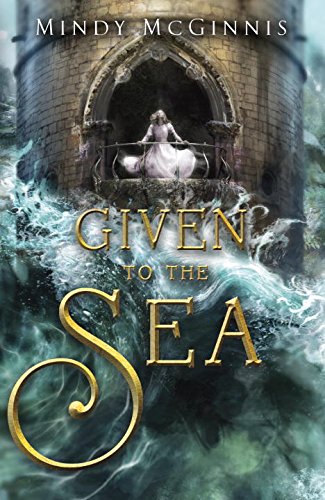
                  The Given Duet

                  series · 2 books · 2017

                  similar bydarksecondary worldfantasy+1 more

                • Cover of Firefly Island
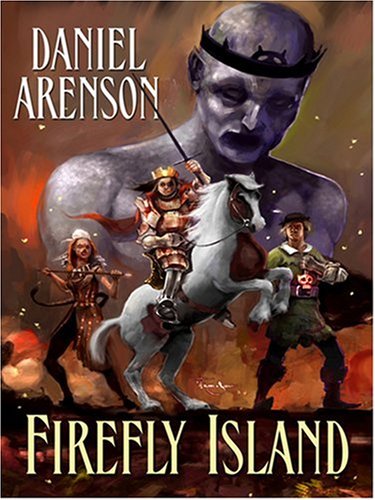
                  Firefly Island

                  Daniel Arenson · standalone novel · 2007

                  similar bydarksecondary worldfantasy+1 more

                  From the author's Web site: "A cruel king, his flesh made of stone, tyrannizes the enchanted Firefly Island. No sword or arrow can harm him. Aeolia, a servant girl, can magically share feelings and senses... even pain. Only she, by hurting herself, can hurt the mad monarch. But can she save the island from his grasp?"