More like WIRED
anchored on:science fictiongenetic engineeringour worldnear futuretensehard science fiction+3 more
but
- Wired (Douglas E. Richards)
series2 books2012
similar bynear futuregenetic engineeringtenseour worldscience fictiontechno-thriller+3 more
Wired opens Douglas E. Richards's two-book techno-thriller about genetic engineer Kira Miller, whose discovery of a way to unlock temporary savant-level intelligence turns her into both a scientific breakthrough and a fugitive, and David Desh, the former special-forces operative sent to track her down. The story escalates from a bioterror investigation into a fight over the future of engineered human cognition, continuing directly into the 2012 sequel Amped. Richards, primarily a science-fiction and thriller writer, built both books into New York Times and USA Today bestsellers rather than a longer franchise.
- Blood Music
Greg Bearstandalone novel1985
similar byour worldnear futuregenetic engineeringscience fictionhard science fiction+1 more
Blood Music is a 1985 science fiction novel by American writer Greg Bear. It is an expanded version of a short story of the same title, originally published in the June 1983 issue of Analog and the winner of both the 1983 Nebula and 1984 Hugo awards for Best Novelette. The novel won the 1986 Prix Apollo Award, given to the best science fiction novel published in France during the preceding year, under the title La Musique du sang.
- Darwin
series2 books1999
completed
similar bynear futuregenetic engineeringtensescience fictionhard science fiction+2 more
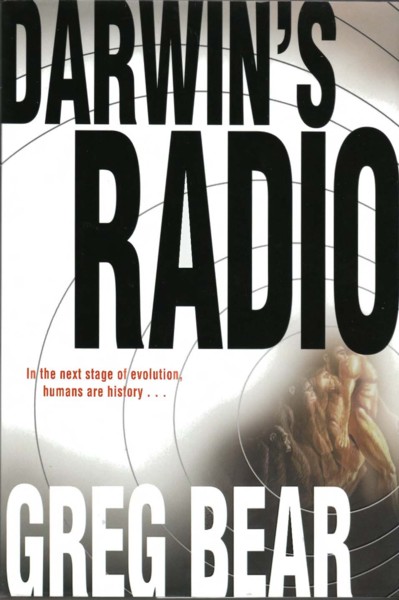
Greg Bear's Darwin's Radio imagines a dormant retrovirus in human DNA activating worldwide, triggering an accelerated leap in human evolution that governments respond to as a plague. The 1999 novel won the Nebula Award; its sequel Darwin's Children follows the first generation of changed children as society decides what to do with them. Together they're speculative near-future science fiction grounded in genetics rather than space opera.
- The Eyes of Heisenberg
Frank Herbertstandalone novel1966
similar byour worldgenetic engineeringtenseimmortalityscience fiction
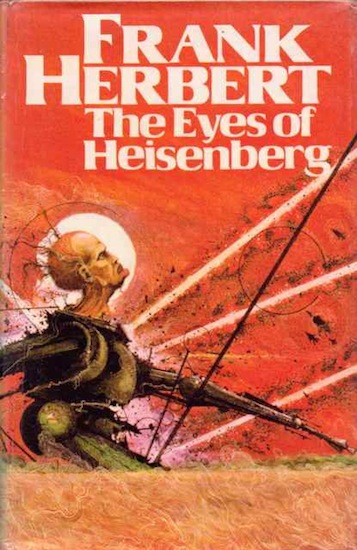
Tens of thousands of years in the future, Earth is ruled by the Optimen, a genetically engineered aristocracy that has made itself functionally immortal, while ordinary people, the Folk, live under strict reproductive control. When Harvey and Lizbeth Durant arrive to have their embryo genetically screened, the examining doctor finds something in the child no one has seen in a very long time: real potential for both fertility and life span, traits the Optimen have arrogated to themselves. Rather than destroy the embryo as policy demands, the doctor hesitates, setting off a chain of surveillance, suspicion and resistance. A tightly wound Frank Herbert thriller about genetic caste and rebellion.
- The Chronoliths
Robert Charles Wilsonstandalone novel2001
similar byour worldnear futuremysterioustensescience fictionhard science fiction
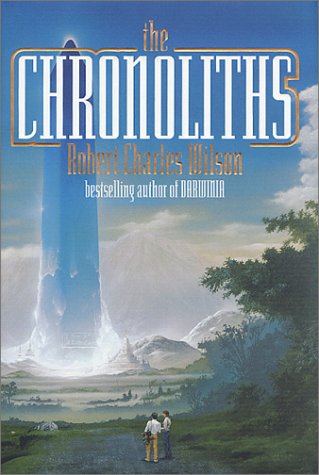
The Chronoliths is a 2001 science fiction novel by American-Canadian writer Robert Charles Wilson. It was nominated for the 2002 Hugo Award for Best Novel and tied for the 2002 John W. Campbell Memorial Award for Best Science Fiction Novel.
- Seveneves
Neal Stephensonstandalone novel2015
similar bynear futuregenetic engineeringtenseour worldscience fictionhard science fiction
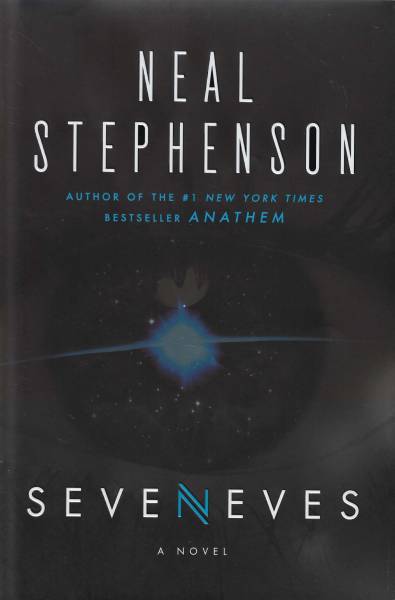
Seveneves is a science fiction novel by Neal Stephenson published in 2015. The story tells of the desperate efforts to preserve Homo sapiens in the wake of apocalyptic events on Earth after the unexplained disintegration of the Moon and the remaking of human society as a space-based civilization after a severe genetic bottleneck.
- Nexus 5
series3 books2012
similar byour worldnear futuretensescience fictionartificial intelligence+2 more
Nexus opens Ramez Naam's postcyberpunk trilogy in 2040 with scientist Kaden Lane, who works on Nexus, an experimental nano-drug that lets human minds be networked and reprogrammed, and finds himself caught between government and corporate interests once the technology's implications become clear. The trilogy continues through Crux and Apex, following the same central conflict over who controls the technology. Nexus tied for Best Novel at the 2014 Prometheus Awards and Apex won the 2015 Philip K. Dick Award.
- The Games
Ted Kosmatkastandalone novel2012
similar bynear futuregenetic engineeringour worldtensescience fictionhard science fictionartificial intelligence
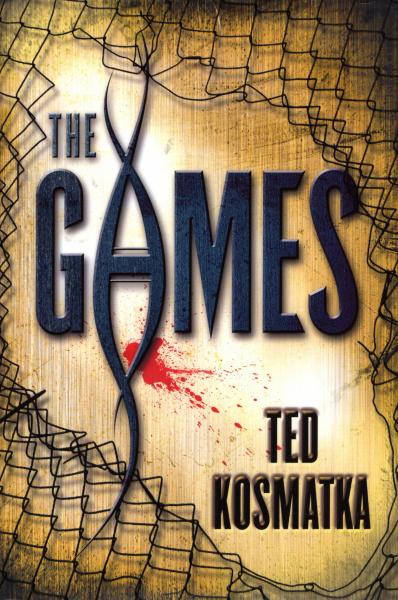
The Games is a 2012 science fiction novel by Ted Kosmatka, exploring the effects of advances in artificial intelligence and genetics on sport. It was a finalist for the 2013 Locus Award for Best First Novel.
- The Windup Universe
series3 books2005
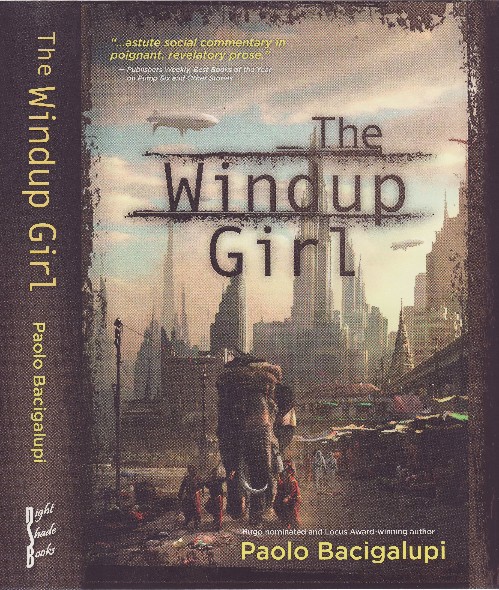
similar bynear futuregenetic engineeringour worldscience fiction+1 more
- The Jackpot Trilogy
series2 books2014
similar bynear futuremysterioustensescience fiction+3 more
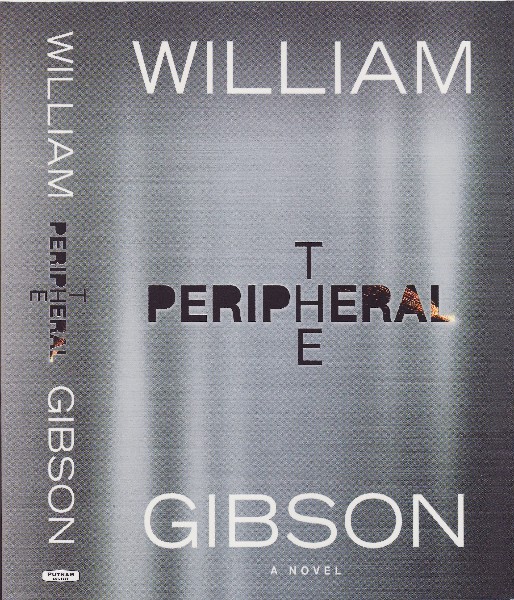
William Gibson's Jackpot sequence begins with The Peripheral (2014), a science-fiction thriller cross-cutting between a near-future American town and a devastated London seventy years on. Gibson continued the same world in Agency (2020), set slightly later in the near-future timeline.
- The Martian
series2 books2012
similar bynear futuretenseour worldscience fictionhard science fiction
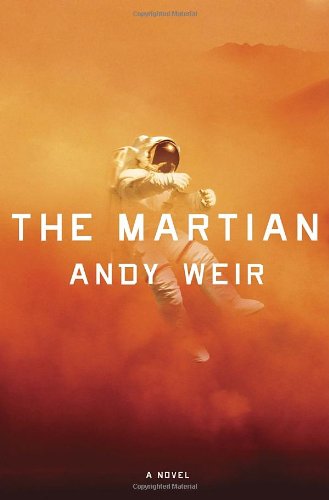
Andy Weir's novel The Martian, first self-published in 2011 before a commercial re-release, follows astronaut Mark Watney after he is stranded alone on Mars when his crew presumes him dead and departs. Using scientific improvisation and dark humor, Watney works to keep himself alive long enough for a rescue to reach him. It is a single, self-contained survival story.
- The Computer Connection
Alfred Besterstandalone novel1975
similar byour worldnear futureimmortalityscience fictionartificial intelligence+2 more
The Computer Connection is a science fiction novel by American writer Alfred Bester. It was originally published as a serial in Analog Science Fiction magazine in November and December 1974, and in January 1975 under the title The Indian Giver; the novel appeared in book form in 1975. Some editions use the title Extro. The novel was nominated for the Nebula Award for Best Novel in 1975 and the Hugo Award for Best Novel in 1976.
- Flashforward
Robert J. Sawyerstandalone novel1999
similar byour worldnear futuremysterioustensescience fiction
Flashforward is a science fiction novel by Canadian author Robert J. Sawyer first published in 1999. The novel is set in 2009. At CERN, the Large Hadron Collider accelerator is performing a run to search for the Higgs boson. The experiment has a unique side effect; the entire human race loses their consciousness for about two minutes. During that time, nearly everyone sees themselves roughly twenty-one years and six months in the future. Each individual experiences the future through the senses of their future self. This "flashforward" results in countless deaths and accidents involving vehicles, aircraft, and any other device needing human control at the time of the experiment. The novel was adapted into the 2009 television series FlashForward.
- Prey
Michael Crichtonstandalone novel2002
similar byour worldtensegenetic engineeringscience fictiontechno-thrillerartificial intelligence
Prey is the thirteenth novel by Michael Crichton under his own name and his twenty-third novel overall. It was first published in November 2002, making it his first novel of the twenty-first century. An excerpt was first published in the January–February 2003 issue of Seed magazine. Prey brings together themes from two earlier Crichton best-selling novels, Jurassic Park and The Andromeda Strain, and serves as a cautionary tale about developments in science and technology: in particular, nanotechnology, genetic engineering, and distributed artificial intelligence.
- The Octagonal Raven
L. E. Modesitt & Jr.standalone novel2001
similar byour worldnear futuretensegenetic engineeringscience fictiontechno-thriller+1 more
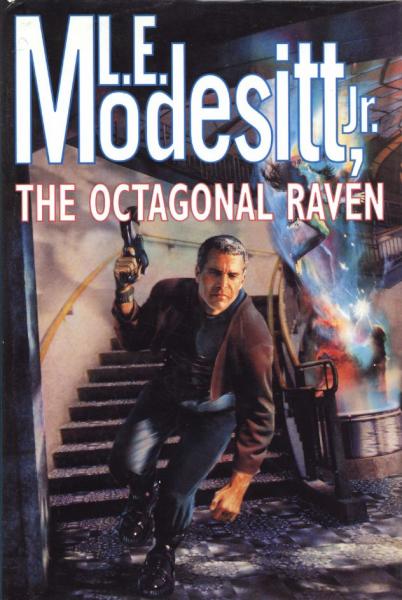
From the front flap of the first edition: Someone is trying to kill Daryn Alwyn. Born to privilege with preselected genetic advantages and the best nanotech augmentation his father's fabulous fortune can buy, Daryn spurned the lucrative family Media Network to seek his own path, a craft raven among soaring eagles. After serving with distinction as a space pilot in the military, he enjoys success as a media consultant. But when he finds himself the target of sophisticated murder attempts, his world is turned upside down. It seems unlikely that his success outside the family business could have inspired such expensive assassination attempts, and his father and brother and sister would be more obvious targets within the family. Then is sister is killed, and Daryn is her heir - suddenly he is one of the richest and most powerful men in the world. Modesitt's new SF thriller lays bare the prejudices of the powerful in a fascinating future society, and it reads like an express train.
- The Light of Other Days
Arthur C. Clarke & Stephen Baxterstandalone novel2000
similar byour worldnear futuretensescience fiction+2 more
An industrialist devises a technique to use tiny wormholes as light pipes to enable viewing of any event anywhere; and subsequently it becomes possible to use them to view any event in the past as well. The effects on society are enormous.
- Hopscotch
Kevin J. Andersonstandalone novel2002
similar byour worldnear futuretenseimmortalityscience fiction
From the flaps of the Bantam first edition: "Suppose you could switch bodies with another person? What exciting new experiences would you choose to explore? What forbidden desires would you indulge? Suppose someone stole your life–how far would you go to get it back? From ... author Kevin J. Anderson comes a pure adrenaline thriller of hijacked identities, elusive motives, and deeply buried secrets–a disturbing, thought-provoking excursion into a sleek, hedonistic society where nothing is your own...not even your soul. Hopscotch - For a fee, Eduard Swan will swap bodies with people in distress–those facing surgeries, emotional crises, moments of unpleasantness or discomfort they can't or would rather not deal with. Eduard will experience the suffering for them. It's a lucrative business, and in a world in which no one is required to feel any pain, there is no end of clients. But someone doesn't want to play by the rules. Someone doesn't want to return his body. And, unfortunately for Eduard, that someone is one of the world's most powerful men. Now Eduard has no choice but to steal back his life. He has the perfect alibi–or so he thinks. For even in a world where you can hopscotch from body to body, you always leave a trail. And following that trail is a relentless dispenser of "justice" named Daragon, a childhood friend, now a zealous and ambitious agent of state security, who won't let old friendships stand in the way of doing his duty. When Eduard goes on the run, hounded at every turn by Daragon, his only hope is two other childhood friends: Garth, a tormented artist who gains success beyond his wildest dreams, only to discover the terrible price of fame; and Teresa, a spiritual seeker who risks losing her own body to a fanatical religious cult as she embarks on a harrowing quest to find her true identity. Moving from underground hopscotch pleasure bars to the highest enclaves of power to a seamy underworld of illegal Phantoms, ancient minds who steal younger bodies in a quest for eternal life, Eduard and his friends seek the meaning of identity in a society in which appearances mean everything–and nothing–and where everything is relative...even murder."
- The Turing Option
Harry Harrison & Marvin Minskystandalone novel1992
similar byour worldnear futuretensescience fictionhard science fictionartificial intelligence
Classic SF Harry Harrison enthralls with the discovery, loss and re-discovery of AI. Quaint but fairly accurate predictions of modern computing power. 24 style presentation.
- Vitals
Greg Bearstandalone novel2002
similar byour worldtensegenetic engineeringimmortalityscience fiction
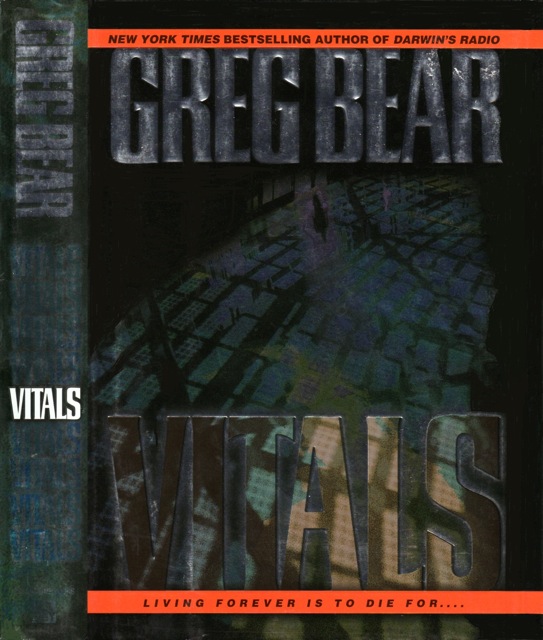
From the flaps of the Del Rey first edition: "Hal Cousins is one of a handful of scientists nearing the most sought after discovery in human history: the key to short-circuiting the aging process. Fueled by a wealth of research, an overdose of self-confidence, and the money of influential patrons to whom he makes outrageous promises, Hal experiments with organisms living in the hot thermal plumes in the ocean depths. But as he journeys beneath the sea, his other world is falling apart. Across the country, scientists are being inexplicably murdered - including Hal's identical twin brother, who is also working to unlock the key to immortality. Hal himself barely eludes a cold-blooded attack at sea, and when he returns home to Seattle, he finds himself walking into an eerie realm where voices speak to him from the dead ... where a once-brilliant historian turned crackpot is leading him on a deadly game of hide-and-seek ... and where the beautiful, rich widow of his twin is more than willing to pick up the pieces of Hal's life-and take him places he's never been before. Suddenly Hal is trapped inside an ever-twisting maze of shocking revelations. For he is not the first person to come close to ending aging forever - and those who came before him will stop at nothing to keep the secret to themselves. Now every person on earth is at risk of being made an unsuspecting player in one man's spectacular and horrifying master plan. From the bottom of Russia's Lake Baikal to a billionaire's bionic house built into the cliffs of the Washington seashore, from the darkest days of World War II and the reign of Josef Stalin to the capitalist free-for-all that is the United States, Vitals tells an astounding tale of the most unimaginable scientific secret of all - exposed by the quest for immortality itself..."
- Autonomous
Annalee Newitzstandalone novel2017
similar byour worldnear futuretensescience fictionartificial intelligence+2 more
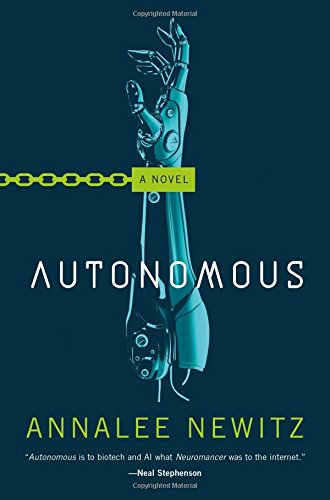
Autonomous is a 2017 science fiction novel by Annalee Newitz. It is Newitz's debut novel and was published by Tor Books on September 19, 2017. Set in a near future Earth, the book describes a world where both humans and intelligent robots can be owned as property. The events of the novel follow Jack, a "drug pirate" who manufactures illegal versions of patented drugs, and Paladin, a combat robot who is owned by the law enforcement agency searching for Jack after one of the drugs she reverse-engineered turns out to have dangerous side effects.
- The Mind Cage
A. E. van Vogtstandalone novel1957
similar byour worldnear futuretensescience fiction+1 more
The Mind Cage is a 1957 science fiction novel by American writer A. E. van Vogt, adapted from the short story "The Great Judge" (1948).
- Friday
Robert A. Heinleinstandalone novel1982
similar bynear futuregenetic engineeringtensescience fiction+1 more
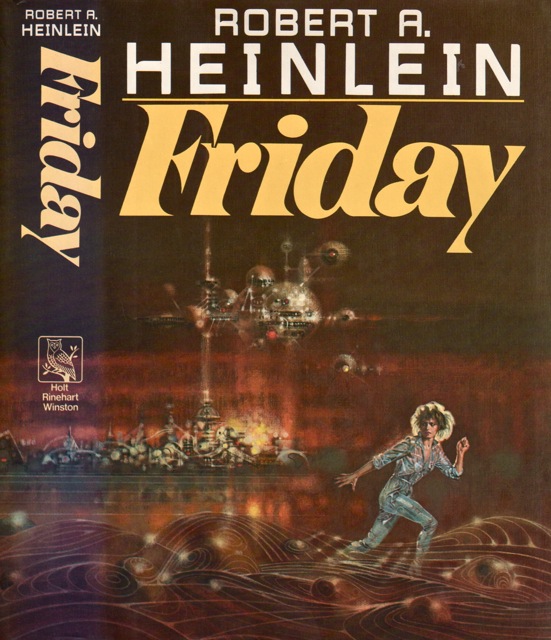
Friday is a 1982 science fiction novel by American writer Robert A. Heinlein. It is the story of a female "artificial person", the eponymous Friday, genetically engineered to be stronger, faster, smarter, and generally better than normal humans. Artificial humans are widely resented, and much of the story deals with Friday's struggle both against prejudice and to conceal her enhanced attributes from other humans. The story is set in a Balkanized 21st century, in which the nations of the North American continent have been split up into a number of smaller states.
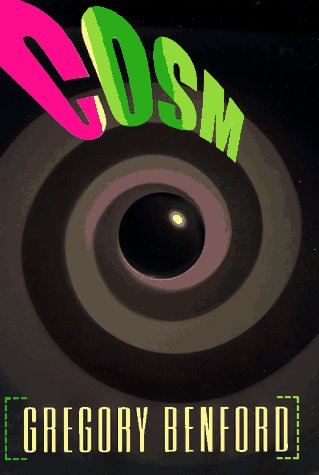
- Cosm
Gregory Benfordstandalone novel1998
similar byour worldnear futuretensescience fictionhard science fiction+1 more
From the flaps of the Avon/Eos first edition: "On an otherwise ordinary day not long from now, inside a massive installation of ultra-high-energy scientific equipment, something goes wrong with a brilliant young physicist's most ambitious experiment. But this is not a calamity. It will soon be seen as one of the most significant breakthroughs in history. For the explosion has left something behind: a wondrous sphere the size of a basketball, made of nothing known to science. Before long, it will be clear that this object has opened a vista on an entirely different universe - a newborn cosmos whose existence will rock this world and test one woman to the limit as she comes face-to-face with fame and terror. That woman is the physicist who has ignited this thrilling adventure."
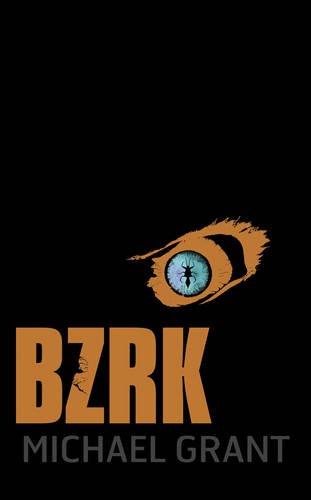
- BZRK
series3 books2012
similar byour worldnear futuretensescience fiction+2 more
BZRK is a book series written by Michael Grant. The series consists of four books: BZRK, BZRK II: Reloaded, BZRK III: Apocalypse and BZRK: Origins. The series follows the interaction between two warring factions. On one side Charles and Benjamin Armstrong, owners of the Armstrong Fancy Gifts Corporation have a goal to turn the world into their version of utopia. The only people who can stop them are a group of teenagers with the codename BZRK. In 2011, Grant's BZRK had a multimedia online debut with gaming, apps and social media tie-ins beginning six months before the book's publication.