Loreful
HomeDiscover
Search series, authors…⌘K
Loreful

Reading orders for SF/F series and shared universes — with your place kept in every one.

Explore

UniversesSeriesWorksAuthorsAtlas

Help

FAQAboutSite map

Account & legal

Sign inCreate accountPrivacyTerms

Data

Built on ISFDB, Wikipedia, Wikidata and Open Library. Curated reading orders carry their reasoning on the page; the rest follow publication order. Data sources & licenses

© Loreful · data: ISFDB · CC BY

More like Witch Boy

anchored on:fantasypsychic powersidentityour worldcontemporaryfirst person+3 more

but

Mood

The mood the book leaves you in.

  • The reading experience is propelled by journeys, exploration, and physical risk; excitement and forward momentum dominate over dread or introspection.
  • Joy and loss are deliberately mixed; the resolution grants characters something real while taking something else away, leaving warmth and sorrow together.
  • The book demands work from the reader — dense prose, difficult structure, unfamiliar ideas, or morally uncomfortable material — as part of its intended effect.
  • Grim events, cruelty, or despair dominate the atmosphere, and the book does not soften them with comfort or comic relief.
  • The atmosphere is quietly unsettling — wrongness, unease, and the uncanny pervade the book without necessarily escalating into overt horror.
  • The book is built to move the reader; character feeling is foregrounded and major scenes aim at a strong emotional response.
  • Humor is a primary aim and the prose plays for laughs — comic situations, wit, or dialogue produce sustained comedy, not occasional levity.
  • The book insists that things can improve; effort and decency are shown to matter, and the arc bends toward better outcomes even through hardship.
  • The book teaches as it goes — real facts, history, science, or craft are conveyed in enough depth that learning is part of the reading experience.
  • The book is designed to uplift and motivate, presenting perseverance or achievement in a way that invites the reader to aspire or act.
  • The overall register is cheerful and easygoing; stakes are kept gentle and the book avoids dwelling on pain or dread.
  • Withheld information drives the experience; the book sustains enigmas and secrets the reader wants resolved, whatever its genre.
  • The book is contemplative and inward-looking, giving more weight to thought, memory, and meaning than to external events.
  • The book works as comfort reading — low tension, a soothing pace, and an atmosphere the reader can unwind in.
  • Grief, loss, or melancholy set the dominant register, and the book lets sorrow stand rather than resolving it into comfort.
  • Sustained suspense is the point; the book keeps the reader braced for what happens next through danger, pressure, or impending revelation.
  • Playful invention and charm define the register — fanciful conceits, light absurdity, and a narration that delights in its own oddity.

About

What the story runs on.

  • Stories in which extraterrestrial beings are central — as characters, cultures, or the object of the plot.
  • Stories structured as a quest — a journey undertaken to find, deliver, or destroy something of great import.
  • Stories in which staying alive against nature, catastrophe, or scarcity is the central problem.
  • Stories of lovers kept apart by law, family, faith, or station, where the obstacle to love is the plot.
  • Stories in which a friendship — its making, testing, or loss — is the emotional center.
  • Stories of growing up — a young protagonist crossing from childhood into adult knowledge and responsibility.
  • Stories about who a character truly is — self-discovery, doubled lives, and the search for a self.
  • Stories about mourning — living through the death of a loved one and what loss does to the survivors.
  • Stories in which a buried family truth — hidden parentage, crimes, or shames — surfaces and reorders the present.
  • Stories driven by maneuvering for power — factions, conspiracies, and statecraft conducted in shadow.
  • Stories in which war itself is the subject — combat, occupation, and what warfare does to soldiers and civilians.
  • Stories organized around investigating a killing — the case, the clues, and the pursuit of the killer, in any genre's clothing.

Shelf

Where it sits in the library.

    • Fiction built on magic or other supernatural elements that have no scientific explanation.
    • Secondary-world fantasy at large scale, where the fate of nations or the world turns on the protagonists' struggle.
    • Fantasy set in a recognizably modern city or contemporary world where the supernatural intrudes on everyday life.
    • Fantasy that blends in horror's atmosphere and imagery, keeping a fantastical frame around grim or frightening material.
    • Action-driven fantasy following warriors or rogues with personal stakes against sorcerous threats, rather than world-spanning conflicts.
    • Fantasy set in a real historical period or a close analogue of one, with magic woven into the era.
    • Fantasy in which protagonists cross from the ordinary world into another world through a portal or similar passage.
    • Fiction that retells or reworks a traditional fairy tale in a new form or setting.
    • Fantasy drawing directly on myths, legends, and folklore, retelling them or building on their figures and logic.
    • Fantasy of ghosts, vampires, shapeshifters, psychics, and similar phenomena, usually set in an otherwise ordinary world.
    • Fiction mixing science-fictional trappings with overtly magical or impossible elements in one setting.
    • Low-stakes fantasy emphasizing comfort, community, and everyday pleasures over conflict and peril.
    • Speculative fiction of pervasive moral ambiguity, violence, and cynicism that rejects heroic conventions — fantasy and SF alike.
      • Fiction that extrapolates from science and technology — future societies, space travel, or speculative inventions — within at least nominally natural laws.
      • Science fiction of interstellar scope — starships, galactic polities, and adventure across star systems.
      • Science fiction committed to scientific rigor, where technical plausibility constrains the story.
      • Science fiction centered on armed forces and warfare, told largely from a military point of view.
      • Science fiction of networked, corporate-dominated near futures, pairing high technology with social decay.
      • Science fiction styled on nineteenth-century steam-powered technology, often in a Victorian or pseudo-Victorian setting.
      • Fiction depicting an oppressive or catastrophic society, presented as a warning.
      • Fiction set after civilization's collapse, following survivors in the ruins of the old world.
      • Fiction in which characters move between past and future, and the mechanics or consequences of that travel drive the plot.
      • Fiction exploring a world where a historical event went differently and history diverged from ours.
      • Science fiction about humanity's first encounter and communication with an alien intelligence.
      • Science fiction in which extraterrestrial forces attack or occupy Earth and humanity resists.
      • Fiction whose primary aim is to frighten or unsettle the reader through dread, menace, or the monstrous.
      • Horror of vast, indifferent, incomprehensible entities before which humanity is insignificant, in the Lovecraft tradition.
      • Horror of decaying houses, buried family secrets, and oppressive atmosphere in the Gothic literary tradition.
      • Horror centered on hauntings and the returning dead.
      • Horror located in the mind — paranoia, obsession, and unreliable perception rather than external monsters.
      • Horror built around the reanimated dead and survival amid their outbreaks.
      • Horror defined by explicit, transgressive gore that refuses to cut away from violence.
      • Speculative fiction of the strange and uncanny that resists both natural explanation and standard genre categories.
      • Fiction organized around solving a crime or puzzle, typically following an investigator toward the identification of a culprit.
      • A puzzle-first mystery that lays out clues so the culprit's identity can be deduced before the reveal.
      • Crime fiction of moral ambiguity, fatalism, and hard-edged style, set among the corrupt and the doomed.
      • A mystery following the realistic routines of police work — forensics, interviews, and case-building.
      • A gentle mystery with an amateur sleuth, a small community, and violence kept off the page.
      • A mystery set in a past era, where the investigation works within that period's methods and society.
      • Fast-paced fiction driven by imminent danger, pursuit, or high-stakes conspiracy, built to sustain tension.
      • A thriller of espionage — agents, tradecraft, and intelligence services in conflict.
      • A thriller centered on lawyers and the courtroom, where litigation carries the suspense.
      • A thriller driven by detailed contemporary or near-future technology, often military or scientific.
      • A thriller whose tension comes from mental states and manipulation between characters rather than external action.
      • Fiction whose central plot is a romantic relationship and its development toward an emotionally satisfying resolution.
      • Romance in which one or both partners are supernatural beings, blending fantasy elements into the love story.
      • A fantasy-romance hybrid in which the romantic arc and the fantasy plot carry equal weight.
      • Romance set in a past era, with courtship shaped by the period's society and manners.
      • Romance set in the present day, without supernatural or historical elements.
      • Fiction set in a real past period, where the historical setting materially shapes characters and events.
        • General and literary fiction emphasizing prose style, character interiority, or formal ambition over genre plot conventions.
        • Fiction in a realistic world where magical events occur and are treated as ordinary, in the tradition of Latin American literature.
        • Fiction that ridicules people, institutions, or society in order to criticize them.
        • Fiction of dreamlike, irrational imagery and logic that breaks from realistic representation.
        • Fiction that plays with narrative convention through metafiction, fragmentation, and self-reference.
        • Fiction propelled by journeys, exploration, and physical peril, where action and survival carry the plot.
        • Adventure fiction of ships and seafaring — naval engagements, voyages, and life at sea.
        • Fiction of the American frontier West — gunmen, ranchers, and lawmen, typically in the late nineteenth century.
        • Fiction centered on soldiers, campaigns, and the experience of warfare, historical or imagined.
          • Fiction written primarily to amuse, using comedic situations, wit, or parody as its organizing principle.
            • Multi-generational fiction following a family or dynasty across decades, with inheritance and kinship as the through-line.
              • Fiction whose world runs on explicit game mechanics — levels, stats, and skills that characters can see and exploit.
                • Fiction about costumed or superpowered heroes and their conflicts with comparable villains.

                Practical

                How long a commitment, whether it stands alone, and whether it has finished.

                Tap a chip to ask for it · tap again to rule it out · once more to clear. Numbers show what would be left.

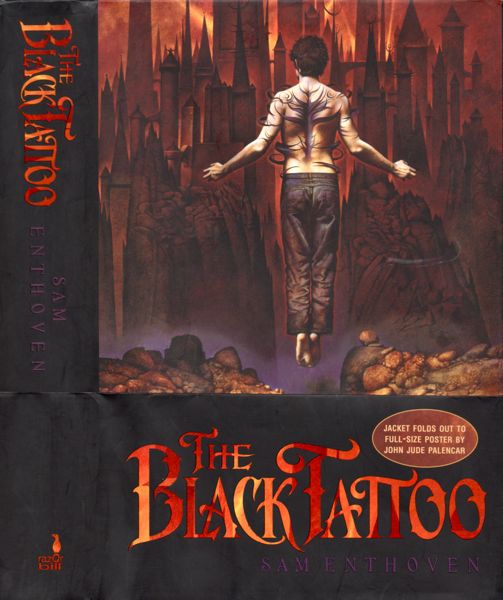
                • Cover of The Black Tattoo
                  The Black Tattoo

                  Sam Enthoven · standalone novel · 2006

                  similar byfantasyour worldcontemporarydarktenseyoung adultidentity

                  The Black Tattoo is a 2006 young adult fantasy novel by Sam Enthoven. It deals with a boy, Charlie, becoming possessed by a demon that manifests itself in the form of a black tattoo on his body.

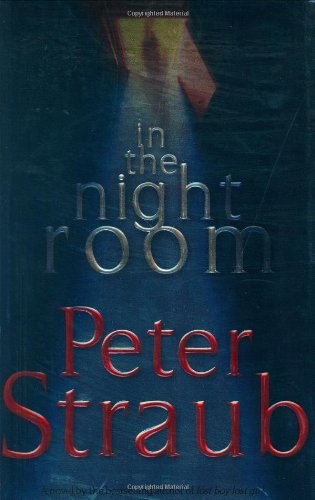
                • Cover of In the Night Room
                  In the Night Room

                  Peter Straub · standalone novel · 2004

                  similar byour worldcontemporarydarktenseidentitymadness+2 more

                  In the Night Room is a 2004 horror-thriller novel by American author Peter Straub, a sequel to his 2003 book Lost Boy, Lost Girl. The work was first published in hardback on October 26, 2004, through Random House and it won the 2004 Bram Stoker Award for Novel. Straub encountered some difficulties while writing In the Night Room and had written several different passages for the work before growing bored with each version before writing it using the same technique he used for its predecessor in which he "reached down inside the book and turned it inside out."

                • Cover of Sunshine
                  Sunshine

                  Robin McKinley · standalone novel · 2003

                  similar byfantasyour worldcontemporarytensefirst person+1 more

                  From the front flap of the Berkley HB first edition: "There are places in the world where darkness rules, where it's unwise to walk. Sunshine knew that. But there hadn't been any trouble out at the lake for years, and she needed a place to be alone for a while. Unfortunately, she wasn't alone. She never heard them coming. Of course you don't, when they're vampires. They took her clothes and sneakers. They dressed her in a long red gown. And they shackled her to the wall of an abandoned mansion - within easy reach of a figure stirring in the moonlight. She knows that he is a vampire. She knows that she's to be his dinner, and that when he is finished with her, she will be dead. Yet, as dawn breaks, she finds that he has not attempted to harm her. And now it is he who needs her to help him survive the day..."

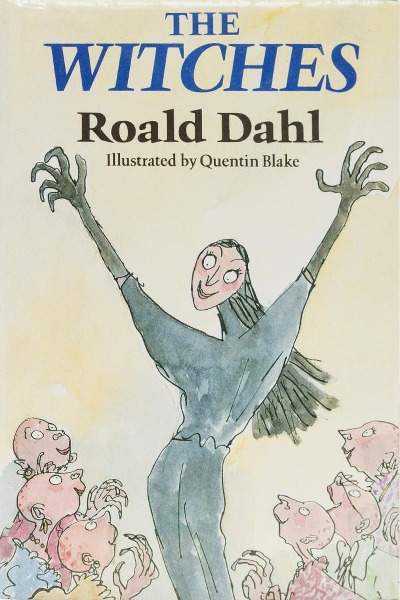
                • Cover of The Witches
                  The Witches

                  Roald Dahl · standalone novel · 1983

                  similar byfantasycontemporarydarktensewitches+1 more

                  The Witches is a 1983 children's novel by British author Roald Dahl. A dark fantasy, the story is set partly in Norway and partly in England, and features the experiences of a young English boy and his Norwegian grandmother in a world where child-hating societies of witches secretly exist in every country. The witches are ruled by the vicious and powerful Grand High Witch, who arrives in England to organise her plan to turn all of the children there into mice.

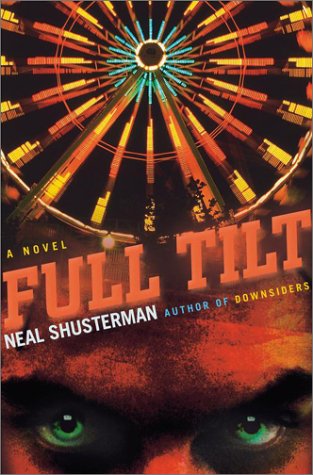
                • Cover of Full Tilt
                  Full Tilt

                  Neal Shusterman · standalone novel · 2003

                  similar byfantasyour worldcontemporarydarktenseyoung adult

                  When sixteen-year-old Blake goes to a mysterious, by-invitation-only carnival he somehow knows that it could save his comatose brother, but soon learns that much more is at stake if he fails to meet the challenge presented there by the beautiful Cassandra.

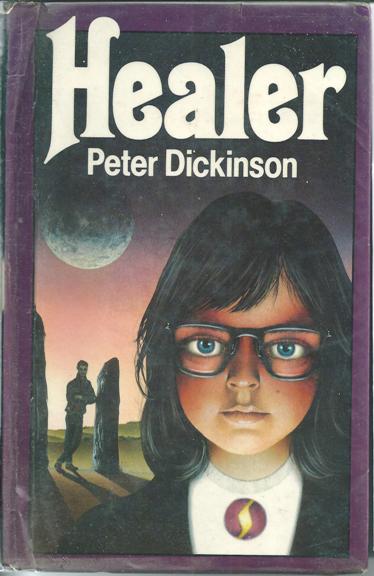
                • Cover of Healer
                  Healer

                  Peter Dickinson · standalone novel · 1983

                  similar byfantasyour worldcontemporarytensepsychic powers+1 more

                  Although grudgingly aware that ten-year-old Pinki has extraordinary powers to heal, sixteen-year-old Barry becomes increasingly convinced that she is an unwilling participant at the healing sessions run by her enterprising stepfather.

                • Cover of The Replacement
                  The Replacement

                  Brenna Yovanoff · standalone novel · 2010

                  similar byfantasyour worldcontemporarydarkyoung adultidentityfirst person

                  Mackie Doyle is not one of us. Though he lives in the small town of Gentry, he comes from a world of tunnels and black murky water, a world of living dead girls ruled by a little tattooed princess. He is a Replacement—left in the crib of a human baby sixteen years ago. Now, he's slowly dying in the human world. Mackie would give anything to live a normal life, play his bass, and find out more about an oddly intriguing girl named Tate. But when Tate's baby sister goes missing, Mackie is drawn into the underworld of Gentry, known as Mayhem. He must face the dark creatures of the Slag Heaps and find his rightful place, in our world—or theirs.

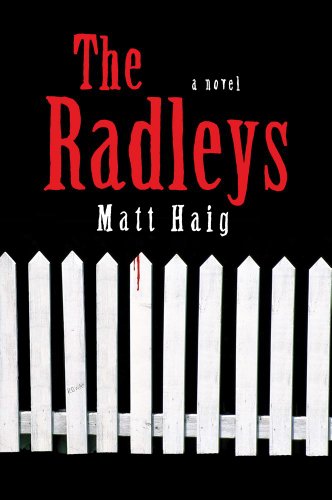
                • Cover of The Radleys
                  The Radleys

                  Matt Haig · standalone novel · 2010

                  similar byfantasyour worldcontemporarydarkyoung adult+1 more

                  The Radleys is a paranormal fantasy novel for young adults by Matt Haig, published 1 July 2010 by Canongate Books.

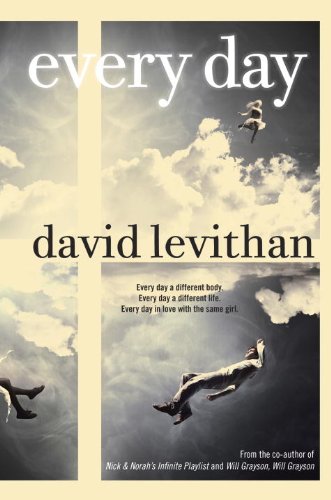
                • Cover of Every Day
                  Every Day

                  series · 3 books · 2012

                  similar byfantasyour worldcontemporaryidentityyoung adultfirst person

                  David Levithan's Every Day follows A, a consciousness with no fixed body who wakes each morning inside a different person's life, and who falls for a girl named Rhiannon despite the impossibility of ever staying in one body to be with her. The story continues from other perspectives in Another Day and, years later, Someday.

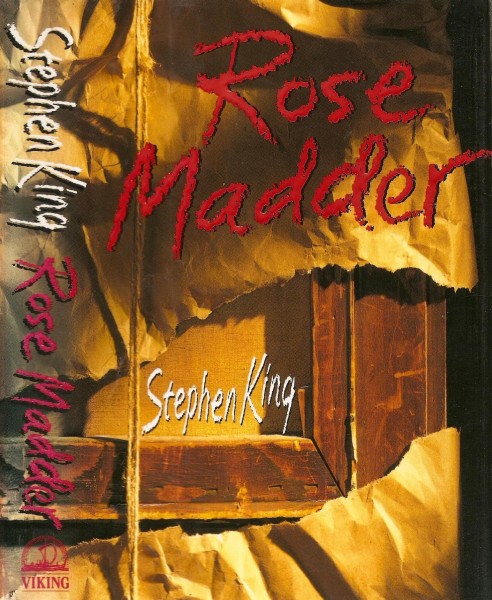
                • Cover of Rose Madder
                  Rose Madder

                  Stephen King · standalone novel · 1995

                  similar byfantasyour worldcontemporarydarktense

                  Rose Madder is a horror/fantasy novel by American writer Stephen King, published in 1995. It deals with the effects of domestic violence and, unusually for a King novel, relies for its fantastic element on Greek mythology. In his memoir, On Writing, King states that Rose Madder and Insomnia are "stiff, trying-too-hard novels."

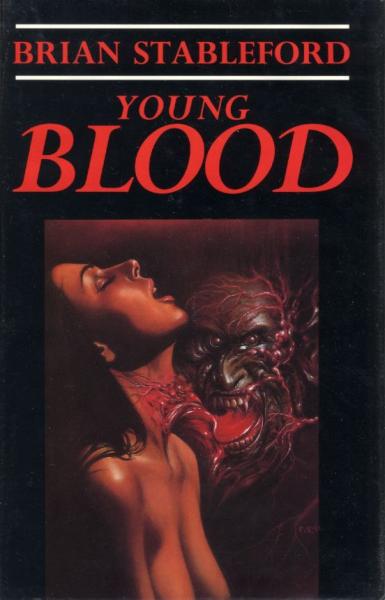
                • Cover of Young Blood
                  Young Blood

                  Brian Stableford · standalone novel · 1992

                  similar byfantasyour worldcontemporarydarktensemadness+1 more

                  A vampire who calls himself Maldureve comes out of the shadowy borderlands of existence in response to the unvoiced desires of philosophy student Anne Charet. By choosing to see him she gives him substance; after feeding him, she too begins to hunger for blood. Maldureve becomes Anne's lover and mentor but he cannot protect her against his own enemies, mysterious creatures of light who call themselves owls because they believe that theirs is the highest wisdom of all. Anne's boyfriend, psychologist Gil Molari, worries about her health and state of mind, although he knows nothing about his supernatural rival. His anxiety is magnified when he becomes convinced that one of the mind-altering viruses with which he works has escaped from the laboratory. Gil refuses to believe in Maldureve but his refusal to believe cannot save him from becoming the victim of a fierce hunger that he cannot satisfy, which drives him in the end to an unendurable extreme.Anne believes that her experiences are entirely real; Gil believes that his are the products of an infectious madness. Whichever of them is right, they are both in deadly danger, and so is everyone around them. Once they have started on their strange journey, there is no way back. But what can possibly lie ahead of them, when death itself no longer seems to be an end?

                • Cover of The Frenzy
                  The Frenzy

                  Francesca Lia Block · standalone novel · 2010

                  similar byfantasyour worldcontemporarydarktenseyoung adultidentity

                  Love is a werewolf, influenced by the moon and terror, and always about to change. Liv has a secret. Something happened to her when she was thirteen. Something that changed everything. Liv knows she doesn’t belong anymore—not in her own skin, not in her family . . . not anywhere. The only time she truly feels like herself is when she’s with her boyfriend, Corey, and in the woods that surround her town. But in the woods, a mysterious woman watches Liv. In the woods, a pack of wild boys lurks. In the woods, Liv learns about the curse that will haunt her forever. The curse that caused the frenzy four years ago. And that may cause it again, all too soon. While Corey and Liv’s love binds them together, Liv’s dark secret threatens to tear them apart as she struggles to understand who—or what—she really is. And by the light of the full moon, the most dangerous secrets bare their claws. . . .

                • Cover of The Coldest Girl in Coldtown
                  The Coldest Girl in Coldtown

                  series · 2 books · 2009

                  similar byfantasyour worldcontemporarydarktenseyoung adult

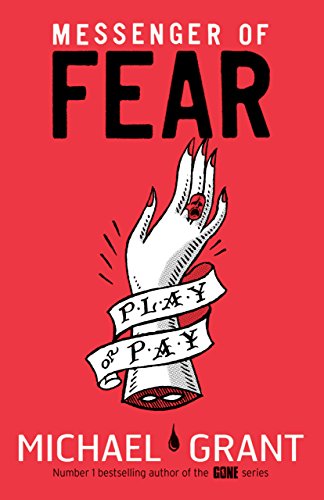
                • Cover of Messenger of Fear
                  Messenger of Fear

                  series · 3 books · 2014

                  similar byfantasyour worldcontemporarydarkyoung adult+2 more

                • Cover of The Half Bad Trilogy
                  The Half Bad Trilogy

                  series · 4 books · 2014

                  similar byfantasydarkcontemporarytenseyoung adultwitches+2 more

                  Sally Green's Half Bad is set in a modern Britain where witches live alongside ordinary humans, split between a persecuted Black witch minority and a dominant White witch majority. It follows seventeen-year-old Nathan Byrn, son of a White witch mother and the most feared Black witch in history, who must escape the Council's custody before his seventeenth birthday to receive his father's gifts or die. The story continues across Half Wild and Half Lost, with the novella Half Lies also part of the same catalog entry.

                • Cover of The Library at Mount Char
                  The Library at Mount Char

                  Scott Hawkins · standalone novel · 2015

                  similar byfantasyour worldcontemporarydarktense

                  The Library at Mount Char is a contemporary fantasy/horror novel written by Scott Hawkins. It is his first novel.

                • Cover of The Damnation Game
                  The Damnation Game

                  Clive Barker · standalone novel · 1985

                  similar byfantasyour worldcontemporarydarktense

                  Marty Strauss is a compulsive gambler fresh out of prison when he's hired as bodyguard for Joseph Whitehead, a reclusive tycoon whose fortune and continued existence trace back to a bargain struck decades earlier, during World War II, with a man named Mamoulian. That bargain is coming due: Mamoulian, who commands powers reaching well past death, wants what he's owed, and Whitehead's household -- his wife, his daughter Carys, his previous bodyguard -- is caught in the middle of a decades-old debt finally being called in. Marty, out of his depth from the start, finds himself the only one willing to stand against Mamoulian. Clive Barker's first novel.

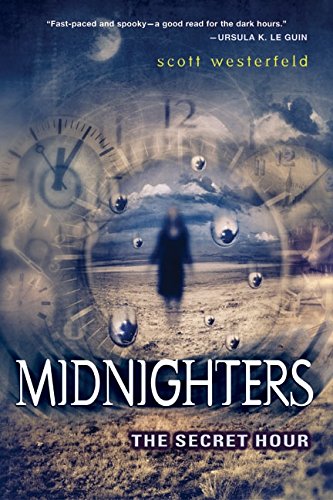
                • Cover of Midnighters
                  Midnighters

                  series · 3 books · 2004

                  similar byfantasycontemporarytenseour worldpsychic powersyoung adult

                  The Midnighters Trilogy is a science-fiction fantasy series written by Scott Westerfeld. It was published by Eos in 2004. It comprises three books: The Secret Hour, Touching Darkness. and Blue Noon. Over the course of the trilogy, Jessica encounters other Midnighters with whom she allies herself. The protagonists in the trilogy are the eponymous Midnighters Desdemona, Rex, Jonathan, and Melissa. The antagonists of the series are Darklings and Slithers, dangerous and powerful beings that created and live in the Blue Hour.

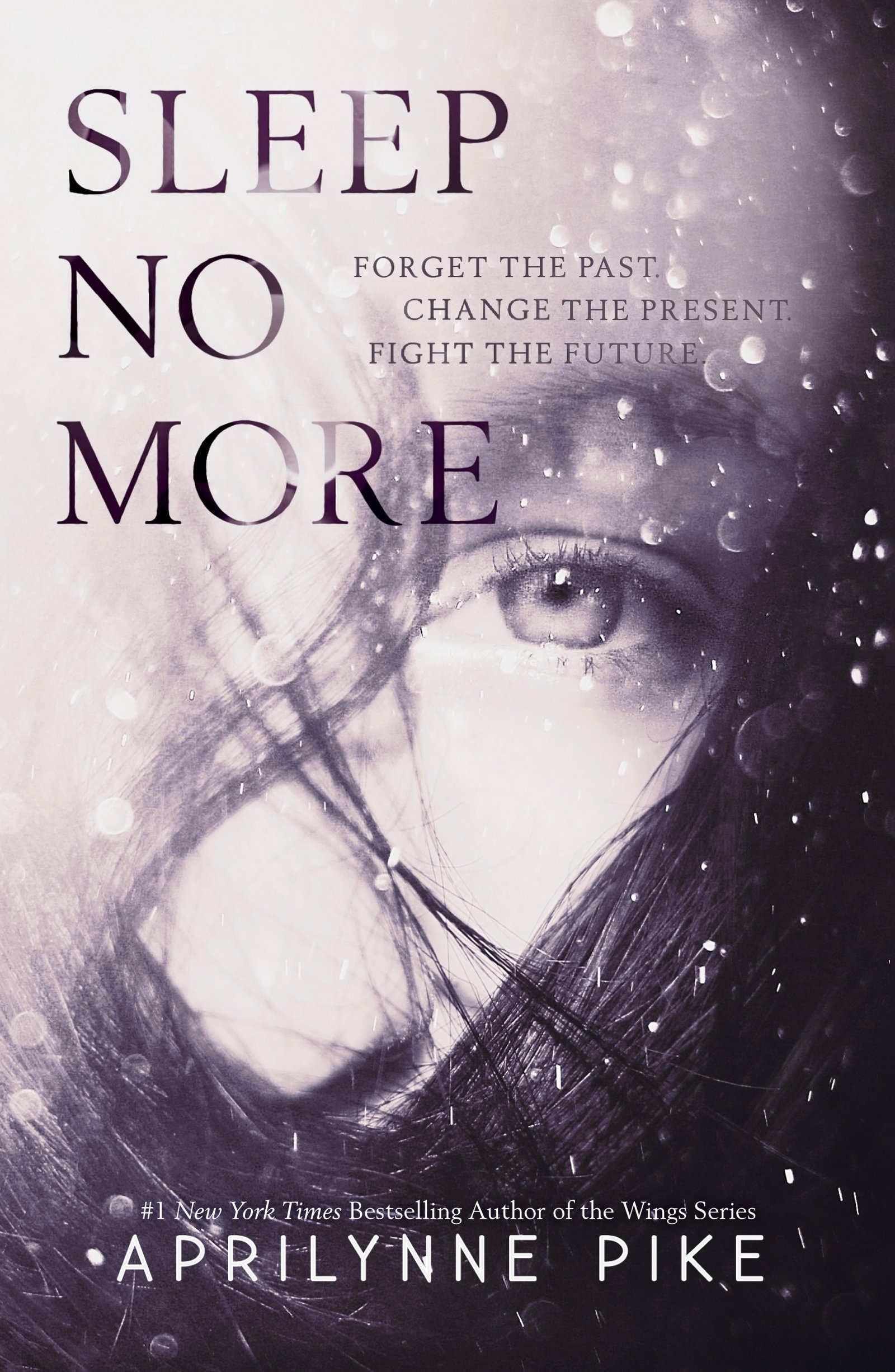
                • Cover of Sleep No More
                  Sleep No More

                  Aprilynne Pike · standalone novel · 2014

                  similar byfantasyour worldcontemporarytensepsychic powersyoung adult

                  "Charlotte is a sixteen-year-old Oracle who is not supposed to interfere with her visions of the future, but when she foresees a classmate's murder, she realizes she must break the rules to stop the killer"-- Charlotte is a 16-yr-old Oracle who is not supposed to interfere with her visions of the future, but when she foresees a classmate's murder, she realizes she must break the rules to stop the killer. The plot contains profanity and graphic violence.

                • Cover of James and the Giant Peach
                  James and the Giant Peach

                  Roald Dahl · standalone novel · 1961

                  similar byfantasyour worldcontemporary+1 more

                  James and the Giant Peach is a children's novel written in 1961 by British author Roald Dahl. The first edition, published by Alfred Knopf, featured illustrations by Nancy Ekholm Burkert. There have been re-illustrated versions of it over the years, drawn by Michael Simeon, Emma Chichester Clark, Lane Smith and Quentin Blake. It was adapted into a film of the same name in 1996 which was directed by Henry Selick, and a musical in 2010.

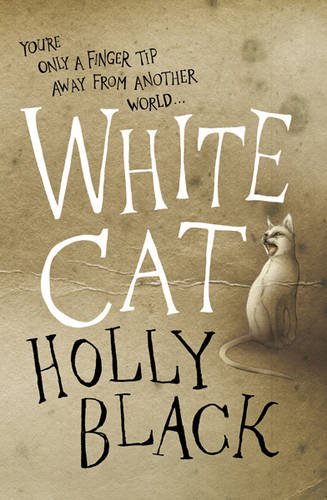
                • Cover of The Curse Workers
                  The Curse Workers

                  series · 3 books · 2010

                  similar byfantasycontemporarytenseour worldyoung adultfirst person+1 more

                  Holly Black's Curse Workers trilogy is set in an alternate America where 'curse work' — magic that harms or transforms through touch — is illegal, enforced through gloves and Prohibition-era-style crime families. It follows Cassel Sharpe, the only non-worker in a family of con artists and workers, as he tries to stay out of his family's schemes despite his own hidden connection to their world. The series runs from White Cat through two further novels.

                • Cover of The Star Group
                  The Star Group

                  Christopher Pike · standalone novel · 1997

                  similar byfantasyour worldcontemporarydarkpsychic powersyoung adult+2 more

                  Three guys and four girls meet a strange man who offers to give them secret knowledge, an inner journey that will transform them into powerful beings capable of bending the world to their wills. In the midst of this great transformation will emerge a bad seed with a will more evil than a devil.

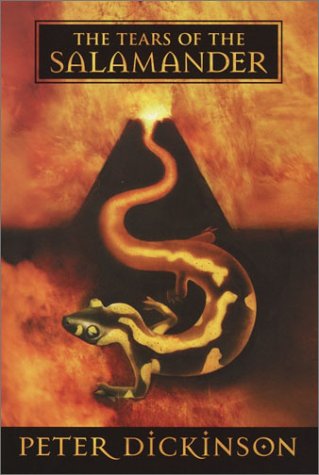
                • Cover of The Tears of the Salamander
                  The Tears of the Salamander

                  Peter Dickinson · standalone novel · 2003

                  similar byfantasyour worldcontemporarydarktense

                  Mount Etna towers above the remote villa where Alfredo lives with his uncle after a fire wipes out his family. Deep within Etna swim the magical salamanders, and he must use his strange powers to protect them, destroy his uncle and control the explosive rage of the volcano.

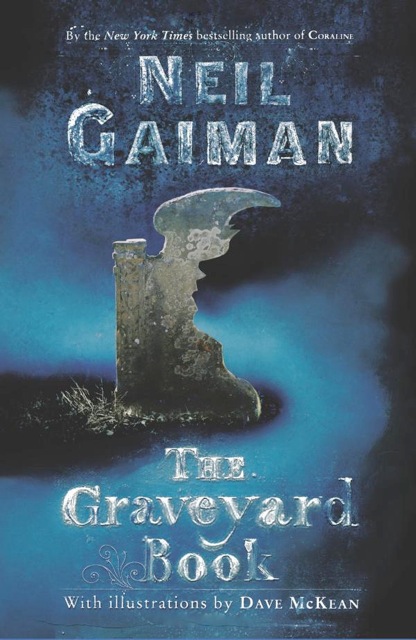
                • Cover of Bod Owens
                  Bod Owens

                  series · 3 books · 2007

                  similar byfantasyour worldcontemporary+1 more

                  The Graveyard Book follows Nobody "Bod" Owens, a toddler who escapes the murder of his family and is raised among the ghosts of an old English graveyard, absorbing their otherworldly customs while a threat from his past waits beyond the gates. Neil Gaiman's 2008 novel won both the Newbery and Carnegie Medals, and illustrator P. Craig Russell later adapted it into a two-volume graphic novel. Bod's story spans the original novel and that graphic-novel retelling rather than continuing in a prose sequel.