Loreful
HomeDiscover
Search series, authors…⌘K
Loreful

Reading orders for SF/F series and shared universes — with your place kept in every one.

Explore

UniversesSeriesWorksAuthorsAtlas

Help

FAQAboutSite map

Account & legal

Sign inCreate accountPrivacyTerms

Data

Built on ISFDB, Wikipedia, Wikidata and Open Library. Curated reading orders carry their reasoning on the page; the rest follow publication order. Data sources & licenses

© Loreful · data: ISFDB · CC BY

More like Wives

anchored on:science fiction

but

Mood

The mood the book leaves you in.

  • The reading experience is propelled by journeys, exploration, and physical risk; excitement and forward momentum dominate over dread or introspection.
  • Joy and loss are deliberately mixed; the resolution grants characters something real while taking something else away, leaving warmth and sorrow together.
  • The book demands work from the reader — dense prose, difficult structure, unfamiliar ideas, or morally uncomfortable material — as part of its intended effect.
  • Grim events, cruelty, or despair dominate the atmosphere, and the book does not soften them with comfort or comic relief.
  • The atmosphere is quietly unsettling — wrongness, unease, and the uncanny pervade the book without necessarily escalating into overt horror.
  • The book is built to move the reader; character feeling is foregrounded and major scenes aim at a strong emotional response.
  • Humor is a primary aim and the prose plays for laughs — comic situations, wit, or dialogue produce sustained comedy, not occasional levity.
  • The book insists that things can improve; effort and decency are shown to matter, and the arc bends toward better outcomes even through hardship.
  • The book teaches as it goes — real facts, history, science, or craft are conveyed in enough depth that learning is part of the reading experience.
  • The book is designed to uplift and motivate, presenting perseverance or achievement in a way that invites the reader to aspire or act.
  • The overall register is cheerful and easygoing; stakes are kept gentle and the book avoids dwelling on pain or dread.
  • Withheld information drives the experience; the book sustains enigmas and secrets the reader wants resolved, whatever its genre.
  • The book is contemplative and inward-looking, giving more weight to thought, memory, and meaning than to external events.
  • The book works as comfort reading — low tension, a soothing pace, and an atmosphere the reader can unwind in.
  • Grief, loss, or melancholy set the dominant register, and the book lets sorrow stand rather than resolving it into comfort.
  • Sustained suspense is the point; the book keeps the reader braced for what happens next through danger, pressure, or impending revelation.
  • Playful invention and charm define the register — fanciful conceits, light absurdity, and a narration that delights in its own oddity.

About

What the story runs on.

  • Stories in which a machine intelligence — an AI, computer mind, or sentient program — is a central character or the story's driving problem.
  • Stories in which extraterrestrial beings are central — as characters, cultures, or the object of the plot.
  • Stories driven by deliberate modification of genomes — designer organisms, engineered humans, and the consequences of remaking life.
  • Stories about venturing into space to explore — survey missions, astronauts, and the frontier of the unknown beyond Earth.
  • Stories about settling other planets or habitats — founding, sustaining, and governing colonies off Earth.
  • Stories about minds with paranormal abilities — telepathy, telekinesis, precognition, empathy — and how societies handle those who have them.
  • Stories in which staying alive against nature, catastrophe, or scarcity is the central problem.
  • Stories of growing up — a young protagonist crossing from childhood into adult knowledge and responsibility.
  • Stories about who a character truly is — self-discovery, doubled lives, and the search for a self.
  • Stories driven by maneuvering for power — factions, conspiracies, and statecraft conducted in shadow.
  • Stories about rising against rulers — uprisings, resistance movements, and revolutions and their aftermaths.
  • Stories in which war itself is the subject — combat, occupation, and what warfare does to soldiers and civilians.

Shelf

Where it sits in the library.

    • Fiction built on magic or other supernatural elements that have no scientific explanation.
    • Secondary-world fantasy at large scale, where the fate of nations or the world turns on the protagonists' struggle.
    • Fantasy set in a recognizably modern city or contemporary world where the supernatural intrudes on everyday life.
    • Fantasy that blends in horror's atmosphere and imagery, keeping a fantastical frame around grim or frightening material.
    • Action-driven fantasy following warriors or rogues with personal stakes against sorcerous threats, rather than world-spanning conflicts.
    • Fantasy set in a real historical period or a close analogue of one, with magic woven into the era.
    • Fantasy in which protagonists cross from the ordinary world into another world through a portal or similar passage.
    • Fiction that retells or reworks a traditional fairy tale in a new form or setting.
    • Fantasy drawing directly on myths, legends, and folklore, retelling them or building on their figures and logic.
    • Fantasy of ghosts, vampires, shapeshifters, psychics, and similar phenomena, usually set in an otherwise ordinary world.
    • Fiction mixing science-fictional trappings with overtly magical or impossible elements in one setting.
    • Low-stakes fantasy emphasizing comfort, community, and everyday pleasures over conflict and peril.
    • Speculative fiction of pervasive moral ambiguity, violence, and cynicism that rejects heroic conventions — fantasy and SF alike.
      • Fiction that extrapolates from science and technology — future societies, space travel, or speculative inventions — within at least nominally natural laws.
      • Science fiction of interstellar scope — starships, galactic polities, and adventure across star systems.
      • Science fiction committed to scientific rigor, where technical plausibility constrains the story.
      • Science fiction centered on armed forces and warfare, told largely from a military point of view.
      • Science fiction of networked, corporate-dominated near futures, pairing high technology with social decay.
      • Science fiction styled on nineteenth-century steam-powered technology, often in a Victorian or pseudo-Victorian setting.
      • Fiction depicting an oppressive or catastrophic society, presented as a warning.
      • Fiction set after civilization's collapse, following survivors in the ruins of the old world.
      • Fiction in which characters move between past and future, and the mechanics or consequences of that travel drive the plot.
      • Fiction exploring a world where a historical event went differently and history diverged from ours.
      • Science fiction about humanity's first encounter and communication with an alien intelligence.
      • Science fiction in which extraterrestrial forces attack or occupy Earth and humanity resists.
      • Fiction whose primary aim is to frighten or unsettle the reader through dread, menace, or the monstrous.
      • Horror of vast, indifferent, incomprehensible entities before which humanity is insignificant, in the Lovecraft tradition.
      • Horror of decaying houses, buried family secrets, and oppressive atmosphere in the Gothic literary tradition.
      • Horror centered on hauntings and the returning dead.
      • Horror located in the mind — paranoia, obsession, and unreliable perception rather than external monsters.
      • Horror built around the reanimated dead and survival amid their outbreaks.
      • Horror defined by explicit, transgressive gore that refuses to cut away from violence.
      • Speculative fiction of the strange and uncanny that resists both natural explanation and standard genre categories.
      • Fiction organized around solving a crime or puzzle, typically following an investigator toward the identification of a culprit.
      • A puzzle-first mystery that lays out clues so the culprit's identity can be deduced before the reveal.
      • Crime fiction of moral ambiguity, fatalism, and hard-edged style, set among the corrupt and the doomed.
      • A mystery following the realistic routines of police work — forensics, interviews, and case-building.
      • A gentle mystery with an amateur sleuth, a small community, and violence kept off the page.
      • A mystery set in a past era, where the investigation works within that period's methods and society.
      • Fast-paced fiction driven by imminent danger, pursuit, or high-stakes conspiracy, built to sustain tension.
      • A thriller of espionage — agents, tradecraft, and intelligence services in conflict.
      • A thriller centered on lawyers and the courtroom, where litigation carries the suspense.
      • A thriller driven by detailed contemporary or near-future technology, often military or scientific.
      • A thriller whose tension comes from mental states and manipulation between characters rather than external action.
      • Fiction whose central plot is a romantic relationship and its development toward an emotionally satisfying resolution.
      • Romance in which one or both partners are supernatural beings, blending fantasy elements into the love story.
      • A fantasy-romance hybrid in which the romantic arc and the fantasy plot carry equal weight.
      • Romance set in a past era, with courtship shaped by the period's society and manners.
      • Romance set in the present day, without supernatural or historical elements.
      • Fiction set in a real past period, where the historical setting materially shapes characters and events.
        • General and literary fiction emphasizing prose style, character interiority, or formal ambition over genre plot conventions.
        • Fiction in a realistic world where magical events occur and are treated as ordinary, in the tradition of Latin American literature.
        • Fiction that ridicules people, institutions, or society in order to criticize them.
        • Fiction of dreamlike, irrational imagery and logic that breaks from realistic representation.
        • Fiction that plays with narrative convention through metafiction, fragmentation, and self-reference.
        • Fiction propelled by journeys, exploration, and physical peril, where action and survival carry the plot.
        • Adventure fiction of ships and seafaring — naval engagements, voyages, and life at sea.
        • Fiction of the American frontier West — gunmen, ranchers, and lawmen, typically in the late nineteenth century.
        • Fiction centered on soldiers, campaigns, and the experience of warfare, historical or imagined.
          • Fiction written primarily to amuse, using comedic situations, wit, or parody as its organizing principle.
            • Multi-generational fiction following a family or dynasty across decades, with inheritance and kinship as the through-line.
              • Fiction whose world runs on explicit game mechanics — levels, stats, and skills that characters can see and exploit.
                • Fiction about costumed or superpowered heroes and their conflicts with comparable villains.

                Practical

                How long a commitment, whether it stands alone, and whether it has finished.

                Tap a chip to ask for it · tap again to rule it out · once more to clear. Numbers show what would be left.

                • Cover of Stranger in a Strange Land
                  Stranger in a Strange Land

                  Robert A. Heinlein · standalone novel · 1961

                  similar byscience fiction+1 more

                  Stranger in a Strange Land is a 1961 science fiction novel by the American author Robert A. Heinlein. It tells the story of Valentine Michael Smith, a human who comes to Earth in early adulthood after being born on the planet Mars and raised by Martians, and explores his interaction with and eventual transformation of Terran culture.

                • Cover of Flatland
                  Flatland

                  series · 2 books · 1884

                  similar byscience fiction+1 more

                  Edwin A. Abbott's 1884 novella Flatland: A Romance of Many Dimensions imagines a two-dimensional world of geometric beings, using its narrator's brush with higher dimensions as both a mathematical thought experiment and a satire of Victorian social rank. Ian Stewart's 2001 Flatterland follows a descendant of that narrator on a tour of stranger geometries, from curved and multidimensional space to relativity, as a knowing homage to Abbott's original. Together they pair a Victorian mathematical classic with its modern sequel.

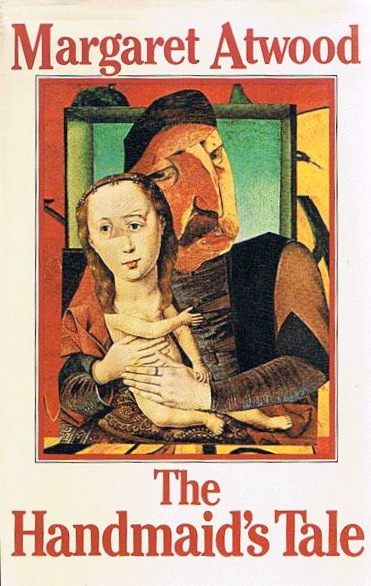
                • Cover of The Handmaid's Tale
                  The Handmaid's Tale

                  series · 3 books · 1985

                  similar bygender and societyscience fiction

                  The Handmaid's Tale is Margaret Atwood's 1985 novel set in Gilead, a totalitarian theocracy that has overthrown the United States and forces fertile women into reproductive servitude as Handmaids; it is narrated by one such woman, Offred. Atwood returned to the world in her 2019 sequel The Testaments, set fifteen years later and narrated by three women, including the regime's Aunt Lydia. Together the two novels move from Gilead's grip on power toward the first cracks in it.

                • Cover of Hainish
                  Hainish

                  series · 33 books · 1964

                  completed

                  similar byscience fiction+1 more

                  The Hainish Cycle consists of a number of science fiction novels and stories by Ursula K. Le Guin. The cycle is set in a future history that features civilizations of human beings on planets orbiting a number of nearby stars, including Terra ("Earth"); these humans are contacting each other for the first time and establishing diplomatic relations, as well as setting up a confederacy under the guidance of the oldest of the human worlds, the peaceful planet Hain. In this history, human beings did not evolve on Earth, but they were instead the result of interstellar colonies planted by Hain in the distant past, after which interstellar travel ceased for an extended period. Some of the human races have new genetic traits, a result of ancient Hainish experiments in genetic engineering; this includes people who can dream while awake, and a world of hermaphroditic people who only enter active sexuality once per month, not knowing which sex will manifest in them. In keeping with Le Guin's narrative approach, she uses varied social and environmental settings to explore the anthropological and sociological outcomes of human evolution in those environments. The author often discounted the characterization of a so-called "Hainish Cycle".

                • Cover of Trouble with Lichen
                  Trouble with Lichen

                  John Wyndham · standalone novel · 1960

                  similar bygender and societyscience fiction

                  Biochemists Diana Brackley and Francis Saxover, working independently, both isolate a compound from a rare lichen that appears to dramatically slow the aging process. Francis quietly doses himself and his family and says nothing; Diana takes the opposite approach, opening exclusive beauty spas as cover to give the drug to well-connected women across Britain, reasoning that if longevity becomes known before women have a foothold, men will simply monopolize it as they have everything else. The secret can only hold so long, and the novel's tension builds toward the moment it gets out. A quietly subversive social science-fiction novel from John Wyndham.

                • Cover of Venus Plus X
                  Venus Plus X

                  Theodore Sturgeon · standalone novel · 1960

                  similar bygender and societyscience fiction

                  Charlie Johns wakes in a featureless silver room with no memory of how he got there and a watch that's inexplicably running backward. He's been brought, how and by whom is never explained to him, to Ledom, an isolated, technologically advanced society whose members are all both male and female and have done away with fixed sex roles entirely. Guides walk him through Ledom's customs and machinery while making clear he's there to judge them before he can go home. Interwoven with Charlie's tour are chapters following an ordinary mid-century American family, setting the utopia against the world it's implicitly critiquing. Theodore Sturgeon's provocative novel about gender and social design.

                • Cover of Whileaway
                  Whileaway

                  series · 4 books · 1972

                  completed

                  similar bygender and societyscience fiction

                  Joanna Russ's The Female Man (1975) is a single feminist science fiction novel, not a multi-book series, built around four women from parallel timelines with very different gender arrangements. One of them, Janet, comes from Whileaway, an all-female utopian Earth ten centuries in the future where men died out in a plague; the other three come from realities closer to Russ's own, and their collisions are used to interrogate what womanhood and equality could mean under different social rules.

                • Cover of The Gate to Women's Country
                  The Gate to Women's Country

                  Sheri S. Tepper · standalone novel · 1988

                  similar bygender and societyscience fiction

                  The Gate to Women's Country is a post-apocalyptic novel by American writer Sheri S. Tepper, published in 1988. It describes a world set three hundred years into the future after a catastrophic war which has fractured the United States into several nations.

                • Cover of Marjorie Westriding
                  Marjorie Westriding

                  series · 3 books · 1989

                  completed

                  similar byscience fiction+1 more

                  Sheri S. Tepper's Arbai Trilogy opens with Grass (1989), in which investigator Marjorie Westriding is sent to the planet Grass to learn why its aristocratic settlers, obsessed with hunting using native and unsettlingly intelligent fauna, appear immune to a plague devastating the rest of human space. Raising the Stones and Sideshow carry the trilogy's ideas forward across roughly a thousand years and more of the same future history, with Marjorie's legacy and the extinct alien Arbai continuing to shape events.

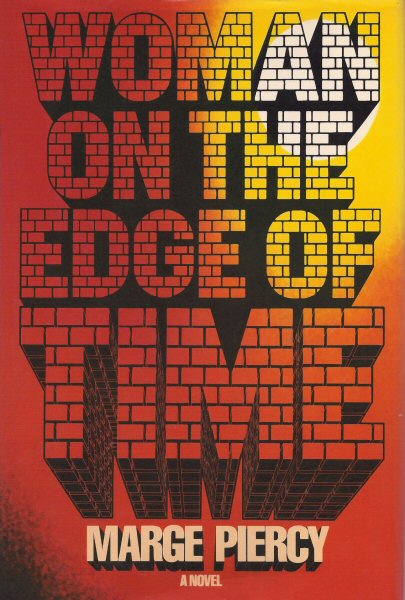
                • Cover of Woman on the Edge of Time
                  Woman on the Edge of Time

                  Marge Piercy · standalone novel · 1976

                  similar bygender and societyscience fiction

                  Woman on the Edge of Time is a 1976 feminist science fiction novel by American writer Marge Piercy. The novel was originally published by Alfred A. Knopf. Piercy draws on several inspirations to write this novel such as utopian studies, technoscience, socialization, and female fantasies. One of Piercy's main inspirations for her utopian novels is Plato's Republic. Piercy describes the novel as, "if only…"

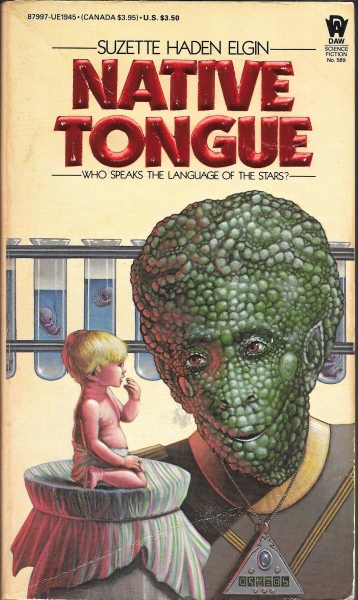
                • Cover of Native Tongue
                  Native Tongue

                  series · 3 books · 1984

                  completed

                  similar bygender and societyscience fiction

                  Suzette Haden Elgin's Native Tongue trilogy (1984-1994) is set in a dystopian future America where women have been stripped of legal rights, and follows a family of professional interpreter-linguists whose women secretly develop Láadan, a constructed language built to express female experience that the existing languages of men can't capture. The trilogy follows the spread of Láadan among the oppressed women of the linguist households as an act of quiet resistance against the patriarchal order around them.

                • Cover of Glasshouse
                  Glasshouse

                  Charles Stross · standalone novel · 2006

                  similar bygender and societyscience fiction

                  Robin wakes in a rehabilitation clinic with his memory deliberately erased, convinced that whoever tried to kill him before is still out there. To disappear completely, he volunteers for an experimental study recreating a vanished slice of 20th/21st-century society inside a closed habitat called the glasshouse -- a former high-security detention facility for war criminals -- and is assigned a female body and a new name, Reeve. As the simulation's rules of gender and conformity close in, Reeve starts to suspect the experiment's organizers are running something considerably darker than sociology. A standalone posthuman-future novel by Charles Stross.

                • Cover of The White Plague
                  The White Plague

                  Frank Herbert · standalone novel · 1982

                  similar bygender and societyscience fiction

                  The White Plague is a 1982 science fiction novel by American author Frank Herbert about an engineered disease which kills only women. It was nominated for a best science fiction novel Locus Award in 1983.

                • Cover of Urban Monad
                  Urban Monad

                  series · 7 books · 1970

                  similar byscience fiction+1 more

                  Robert Silverberg's Urban Monad sequence, gathered into the fix-up novel The World Inside (serialized in Galaxy in 1970-71 and a Hugo finalist Silverberg declined), is set inside towering high-rise arcologies -- urban monads -- built to house a wildly overpopulated future Earth. Moving between residents of one tower, the linked stories examine a tightly regulated, sexually permissive society engineered to cope with constant population growth, and the discontent that surfaces underneath it.

                • Cover of Triton
                  Triton

                  Samuel R. Delany · standalone novel · 1976

                  similar bygender and societyscience fiction

                  Trouble on Triton: An Ambiguous Heterotopia (1976) is a science fiction novel by American writer Samuel R. Delany. It was nominated for the 1976 Nebula Award for Best Novel, and was shortlisted for a retrospective James Tiptree, Jr. Award in 1995. It was originally published under the shorter title Triton.

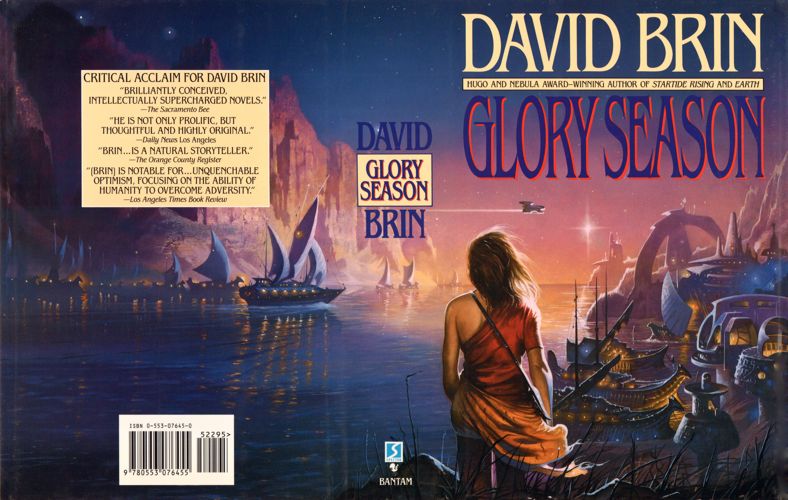
                • Cover of Glory Season
                  Glory Season

                  David Brin · standalone novel · 1993

                  similar bygender and societyscience fiction

                  Glory Season is a 1993 science fiction novel by David Brin. It was nominated for both the Hugo and Locus Awards in 1994. An announcement in the back of one edition of Earth is for a novel titled Stratos, to be released in the spring of 1992. It seems likely that this was delayed, and renamed Glory Season.

                • Cover of The Disappearance
                  The Disappearance

                  Philip Wylie · standalone novel · 1951

                  similar bygender and societyscience fiction

                  One ordinary moment, the world splits in two: every man on Earth finds every woman gone without a trace, and at the same instant every woman finds herself in a world emptied of men -- two parallel realities on the same planet, each population convinced the other has vanished. Philip Wylie follows both worlds afterward, one sliding into authoritarian collapse without women to share or restrain power, the other building something more equal and freer, using the split to interrogate mid-century assumptions about sex, marriage and the double standards separating what men and women were each allowed to be. A speculative novel years ahead of the feminist movement it anticipates.

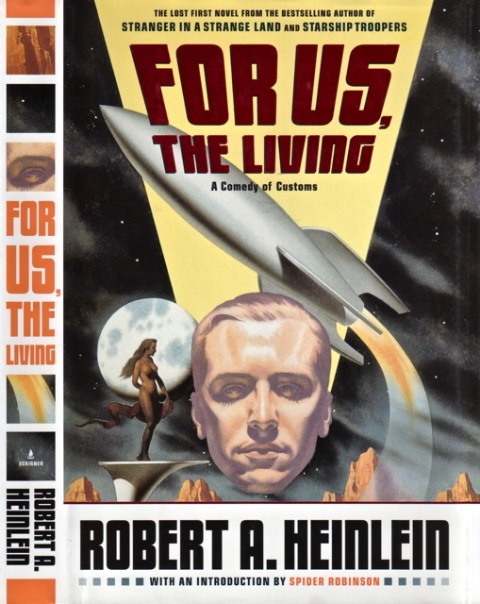
                • Cover of For Us, the Living: A Comedy of Customs
                  For Us, the Living: A Comedy of Customs

                  Robert A. Heinlein · standalone novel · 2004

                  similar byscience fiction+1 more

                  For Us, the Living: A Comedy of Customs is a science fiction novel by American writer Robert A. Heinlein. It was written in 1938 and published for the first time in 2003. Heinlein admirer and science fiction author Spider Robinson titled his introductory essay "RAH DNA", as he believes this first, unpublished novel formed the DNA of Heinlein's later works.

                • Cover of Flesh
                  Flesh

                  Philip José Farmer · standalone novel · 1960

                  similar bygender and societyscience fiction

                  Flesh is an American science fiction novel written by Philip José Farmer. Originally released in 1960, it was Farmer's second novel-length publication, after The Green Odyssey. Flesh features many sexual themes, as is typical of Farmer's earliest work.

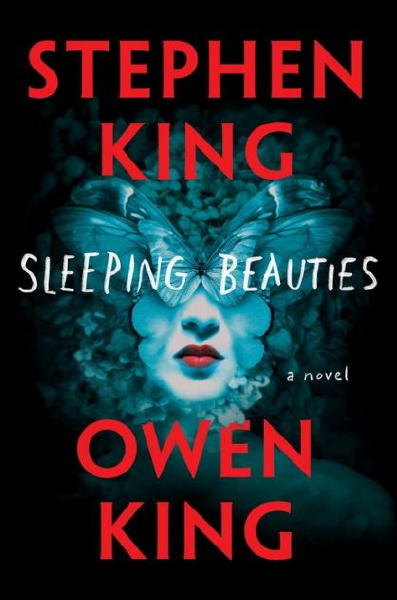
                • Cover of Sleeping Beauties
                  Sleeping Beauties

                  Stephen King & Owen King · standalone novel · 2017

                  similar bygender and societyscience fiction

                  Sleeping Beauties is a novel by Stephen King and his son Owen King, released on September 26, 2017. The book was first mentioned during a promotional appearance on the CBC radio program q. Of the novel, Stephen King stated, "Owen brought me this dynamite idea and I've collaborated a couple of times with Joe. I'm not going to say what the idea is because it's too good."

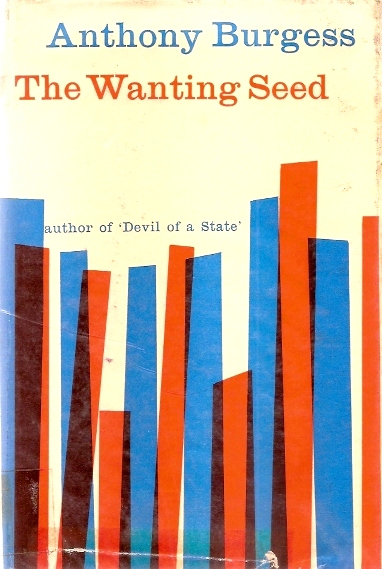
                • Cover of The Wanting Seed
                  The Wanting Seed

                  Anthony Burgess · standalone novel · 1962

                  similar bygender and societyscience fiction

                  The Wanting Seed is a dystopian novel by the English author Anthony Burgess, written in 1962.

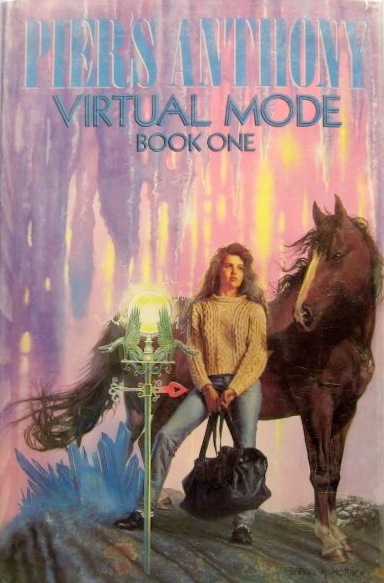
                • Cover of Mode
                  Mode

                  series · 4 books · 1991

                  similar byscience fiction+1 more

                  The Mode series is a quartet of novels by Piers Anthony. Like many of Anthony's other fictional works, it explores many themes and ideas. This series has themes of violence, the abuse of power, sexism and male dominance, gender roles, the environment, integrity and personal honor, sapient animal life, parallel and alternative evolution, space travel, alternate dimensions, paradox, obscure concepts in physics and mathematics, sexual assault and abuse, child and adolescent sexuality, and suicide.

                • Cover of Herland
                  Herland

                  series · 2 books · 1915

                  completed

                  similar bygender and society+1 more

                • Cover of The Power
                  The Power

                  Naomi Alderman · standalone novel · 2016

                  similar bygender and societyscience fiction

                  The Power is a 2016 science fiction novel by the British writer Naomi Alderman. Its central premise is of women developing the ability to release electrical jolts from their fingers, which allows them to become the dominant sex. In 2017, it won the Baileys Women's Prize for Fiction.