More like Year Zero
anchored on:age of sail & 18th century19th century
but
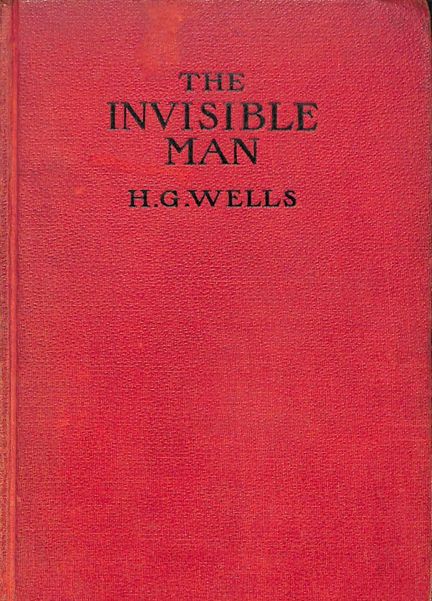
- The Invisible Man
series6 books1897
similar by19th century
The Invisible Man is H. G. Wells's 1897 science fiction novel about Griffin, a scientist who works out how to make living tissue invisible and tests the process on himself, only to discover he has no way to reverse it. Unseen and increasingly cut off from other people, he turns to theft and violence while trying to survive and find a cure, making the book as much about his moral collapse as about the invisibility premise itself. It's a single self-contained novel; the two listed titles here are duplicate editions rather than separate books.
- The Island of Dr. Moreau
series12 books1896
similar by19th century
H. G. Wells's 1896 novel The Island of Doctor Moreau follows a shipwrecked man stranded on a remote island where a reclusive scientist creates human-animal hybrids through vivisection, using the scenario to probe questions of cruelty, control, and what separates humanity from the beasts it experiments on. The premise has drawn later reimaginings gathered alongside it here, including Brian Aldiss's Moreau's Other Island and Silvia Moreno-Garcia's The Daughter of Doctor Moreau, each transplanting Wells's central idea into a new setting and voice. Taken together, the group traces one unsettling premise across more than a century of speculative fiction rather than forming a single ongoing story.
- Allan Quatermain
series25 books1885
similar by19th century
Allan Quatermain is the protagonist of H. Rider Haggard's 1885 novel King Solomon's Mines, its one sequel Allan Quatermain (1887), twelve prequel novels and four prequel short stories, totalling eighteen works. An English professional big game hunter and adventurer, in film and television he has been portrayed by Richard Chamberlain, Sean Connery, Cedric Hardwicke, Patrick Swayze and Stewart Granger among others.
- The Turn of the Screw
series3 books1898
similar by19th century
Henry James's 1898 novella The Turn of the Screw follows a governess at an isolated English country house who becomes convinced that the two children in her care are being stalked by malevolent ghosts, narrated entirely through her own increasingly uncertain account. Its ambiguity over whether the haunting is real has made it one of the most discussed ghost stories in English literature and prompted later works built around it, including Michael Hastings's The Nightcomers, a 1971 prequel imagining events at the house before the governess's arrival. A stage adaptation of James's original text also exists.
- Jungle Book Universe
universe44 books1893
Start hereThe Jungle Book · Start here
similar by19th century
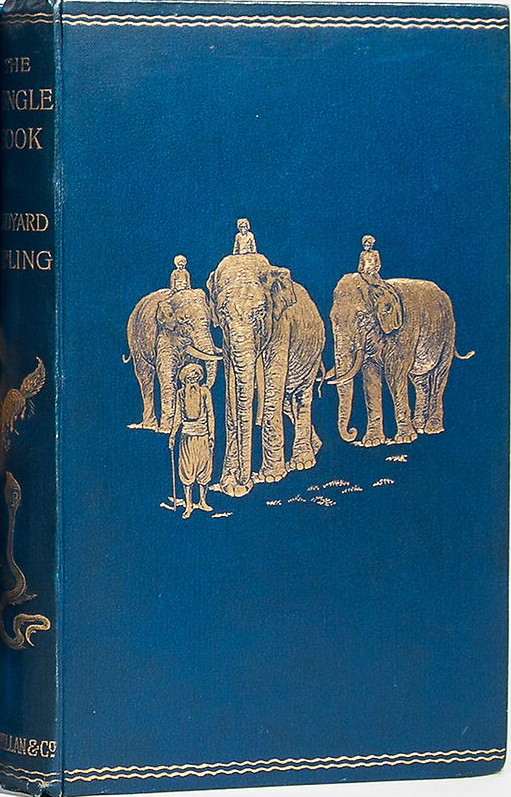
The Law of the Jungle is older than any animal reciting it, and a naked man-cub who wandered into a wolf den at dusk will have to learn every clause of it. Mowgli grows up between two peoples and belongs entirely to neither — the pack that took him in, Baloo who teaches him the words, Bagheera who bought his life with a bull, Kaa who is the most dangerous friend a boy ever had, and Shere Khan, who has been waiting since the first page. Rudyard Kipling wrote these as two books of stories, and the stories run well past Mowgli. Rikki-Tikki-Tavi fights cobras in a bungalow garden; a white seal searches the ocean for an island where men do not come; Toomai watches the elephants dance where nobody is meant to see them; and the beasts of the army explain, in Her Majesty's Servants, exactly why they obey. Verse runs between the tales, and the Jungle Books have been reissued, excerpted and adapted ever since. The voice is the whole point — biblical cadence, animal dignity, and a hard moral world in which the Law protects you precisely as far as you keep it. Read The Jungle Book first and take the Mowgli stories in their order within it; the rest stand alone and can be picked up in any mood. It is a children's book that never once talks down.
- A Little Princess
Frances Hodgson Burnettstandalone novel1905
similar by19th century
A Little Princess is a work by British-American author Frances Hodgson Burnett, presented as a 1888 novella, a 1902 play and a 1905 children's novel. All three versions tell the story of Sara Crewe, a wealthy young girl and the prize student of a private London boarding school who is reduced to poverty and forced to endure the life of a servant under the school's cruel headmistress.
- The Raven King
series13 books1996
similar by19th century
Susanna Clarke's Jonathan Strange & Mr Norrell reintroduces magic to an alternate nineteenth-century England, centering on the prickly rivalry between the two title magicians as they revive a lost English tradition. The linked collection The Ladies of Grace Adieu, which includes the earlier story "Mr Simonelli, or the Fairy Widower," explores the same magical history from other corners of England and refers back to the legendary Raven King, said to have created English magic centuries before. The two books share a setting and mythology rather than a single sequential plot.
- The Difference Engine
William Gibson & Bruce Sterlingstandalone novel1990
similar by19th century
The computer age arrives a century early with Babbage's perfection of his 'analytical engine'. The industrial revolution is accelerated by the development of steam-driven cybernetic 'Engines'. An advanced Great Britain prepares to better the world's lot. An example of the 'steampunk' sub-genre of the cyberpunk movement.
- The Anubis Gates
series3 books1983
similar by19th century
The Anubis Gates is a single time-travel fantasy novel by Tim Powers, following a present-day academic who takes part in a time-travel experiment and ends up stranded in early nineteenth-century London. It won the Philip K. Dick Award in 1983 and the Science Fiction Chronicle Award the following year.
- Bring the Jubilee
Ward Moorestandalone novel1953
similar by19th century
From the flaps of the Farrar, Straus and Young first edition: ""Although I am writing this in the year 1877, I was not born until 1921." So Hodge Backmaker begins his story of the harsh and curious world he lived in, a world in which the South won the Civil War and the all-powerful Confederacy dominated the poor and backward North; a North that had neither a transcontinental railroad, and where television was undreamed of. Like most Northerners, Hodge was poor - but he had ambition. A printer's handyman in 1938, he had since become an eminent historian. Hodge's special interest was the American past, when the States had been united and had seemed to be on the brink of prosperity and technical progress. And then he was offered an opportunity no historian could resist - he could go back in time. Hodge chsoe to return to a certain field near Gettysburg on a day in July, 1863... Bring the Jubilee is a novel of curious events, of adventures and reflection, of passions and comment. It at time Hodge's world, its horse-carriages and gas-lights, minibles and tinugraphs and the Great Emperors' War of 1914 faintly resembles our own, it is perhaps, because that world might well become a reality: on the battlefield of Gettysburg there is a small hill called Little Round Top. One July morning in 1863 the Confederate Army made the tactical error of not occupying this hill. It was a mistake that cost them victory in a battle which - in the view of many historians - was the turning point of the Civil War."
- Wolves Chronicles
series12 books1962
completed
similar by19th century
The Wolves Chronicles is Joan Aiken's long-running alternate-history series for young readers, set in a nineteenth-century England ruled by the Stuart dynasty and beset by wolves that have migrated across a Channel land-bridge. It opens with The Wolves of Willoughby Chase, in which two girls outwit a scheming governess sent to ruin them, and expands over twelve books into a sprawling saga of orphans, conspiracies, and journeys through a Britain quite unlike the real one. Aiken kept adding to the same timeline across more than four decades, including later prequels set before the first book.
- Kindred
Octavia E. Butlerstandalone novel1979
similar by19th century
Kindred (1979) is a novel by American writer Octavia E. Butler that incorporates time travel and is modeled on slave narratives. Widely popular, it has frequently been chosen as a text by community-wide reading programs and book organizations, and for high school and college courses.
- The People of the Mist
H. Rider Haggardstandalone novel1894
similar by19th century
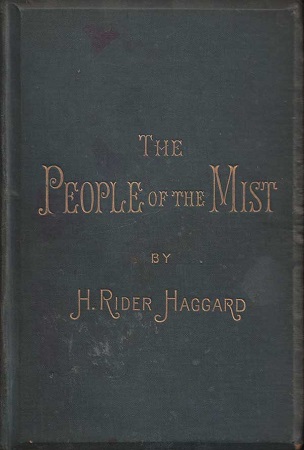
The People of the Mist is a classic lost world fantasy novel written by H. Rider Haggard. It was first published serially in the weekly magazine Tit-Bits, between December 1893 and August 1894; the first edition in book form was published in London by Longman in October, 1894. It was reprinted in December, 1973 by Ballantine Books as the sixty-third paperback volume of the Ballantine Adult Fantasy series.
- The Witch of Prague
F. Marion Crawfordstandalone novel1891
similar by19th century
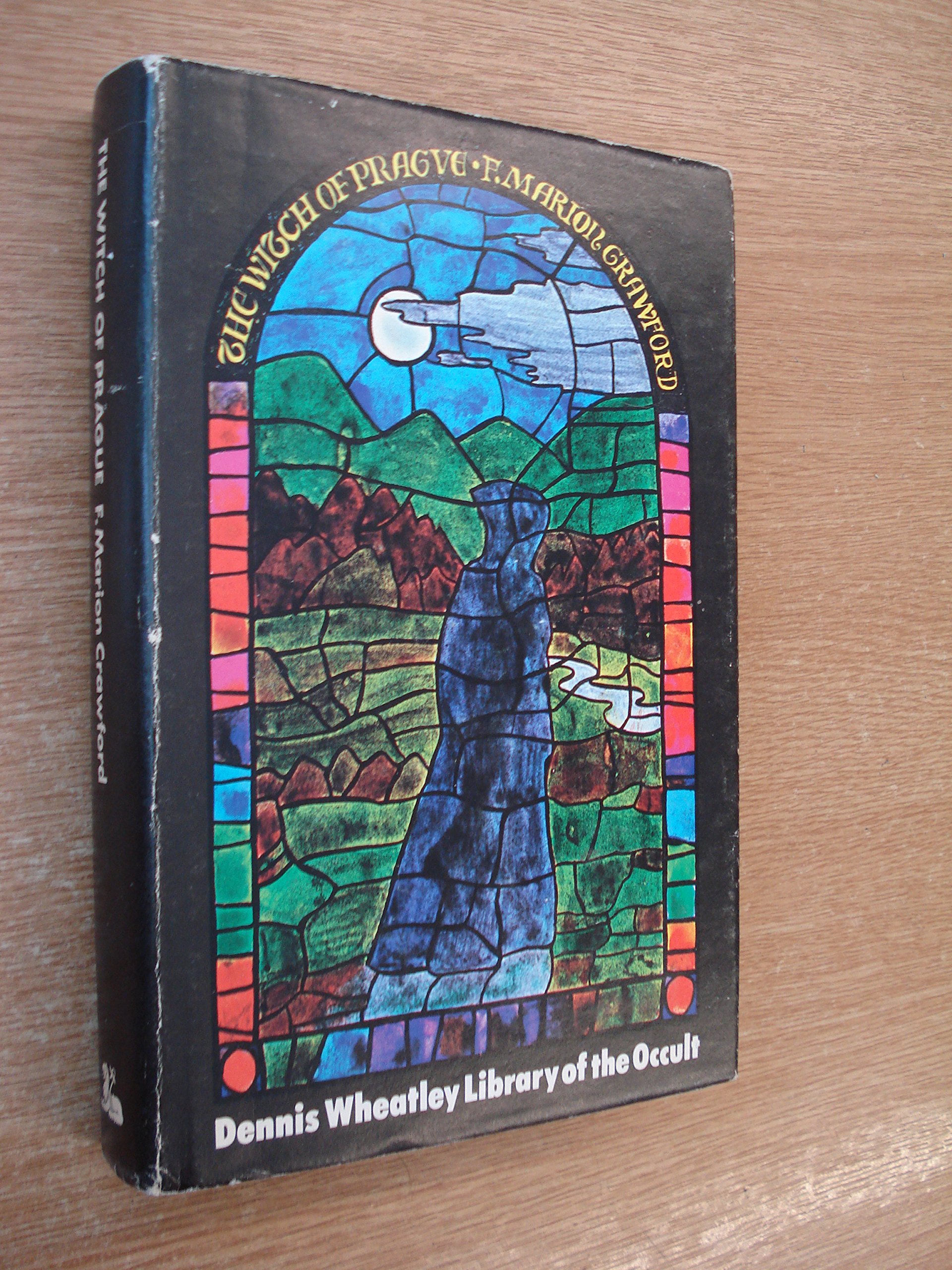
"The Witch of Prague (1891), with Byronic overtones, uses the motif of the Femme Fatale to explore powers of the mind." (underscore represents linked cross-reference) --Encyclopedia of Fantasy, Crawford biographical entry by Mike Ashley
- The Haunted Hotel
Wilkie Collinsstandalone novel1878
similar by19th century
Lord Montbarry breaks off his engagement to Agnes Lockwood and marries the Countess Narona, with whom he lives in a Venetian palace. When he dies, Agnes Lockwood becomes suspicious of the circumstances, and goes to Venice with other family members to investigate. Staying in Montbarry's former residence, they experience a haunting.
- A Strange Manuscript Found in a Copper Cylinder
James De Millestandalone novel1888
similar by19th century
A fantasy novel about the discovery of a civilization hidden near Antarctica.
- The Alvin Maker Saga
series15 books1986
similar by19th century
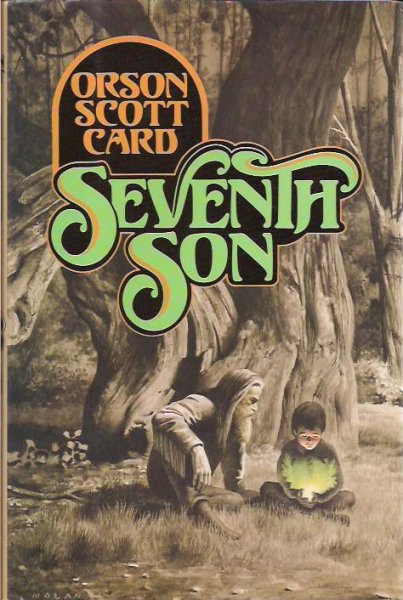
The Tales of Alvin Maker is a series of seven alternate history fantasy novels written by American novelist Orson Scott Card, published from 1987 to 2026. They explore the experiences of a young man, Alvin Miller, who realizes he has incredible powers for creating and shaping things around him.
- Fevre Dream
George R. R. Martinstandalone novel1982
similar by19th century
Fevre Dream is a 1982 vampire novel written by American author George R. R. Martin. It is set on the antebellum Mississippi River, beginning in 1857, and has been described by critics and Martin himself as "Bram Stoker meets Mark Twain". About writing the novel, Martin said that "It was strongly influenced by the time I spent in Dubuque, Iowa, where river steamboats were once built".
- Ayesha
series8 books1886
similar by19th century
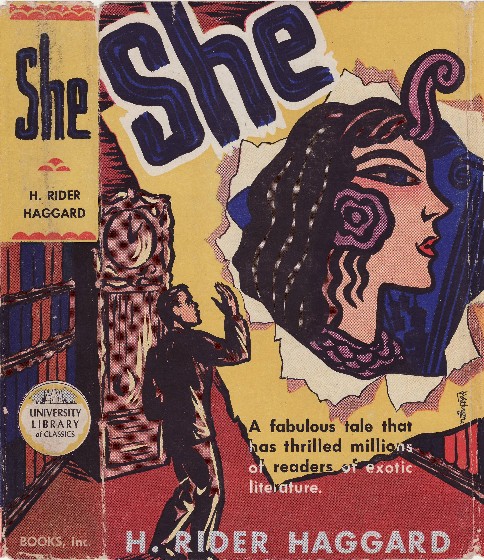
The Ayesha books follow H. Rider Haggard's immortal sorceress-queen Ayesha, introduced in his 1887 novel She as the ruler of a hidden civilization who has waited millennia for her lost love to be reborn. Haggard continued her story in later novels, including the 1905 sequel Ayesha: The Return of She, which reunites her with characters from the first book, and further installments tracing her earlier history. Later reissues and retellings continue to build on the same character.
- The Terror
Dan Simmonsstandalone novel2007
similar by19th century
The Terror is a 2007 novel by American author Dan Simmons. It is a fictionalized account of Captain Sir John Franklin's lost expedition, on HMS Erebus and HMS Terror, to the Arctic, in 1845–1848, to locate the Northwest Passage. In the novel, while Franklin and his crew are plagued by starvation and illness, and forced to contend with mutiny and cannibalism, they are stalked across the bleak Arctic landscape by a monster.
- A Romance of Two Worlds
Marie Corellistandalone novel1886
similar by19th century
A Romance of Two Worlds was Marie Corelli's first novel, published in 1886. It referenced the contemporary debate between creationism and evolution, as well as supernatural themes, overlaid with elements of science fiction. The book was an immediate commercial success, establishing Corelli as one of the most popular writers of the time, though like much of her subsequent work, it was negatively received by critics.
- On Stranger Tides
Tim Powersstandalone novel1987
similar byage of sail & 18th century
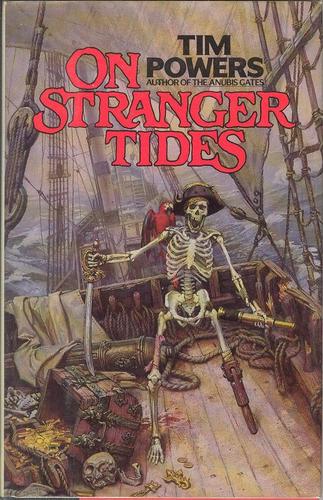
On Stranger Tides is a 1987 historical fantasy supernatural novel by American writer Tim Powers. It was nominated for the World Fantasy Award for Best Novel, and placed second in the annual Locus poll for best fantasy novel.