More like Zearn
anchored on:romancescience fictionother star systems
but
- H. G. Wells' War of the Worlds
universe65 books1898
Start hereThe War of the Worlds · Start here
similar byscience fiction+2 more
No one would have believed, in the closing years of the nineteenth century, that human affairs were being watched keenly and closely from the timeless worlds of space. And then the cylinders fell. H. G. Wells' War of the Worlds opens in the quiet of the Surrey commons, where a falling star proves to be the first Martian craft — and from the pit rise the towering tripods, the Heat-Ray, the choking Black Smoke and the creeping red weed, wielded by minds that regard mankind much as we regard the creatures we boil for supper. This is invasion rendered as natural disaster: cold, methodical, and vast beyond argument. Wells' 1898 novel is the seed; everything else grows from that Martian soil. The catalogue gathers direct sequels and continuations alongside a wide field of other hands. In War of the Worlds: Global Dispatches the invasion is retold across the whole planet through the eyes of Twain, Verne, Tolstoy, Lowell and Kipling; in the Manly Wade and Wade Wellman crossover, Sherlock Holmes, Watson and Professor Challenger take the field against the machines; and Scott Washburn's Great Martian War stretches the fighting into a decades-long alternate history of steam, artillery and grinding attrition. It is a loose shared world — no single decreed sequence, many voices answering one calamity. What sets this world apart is its refusal of heroics: the invaders fall not to generals but to the smallest things of Earth, humbling and indifferent. Begin, always, with Wells' original novel — it is short, and it is the ground every later book stands upon. From there follow your appetite: Global Dispatches for the panorama, the Holmes campaign for adventure, Washburn for the long war.
- Have Space Suit - Will Travel
Robert A. Heinleinstandalone novel1958
similar bytensealienssurvivalnear futurescience fictionspace+1 more
From the back cover of the Del Rey 9th printing: "Skyjacked - Everything happened at once. One minute Kip Russell was walking about in his own backyard, testing out an old space suit and dreaming about going to the moon - and the next he was out cold and the captive of an insidious space pirate. The whole thing seemed like a very bad dream until he discovered he wasn't the only prisoner on board. Then the reality of the situation became inescapable. He - along with the daughter of a world-renowned scientist and a beautiful creature from an alien planet - had been skyjacked by a monstrous extraterrestrial and they were on their way to the Moon... a journey toward a fate worse than death!"
- Forge of God
series2 books1987
completed
similar bytensealienssurvivalscience fiction+3 more
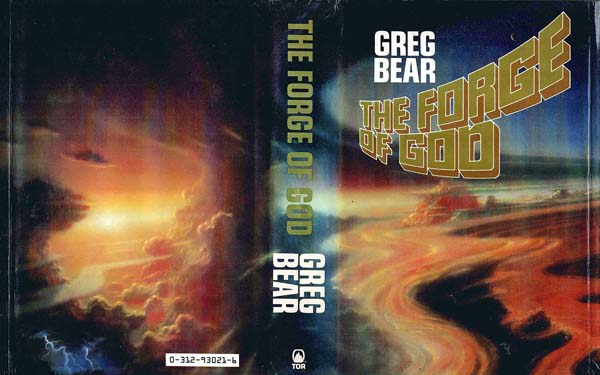
The Forge of God (1987) is Greg Bear's science fiction novel about Earth's discovery that it is the target of an incomprehensible, overwhelming alien attack, following scientists and ordinary people as they try to understand what is destroying the planet. Its 1992 sequel, Anvil of Stars, follows a group of young survivors sent on a mission of interstellar retaliation, continuing directly from the first book's ending.
- Forever War
series10 books1972
similar byscience fictionspace+2 more
Joe Haldeman's The Forever War (1974) follows a soldier conscripted into a centuries-long interstellar war against the alien Taurans, using relativistic space travel so that months spent in transit correspond to years or decades passing back on Earth. Haldeman later returned to the same conflict in Forever Peace (1997), a thematically connected but separate story, and Forever Free (1999), a direct sequel set years after the original war's end. The first novel won the Hugo, Nebula, and Locus awards and is considered a foundational work of military science fiction.
- The Host
Stephenie Meyerstandalone novel2008
similar bytensealienssurvivalnear futurescience fictionromanceemotional
The earth has been invaded by a species that take over the minds of their human hosts while leaving their bodies intact, and most of humanity has succumbed. But Melanie Stryder refuses to fade away. Wanderer, the invading "soul" who has been given Melanie's body, knew about the challenges of living inside a human: the overwhelming emotions, the too vivid memories. But there was one difficulty Wanderer didn't expect: the former tenant of her body refusing to relinquish possession of her mind. Melanie fills Wanderer's thoughts with visions of the man Melanie loves--Jared, a human who still lives in hiding. Unable to separate herself from her body's desires, Wanderer yearns for a man she's never met. As outside forces make Wanderer and Melanie unwilling allies, they set off to search for the man they both love.--From publisher description.
- Ocean / Galactic Center
series12 books1972
similar byaliensscience fiction+5 more
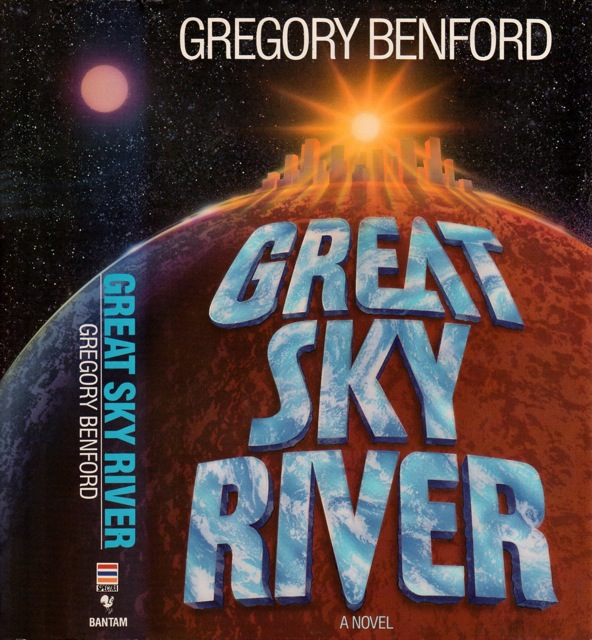
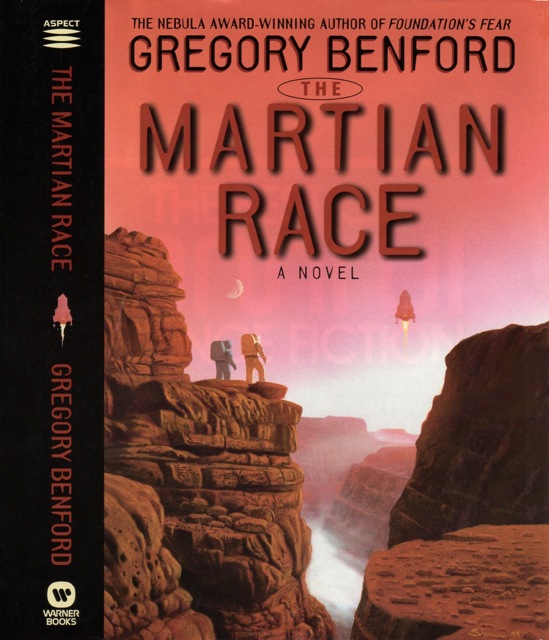
The Galactic Center Saga is a series of books by author Gregory Benford detailing a galactic war between mechanical and biological life.In the Ocean of Night (1977) — 1977 Nebula Award nominee, 1978 Locus Award nominee Across the Sea of Suns (1984) Great Sky River (1987) — 1988 Nebula Nominee Tides of Light (1989) — 1990 Locus Award nominee Furious Gulf (1994) Sailing Bright Eternity (1996) "A Hunger for the Infinite" a novella published in the anthology Far Horizons
- Bronson Beta
series5 books1933
similar byscience fictionother star systems+4 more
When Worlds Collide (1933) and its sequel After Worlds Collide (1934), written together by Edwin Balmer and Philip Wylie, follow a small group of survivors who escape a doomed Earth as the rogue planet Bronson Alpha destroys it, landing on its companion world Bronson Beta to begin again. The two novels form a self-contained disaster-and-survival duology.
- Ender Wiggin
series14 books1977
part of Ender's Game Universe
similar byaliensscience fictionother star systems+3 more
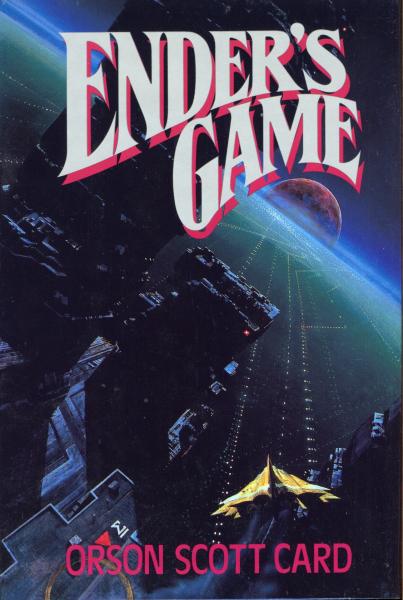
Orson Scott Card's Ender's Game (1985, expanded from his 1977 novella) follows child prodigy Andrew "Ender" Wiggin as he is recruited into a military training program built to prepare Earth's defenses for an anticipated third war against an insectoid alien species known as the Formics. The saga continues years later through Speaker for the Dead and Xenocide, following an older Ender as he confronts the moral weight of his role in that earlier conflict, and concludes the core arc in Children of the Mind, with Ender in Exile filling in the years between the first two books. Set within the wider Ender's Game universe, the series shifts from military coming-of-age story to slower, more philosophical science fiction as it progresses.
- Patternist
series6 books1976
completed
similar byscience fiction+3 more
The Patternist series is a group of science fiction novels by Octavia E. Butler that detail a secret history continuing from the Ancient Egyptian period to the far future that involves telepathic mind control and an extraterrestrial plague. A profile of Butler in Black Women in America notes that the themes of the series include "racial and gender-based animosity, the ethical implications of biological engineering, the question of what it means to be human, ethical and unethical uses of power, and how the assumption of power changes people."
- Ender's Shadow
series5 books1999
part of Ender's Game Universe
similar bytensescience fiction+2 more
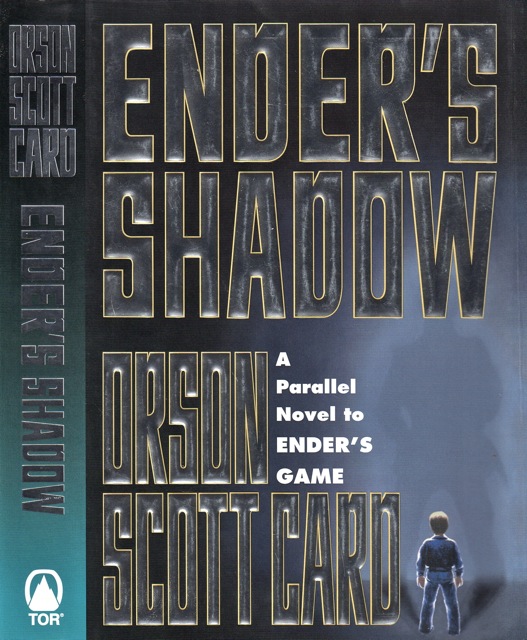
Orson Scott Card's Ender's Shadow retells the events of Ender's Game from the perspective of Bean, a physically stunted but ferociously intelligent street child recruited into the same Battle School program as Ender Wiggin. It launches the Shadow series, which follows Bean and other secondary Battle School characters into the political aftermath of the Formic Wars back on Earth, running parallel to and eventually past the timeline of Card's main Ender Quintet.
- Salvation
series3 books2018
similar byscience fictionother star systemsspace+3 more
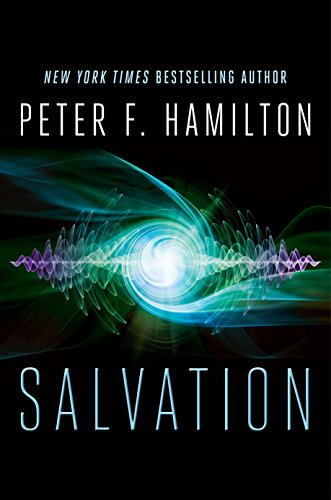
By 2204, instantaneous jump-gate travel has made distance nearly meaningless, connecting Earth to its scattered colonies in a single step -- until a crashed alien ship of unknown origin turns up on a world eighty-nine light years away, carrying something far more dangerous than wreckage. Peter F. Hamilton's Salvation follows the investigation team sent to assess the find, one of whom may not be who they claim, while a second timeline set generations later shows the far-future fallout of what they discover. The trilogy continues through Salvation Lost and The Saints of Salvation.
- War Dogs
series3 books2014
completed
similar byscience fictionspace+5 more
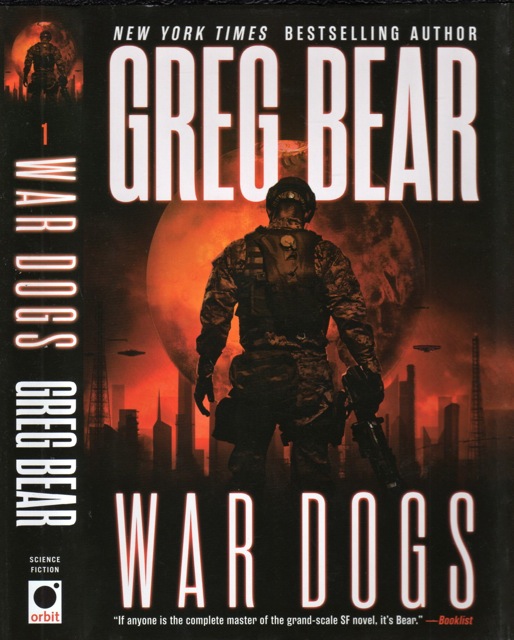
Greg Bear's trilogy opens with humanity fighting an entrenched, technologically superior alien presence across the Solar System, following a soldier drafted into a war whose true stakes he only gradually understands. War Dogs (later reissued as War Dogs: Ares Rising) was followed by Killing Titan and Take Back the Sky as the scope of the alien threat, and the deceptions surrounding it, widens.
- Tripods
series4 books1967
completed
similar bytensealiensnear futurescience fiction+1 more
The Tripods is a series of young adult science fiction novels by John Christopher. The series takes place in a post-apocalyptic world where humanity is enslaved by "Tripods"—gigantic three-legged walking machines piloted by an alien race later identified as the "Masters". The first two books were the basis of a science fiction TV series, produced in the United Kingdom in the 1980s.
- Blindsight / Firefall
series3 books2006
similar bytensealiensscience fictionspace+2 more
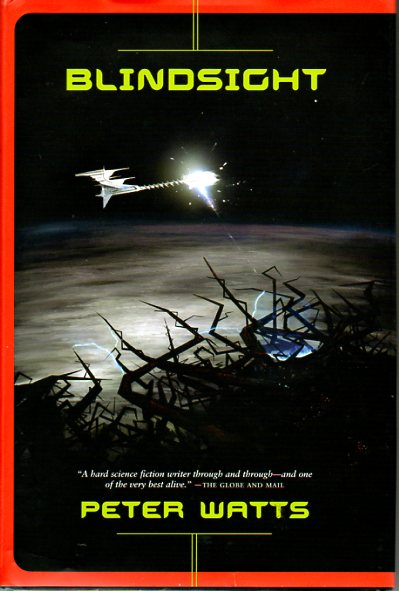
Blindsight sends a crew of radically modified posthumans (including a resurrected, genetically restored vampire) out to the Oort cloud after humanity detects an alien signal, only to make contact with something intelligent, wildly capable, and possibly not conscious at all — a first-contact story built around the question of whether self-awareness is actually useful. Peter Watts's Echopraxia is a same-timeframe "sidequel" rather than a direct sequel, following different characters through the fallout of the same first-contact event.
- The Winds of Altair
Ben Bovastandalone novel1973
similar bytensealiensnear futurescience fictionother star systems+1 more
From back cover Tor trade paperback May 1983: MORALITY VS. SURVIVAL... Even before the human scientists arrived at the sixth planet of Altair they knew they had their work cut out for them. Star probes had long before informed them that Altair VI had flourishing ecology with one very tough beast at the top of the food chain, a beast that would have to be dealt with before the human colony ships arrived. What they didn't know was that the beast was not only tough, it was as smart as a man -- and that the only human capable of real communication with the wolfcats of Altair would want to become one...
- Xenogenesis / Lilith's Brood
series4 books1987
completed
similar byaliensscience fiction+4 more
Lilith's Brood, previously known as the Xenogenesis Trilogy, is a collection of three science fiction works by Octavia E. Butler: Dawn, Adulthood Rites, and Imago.
- Cities in Flight
series10 books1950
completed
similar byscience fictionspace+2 more
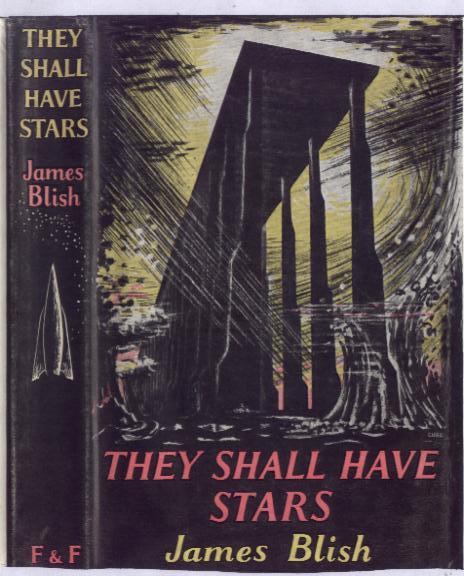
Cities in Flight is a four-volume series of science fiction novels and short stories by American writer James Blish, originally published between 1950 and 1962, which were first known collectively as the "Okie" novels. The series features entire cities that are able to fly through space using an anti-gravity device, the spindizzy. The stories cover roughly two thousand years, from the very near future to the end of the universe. One story, "Earthman, Come Home", won a Retro Hugo Award in 2004 for Best Novelette. Since 1970, the primary edition has been the omnibus volume first published in paperback by Avon Books. Over the years James Blish made many changes to these stories in response to points raised in letters from readers.
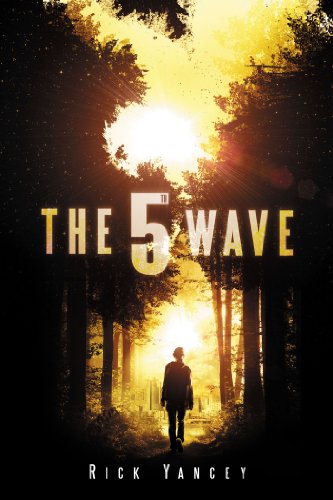
- The 5th Wave
series4 books2013
similar bytensealienssurvivalnear futurescience fiction+1 more
Rick Yancey's The 5th Wave opens after a series of escalating alien attacks has already devastated Earth's population and infrastructure, following sixteen-year-old survivor Cassie Sullivan as she searches for her younger brother while trying to work out who, among the remaining humans, can still be trusted. The trilogy is young-adult science fiction that treats its alien-invasion premise as a survival and paranoia story more than a war story.
- NASA Trilogy
series4 books1996
similar bytensescience fiction+4 more
The NASA Trilogy consists of three hard science fiction novels written by British science fiction author Stephen Baxter. They were published from 1996 to 1998. These books explore the possibilities of the American space program if the circumstances had been different. They have generally darker tones than his other books and are critical of NASA. They consist of:
- Alliance-Union Universe
universe173 books1976
Start hereCompany Wars · The central sequence
similar byscience fiction+4 more
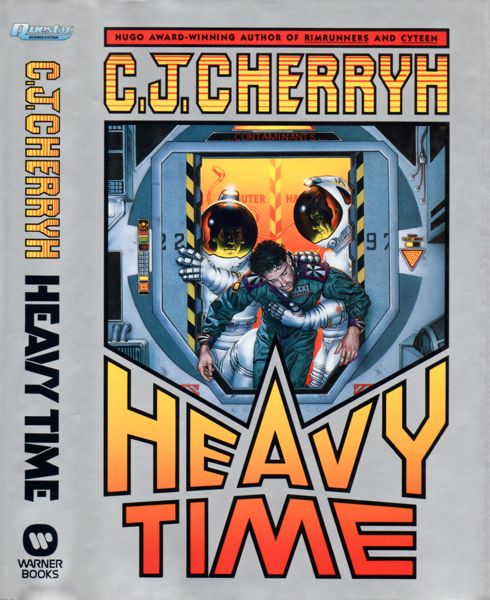
The dark between the stars belongs to no one, and everyone who lives out here knows it: the merchanter Families hauling cargo between stations that cannot feed themselves, the Earth Company clutching at colonies it can no longer supply, the Union breeding its cloned azi to settle worlds faster than birth allows. C. J. Cherryh's Alliance-Union is a future history of humankind's spread across the third and fourth millennia, told from inside the pressure — no clean empires, only stations, ships, treaties, and the people caught in the machinery of who holds the jump-points. The sequence runs from the first laborious pre-FTL stations through the Company Wars, the independence struggle that breaks over Pell in Downbelow Station (Hugo, 1981), to the genetics and cold politics of Union's homeworld in Cyteen (Hugo, 1988) and its sequel Regenesis. Around that spine cluster the merchanter novels of trader Families, the Faded Sun trilogy of human envoys among the martial alien Mri, and the Chanur books, narrated from the hierarchical, whiskered viewpoint of the hani. On the isolated world of Merovin, the Merovingen Nights anthologies open the setting to other hands — Mercedes Lackey, Janet and Chris Morris, Nancy Asire — a shared world braided into the whole. What sets it apart is intimacy at scale. Cherryh drops you without a map into a single skull and lets you assemble the politics from what that person fears and bargains for; the aliens are genuinely alien, loyalty is always provisional, and the real antagonist is usually logistics. Most books stand alone, in her words, "like real history." The surest way in is Downbelow Station — the war seen from one besieged station — then Cyteen, for the mind that shaped the other side.
- Adventures of Viktor & Julia
series2 books1999
similar bytensealienssurvivalnear futurescience fiction+1 more
- Nicholas Seafort
series7 books1994
completed
similar bytensescience fictionspace+2 more
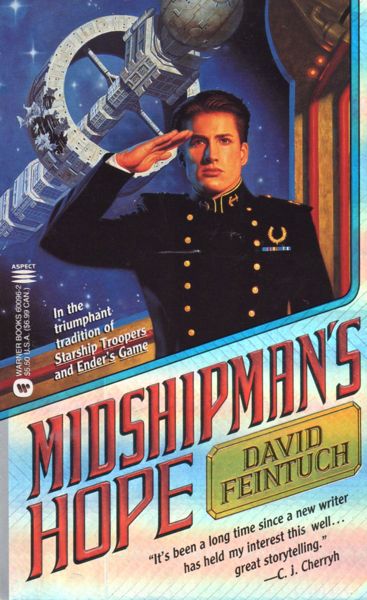
The Seafort Saga is a series of science fiction novels written by American author David Feintuch. The novels are set from the late 22nd century to the mid-23rd century and relate the adventures of Nicholas Seafort, an officer in the (fictional) UNNS| United Nations Naval Service. The series is a collection of personal accounts, usually from the perspective of Nicholas Seafort, describing Seafort's adventures, beginning as a lowly midshipman, to the elected leader of earth, and finally to the captain of the UNNS flagship Olympiad. Although most books in the series are told from a single perspective, usually Seafort's, Voices of Hope is a collection of accounts from several sources: Seafort's son, PT, the son of a friend of Seafort's, and a transient boy named Pook. Additionally, Children of Hope is narrated by Randy Carr, the son of a close friend of Seafort.