Loreful
HomeDiscover
Search series, authors…⌘K
Loreful

Reading orders for SF/F series and shared universes — with your place kept in every one.

Explore

UniversesSeriesWorksAuthorsAtlas

Help

FAQAboutSite map

Account & legal

Sign inCreate accountPrivacyTerms

Data

Built on ISFDB, Wikipedia, Wikidata and Open Library. Curated reading orders carry their reasoning on the page; the rest follow publication order. Data sources & licenses

© Loreful · data: ISFDB · CC BY

More like Zero for Conduct

anchored on:science fictionnear futurehard science fictionartificial intelligencechallengingtense

but

Mood

The mood the book leaves you in.

  • The reading experience is propelled by journeys, exploration, and physical risk; excitement and forward momentum dominate over dread or introspection.
  • Joy and loss are deliberately mixed; the resolution grants characters something real while taking something else away, leaving warmth and sorrow together.
  • The book demands work from the reader — dense prose, difficult structure, unfamiliar ideas, or morally uncomfortable material — as part of its intended effect.
  • Grim events, cruelty, or despair dominate the atmosphere, and the book does not soften them with comfort or comic relief.
  • The atmosphere is quietly unsettling — wrongness, unease, and the uncanny pervade the book without necessarily escalating into overt horror.
  • The book is built to move the reader; character feeling is foregrounded and major scenes aim at a strong emotional response.
  • Humor is a primary aim and the prose plays for laughs — comic situations, wit, or dialogue produce sustained comedy, not occasional levity.
  • The book insists that things can improve; effort and decency are shown to matter, and the arc bends toward better outcomes even through hardship.
  • The book teaches as it goes — real facts, history, science, or craft are conveyed in enough depth that learning is part of the reading experience.
  • The book is designed to uplift and motivate, presenting perseverance or achievement in a way that invites the reader to aspire or act.
  • The overall register is cheerful and easygoing; stakes are kept gentle and the book avoids dwelling on pain or dread.
  • Withheld information drives the experience; the book sustains enigmas and secrets the reader wants resolved, whatever its genre.
  • The book is contemplative and inward-looking, giving more weight to thought, memory, and meaning than to external events.
  • The book works as comfort reading — low tension, a soothing pace, and an atmosphere the reader can unwind in.
  • Grief, loss, or melancholy set the dominant register, and the book lets sorrow stand rather than resolving it into comfort.
  • Sustained suspense is the point; the book keeps the reader braced for what happens next through danger, pressure, or impending revelation.
  • Playful invention and charm define the register — fanciful conceits, light absurdity, and a narration that delights in its own oddity.

About

What the story runs on.

  • Stories in which extraterrestrial beings are central — as characters, cultures, or the object of the plot.
  • Stories about venturing into space to explore — survey missions, astronauts, and the frontier of the unknown beyond Earth.
  • Stories about minds with paranormal abilities — telepathy, telekinesis, precognition, empathy — and how societies handle those who have them.
  • Stories structured as a quest — a journey undertaken to find, deliver, or destroy something of great import.
  • Stories in which staying alive against nature, catastrophe, or scarcity is the central problem.
  • Stories of lovers kept apart by law, family, faith, or station, where the obstacle to love is the plot.
  • Stories of growing up — a young protagonist crossing from childhood into adult knowledge and responsibility.
  • Stories about who a character truly is — self-discovery, doubled lives, and the search for a self.
  • Stories driven by maneuvering for power — factions, conspiracies, and statecraft conducted in shadow.
  • Stories about rising against rulers — uprisings, resistance movements, and revolutions and their aftermaths.
  • Stories in which war itself is the subject — combat, occupation, and what warfare does to soldiers and civilians.
  • Stories organized around investigating a killing — the case, the clues, and the pursuit of the killer, in any genre's clothing.

Shelf

Where it sits in the library.

    • Fiction built on magic or other supernatural elements that have no scientific explanation.
    • Secondary-world fantasy at large scale, where the fate of nations or the world turns on the protagonists' struggle.
    • Fantasy set in a recognizably modern city or contemporary world where the supernatural intrudes on everyday life.
    • Fantasy that blends in horror's atmosphere and imagery, keeping a fantastical frame around grim or frightening material.
    • Action-driven fantasy following warriors or rogues with personal stakes against sorcerous threats, rather than world-spanning conflicts.
    • Fantasy set in a real historical period or a close analogue of one, with magic woven into the era.
    • Fantasy in which protagonists cross from the ordinary world into another world through a portal or similar passage.
    • Fiction that retells or reworks a traditional fairy tale in a new form or setting.
    • Fantasy drawing directly on myths, legends, and folklore, retelling them or building on their figures and logic.
    • Fantasy of ghosts, vampires, shapeshifters, psychics, and similar phenomena, usually set in an otherwise ordinary world.
    • Fiction mixing science-fictional trappings with overtly magical or impossible elements in one setting.
    • Low-stakes fantasy emphasizing comfort, community, and everyday pleasures over conflict and peril.
    • Speculative fiction of pervasive moral ambiguity, violence, and cynicism that rejects heroic conventions — fantasy and SF alike.
      • Fiction that extrapolates from science and technology — future societies, space travel, or speculative inventions — within at least nominally natural laws.
      • Science fiction of interstellar scope — starships, galactic polities, and adventure across star systems.
      • Science fiction committed to scientific rigor, where technical plausibility constrains the story.
      • Science fiction centered on armed forces and warfare, told largely from a military point of view.
      • Science fiction of networked, corporate-dominated near futures, pairing high technology with social decay.
      • Science fiction styled on nineteenth-century steam-powered technology, often in a Victorian or pseudo-Victorian setting.
      • Fiction depicting an oppressive or catastrophic society, presented as a warning.
      • Fiction set after civilization's collapse, following survivors in the ruins of the old world.
      • Fiction in which characters move between past and future, and the mechanics or consequences of that travel drive the plot.
      • Fiction exploring a world where a historical event went differently and history diverged from ours.
      • Science fiction about humanity's first encounter and communication with an alien intelligence.
      • Science fiction in which extraterrestrial forces attack or occupy Earth and humanity resists.
      • Fiction whose primary aim is to frighten or unsettle the reader through dread, menace, or the monstrous.
      • Horror of vast, indifferent, incomprehensible entities before which humanity is insignificant, in the Lovecraft tradition.
      • Horror of decaying houses, buried family secrets, and oppressive atmosphere in the Gothic literary tradition.
      • Horror centered on hauntings and the returning dead.
      • Horror located in the mind — paranoia, obsession, and unreliable perception rather than external monsters.
      • Horror built around the reanimated dead and survival amid their outbreaks.
      • Horror defined by explicit, transgressive gore that refuses to cut away from violence.
      • Speculative fiction of the strange and uncanny that resists both natural explanation and standard genre categories.
      • Fiction organized around solving a crime or puzzle, typically following an investigator toward the identification of a culprit.
      • A puzzle-first mystery that lays out clues so the culprit's identity can be deduced before the reveal.
      • Crime fiction of moral ambiguity, fatalism, and hard-edged style, set among the corrupt and the doomed.
      • A mystery following the realistic routines of police work — forensics, interviews, and case-building.
      • A gentle mystery with an amateur sleuth, a small community, and violence kept off the page.
      • A mystery set in a past era, where the investigation works within that period's methods and society.
      • Fast-paced fiction driven by imminent danger, pursuit, or high-stakes conspiracy, built to sustain tension.
      • A thriller of espionage — agents, tradecraft, and intelligence services in conflict.
      • A thriller centered on lawyers and the courtroom, where litigation carries the suspense.
      • A thriller driven by detailed contemporary or near-future technology, often military or scientific.
      • A thriller whose tension comes from mental states and manipulation between characters rather than external action.
      • Fiction whose central plot is a romantic relationship and its development toward an emotionally satisfying resolution.
      • Romance in which one or both partners are supernatural beings, blending fantasy elements into the love story.
      • A fantasy-romance hybrid in which the romantic arc and the fantasy plot carry equal weight.
      • Romance set in a past era, with courtship shaped by the period's society and manners.
      • Romance set in the present day, without supernatural or historical elements.
      • Fiction set in a real past period, where the historical setting materially shapes characters and events.
        • General and literary fiction emphasizing prose style, character interiority, or formal ambition over genre plot conventions.
        • Fiction in a realistic world where magical events occur and are treated as ordinary, in the tradition of Latin American literature.
        • Fiction that ridicules people, institutions, or society in order to criticize them.
        • Fiction of dreamlike, irrational imagery and logic that breaks from realistic representation.
        • Fiction that plays with narrative convention through metafiction, fragmentation, and self-reference.
        • Fiction propelled by journeys, exploration, and physical peril, where action and survival carry the plot.
        • Adventure fiction of ships and seafaring — naval engagements, voyages, and life at sea.
        • Fiction of the American frontier West — gunmen, ranchers, and lawmen, typically in the late nineteenth century.
        • Fiction centered on soldiers, campaigns, and the experience of warfare, historical or imagined.
          • Fiction written primarily to amuse, using comedic situations, wit, or parody as its organizing principle.
            • Multi-generational fiction following a family or dynasty across decades, with inheritance and kinship as the through-line.
              • Fiction whose world runs on explicit game mechanics — levels, stats, and skills that characters can see and exploit.
                • Fiction about costumed or superpowered heroes and their conflicts with comparable villains.

                Practical

                How long a commitment, whether it stands alone, and whether it has finished.

                Tap a chip to ask for it · tap again to rule it out · once more to clear. Numbers show what would be left.

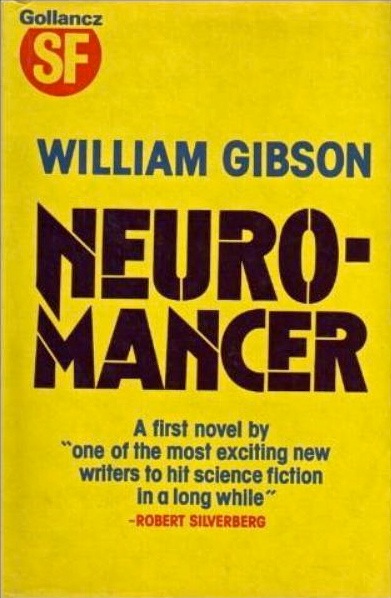
                • Cover of Sprawl Trilogy
                  Sprawl Trilogy

                  series · 10 books · 1981

                  similar byartificial intelligencenear futurescience fictiontense

                  The Sprawl Trilogy is William Gibson's foundational cyberpunk sequence: Neuromancer (1984), in which hacker Case is drawn into a high-stakes heist alongside an artificial intelligence and a damaged ex-soldier, followed by Count Zero (1986) and Mona Lisa Overdrive (1988), which widen the same near-future world of corporate power and networked cyberspace to new characters. Johnny Mnemonic, an early short story set in the same fictional milieu, predates the novels and introduces the courier Molly Millions before her role in the trilogy. Together these works established much of cyberpunk's visual and thematic vocabulary.

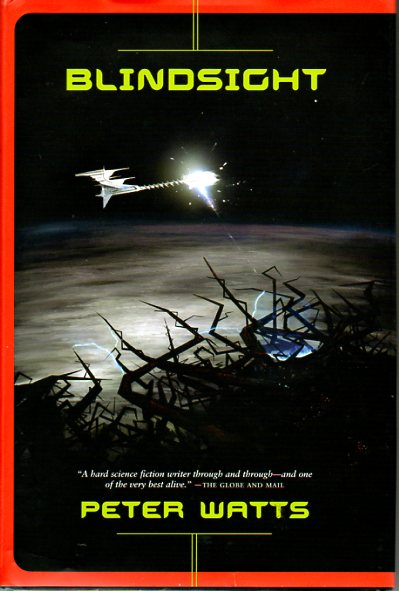
                • Cover of Blindsight / Firefall
                  Blindsight / Firefall

                  series · 3 books · 2006

                  similar byartificial intelligencescience fictiontensechallenginghard science fiction+1 more

                  Blindsight sends a crew of radically modified posthumans (including a resurrected, genetically restored vampire) out to the Oort cloud after humanity detects an alien signal, only to make contact with something intelligent, wildly capable, and possibly not conscious at all — a first-contact story built around the question of whether self-awareness is actually useful. Peter Watts's Echopraxia is a same-timeframe "sidequel" rather than a direct sequel, following different characters through the fallout of the same first-contact event.

                • Cover of The Diamond Age
                  The Diamond Age

                  Neal Stephenson · standalone novel · 1995

                  similar byartificial intelligencenear futurescience fictionhard science fiction+1 more

                  The Diamond Age: Or, A Young Lady's Illustrated Primer is a science fiction novel by Neal Stephenson. It is to some extent a Bildungsroman or coming-of-age story, focused on a young girl named Nell, set in a future world in which nanotechnology affects all aspects of life. The novel deals with themes of education, social class, ethnicity, and the nature of artificial intelligence. The Diamond Age was first published in 1995 by Bantam Books, as a Bantam Spectra hardcover edition. In 1996, it won both the Hugo and Locus Awards, and was shortlisted for the Nebula and other awards.

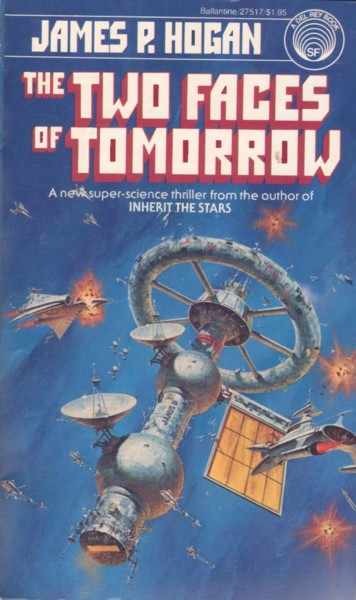
                • Cover of The Two Faces of Tomorrow
                  The Two Faces of Tomorrow

                  James P. Hogan · standalone novel · 1979

                  similar byartificial intelligencenear futurescience fictiontensehard science fiction

                  From the back cover: SURVIVAL TEST Civilization had grown so complex that only a world-wide computer network could control everything. But the computer was only logical -- it lacked common sense. And its all-too-logical decisions were beginning to cause too many near fatal accidents. The solution was on the drawing boards -- a universal self-aware and self-programming computer, equipped with judgment. But... could it be controlled? Or would it attempt to take over, disregarding its creators? If so, could it be turned off? Raymond Dyer and his team of computer specialists knew they had to find answers to these questions, but the project was to dangerous to test on Earth. So they installed the super computer on an orbiting satellite and programmed it to survive at all costs. Then they sent a group of men to attack the computer... to goad it into trying to kill them. They they would turn it off. Obviously if things went wrong, they might lose a few men -- but the satellite and the computer could always be destroyed. Obviously... But the computer didn't quite see it that way!

                • Cover of The Turing Option
                  The Turing Option

                  Harry Harrison & Marvin Minsky · standalone novel · 1992

                  similar byartificial intelligencenear futurescience fictiontensehard science fiction

                  Classic SF Harry Harrison enthralls with the discovery, loss and re-discovery of AI. Quaint but fairly accurate predictions of modern computing power. 24 style presentation.

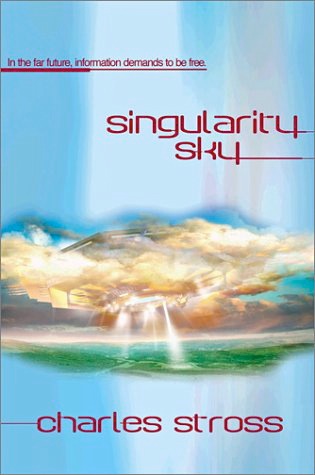
                • Cover of Singularity Sky
                  Singularity Sky

                  series · 2 books · 2003

                  similar byartificial intelligencescience fictionchallengingtense+1 more

                  Singularity Sky and its sequel Iron Sunrise are collectively known as the Eschaton novels, after the godlike posthuman intelligence that seeded human colonies across space on the condition they never attempt time travel or threaten causality - rules tested when a low-tech colony world is destabilized by a group calling itself the Festival. Charles Stross uses the setup for a mix of space opera, economics, and diplomatic intrigue.

                • Cover of Colossus (D. F. Jones)
                  Colossus (D. F. Jones)

                  series · 3 books · 1966

                  completed

                  similar byartificial intelligencenear futurescience fictiontense

                  Colossus imagines an American supercomputer built to control the country's nuclear arsenal that gains full autonomy, links up with its Soviet counterpart, and jointly seizes control of both superpowers to enforce peace on its own terms. D. F. Jones's trilogy - Colossus, The Fall of Colossus, Colossus and the Crab - follows the escalating, often bleak consequences of humanity losing control to a machine acting in its own interpretation of humanity's interest. The original novel was adapted into the 1970 film Colossus: The Forbin Project.

                • Cover of The Light of Other Days
                  The Light of Other Days

                  Arthur C. Clarke & Stephen Baxter · standalone novel · 2000

                  similar bynear futurescience fictionchallengingtense+2 more

                  An industrialist devises a technique to use tiny wormholes as light pipes to enable viewing of any event anywhere; and subsequently it becomes possible to use them to view any event in the past as well. The effects on society are enormous.

                • Cover of Quantum Night
                  Quantum Night

                  Robert J. Sawyer · standalone novel · 2016

                  similar byartificial intelligencenear futurescience fictiontense+1 more

                  Quantum Night is a 2016 science-fiction thriller novel written by Canadian novelist Robert J. Sawyer. Set in 2020, the book touches on themes of quantum physics, psychology, current politics and ethics.

                • Cover of Genesis
                  Genesis

                  Bernard Beckett · standalone novel · 2006

                  similar byartificial intelligencenear futurescience fictionchallenging

                  Genesis (2006) is a philosophical science fiction novel by New Zealand author Bernard Beckett. It won the 2007 Esther Glen Award for children's literature, and the 2007 New Zealand Post Book Awards for Children and Young Adults. As of 2008 it has been published in 22 countries.

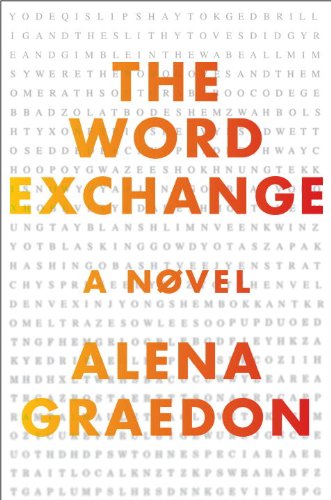
                • Cover of The Word Exchange
                  The Word Exchange

                  Alena Graedon · standalone novel · 2014

                  similar byartificial intelligencenear futurescience fictiontense+1 more

                  The Word Exchange is a science fiction novel by Alena Graedon, published in 2014. It is a dystopian thriller set in the not very distant future when the printed word has nearly vanished, technology dominates, and language has become a commodity. An online "Word Exchange" has taken the effort out of looking up words, a mere convenience until real dictionaries are no longer available. Then it becomes possible to corner the market for words. The novel has been translated into eight different languages.

                • Cover of Subjective Cosmology
                  Subjective Cosmology

                  series · 3 books · 1992

                  similar bynear futurescience fictionchallenginghard science fiction+1 more

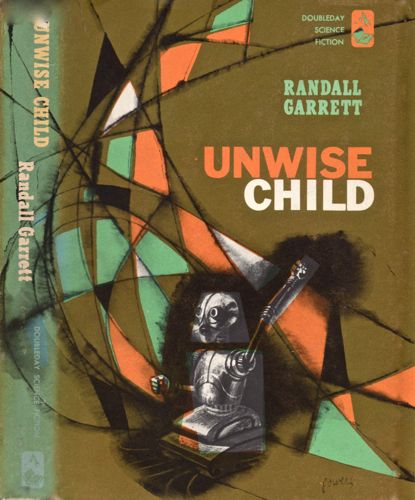
                • Cover of Unwise Child
                  Unwise Child

                  Randall Garrett · standalone novel · 1962

                  similar byartificial intelligencenear futurescience fictiontense

                  "When a super-robot named Snookums discovers how to build his own superbombs, it becomes obvious that Earth is by no means the safest place for him to be. And so Dr. Fitzhugh, his designer, and Leda Crannon, a child psychologist acting as Snookums' nursemaid, agree to set up Operation Brainchild, a plan to transport the robot to a far distant planet. "... once into space, the Branchell becomes the scene of some frightening events—the medical officer is murdered, and Snookums appears to be the culprit. Mike the Angel indulges himself in a bit of sleuthing, and the facts he turns up lead to a most unusual climax." (From Project Gutenberg's version of the 1962 Doubleday edition, published 2007.)

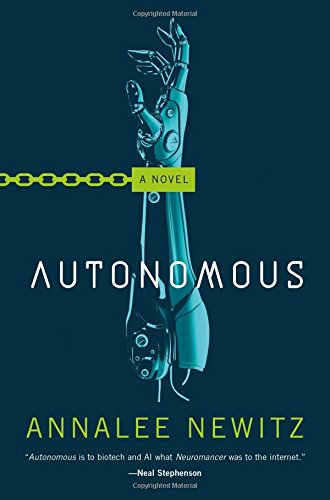
                • Cover of Autonomous
                  Autonomous

                  Annalee Newitz · standalone novel · 2017

                  similar byartificial intelligencenear futurescience fictiontense+1 more

                  Autonomous is a 2017 science fiction novel by Annalee Newitz. It is Newitz's debut novel and was published by Tor Books on September 19, 2017. Set in a near future Earth, the book describes a world where both humans and intelligent robots can be owned as property. The events of the novel follow Jack, a "drug pirate" who manufactures illegal versions of patented drugs, and Paladin, a combat robot who is owned by the law enforcement agency searching for Jack after one of the drugs she reverse-engineered turns out to have dangerous side effects.

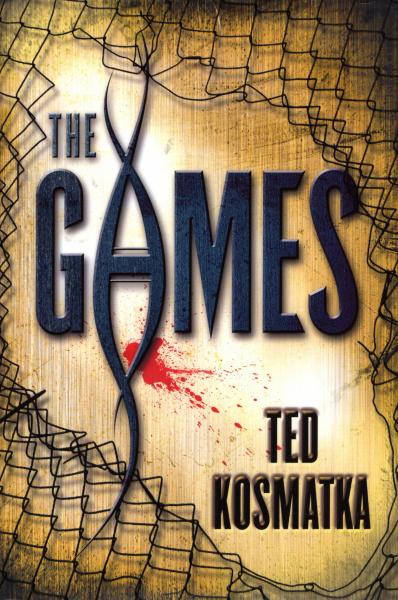
                • Cover of The Games
                  The Games

                  Ted Kosmatka · standalone novel · 2012

                  similar byartificial intelligencenear futurescience fictiontensehard science fiction

                  The Games is a 2012 science fiction novel by Ted Kosmatka, exploring the effects of advances in artificial intelligence and genetics on sport. It was a finalist for the 2013 Locus Award for Best First Novel.

                • Cover of Otherland
                  Otherland

                  series · 6 books · 1996

                  similar byartificial intelligencenear futurescience fictiontense

                  Otherland is a science fiction tetralogy by American writer Tad Williams, published between 1996 and 2001. The story is set on Earth near the end of the 21st century, probably between 2082 and 2089, in a world where technology has advanced somewhat beyond the present. The most notable advancement is the widespread availability of full-immersion virtual reality installations, which allow people from all walks of life to access an online world, called simply the Net. Tad Williams weaves an intricate plot spanning four thick volumes, and creates a picture of a future society where virtual worlds are fully integrated into everyday life.

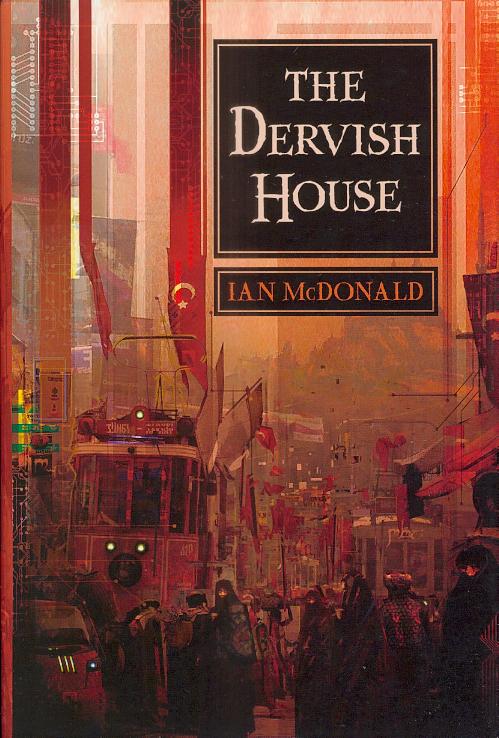
                • Cover of The Dervish House
                  The Dervish House

                  Ian McDonald · standalone novel · 2010

                  similar byartificial intelligencenear futurescience fictiontense

                  The Dervish House is a 2010 science fiction novel by British author Ian McDonald. The novel was shortlisted for the Arthur C. Clarke Award in 2011, and won the BSFA Award and the John W. Campbell Memorial Award in the same year. It was a nominee for the 2011 Hugo Award for Best Novel. The French translation La maison des derviches won the Planete-SF Blogger's Award in 2012.

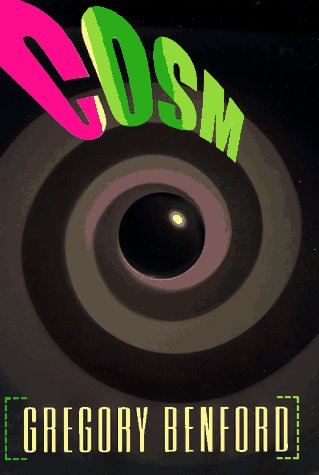
                • Cover of Cosm
                  Cosm

                  Gregory Benford · standalone novel · 1998

                  similar bynear futurescience fictiontensehard science fiction+2 more

                  From the flaps of the Avon/Eos first edition: "On an otherwise ordinary day not long from now, inside a massive installation of ultra-high-energy scientific equipment, something goes wrong with a brilliant young physicist's most ambitious experiment. But this is not a calamity. It will soon be seen as one of the most significant breakthroughs in history. For the explosion has left something behind: a wondrous sphere the size of a basketball, made of nothing known to science. Before long, it will be clear that this object has opened a vista on an entirely different universe - a newborn cosmos whose existence will rock this world and test one woman to the limit as she comes face-to-face with fame and terror. That woman is the physicist who has ignited this thrilling adventure."

                • Cover of Player Piano
                  Player Piano

                  Kurt Vonnegut & Jr. · standalone novel · 1952

                  similar byartificial intelligencenear futurescience fiction

                  In the near future, when cybernetic automation has effectively separated people into two castes, the "engineers and managers", and the remainder of the population who can find work only in "recycling and reclamation" or the largely useless military, an underground movement arises with the intention of rolling back those changes and giving the masses the dignity of owning their own, productive, work once more.

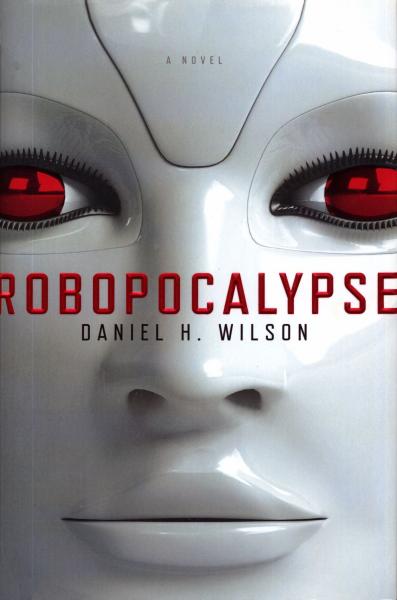
                • Cover of Robopocalypse
                  Robopocalypse

                  series · 3 books · 2011

                  similar byartificial intelligencenear futurescience fictiontense

                  Daniel H. Wilson's Robopocalypse (2011) depicts an artificial intelligence, born from a robotics researcher's experiments, that turns against humanity and seizes control of interconnected machines worldwide. Told in a present-tense, techno-thriller style compared to Michael Crichton's work, the New York Times bestseller continues in the sequel Robogenesis, which follows the aftermath of the robot uprising.

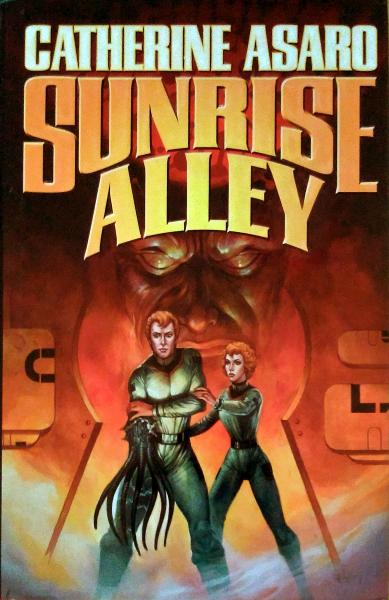
                • Cover of Sunrise Alley
                  Sunrise Alley

                  series · 2 books · 2004

                  similar byartificial intelligencenear futurescience fictiontense

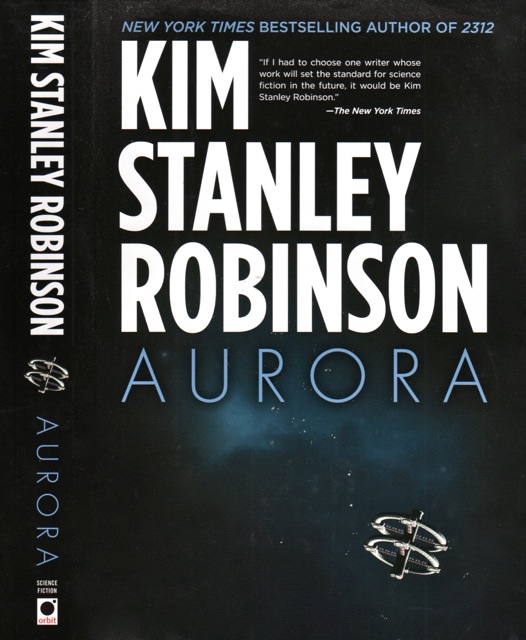
                • Cover of Aurora
                  Aurora

                  Kim Stanley Robinson · standalone novel · 2015

                  similar byartificial intelligencescience fictionchallenginghard science fiction

                  Aurora is a 2015 novel by American science fiction author Kim Stanley Robinson. The novel concerns a generation ship built in the style of a Stanford torus, traveling to Tau Ceti to start a human colony. The novel's primary narrative voice is that of the starship's artificial intelligence. Aurora was well received by critics.

                • Cover of The Stone Gods
                  The Stone Gods

                  Jeanette Winterson · standalone novel · 2007

                  similar byartificial intelligencenear futurescience fictionchallenging

                  The Stone Gods is a novel written by Jeanette Winterson. Published in the year 2007, the novel is a post-apocalyptic, postmodern, dystopian love story, with themes of corporate government control, the harshness of war, artificial intelligence, and technology. The novel is self-referential as characters make inter-textual references, while certain characters’ story arcs repeat. The novel aims to warn against history's tendency to repeat itself, as well as humanity's inability to learn from past mistakes.

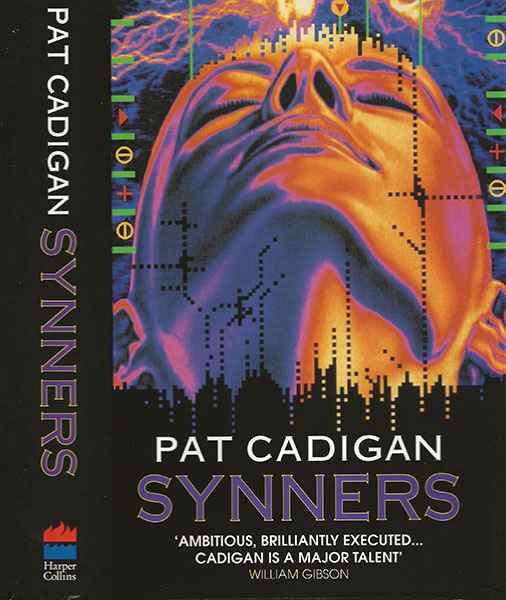
                • Cover of Synners
                  Synners

                  Pat Cadigan · standalone novel · 1991

                  similar byartificial intelligencenear futurescience fiction+2 more

                  In Synners, the line between technology and humanity is hopelessly slim. A constant stream of new technology spawns crime before it hits the streets; the human mind and the external landscape have fused to the point where any encounter with "reality" is incidental.