More like Zero-G
anchored on:science fictionprison escapespace stationfar futuretensethriller & suspense+1 more
but
- The Status Civilization
Robert Sheckleystandalone novel1960
similar bytensefar futureprison escapescience fictionsurvivaldystopia
"Will Barrent had no memory of his crime ... but he found himself shipped across space to a brutal prison-planet. On Omega, his only chance to advance himself -- and stay alive -- is to commit an endless series of violent crimes. The average inmate's life expectancy from time of arrival is three years. Can Barrett survive, escape, and return to Earth to clear his name?" - From the cover of the 2007 Wildside paperback edition.
- The Hunger Games Universe
universe5 books2008
Start hereThe Hunger Games · Start here
similar bytensefar futurescience fictionsurvivaldystopia+1 more
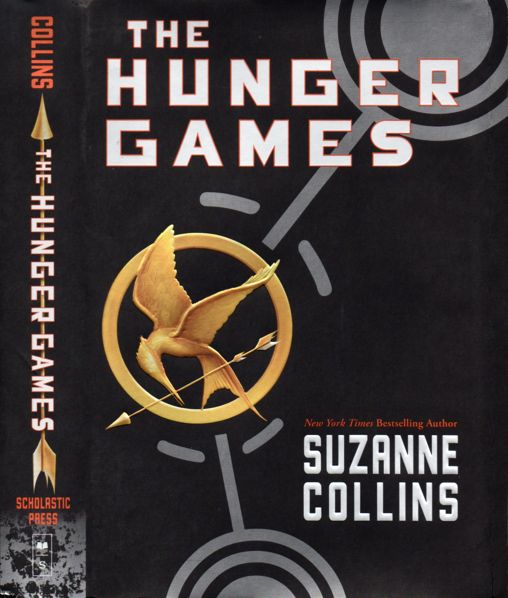
Panem, they call it now — a nation raised on the drowned bones of North America, a glittering Capitol ringed by twelve districts it once starved into obedience. Every year the Capitol collects its debt in children: two tributes from each district, drawn by lottery, dropped into an engineered arena, and made to kill one another on live television while the whole country is required to watch. This is the Hunger Games — entertainment, punishment, and government at once. Suzanne Collins tells it in a compact, unified body of work. The founding trilogy — The Hunger Games, Catching Fire, and Mockingjay — follows Katniss Everdeen, a girl from the coal-mining District 12 who volunteers in her sister's place and becomes something the Capitol never scripted. Two prequels reach back into the same machinery: The Ballad of Songbirds and Snakes traces a young Coriolanus Snow long before he is President, and Sunrise on the Reaping returns to District 12 a generation ahead of Katniss. Begin with the trilogy, in order — it is Katniss's voice, close and present-tense, that makes Panem breathe, and the prequels land hardest once you know how her story ends. Beneath the spectacle sits one steady, uncomfortable question: who profits when we agree to look away.
- The Hunger Games
series3 books2008
part of The Hunger Games Universe
similar bytensefar futurescience fictionsurvivaldystopia
The Hunger Games is a series of young adult dystopian novels written by American author Suzanne Collins. The series consists of a trilogy that follows teenage protagonist Katniss Everdeen, as well as two prequels. The Hunger Games universe is a dystopia set in Panem, a post-apocalyptic North American country consisting of the wealthy Capitol and 12 districts in varying states of poverty. As punishment for rebellion, the Capitol hosts an annual battle royale competition called The Hunger Games. Each of the 12 districts must send two children between the ages of 12 and 18 to participate, and the last surviving child is dubbed the victor.
- Company Wars
series7 books1981
part of Alliance-Union Universe
similar bytensefar futurescience fictionpolitical intrigue+2 more
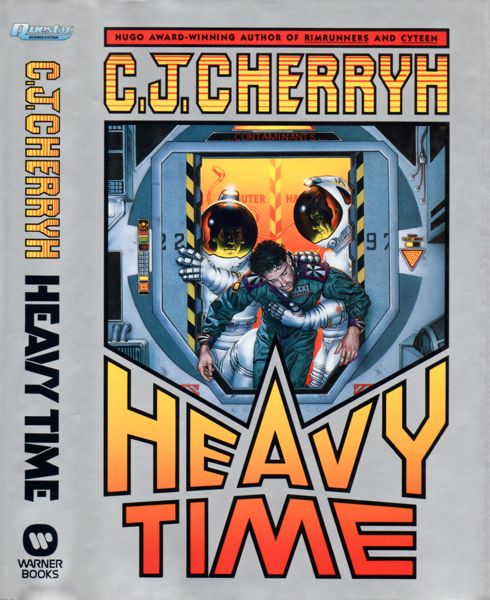
Company Wars gathers the novels C. J. Cherryh set during the breakaway conflict between Earth's colonial Company and the newly independent Union, within her wider Alliance-Union future history. Anchored by the Hugo Award-winning Downbelow Station, the books follow different ships, stations, and crews caught on either side, from merchanter traders to military spacers, rather than a single continuing cast. Read in any order, they build up a picture of the political and economic pressure that reshapes Cherryh's larger Alliance-Union universe.
- The Chrysalids
John Wyndhamstandalone novel1955
similar bytensefar futurescience fictionsurvival+1 more
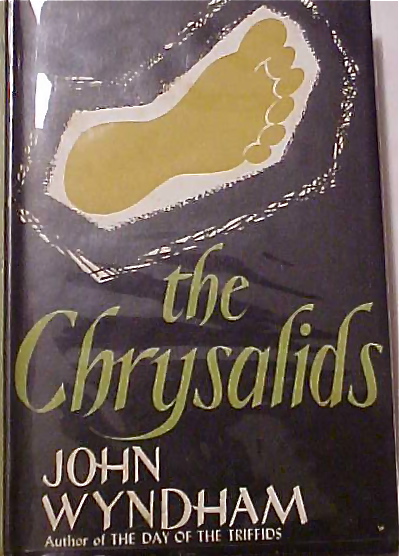
The Chrysalids is a science fiction novel by British writer John Wyndham, first published in 1955 by Michael Joseph. It is the least typical of Wyndham's major novels, but regarded by some as his best. An early manuscript version was entitled Time for a Change.
- Gravity
Tess Gerritsenstandalone novel1999
similar bytensespace stationscience fictionsurvivalthriller & suspense
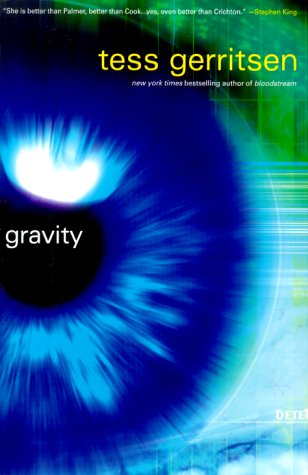
Medical thriller set aboard the International Space Station where astronauts are dying one by one from a mysterious disease. Dr Emma Watson is a research physician on a mission to study living organisms in space. But the mission aboard the space station turns into a nightmare.
- Endgame Enigma
James P. Hoganstandalone novel1987
similar bytensespace stationscience fictionprison escapethriller & suspensepolitical intrigue
From back cover Bantam paperback November 1988: IT MIGHT BE A STEP BEYOND STAR WARS... AND ONE STEP CLOSER TO WORLD WAR III. It is the near future. With its power and influence waning, the Soviet Union has launched Valentina Tereshkova, a giant space station capable of housing 12,000 citizens, into orbit around the earth. But is the colossal off-world colony the peaceful Utopian experiment it's alleged to be? Or is it the last desperate weapon of a crumbling superpower bent on global domination? U.S. computer scientist Paula Bryce and agent Lew McCain are sent to learn the truth -- only to find themselves trapped in the station's awesome prison facility. With a brilliant and eccentric group of dissident inmates, Bryce and McCain seek to unlock from within the secret of the mysterious station. But how will they ever report their findings? In an international powder keg, even unconfirmed suspicions could force a terrifying first strike... while the only hope for mankind rests with two Americans trapped in a prison they can't possibly escape...
- Prison Planet
William C. Dietzstandalone novel1989
similar bytensefar futureprison escapescience fictionsurvival
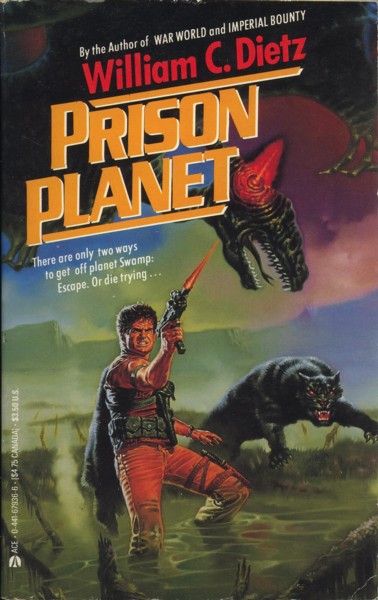
Convicted of a crime he did not commit, Jonathan Renn is sentenced to life in the Swamp, a prison planet death row in a distant galaxy. Renn only has two choices, escape the Swamp or die in the process. Defending himself from attacks by deadly, native monster and his fellow convicts, Renn is obsessed with escaping the planet and getting his revenge on the people who set him up. Marla Marie Mendez is even more down on her luck. Trapped inside a cybernetic dog and dropped defenseless into the Swamp, Marla can only rely on Renn and her claws to save her from the unfriendly elements. They must find a way out of the Swamp and quick before their life sentence is cut short.
- The Dosadi Experiment
Frank Herbertstandalone novel1977
similar bytensefar futurescience fictionsurvivalpolitical intrigue
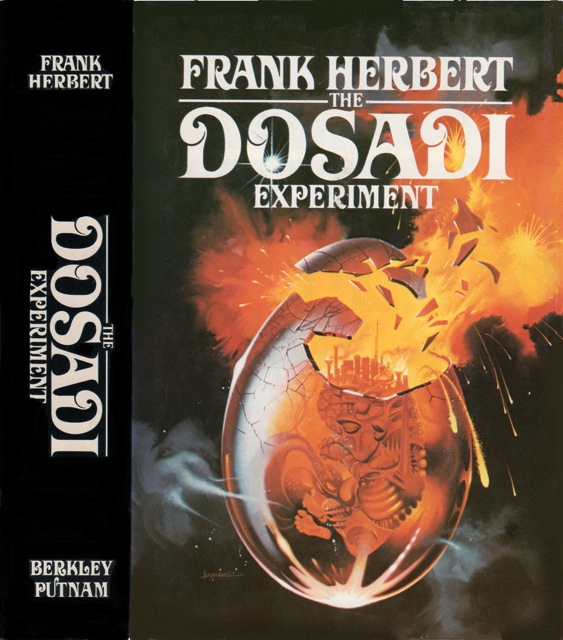
From the flaps of the Berkley Putnam first edition: "In his first new work of science fiction since the best-selling Children of Dune, Frank Herbert returns to his world of Whipping Star, and involves Jorj X. McKie, Saboteur Extraordinary, in a new intrigue. In Whipping Star, McKie discovered that some of the stars in the universe are actually intelligent, super-powerful beings, and was able to befriend one of them, the star Alcyone - affectionately known as Fannie Mae. As The Dosadi Experiment opens, McKie is assigned to investigate the planet Dosadi, which is isolated from the rest of the galaxy by a "god-wall," a barrier set up by one of the intelligent stars. Dosadi is rumored to be an experimental planet, and the experimenters are the froglike Gowachin, whose culture is founded upon a strange legal system in which McKie is the only human ever trained. He learns that humans and Gowachin have been placed on Dosadi, without their consent, for an experiment that could last centuries: an experiment in extreme overcrowding. But this monstrous plot is apparently out of control, and it seems the Gowachin may be prepared to destroy Dosadi rather than expose its secret, thus breaking the peace among the races, and starting the first interstellar war. But this is just the beginning. When McKie finally reaches Dosadi he discovers that the Dosadis have taken control of their own evolution and produced a competitive, highly evolved elite, of both humans and Gowachin, who have been able to extrapolate the existence of a universe beyond the god-wall and hate whoever has imprisoned them like this. They plan to break out and avenge themselves on the galaxy."
- The Eyes of Heisenberg
Frank Herbertstandalone novel1966
similar bytensefar futurescience fictionthriller & suspense
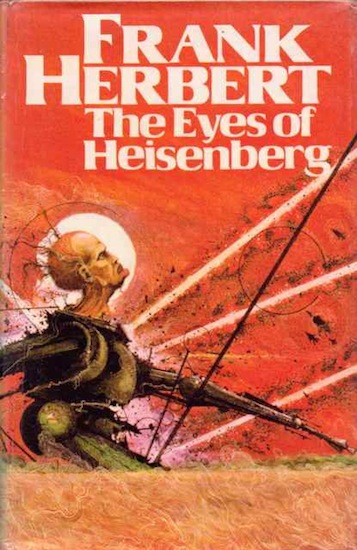
Tens of thousands of years in the future, Earth is ruled by the Optimen, a genetically engineered aristocracy that has made itself functionally immortal, while ordinary people, the Folk, live under strict reproductive control. When Harvey and Lizbeth Durant arrive to have their embryo genetically screened, the examining doctor finds something in the child no one has seen in a very long time: real potential for both fertility and life span, traits the Optimen have arrogated to themselves. Rather than destroy the embryo as policy demands, the doctor hesitates, setting off a chain of surveillance, suspicion and resistance. A tightly wound Frank Herbert thriller about genetic caste and rebellion.
- Colony
Ben Bovastandalone novel1978
similar bytensespace stationscience fictionsurvivalpolitical intriguedystopia
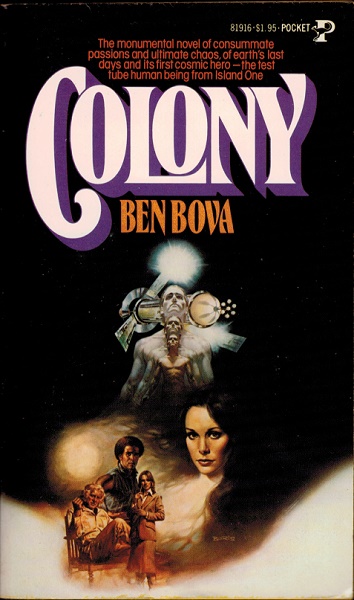
Colony continues the story Ben Bova began in Millennium, following astronaut-turned-administrator Chet Kinsman years later as the head of an orbiting space habitat that has become Earth's only real refuge from a planet buckling under overpopulation, food shortages and unrest. Getting a place in the habitat is a matter of life and death for millions who will never be chosen, and as Earth's governments grow more desperate to control or dismantle the colony outright, Kinsman has to decide how far he'll go to protect the world he's built off-world. Bova later folded both novels together into the omnibus The Kinsman Saga. Part of Ben Bova's Chet Kinsman series.
- In the Company of Others
Julie E. Czernedastandalone novel2001
similar bytensespace stationfar futurescience fictionsurvival
When humans set out to explore the universe, they found a number of planets suitable for colonizing. The one thing they didn't find was intelligent life. And so the terraforming of worlds began, with eager immigrant families temporarily housed in space stations till their new home planets were ready. But the technicians made one all important mistake by introducing the alien Quill to worlds where they did not belong. The Quill were supposed to be destroyed when the crews finished their work, but some survived, multiplied, and mutated till they were no longer harmless. They were deadly. Suddenly mankind was in retreat, leaving colonists stranded in space. In the ensuing chaos many stations failed. For the survivors, the only hope lay in finding a way to wipe out the Quill. Earth scientist, Dr. Gail Smith, thought one special human, Aaron Pardell, might hold the answer. Found as a baby and raised by a stationer in the "Outsider" settlement that clung to Thromberg Station, Aaron may have survived Quill contact. Still, finding Aaron and winning his help might be the least of Dr. Smith"s problems.... (from the back cover of the DAW Books first edition)
- Dune Universe
universe78 books1963
Start hereDune · Start here
similar byfar futurescience fictionpolitical intrigue+1 more
Arrakis. Dune. The desert planet, where empire runs on a single substance: the spice melange, which folds space, prolongs life, and unlocks prescience, and which exists nowhere else in the known universe. Frank Herbert's saga is a meditation dressed as an adventure — feudal houses and a secret sisterhood, engineered messiahs and the patient ecology of a world without water, all turning on the terrible gravity of who commands the spice. It reads like scripture and schemes like a war room, ten thousand years hence, among people who have outlawed the thinking machine and made instruments of themselves instead. At its heart stand Herbert's original six — Dune, Dune Messiah, Children of Dune, God Emperor of Dune, Heretics of Dune, Chapterhouse: Dune — a single deepening arc across millennia, arguing the whole way between prophecy and free will. Around that spine his son Brian Herbert and Kevin J. Anderson have raised a vast prequel architecture: Prelude to Dune, tracing the great houses a generation before Paul; Legends of Dune, reaching back to the crusade that broke the machines; the Schools of Dune cycle on the founding of Bene Gesserit, Mentat, and Navigator; the Caladan Trilogy and Heroes of Dune filling years the originals left in shadow. Many hands, dozens of volumes, one desert. What sets Dune apart is its refusal of the simple: religion is manufactured, heroes are hazards, and the sand itself — worm, water, ecology — acts as a political power. Begin where the universe did, with Frank Herbert's Dune (1965), and read the original six in order; you need nothing else to feel the full weight. The prequels are a country to explore afterward, taken by era. Beginnings are delicate times.
- Dune
series20 books1963
part of Dune Universe
similar byfar futurescience fictionpolitical intrigue+1 more
Frank Herbert's Dune Chronicles opens with 1965's Dune, set on the desert planet Arrakis where House Atreides takes control of the only source of the vital spice melange and young Paul Atreides is pulled into a struggle over its politics and religion. Herbert carried the story forward across five further novels — Dune Messiah, Children of Dune, God Emperor of Dune, Heretics of Dune, and Chapterhouse: Dune — following Paul's line over the following millennia, before Brian Herbert and Kevin J. Anderson later extended the saga. Many other editions of these six novels are omnibus and box-set repackagings rather than separate stories.
- The Puppet Masters
Robert A. Heinleinstandalone novel1951
similar bytensescience fictionsurvival+1 more
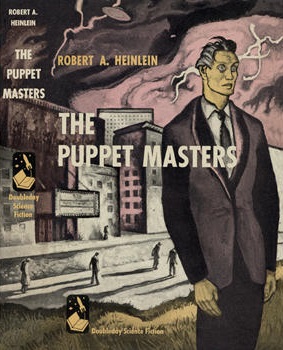
Parasitical aliens attach themselves to human hosts and take over their bodies. Two spies are sent to find out what's happening, but the extent is much farther than they knew. With access to the humans' memories, the aliens quietly invade the government and start taking over.
- Tunnel in the Sky
Robert A. Heinleinstandalone novel1955
similar bytensefar futurescience fictionsurvival
As the final test of a survivalist/explorer class, teenagers are dumped on an alien planet to use their skills while awaiting pickup. But something has gone wrong, and they find they are on their own.
- The Fluger
Doris Piserchiastandalone novel1980
similar bytensespace stationfar futurescience fictionsurvival
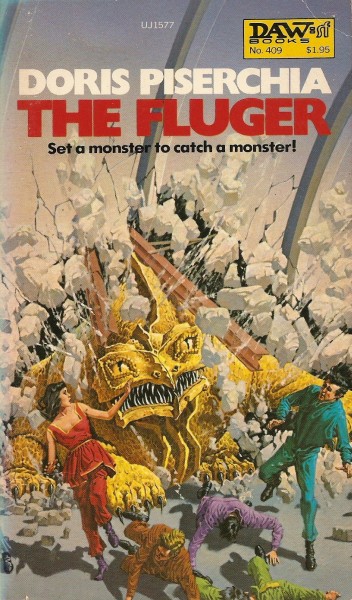
Amazon: The Fluger was five meters long, had four thick legs, a body of impenetrable molecular density and numerous teeth capable of chewing diamonds into powder. It was four hundred massive kilos of violence, savagery and hatred. When the Fluger arrived as unlisted cargo in the enclosed city of Olympus, it launched itself on a murderous rampage which couldn't be halted. It presented that terrified utopian community with the problem of how to stop an irresistible force. The only answer seemed to be a hired alien assassin - an outer-space humanoid about whom the citizens of Olympus knew next to nothing except that he was a professional killer who would not quit until his job was done. But when the irresistible force met the immovable object they turned that fragile city in the sky into a raging battlefield, and their 'savior' looked to become as much of a menace as his monster counterpart.
- The City in the Middle of the Night
Charlie Jane Andersstandalone novel2019
similar bytensefar futurescience fictionsurvivaldystopia+1 more
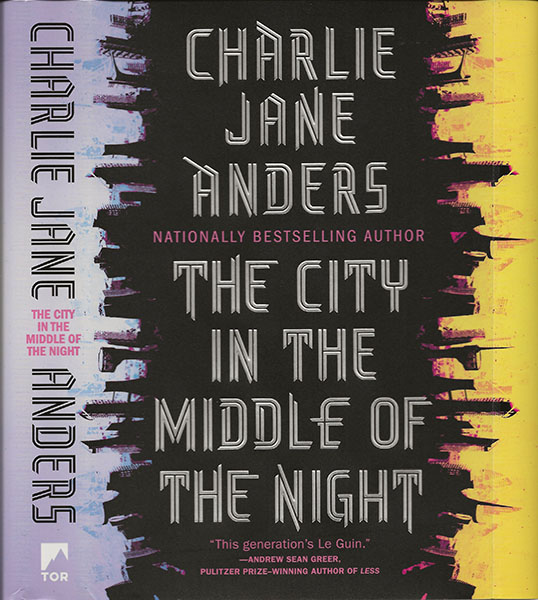
The City In the Middle of the Night is a 2019 climate-fiction novel by Charlie Jane Anders. It is set on a tidally locked planet, where human life, surrounded by hostile alien life, is mostly divided between two archetypically different urban sites. The main story focuses on two characters whose actions take them outside of the cities.
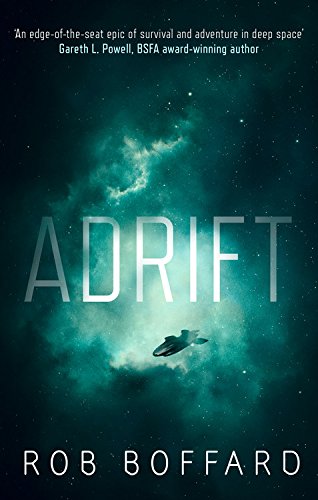
- Adrift
Rob Boffardstandalone novel2018
similar bytensefar futurescience fictionsurvivalthriller & suspense
"Sigma Station. The ultimate luxury hotel, in the far reaches of space. For one small group, a tour of the Horsehead Nebula is meant to be a short but stunning highlight in the trip of a lifetime. But when a mysterious ship destroys Sigma Station and everyone on it, suddenly their tourist shuttle is stranded. They have no weapons. No food. No water. No one back home knows they're alive. And the mysterious ship is hunting them" -- Back cover.
- The Running Man
Stephen Kingstandalone novel1982
similar bytensescience fictionsurvivalthriller & suspensedystopia
The Running Man is a dystopian thriller novel by American writer Stephen King, first published under the pseudonym Richard Bachman in 1982 as a paperback original. It was collected in 1985 in the omnibus The Bachman Books. The novel is set in a dystopian United States during the year 2025, in which the nation's economy is in ruins and world violence is rising. The story follows protagonist Ben Richards as he participates in the reality show The Running Man, in which contestants win money by evading a team of hitmen sent to kill them.
- Night Walk
Bob Shawstandalone novel1967
similar bytensefar futurescience fictionsurvival
Night Walk is a science fiction novel by Bob Shaw, first published in 1967. It was his first novel.