More like Zlo
but
- Stephen King multiverse
universe46 books1967
Start hereThe Gunslinger · Start here
similar bydark+4 more
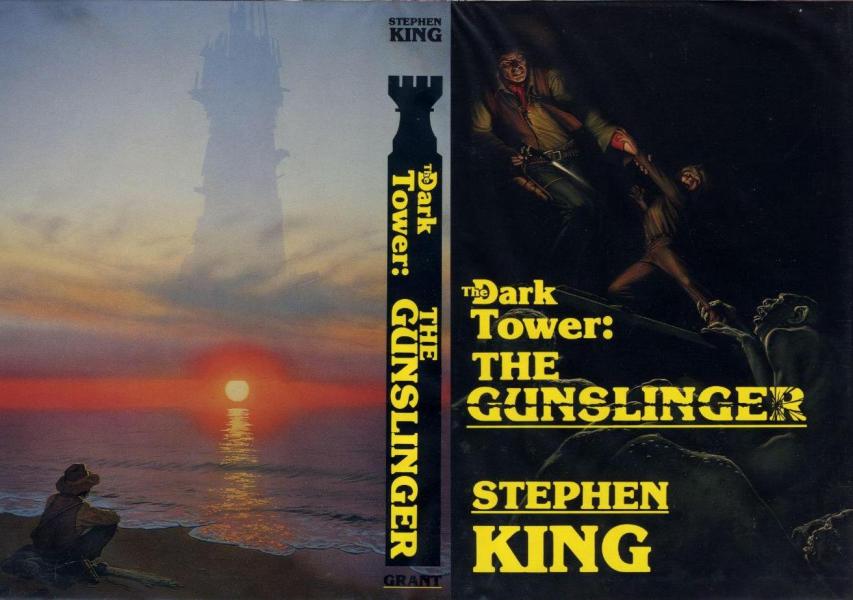
The man in black fled across the desert, and the gunslinger followed. So begins the long walk of Roland Deschain, last of an order of knight-errant pistoleers, across a land that has "moved on" — where the compass points drift, dead machines rot toward sentience, and the weave of what's real wears thin. His quest is the Dark Tower itself: a spire standing at the hub of every world that exists, the linchpin that holds all of them back from ruin. Roland's road runs eight volumes, from The Gunslinger through the closing Dark Tower, with the later, interleaved tale The Wind Through the Keyhole folding a story-within-a-story back into his youth. Along the way he draws a ka-tet — a fellowship bound by fate, not choosing — through doorways between worlds: a heroin-shackled New Yorker, a woman of two minds, a boy who dies twice. The Tower is also the secret axle around which the wider shelf of King's work turns; threads from The Stand, 'Salem's Lot and beyond wind quietly toward it. Expect a mongrel of Western, high fantasy, horror and decayed science fiction, told in a dusty, incantatory dialect all its own — ka, thankee-sai, the world that has moved on. This is King at his most mythic and most personal, a decades-spanning circle that rewards a patient reader. Begin at the beginning: The Gunslinger, then walk forward in publication order. There are other worlds than these — but this door opens first.
- Thomas Covenant the Unbeliever
series11 books1977
similar bysecondary worlddark
The Chronicles of Thomas Covenant is a series of ten high fantasy novels written by American author Stephen R. Donaldson. The series began as a trilogy, The Chronicles of Thomas Covenant the Unbeliever. This was followed by another trilogy, The Second Chronicles of Thomas Covenant, and finally a tetralogy, The Last Chronicles of Thomas Covenant.
- Demon Cycle
series10 books2008
part of The Demon Cycle
similar bysecondary worlddark fantasy+3 more
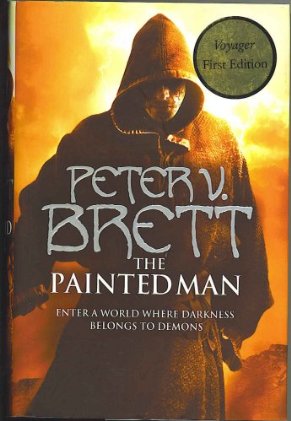
Peter V. Brett's Demon Cycle is set in a world where nightly demon attacks have driven humanity behind protective magical wards, following several point-of-view characters, including Arlen Bales and Leesha Paper, who each search for ways to fight back after centuries of retreat. The core story runs across five novels plus companion novellas.
- The Broken Earth
series5 books2014
similar bysecondary worlddarksurvival+2 more
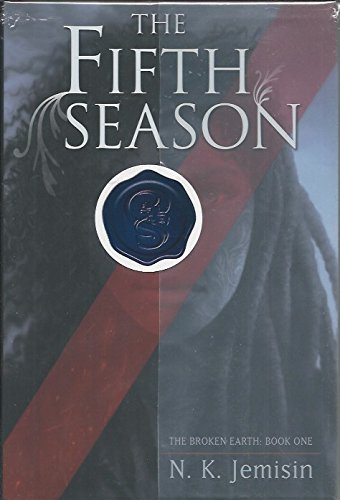
N. K. Jemisin's Broken Earth trilogy is set on the Stillness, a single supercontinent wracked every few centuries by civilization-ending climate catastrophes called Fifth Seasons. It follows orogenes, people born with the power to move earth and quell earthquakes, who are trained and controlled by the state even as they are feared and despised. The Fifth Season, the opening volume, traces three women revealed to be the same person at different stages of her life, setting up the two sequels that follow her search for her daughter after an orogene shatters the continent.
- The Demon Cycle
universe18 books2008
Start hereDemon Cycle · Start here
similar bysecondary world+4 more
When the sun goes down, the ground breathes out murder. Mist seeps up from the Core, hardens into flame and rock and wind given teeth, and the only thing between a sleeping family and the corelings is a ring of wards — glyphs scratched in the dust that hold as long as the lines stay unbroken. Miss one stroke and you are meat by morning. This is Peter V. Brett's world: a humanity three centuries into a losing siege, huddled in the dark, waiting on a Deliverer half of them no longer believe will come. The Demon Cycle runs five volumes — The Warded Man (published in Britain as The Painted Man), The Desert Spear, The Daylight War, The Skull Throne, and The Core — following a messenger who tattoos the lost combat-wards into his own skin, a healer, a fiddler whose music turns demons aside, and a desert warlord who claims the prophecy for himself. Around them sit shorter works (Brayan's Gold, Messenger's Legacy, Barren), and beyond them the ongoing Nightfall Saga — The Desert Prince, The Hidden Queen — carrying the next generation into a war their parents did not finish. At its heart is a quarrel over faith and fire: the mannered Free Cities against fanatic, sand-hard Krasia, two would-be saviors who cannot both be right, and a lost art of war-magic that could turn prey into hunters. Begin with The Warded Man and read straight through in publication order; the novellas keep, for later, once the dark is under your skin.
- Demonata
series10 books2005
similar bydark fantasyhorrordarktense+1 more
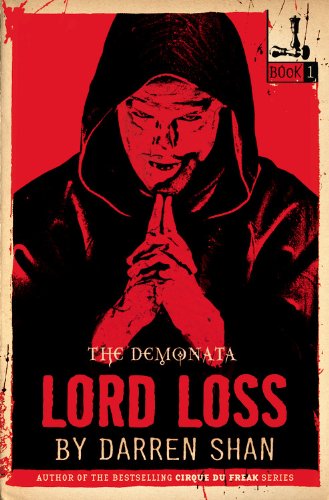
The Demonata is a young adult horror/fantasy series by author Darren Shan.
- Malazan
universe36 books1999
Start hereMalazan Book of the Fallen · Start here
similar bysecondary worlddark+2 more
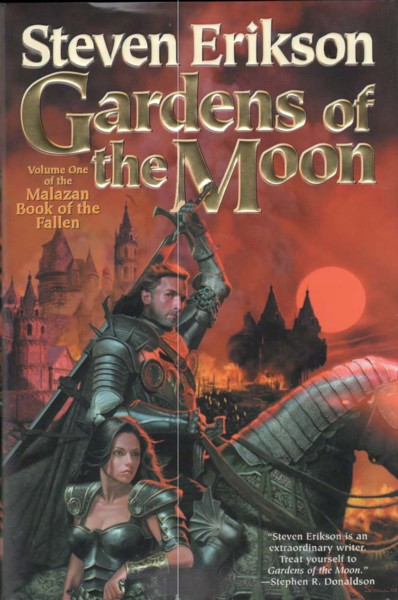
Pity the historian who tries to map this world; pity more the god who thinks he rules it. The Malazan Empire marches across continents on the boots of its common soldiers, and above them move Ascendants — mortals grown into something like gods, and gods worn thin as old coin. Magic is drawn from Warrens, roads of power threaded through reality; the dead keep their grudges; and every empire, however vast, is a wager against time. This is epic fantasy told from the mud, where a sapper cracking a joke weighs as much as an immortal settling a feud older than the human race. The world began as a tabletop campaign two friends built in the 1980s, and it still moves by two hands. Steven Erikson's ten-volume Malazan Book of the Fallen is the spine — Gardens of the Moon, Deadhouse Gates, Memories of Ice, on through The Crippled God — each book a near-standalone campaign that only later reveals how it locks together. Ian C. Esslemont walks the same years from a different vantage in his Novels of the Malazan Empire (Night of Knives, Return of the Crimson Guard onward). Around them stand the prequels: Erikson's Kharkanas Trilogy, archaic and elegiac, chronicling a doomed elder people, and Esslemont's brisker Path to Ascendancy, following two adventurers before they became legends. Erikson's Witness sequence carries the tale forward, and novellas of the genial necromancers Bauchelain and Korbal Broach supply the gallows comedy. Nothing is explained to you; comprehension is earned, and that is the pleasure. The themes run deep — compassion set against cruelty, the toll empires charge, civilizations that fall and are mourned. Begin where the saga does, with Erikson's Gardens of the Moon, and read the ten in publication order; the prequels are for the already-initiated. Trust that confusion is the price of entry.
- Malazan Book of the Fallen
series20 books1999
part of Malazan
similar bysecondary worlddark fantasydark+2 more
The Malazan Book of the Fallen is a series of epic fantasy novels written by the Canadian author Steven Erikson. The series, published by Bantam Books in the U.K. and Tor Books in the U.S., consists of ten volumes, beginning with Gardens of the Moon (1999) and concluding with The Crippled God (2011). Erikson's series presents the narratives of a large cast of characters spanning thousands of years across multiple continents.
- Jerusalem's Lot
series3 books1975
similar bygrief and losshorrordarktense+1 more
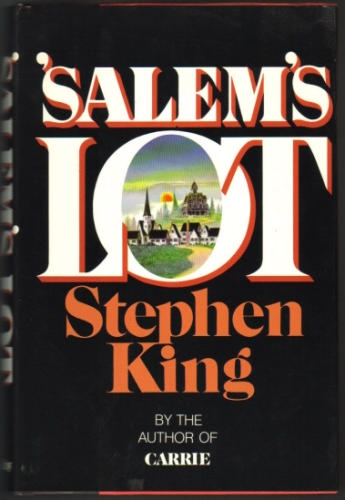
Stephen King's 1975 novel 'Salem's Lot follows writer Ben Mears as he returns to his childhood town of Jerusalem's Lot, Maine, only to discover that its residents are being turned into vampires by a newly arrived stranger. It transplants Gothic vampire horror into a small New England community, tracking that community's collapse under a supernatural siege. It is a single, self-contained novel.
- A Song of Ice and Fire
series14 books1996
part of World of Ice and Fire
similar bysecondary worlddark+2 more
A Song of Ice and Fire is a series of high fantasy novels by the American author George R. R. Martin. Martin began writing the first volume, A Game of Thrones, in 1991, and published it in 1996. Martin, who originally envisioned the series as a trilogy, has released five out of seven planned volumes. The most recent entry in the series, A Dance with Dragons, was published in 2011. Since then, Martin has been working on the sixth novel, titled The Winds of Winter. A seventh novel, A Dream of Spring, is planned to follow.
- The Circle of the World
universe29 books2006
Start hereThe Blade Itself · Start here
similar bysecondary world+2 more
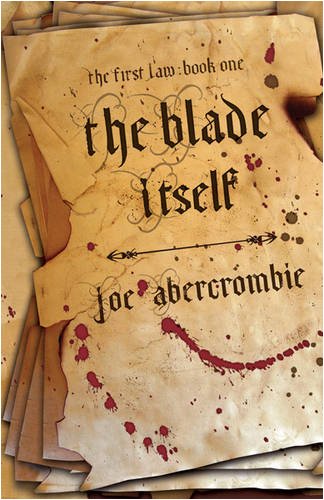
You want heroes? Best look elsewhere. The Circle of the World has kings and wizards and famous barbarians enough, but scratch any of them and you'll find a coward, a schemer, or a killer who's simply better at it than the rest. This is Joe Abercrombie's fantasy world: a grimy, blood-soaked continent where the fat and corrupt Union squats between the savage North and the scheming South, and where every noble cause turns out to have a knife hidden behind it. It opens with the First Law trilogy — The Blade Itself, Before They Are Hanged, Last Argument of Kings — following a crippled torturer with a razor wit, a weary Northman who would dearly like to stop fighting and can't, and a bald old wizard whose plans run older and colder than anyone guesses. Three self-contained standalones share the same ground and a familiar face or two: Best Served Cold takes its revenge across sunlit, murderous Styria; The Heroes crushes a whole war into three days over one worthless hill; Red Country rides the frontier. Short pieces (Sharp Ends) fill the gaps, and a generation on, the Age of Madness trilogy drags the old survivors into an age of factories, mobs, and revolution. What sets it apart is the honesty of its cynicism — close, sardonic points of view, gallows humour, and a flat refusal to let anyone stay clean. Violence carries a cost here; victory rarely settles anything; the wheel just turns and grinds someone new under it. Abercrombie recommends reading in publication order, and it's the right call: begin with The Blade Itself and let the world curdle around you. You have to be realistic about these things.
- An Ember in the Ashes
series4 books2015
similar bysecondary worldtense+1 more
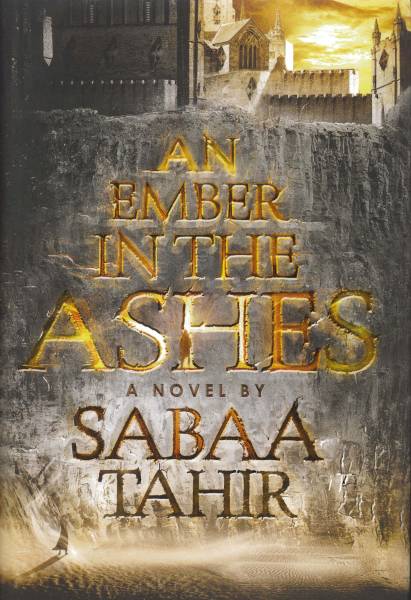
An Ember in the Ashes, set in a fantasy world modeled on ancient Rome, alternates between Laia, who spies on a brutal military academy for rebels in exchange for help freeing her imprisoned brother, and Elias, one of that academy's most skilled soldiers trying to break free of the empire he's been raised to serve. Sabaa Tahir's quartet, continuing through A Torch Against the Night, A Reaper at the Gates, and A Sky Beyond the Storm, follows the two toward a reckoning with the empire that trained one of them to enforce it.
- The Library at Hellebore
Cassandra Khawstandalone novel2025
similar bysecondary worlddark fantasyhorrordarktensesurvival
The Library at Hellebore is a 2025 horror novel by Cassandra Khaw. It has been described as dark academia. The novel tells the story of a group of students with dangerous powers who are sent to Hellebore Institute. The faculty attacks the students, who seek shelter in the school's library in a bid for survival.
- Tender Morsels
Margo Lanaganstandalone novel2008
similar bygrief and losssecondary worlddark fantasydark
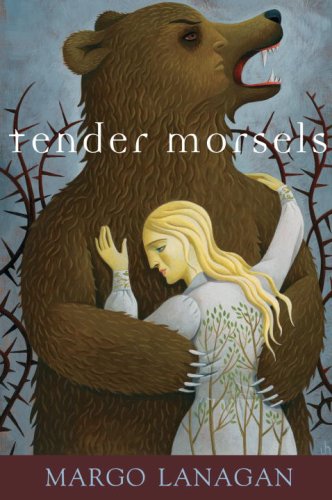
Tender Morsels (2008) is a novel by Australian author Margo Lanagan. It won the Ditmar Award in 2009 for Best Novel and was joint winner of the 2009 World Fantasy Award for Best Novel.
- Darwath
series7 books1982
similar bysecondary worlddark+3 more
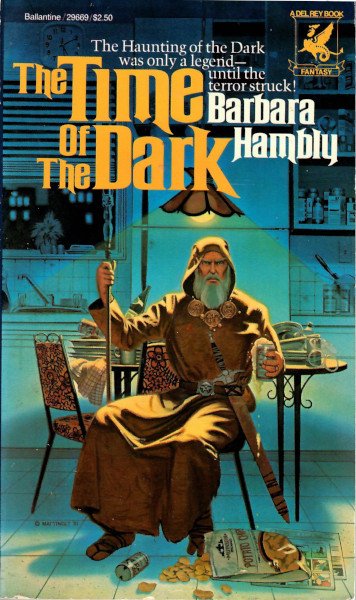
Darwath begins with two modern-day Californians pulled through a portal into a dying medieval world under siege from the Dark, shape-shifting monsters that hunt by night and are driving civilization underground. The Time of the Dark, The Walls of Air, and The Armies of Daylight make up the original trilogy; Barbara Hambly returned to the same characters decades later in Mother of Winter and Icefalcon's Quest. It's portal fantasy built around practical, unglamorous survival rather than chosen-one heroics.
- Deerskin
Robin McKinleystandalone novel1993
similar bygrief and losssecondary worlddark fantasydark
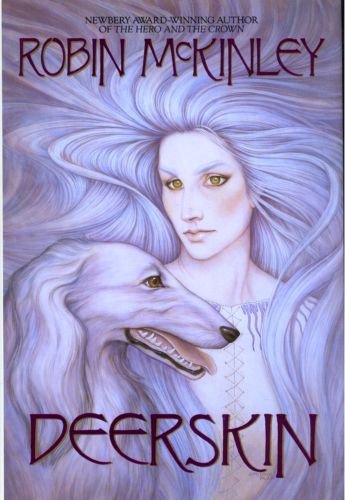
Deerskin is a dark fantasy novel by Robin McKinley, first published in 1993. It is based on an old French fairy tale by Charles Perrault called Peau d'âne. It was nominated for the Mythopoeic Fantasy Award for Adult Literature.
- Fairy Tale
Stephen Kingstandalone novel2022
similar bysecondary worlddark fantasydark+2 more
Fairy Tale is a dark fantasy novel by American author Stephen King, published on September 6, 2022, by Scribner. The novel follows Charlie Reade, a 17-year-old who inherits keys to a hidden, otherworldly realm, and finds himself leading the battle between forces of good and evil.
- The City (Shan)
series3 books1999
similar bysecondary worlddarktense+2 more
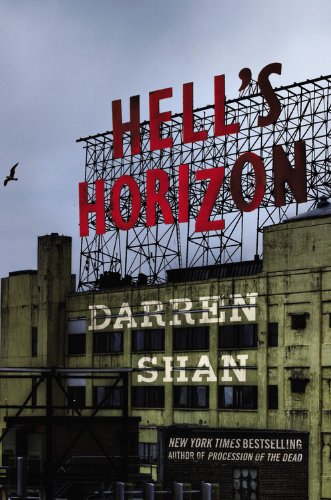
Darren O'Shaughnessy is an Irish writer and novelist. He is best known for his young adult fiction series The Saga of Darren Shan, The Demonata, and Zom-B, published under the pseudonym Darren Shan. The former was adapted into a manga series from 2006 to 2009 as well as a live-action film in 2009, with a prequel series, The Saga of Larten Crepsley, being released from 2010 to 2012.
- Shannara
universe50 books1977
Start hereWord and the Void · The very beginning of the timeline
similar bysecondary world+1 more
Long after the world we know has burned itself to slag in the Great Wars, the Four Lands rise green over the bones of the old age. Science is a forbidden memory; magic has come back into the world, and with it the old divisions — Men, Elves, Dwarves, Trolls, and Gnomes, each Race a splinter of what humanity became. This is the far-future Earth of Shannara, where the ruins buried beneath the soil are ours, and the only keepers of the vanished knowledge are the Druids of Paranor, who wake once a generation to meet the darkness rising again. Terry Brooks opened the Four Lands in 1977 with The Sword of Shannara and has charted its history for four decades since — a legendarium ordered not by throne but by a single bloodline, the Ohmsfords, each generation inheriting an Elfstone, a blade, or a wishsong when the age demands a hero. The original trilogy gives way to the Heritage of Shannara, the Voyage of the Jerle Shannara, the High Druid, Dark Legacy, Defenders, and the concluding Fall of Shannara; the Genesis of Shannara books reach back to the apocalypse itself, and the Word and the Void trilogy back further still, into a demon-haunted version of our own present that is the root of everything after. In 2025 Brooks passed the histories to Delilah S. Dawson to carry forward. What sets these books apart is their long memory: a world where every triumph is provisional, where the same evil returns wearing a fresh shape each age, and magic always exacts its price. The reading is warm and headlong — questing companies, old talismans, journeys across a mapped and named wilderness — shadowed by the knowledge that all of it stands on the wreckage of a former world. Enter as readers first did: with The Sword of Shannara, then onward in publication order. The chronological path, beginning with Word and the Void, rewards a second journey, once the Four Lands already feel like home.