Loreful
HomeDiscover
Search series, authors…⌘K
Loreful

Reading orders for SF/F series and shared universes — with your place kept in every one.

Explore

UniversesSeriesWorksAuthorsAtlas

Help

FAQAboutSite map

Account & legal

Sign inCreate accountPrivacyTerms

Data

Built on ISFDB, Wikipedia, Wikidata and Open Library. Curated reading orders carry their reasoning on the page; the rest follow publication order. Data sources & licenses

© Loreful · data: ISFDB · CC BY

More like Zombies Don't Surf

anchored on:zombie horrorour world

but

Mood

The mood the book leaves you in.

  • The reading experience is propelled by journeys, exploration, and physical risk; excitement and forward momentum dominate over dread or introspection.
  • Joy and loss are deliberately mixed; the resolution grants characters something real while taking something else away, leaving warmth and sorrow together.
  • The book demands work from the reader — dense prose, difficult structure, unfamiliar ideas, or morally uncomfortable material — as part of its intended effect.
  • Grim events, cruelty, or despair dominate the atmosphere, and the book does not soften them with comfort or comic relief.
  • The atmosphere is quietly unsettling — wrongness, unease, and the uncanny pervade the book without necessarily escalating into overt horror.
  • The book is built to move the reader; character feeling is foregrounded and major scenes aim at a strong emotional response.
  • Humor is a primary aim and the prose plays for laughs — comic situations, wit, or dialogue produce sustained comedy, not occasional levity.
  • The book insists that things can improve; effort and decency are shown to matter, and the arc bends toward better outcomes even through hardship.
  • The book teaches as it goes — real facts, history, science, or craft are conveyed in enough depth that learning is part of the reading experience.
  • The book is designed to uplift and motivate, presenting perseverance or achievement in a way that invites the reader to aspire or act.
  • The overall register is cheerful and easygoing; stakes are kept gentle and the book avoids dwelling on pain or dread.
  • Withheld information drives the experience; the book sustains enigmas and secrets the reader wants resolved, whatever its genre.
  • The book is contemplative and inward-looking, giving more weight to thought, memory, and meaning than to external events.
  • The book works as comfort reading — low tension, a soothing pace, and an atmosphere the reader can unwind in.
  • Grief, loss, or melancholy set the dominant register, and the book lets sorrow stand rather than resolving it into comfort.
  • Sustained suspense is the point; the book keeps the reader braced for what happens next through danger, pressure, or impending revelation.
  • Playful invention and charm define the register — fanciful conceits, light absurdity, and a narration that delights in its own oddity.

About

What the story runs on.

  • Stories in which extraterrestrial beings are central — as characters, cultures, or the object of the plot.
  • Stories about venturing into space to explore — survey missions, astronauts, and the frontier of the unknown beyond Earth.
  • Stories structured as a quest — a journey undertaken to find, deliver, or destroy something of great import.
  • Stories in which staying alive against nature, catastrophe, or scarcity is the central problem.
  • Stories of lovers kept apart by law, family, faith, or station, where the obstacle to love is the plot.
  • Stories in which a friendship — its making, testing, or loss — is the emotional center.
  • Stories of growing up — a young protagonist crossing from childhood into adult knowledge and responsibility.
  • Stories about who a character truly is — self-discovery, doubled lives, and the search for a self.
  • Stories in which a buried family truth — hidden parentage, crimes, or shames — surfaces and reorders the present.
  • Stories driven by maneuvering for power — factions, conspiracies, and statecraft conducted in shadow.
  • Stories in which war itself is the subject — combat, occupation, and what warfare does to soldiers and civilians.
  • Stories organized around investigating a killing — the case, the clues, and the pursuit of the killer, in any genre's clothing.

Shelf

Where it sits in the library.

    • Fiction built on magic or other supernatural elements that have no scientific explanation.
    • Secondary-world fantasy at large scale, where the fate of nations or the world turns on the protagonists' struggle.
    • Fantasy set in a recognizably modern city or contemporary world where the supernatural intrudes on everyday life.
    • Fantasy that blends in horror's atmosphere and imagery, keeping a fantastical frame around grim or frightening material.
    • Action-driven fantasy following warriors or rogues with personal stakes against sorcerous threats, rather than world-spanning conflicts.
    • Fantasy set in a real historical period or a close analogue of one, with magic woven into the era.
    • Fantasy in which protagonists cross from the ordinary world into another world through a portal or similar passage.
    • Fiction that retells or reworks a traditional fairy tale in a new form or setting.
    • Fantasy drawing directly on myths, legends, and folklore, retelling them or building on their figures and logic.
    • Fantasy of ghosts, vampires, shapeshifters, psychics, and similar phenomena, usually set in an otherwise ordinary world.
    • Fiction mixing science-fictional trappings with overtly magical or impossible elements in one setting.
    • Low-stakes fantasy emphasizing comfort, community, and everyday pleasures over conflict and peril.
    • Speculative fiction of pervasive moral ambiguity, violence, and cynicism that rejects heroic conventions — fantasy and SF alike.
      • Fiction that extrapolates from science and technology — future societies, space travel, or speculative inventions — within at least nominally natural laws.
      • Science fiction of interstellar scope — starships, galactic polities, and adventure across star systems.
      • Science fiction committed to scientific rigor, where technical plausibility constrains the story.
      • Science fiction centered on armed forces and warfare, told largely from a military point of view.
      • Science fiction of networked, corporate-dominated near futures, pairing high technology with social decay.
      • Science fiction styled on nineteenth-century steam-powered technology, often in a Victorian or pseudo-Victorian setting.
      • Fiction depicting an oppressive or catastrophic society, presented as a warning.
      • Fiction set after civilization's collapse, following survivors in the ruins of the old world.
      • Fiction in which characters move between past and future, and the mechanics or consequences of that travel drive the plot.
      • Fiction exploring a world where a historical event went differently and history diverged from ours.
      • Science fiction about humanity's first encounter and communication with an alien intelligence.
      • Science fiction in which extraterrestrial forces attack or occupy Earth and humanity resists.
      • Fiction whose primary aim is to frighten or unsettle the reader through dread, menace, or the monstrous.
      • Horror of vast, indifferent, incomprehensible entities before which humanity is insignificant, in the Lovecraft tradition.
      • Horror of decaying houses, buried family secrets, and oppressive atmosphere in the Gothic literary tradition.
      • Horror centered on hauntings and the returning dead.
      • Horror located in the mind — paranoia, obsession, and unreliable perception rather than external monsters.
      • Horror built around the reanimated dead and survival amid their outbreaks.
      • Horror defined by explicit, transgressive gore that refuses to cut away from violence.
      • Speculative fiction of the strange and uncanny that resists both natural explanation and standard genre categories.
      • Fiction organized around solving a crime or puzzle, typically following an investigator toward the identification of a culprit.
      • A puzzle-first mystery that lays out clues so the culprit's identity can be deduced before the reveal.
      • Crime fiction of moral ambiguity, fatalism, and hard-edged style, set among the corrupt and the doomed.
      • A mystery following the realistic routines of police work — forensics, interviews, and case-building.
      • A gentle mystery with an amateur sleuth, a small community, and violence kept off the page.
      • A mystery set in a past era, where the investigation works within that period's methods and society.
      • Fast-paced fiction driven by imminent danger, pursuit, or high-stakes conspiracy, built to sustain tension.
      • A thriller of espionage — agents, tradecraft, and intelligence services in conflict.
      • A thriller centered on lawyers and the courtroom, where litigation carries the suspense.
      • A thriller driven by detailed contemporary or near-future technology, often military or scientific.
      • A thriller whose tension comes from mental states and manipulation between characters rather than external action.
      • Fiction whose central plot is a romantic relationship and its development toward an emotionally satisfying resolution.
      • Romance in which one or both partners are supernatural beings, blending fantasy elements into the love story.
      • A fantasy-romance hybrid in which the romantic arc and the fantasy plot carry equal weight.
      • Romance set in a past era, with courtship shaped by the period's society and manners.
      • Romance set in the present day, without supernatural or historical elements.
      • Fiction set in a real past period, where the historical setting materially shapes characters and events.
        • General and literary fiction emphasizing prose style, character interiority, or formal ambition over genre plot conventions.
        • Fiction in a realistic world where magical events occur and are treated as ordinary, in the tradition of Latin American literature.
        • Fiction that ridicules people, institutions, or society in order to criticize them.
        • Fiction of dreamlike, irrational imagery and logic that breaks from realistic representation.
        • Fiction that plays with narrative convention through metafiction, fragmentation, and self-reference.
        • Fiction propelled by journeys, exploration, and physical peril, where action and survival carry the plot.
        • Adventure fiction of ships and seafaring — naval engagements, voyages, and life at sea.
        • Fiction of the American frontier West — gunmen, ranchers, and lawmen, typically in the late nineteenth century.
        • Fiction centered on soldiers, campaigns, and the experience of warfare, historical or imagined.
          • Fiction written primarily to amuse, using comedic situations, wit, or parody as its organizing principle.
            • Multi-generational fiction following a family or dynasty across decades, with inheritance and kinship as the through-line.
              • Fiction whose world runs on explicit game mechanics — levels, stats, and skills that characters can see and exploit.
                • Fiction about costumed or superpowered heroes and their conflicts with comparable villains.

                Practical

                How long a commitment, whether it stands alone, and whether it has finished.

                Tap a chip to ask for it · tap again to rule it out · once more to clear. Numbers show what would be left.

                • Cover of Service Model
                  Service Model

                  series · 3 books · 2024

                  similar byfunnyour worldnear futurescience fictionpost-apocalyptic+1 more

                • Cover of The Gone-Away World
                  The Gone-Away World

                  Nick Harkaway · standalone novel · 2008

                  similar bysurvivalnear futureour worldscience fictionpost-apocalyptic+1 more

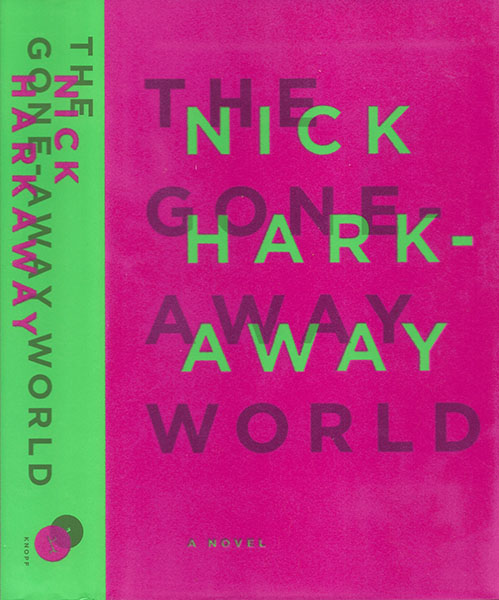
                  The Gone-Away World is the debut novel of British author Nick Harkaway, a science fiction story set in a post-apocalyptic world crippled by the 'Go-Away War'. The book was first published in June 2008 by Heinemann.

                • Cover of Bromeliad
                  Bromeliad

                  series · 3 books · 1989

                  completed

                  similar bysurvivalour world+2 more

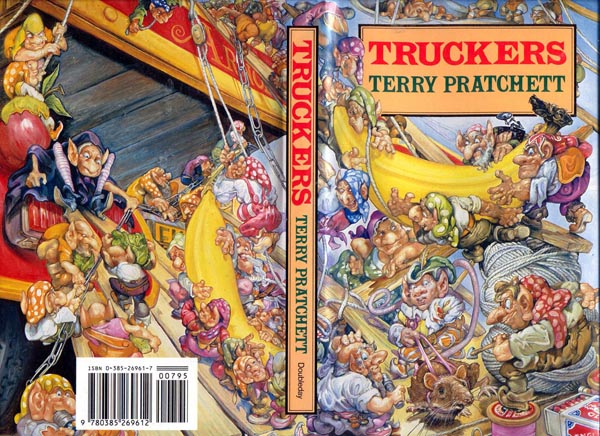
                  The Nome Trilogy, also known as The Bromeliad, is a trilogy of children's books by British writer Terry Pratchett, consisting of the books Truckers (1989), Diggers (1990) and Wings (1990). The trilogy tells the story of the Nomes, a race of tiny people from another world who now live hidden among humans. Through the books they struggle to survive in the human world and, once they learn of their history from an artefact known as "The Thing", make plans to return home.

                • Cover of Go-Go Girls of the Apocalypse
                  Go-Go Girls of the Apocalypse

                  Victor Gischler · standalone novel · 2008

                  similar bysurvivalfunnyour worldnear futurepost-apocalyptic

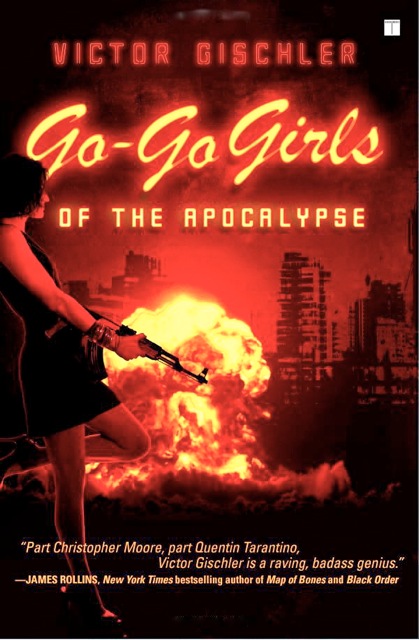
                  Ten years after the world ends, insurance salesman Mortimer Tate emerges from his well-stocked mountain hideout to find a desolate land populated by bandits, savages, cannibals, and a lone cowboy named Buffalo Bill, who becomes his sidekick in danger and exploration. Joined by Sheila and Tyler, two women who have made their own paths to survival, the group discovers the glue that holds a fragile civilization together?a franchise of strip clubs called Joey Armageddon's Sassy-a-Go-Go.

                • Cover of Forest of Hands and Teeth
                  Forest of Hands and Teeth

                  series · 9 books · 2009

                  similar bysurvivalzombie horrornear futurepost-apocalyptic+1 more

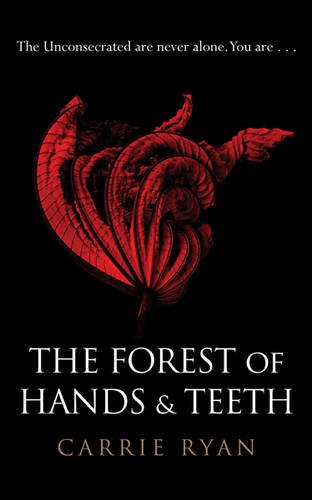
                  Carrie Ryan's debut trilogy is set generations after an apocalypse turned much of humanity into the mindless, cannibalistic "Unconsecrated," following young women in a small walled village whose protective fence keeps the undead out and its residents locked into a repressive, secretive society. The Forest of Hands and Teeth follows the first heroine's break from that village into the wider, undead-infested world; The Dead-Tossed Waves and The Dark and Hollow Places carry the aftermath forward through new narrators. It is YA horror more concerned with the fear and control inside the fences than with survivalist action.

                • Cover of H. G. Wells' War of the Worlds
                  H. G. Wells' War of the Worlds

                  universe · 65 books · 1898

                  Start hereThe War of the Worlds · Start here

                  similar byscience fiction+1 more

                  No one would have believed, in the closing years of the nineteenth century, that human affairs were being watched keenly and closely from the timeless worlds of space. And then the cylinders fell. H. G. Wells' War of the Worlds opens in the quiet of the Surrey commons, where a falling star proves to be the first Martian craft — and from the pit rise the towering tripods, the Heat-Ray, the choking Black Smoke and the creeping red weed, wielded by minds that regard mankind much as we regard the creatures we boil for supper. This is invasion rendered as natural disaster: cold, methodical, and vast beyond argument. Wells' 1898 novel is the seed; everything else grows from that Martian soil. The catalogue gathers direct sequels and continuations alongside a wide field of other hands. In War of the Worlds: Global Dispatches the invasion is retold across the whole planet through the eyes of Twain, Verne, Tolstoy, Lowell and Kipling; in the Manly Wade and Wade Wellman crossover, Sherlock Holmes, Watson and Professor Challenger take the field against the machines; and Scott Washburn's Great Martian War stretches the fighting into a decades-long alternate history of steam, artillery and grinding attrition. It is a loose shared world — no single decreed sequence, many voices answering one calamity. What sets this world apart is its refusal of heroics: the invaders fall not to generals but to the smallest things of Earth, humbling and indifferent. Begin, always, with Wells' original novel — it is short, and it is the ground every later book stands upon. From there follow your appetite: Global Dispatches for the panorama, the Holmes campaign for adventure, Washburn for the long war.

                • Cover of The Last Kids on Earth
                  The Last Kids on Earth

                  series · 12 books · 2015

                  similar bysurvivalfunnyscience fictionpost-apocalyptic+2 more

                  The Last Kids on Earth is a children's illustrated novel and subsequent book series by American author Max Brallier, illustrated by Douglas Holgate, with audiobook format narrated by Robbie Daymond. Novels in the series have been recognized on Best Seller lists of both The New York Times and USA Today. This book is recommended for teens/pre-teens in the "middle school" demographic. The series currently includes 10 books and has been adapted into an animated series by Netflix.

                • Cover of Zombie Novels
                  Zombie Novels

                  series · 2 books · 2011

                  similar bysurvivalzombie horrorpost-apocalyptic+2 more

                • Cover of Deadweight
                  Deadweight

                  series · 3 books · 2019

                  similar bysurvivalzombie horrorour worldnear futurescience fictionpost-apocalyptic

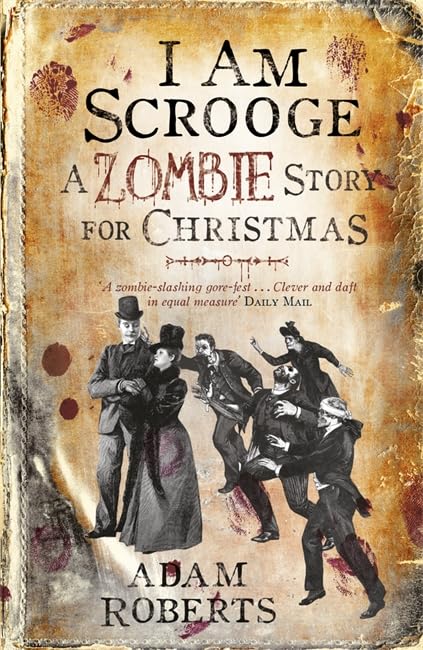
                • Cover of I Am Scrooge: A Zombie Story for Christmas
                  I Am Scrooge: A Zombie Story for Christmas

                  Adam Roberts · standalone novel · 2009

                  similar bysurvivalfunnyzombie horrorour world

                  Marley was dead. Again. The legendary Ebenezeer Scrooge sits in his house counting money. The boards that he has nailed up over the doors and the windows shudder and shake under the blows from the endless zombie hordes that crowd the streets hungering for his flesh and his miserly braaaaiiiiiinns! Just how did the happiest day of the year slip into a welter of blood, innards and shambling, ravenous undead on the snowy streets of old London town? Will the ghosts of Christmas Past, Present and Future be able to stop the world from drowning under a top-hatted and crinolined zombie horde? Was Tiny Tim's illness something infinitely more sinister than mere rickets and consumption? Can Scrooge be persuaded to go back to his evil ways, travel back to Christmas past and destroy the brain stem of the tiny, irritatingly cheery Patient Zero? It's the Dickensian Zombie Apocalypse - God Bless us, one and all!

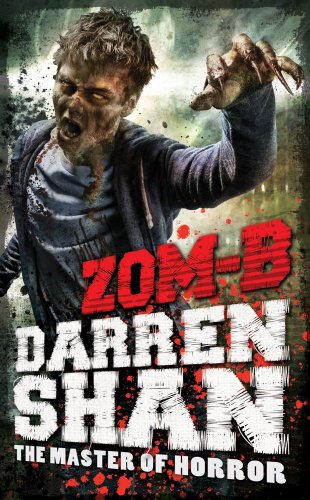
                • Cover of Zom-B
                  Zom-B

                  series · 12 books · 2012

                  similar bysurvivalzombie horrorour worldpost-apocalyptic

                  Zom-B is a young adult zombie apocalyptic-thriller novel series by written by Irish author Darren O'Shaughnessy under the pen name Darren Shan. The series is told by first-person perspective of B Smith, a teenager turned into a zombie. Like Shan's previous series, Zom-B is notable for exploring themes of racism, xenophobia, and the sociological concept of "us and them".

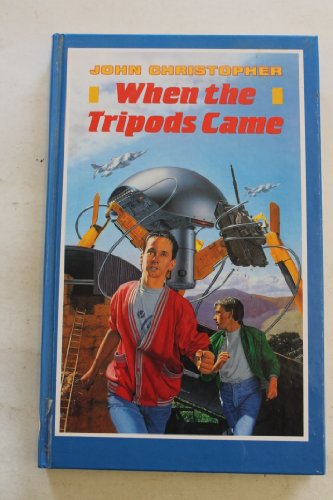
                • Cover of Tripods
                  Tripods

                  series · 4 books · 1967

                  completed

                  similar bynear futureour worldscience fictionpost-apocalyptic+1 more

                  The Tripods is a series of young adult science fiction novels by John Christopher. The series takes place in a post-apocalyptic world where humanity is enslaved by "Tripods"—gigantic three-legged walking machines piloted by an alien race later identified as the "Masters". The first two books were the basis of a science fiction TV series, produced in the United Kingdom in the 1980s.

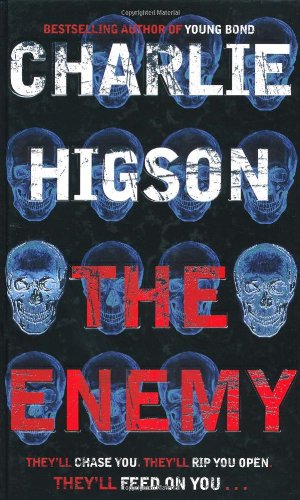
                • Cover of The Enemy (Charlie Higson)
                  The Enemy (Charlie Higson)

                  series · 7 books · 2009

                  similar bysurvivalzombie horrorpost-apocalyptic+2 more

                  The Enemy opens Charlie Higson's seven-book YA horror series, set in London after a mysterious sickness turns every adult into a voracious, flesh-hungry threat and leaves children to fend for themselves in a city gone feral. Each subsequent book (The Dead, The Fear, The Sacrifice, The Fallen, The Hunted, The End) follows different groups of survivors as the outbreak's scope and cause slowly come into focus. Higson also wrote a short companion book, Geeks vs. Zombies, alongside the main series.

                • Cover of Z for Zachariah
                  Z for Zachariah

                  Robert C. O'Brien · standalone novel · 1975

                  similar bysurvivalour worldnear futurescience fictionpost-apocalyptic

                  Sixteen-year-old Ann Burden, on an Amish family farm in an isolated valley, believes she is the only survivor of nuclear war and nerve gas. One day a man arrives in a "safe-suit" that he and others have recently developed.

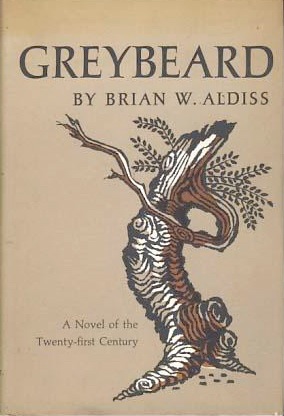
                • Cover of Greybeard
                  Greybeard

                  Brian W. Aldiss · standalone novel · 1964

                  similar bysurvivalour worldnear futurescience fictionpost-apocalyptic

                  Long after a catastrophe that has sterilized humans and most other mammals, the 54-year-old protagonists—Greybeard and Martha—take a tour of entropic England. In scattered self contained communities only the old survive, while outside these enclaves nature comes back into its own, peopling the land with new animal life.

                • Cover of The Gospel of Z
                  The Gospel of Z

                  Stephen Graham Jones · standalone novel · 2014

                  similar bysurvivalzombie horrorour worldnear futurepost-apocalyptic

                  "In the ten years since zombies killed the world, Jory Gray has found exactly one person who matters. Her name is Linse. But when he wakes to find her gone, to join the church, his world falls apart all over again. Jory's suicide mission to save her will lead him deep into the restricted zone, into the bowels of the military, the underbelly of the church, and, worse, it will give him a glimpse into a past that's supposed to be ten years dead, a past still contained in a document that never should have existed: The Gospel of Z"--Page 4 of cover.

                • Cover of The Martian
                  The Martian

                  series · 2 books · 2012

                  similar bysurvivalnear futureour worldscience fiction

                  Andy Weir's novel The Martian, first self-published in 2011 before a commercial re-release, follows astronaut Mark Watney after he is stranded alone on Mars when his crew presumes him dead and departs. Using scientific improvisation and dark humor, Watney works to keep himself alive long enough for a rescue to reach him. It is a single, self-contained survival story.

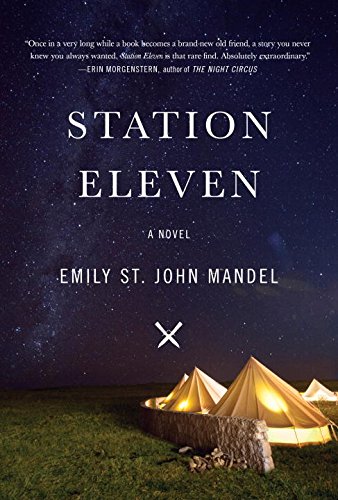
                • Cover of Station Eleven
                  Station Eleven

                  Emily St. John Mandel · standalone novel · 2014

                  similar bysurvivalour worldnear futurescience fictionpost-apocalyptic

                  "Set in the days of civilization's collapse, Station Eleven tells the story of a Hollywood star, his would-be savior, and a nomadic group of actors roaming the scattered outposts of the Great Lakes region, risking everything for art and humanity. One snowy night a famous Hollywood actor slumps over and dies onstage during a production of King Lear. Hours later, the world as we know it begins to dissolve. Moving back and forth in time — from the actor's early days as a film star to fifteen years in the future, when a theater troupe known as the Traveling Symphony roams the wasteland of what remains — this suspenseful, elegiac, spellbinding novel charts the strange twists of fate that connect five people: the actor, the man who tried to save him, the actor's first wife, his oldest friend, and a young actress with the Traveling Symphony, caught in the crosshairs of a dangerous self-proclaimed prophet." (source: Goodreads.com)

                • TF
                  The Fearlanders Universe

                  series · 3 books · 2012

                  similar bysurvivalzombie horrorpost-apocalyptic+3 more

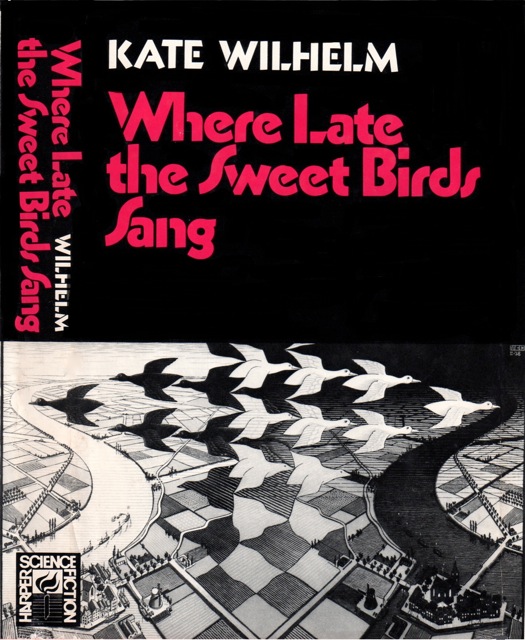
                • Cover of Where Late the Sweet Birds Sang
                  Where Late the Sweet Birds Sang

                  Kate Wilhelm · standalone novel · 1976

                  similar bysurvivalour worldnear futurescience fictionpost-apocalyptic

                  Where Late the Sweet Birds Sang is a science fiction novel by American writer Kate Wilhelm, published in 1976. The novel is composed of three parts, "Where Late the Sweet Birds Sang," "Shenandoah," and "At the Still Point," and is set in a post-apocalyptic era, a concept popular among authors who took part in the New Wave Science Fiction movement in the 1960s.

                • Cover of Make Room! Make Room!
                  Make Room! Make Room!

                  Harry Harrison · standalone novel · 1966

                  similar bysurvivalour worldnear futurescience fiction

                  Make Room! Make Room! is a 1966 science fiction novel written by Harry Harrison exploring the consequences of both unchecked population growth on society and the hoarding of resources by a wealthy minority. It was originally serialized in Impulse magazine.

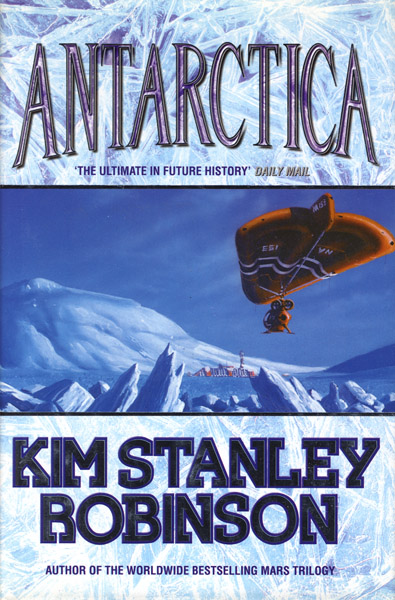
                • Cover of Antarctica
                  Antarctica

                  Kim Stanley Robinson · standalone novel · 1997

                  similar byour worldnear futurescience fiction+1 more

                  Antarctica (1997) is a science fiction novel by American writer Kim Stanley Robinson. It deals with a variety of characters living at or visiting an Antarctic research station. The novel incorporates many of Robinson's frequent themes, including scientific process and the importance of environmental protection.

                • Cover of Rot & Ruin
                  Rot & Ruin

                  series · 22 books · 2010

                  part of Night

                  similar bysurvivalzombie horrornear futurepost-apocalyptic

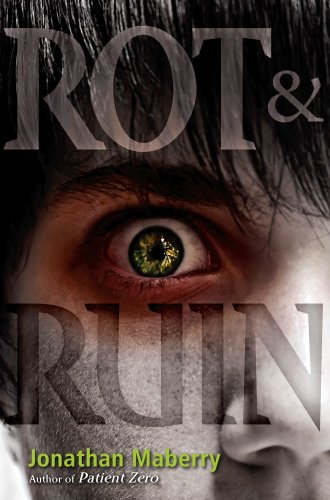
                  Jonathan Maberry's Rot & Ruin is set fourteen years after a zombie plague, following fifteen-year-old Benny Imura, who reluctantly apprentices to his older half-brother as a bounty hunter clearing the dead beyond his fenced-in California town. The series follows Benny's growing understanding of both the zombies and the living people who prey on the fragile post-apocalyptic order, across four more novels and companion story collections.
                • Cover of World War Z
                  World War Z

                  series · 3 books · 2006

                  similar bysurvivalzombie horrorour worldpost-apocalyptic+1 more