More like 1500
anchored on:science fictionour world
but
- Chocky
series2 books1968
similar byscience fictioncontemporary+1 more
Chocky (1968) is John Wyndham's science fiction novel about an eleven-year-old boy, Matthew, whose parents grow alarmed by his conversations with an unseen presence that feeds him unsettling insights into mathematics and human progress, building toward the reveal of what, or who, Chocky really is. Mark Daniel's Chocky's Challenge (1986), published after Wyndham's death, is an authorized continuation that carries the story forward.
- The Silver Crown
Robert C. O'Brienstandalone novel1968
similar byscience fictionour worldcontemporary+1 more
The Silver Crown is a children's science-fiction book by Robert C. O'Brien. Published in 1968, it was his first novel.
- The Dreaming Jewels
Theodore Sturgeonstandalone novel1950
similar byscience fictionour worldcontemporary
The Dreaming Jewels (1950), also known as The Synthetic Man, is a science fiction novel by American writer Theodore Sturgeon. It was his first published novel.
- Footfall
Larry Niven & Jerry Pournellestandalone novel1985
similar byscience fictionour worldcontemporary
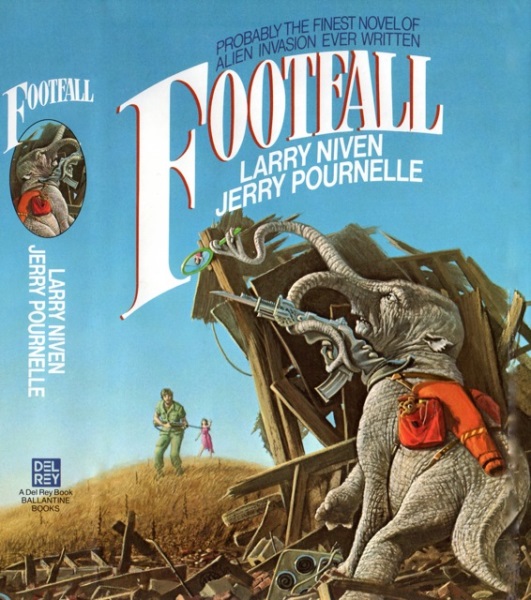
When aliens travel to Earth from Alpha Centauri, differences between alien and human psychology result in an unprovoked invasion, and the resulting resistance results in the aliens' use of a devastating weapon.
- The Boat of a Million Years
Poul Andersonstandalone novel1989
similar byscience fictionour world+1 more
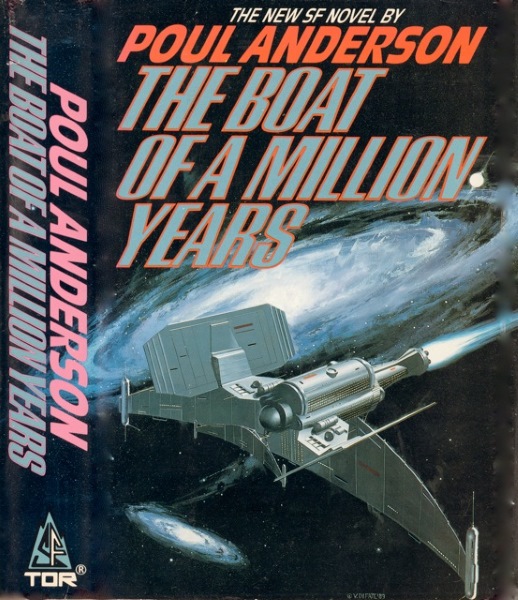
The Boat of a Million Years is a science fiction novel by American writer Poul Anderson, first published in 1989 and nominated for the Nebula Award for Best Novel that same year. It was also nominated for the Hugo Award for Best Novel and the Prometheus Award in 1990.
- Space Demons
series4 books1986
similar byscience fictioncontemporaryour worldyoung adult
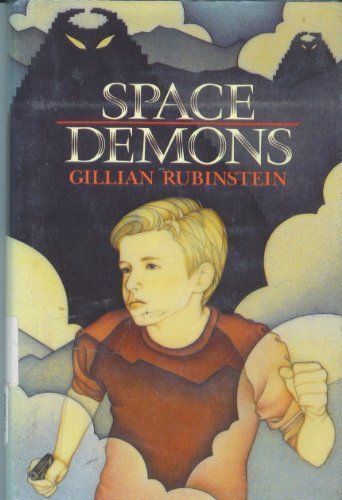
Gillian Rubinstein's Space Demons follows a group of Australian schoolkids drawn into a mysterious video game that starts pulling them physically into its world, with consequences that follow them home. The story continues across two more novels, Skymaze and Shinkei, following the same characters into further games.
- The Caretaker Trilogy
series3 books2006
similar byscience fictionour worldyoung adulttime travel+1 more
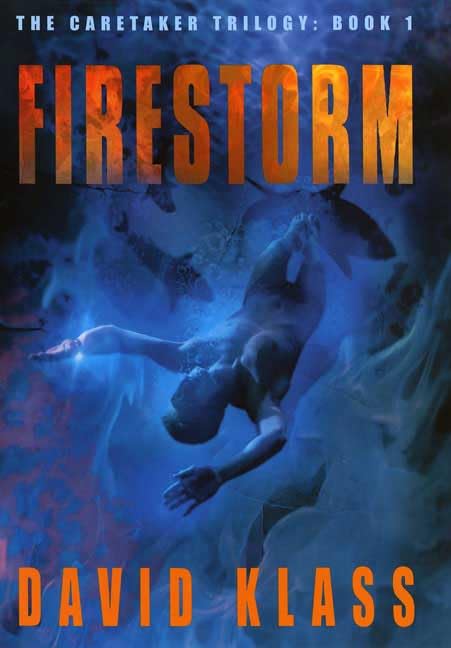
The Caretaker Trilogy is a series of science fiction thrillers with an ecological theme, written for young adults by David Klass. The first book in the series, Firestorm (2006), was the first book ever endorsed by Greenpeace and was praised by critics for its combination of entertainment value and environmental message, garnering an American Library Association (ALA) Best Book citation, a starred review from Publishers Weekly, and a favorable review by the New York Times Book Review. The story focuses on Jack Danielson, a teenager sent back from the future to save the world's oceans. Whirlwind, the second book in the Caretaker Trilogy, tells the story of Jack's efforts to save the Amazon rainforest; published in March 2008 by Farrar, Straus and Giroux. The third book in the trilogy is Timelock, published in 2009.
- TimeRiders
series9 books2010
similar byscience fictionour worldyoung adulttime travel+1 more
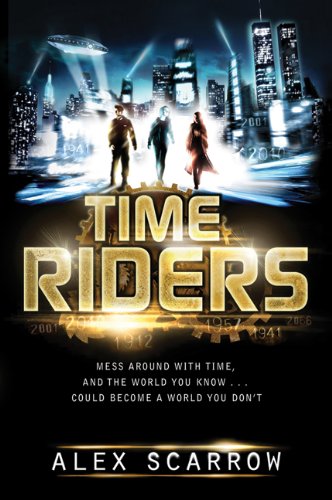
TimeRiders is a series of teen science fiction novels written by Alex Scarrow. The series consists of nine books and is published by Puffin Books.
- Needle
series2 books1950
completed
similar byscience fictionour world+1 more
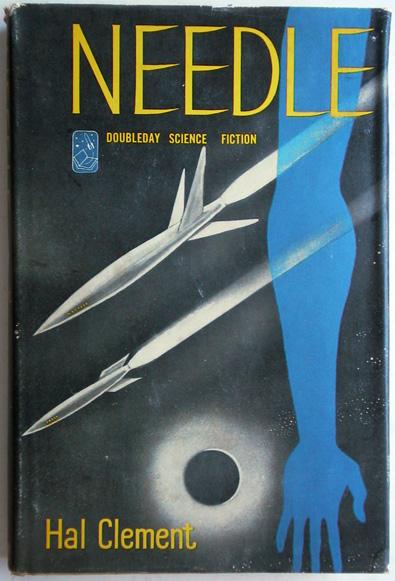
Hal Clement's Needle follows an alien detective nicknamed the Hunter, a shapeless symbiotic being that can live inside a host body, as it crash-lands on Earth pursuing a fugitive of its own kind and takes refuge inside an American teenager, Robert Kinnaird. Together the mismatched pair must learn to communicate and cooperate, first to survive and later to track down the second alien, which has hidden inside another human in the same Pacific island community. The sequel, Through the Eye of a Needle, published nearly three decades later, continues the Hunter's story.
- Beyond the Labyrinth
Gillian Rubinsteinstandalone novel1988
similar byscience fictionour worldcontemporaryyoung adult
Fourteen-year-old Brenton questions the choices in his life when an alien anthropologist arrives to study an ancient Aboriginal tribe that once lived in the area around his home.
- Escape from Memory
Margaret Peterson Haddixstandalone novel2003
similar byscience fictionour worldcontemporaryyoung adult
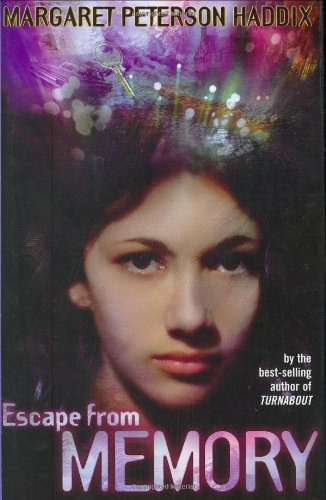
Escape from Memory is a young adult novel by Margaret Peterson Haddix. It was published in 2003 by Simon & Schuster.
- Sputnik's Guide to Life on Earth
Frank Cottrell Boycestandalone novel2016
similar byscience fictionour worldcontemporary+1 more
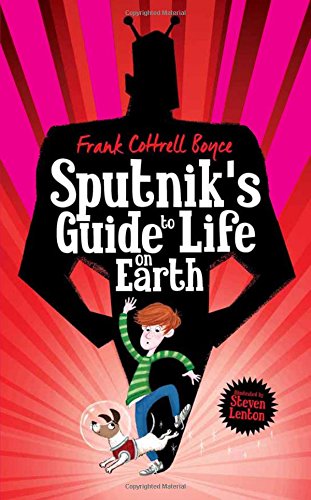
Prez knows that the best way to keep track of things is to make a list. That's important when you have a grandfather who is constantly forgetting. And it's even more important when your grandfather can't care for you anymore and you have to go live with a foster family out in the country.
- WWW Trilogy
series3 books2009
similar byscience fictionour worldcontemporary
The WWW Trilogy is a trilogy of science-fiction novels by Canadian science fiction author Robert J. Sawyer. The first book, Wake, was originally serialized in four parts in Analog Science Fiction and Fact from November 2008 to March 2009, published in book form through Ace on April 7, 2009, and was followed by the second book, Watch, on April 6, 2010. Wonder was published in 2011.
- Time Travelers Never Die
series2 books1996
similar byscience fictionour worldcontemporarytime travel
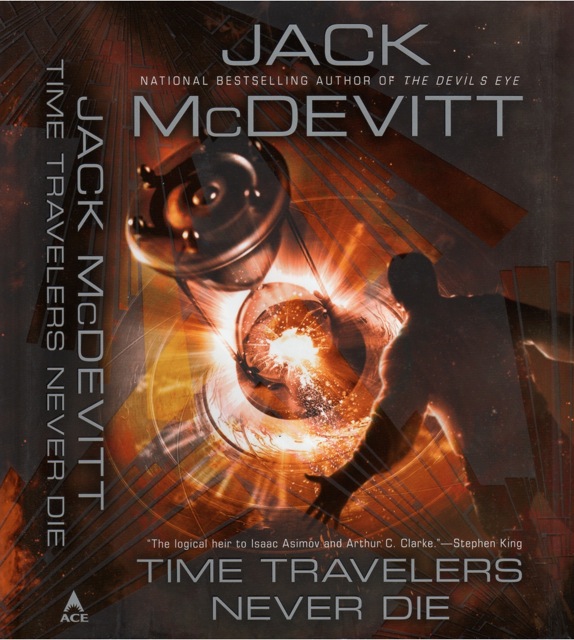
Time Travelers Never Die started life as a Jack McDevitt novella in the mid-1990s (Hugo- and Nebula-nominated) before he expanded it into a full novel over a decade later; the novella and novel are two forms of the same story rather than a sequel. It follows a small circle of people who gain access to working time travel and use it to step into the past, in McDevitt's characteristic register of curious, history-minded science fiction.
- Kairos
series11 books1962
completed
similar byscience fictionyoung adult+3 more
The Time Quintet is a science fantasy series of five young adult novels written by American author Madeleine L'Engle and made up of A Wrinkle in Time (1962), A Wind in the Door (1973), A Swiftly Tilting Planet (1978), Many Waters (1986), and An Acceptable Time (1989).
- D. O. D. O. (Department of Diachronic Operations)
series2 books2017
similar byscience fictionour worldtime travel
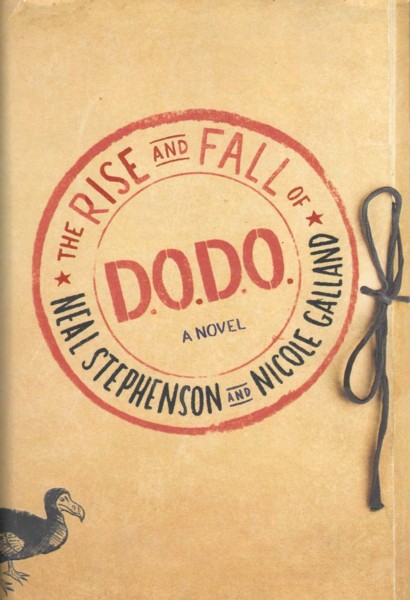
Neal Stephenson and Nicole Galland's D.O.D.O. novels center on the Department of Diachronic Operations, a covert U.S. government agency that discovers magic vanished from the world in the nineteenth century and sets out to use time travel to bring it back. The Rise and Fall of D.O.D.O. (2017) is followed by Master of the Revels, continuing the pair's earlier collaboration on The Mongoliad.
- The Resurrection Wager
Christopher Coatesstandalone novel2018
similar byscience fictionour worldcontemporarytime travel
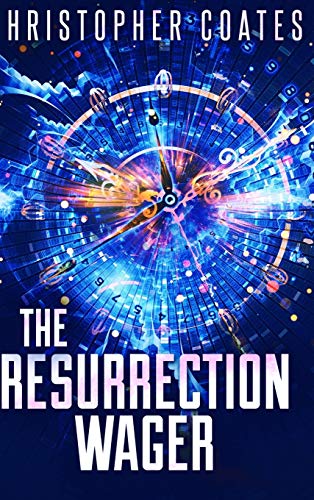
• "When a man of science and a man of faith develop the ability to go back in time, there is only one place for them to go to demonstrate their new technology. After they make a wager about whether or not the resurrection of Jesus really happened, the two set out to prove it one way or the other. Along the way, they face obstacles and challenges from those who want to use their technology for personal gain." ― quoted from this book's product page on Goodreads.com as of 2020-05-28.
- Foundation Universe
universe123 books1940
Start hereFoundation · Start here
similar byscience fiction+1 more
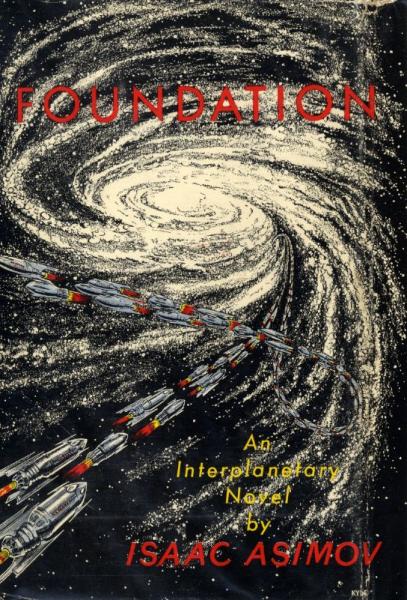
There is a science that reads the future of quadrillions the way an astronomer reads the orbits of stars. It is called psychohistory, and its equations foresee something the ruling Galactic Empire cannot admit: the throne is rotting, and thirty thousand years of barbarism are coming. One man, Hari Seldon, cannot stop the fall. He can only shorten it — by seeding a Foundation of scholars at the rim of the galaxy, a fragile institution built to carry knowledge across the dark and cut the interregnum to a single millennium. This is a universe told in the register of history itself: the long view, the calm of deep time, empires measured in centuries and men measured against them. The spine is Asimov's original trilogy — Foundation, Foundation and Empire, Second Foundation — followed decades later by the sequels Foundation's Edge and Foundation and Earth and the prequels Prelude to Foundation and Forward the Foundation. Late in life Asimov braided this in with his other future histories: the Robot novels of detective Elijah Baley and his humaniform partner R. Daneel Olivaw (The Caves of Steel, The Naked Sun, The Robots of Dawn, Robots and Empire) and the early Galactic Empire novels (Pebble in the Sky and its kin), until one continuous chronicle ran from the first thinking robots to the Second Empire. Other hands extend it — the Second Foundation Trilogy by Gregory Benford, Greg Bear, and David Brin, and shared-world spinoffs such as Robot City — so the corpus sprawls beyond a single author's tidy shelf. What distinguishes it is that the drama is intellectual: crises resolved by insight, nerve, and dialogue rather than fleets and blades, each turn hinging on the hidden logic of the Seldon Plan. Begin where readers have always begun — with Foundation, and the original trilogy in publication order. The rest opens outward from there.
- The Duplicate
William Sleatorstandalone novel1988
similar byscience fictionour worldcontemporaryyoung adult
"Sixteen-year-old David, finding a strange machine that creates replicas of living organisms, duplicates himself and suffers the horrible consequences when the duplicate turns against him." --summary, WorldCat library record {{OCLC|855408448}}
- The Fourth Horseman
Kate Thompsonstandalone novel2006
similar byscience fictionour worldcontemporaryyoung adult
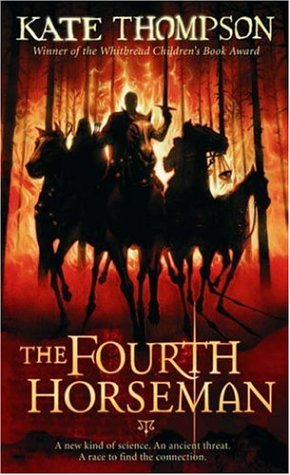
When Laurie is arrested for setting fire to her father's research lab she's unsure what to say in her defence. Should she say that she's an animal rights activist? Or should she tell the whole story, about the mysterious horsemen that she saw in the woods and the terrifying truth which lay behind their appearance? Suggested level: intermediate, junior secondary.
- The Accidental Time Machine
Joe Haldemanstandalone novel2007
similar byscience fictionour worldcontemporarytime travel
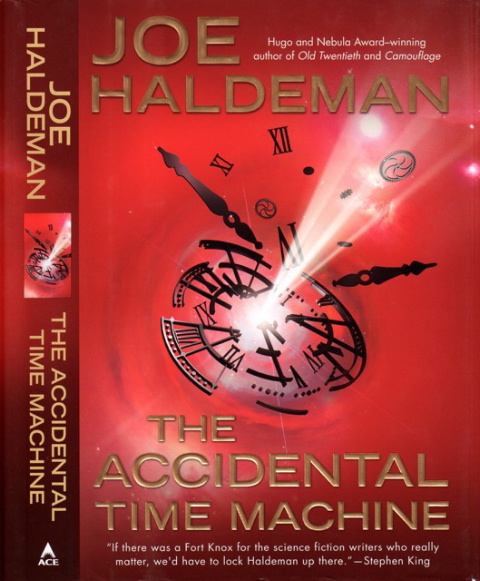
"Grad-school dropout Matt Fuller is toiling as a lowly research assistant at MIT when, while measuring subtle quantum forces that relate to time changes in gravity and electromagnetic force, his calibrator turns into a time machine. With a dead-end job and a girlfriend who has left him for another man, Matt has nothing to lose taking a time machine trip himself - or so he thinks."
- Daniel X
series6 books2008
similar byscience fictioncontemporaryour worldyoung adult
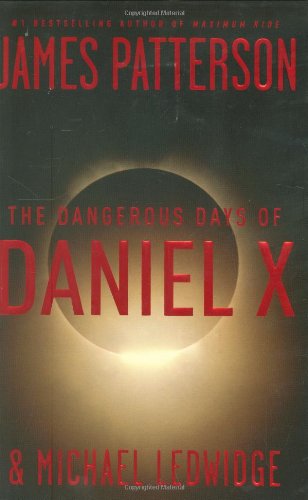
The Dangerous Days of Daniel X opens James Patterson's science-fiction series, co-written with Michael Ledwidge, marking Patterson's return to genre science fiction in a similar vein to his Maximum Ride series. Released in 2008, it became the first of six books following the same teenage protagonist. Patterson's later collaborators on the sequels include Chris Grabenstein, Ned Rust, and Adam Sadler.
- The White Plague
Frank Herbertstandalone novel1982
similar byscience fictionour world+1 more
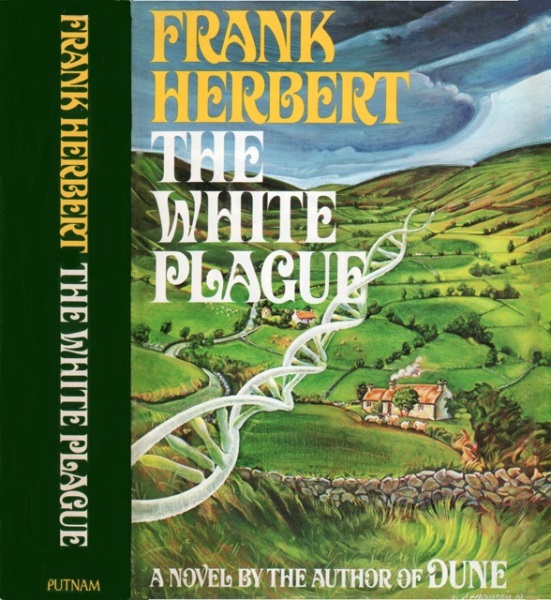
The White Plague is a 1982 science fiction novel by American author Frank Herbert about an engineered disease which kills only women. It was nominated for a best science fiction novel Locus Award in 1983.
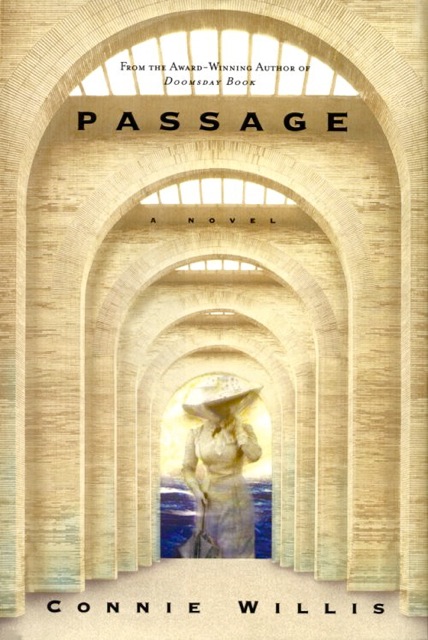
- Passage
Connie Willisstandalone novel2001
similar byscience fictionour worldcontemporary
Passage is a science fiction novel by Connie Willis, published in 2001. The novel won the Locus Award for Best Novel in 2002, was shortlisted for the Nebula Award in 2001, and received nominations for the Hugo, Campbell, and Clarke Awards in 2002.