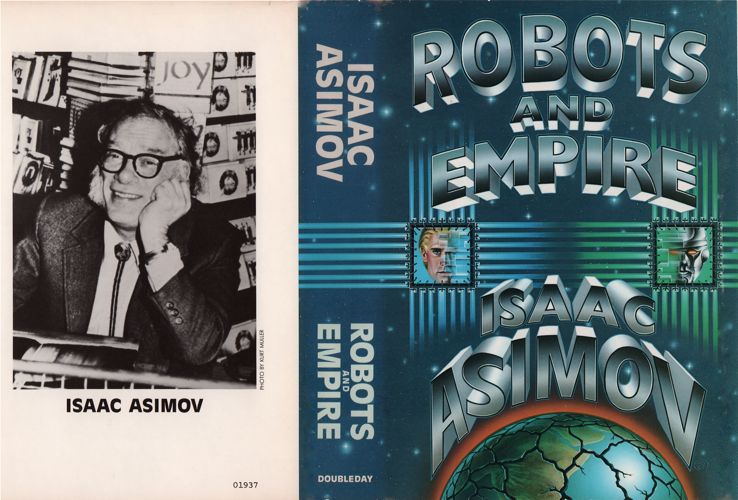
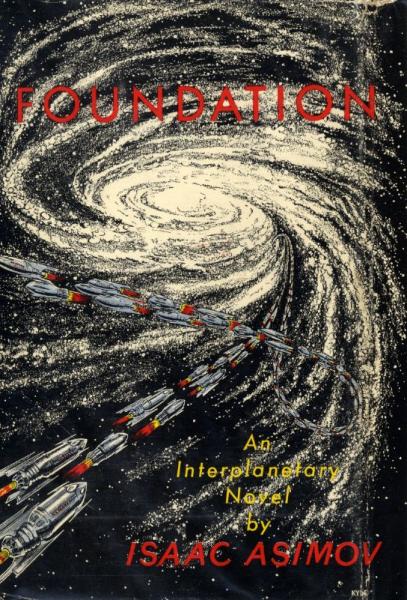
Foundation 1951
The 1951 fix-up that defines the saga; publication order keeps Asimov's reveals intact.
Open book →
Universe
Isaac Asimov, Tricia Reilly, William F. Wu, Rowena Akinyemi, Mark W. Tiedemann, Mickey Zucker Reichert, Roger MacBride Allen, David Brin, Jerry Oltion, Robert Silverberg, Alex Irvine, Arthur Byron Cover, Bruce Bethke, Connie Willis, Cordell Scotten, David Fickling, Donald Kingsbury, George Zebrowski, Greg Bear, Gregory Benford, Hal Clement, Harlan Ellison, Harry Harrison, Harry Turtledove, Michael P. Kube-McDowell, Mike McQuay, Mike Resnick, Orson Scott Card, Pamela Sargent, Poul Anderson, Rob Chilson, Robert Sheckley, Robert Thurston, Rosemary Border, Sheila Finch & Stephen Leigh · 16 series · 50 novels · 8 novellas · 17 novelettes · 41 short stories · 7 collections · 1940–2016
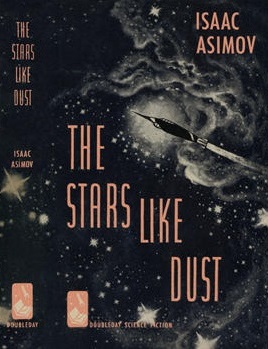
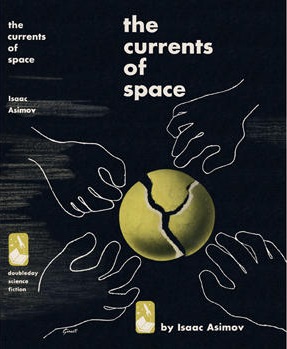
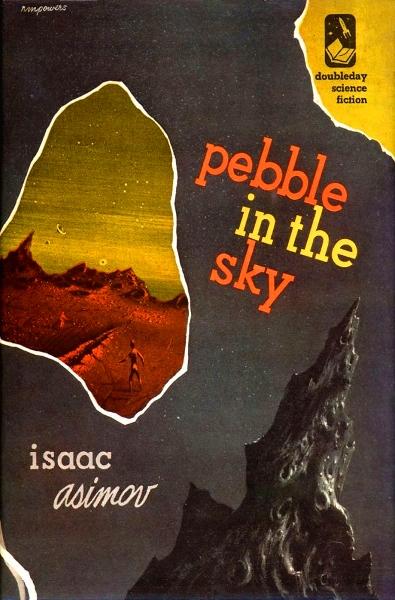
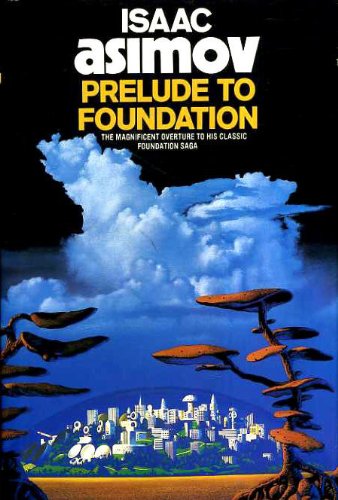
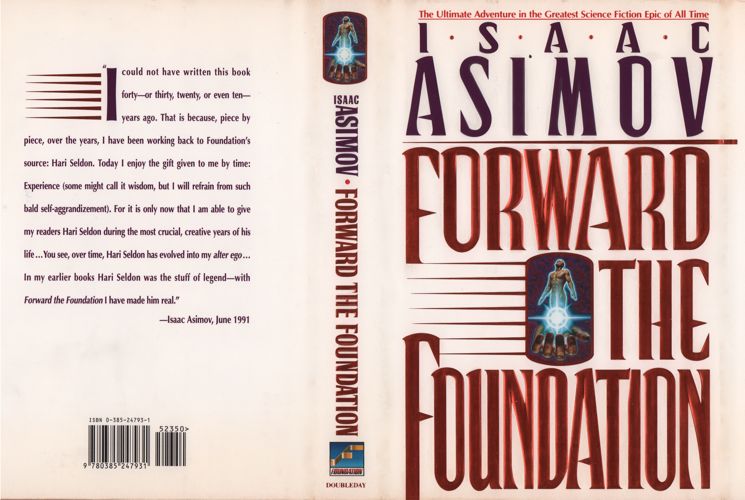
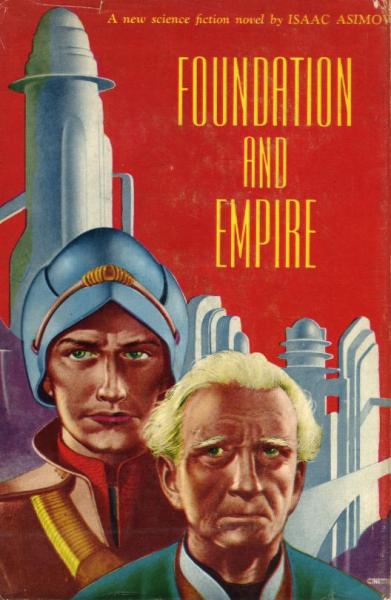
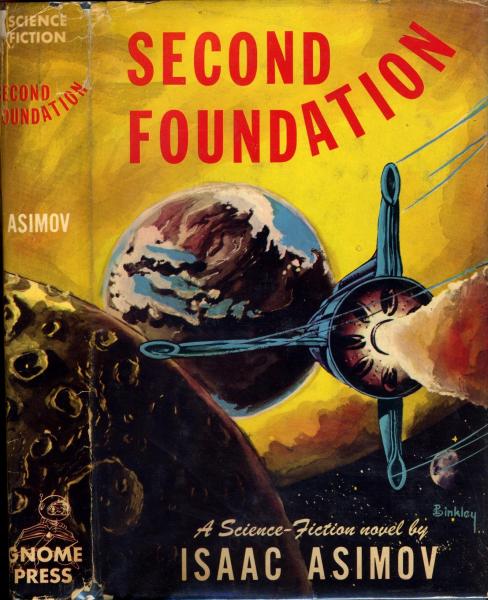
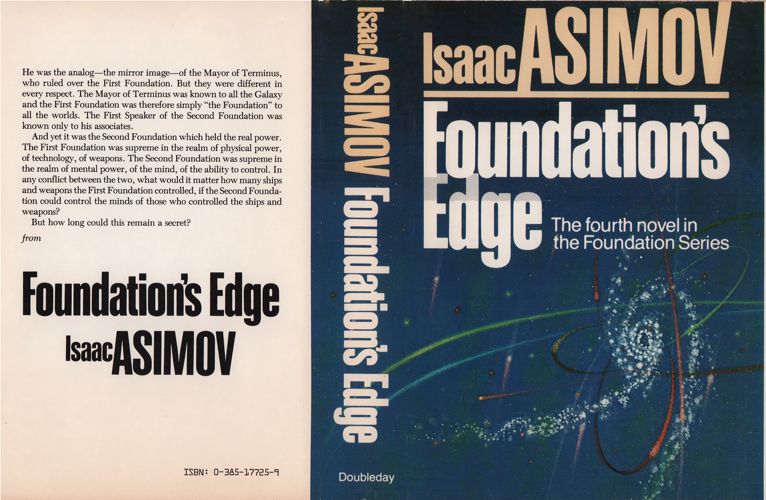
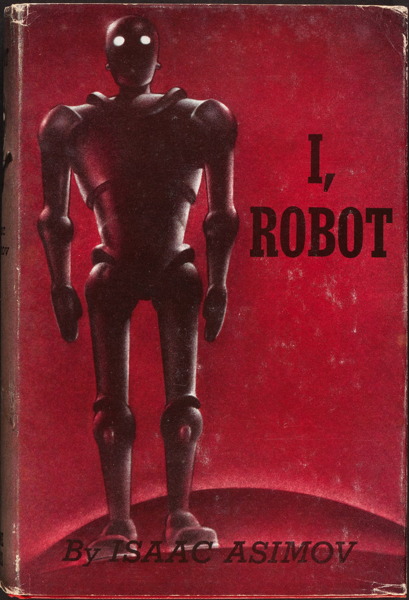
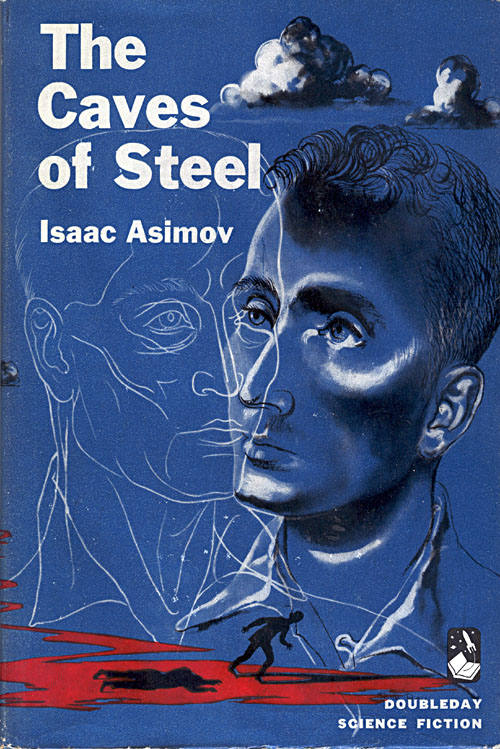
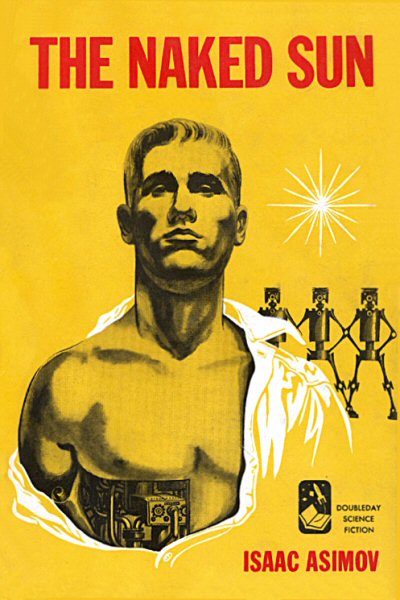
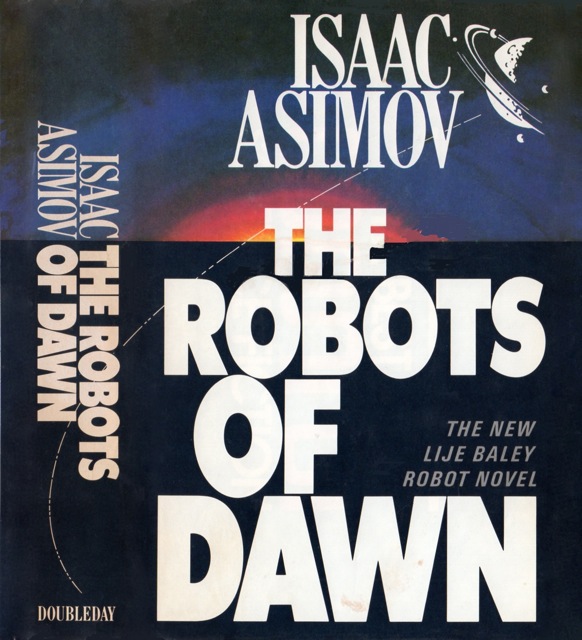
There is a science that reads the future of quadrillions the way an astronomer reads the orbits of stars. It is called psychohistory, and its equations foresee something the ruling Galactic Empire cannot admit: the throne is rotting, and thirty thousand years of barbarism are coming. One man, Hari Seldon, cannot stop the fall. He can only shorten it — by seeding a Foundation of scholars at the rim of the galaxy, a fragile institution built to carry knowledge across the dark and cut the interregnum to a single millennium. This is a universe told in the register of history itself: the long view, the calm of deep time, empires measured in centuries and men measured against them. The spine is Asimov's original trilogy — Foundation, Foundation and Empire, Second Foundation — followed decades later by the sequels Foundation's Edge and Foundation and Earth and the prequels Prelude to Foundation and Forward the Foundation. Late in life Asimov braided this in with his other future histories: the Robot novels of detective Elijah Baley and his humaniform partner R. Daneel Olivaw (The Caves of Steel, The Naked Sun, The Robots of Dawn, Robots and Empire) and the early Galactic Empire novels (Pebble in the Sky and its kin), until one continuous chronicle ran from the first thinking robots to the Second Empire. Other hands extend it — the Second Foundation Trilogy by Gregory Benford, Greg Bear, and David Brin, and shared-world spinoffs such as Robot City — so the corpus sprawls beyond a single author's tidy shelf. What distinguishes it is that the drama is intellectual: crises resolved by insight, nerve, and dialogue rather than fleets and blades, each turn hinging on the hidden logic of the Seldon Plan. Begin where readers have always begun — with Foundation, and the original trilogy in publication order. The rest opens outward from there.
Summary by Loreful, from public sources
One way in for Foundation Universe.
14 novels · 1 short story · 1 collection
✦ Curated by the Loreful team
91 works not in this orderThe three Asimov cycles by internal timeline: I, Robot and the robot novels first, the Empire novels as the Galactic Empire rises, then Trantor and the Foundation books. Publication began in the middle — Foundation (1951) predates The Caves of Steel (1954), and the two Foundation prequels came last (1988, 1993) — so the timeline is a real re-sequencing, not a relabel. Continuations by other writers stay off this route.
Foundation Universe at the centre, 16 branches around it.
What this universe published, when, and what it is made of.
122 works · 1940–2016 · busiest 1989 (14 works) · longest gap 7 years (1959–1965)
Empty columns are silent years — nothing published. The longest silence here is 7 years, 1959–1965.
See every work ↓50 novels · 8 novellas · 17 novelettes · 41 short stories · 7 collections
36 authors
reads like:science fictionrobotsour worldfar futuremysteriousadult
Grim and intense: 51% of this universe's placed works, the catalog's 46%.
this universe · the catalog · brighter = more books100 of 125 works carry a tone
Every work, three ways to look at it.
Series and publication data from ISFDB, CC BY 4.0. Branch grouping is derived, not curated.