Loreful
HomeDiscover
Search series, authors…⌘K
Loreful

Reading orders for SF/F series and shared universes — with your place kept in every one.

Explore

UniversesSeriesWorksAuthorsAtlas

Help

FAQAboutSite map

Account & legal

Sign inCreate accountPrivacyTerms

Data

Built on ISFDB, Wikipedia, Wikidata and Open Library. Curated reading orders carry their reasoning on the page; the rest follow publication order. Data sources & licenses

© Loreful · data: ISFDB · CC BY

More like A Strange Loop

but

Mood

The mood the book leaves you in.

  • The reading experience is propelled by journeys, exploration, and physical risk; excitement and forward momentum dominate over dread or introspection.
  • Joy and loss are deliberately mixed; the resolution grants characters something real while taking something else away, leaving warmth and sorrow together.
  • The book demands work from the reader — dense prose, difficult structure, unfamiliar ideas, or morally uncomfortable material — as part of its intended effect.
  • Grim events, cruelty, or despair dominate the atmosphere, and the book does not soften them with comfort or comic relief.
  • The atmosphere is quietly unsettling — wrongness, unease, and the uncanny pervade the book without necessarily escalating into overt horror.
  • The book is built to move the reader; character feeling is foregrounded and major scenes aim at a strong emotional response.
  • Humor is a primary aim and the prose plays for laughs — comic situations, wit, or dialogue produce sustained comedy, not occasional levity.
  • The book insists that things can improve; effort and decency are shown to matter, and the arc bends toward better outcomes even through hardship.
  • The book teaches as it goes — real facts, history, science, or craft are conveyed in enough depth that learning is part of the reading experience.
  • The overall register is cheerful and easygoing; stakes are kept gentle and the book avoids dwelling on pain or dread.
  • Withheld information drives the experience; the book sustains enigmas and secrets the reader wants resolved, whatever its genre.
  • The book is contemplative and inward-looking, giving more weight to thought, memory, and meaning than to external events.
  • The book works as comfort reading — low tension, a soothing pace, and an atmosphere the reader can unwind in.
  • Grief, loss, or melancholy set the dominant register, and the book lets sorrow stand rather than resolving it into comfort.
  • Sustained suspense is the point; the book keeps the reader braced for what happens next through danger, pressure, or impending revelation.
  • Playful invention and charm define the register — fanciful conceits, light absurdity, and a narration that delights in its own oddity.

About

What the story runs on.

  • Stories in which extraterrestrial beings are central — as characters, cultures, or the object of the plot.
  • Stories structured as a quest — a journey undertaken to find, deliver, or destroy something of great import.
  • Stories in which staying alive against nature, catastrophe, or scarcity is the central problem.
  • Stories in which a friendship — its making, testing, or loss — is the emotional center.
  • Stories of growing up — a young protagonist crossing from childhood into adult knowledge and responsibility.
  • Stories about who a character truly is — self-discovery, doubled lives, and the search for a self.
  • Stories about mourning — living through the death of a loved one and what loss does to the survivors.
  • Stories in which a buried family truth — hidden parentage, crimes, or shames — surfaces and reorders the present.
  • Stories driven by maneuvering for power — factions, conspiracies, and statecraft conducted in shadow.
  • Stories in which war itself is the subject — combat, occupation, and what warfare does to soldiers and civilians.
  • Stories organized around investigating a killing — the case, the clues, and the pursuit of the killer, in any genre's clothing.
  • Stories following an expedition into the unknown — uncharted lands, lost cities, and the discovery or ruin waiting at the end.

Shelf

Where it sits in the library.

    • Fiction built on magic or other supernatural elements that have no scientific explanation.
    • Secondary-world fantasy at large scale, where the fate of nations or the world turns on the protagonists' struggle.
    • Fantasy set in a recognizably modern city or contemporary world where the supernatural intrudes on everyday life.
    • Fantasy that blends in horror's atmosphere and imagery, keeping a fantastical frame around grim or frightening material.
    • Action-driven fantasy following warriors or rogues with personal stakes against sorcerous threats, rather than world-spanning conflicts.
    • Fantasy set in a real historical period or a close analogue of one, with magic woven into the era.
    • Fantasy in which protagonists cross from the ordinary world into another world through a portal or similar passage.
    • Fantasy drawing directly on myths, legends, and folklore, retelling them or building on their figures and logic.
    • Fantasy of ghosts, vampires, shapeshifters, psychics, and similar phenomena, usually set in an otherwise ordinary world.
    • Fiction mixing science-fictional trappings with overtly magical or impossible elements in one setting.
    • Fiction that extrapolates from science and technology — future societies, space travel, or speculative inventions — within at least nominally natural laws.
    • Science fiction of interstellar scope — starships, galactic polities, and adventure across star systems.
    • Science fiction committed to scientific rigor, where technical plausibility constrains the story.
    • Science fiction of networked, corporate-dominated near futures, pairing high technology with social decay.
    • Science fiction styled on nineteenth-century steam-powered technology, often in a Victorian or pseudo-Victorian setting.
    • Fiction depicting an oppressive or catastrophic society, presented as a warning.
    • Fiction set after civilization's collapse, following survivors in the ruins of the old world.
    • Fiction in which characters move between past and future, and the mechanics or consequences of that travel drive the plot.
    • Fiction exploring a world where a historical event went differently and history diverged from ours.
    • Science fiction about humanity's first encounter and communication with an alien intelligence.
    • Science fiction in which extraterrestrial forces attack or occupy Earth and humanity resists.
    • Fiction whose primary aim is to frighten or unsettle the reader through dread, menace, or the monstrous.
    • Horror of decaying houses, buried family secrets, and oppressive atmosphere in the Gothic literary tradition.
    • Horror centered on hauntings and the returning dead.
    • Horror located in the mind — paranoia, obsession, and unreliable perception rather than external monsters.
    • Speculative fiction of the strange and uncanny that resists both natural explanation and standard genre categories.
    • Fiction organized around solving a crime or puzzle, typically following an investigator toward the identification of a culprit.
    • Crime fiction of moral ambiguity, fatalism, and hard-edged style, set among the corrupt and the doomed.
    • A gentle mystery with an amateur sleuth, a small community, and violence kept off the page.
    • A mystery set in a past era, where the investigation works within that period's methods and society.
    • Fast-paced fiction driven by imminent danger, pursuit, or high-stakes conspiracy, built to sustain tension.
    • A thriller of espionage — agents, tradecraft, and intelligence services in conflict.
    • A thriller whose tension comes from mental states and manipulation between characters rather than external action.
    • Fiction whose central plot is a romantic relationship and its development toward an emotionally satisfying resolution.
    • Romance in which one or both partners are supernatural beings, blending fantasy elements into the love story.
    • Romance set in a past era, with courtship shaped by the period's society and manners.
    • Romance set in the present day, without supernatural or historical elements.
    • Fiction set in a real past period, where the historical setting materially shapes characters and events.
      • General and literary fiction emphasizing prose style, character interiority, or formal ambition over genre plot conventions.
      • Fiction in a realistic world where magical events occur and are treated as ordinary, in the tradition of Latin American literature.
      • Fiction that ridicules people, institutions, or society in order to criticize them.
      • Fiction of dreamlike, irrational imagery and logic that breaks from realistic representation.
      • Fiction propelled by journeys, exploration, and physical peril, where action and survival carry the plot.
      • Adventure fiction of ships and seafaring — naval engagements, voyages, and life at sea.
      • Fiction of the American frontier West — gunmen, ranchers, and lawmen, typically in the late nineteenth century.
      • Fiction centered on soldiers, campaigns, and the experience of warfare, historical or imagined.
        • Fiction written primarily to amuse, using comedic situations, wit, or parody as its organizing principle.

        Practical

        How long a commitment, whether it stands alone, and whether it has finished.

        Tap a chip to ask for it · tap again to rule it out · once more to clear. Numbers show what would be left.

        • Cover of Nineteen Eighty-Four
          Nineteen Eighty-Four

          series · 4 books · 1949

          similar by+1 more

          Nineteen Eighty-Four (1949) is George Orwell's novel of a totalitarian future Britain kept under constant surveillance and thought control, following Winston Smith's doomed attempt at a private rebellion against the ruling Party. Sandra Newman's Julia (2023), written with the Orwell estate's authorization, retells the same events from the point of view of Winston's lover Julia, filling in a life and set of motives the original largely left offstage.

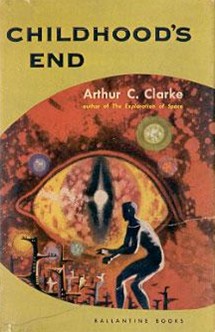
        • Cover of Childhood's End
          Childhood's End

          Arthur C. Clarke · standalone novel · 1953

          similar by+1 more

          Childhood's End is a 1953 science fiction novel by the British author Arthur C. Clarke. The story follows a peaceful alien invasion of Earth by mysterious Overlords, whose arrival begins decades of apparent utopia under indirect alien rule, at the cost of human identity and culture.

        • Cover of On the Beach
          On the Beach

          Nevil Shute · standalone novel · 1957

          similar byoceania

          On the Beach is an apocalyptic novel published in 1957, written by British author Nevil Shute after he immigrated to Australia. The novel details the experiences of a mixed group of people in Melbourne as they await the arrival of deadly radiation spreading towards them from the Northern Hemisphere, following a nuclear war some years previously. As the radiation approaches, each person deals with impending death differently.

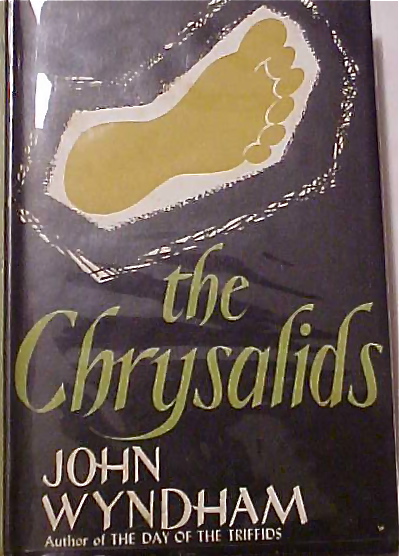
        • Cover of The Chrysalids
          The Chrysalids

          John Wyndham · standalone novel · 1955

          similar by+1 more

          The Chrysalids is a science fiction novel by British writer John Wyndham, first published in 1955 by Michael Joseph. It is the least typical of Wyndham's major novels, but regarded by some as his best. An early manuscript version was entitled Time for a Change.

        • Cover of Walter Goodwin
          Walter Goodwin

          series · 3 books · 1918

          completed

          similar by+1 more

          The Moon Pool (1919) and The Metal Monster (1920) are connected fantasy-adventure novels by A. Merritt, both narrated by the same character, Dr. Walter Goodwin, as he encounters hidden ancient civilizations and forces beyond ordinary science. The Moon Pool began as two related stories serialized in All-Story Weekly before being combined into a novel, and its success led Merritt to send Goodwin into a second, similarly strange discovery in The Metal Monster the following year. The two books follow Goodwin from one uncanny expedition to the next rather than forming a tightly plotted continuing saga.

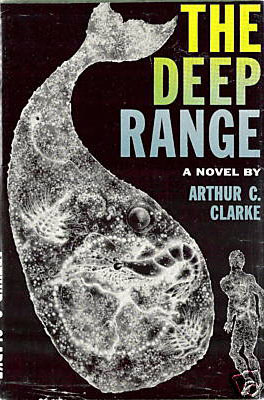
        • Cover of The Deep Range
          The Deep Range

          Arthur C. Clarke · standalone novel · 1957

          similar by+1 more

          The Deep Range is a 1957 science fiction novel by British writer Arthur C. Clarke, concerning a future sub-mariner who works in the field of mariculture, herding whales. The story includes the capture of a sea monster similar to a kraken.

        • Cover of Dolphin Island
          Dolphin Island

          Arthur C. Clarke · standalone novel · 1963

          similar byoceania

          A teen stows away on a giant freight hovership that makes an emergency landing near his house. When the craft is lost at sea, his life is saved by a school of dolphins that leads him to an island in the Great Barrier Reef. There he meets a research team that is trying to learn to communicate with dolphins.

        • Cover of Cloud Atlas
          Cloud Atlas

          David Mitchell · standalone novel · 2004

          similar by+1 more

          Cloud Atlas, published in 2004, is the third novel by British author David Mitchell. The book combines metafiction, historical fiction, contemporary fiction and science fiction, with interconnected nested stories in different writing styles that take the reader from the remote South Pacific in the 19th century to the island of Hawaii in a distant post-apocalyptic future. Its title references a piece of music by Toshi Ichiyanagi.

        • Cover of Ape and Essence
          Ape and Essence

          Aldous Huxley · standalone novel · 1948

          similar by+1 more

          Ape and Essence (1948) is a novel by Aldous Huxley, first published in August 1948 by Harper & Brothers in the US, and then in 1949 by Chatto & Windus in the UK. It is set in a dystopia, as is Brave New World, Huxley's more famous work. It is largely a satire of the rise of large-scale warfare and warmongering in the 20th century, and presents a pessimistic view of the politics of mutually assured destruction. The book makes extensive use of surreal imagery, depicting humans as apes who, as a whole, will inevitably kill themselves.

        • Cover of Mother of Storms
          Mother of Storms

          John Barnes · standalone novel · 1994

          similar by+1 more

          From the flaps of the Tor first edition: "It is 2028. A strike to destroy an illegal Arctic weapons cache has a catastrophic side effect. Massive amounts of energy are liberated from the polar ice, suddenly warming the Earth's climate. In the middle of the Pacific, a gigantic hurricane thousands of miles across is forming, larger than any in human history. A storm with winds of supersonic speed. A storm that changes direction at whim. A storm that refuses to die. A storm so vast it spawns dozens more in its wake... Blinded by intrigue, expedience, and greed, the world's politicians and power brokers have ignored the killer storms threat until it is too late. Already the death toll is in the tens of millions, as it savages the Pacific coast, while its devil's brood of smaller storms are wreaking havoc across the face of the planet. While the survivors scramble for advantage, a handful of courageous men and women undertake a daring, desperate plan to save humanity from total destruction - a plan so visionary it may alter forever the future of the human race."

        • Cover of The Changeover
          The Changeover

          Margaret Mahy · standalone novel · 1984

          similar byoceania

          The Changeover: a Supernatural Romance is a low fantasy novel for young adults by Margaret Mahy, published in 1984 by J. M. Dent in the U.K. It is set in Christchurch in the author's native New Zealand.

        • Cover of Nargun / Wirrun milieu
          Nargun / Wirrun milieu

          series · 4 books · 1973

          completed

          similar byoceania

          Patricia Wrightson's The Nargun and the Stars follows a boy sent to recover on his relatives' rural Australian property, where he becomes entangled with the Nargun, an ancient stone-being drawn from Aboriginal storytelling traditions, alongside other spirits native to the land. The novel treats the Australian bush as inhabited by beings far older than European settlement, seen through a child's slowly widening awareness. It won the Children's Book Council of Australia's Book of the Year in 1974.

        • Cover of Days of Infamy
          Days of Infamy

          series · 2 books · 2004

          similar by+1 more

          Harry Turtledove's Days of Infamy duology reimagines the Pacific theater of World War II with an alternate outcome at Pearl Harbor: a Japanese invasion and occupation of Hawaii rather than a single carrier strike. Days of Infamy covers the invasion itself, while End of the Beginning follows the ensuing occupation and eventual counter-invasion. As in his other alternate-history work, Turtledove follows the changed war through a wide, rotating cast of civilian and military viewpoints.

        • TM
          Tomorrow (John Marsden)

          series · 10 books · 1993

          completed

          similar byoceania

        • Cover of Illywhacker
          Illywhacker

          Peter Carey · standalone novel · 1984

          similar byoceania

          Illywhacker is a novel by Australian writer Peter Carey. It was published in 1985 to commercial and critical success, winning a number of awards and being short-listed for the Booker Prize.

        • Cover of Playing Beatie Bow
          Playing Beatie Bow

          Ruth Park · standalone novel · 1980

          similar byoceania

          WorldCat: A lonely Australian girl from a divided family is transported back to the 1880's and an immigrant family from the Orkney Islands.

        • Cover of Island of the Sequined Love Nun
          Island of the Sequined Love Nun

          Christopher Moore · standalone novel · 1997

          similar byoceania

          Island of the Sequined Love Nun is a novel by American absurdist writer Christopher Moore, published in 1997. It is based partly on the author's personal experiences in Micronesia.

        • Cover of Maori
          Maori

          Alan Dean Foster · standalone novel · 1988

          similar byoceania

        • Cover of Jennifer Government
          Jennifer Government

          Max Barry · standalone novel · 2003

          similar by+1 more

          In the near future, where most of the English-speaking world is part of the United States, whose government has become vestigial, police departments are for hire, and corporations and their customer loyalty alliances possess almost unlimited power; a sundry cast of characters are caught up in various levels of a power struggle.

        • Cover of Beyond the Labyrinth
          Beyond the Labyrinth

          Gillian Rubinstein · standalone novel · 1988

          similar byoceania

          Fourteen-year-old Brenton questions the choices in his life when an alien anthropologist arrives to study an ancient Aboriginal tribe that once lived in the area around his home.

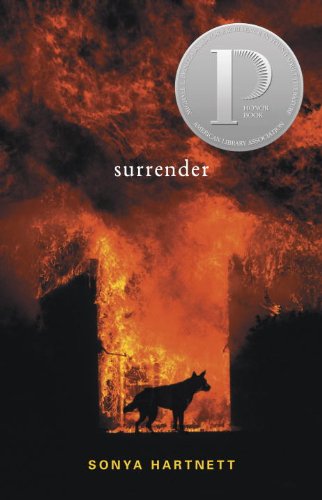
        • Cover of Surrender
          Surrender

          Sonya Hartnett · standalone novel · 2005

          similar byoceania

          Surrender is a novel written by the award-winning Australian novelist, Sonya Hartnett. It was first published in 2005 in Australia by Walker Books. It is narrated by twenty-year-old Gabriel, who is dying, and twenty-year-old Finnigan, a homeless boy who is Gabriel's only friend.

        • Cover of The Unknown Terrorist
          The Unknown Terrorist

          Richard Flanagan · standalone novel · 2006

          similar byoceania

          The Unknown Terrorist is the 2006 fourth novel by the Australian novelist Richard Flanagan.

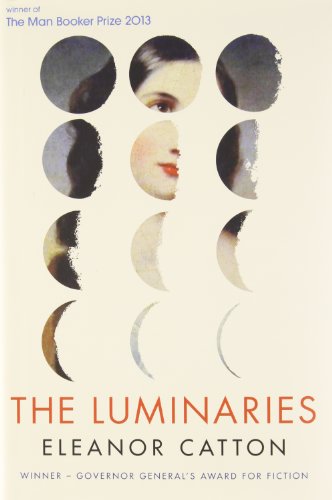
        • Cover of The Luminaries
          The Luminaries

          Eleanor Catton · standalone novel · 2013

          similar byoceania

          The Luminaries is a 2013 novel by Eleanor Catton. Set in New Zealand's South Island in 1866, the novel follows Walter Moody, a prospector who travels to the West Coast settlement of Hokitika to make his fortune on the goldfields. Instead, he stumbles into a tense meeting between twelve local men, and is drawn into a complex mystery involving a series of unsolved crimes. The novel's complex structure is based on the system of Western astrology, with each of the twelve local men representing one of the twelve signs of the zodiac, and with another set of characters representing planets in the Solar System.

        • Cover of Del-Del
          Del-Del

          Victor Kelleher · standalone novel · 1991

          similar by+1 more

          Del-Del is a psychological young adult novel written by Australian author Victor Kelleher and published in 1992. It deals with themes of loss and apparent demonic possession.