Loreful
HomeDiscover
Search series, authors…⌘K
Loreful

Reading orders for SF/F series and shared universes — with your place kept in every one.

Explore

UniversesSeriesWorksAuthorsAtlas

Help

FAQAboutSite map

Account & legal

Sign inCreate accountPrivacyTerms

Data

Built on ISFDB, Wikipedia, Wikidata and Open Library. Curated reading orders carry their reasoning on the page; the rest follow publication order. Data sources & licenses

© Loreful · data: ISFDB · CC BY

More like Alien

anchored on:science fictionalienssurvivalspaceshipfar futuretense+3 more

but

Mood

The mood the book leaves you in.

  • The reading experience is propelled by journeys, exploration, and physical risk; excitement and forward momentum dominate over dread or introspection.
  • Joy and loss are deliberately mixed; the resolution grants characters something real while taking something else away, leaving warmth and sorrow together.
  • The book demands work from the reader — dense prose, difficult structure, unfamiliar ideas, or morally uncomfortable material — as part of its intended effect.
  • Grim events, cruelty, or despair dominate the atmosphere, and the book does not soften them with comfort or comic relief.
  • The atmosphere is quietly unsettling — wrongness, unease, and the uncanny pervade the book without necessarily escalating into overt horror.
  • The book is built to move the reader; character feeling is foregrounded and major scenes aim at a strong emotional response.
  • Humor is a primary aim and the prose plays for laughs — comic situations, wit, or dialogue produce sustained comedy, not occasional levity.
  • The book insists that things can improve; effort and decency are shown to matter, and the arc bends toward better outcomes even through hardship.
  • The book teaches as it goes — real facts, history, science, or craft are conveyed in enough depth that learning is part of the reading experience.
  • The book is designed to uplift and motivate, presenting perseverance or achievement in a way that invites the reader to aspire or act.
  • The overall register is cheerful and easygoing; stakes are kept gentle and the book avoids dwelling on pain or dread.
  • Withheld information drives the experience; the book sustains enigmas and secrets the reader wants resolved, whatever its genre.
  • The book is contemplative and inward-looking, giving more weight to thought, memory, and meaning than to external events.
  • The book works as comfort reading — low tension, a soothing pace, and an atmosphere the reader can unwind in.
  • Grief, loss, or melancholy set the dominant register, and the book lets sorrow stand rather than resolving it into comfort.
  • Sustained suspense is the point; the book keeps the reader braced for what happens next through danger, pressure, or impending revelation.
  • Playful invention and charm define the register — fanciful conceits, light absurdity, and a narration that delights in its own oddity.

About

What the story runs on.

  • Stories in which extraterrestrial beings are central — as characters, cultures, or the object of the plot.
  • Stories about venturing into space to explore — survey missions, astronauts, and the frontier of the unknown beyond Earth.
  • Stories structured as a quest — a journey undertaken to find, deliver, or destroy something of great import.
  • Stories in which staying alive against nature, catastrophe, or scarcity is the central problem.
  • Stories of lovers kept apart by law, family, faith, or station, where the obstacle to love is the plot.
  • Stories of growing up — a young protagonist crossing from childhood into adult knowledge and responsibility.
  • Stories about who a character truly is — self-discovery, doubled lives, and the search for a self.
  • Stories about mental unraveling — descent into madness, delusion, and minds at war with themselves.
  • Stories in which a buried family truth — hidden parentage, crimes, or shames — surfaces and reorders the present.
  • Stories driven by maneuvering for power — factions, conspiracies, and statecraft conducted in shadow.
  • Stories in which war itself is the subject — combat, occupation, and what warfare does to soldiers and civilians.
  • Stories organized around investigating a killing — the case, the clues, and the pursuit of the killer, in any genre's clothing.

Shelf

Where it sits in the library.

    • Fiction built on magic or other supernatural elements that have no scientific explanation.
    • Secondary-world fantasy at large scale, where the fate of nations or the world turns on the protagonists' struggle.
    • Fantasy set in a recognizably modern city or contemporary world where the supernatural intrudes on everyday life.
    • Fantasy that blends in horror's atmosphere and imagery, keeping a fantastical frame around grim or frightening material.
    • Action-driven fantasy following warriors or rogues with personal stakes against sorcerous threats, rather than world-spanning conflicts.
    • Fantasy set in a real historical period or a close analogue of one, with magic woven into the era.
    • Fantasy in which protagonists cross from the ordinary world into another world through a portal or similar passage.
    • Fiction that retells or reworks a traditional fairy tale in a new form or setting.
    • Fantasy drawing directly on myths, legends, and folklore, retelling them or building on their figures and logic.
    • Fantasy of ghosts, vampires, shapeshifters, psychics, and similar phenomena, usually set in an otherwise ordinary world.
    • Fiction mixing science-fictional trappings with overtly magical or impossible elements in one setting.
    • Low-stakes fantasy emphasizing comfort, community, and everyday pleasures over conflict and peril.
    • Speculative fiction of pervasive moral ambiguity, violence, and cynicism that rejects heroic conventions — fantasy and SF alike.
      • Fiction that extrapolates from science and technology — future societies, space travel, or speculative inventions — within at least nominally natural laws.
      • Science fiction of interstellar scope — starships, galactic polities, and adventure across star systems.
      • Science fiction committed to scientific rigor, where technical plausibility constrains the story.
      • Science fiction centered on armed forces and warfare, told largely from a military point of view.
      • Science fiction of networked, corporate-dominated near futures, pairing high technology with social decay.
      • Science fiction styled on nineteenth-century steam-powered technology, often in a Victorian or pseudo-Victorian setting.
      • Fiction depicting an oppressive or catastrophic society, presented as a warning.
      • Fiction set after civilization's collapse, following survivors in the ruins of the old world.
      • Fiction in which characters move between past and future, and the mechanics or consequences of that travel drive the plot.
      • Fiction exploring a world where a historical event went differently and history diverged from ours.
      • Science fiction about humanity's first encounter and communication with an alien intelligence.
      • Science fiction in which extraterrestrial forces attack or occupy Earth and humanity resists.
      • Fiction whose primary aim is to frighten or unsettle the reader through dread, menace, or the monstrous.
      • Horror of vast, indifferent, incomprehensible entities before which humanity is insignificant, in the Lovecraft tradition.
      • Horror of decaying houses, buried family secrets, and oppressive atmosphere in the Gothic literary tradition.
      • Horror centered on hauntings and the returning dead.
      • Horror located in the mind — paranoia, obsession, and unreliable perception rather than external monsters.
      • Horror built around the reanimated dead and survival amid their outbreaks.
      • Horror defined by explicit, transgressive gore that refuses to cut away from violence.
      • Speculative fiction of the strange and uncanny that resists both natural explanation and standard genre categories.
      • Fiction organized around solving a crime or puzzle, typically following an investigator toward the identification of a culprit.
      • A puzzle-first mystery that lays out clues so the culprit's identity can be deduced before the reveal.
      • Crime fiction of moral ambiguity, fatalism, and hard-edged style, set among the corrupt and the doomed.
      • A mystery following the realistic routines of police work — forensics, interviews, and case-building.
      • A gentle mystery with an amateur sleuth, a small community, and violence kept off the page.
      • A mystery set in a past era, where the investigation works within that period's methods and society.
      • Fast-paced fiction driven by imminent danger, pursuit, or high-stakes conspiracy, built to sustain tension.
      • A thriller of espionage — agents, tradecraft, and intelligence services in conflict.
      • A thriller centered on lawyers and the courtroom, where litigation carries the suspense.
      • A thriller driven by detailed contemporary or near-future technology, often military or scientific.
      • A thriller whose tension comes from mental states and manipulation between characters rather than external action.
      • Fiction whose central plot is a romantic relationship and its development toward an emotionally satisfying resolution.
      • Romance in which one or both partners are supernatural beings, blending fantasy elements into the love story.
      • A fantasy-romance hybrid in which the romantic arc and the fantasy plot carry equal weight.
      • Romance set in a past era, with courtship shaped by the period's society and manners.
      • Romance set in the present day, without supernatural or historical elements.
      • Fiction set in a real past period, where the historical setting materially shapes characters and events.
        • General and literary fiction emphasizing prose style, character interiority, or formal ambition over genre plot conventions.
        • Fiction in a realistic world where magical events occur and are treated as ordinary, in the tradition of Latin American literature.
        • Fiction that ridicules people, institutions, or society in order to criticize them.
        • Fiction of dreamlike, irrational imagery and logic that breaks from realistic representation.
        • Fiction that plays with narrative convention through metafiction, fragmentation, and self-reference.
        • Fiction propelled by journeys, exploration, and physical peril, where action and survival carry the plot.
        • Adventure fiction of ships and seafaring — naval engagements, voyages, and life at sea.
        • Fiction of the American frontier West — gunmen, ranchers, and lawmen, typically in the late nineteenth century.
        • Fiction centered on soldiers, campaigns, and the experience of warfare, historical or imagined.
          • Fiction written primarily to amuse, using comedic situations, wit, or parody as its organizing principle.
            • Multi-generational fiction following a family or dynasty across decades, with inheritance and kinship as the through-line.
              • Fiction whose world runs on explicit game mechanics — levels, stats, and skills that characters can see and exploit.
                • Fiction about costumed or superpowered heroes and their conflicts with comparable villains.

                Practical

                How long a commitment, whether it stands alone, and whether it has finished.

                Tap a chip to ask for it · tap again to rule it out · once more to clear. Numbers show what would be left.

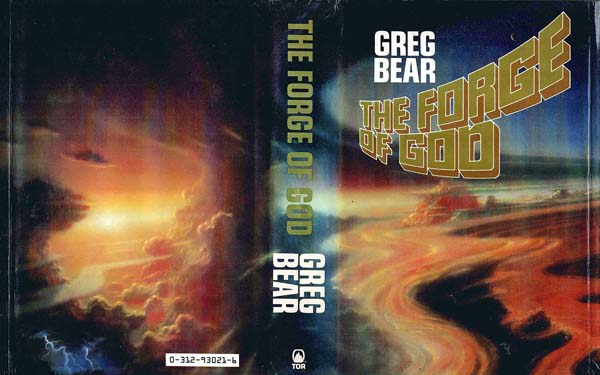
                • Cover of Forge of God
                  Forge of God

                  series · 2 books · 1987

                  completed

                  similar byaliensscience fictiondarktensesurvival+6 more

                  The Forge of God (1987) is Greg Bear's science fiction novel about Earth's discovery that it is the target of an incomprehensible, overwhelming alien attack, following scientists and ordinary people as they try to understand what is destroying the planet. Its 1992 sequel, Anvil of Stars, follows a group of young survivors sent on a mission of interstellar retaliation, continuing directly from the first book's ending.

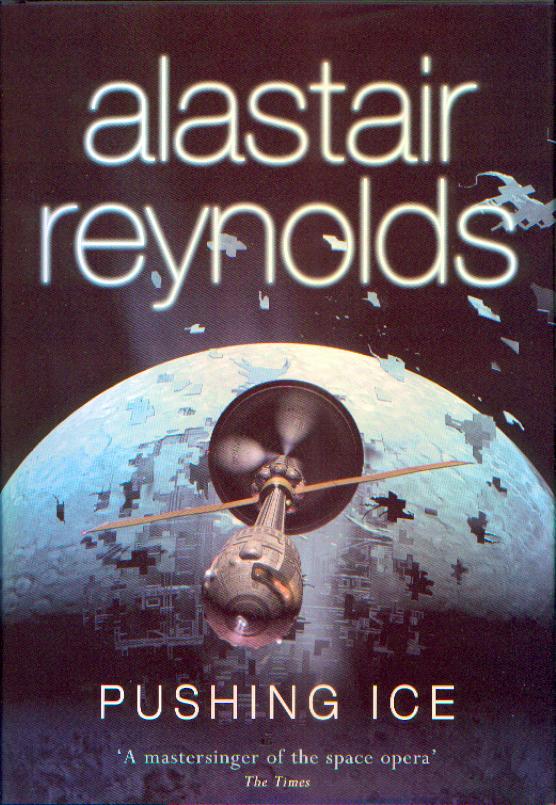
                • Cover of Pushing Ice
                  Pushing Ice

                  Alastair Reynolds · standalone novel · 2005

                  similar byfar futurescience fictiontensealienssurvivalspaceshipother star systemsspace exploration+2 more

                  When Saturn's moon Janus suddenly takes off into interstellar space, an ice mining spaceship sent to investigate finds itself swept along into distant space until it ends up trapped in a gigantic alien structure, wherein the crew must prepare to reside for the foreseeable future.

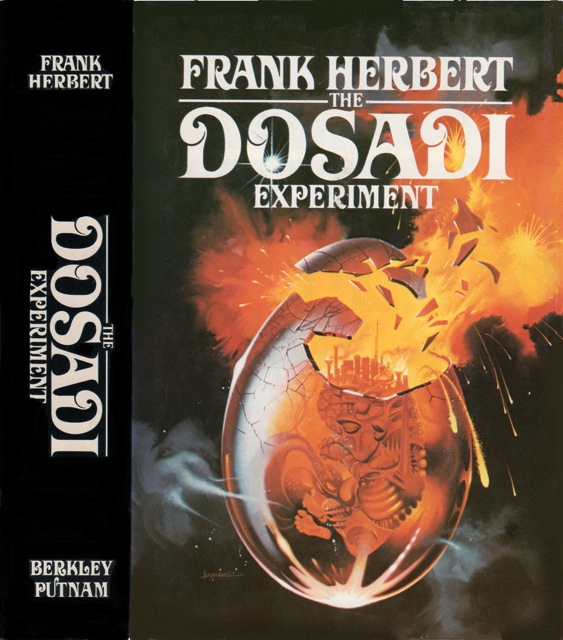
                • Cover of The Dosadi Experiment
                  The Dosadi Experiment

                  Frank Herbert · standalone novel · 1977

                  similar byfar futurescience fictiontensealienssurvivalother star systemsspace opera+2 more

                  From the flaps of the Berkley Putnam first edition: "In his first new work of science fiction since the best-selling Children of Dune, Frank Herbert returns to his world of Whipping Star, and involves Jorj X. McKie, Saboteur Extraordinary, in a new intrigue. In Whipping Star, McKie discovered that some of the stars in the universe are actually intelligent, super-powerful beings, and was able to befriend one of them, the star Alcyone - affectionately known as Fannie Mae. As The Dosadi Experiment opens, McKie is assigned to investigate the planet Dosadi, which is isolated from the rest of the galaxy by a "god-wall," a barrier set up by one of the intelligent stars. Dosadi is rumored to be an experimental planet, and the experimenters are the froglike Gowachin, whose culture is founded upon a strange legal system in which McKie is the only human ever trained. He learns that humans and Gowachin have been placed on Dosadi, without their consent, for an experiment that could last centuries: an experiment in extreme overcrowding. But this monstrous plot is apparently out of control, and it seems the Gowachin may be prepared to destroy Dosadi rather than expose its secret, thus breaking the peace among the races, and starting the first interstellar war. But this is just the beginning. When McKie finally reaches Dosadi he discovers that the Dosadis have taken control of their own evolution and produced a competitive, highly evolved elite, of both humans and Gowachin, who have been able to extrapolate the existence of a universe beyond the god-wall and hate whoever has imprisoned them like this. They plan to break out and avenge themselves on the galaxy."

                • Cover of Space Beagle
                  Space Beagle

                  series · 5 books · 1939

                  completed

                  similar byfar futurealiensscience fictiontensespaceshipspace explorationspace opera+1 more

                  The Voyage of the Space Beagle is a 1950 fix-up novel by A. E. van Vogt, stitched together from four previously published pulp stories into a single continuous account of the exploration ship Space Beagle's encounters with a series of dangerous alien life forms. Its episodic, crew-versus-monster structure reads as a loose sequence of adventures rather than one continuous plot.

                • Cover of Chanur
                  Chanur

                  series · 7 books · 1982

                  part of Alliance-Union Universe

                  similar byfar futurealiensscience fictiontensespaceshipother star systemsspace opera+1 more

                  The Chanur novels are a series of five science fiction novels, forming three separate stories, written by American author C. J. Cherryh and published by DAW Books between 1982 and 1992. The first novel in the series is The Pride of Chanur (1982), which was nominated for both the Hugo and Locus Awards in 1983. The Pride of Chanur, originally a stand-alone story, was followed by the Chanur's Venture trilogy, Chanur's Venture (1984), which was shortlisted for a Locus Award in 1985; The Kif Strike Back (1985) and Chanur's Homecoming (1986). These were followed by a later sequel, Chanur's Legacy (1992). The five novels were also published in two omnibus editions: the first three in The Chanur Saga in 2000 and the next two in Chanur's Endgame in 2007.

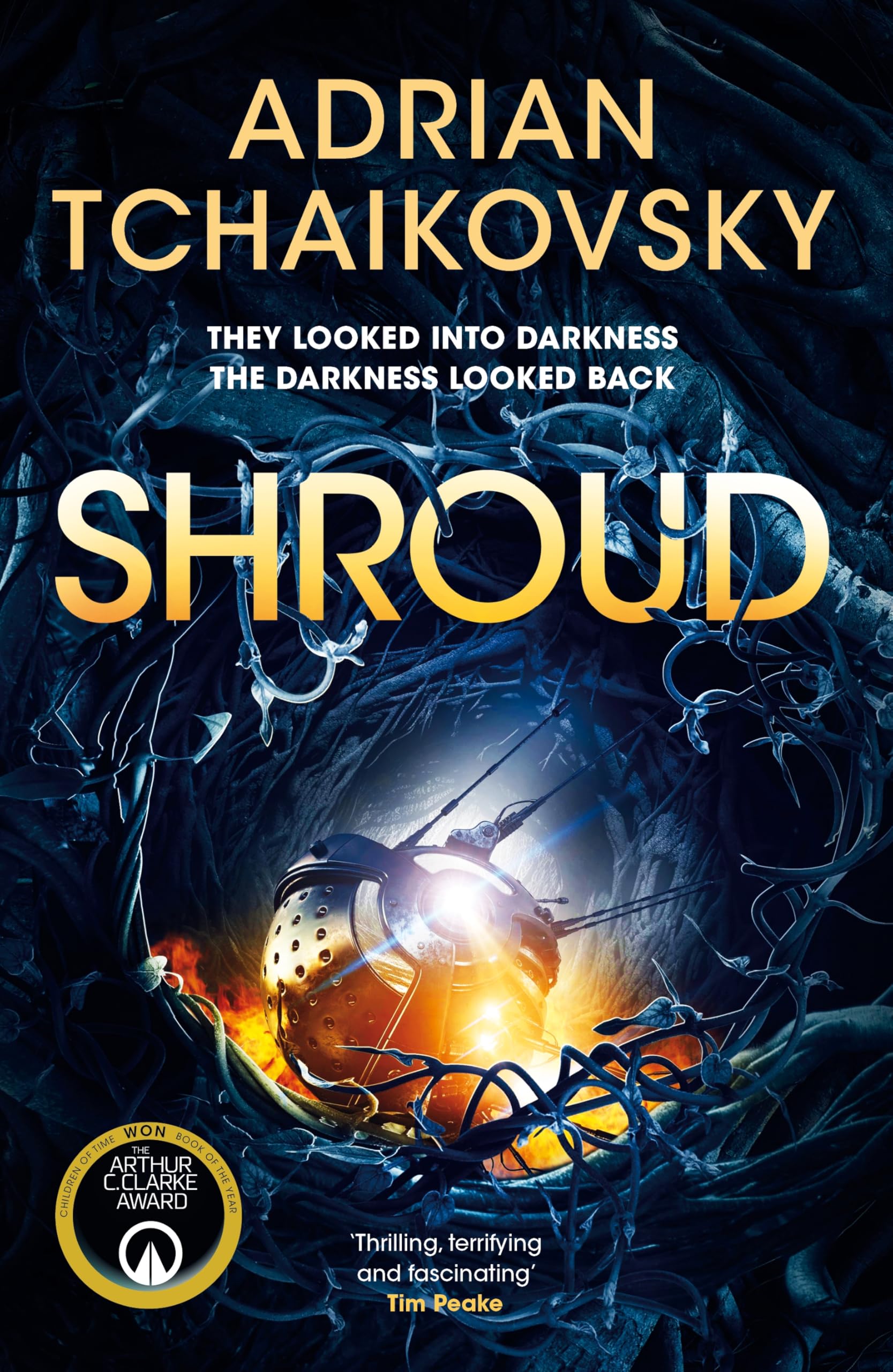
                • Cover of Shroud (Adrian Tchaikovsky)
                  Shroud (Adrian Tchaikovsky)

                  series · 2 books · 2024

                  similar byfar futuretensealienssurvivalscience fictionother star systemsspace exploration+1 more

                • Cover of Slow Train to Arcturus
                  Slow Train to Arcturus

                  Eric Flint & Dave Freer · standalone novel · 2008

                  similar byfar futurealiensscience fictiontensespaceshipsurvivalother star systemsspace opera+1 more

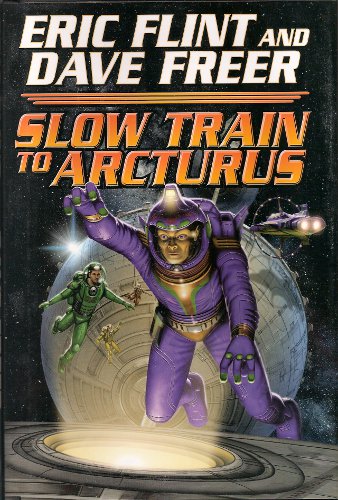
                  Sending a spaceship to rendezvous with an enormous vessel made up of a series of globular habitats approaching its star system, the aliens find a savage race calling themselves "humans" who promptly slaughter the exploration team, except for a single survivor who escapes to another habitat, where he finds more friendly humans whose help he requires to get back to his own ship.

                • Cover of Moties
                  Moties

                  series · 4 books · 1974

                  part of CoDominium

                  similar byfar futurescience fictionaliensother star systemsspace operafirst contact+2 more

                  Larry Niven and Jerry Pournelle's The Mote in God's Eye (1974) depicts humanity's first contact with an alien species, the Moties, set within the far-future interstellar setting of Pournelle's codominium future history. The Gripping Hand continues that first-contact crisis years later, and Outies, written by J. R. Pournelle, carries the story forward into a new generation. Together the three books trace an escalating encounter between human and Motie civilizations within the codominium universe.

                • Cover of Cycle of Fire
                  Cycle of Fire

                  Hal Clement · standalone novel · 1957

                  similar byfar futurealienssurvivalscience fictiontenseother star systems+1 more

                  After his ship crashed on the inhospitable planet Abyorman, Nils Kruger had spent weeks wandering across the face of the planet.suffering from blistering heat, the searing cold of an alien climate. Now he had found a fellow wanderer, Dar, an alien castaway. They may both die. The human opts to do something about it. Dar, who knows the time of his death in advance, opts to do nothing. Which of them is right? Perhaps both

                • Cover of Hunter's Run
                  Hunter's Run

                  Gardner Dozois, George R. R. Martin & Daniel Abraham · standalone novel · 2007

                  similar byfar futurealiensscience fictiontensesurvivalother star systemsspace opera+1 more

                  Hunter's Run is a 2007 science fiction novel written by Daniel Abraham, Gardner Dozois and George R. R. Martin. It is a heavily rewritten and expanded version of an earlier novella called Shadow Twin.

                • Cover of Fractalverse
                  Fractalverse

                  series · 2 books · 2020

                  similar byfar futurescience fictiontensealienssurvivalother star systemsspace explorationspace opera+1 more

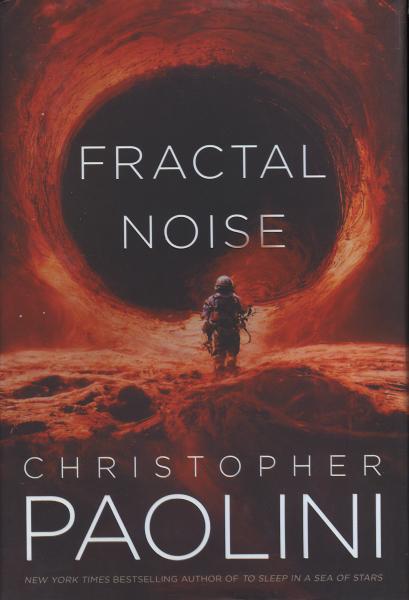
                  To Sleep in a Sea of Stars opens Christopher Paolini's Fractalverse with Kira Navárez, a xenobiologist whose survey of an unexplored planet triggers first contact with an ancient alien intelligence, dragging her and the wider human Alliance into a wider interstellar conflict for survival. Fractal Noise, a parallel entry, follows a separate crew investigating a mysterious signal-emitting structure on another world within the same universe. Both books were published between 2020 and 2023.

                • Cover of Xan-Sskarn War
                  Xan-Sskarn War

                  series · 1 book · 2010

                  similar byfar futuretensealiensscience fictiondarkother star systemsspace opera+1 more

                • Cover of The Exile Waiting
                  The Exile Waiting

                  Vonda N. McIntyre · standalone novel · 1975

                  similar byfar futurescience fictiondarktensealienssurvivalother star systems

                  From the front flap of the Gollancz first printing: The time is the distant future and Earth has been rendered uninhabitable for much of the year by terrible storms during which its only city, Center, constructed around a natural cave system, is closed off from the outside. Mischa, a young thief whose capabilities are enhanced by hereditary mutation, is trying to escape with her drug-addicted brother from the dominance of her uncle. So when a starship arrives commanded by the twin alien pseudosibs, Subone and Subtwo, Mischa seizes her chance. She is soon assigned for training to Jan Hikaru, who quickly realises that Mischa has immense abilities. All goes well until Subone, in a moment of cruelty, lures Mischa's brother into a fight and then kills him. Mischa attacks Subone and both she and Jan have to flee the wrath of the brothers and take refuge n the deep cave system underneath the city.

                • Cover of Stardeath
                  Stardeath

                  E. C. Tubb · standalone novel · 1983

                  similar byfar futuretensescience fictiondarksurvivalhorrorspaceship

                  Amazon: Ships occasionally disappeared in hyperspace, regrettable sacrifices to the luxury of faster than light travel. But now one of the lost ships has been found and the wreckage is enough to terrify even the most cold blooded witness. From the author of the Dumarest saga.

                • Cover of Dancers in the Afterglow
                  Dancers in the Afterglow

                  Jack L. Chalker · standalone novel · 1978

                  similar byfar futurescience fictiontensealiensspaceshipother star systemsrobotsspace opera+2 more

                  From the back cover: FIRST CAME THE TOURISTS... Ondine was a resort planet. Sixteen million tourists traveled there from just about every world you could think of to live and love in sixteen million different ways. THEN CAME THE MACHISTS... They had gobbled up world after world, spreading their culture to thousands of different races with a brutal, vicious, but most effective system. They were inhuman, unthinking... uncaring. The Combine had already seen what they had done on other worlds, seen whole populations converted into something horrible... something not quite human, non-thinking and no longer caring. Now they had captured Ondine, and no human could save the planet. AND THEN DANIEL CAME TO JUDGMENT Daniel was a cyborg, a former fighter pilot now wedded to a master computer and life-support system housed in a flying golden egg. He was the Combine scientists' finest creation, a spaceship that could control twenty-two robot slaves. He was the perfect savior for Ondine, but for one thing. Everyone seemed to forget that somewhere deep inside that golden egg was a very human being...

                • Cover of The City in the Middle of the Night
                  The City in the Middle of the Night

                  Charlie Jane Anders · standalone novel · 2019

                  similar byfar futurescience fictiondarktensealienssurvivalother star systems

                  The City In the Middle of the Night is a 2019 climate-fiction novel by Charlie Jane Anders. It is set on a tidally locked planet, where human life, surrounded by hostile alien life, is mostly divided between two archetypically different urban sites. The main story focuses on two characters whose actions take them outside of the cities.

                • Cover of The Final Architecture
                  The Final Architecture

                  series · 6 books · 2021

                  similar byfar futurealiensscience fictiontenseother star systemsspace explorationspace opera+1 more

                  The Final Architecture is a series of science fiction novels by British writer Adrian Tchaikovsky. It contains the books Shards of Earth, Eyes of the Void, and Lords of Uncreation. The series focuses on a group of humans fighting against the mysterious Architects, who destroy inhabited planets. The series has been well-received critically, with Shards of Earth winning the 2021 BSFA Award for Best Novel. The entire series was a finalist for the 2024 Hugo Award for Best Series.

                • Cover of Dreamcatcher
                  Dreamcatcher

                  Stephen King · standalone novel · 2001

                  similar bytensealiensscience fictiondarksurvivalhorror

                  Dreamcatcher is a 2001 science fiction horror novel by American writer Stephen King, featuring elements of body horror, suspense and alien invasion. The book, written in longhand, helped the author recuperate from a 1999 car crash, and was completed in half a year. According to the author in his afterword, the working title was Cancer. His wife, Tabitha King, persuaded him to change the title. A film adaptation was released in 2003.

                • Cover of Tunnel in the Sky
                  Tunnel in the Sky

                  Robert A. Heinlein · standalone novel · 1955

                  similar byfar futuresurvivalscience fictiontenseother star systemsspace exploration

                  As the final test of a survivalist/explorer class, teenagers are dumped on an alien planet to use their skills while awaiting pickup. But something has gone wrong, and they find they are on their own.

                • Cover of The Hunger Games
                  The Hunger Games

                  series · 3 books · 2008

                  part of The Hunger Games Universe

                  similar byfar futuretensescience fictiondarksurvival

                  The Hunger Games is a series of young adult dystopian novels written by American author Suzanne Collins. The series consists of a trilogy that follows teenage protagonist Katniss Everdeen, as well as two prequels. The Hunger Games universe is a dystopia set in Panem, a post-apocalyptic North American country consisting of the wealthy Capitol and 12 districts in varying states of poverty. As punishment for rebellion, the Capitol hosts an annual battle royale competition called The Hunger Games. Each of the 12 districts must send two children between the ages of 12 and 18 to participate, and the last surviving child is dubbed the victor.

                • Cover of Ship of Fools
                  Ship of Fools

                  Richard Paul Russo · standalone novel · 2001

                  similar byfar futurescience fictiontensespaceshipaliensspace explorationspace opera+3 more

                  A generation ship searching for inhabited planets is drawn by a beacon to a planet where all human residents have died violently; upon leaving, it encounters a mysterious giant ship of alien origin.

                • Cover of Ender Wiggin
                  Ender Wiggin

                  series · 14 books · 1977

                  part of Ender's Game Universe

                  similar byfar futurescience fictionaliensother star systems+2 more

                  Orson Scott Card's Ender's Game (1985, expanded from his 1977 novella) follows child prodigy Andrew "Ender" Wiggin as he is recruited into a military training program built to prepare Earth's defenses for an anticipated third war against an insectoid alien species known as the Formics. The saga continues years later through Speaker for the Dead and Xenocide, following an older Ender as he confronts the moral weight of his role in that earlier conflict, and concludes the core arc in Children of the Mind, with Ender in Exile filling in the years between the first two books. Set within the wider Ender's Game universe, the series shifts from military coming-of-age story to slower, more philosophical science fiction as it progresses.

                • Cover of Armor
                  Armor

                  John Steakley · standalone novel · 1984

                  similar byfar futurescience fictiondarktensealiensother star systems

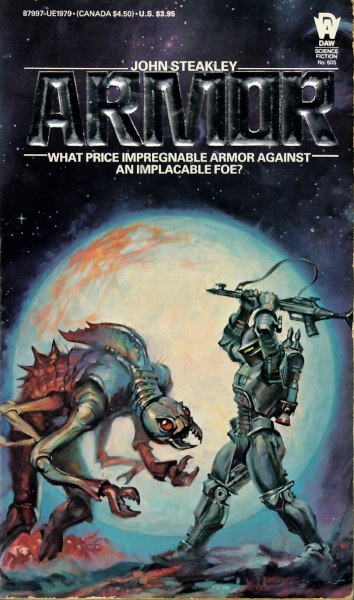
                  Armor is a military science fiction novel by John Steakley. It features the military use of exoskeletons and insect-like alien enemies but concentrates on the psychological effects of violence on human beings.

                • Cover of Berserker (Fred Saberhagen)
                  Berserker (Fred Saberhagen)

                  series · 59 books · 1963

                  similar byfar futurescience fictiontenseother star systemsrobotsspace opera+2 more

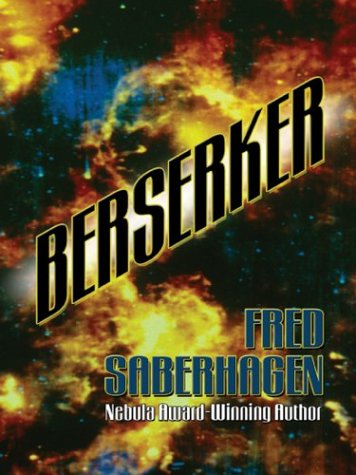
                  The Berserker series is a series of space opera science fiction short stories and novels by Fred Saberhagen, in which robotic self-replicating machines strive to destroy all life.