More like Alien Dust
anchored on:science fiction
but
- H. G. Wells' War of the Worlds
universe65 books1898
Start hereThe War of the Worlds · Start here
similar byscience fiction
No one would have believed, in the closing years of the nineteenth century, that human affairs were being watched keenly and closely from the timeless worlds of space. And then the cylinders fell. H. G. Wells' War of the Worlds opens in the quiet of the Surrey commons, where a falling star proves to be the first Martian craft — and from the pit rise the towering tripods, the Heat-Ray, the choking Black Smoke and the creeping red weed, wielded by minds that regard mankind much as we regard the creatures we boil for supper. This is invasion rendered as natural disaster: cold, methodical, and vast beyond argument. Wells' 1898 novel is the seed; everything else grows from that Martian soil. The catalogue gathers direct sequels and continuations alongside a wide field of other hands. In War of the Worlds: Global Dispatches the invasion is retold across the whole planet through the eyes of Twain, Verne, Tolstoy, Lowell and Kipling; in the Manly Wade and Wade Wellman crossover, Sherlock Holmes, Watson and Professor Challenger take the field against the machines; and Scott Washburn's Great Martian War stretches the fighting into a decades-long alternate history of steam, artillery and grinding attrition. It is a loose shared world — no single decreed sequence, many voices answering one calamity. What sets this world apart is its refusal of heroics: the invaders fall not to generals but to the smallest things of Earth, humbling and indifferent. Begin, always, with Wells' original novel — it is short, and it is the ground every later book stands upon. From there follow your appetite: Global Dispatches for the panorama, the Holmes campaign for adventure, Washburn for the long war.
- Future History
series42 books1939
completed
similar byscience fiction+2 more
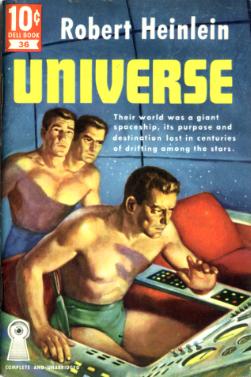
The Future History is a series of science fiction stories written by American author Robert A. Heinlein (1907–1988). It describes a projected future of the human race from the middle of the 20th century through the early 23rd century. The term Future History was coined by John W. Campbell Jr. in the February 1941 issue of Astounding Science Fiction. Campbell published an early draft of Heinlein's chart of the series in the May 1941 issue.
- Thunder and Lightning
series4 books2003
completed
similar byscience fictionadventurousnear future+3 more
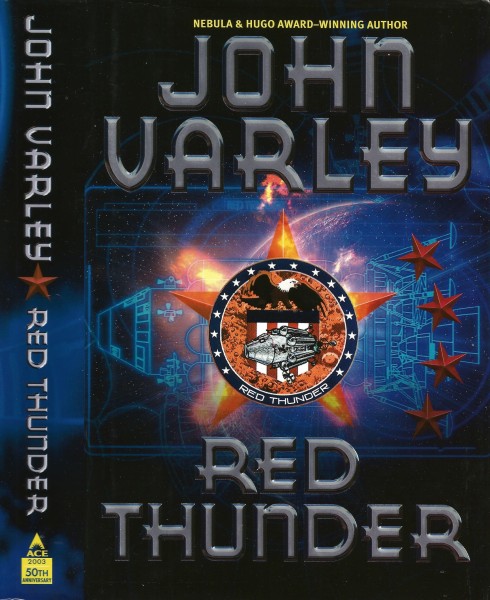
John Varley's Thunder and Lightning books follow the Broussard family across two generations as a backyard fusion-power breakthrough turns an eccentric Florida inventor's homemade spacecraft into the opening move of an independent human expansion to Mars and beyond. Red Thunder and Red Lightning follow the first generation's improvised trip to Mars; Rolling Thunder and Dark Lightning pick up decades later with their descendants.
- Cities in Flight
series10 books1950
completed
similar byscience fictionspace colonization+2 more
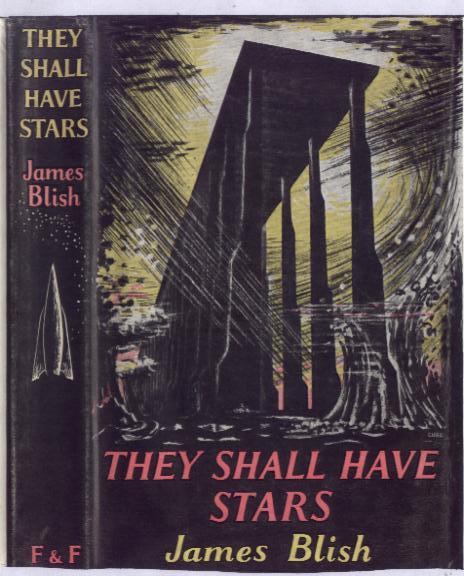
Cities in Flight is a four-volume series of science fiction novels and short stories by American writer James Blish, originally published between 1950 and 1962, which were first known collectively as the "Okie" novels. The series features entire cities that are able to fly through space using an anti-gravity device, the spindizzy. The stories cover roughly two thousand years, from the very near future to the end of the universe. One story, "Earthman, Come Home", won a Retro Hugo Award in 2004 for Best Novelette. Since 1970, the primary edition has been the omnibus volume first published in paperback by Avon Books. Over the years James Blish made many changes to these stories in response to points raised in letters from readers.
- Bronson Beta
series5 books1933
similar byscience fiction+4 more
When Worlds Collide (1933) and its sequel After Worlds Collide (1934), written together by Edwin Balmer and Philip Wylie, follow a small group of survivors who escape a doomed Earth as the rogue planet Bronson Alpha destroys it, landing on its companion world Bronson Beta to begin again. The two novels form a self-contained disaster-and-survival duology.
- Man Plus
series2 books1976
similar byscience fictionspace colonizationmarsnear future
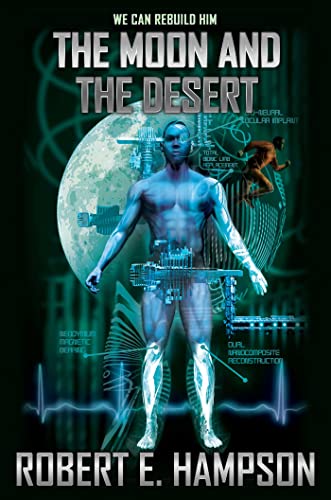
Frederik Pohl's Man Plus follows Roger Torraway, who is surgically and cybernetically rebuilt into a post-human organism able to survive unprotected on the Martian surface, as part of a crash program to colonize Mars ahead of a predicted global crisis. The 1976 novel, which won the Nebula Award, is a clinical, unsentimental look at what such a transformation costs a person's sense of self. Thomas T. Thomas wrote the sequel Mars Plus, continuing the story of the Martian colony years later.
- The Long Earth
series7 books2012
similar byscience fictionadventurousnear future
Terry Pratchett and Stephen Baxter's Long Earth series (five novels, 2012-2016) begins when a cheap, simple device called a Stepper lets people step sideways into a vast, possibly infinite chain of parallel Earths, none of which developed human civilization. The books follow a natural stepper and an AI that believes itself the reincarnation of a Tibetan repairman as they travel millions of steps out along the chain, encountering other hominid species and the dangers, ecological and social, of an endless open frontier.
- Near Space
series30 books1988
similar byscience fictionnear future+1 more
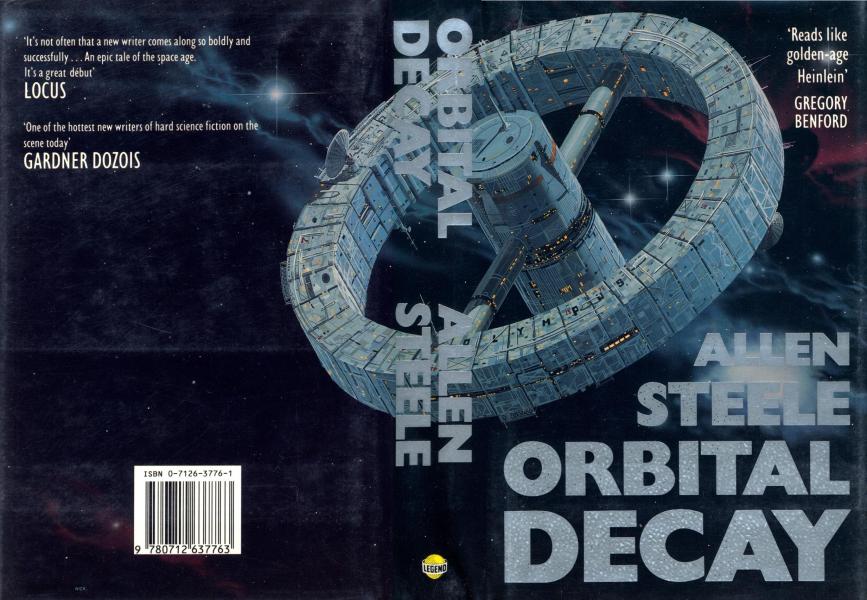
Allen Steele's Near Space novels are near-future, blue-collar hard SF set during the early decades of space industrialization, following working astronauts, engineers, and colonists rather than explorers or soldiers. Orbital Decay follows construction workers on an orbital satellite-assembly project who stumble into an espionage plot; later entries such as Clarke County, Space and Lunar Descent move outward to an orbital colony and a lunar mining operation. The loosely connected novels and story collections share a plausible, unglamorous near-future setting that predates Steele's later Coyote sequence.
- Adventures of Viktor & Julia
series2 books1999
similar byscience fictionadventuroussurvivalnear future+1 more
- To the Stars (Harrison)
series3 books1980
completed
similar byscience fiction+4 more
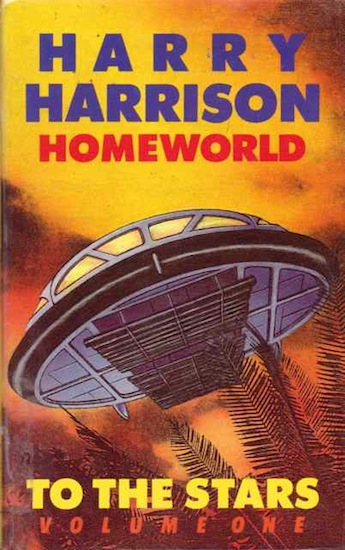
The To the Stars trilogy is a series of science fiction novels by Harry Harrison, first published in 1980 (Homeworld) and 1981. The three books were re-published in an omnibus edition in 1981.
- Poseidon's Children
series3 books2012
similar byscience fictionspace colonization+2 more
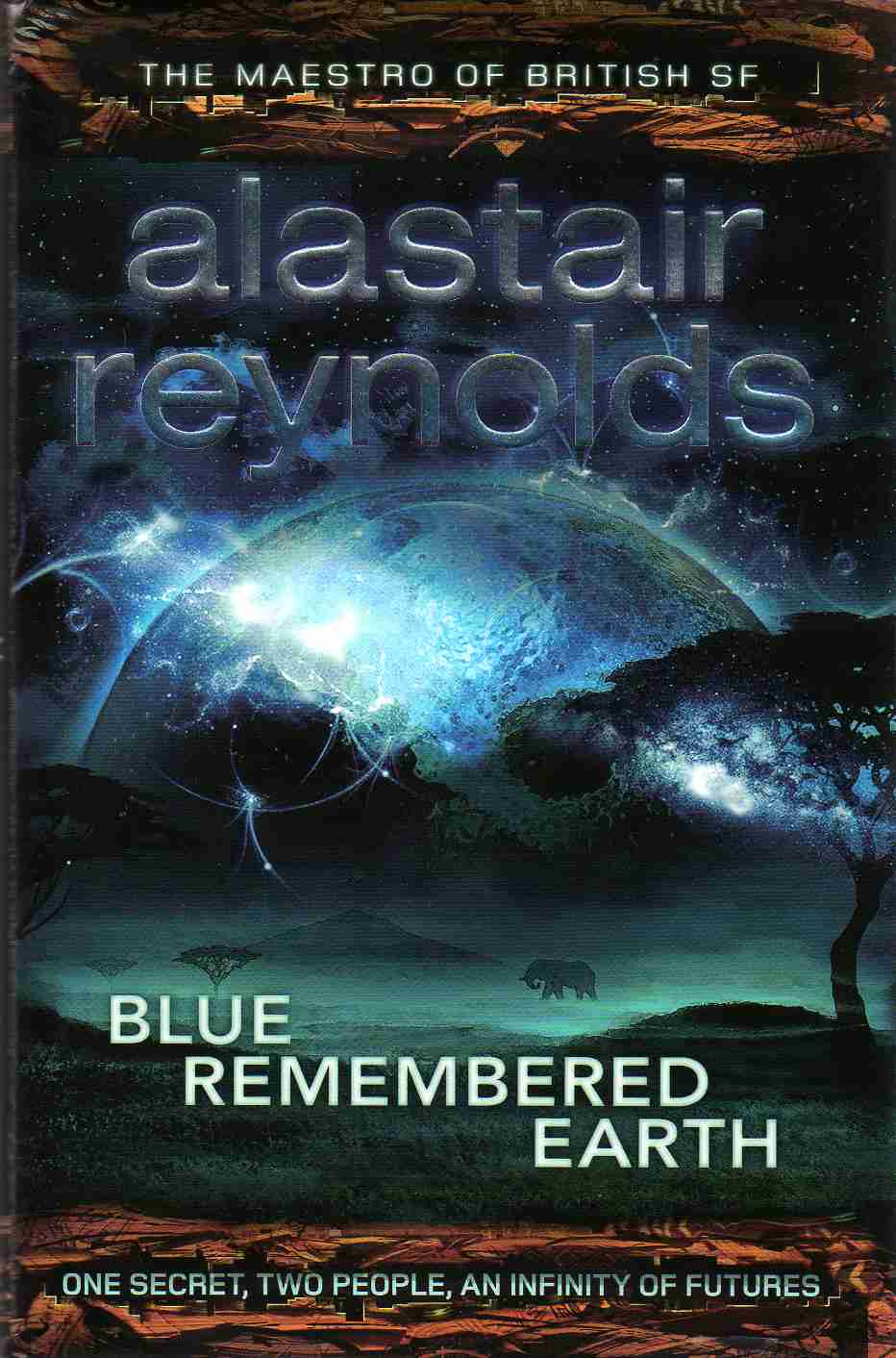
Alastair Reynolds' Poseidon's Children trilogy follows humanity — and its transhuman descendants — expanding into the galaxy over the course of centuries, beginning with Blue Remembered Earth (2012) and continuing through On the Steel Breeze and the concluding Poseidon's Wake (2015).
- Laurie Jo Hansen
series10 books1971
completed
part of CoDominium
similar byscience fictionspace colonizationnear future+1 more
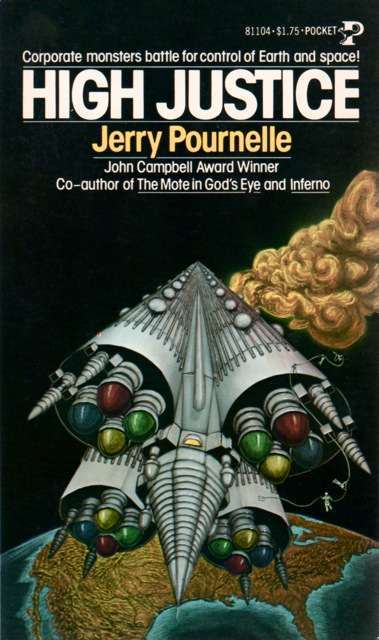
Laurie Jo Hansen groups Jerry Pournelle's early CoDominium-universe stories and the novel Exiles to Glory (1978), part of the same future history that produced his Falkenberg's Legion novels.
- Podkayne of Mars
Robert A. Heinleinstandalone novel1963
similar byscience fictionadventurousmarsnear future
From the back cover of the Baen 1995 edition: "Meet Podkayne Fries, a thoroughly modern Martian Ms. who thinks that Earth is not really fit for habitation and that humanity evolved in the now-exploded Fifth Planet. Poddy has one goal in life, to be the first female starship captain. She has her strategy all scoped out, and with her determination, looks and I.Q. she'll get there, never you doubt! But all work and no play would make Poddy a Dull Girl, so when a chance comes her way to travel to distant Earth via Venus with her elderly uncle, Poddy jumps at it, even if it does mean having her loathsome little brother along for the trip: Travel, Adventure, the chance to cuddle up (in a nice way) with real spaceship officers and ruthlessly pump their brains - she'll have it all. What Poddy doesn't know is that "Unca Tom" is more than her warmly supportive relative: he is also the Ambassador Plenipotentiary from Mars to the Three Planets Conference (travelling not quite incognito enough) and that certain people will stop at nothing to gain control of his vote - including kidnapping and doing terrible things to sweetly innocent Poddy Fries..."
- Red Planet
Robert A. Heinleinstandalone novel1949
similar byscience fictionadventurousspace colonizationmars
A boy colonist on Mars takes his bouncing ball Martian pet with him to boarding school, but the new Headmaster is a controlling tyrant. Things get worse when he discovers a plot that will jeopardize all of the colonists.
- Farmer in the Sky
Robert A. Heinleinstandalone novel1950
similar byscience fictionadventurousspace colonizationsurvival
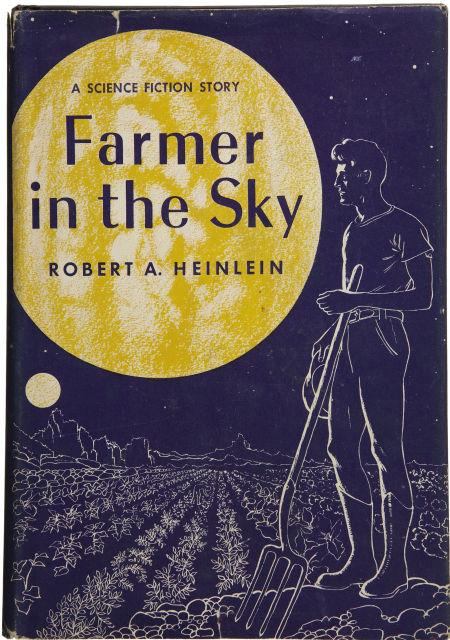
A family emigrates to the new colony on Ganymede, but the existing colonists do not have the resources to support a flood of immigrants. The teenage son, a boy scout, works to invigorate their barren holding without any technological support. Things come to a head when disaster strikes.
- A Fall of Moondust
Arthur C. Clarkestandalone novel1961
similar byscience fictionadventuroussurvivalnear future
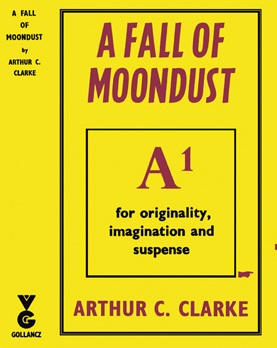
From the back cover of the Harbrace paperback: "The action of A Fall of Moondust takes place almost a century from now when tours on the moon are a common occurrence. One of the high points of each tour is a cruise around the Sea of Thirst, a body of volcanic dust, in a specially designed vessel called the Selene On a perfectly routine voyage one day the Selene suddenly disappears. How do you locate a small tourist "cruiser" buried beneath fifty feet of dust? If you find it, how do you rescue the passengers and crew? If you are on board, how do you feel and what do you do while brave men and expert technicians join forces in a race against time? Sustained excitement, lively humor, and an engaging cast of characters make this one of Arthur C. Clarke's most intriguing novels."
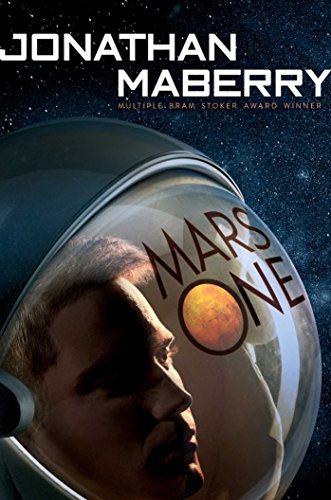
- Mars One
Jonathan Maberrystandalone novel2017
similar byscience fictionadventurousspace colonizationsurvivalmarsnear future
Go on the adventure of a lifetime with a teen and his family after they are selected to colonize Mars.