More like Alien Nation
anchored on:science fictionour world
but
- Foundation Universe
universe123 books1940
Start hereFoundation · Start here
similar byscience fiction+1 more
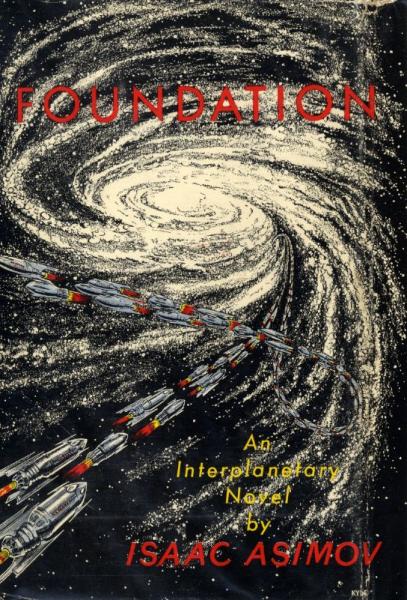
There is a science that reads the future of quadrillions the way an astronomer reads the orbits of stars. It is called psychohistory, and its equations foresee something the ruling Galactic Empire cannot admit: the throne is rotting, and thirty thousand years of barbarism are coming. One man, Hari Seldon, cannot stop the fall. He can only shorten it — by seeding a Foundation of scholars at the rim of the galaxy, a fragile institution built to carry knowledge across the dark and cut the interregnum to a single millennium. This is a universe told in the register of history itself: the long view, the calm of deep time, empires measured in centuries and men measured against them. The spine is Asimov's original trilogy — Foundation, Foundation and Empire, Second Foundation — followed decades later by the sequels Foundation's Edge and Foundation and Earth and the prequels Prelude to Foundation and Forward the Foundation. Late in life Asimov braided this in with his other future histories: the Robot novels of detective Elijah Baley and his humaniform partner R. Daneel Olivaw (The Caves of Steel, The Naked Sun, The Robots of Dawn, Robots and Empire) and the early Galactic Empire novels (Pebble in the Sky and its kin), until one continuous chronicle ran from the first thinking robots to the Second Empire. Other hands extend it — the Second Foundation Trilogy by Gregory Benford, Greg Bear, and David Brin, and shared-world spinoffs such as Robot City — so the corpus sprawls beyond a single author's tidy shelf. What distinguishes it is that the drama is intellectual: crises resolved by insight, nerve, and dialogue rather than fleets and blades, each turn hinging on the hidden logic of the Seldon Plan. Begin where readers have always begun — with Foundation, and the original trilogy in publication order. The rest opens outward from there.
- Contact
Carl Saganstandalone novel1985
similar byreflectivescience fictionalienscontemporaryour worldfirst contact+1 more
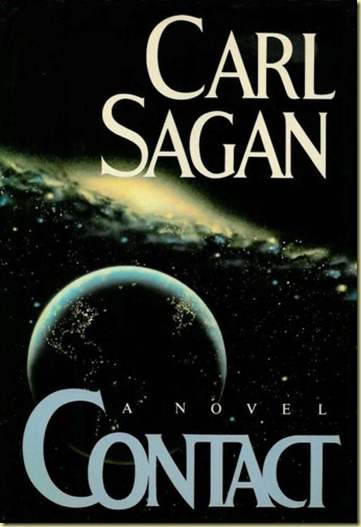
From the front flap of the Simon and Schuster first edition: For centuries humanity has dreamed of life and intelligence beyond the Earth; for decades scientists have searched for it in every corner of the sky; for years Project Argus, a vast, sophisticated complex of radio telescopes, has listened for a signal indicating the existence, somewhere in the universe, of extraterrestrial intelligence. Then, one afternoon, the course of human history is changed, abruptly and forever. The Message, awaited for so long, its very possibility doubted by so many, arrives. Contact has been made. Life, intelligence, someone, something beyond Earth, 26 light-years away, in the vicinity of the star Vega, is calling, beaming across space a wholly unexpected message to say that we are not - have never been - alone. In Contact, Carl Sagan, whose Cosmos enthralled millions of readers and television viewers, has brilliantly employed the freedom of fiction to imagine the greatest adventure of all - humanity's first encounter with other intelligent beings. But the novel is not only about contact between humans and extraterrestrials; it is also about contact, down here on Earth, with each other and ourselves. At its center is a brilliant scientist, Eleanor Arroway, director of Project Argos, who is the first to realize that chapter one of human history is over. It is she who is instrumental in decoding the Message - and in persuading world leaders not to treat it as a threat - she who finds her own life changed by the immense challenge of responding to the Message; she who finally journeys out to experience, in circumstances at once profoundly religious and scientific, the most fateful encounter in human history.
- The Dreaming Jewels
Theodore Sturgeonstandalone novel1950
similar byscience fictioncontemporaryour world+2 more
The Dreaming Jewels (1950), also known as The Synthetic Man, is a science fiction novel by American writer Theodore Sturgeon. It was his first published novel.
- Childhood's End
Arthur C. Clarkestandalone novel1953
similar byreflectivescience fictionaliensour worldfirst contact
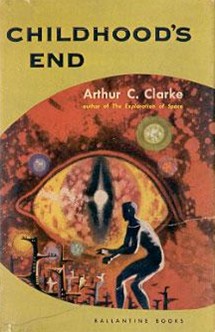
Childhood's End is a 1953 science fiction novel by the British author Arthur C. Clarke. The story follows a peaceful alien invasion of Earth by mysterious Overlords, whose arrival begins decades of apparent utopia under indirect alien rule, at the cost of human identity and culture.
- Chocky
series2 books1968
similar byscience fictionalienscontemporary+2 more
Chocky (1968) is John Wyndham's science fiction novel about an eleven-year-old boy, Matthew, whose parents grow alarmed by his conversations with an unseen presence that feeds him unsettling insights into mathematics and human progress, building toward the reveal of what, or who, Chocky really is. Mark Daniel's Chocky's Challenge (1986), published after Wyndham's death, is an authorized continuation that carries the story forward.
- Stranger in a Strange Land
Robert A. Heinleinstandalone novel1961
similar byreflectivescience fictionaliensour worldfirst contactnorth america
Stranger in a Strange Land is a 1961 science fiction novel by the American author Robert A. Heinlein. It tells the story of Valentine Michael Smith, a human who comes to Earth in early adulthood after being born on the planet Mars and raised by Martians, and explores his interaction with and eventual transformation of Terran culture.
- Calculating God
Robert J. Sawyerstandalone novel2000
similar byreflectivescience fictionalienscontemporaryour worldfirst contact
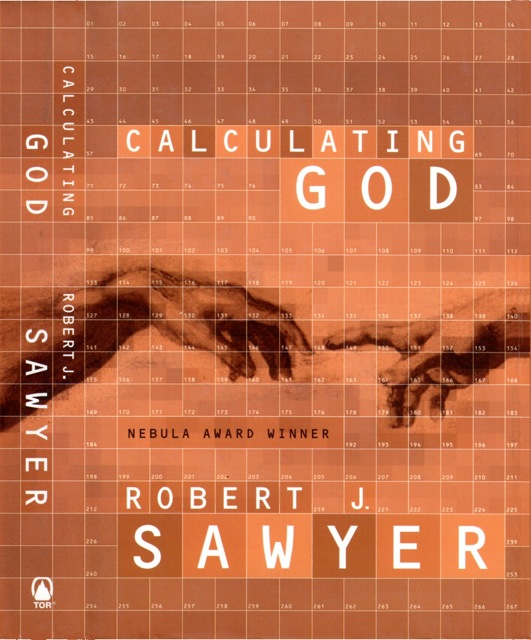
Calculating God is a 2000 science fiction novel by Canadian writer Robert J. Sawyer. It takes place in the present day and describes the arrival of sentient aliens on Earth. The bulk of the novel covers the many discussions and arguments on this topic, as well as the nature of belief, religion, and science. Several planetary civilizations illustrate the logical conclusion of the Fermi paradox.
- The Martian Chronicles
series30 books1946
completed
similar byreflectivescience fiction+1 more
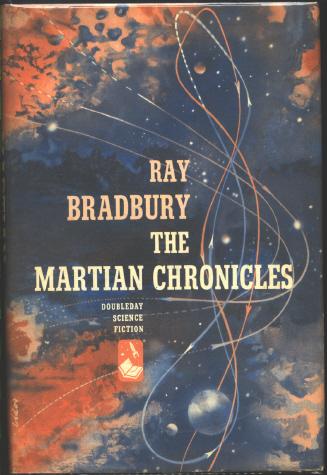
The Martian Chronicles (1950) is Ray Bradbury's fix-up novel, a chain of linked short stories following waves of settlers leaving a troubled Earth to colonize Mars and encountering its native Martians, before Earth itself is ultimately consumed by nuclear war.
- The Fresco
Sheri S. Tepperstandalone novel2000
similar byscience fictionalienscontemporaryour worldfirst contact+1 more
The Fresco is a science fiction novel by American writer Sheri S. Tepper, published in 2000. It describes Earth's contact with a confederation of intelligent alien races. The Fresco was on the shortlist for 2001 James Tiptree, Jr. Award
- Camouflage
Joe Haldemanstandalone novel2004
similar byreflectivescience fictionalienscontemporaryour world
Camouflage is a 2004 science fiction novel by American writer Joe Haldeman. It won the James Tiptree, Jr. Award in 2004 and the Nebula Award for Best Novel in 2005.
- The Hercules Text
Jack McDevittstandalone novel1986
similar byreflectivescience fictionalienscontemporaryour worldfirst contactnorth america
The Hercules Text is a 1986 science fiction novel by American writer Jack McDevitt. It tells the story of a message of intelligent extraterrestrial origin received by SETI scientists. The Hercules Text was nominated for the Philip K. Dick Award in 1986.
- Beyond the Labyrinth
Gillian Rubinsteinstandalone novel1988
similar byreflectivescience fictionalienscontemporaryour worldfirst contact
Fourteen-year-old Brenton questions the choices in his life when an alien anthropologist arrives to study an ancient Aboriginal tribe that once lived in the area around his home.
- Neanderthal Parallax
series3 books2002
similar byscience fictioncontemporary+4 more
The Neanderthal Parallax is a trilogy of novels written by Robert J. Sawyer and published by Tor. It depicts the effects of the opening of a connection between two versions of Earth in different parallel universes: the world familiar to the reader, and another where Neanderthals became the dominant intelligent hominid. The societal, spiritual, and technological differences between the two worlds form the focus of the story.
- The Jonah Kit
Ian Watsonstandalone novel1975
similar byreflectivescience fictionalienscontemporaryour world
The Jonah Kit is a 1975 science fiction novel by English writer Ian Watson. In 1977, The Jonah Kit won the BSFA Award for Best Novel.
- The Man Who Fell to Earth
Walter Tevisstandalone novel1963
similar byreflectivescience fictionaliensour worldnorth america
The Man Who Fell to Earth is a 1963 science-fiction novel by American writer Walter Tevis. Published by Gold Medal Books as a paperback original, it was Tevis's second novel, following The Hustler. The novel follows Thomas Jerome Newton, an extraterrestrial from the drought-stricken planet Anthea, who comes to Earth hoping to build a spacecraft that can save the surviving members of his species.
- Hard Landing
Algis Budrysstandalone novel1993
similar byreflectivescience fictionalienscontemporaryour worldfirst contactnorth america
When an alien spacecraft crashes into a swamp on the US Atlantic coast, the fates of the humanoid surviving crew members are described as they separate and attempt to avoid discovery by blending into the American public.
- Patternist
series6 books1976
completed
similar byscience fiction+4 more
The Patternist series is a group of science fiction novels by Octavia E. Butler that detail a secret history continuing from the Ancient Egyptian period to the far future that involves telepathic mind control and an extraterrestrial plague. A profile of Butler in Black Women in America notes that the themes of the series include "racial and gender-based animosity, the ethical implications of biological engineering, the question of what it means to be human, ethical and unethical uses of power, and how the assumption of power changes people."
- This Immortal
series2 books1966
similar byreflectivescience fictionaliensour world
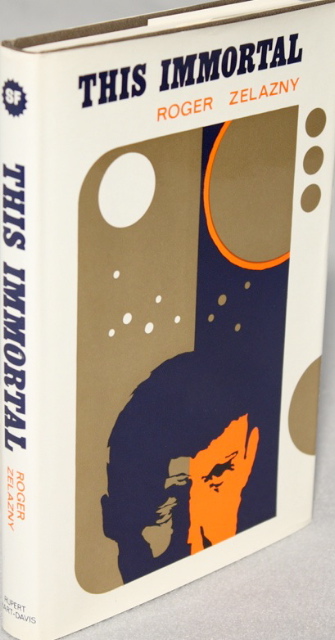
This Immortal is a single science fiction novel by Roger Zelazny, expanded from his 1965 serial ...And Call Me Conrad. In a depopulated future Earth largely toured by an alien race, its long-lived, secretive protagonist Conrad Nomikos is assigned to guide and protect a visiting alien across the ruins of Greece and Egypt, uncovering old grudges and assassination plots along the way. The novel shared the 1966 Hugo Award for Best Novel with Frank Herbert's Dune.
- Hainish
series33 books1964
completed
similar byreflectivescience fiction+1 more
The Hainish Cycle consists of a number of science fiction novels and stories by Ursula K. Le Guin. The cycle is set in a future history that features civilizations of human beings on planets orbiting a number of nearby stars, including Terra ("Earth"); these humans are contacting each other for the first time and establishing diplomatic relations, as well as setting up a confederacy under the guidance of the oldest of the human worlds, the peaceful planet Hain. In this history, human beings did not evolve on Earth, but they were instead the result of interstellar colonies planted by Hain in the distant past, after which interstellar travel ceased for an extended period. Some of the human races have new genetic traits, a result of ancient Hainish experiments in genetic engineering; this includes people who can dream while awake, and a world of hermaphroditic people who only enter active sexuality once per month, not knowing which sex will manifest in them. In keeping with Le Guin's narrative approach, she uses varied social and environmental settings to explore the anthropological and sociological outcomes of human evolution in those environments. The author often discounted the characterization of a so-called "Hainish Cycle".
- Ormingat Trilogy
series3 books2000
completed
similar byscience fictionalienscontemporaryour world+1 more
- The People
series33 books1952
completed
similar byscience fictionnorth america+2 more
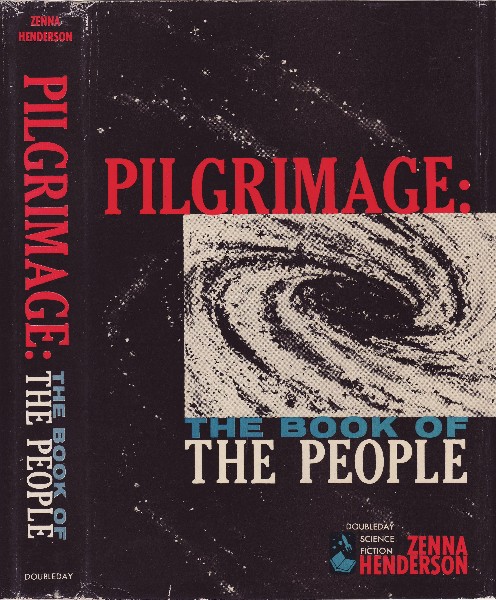
The People follows a group of telepathic, gifted humanoids who crash-landed in the American frontier generations ago and now live quietly scattered among ordinary humans, hiding their abilities while raising children who must learn to control powers that frighten their neighbors. Zenna Henderson told their story mostly through linked short fiction, gathered into the fix-up novels Pilgrimage and The People: No Different Flesh and later omnibus collections. It's less a plotted series than a mosaic of related stories about faith, belonging, and exile.
- Ender Wiggin
series14 books1977
part of Ender's Game Universe
similar byscience fictionaliens+1 more
Orson Scott Card's Ender's Game (1985, expanded from his 1977 novella) follows child prodigy Andrew "Ender" Wiggin as he is recruited into a military training program built to prepare Earth's defenses for an anticipated third war against an insectoid alien species known as the Formics. The saga continues years later through Speaker for the Dead and Xenocide, following an older Ender as he confronts the moral weight of his role in that earlier conflict, and concludes the core arc in Children of the Mind, with Ender in Exile filling in the years between the first two books. Set within the wider Ender's Game universe, the series shifts from military coming-of-age story to slower, more philosophical science fiction as it progresses.