More like Alien Rapunzel
anchored on:science fictionfar futurefairy tale retellingother star systems
but
- Anna Nestor-Sigrid / The Aighors
series4 books1975
completed
similar byfar futureother star systemsscience fictionaliens+1 more
Beyond Heaven's River follows Yoshio Kawashita, a soldier abducted mid-battle during World War II and stranded by unknown aliens on a distant world he can never leave, whose only tie back to meaning is Anna Nestor, a ruthless interstellar power broker who first treats him as a curiosity before the two are forced to confront who took him and why. Greg Bear wrote it as a standalone 1980 novel rather than the start of a series.
- Dare
Philip José Farmerstandalone novel1965
similar byforbidden lovefar futureother star systemsscience fictionaliens
Jack Cage lived on the planet Dare. He knew that he was human, and that he was the oldest son of a wealthy human farmer. But he hardly dared admit to himself, let alone to his family, the keen interest he felt in the 'native' inhabitants of Dare - those spectacularly beautiful humanoid creatures whose magnificent hair, growing clear down to the base of the spine, had given them their name of "horstel". It was death for any human to consort with any horstel after they became adult. For the humans of Dare still lived by the standards and mores of three hundred years before when they had been mysteriously whisked away from Earth and brought to this new planet. Except that Jack Cage suspected this was no mystery to the horstels... (from the back cover of the Ballantine Books first edition)
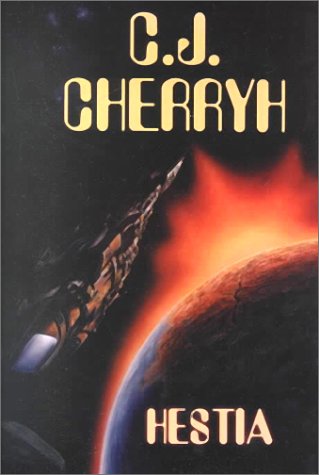
- Hestia
C. J. Cherryhstandalone novel1979
similar byfar futureother star systemsscience fictionaliens+1 more
Hestia is a 1979 science fiction novel by American writer C. J. Cherryh. It is an early novel in her career, about colonists on an alien world and their interactions with the catlike natives, centering on a young engineer sent to solve the colonists' problems, and his relationship with the young native cat-woman in scanty clothing on the cover.
- Pip & Flinx
series18 books1972
part of Humanx Commonwealth
similar byfar futureother star systemsscience fictionaliens
The Pip & Flinx novels follow Flinx, a young man with an unusual, mysterious origin, and his ever-present animal companion Pip, across Alan Dean Foster's Humanx Commonwealth setting. Beginning with The Tar-Aiym Krang (1972) — chronologically the second entry, since Foster later filled in Flinx's earlier life — the series grew to fifteen novels published between 1972 and 2017, mixing planetary adventure with a slowly unfolding personal mystery.
- The Eternal Frontiers
James H. Schmitzstandalone novel1973
similar byfar futureother star systemsscience fiction+1 more
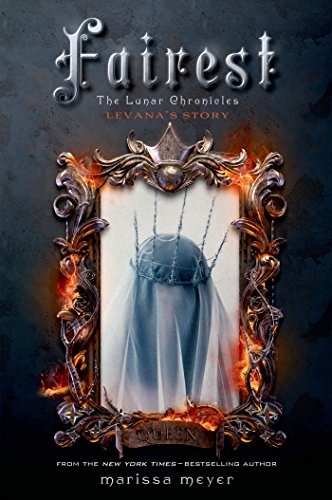
- Lunar Chronicles
series15 books2011
similar byfar futureother star systemsscience fictionfairy tale retelling+1 more
The Lunar Chronicles is a series of four young adult science fiction novels, a novella, and a short story collection written by American author Marissa Meyer and published by Feiwel & Friends. Each book entails a science fictional twist on a classic fairy tale, including "Cinderella", "Little Red Riding Hood", "Rapunzel", and "Snow White". Set in a futuristic world inhabited by various species and creatures, tensions are rising between Earth and its former colony Luna, while both attempt to manage an ongoing pandemic.
- LySanTer (Future Fantasy Romance)
series3 books1990
completed
similar byother star systemsfar futureromance+4 more
- The Sardonyx Net
Elizabeth A. Lynnstandalone novel1981
similar byfar futureother star systemsscience fiction+1 more
From the flaps of the Putnam first edition: "The Sardonyx Net, also known as the Yago Net: a vast starship owned and operated by the Family Yago, captained by Zed Yago. It visits all planets in the Sardonyx Sector of space, picking up special cargo - convicted felons who will serve our their terms as dorazine-drugged slaves to the wealthy land and factory owners on the planet Chabad. But often their ordeal begins even before the are sold, for Zed Yago is a man with a taste for sadism. The slave trade is the most lucrative business on Chabad. It is controlled totally by the Family Yago, headed by Zed's older sister Rhani, who is the only woman Zed has truly loved. Rhani is a shrewd businesswoman with only one weakness: a heart as compassionate as her brother's is perverse. While the authorities of the Sector's other planets look away, the Families of Chabad purchase dorazine from representatives of a secret, unlocatable source known as The Pharmacy, and use it to keep their slave-based economy healthy. Not one protests, for Chabad's illegal and inhumane activities keep prisons empty, criminals under control, and Chabad's valuable exports flowing. Despite constant underground revolutionary activity, the situation has maintained. But he long-lived stability of this sanctioned trade in illegal drugs and human beings is now threatened by two unexpected events: a worsening shortage of dorazine which is sparking more rebellion, and the arrival of Starcaptain Dana Ikoro. Dana, as drug smuggler, is captured by the Net and delivered from Zed's hands to Rhani. He is to be her bodyguard, but becomes much more. Against this incredible background, Lynn tells an irresistible story of adventure, intrigue, revolution and romance. It is a story of people snared in a net of warring passions, a net which will prove to be even stronger than the power of the Sardonyx Net."
- Hainish
series33 books1964
completed
similar byfar futureother star systemsscience fiction+1 more
The Hainish Cycle consists of a number of science fiction novels and stories by Ursula K. Le Guin. The cycle is set in a future history that features civilizations of human beings on planets orbiting a number of nearby stars, including Terra ("Earth"); these humans are contacting each other for the first time and establishing diplomatic relations, as well as setting up a confederacy under the guidance of the oldest of the human worlds, the peaceful planet Hain. In this history, human beings did not evolve on Earth, but they were instead the result of interstellar colonies planted by Hain in the distant past, after which interstellar travel ceased for an extended period. Some of the human races have new genetic traits, a result of ancient Hainish experiments in genetic engineering; this includes people who can dream while awake, and a world of hermaphroditic people who only enter active sexuality once per month, not knowing which sex will manifest in them. In keeping with Le Guin's narrative approach, she uses varied social and environmental settings to explore the anthropological and sociological outcomes of human evolution in those environments. The author often discounted the characterization of a so-called "Hainish Cycle".
- Ender Wiggin
series14 books1977
part of Ender's Game Universe
similar byother star systemsfar futurescience fictionaliens
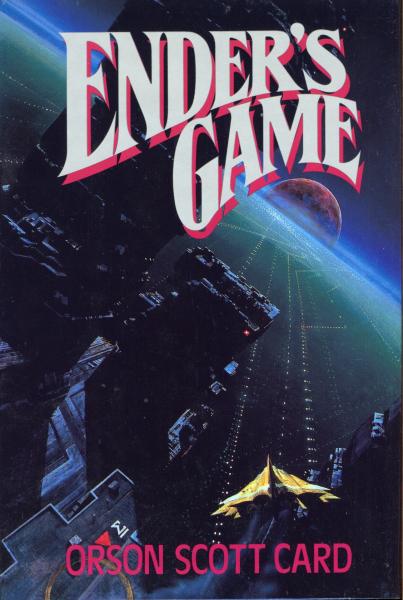
Orson Scott Card's Ender's Game (1985, expanded from his 1977 novella) follows child prodigy Andrew "Ender" Wiggin as he is recruited into a military training program built to prepare Earth's defenses for an anticipated third war against an insectoid alien species known as the Formics. The saga continues years later through Speaker for the Dead and Xenocide, following an older Ender as he confronts the moral weight of his role in that earlier conflict, and concludes the core arc in Children of the Mind, with Ender in Exile filling in the years between the first two books. Set within the wider Ender's Game universe, the series shifts from military coming-of-age story to slower, more philosophical science fiction as it progresses.
- Ringworld
series5 books1970
part of Known Space
similar byother star systemsfar futurescience fictionaliens
The Ringworld series is a series of science fiction novels written by American author Larry Niven. It is part of his Known Space series of stories. Its backdrop is the Ringworld, a giant artifact 3 million times the surface area of Earth circling a star. The series is composed of four standalone science fiction novels, the original award-winning book and its three sequels:1970: Ringworld 1979: The Ringworld Engineers 1996: The Ringworld Throne 2004: Ringworld's Children
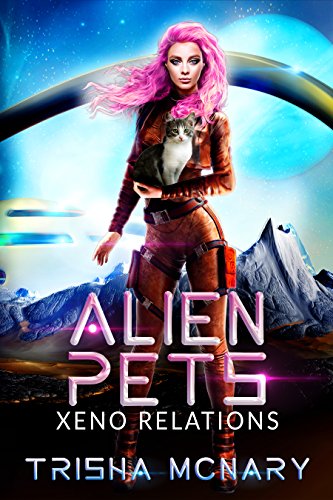
- Trilyn Alien Fairy Tales
series8 books2018
similar byother star systemsscience fictionfairy tale retelling+2 more
- Burning Bright
Melissa Scottstandalone novel1993
similar byfar futureother star systemsscience fiction+1 more
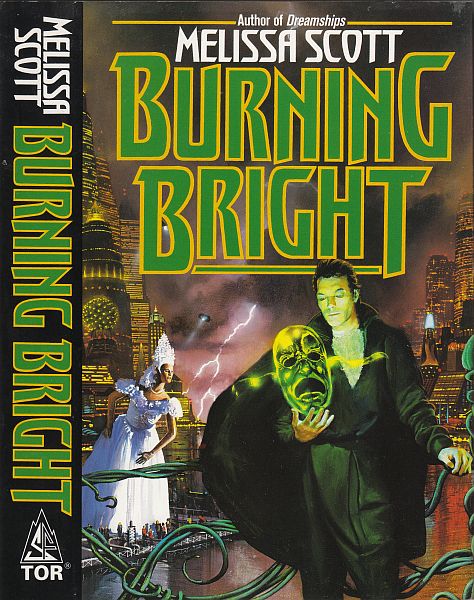
Governed by two political rulers, the planet Burning Bright is the location of the biggest virtual reality game in the universe. Quinn Lioe is tangled in a web of love and suspense when she becomes determined to play at the center of the virtual reality world and gets stuck in the war between the two empires. This science fiction adventure is one of Scott's best and the complex futuristic world is unforgettable.
- Strings
Dave Duncanstandalone novel1990
similar byfar futureother star systemsscience fiction+1 more
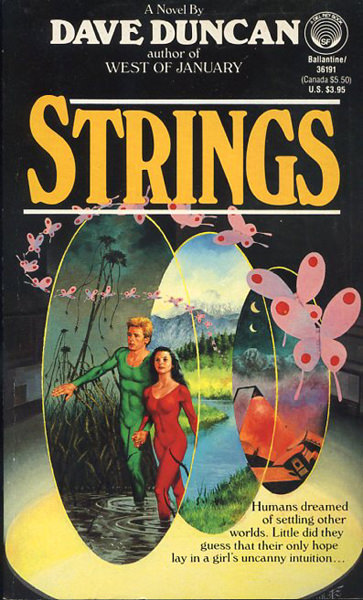
Alya has an almost magical talent. Her hunches are never wrong. The scientists of planet 4-I want to use her talent and promise her a spot on the next offworld colonization team in return for her assessment of the potential of the latest worlds they've discovered. But Alya meets Cedric, the grandson of the brilliant and tyrannical director of 4-I and she begins to doubt her own intuition.Cedric has dreamed of becoming a scout and exploring new worlds and when he meets Alya he is more determined than ever to leave 4-I, with her. His grandmother needs him on 4-I, though, because she has schemes afoot to protect her planet and to cover up a murder and she does not intend to let him go. However, she has underestimated her grandson—and the young woman whose intuition is so strong and whose destiny is linked to Cedric's.
- Hoka
series33 books1951
completed
similar byfar futureother star systemsscience fictionaliens
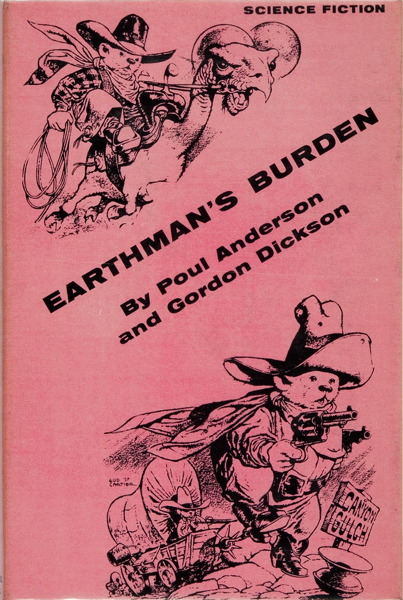
Poul Anderson and Gordon R. Dickson's Hoka stories follow the Hokas, a teddy-bear-like alien race who enthusiastically role-play human genres and history, to comic effect. Beginning with the linked collection Earthman's Burden (1957) and its sequel Hoka!, the stories and the novel Star Prince Charlie were later gathered into omnibus editions such as Hoka! Hoka! Hoka! and The Sound & the Furry.
- Moties
series4 books1974
part of CoDominium
similar byfar futureother star systemsscience fictionaliens
Larry Niven and Jerry Pournelle's The Mote in God's Eye (1974) depicts humanity's first contact with an alien species, the Moties, set within the far-future interstellar setting of Pournelle's codominium future history. The Gripping Hand continues that first-contact crisis years later, and Outies, written by J. R. Pournelle, carries the story forward into a new generation. Together the three books trace an escalating encounter between human and Motie civilizations within the codominium universe.
- Planet Nerak / Nerakian Quest
series4 books2007
similar byother star systemsscience fictionaliensromance+2 more
- Starman Jones
Robert A. Heinleinstandalone novel1953
similar byfar futureother star systemsscience fiction+1 more
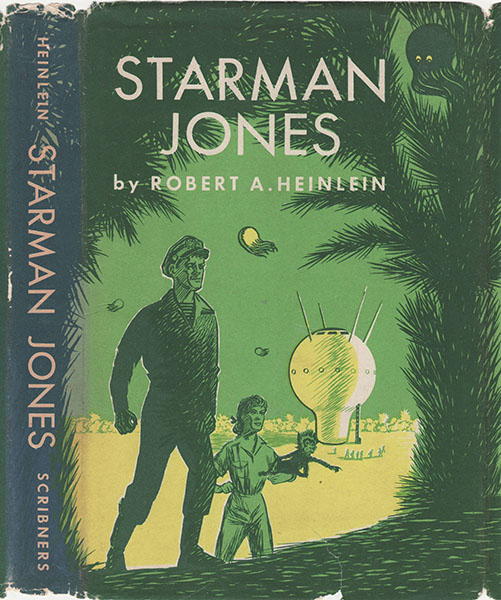
Starman Jones, a 1953 science fiction novel by Robert A. Heinlein, features a farm boy who wants to go to the stars. Charles Scribner's Sons published the book as part of the Heinlein juveniles series.
- The Gods Themselves
Isaac Asimovstandalone novel1972
similar byfar futureother star systemsscience fictionaliens
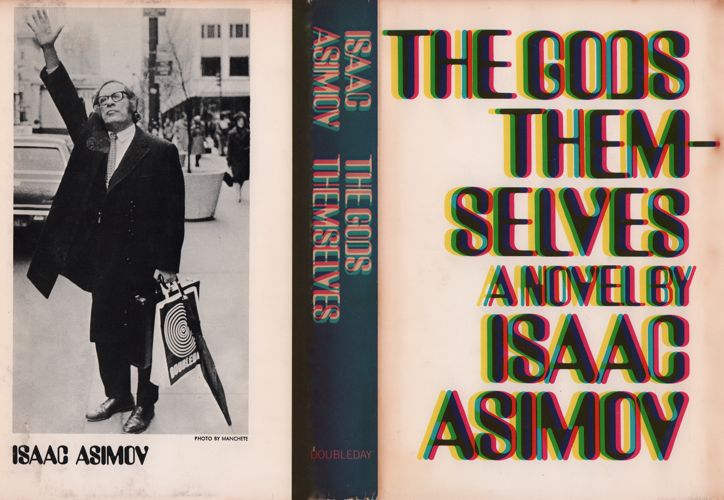
The Gods Themselves is a 1972 science fiction novel written by Isaac Asimov, and his first original novel in fifteen years. It won the Nebula Award for Best Novel in 1972, and the Hugo Award for Best Novel in 1973.
- Beyond the Red
series3 books2016
similar byforbidden lovefar futureother star systemsscience fictionaliens
The Beyond the Red trilogy is a series of young adult dystopian science fiction novels by Gabe Cole Novoa, writing under the pen name Ava Jae. Set on a planet where humans and a humanoid native species are in violent conflict, the books include action, forbidden romance, political intrigue, and queer themes.
- Dune Universe
universe78 books1963
Start hereDune · Start here
similar byfar futureother star systemsscience fiction
Arrakis. Dune. The desert planet, where empire runs on a single substance: the spice melange, which folds space, prolongs life, and unlocks prescience, and which exists nowhere else in the known universe. Frank Herbert's saga is a meditation dressed as an adventure — feudal houses and a secret sisterhood, engineered messiahs and the patient ecology of a world without water, all turning on the terrible gravity of who commands the spice. It reads like scripture and schemes like a war room, ten thousand years hence, among people who have outlawed the thinking machine and made instruments of themselves instead. At its heart stand Herbert's original six — Dune, Dune Messiah, Children of Dune, God Emperor of Dune, Heretics of Dune, Chapterhouse: Dune — a single deepening arc across millennia, arguing the whole way between prophecy and free will. Around that spine his son Brian Herbert and Kevin J. Anderson have raised a vast prequel architecture: Prelude to Dune, tracing the great houses a generation before Paul; Legends of Dune, reaching back to the crusade that broke the machines; the Schools of Dune cycle on the founding of Bene Gesserit, Mentat, and Navigator; the Caladan Trilogy and Heroes of Dune filling years the originals left in shadow. Many hands, dozens of volumes, one desert. What sets Dune apart is its refusal of the simple: religion is manufactured, heroes are hazards, and the sand itself — worm, water, ecology — acts as a political power. Begin where the universe did, with Frank Herbert's Dune (1965), and read the original six in order; you need nothing else to feel the full weight. The prequels are a country to explore afterward, taken by era. Beginnings are delicate times.