More like Alphas
anchored on:fantasy
but
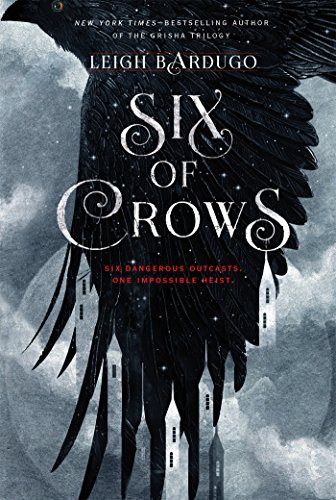
- Six of Crows
series3 books2015
part of Grishaverse
similar byfound familyfantasytensesecondary worldyoung adult
Leigh Bardugo's Six of Crows duology (2015-2016) follows a crew of six criminal teenagers in Ketterdam, a city modeled on the Dutch Republic, as they pull off a near-impossible heist and then deal with its fallout. Told from multiple points of view, the books lean on the found-family bond between the crew members as much as the caper plotting, and sit within Bardugo's wider Grishaverse alongside her Shadow and Bone books.
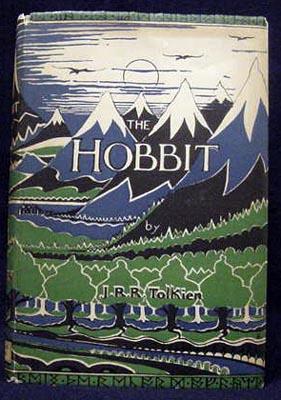
- The Hobbit
series2 books1937
completed
part of Tolkien's legendarium
similar byfantasysecondary world+2 more
The Hobbit (1937) is J. R. R. Tolkien's children's fantasy novel following the reluctant burglar Bilbo Baggins, who joins a company of dwarves and the wizard Gandalf on a journey to reclaim treasure guarded by the dragon Smaug. It stands as a complete adventure on its own, but shares its setting with the rest of Tolkien's legendarium and leads into the events of The Lord of the Rings.
- His Dark Materials
series8 books1995
part of His Dark Materials Universe
similar byfantasyyoung adult+2 more
His Dark Materials is a trilogy of fantasy novels by Philip Pullman consisting of Northern Lights, The Subtle Knife (1997), and The Amber Spyglass (2000). It follows the coming of age of two children, Lyra Belacqua and Will Parry, as they wander through a series of parallel universes. The novels have won a number of awards, including the Carnegie Medal in 1995 for Northern Lights and the 2001 Whitbread Book of the Year for The Amber Spyglass. In 2003, the trilogy was ranked third on the BBC's The Big Read poll.
- His Dark Materials Universe
universe13 books1995
Start hereHis Dark Materials · Start here
similar byfantasyyoung adult+1 more
In a world like ours and unlike it, every human soul walks outside the body in the shape of an animal — a daemon, who speaks, who cannot be lied to, and who settles into one fixed form only when childhood ends. This is the country of His Dark Materials: a company of parallel worlds across which an invisible dust of consciousness drifts down upon the waking mind; where a Church that calls itself the Magisterium would sooner sever a child's soul than let that Dust be understood; and where a golden instrument, the alethiometer, answers true questions for anyone with the patience to read it. Philip Pullman's design stands in two trilogies and a scatter of shorter tales. His Dark Materials — Northern Lights (published in America as The Golden Compass), The Subtle Knife, and The Amber Spyglass — carries Lyra Belacqua from the rooftops of a shadow Oxford across the borders between worlds. The Book of Dust returns to that same territory: La Belle Sauvage looks back to Lyra as an infant carried through a great flood, while The Secret Commonwealth follows her grown and less certain into adulthood, with a concluding volume closing the arc. Around them sit slim companion books — Lyra's Oxford, Once Upon a Time in the North, Serpentine — and Nicholas Wright's stage adaptation, made with Pullman's blessing. The register is grave and luminous at once, its title lifted from Milton and its quarrel drawn from Blake: a story that takes the side of curiosity, love, and the physical world against any authority that would forbid them. It reads as adventure — armoured bears, aeronauts, knife-cut windows between skies — yet reasons like philosophy. Begin with Northern Lights / The Golden Compass and read the first trilogy through before turning to The Book of Dust, which deepens everything the first has already made you feel.
- Watership Down
series21 books1972
completed
similar byfound familyfantasy+2 more
Watership Down is Richard Adams's 1972 novel following a group of rabbits who flee the destruction of their warren and cross the English countryside of Hampshire in search of a new home, developing over the journey a full rabbit culture of language, proverbs, and mythology. Adams returned to the same world in 1996 with Tales from Watership Down, a collection of nineteen short stories mixing rabbit folklore with further adventures of characters from the novel.
- Blood and Tea
series2 books2024
similar byfound familytensesecondary worldfantasyyoung adult
Hafsah Faizal's A Tempest of Tea introduces Arthie Casimir, a criminal mastermind whose renowned tearoom in the city of White Roaring doubles after dark as an illegal bloodhouse serving the vampires society fears. When her business comes under threat, Arthie strikes an uneasy alliance with a dangerous adversary and assembles a crew of skilled outcasts to infiltrate the glittering vampire society known as the Athereum, uncovering a conspiracy that reaches far beyond her tearoom. A Steeping of Blood concludes the duology.
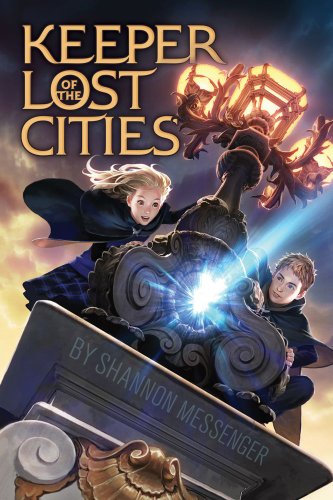
- Keeper of the Lost Cities
series11 books2012
similar byfantasysecondary world+2 more
Keeper of the Lost Cities is an upper-middle-grade fantasy series by Shannon Messenger that has appeared on the New York Times Best Seller list for a total of ten weeks.
- The Nikolai Duology
series2 books2019
part of Grishaverse
similar byfantasytensesecondary worldyoung adult
Leigh Bardugo's Nikolai Duology picks up Nikolai Lantsov and Zoya Nazyalensky from her earlier Grishaverse trilogy set in Ravka, now dealing with the kingdom's fallout as king and general, and adds Nina Zenik from the Six of Crows spin-off working a mission out of Ketterdam. King of Scars and its sequel Rule of Wolves tie together threads from across the wider Grishaverse rather than starting fresh, raising the stakes to a hidden threat inside Nikolai himself. It functions as the convergence point for Bardugo's separate Grishaverse story lines.
- Stephen King multiverse
universe46 books1967
Start hereThe Gunslinger · Start here
similar by+3 more
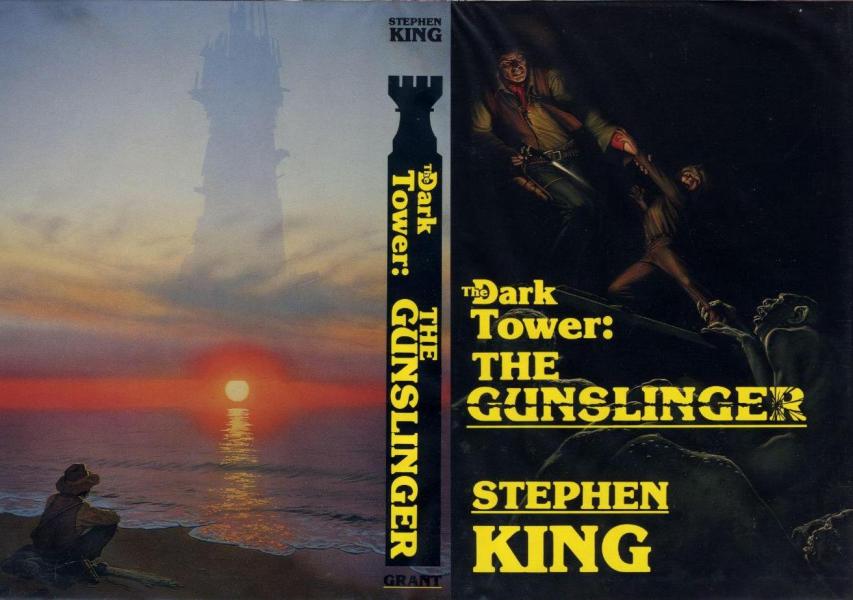
The man in black fled across the desert, and the gunslinger followed. So begins the long walk of Roland Deschain, last of an order of knight-errant pistoleers, across a land that has "moved on" — where the compass points drift, dead machines rot toward sentience, and the weave of what's real wears thin. His quest is the Dark Tower itself: a spire standing at the hub of every world that exists, the linchpin that holds all of them back from ruin. Roland's road runs eight volumes, from The Gunslinger through the closing Dark Tower, with the later, interleaved tale The Wind Through the Keyhole folding a story-within-a-story back into his youth. Along the way he draws a ka-tet — a fellowship bound by fate, not choosing — through doorways between worlds: a heroin-shackled New Yorker, a woman of two minds, a boy who dies twice. The Tower is also the secret axle around which the wider shelf of King's work turns; threads from The Stand, 'Salem's Lot and beyond wind quietly toward it. Expect a mongrel of Western, high fantasy, horror and decayed science fiction, told in a dusty, incantatory dialect all its own — ka, thankee-sai, the world that has moved on. This is King at his most mythic and most personal, a decades-spanning circle that rewards a patient reader. Begin at the beginning: The Gunslinger, then walk forward in publication order. There are other worlds than these — but this door opens first.
- Earthsea Cycle
series18 books1964
completed
part of Earthsea
similar byfantasysecondary world+1 more
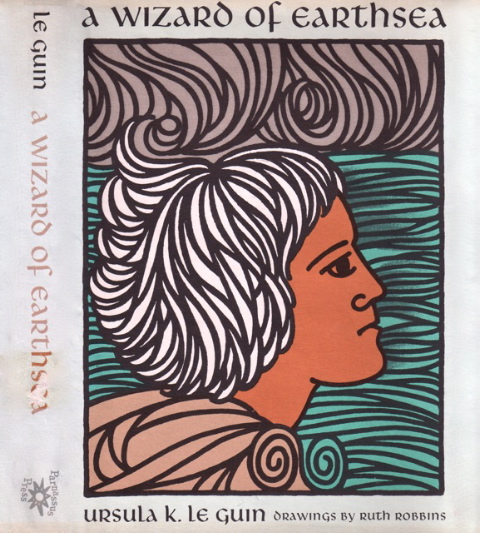
The Earthsea Cycle, also known as Earthsea, is a series of high fantasy books written by American author Ursula K. Le Guin. Beginning with A Wizard of Earthsea (1968), The Tombs of Atuan (1970), and The Farthest Shore (1972), the series was continued in Tehanu (1990), and Tales from Earthsea and The Other Wind. In 2018, all the novels and short stories were published in a single volume, The Books of Earthsea: The Complete Illustrated Edition, with artwork by Charles Vess.
- Flightless Falcon
Mickey Zucker Reichertstandalone novel2000
similar byfound familyfantasysecondary world+1 more
From the flaps of the DAW first edition: "Set in a land of scattered rival cities, this is the story of a poignant and dangerous quest, the tale of a man manipulated into a mission against his will in the hopes of regaining the only thing of importance in his life - his family. Tamison had been a miner until the cave-in which killed his brother and father, and left him trapped behind a wall of rubble, cut off from light and life for what seemed like eternity. When he was finally rescued, Tamison was so traumatized by the experience that he was left with a paralyzing fear of venturing underground. With the passing years and the growth of his new family, Tamison was willing to turn his hand to any trade that would feed his wife and children. But in a realm where guilds ruled - and where his own guild could no longer support him - Tamison became more and more desperate as even jobs for unskilled guildless laborers became impossible to obtain. Eventually Tamison was forced to what once would have been unimaginable to him. But he had no other choice. Either he must steal food of see his family starve. Caught in the act, Tamison is sentenced to a chain gang. And when he was finally released, he discovered that his family had vanished. Searching for them, Tamison became so despondent that when a guard named Dallan claimed to know of their fate he was only too ready to listen. And when Dallan said that he, too, had had someone taken by the same villains, Tamison agreed to join forces with him. But before setting out on their quest, Tamison visited a fortune-teller, hoping to be told that his mission would prove successful. Instead of learning about his own destiny, Tamison found himself acquiring a new alley as Rifkah, the fortune-teller, suddenly discovered a pressing need to leave the city. Together the three set out for the rival trading town where Dallan was certain the people they sought were being held. Tamison's initial search had led him into an encounter with a thief, who now seemed determined to attach himself to their group, and the unlikely foursome soon concocted a daring plan to break into the seemingly impenetrable city. Yet even if they succeeded in this venture it might well prove their doom, for gaining entrance to the town did not mean that they would find what they sought - or survive to win free of the place again!"
- A Song of Ice and Fire
series14 books1996
part of World of Ice and Fire
similar bysecondary worldfantasy+1 more
A Song of Ice and Fire is a series of high fantasy novels by the American author George R. R. Martin. Martin began writing the first volume, A Game of Thrones, in 1991, and published it in 1996. Martin, who originally envisioned the series as a trilogy, has released five out of seven planned volumes. The most recent entry in the series, A Dance with Dragons, was published in 2011. Since then, Martin has been working on the sixth novel, titled The Winds of Winter. A seventh novel, A Dream of Spring, is planned to follow.
- The Old Kingdom / Abhorsen milieu
series11 books1995
similar byfantasysecondary worldyoung adult+1 more
The Old Kingdom, or Abhorsen in North America and the UK, is a fantasy series written by Australian author Garth Nix. It originated in 1995 with the novel Sabriel and has continued in the novels Lirael (2001), Abhorsen (2003), Goldenhand (2016), and Terciel & Elinor (2021), as well as a prequel novel titled Clariel (2014). The Old Kingdom also consists of the novella The Creature in the Case (2005) and various other short fiction.
- An Ember in the Ashes
series4 books2015
similar bytensefantasysecondary worldyoung adult
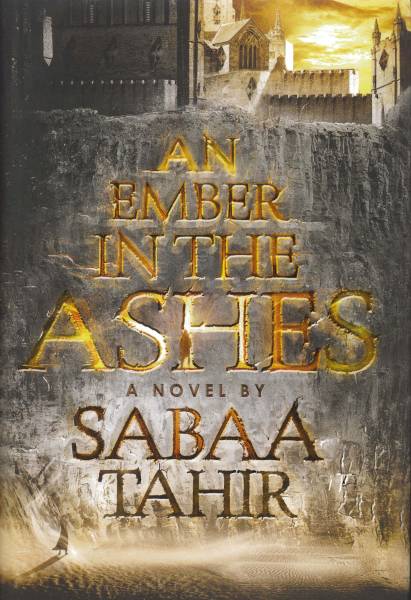
An Ember in the Ashes, set in a fantasy world modeled on ancient Rome, alternates between Laia, who spies on a brutal military academy for rebels in exchange for help freeing her imprisoned brother, and Elias, one of that academy's most skilled soldiers trying to break free of the empire he's been raised to serve. Sabaa Tahir's quartet, continuing through A Torch Against the Night, A Reaper at the Gates, and A Sky Beyond the Storm, follows the two toward a reckoning with the empire that trained one of them to enforce it.
- Kingdom of the Wicked (Kerri Maniscalco)
series6 books2020
similar byfantasy+3 more
Kerri Maniscalco's trilogy follows Emilia, a Sicilian witch whose twin sister is murdered by a serial killer targeting witches, forcing her into an uneasy bargain with Wrath, one of the seven princes of Hell, to hunt the culprit. Kingdom of the Wicked and its sequels, Kingdom of the Cursed and Kingdom of the Feared, escalate from that investigation into a wider entanglement with the political rivalries of Hell itself. The series pairs a murder-mystery hook with a slow-burn romance between Emilia and Wrath.
- The Fire's Stone
Tanya Huffstandalone novel1990
similar byfantasysecondary world+2 more
From the back cover of the DAW Books first edition: Thief, Swordsman, and Wizardess... Aaron - Clan Heir, he had fled his people when his beloved was slain by his own father's command, abandoning his training, duty, and beliefs to become a thief. A master of his trade, he now dared the odds in Ischia, city of the volcano, where the price of being caught was death. Darvish - prince of Ischia, third son of a king who had no intention of giving up his throne. The prince was a drunkard, a lover, and a wastrel, yet was gifted with sword skills and with the ability to charm all around him. But not even his charm could free him from the political marriage now being planned. Chandra - born a princess, she had chosen to become a Wizard of the Nine, that rarest of beings, able to master all the forms that sorcery could take. Now, promised as Darvish's bride, she undertook a desperate journey to Ischia to convince him they must not wed. Aaron, Darvish, Chandra - three strangers whose fates were about to become intertwined. For someone had stolen The Stone, the magical talisman which stood between Ischia and the volcano's wrath. And unless the three could learn to work together on a quest to the The Stone, Ischia would drown in a sea of lava...
- Karou
series4 books2011
similar byfantasysecondary worldyoung adultemotional+1 more
Daughter of Smoke and Bone is a young-adult fantasy book series written by Laini Taylor and published by Hachette Book Group, an imprint of Little, Brown and Company. It is a complete trilogy, Daughter of Smoke and Bone being published on 27 September 2011 in the United States; Days of Blood and Starlight on 6 November 2012 in the United States; and the third book Dreams of Gods and Monsters on April 1, 2014. The books have been published in a variety of different languages.
- Realm Breaker
series3 books2021
similar bysecondary worldyoung adult+3 more
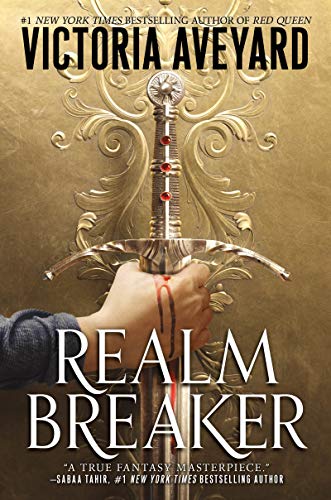
Realm Breaker follows Corayne an-Amarat, an ordinary young woman living in a quiet coastal town, who learns she's the last of an ancient bloodline capable of standing against an immortal warlord raising an army to tear the world apart with a stolen, realm-breaking sword. Victoria Aveyard's trilogy, continuing through Blade Breaker and Fate Breaker, sends Corayne out with a small band of reluctant allies on a race against the warlord's forces.
- Malazan Book of the Fallen
series20 books1999
part of Malazan
similar bysecondary worldfantasy+1 more
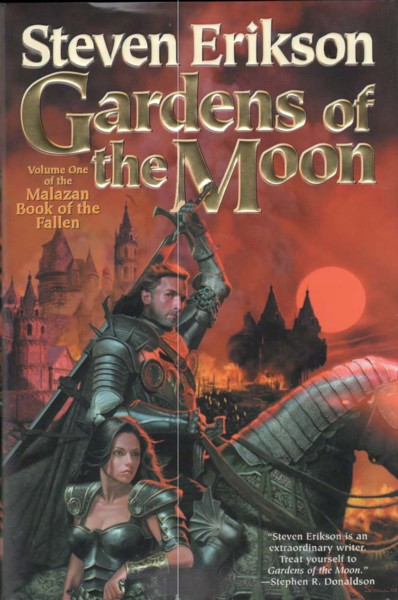
The Malazan Book of the Fallen is a series of epic fantasy novels written by the Canadian author Steven Erikson. The series, published by Bantam Books in the U.K. and Tor Books in the U.S., consists of ten volumes, beginning with Gardens of the Moon (1999) and concluding with The Crippled God (2011). Erikson's series presents the narratives of a large cast of characters spanning thousands of years across multiple continents.