Loreful
HomeDiscover
Search series, authors…⌘K
Loreful

Reading orders for SF/F series and shared universes — with your place kept in every one.

Explore

UniversesSeriesWorksAuthorsAtlas

Help

FAQAboutSite map

Account & legal

Sign inCreate accountPrivacyTerms

Data

Built on ISFDB, Wikipedia, Wikidata and Open Library. Curated reading orders carry their reasoning on the page; the rest follow publication order. Data sources & licenses

© Loreful · data: ISFDB · CC BY

More like Alyx

anchored on:science fictionshort story cyclefantasyadventuresecondary worldadventurous

but

Mood

The mood the book leaves you in.

  • The reading experience is propelled by journeys, exploration, and physical risk; excitement and forward momentum dominate over dread or introspection.
  • Joy and loss are deliberately mixed; the resolution grants characters something real while taking something else away, leaving warmth and sorrow together.
  • The book demands work from the reader — dense prose, difficult structure, unfamiliar ideas, or morally uncomfortable material — as part of its intended effect.
  • Grim events, cruelty, or despair dominate the atmosphere, and the book does not soften them with comfort or comic relief.
  • The atmosphere is quietly unsettling — wrongness, unease, and the uncanny pervade the book without necessarily escalating into overt horror.
  • The book is built to move the reader; character feeling is foregrounded and major scenes aim at a strong emotional response.
  • Humor is a primary aim and the prose plays for laughs — comic situations, wit, or dialogue produce sustained comedy, not occasional levity.
  • The book insists that things can improve; effort and decency are shown to matter, and the arc bends toward better outcomes even through hardship.
  • The book teaches as it goes — real facts, history, science, or craft are conveyed in enough depth that learning is part of the reading experience.
  • The book is designed to uplift and motivate, presenting perseverance or achievement in a way that invites the reader to aspire or act.
  • The overall register is cheerful and easygoing; stakes are kept gentle and the book avoids dwelling on pain or dread.
  • Withheld information drives the experience; the book sustains enigmas and secrets the reader wants resolved, whatever its genre.
  • The book is contemplative and inward-looking, giving more weight to thought, memory, and meaning than to external events.
  • The book works as comfort reading — low tension, a soothing pace, and an atmosphere the reader can unwind in.
  • Grief, loss, or melancholy set the dominant register, and the book lets sorrow stand rather than resolving it into comfort.
  • Sustained suspense is the point; the book keeps the reader braced for what happens next through danger, pressure, or impending revelation.
  • Playful invention and charm define the register — fanciful conceits, light absurdity, and a narration that delights in its own oddity.

About

What the story runs on.

  • Stories in which extraterrestrial beings are central — as characters, cultures, or the object of the plot.
  • Stories about venturing into space to explore — survey missions, astronauts, and the frontier of the unknown beyond Earth.
  • Stories structured as a quest — a journey undertaken to find, deliver, or destroy something of great import.
  • Stories in which staying alive against nature, catastrophe, or scarcity is the central problem.
  • Stories of lovers kept apart by law, family, faith, or station, where the obstacle to love is the plot.
  • Stories in which a friendship — its making, testing, or loss — is the emotional center.
  • Stories of growing up — a young protagonist crossing from childhood into adult knowledge and responsibility.
  • Stories about who a character truly is — self-discovery, doubled lives, and the search for a self.
  • Stories in which a buried family truth — hidden parentage, crimes, or shames — surfaces and reorders the present.
  • Stories driven by maneuvering for power — factions, conspiracies, and statecraft conducted in shadow.
  • Stories in which war itself is the subject — combat, occupation, and what warfare does to soldiers and civilians.
  • Stories organized around investigating a killing — the case, the clues, and the pursuit of the killer, in any genre's clothing.

Shelf

Where it sits in the library.

    • Fiction built on magic or other supernatural elements that have no scientific explanation.
    • Secondary-world fantasy at large scale, where the fate of nations or the world turns on the protagonists' struggle.
    • Fantasy set in a recognizably modern city or contemporary world where the supernatural intrudes on everyday life.
    • Fantasy that blends in horror's atmosphere and imagery, keeping a fantastical frame around grim or frightening material.
    • Action-driven fantasy following warriors or rogues with personal stakes against sorcerous threats, rather than world-spanning conflicts.
    • Fantasy set in a real historical period or a close analogue of one, with magic woven into the era.
    • Fantasy in which protagonists cross from the ordinary world into another world through a portal or similar passage.
    • Fiction that retells or reworks a traditional fairy tale in a new form or setting.
    • Fantasy drawing directly on myths, legends, and folklore, retelling them or building on their figures and logic.
    • Fantasy of ghosts, vampires, shapeshifters, psychics, and similar phenomena, usually set in an otherwise ordinary world.
    • Fiction mixing science-fictional trappings with overtly magical or impossible elements in one setting.
    • Low-stakes fantasy emphasizing comfort, community, and everyday pleasures over conflict and peril.
    • Speculative fiction of pervasive moral ambiguity, violence, and cynicism that rejects heroic conventions — fantasy and SF alike.
      • Fiction that extrapolates from science and technology — future societies, space travel, or speculative inventions — within at least nominally natural laws.
      • Science fiction of interstellar scope — starships, galactic polities, and adventure across star systems.
      • Science fiction committed to scientific rigor, where technical plausibility constrains the story.
      • Science fiction centered on armed forces and warfare, told largely from a military point of view.
      • Science fiction of networked, corporate-dominated near futures, pairing high technology with social decay.
      • Science fiction styled on nineteenth-century steam-powered technology, often in a Victorian or pseudo-Victorian setting.
      • Fiction depicting an oppressive or catastrophic society, presented as a warning.
      • Fiction set after civilization's collapse, following survivors in the ruins of the old world.
      • Fiction in which characters move between past and future, and the mechanics or consequences of that travel drive the plot.
      • Fiction exploring a world where a historical event went differently and history diverged from ours.
      • Science fiction about humanity's first encounter and communication with an alien intelligence.
      • Science fiction in which extraterrestrial forces attack or occupy Earth and humanity resists.
      • Fiction whose primary aim is to frighten or unsettle the reader through dread, menace, or the monstrous.
      • Horror of vast, indifferent, incomprehensible entities before which humanity is insignificant, in the Lovecraft tradition.
      • Horror of decaying houses, buried family secrets, and oppressive atmosphere in the Gothic literary tradition.
      • Horror centered on hauntings and the returning dead.
      • Horror located in the mind — paranoia, obsession, and unreliable perception rather than external monsters.
      • Horror built around the reanimated dead and survival amid their outbreaks.
      • Horror defined by explicit, transgressive gore that refuses to cut away from violence.
      • Speculative fiction of the strange and uncanny that resists both natural explanation and standard genre categories.
      • Fiction organized around solving a crime or puzzle, typically following an investigator toward the identification of a culprit.
      • A puzzle-first mystery that lays out clues so the culprit's identity can be deduced before the reveal.
      • Crime fiction of moral ambiguity, fatalism, and hard-edged style, set among the corrupt and the doomed.
      • A mystery following the realistic routines of police work — forensics, interviews, and case-building.
      • A gentle mystery with an amateur sleuth, a small community, and violence kept off the page.
      • A mystery set in a past era, where the investigation works within that period's methods and society.
      • Fast-paced fiction driven by imminent danger, pursuit, or high-stakes conspiracy, built to sustain tension.
      • A thriller of espionage — agents, tradecraft, and intelligence services in conflict.
      • A thriller centered on lawyers and the courtroom, where litigation carries the suspense.
      • A thriller driven by detailed contemporary or near-future technology, often military or scientific.
      • A thriller whose tension comes from mental states and manipulation between characters rather than external action.
      • Fiction whose central plot is a romantic relationship and its development toward an emotionally satisfying resolution.
      • Romance in which one or both partners are supernatural beings, blending fantasy elements into the love story.
      • A fantasy-romance hybrid in which the romantic arc and the fantasy plot carry equal weight.
      • Romance set in a past era, with courtship shaped by the period's society and manners.
      • Romance set in the present day, without supernatural or historical elements.
      • Fiction set in a real past period, where the historical setting materially shapes characters and events.
        • General and literary fiction emphasizing prose style, character interiority, or formal ambition over genre plot conventions.
        • Fiction in a realistic world where magical events occur and are treated as ordinary, in the tradition of Latin American literature.
        • Fiction that ridicules people, institutions, or society in order to criticize them.
        • Fiction of dreamlike, irrational imagery and logic that breaks from realistic representation.
        • Fiction that plays with narrative convention through metafiction, fragmentation, and self-reference.
        • Fiction propelled by journeys, exploration, and physical peril, where action and survival carry the plot.
        • Adventure fiction of ships and seafaring — naval engagements, voyages, and life at sea.
        • Fiction of the American frontier West — gunmen, ranchers, and lawmen, typically in the late nineteenth century.
        • Fiction centered on soldiers, campaigns, and the experience of warfare, historical or imagined.
          • Fiction written primarily to amuse, using comedic situations, wit, or parody as its organizing principle.
            • Multi-generational fiction following a family or dynasty across decades, with inheritance and kinship as the through-line.
              • Fiction whose world runs on explicit game mechanics — levels, stats, and skills that characters can see and exploit.
                • Fiction about costumed or superpowered heroes and their conflicts with comparable villains.

                Practical

                How long a commitment, whether it stands alone, and whether it has finished.

                Tap a chip to ask for it · tap again to rule it out · once more to clear. Numbers show what would be left.

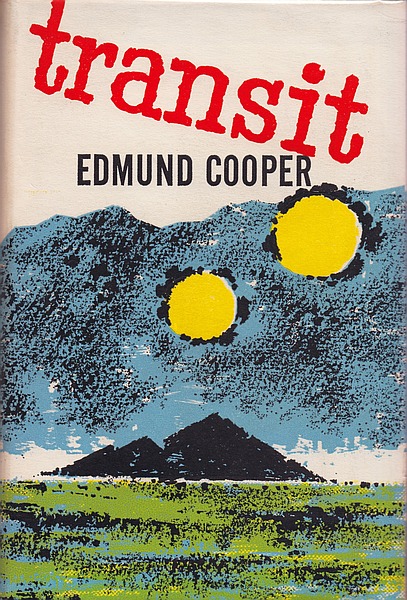
                • Cover of Transit
                  Transit

                  Edmund Cooper · standalone novel · 1964

                  similar byadventuroussurvivalidentitysecondary worldscience fiction

                  Transit... to another world. As a human being - an Earthman - Richard Avery was not particularly successful. He was mediocre as a teacher, and a failure as an artist. The rewards of Earth had passed him by. Still... Earth was home. It was where he belonged, where he could at least go his way unnoticed. Until that afternoon in Kensington Gardens, and that gleaming, hypnotic crystal that transported him - instantaneously - to a new and alien world. He was not alone, at least. There were three other Earth people marooned with him, all without a hint of the location or reason. And four more oddly assorted individuals would have been hard to imagine... Together, they faced sudden, savage onslaughts from an unknown foe. Together, they faced a fantastic implacable environment. And alone, they faced themselves - for to win, or even to survive, they had to re-discover what it meant to be human... (from the back cover of the Lancer first American edition)

                • Cover of Restoree
                  Restoree

                  Anne McCaffrey · standalone novel · 1967

                  similar byadventuroussurvivalscience fiction+2 more

                  Torn from Earth by a bizarre and nameless black force, Sara has no idea where she is or why she inhabits a beautiful new body. Controlled by brutal guards and tamed by terror, she can not comprehend her role as a nurse for a man who appears to be an idiot. She discovers that the planet she had been brought to was Lothar and that the man she was caring for was its Regent, Sara knows the restorees had to escape. When they do, they become fugitives on a world of multiple evils. (adapted from the back cover of the Baen edition)

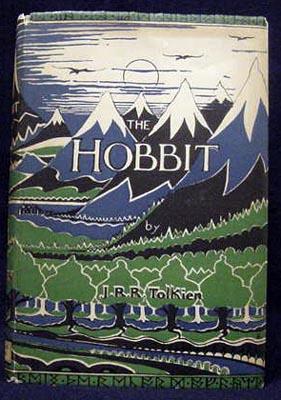
                • Cover of The Hobbit
                  The Hobbit

                  series · 2 books · 1937

                  completed

                  part of Tolkien's legendarium

                  similar byadventuroussecondary worldfantasyadventure

                  The Hobbit (1937) is J. R. R. Tolkien's children's fantasy novel following the reluctant burglar Bilbo Baggins, who joins a company of dwarves and the wizard Gandalf on a journey to reclaim treasure guarded by the dragon Smaug. It stands as a complete adventure on its own, but shares its setting with the rest of Tolkien's legendarium and leads into the events of The Lord of the Rings.

                • Cover of Railsea
                  Railsea

                  China Miéville · standalone novel · 2012

                  similar byadventuroussecondary worldfantasyadventure+2 more

                  Railsea is a young adult novel written and illustrated by English writer China Miéville, and published in May 2012. Miéville described the novel as "weird fiction", io9 labelled its mix of fantasy and steampunk elements as "salvagepunk" and the story has been seen as an "affectionate parody" of Herman Melville's classic 1851 novel Moby-Dick, also drawing on Robert Louis Stevenson's adventure novels Treasure Island and Kidnapped.

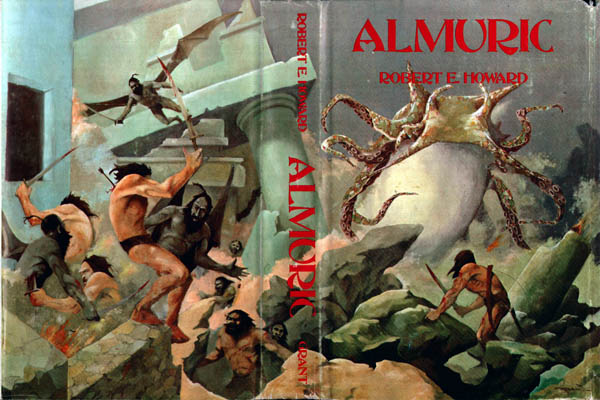
                • Cover of Almuric
                  Almuric

                  series · 1 book · 1964

                  similar byadventuroussurvivalsecondary worldfantasy+1 more

                  Published posthumously in 1964, Robert E. Howard's Almuric is a single planetary-romance novel rather than an ongoing series: Earthman Esau Cairn is transported to the savage world of Almuric, where he fights beast-men and wins the love of Altha, in a story indebted to Edgar Rice Burroughs' Barsoom books.

                • Cover of The Quest of the Riddle-Master
                  The Quest of the Riddle-Master

                  series · 3 books · 1976

                  completed

                  similar byadventuroussecondary worldfantasy+1 more

                  Patricia A. McKillip's Riddle-Master trilogy follows Morgon, prince of the small island of Hed, whose discovery of three star-shaped birthmarks on his forehead draws him into a search for his own hidden identity and a confrontation with ancient, shape-shifting powers. Drawing on Celtic myth, the three books are prized for their lyrical prose and riddle-based magic, and are often cited among the best high fantasy of the 1970s.

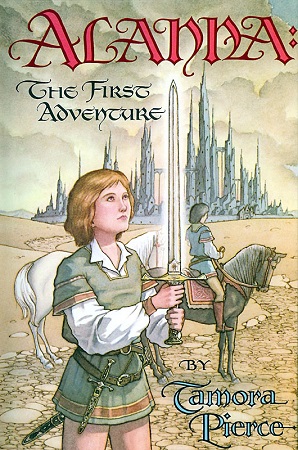
                • Cover of Song of the Lioness
                  Song of the Lioness

                  series · 5 books · 1983

                  part of Tortall

                  similar byadventuroussecondary worldfantasy+1 more

                  The Song of the Lioness is a young adult series of fantasy novels published in the 1980s by Tamora Pierce. The series consists of four books: Alanna: The First Adventure (1983), In the Hand of the Goddess (1984), The Woman Who Rides Like a Man (1986) and Lioness Rampant (1988).

                • Cover of Jack of Shadows
                  Jack of Shadows

                  series · 4 books · 1971

                  similar byadventuroussecondary worldfantasy+1 more

                  Roger Zelazny's Jack of Shadows (1971) is a single novel set on a tidally locked world split between a permanently lit hemisphere ruled by science and a permanently dark one ruled by magic. Its protagonist, Jack of Shadows, draws his power from shadow itself and is nearly helpless in full light or full darkness but formidable wherever shadows fall; the book follows his quest to recover a lost artifact, the Key called Kolwynia, and the power -- and responsibility -- that comes with finding it.

                • Cover of Kingdom (Cynthia Voigt)
                  Kingdom (Cynthia Voigt)

                  series · 4 books · 1985

                  similar byadventuroussecondary worldfantasy+1 more

                • Cover of A Face Like Glass
                  A Face Like Glass

                  Frances Hardinge · standalone novel · 2012

                  similar byadventuroussecondary worldfantasyadventure+1 more

                  A Face Like Glass is a 2012 fantasy adventure novel by Frances Hardinge. It is the 5th novel by Hardinge and was short-listed for the 2013 Kitschies award.

                • Cover of The Princess Bride
                  The Princess Bride

                  William Goldman · standalone novel · 1973

                  similar byadventuroussecondary worldfantasyadventure

                  The Princess Bride: S. Morgenstern's Classic Tale of True Love and High Adventure, The "Good Parts" Version is a 1973 fantasy romance novel by American writer William Goldman. The book combines elements of comedy, adventure, fantasy, drama, romance, and fairy tale. It is metafictionally presented as an abridgment of a longer work by the fictional S. Morgenstern, and Goldman's commentary asides are constant throughout. It was originally published in the United States by Harcourt Brace, then later by Random House, while in the United Kingdom it was later published by Bloomsbury.

                • Cover of Eternal Champion
                  Eternal Champion

                  series · 6 books · 1962

                  part of Moorcock's Multiverse

                  similar byadventuroussecondary worldfantasy+1 more

                  The Eternal Champion introduces Erekosë, a modern man drawn out of his own life to become a warrior fated to fight across many worlds and identities — the seed of Michael Moorcock's whole multiverse concept, in which the same doomed hero recurs under different names. First published as a 1962 novella and expanded to a novel in 1970, it heads a trilogy completed by Phoenix in Obsidian and The Dragon in the Sword; within the wider moorcocks-multiverse this is the sequence that names and anchors the Eternal Champion idea itself.

                • Cover of Narnia
                  Narnia

                  series · 26 books · 1950

                  part of Narnia Universe

                  similar byadventuroussecondary worldfantasy+1 more

                  The Chronicles of Narnia is a series of seven portal fantasy novels by British author C. S. Lewis. Illustrated by Pauline Baynes and originally published between 1950 and 1956, the series is set in the fictional realm of Narnia, a fantasy world of magic, mythical beasts, and talking animals. It narrates the adventures of various children who play central roles in the unfolding history of the Narnian world. Except in The Horse and His Boy, the protagonists are all children from the real world who are magically transported to Narnia, where they are sometimes called upon by the lion Aslan to protect Narnia from evil. The books span the entire history of Narnia, from its creation in The Magician's Nephew to its eventual destruction in The Last Battle.

                • Cover of Watership Down
                  Watership Down

                  series · 21 books · 1972

                  completed

                  similar byadventuroussurvivalfantasy+3 more

                  Watership Down is Richard Adams's 1972 novel following a group of rabbits who flee the destruction of their warren and cross the English countryside of Hampshire in search of a new home, developing over the journey a full rabbit culture of language, proverbs, and mythology. Adams returned to the same world in 1996 with Tales from Watership Down, a collection of nineteen short stories mixing rabbit folklore with further adventures of characters from the novel.

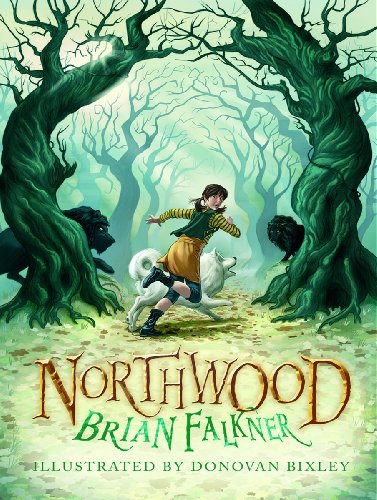
                • Cover of Northwood
                  Northwood

                  Brian Falkner · standalone novel · 2011

                  similar byadventuroussurvivalsecondary worldfantasyadventure

                  "Cecilia Undergarment likes a challenge. So when she discovers a sad and neglected dog, she is determined to rescue him. But here daring dog rescue lands her lost and alone in the dark forest of Northwood. A forest where ferocious black lions roam. A forest where those who enter never return. But then, Northwood has never seen the likes of Cecilia Undergarment before ..."--Page 4 of cover. Suggested level: primary, intermediate.

                • Cover of Damar
                  Damar

                  series · 6 books · 1982

                  similar byadventuroussecondary worldfantasy+1 more

                  Robin McKinley's Damar novels are set in a desert kingdom threatened by invasion from the north. The Blue Sword follows Harry Crewe, an orphaned outsider drawn into the Hillfolk's magic and their war; The Hero and the Crown, a Newbery Medal-winning prequel, tells how the earlier book's legendary dragon-slayer Aerin earned her place in Damar's history. The two novels can be read in either order and were written eight years apart.

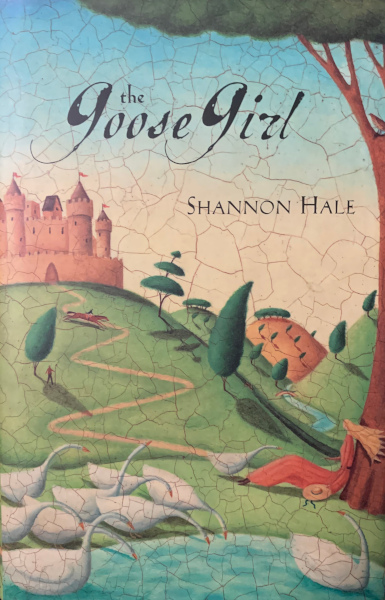
                • Cover of Books of Bayern
                  Books of Bayern

                  series · 4 books · 2003

                  similar byadventuroussecondary worldfantasy+1 more

                  Shannon Hale's Books of Bayern reimagine Grimm fairy tales as YA fantasy, opening with The Goose Girl's story of a crown princess who loses her identity to a treacherous companion and must reclaim her place while working as a goose girl in a foreign kingdom. Later volumes, including Enna Burning and River Secrets, follow other members of her found family through their own magical talents.

                • Cover of Wizard World
                  Wizard World

                  series · 3 books · 1980

                  similar byadventurousidentitysecondary worldfantasy

                  Roger Zelazny's Wizard World duology, Changeling and Madwand, follows Pol Detson, a man raised on Earth who discovers he's heir to a world where magic and technology sit at opposite poles of the same underlying force, and where the balance between the two shapes who can wield power. Torn between the two, Pol has to master an art he was never trained for in order to survive his own inheritance. The two novels form a self-contained sword-and-sorcery adventure distinct from Zelazny's better-known Amber series.

                • Cover of The Princess and the Goblin
                  The Princess and the Goblin

                  series · 2 books · 1871

                  completed

                  similar byadventuroussecondary worldfantasy

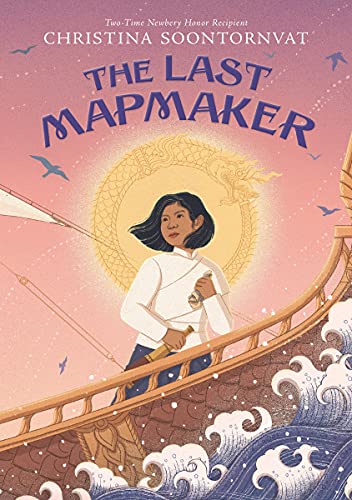
                • Cover of The Last Mapmaker
                  The Last Mapmaker

                  Christina Soontornvat · standalone novel · 2022

                  similar byadventuroussecondary worldfantasyadventure+1 more

                  The Last Mapmaker is a 2021 children's fantasy novel written by American author and educator Christina Soontornvat.

                • Cover of The White Mists of Power
                  The White Mists of Power

                  Kristine Kathryn Rusch · standalone novel · 1991

                  similar byadventuroussecondary worldfantasy+1 more

                  Synopsis -An innocent excited boy, a prince and heir, takes his first journey to the city. It is like nothing he imagined. Hands pound against his carriage: voices call for a coin, Sir just one, spare me some money, sir, I haven’t eaten in days. The streets teem with merchants in velvet robes, magicians, half mad preachers, with life and colour and noise. He doesn’t want to miss any of it. But it is the last journey of his life as a prince. Soon he will be abandoned and declared dead. Soon with survival and what will be the driving force of his life: the quest to recover his stolen inheritance, his usurped throne. His home. A story of cities and palaces, of power hungry lords and ladies scheming inside a magically threatened land...Intricate, compelling.

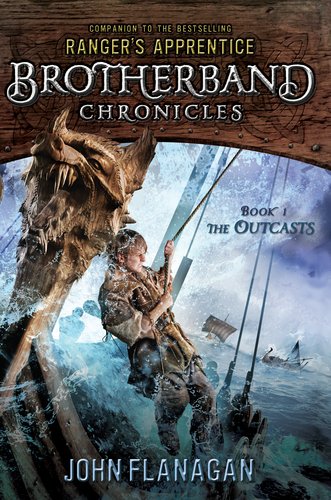
                • Cover of Brotherband Chronicles
                  Brotherband Chronicles

                  series · 9 books · 2011

                  completed

                  part of Ranger's Apprentice

                  similar byadventuroussecondary worldadventurefantasy

                  Hal, Stig, and a crew of Skandian teenagers considered too unpromising for the elite warrior bands are thrown together as the underdog 'Herons' and forced to compete against tougher rival crews in a brutal open-sea trial that's supposed to be a game. John Flanagan's Brotherband Chronicles, set in the same world as Ranger's Apprentice, follows the Herons as they earn respect the hard way and get pulled into real dangers well beyond the training exercise. Shipboard tactics, seamanship, and team loyalty matter as much as any single hero's skill.

                • Cover of Apprentice Adept
                  Apprentice Adept

                  series · 7 books · 1980

                  similar byadventurous+4 more

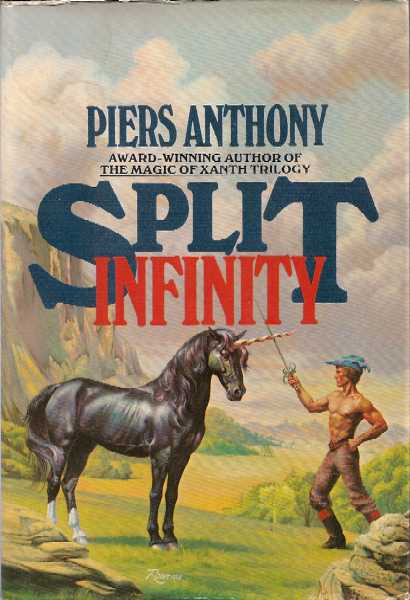
                  Apprentice Adept is a heptalogy of fantasy and science fiction novels written by English American author Piers Anthony. The series takes place on Phaze and Proton, two worlds occupying the same space in two different dimensional planes. Phaze is a lush planet of magic, where Proton is a barren mining planet of science. As the series opens, each person born on Phaze and Proton has an alternate self living on the other world. But if a person on either world lacks a duplicate, he can cross to the other through an energy "curtain" that circumscribes each frame.

                • Cover of Mordant's Need
                  Mordant's Need

                  series · 2 books · 1986

                  similar byadventuroussecondary worldfantasy+1 more

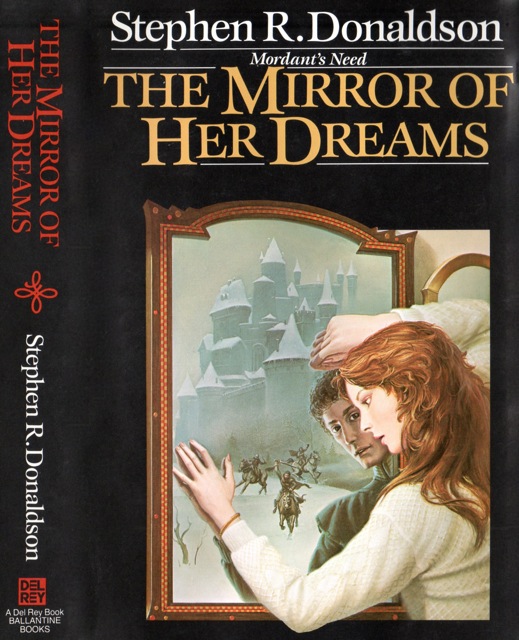
                  Mordant's Need is a fantasy two-part book series by American writer Stephen R. Donaldson, comprising the novels The Mirror of Her Dreams (1986) and A Man Rides Through (1987).