More like Antimage
anchored on:fantasysecondary world
but
- The Hobbit
series2 books1937
completed
part of Tolkien's legendarium
similar byquestsfantasysecondary worldadventurous+1 more
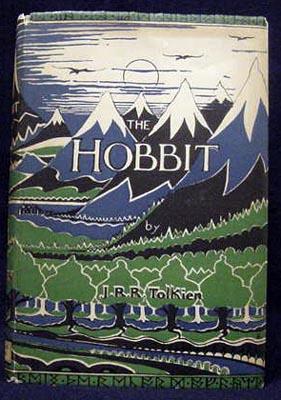
The Hobbit (1937) is J. R. R. Tolkien's children's fantasy novel following the reluctant burglar Bilbo Baggins, who joins a company of dwarves and the wizard Gandalf on a journey to reclaim treasure guarded by the dragon Smaug. It stands as a complete adventure on its own, but shares its setting with the rest of Tolkien's legendarium and leads into the events of The Lord of the Rings.
- The Lord of the Rings
series13 books1954
part of Tolkien's legendarium
similar bysecondary world+4 more
The Lord of the Rings is an epic high fantasy novel written by the English author and scholar J. R. R. Tolkien. Set in Middle-earth, the story began as a sequel to Tolkien's 1937 children's book The Hobbit but eventually developed into a much larger work. Written in stages between 1937 and 1949, The Lord of the Rings is one of the best-selling books ever written, with over 150 million copies sold.
- Elenium
series3 books1989
completed
part of Sparhawk
similar byquestsfantasysecondary worldadventurous+1 more
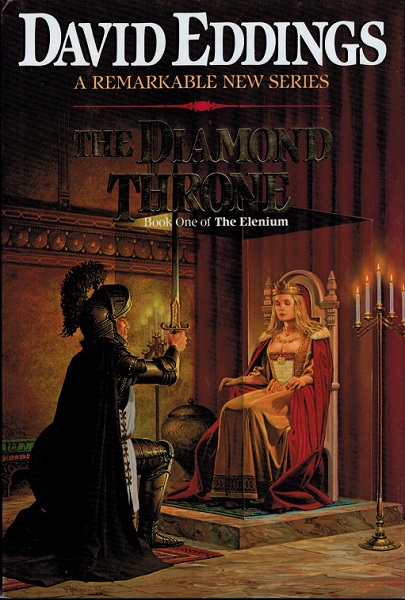
The Elenium is a series of fantasy novels by American writer David Eddings. The series consists of three volumes: The Diamond Throne, The Ruby Knight, and The Sapphire Rose. The series is followed by The Tamuli. The Elenium is Eddings' third fantasy series.
- Knight's Wyrd
Debra Doyle & James D. Macdonaldstandalone novel1992
similar byquestsfantasytensesecondary worldadventuroussword and sorcery+1 more
Will Odosson sets out on a series of dangerous adventures after a wizard predicts that he will meet death before a year has passed.
- Sparhawk
universe6 books1989
Start hereElenium · Start here
similar byquestssecondary worldfantasyadventurous+1 more
Sir Sparhawk is not a young man, and he has little patience for the pageantry his order pretends to. A Pandion Knight of the militant Elene Church, he rides home from a long exile to find his kingdom rotten with intrigue and his young queen, Ehlana, poisoned — kept alive only inside a shell of living crystal. To wake her he must find Bhelliom, a jewel with the power to remake the world or unmake it. So begins a long ride across the continent of Eosia. This is warm, character-first epic fantasy from David Eddings, told across two trilogies. The Elenium — The Diamond Throne, The Ruby Knight, The Sapphire Rose — pits Sparhawk against a corrupt church and a hungry elder god. The Tamuli — Domes of Fire, The Shining Ones, The Hidden City — carries him east into the vast Tamul Empire, where older enemies stir. Around him gathers a quarrelsome company: the Styric sorceress Sephrenia, the thief-boy Talen, the plain-spoken squire Kurik, and a small, imperious goddess who plays a set of pipes and always, somehow, gets her way. The pleasure here is the talk — grizzled knights trading dry insults between miracles and murders, a hero who solves as many problems with patience as with a sword. It never reaches for grimness or grand obscurity; it wants your good company for a long journey. Newcomers begin with The Diamond Throne and read the six in order: the Elenium stands whole on its own before the Tamuli widens the map.
- The Old Kingdom / Abhorsen milieu
series11 books1995
similar byfantasysecondary world+1 more
The Old Kingdom, or Abhorsen in North America and the UK, is a fantasy series written by Australian author Garth Nix. It originated in 1995 with the novel Sabriel and has continued in the novels Lirael (2001), Abhorsen (2003), Goldenhand (2016), and Terciel & Elinor (2021), as well as a prequel novel titled Clariel (2014). The Old Kingdom also consists of the novella The Creature in the Case (2005) and various other short fiction.
- Tiger and Del
series10 books1985
similar byfantasysecondary worldadventuroussword and sorcery+2 more
Jennifer Roberson's fantasy series pairs Tiger, a desert-born sword-dancer from the south, with Del, a Northern swordswoman trained in her own tradition of blade-magic, as reluctant partners across a hostile borderland. Beginning with Sword-Dancer and continuing across six numbered novels, the series follows their partnership, and eventual romance, through decades of adventures and shifting political stakes.
- Shannara
universe50 books1977
Start hereWord and the Void · The very beginning of the timeline
similar bysecondary worldfantasy+3 more
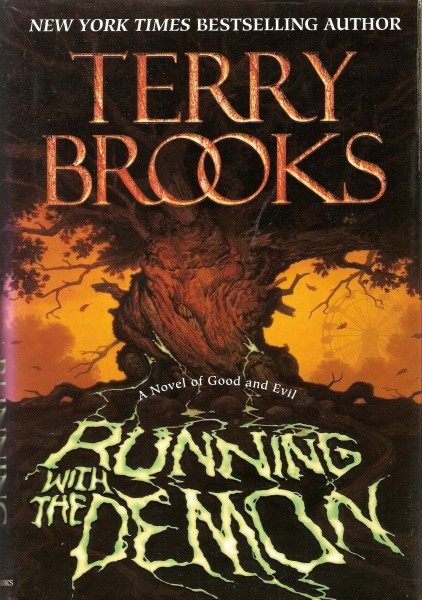
Long after the world we know has burned itself to slag in the Great Wars, the Four Lands rise green over the bones of the old age. Science is a forbidden memory; magic has come back into the world, and with it the old divisions — Men, Elves, Dwarves, Trolls, and Gnomes, each Race a splinter of what humanity became. This is the far-future Earth of Shannara, where the ruins buried beneath the soil are ours, and the only keepers of the vanished knowledge are the Druids of Paranor, who wake once a generation to meet the darkness rising again. Terry Brooks opened the Four Lands in 1977 with The Sword of Shannara and has charted its history for four decades since — a legendarium ordered not by throne but by a single bloodline, the Ohmsfords, each generation inheriting an Elfstone, a blade, or a wishsong when the age demands a hero. The original trilogy gives way to the Heritage of Shannara, the Voyage of the Jerle Shannara, the High Druid, Dark Legacy, Defenders, and the concluding Fall of Shannara; the Genesis of Shannara books reach back to the apocalypse itself, and the Word and the Void trilogy back further still, into a demon-haunted version of our own present that is the root of everything after. In 2025 Brooks passed the histories to Delilah S. Dawson to carry forward. What sets these books apart is their long memory: a world where every triumph is provisional, where the same evil returns wearing a fresh shape each age, and magic always exacts its price. The reading is warm and headlong — questing companies, old talismans, journeys across a mapped and named wilderness — shadowed by the knowledge that all of it stands on the wreckage of a former world. Enter as readers first did: with The Sword of Shannara, then onward in publication order. The chronological path, beginning with Word and the Void, rewards a second journey, once the Four Lands already feel like home.
- Earthsea Cycle
series18 books1964
completed
part of Earthsea
similar byfantasysecondary worldwizards
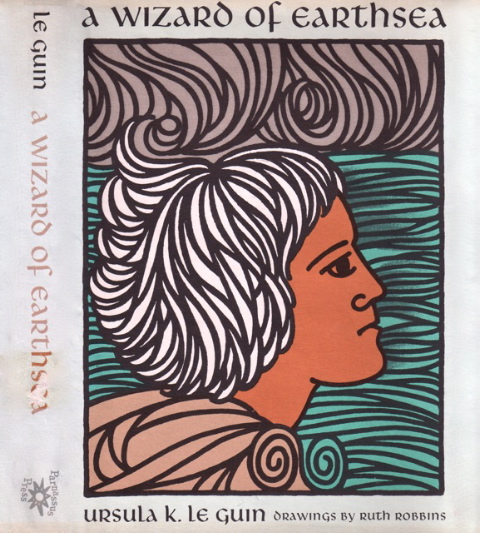
The Earthsea Cycle, also known as Earthsea, is a series of high fantasy books written by American author Ursula K. Le Guin. Beginning with A Wizard of Earthsea (1968), The Tombs of Atuan (1970), and The Farthest Shore (1972), the series was continued in Tehanu (1990), and Tales from Earthsea and The Other Wind. In 2018, all the novels and short stories were published in a single volume, The Books of Earthsea: The Complete Illustrated Edition, with artwork by Charles Vess.
- The Princess and the Goblin
series2 books1871
completed
similar byquestsfantasysecondary worldadventurous
- Sun Wolf and Starhawk
series7 books1984
similar byfantasysecondary worldwizardsadventuroussword and sorcery+2 more
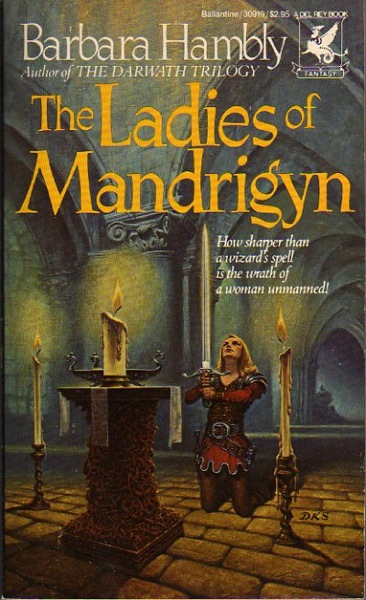
Barbara Hambly's series begins with the city of Mandrigyn conquered and its men enslaved in the mines of the wizard-king Altiokis, forcing surviving noblewoman Sheera Galernas to kidnap the mercenary captain Sun Wolf and press him into training the city's women as fighters. Sun Wolf's partnership with his lieutenant Starhawk carries across The Ladies of Mandrigyn, The Witches of Wenshar, and further volumes as both are drawn deeper into magic neither originally wanted.
- The Fire's Stone
Tanya Huffstandalone novel1990
similar byquestsfantasysecondary worldwizardsadventurous+1 more
From the back cover of the DAW Books first edition: Thief, Swordsman, and Wizardess... Aaron - Clan Heir, he had fled his people when his beloved was slain by his own father's command, abandoning his training, duty, and beliefs to become a thief. A master of his trade, he now dared the odds in Ischia, city of the volcano, where the price of being caught was death. Darvish - prince of Ischia, third son of a king who had no intention of giving up his throne. The prince was a drunkard, a lover, and a wastrel, yet was gifted with sword skills and with the ability to charm all around him. But not even his charm could free him from the political marriage now being planned. Chandra - born a princess, she had chosen to become a Wizard of the Nine, that rarest of beings, able to master all the forms that sorcery could take. Now, promised as Darvish's bride, she undertook a desperate journey to Ischia to convince him they must not wed. Aaron, Darvish, Chandra - three strangers whose fates were about to become intertwined. For someone had stolen The Stone, the magical talisman which stood between Ischia and the volcano's wrath. And unless the three could learn to work together on a quest to the The Stone, Ischia would drown in a sea of lava...
- The White Mists of Power
Kristine Kathryn Ruschstandalone novel1991
similar byquestsfantasytensesecondary worldadventurous
Synopsis -An innocent excited boy, a prince and heir, takes his first journey to the city. It is like nothing he imagined. Hands pound against his carriage: voices call for a coin, Sir just one, spare me some money, sir, I haven’t eaten in days. The streets teem with merchants in velvet robes, magicians, half mad preachers, with life and colour and noise. He doesn’t want to miss any of it. But it is the last journey of his life as a prince. Soon he will be abandoned and declared dead. Soon with survival and what will be the driving force of his life: the quest to recover his stolen inheritance, his usurped throne. His home. A story of cities and palaces, of power hungry lords and ladies scheming inside a magically threatened land...Intricate, compelling.
- The Last Unicorn
series8 books1968
similar byquestsfantasysecondary world
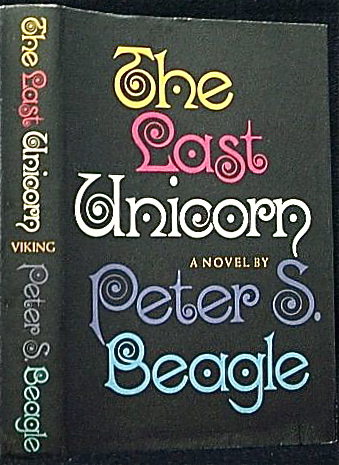
The Last Unicorn is Peter S. Beagle's 1968 fantasy novel about a unicorn who, believing herself the last of her kind, sets out to learn what became of the others. Beagle later returned to her world twice more: The Last Unicorn: The Lost Version prints an early draft of the original novel, and The Way Home (2023) collects two novellas continuing the story decades on. Together the books trace one novel's long afterlife rather than a conventional multi-book series.
- Narnia
series26 books1950
part of Narnia Universe
similar byfantasysecondary worldadventurous+1 more
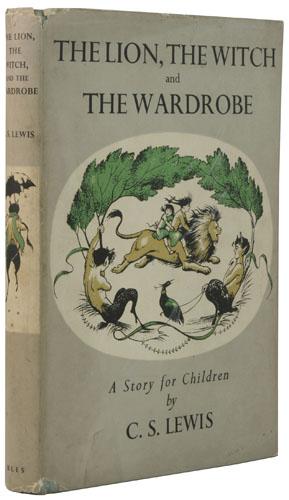
The Chronicles of Narnia is a series of seven portal fantasy novels by British author C. S. Lewis. Illustrated by Pauline Baynes and originally published between 1950 and 1956, the series is set in the fictional realm of Narnia, a fantasy world of magic, mythical beasts, and talking animals. It narrates the adventures of various children who play central roles in the unfolding history of the Narnian world. Except in The Horse and His Boy, the protagonists are all children from the real world who are magically transported to Narnia, where they are sometimes called upon by the lion Aslan to protect Narnia from evil. The books span the entire history of Narnia, from its creation in The Magician's Nephew to its eventual destruction in The Last Battle.
- Flightless Falcon
Mickey Zucker Reichertstandalone novel2000
similar byquestsfantasysecondary worldadventuroussword and sorcery+1 more
From the flaps of the DAW first edition: "Set in a land of scattered rival cities, this is the story of a poignant and dangerous quest, the tale of a man manipulated into a mission against his will in the hopes of regaining the only thing of importance in his life - his family. Tamison had been a miner until the cave-in which killed his brother and father, and left him trapped behind a wall of rubble, cut off from light and life for what seemed like eternity. When he was finally rescued, Tamison was so traumatized by the experience that he was left with a paralyzing fear of venturing underground. With the passing years and the growth of his new family, Tamison was willing to turn his hand to any trade that would feed his wife and children. But in a realm where guilds ruled - and where his own guild could no longer support him - Tamison became more and more desperate as even jobs for unskilled guildless laborers became impossible to obtain. Eventually Tamison was forced to what once would have been unimaginable to him. But he had no other choice. Either he must steal food of see his family starve. Caught in the act, Tamison is sentenced to a chain gang. And when he was finally released, he discovered that his family had vanished. Searching for them, Tamison became so despondent that when a guard named Dallan claimed to know of their fate he was only too ready to listen. And when Dallan said that he, too, had had someone taken by the same villains, Tamison agreed to join forces with him. But before setting out on their quest, Tamison visited a fortune-teller, hoping to be told that his mission would prove successful. Instead of learning about his own destiny, Tamison found himself acquiring a new alley as Rifkah, the fortune-teller, suddenly discovered a pressing need to leave the city. Together the three set out for the rival trading town where Dallan was certain the people they sought were being held. Tamison's initial search had led him into an encounter with a thief, who now seemed determined to attach himself to their group, and the unlikely foursome soon concocted a daring plan to break into the seemingly impenetrable city. Yet even if they succeeded in this venture it might well prove their doom, for gaining entrance to the town did not mean that they would find what they sought - or survive to win free of the place again!"
- Darwath
series7 books1982
similar byfantasysecondary world+2 more
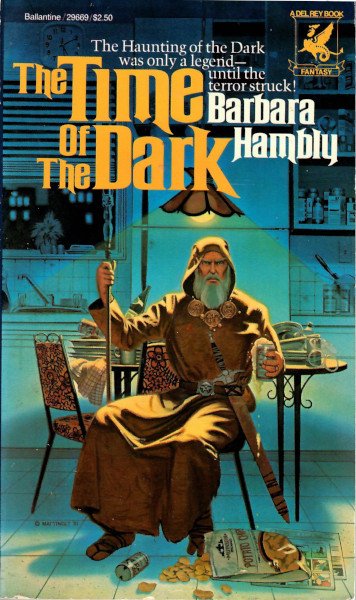
Darwath begins with two modern-day Californians pulled through a portal into a dying medieval world under siege from the Dark, shape-shifting monsters that hunt by night and are driving civilization underground. The Time of the Dark, The Walls of Air, and The Armies of Daylight make up the original trilogy; Barbara Hambly returned to the same characters decades later in Mother of Winter and Icefalcon's Quest. It's portal fantasy built around practical, unglamorous survival rather than chosen-one heroics.
- Forgotten Realms: The Legend of Drizzt
series39 books1988
part of Forgotten Realms
similar byfantasysecondary worldadventurous+3 more
The Legend of Drizzt is a series of fantasy novels by R. A. Salvatore that began in 1988, and consists of 39 books as of August 15, 2023. They are based in the Forgotten Realms setting in the dimension of Abeir-Toril on the continent Faerûn in the Dungeons & Dragons universe currently published and owned by Wizards of the Coast. It combines the series The Dark Elf Trilogy, The Icewind Dale Trilogy, Legacy of the Drow, Paths of Darkness, The Hunter's Blades Trilogy, and other sets into an abridged compilation. Drizzt Do'Urden is the main character of most of the books.
- Shadow
Dave Duncanstandalone novel1987
similar byfantasysecondary worldadventuroussword and sorcery+2 more
Sald Harl would like nothing more than to soar on the wings of his noble eagle, but his youthful rides in the sky are cut short by an appointment to guard the prince. Sald watches his dreams of flight fade with his name and independence as he takes over his bodyguard duties. During a perilous journey to the edges of the kingdom a dark secret comes to life. Now the great Prince Shadow is accused of treason and Sald must orchestrate a desperate plan of escape or he will lose the one thing he has been ordered to defend. The only option of freedom in sight is a dangerous flight that no one has ever survived. Once again Sald may feel the freedom of souring though the air unchained from the shackles of servitude.
- The Wind on Fire
series3 books2000
similar byquestsfantasysecondary worldadventurous+1 more
Wind on Fire is a fantasy trilogy written by William Nicholson, consisting of the following books: The Wind Singer (2000), Slaves of the Mastery (2001), and Firesong (2002).
- Thomas Covenant the Unbeliever
series11 books1977
similar byquestssecondary worldfantasy
The Chronicles of Thomas Covenant is a series of ten high fantasy novels written by American author Stephen R. Donaldson. The series began as a trilogy, The Chronicles of Thomas Covenant the Unbeliever. This was followed by another trilogy, The Second Chronicles of Thomas Covenant, and finally a tetralogy, The Last Chronicles of Thomas Covenant.
- The Princess Bride
William Goldmanstandalone novel1973
similar byquestsfantasysecondary worldadventurous
The Princess Bride: S. Morgenstern's Classic Tale of True Love and High Adventure, The "Good Parts" Version is a 1973 fantasy romance novel by American writer William Goldman. The book combines elements of comedy, adventure, fantasy, drama, romance, and fairy tale. It is metafictionally presented as an abridgment of a longer work by the fictional S. Morgenstern, and Goldman's commentary asides are constant throughout. It was originally published in the United States by Harcourt Brace, then later by Random House, while in the United Kingdom it was later published by Bloomsbury.
- Dying Earth
series27 books1950
similar byfantasysecondary worldwizards+3 more
Dying Earth is a speculative fiction series by the American author Jack Vance, comprising four books originally published from 1950 to 1984. Some have been called picaresque. The series includes short story collections, fix-ups, and novels.
- Dragonlance: Legends Trilogy
series3 books1986
part of Dragonlance
similar bysecondary worldfantasywizards+3 more
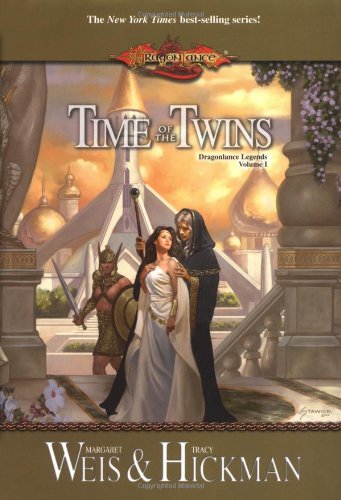
Dragonlance Legends is a trilogy of fantasy novels written by Margaret Weis and Tracy Hickman, which take place in the Dragonlance setting. This series is the sequel to the Dragonlance Chronicles, and focus on Raistlin and Caramon. The three books in the series are Time of the Twins, War of the Twins and Test of the Twins.