More like Apostle
but
- Foundation Universe
universe123 books1940
Start hereFoundation · Start here
similar byscience fiction+2 more
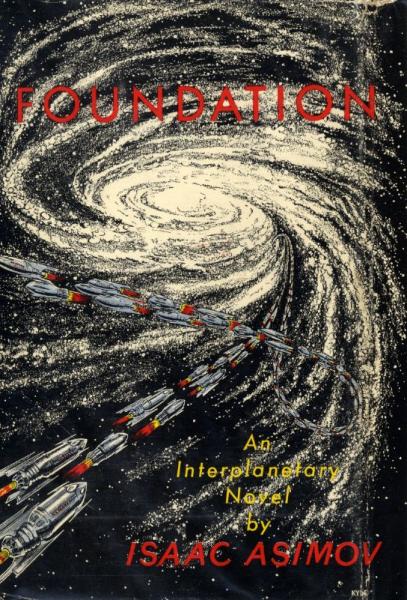
There is a science that reads the future of quadrillions the way an astronomer reads the orbits of stars. It is called psychohistory, and its equations foresee something the ruling Galactic Empire cannot admit: the throne is rotting, and thirty thousand years of barbarism are coming. One man, Hari Seldon, cannot stop the fall. He can only shorten it — by seeding a Foundation of scholars at the rim of the galaxy, a fragile institution built to carry knowledge across the dark and cut the interregnum to a single millennium. This is a universe told in the register of history itself: the long view, the calm of deep time, empires measured in centuries and men measured against them. The spine is Asimov's original trilogy — Foundation, Foundation and Empire, Second Foundation — followed decades later by the sequels Foundation's Edge and Foundation and Earth and the prequels Prelude to Foundation and Forward the Foundation. Late in life Asimov braided this in with his other future histories: the Robot novels of detective Elijah Baley and his humaniform partner R. Daneel Olivaw (The Caves of Steel, The Naked Sun, The Robots of Dawn, Robots and Empire) and the early Galactic Empire novels (Pebble in the Sky and its kin), until one continuous chronicle ran from the first thinking robots to the Second Empire. Other hands extend it — the Second Foundation Trilogy by Gregory Benford, Greg Bear, and David Brin, and shared-world spinoffs such as Robot City — so the corpus sprawls beyond a single author's tidy shelf. What distinguishes it is that the drama is intellectual: crises resolved by insight, nerve, and dialogue rather than fleets and blades, each turn hinging on the hidden logic of the Seldon Plan. Begin where readers have always begun — with Foundation, and the original trilogy in publication order. The rest opens outward from there.
- Richard Forthrast
series2 books2011
similar byscience fictionour world+3 more
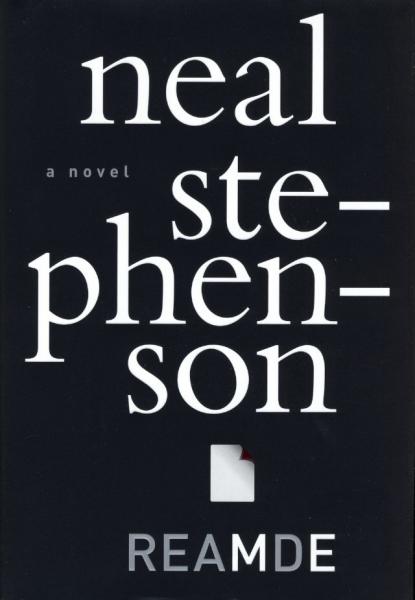
Neal Stephenson's Richard 'Dodge' Forthrast novels open with Reamde, a globe-spanning thriller that starts when ransomware inside an MMORPG economy pulls Richard's extended family into a real-world hostage crisis involving hackers, jihadists and Russian mobsters. The sequel Fall; or, Dodge in Hell shifts registers entirely, following Richard's digitally preserved mind after death into an afterlife simulation built from his scanned brain. The two books share a protagonist and family but differ sharply in genre and scale.
- The Obernewtyn Chronicles
series9 books1987
similar byscience fiction+3 more
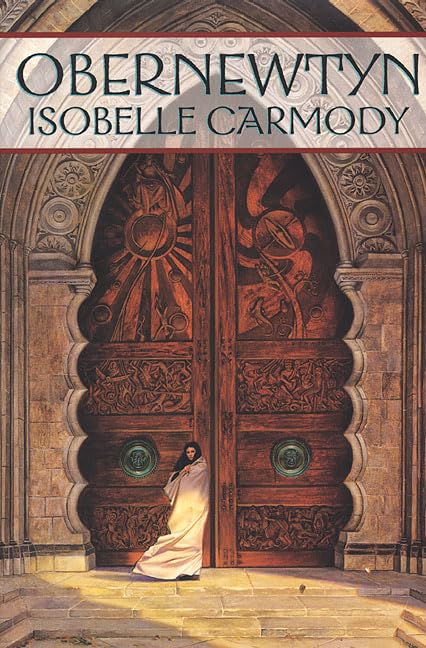
The Obernewtyn Chronicles is a series of science fiction and fantasy novels by Australian author Isobelle Carmody. The series has a post apocalyptic setting and depicts a world long after its destruction by a global nuclear holocaust.
- The Long Earth
series7 books2012
similar byscience fictionadventurous+2 more
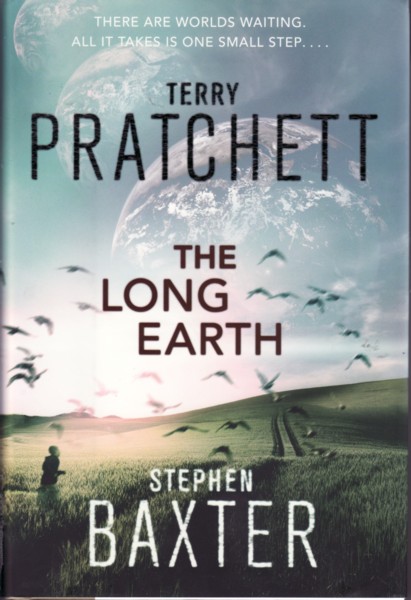
Terry Pratchett and Stephen Baxter's Long Earth series (five novels, 2012-2016) begins when a cheap, simple device called a Stepper lets people step sideways into a vast, possibly infinite chain of parallel Earths, none of which developed human civilization. The books follow a natural stepper and an AI that believes itself the reincarnation of a Tibetan repairman as they travel millions of steps out along the chain, encountering other hominid species and the dangers, ecological and social, of an endless open frontier.
- Roadmarks
Roger Zelaznystandalone novel1979
similar byscience fictionadventurousour world+1 more
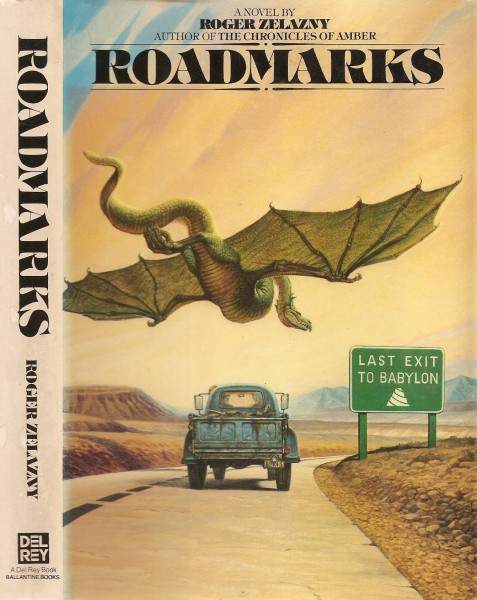
Roadmarks is a science fantasy novel by American author Roger Zelazny, written during the late 1970s and published in 1979.
- 2312
Kim Stanley Robinsonstandalone novel2012
similar byscience fiction+3 more
In the eponymous year, when Earth's ecology is degraded and humanity has settled throughout the solar system by terraforming and genetic engineering, mysterious disasters strike some human communities and an assortment of human types from throughout the system seek to find and eliminate the cause.
- The Moon Is a Harsh Mistress
Robert A. Heinleinstandalone novel1966
similar byartificial intelligencescience fictionadventurous+1 more
A technician discovers that the massive computer that operates everything on Luna (a prison colony) has become self-aware. He befriends it, but when he accompanied a beautiful girl to a dissident meeting, he encounters people who want to throw off the yoke of their Earth rulers.
- Fifth Imperium
series3 books1991
similar byartificial intelligencescience fictionadventuroustense
David Weber's Fifth Imperium series opens with the discovery that Earth's Moon is in fact a disguised alien starship, the Dahak, that has orbited undetected for tens of thousands of years - a relic of the fallen Fourth Imperium, a multi-star civilization destroyed while defending against the genocidal Achuultani. Mutineers' Moon follows humanity's first contact with Dahak and the mutineers still aboard it; The Armageddon Inheritance and Heirs of Empire escalate from that discovery into interstellar war and dynastic politics as humanity inherits the old empire's legacy and its enemies. The three novels were later collected as the omnibus Empire from the Ashes.
- H. I. V. E.
series10 books2006
similar byscience fictiontense+3 more
Mark Walden's series is set at H.I.V.E. (the Higher Institute of Villainous Education), a hidden academy training the next generation of criminal masterminds, following orphan genius Otto and fellow students Wing, Laura, and Shelby as they navigate the school's twisted curriculum while plotting to escape it. The premise plays school-story conventions against a supervillain backdrop across more than a dozen books.
- Artemis Fowl
series15 books2001
similar byadventurousour world
Artemis Fowl is a series of eleven fantasy novels by Irish author Eoin Colfer, revolving around various members of the Fowl family. The first cycle, the Artemis Fowl series, consists of eight books, and the second cycle, The Fowl Twins series, is a trilogy. Both releases have received commercial success and positive critical reception in the children's literature genre, and also originated graphic novel adaptations. As of 2013, the novels have sold more than 21 million copies in 44 languages, and are one of the best-selling series of all time. In 2010, Artemis Fowl was voted by readers as their favorite Puffin Books title of all time.
- Heechee
series19 books1972
completed
similar byscience fiction+1 more
The Heechee Saga, also known as the Gateway series, is a series of science fiction novels and short stories by Frederik Pohl. The Heechee are an advanced alien race that visited the Solar System hundreds of millennia ago and then mysteriously disappeared. They left behind bases containing artifacts, including working starships, which are discovered and exploited by humanity.
- Blade Runner Universe
series6 books1968
similar byscience fiction+3 more
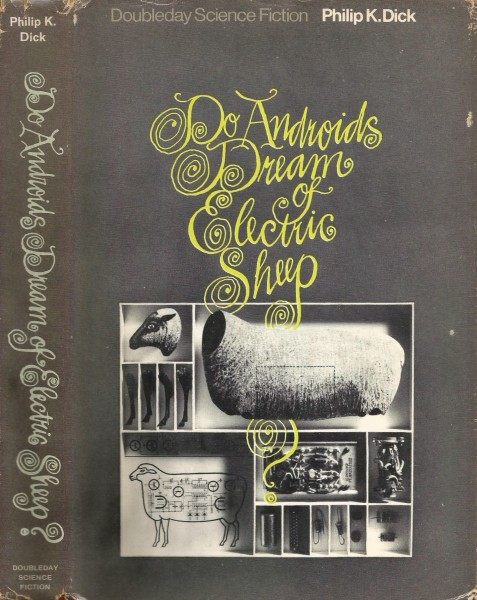
Philip K. Dick's 1968 novel Do Androids Dream of Electric Sheep? follows bounty hunter Rick Deckard as he tracks escaped androids through an irradiated, near-abandoned San Francisco, using the hunt to probe questions of empathy and what separates human from machine. The novel became the basis for Ridley Scott's 1982 film Blade Runner, and Marvel Comics later published an illustrated adaptation of that film. Together the two trace the story's path from prose original to screen and comic-page adaptation.
- Quantum Gravity
series6 books2006
similar by+4 more
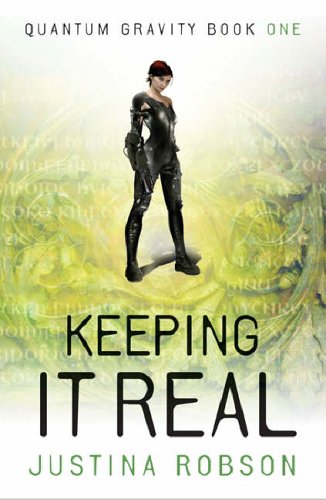
Justina Robson's Quantum Gravity series opens with Keeping It Real, set six years after a catastrophic 'Quantum Bomb' tore open the boundaries between Earth and other dimensions, leaving humans in uneasy contact with elves, elementals, and demons. The series follows cyborg special agent Lila Black across five novels as magic and technology collide.
- Tom Broadbent / Wyman Ford
series6 books2003
similar byscience fictionour worldtense+2 more
Douglas Jerome Preston is an American journalist and author. Although he is best known for his thrillers in collaboration with Lincoln Child, he has also written six solo novels, including the Wyman Ford series and a novel titled Jennie, which was made into a movie by Disney called The Jennie Project. Preston has authored a half-dozen nonfiction books on science and exploration and writes occasionally for The New Yorker, Smithsonian, and other magazines.
- Ender's Shadow
series5 books1999
part of Ender's Game Universe
similar byscience fictiontense
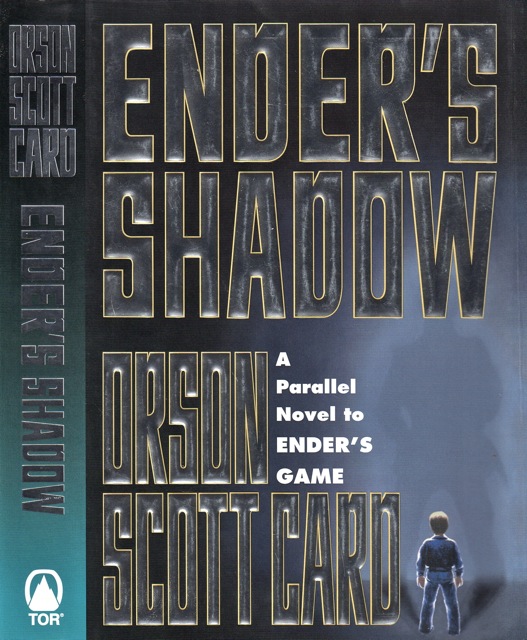
Orson Scott Card's Ender's Shadow retells the events of Ender's Game from the perspective of Bean, a physically stunted but ferociously intelligent street child recruited into the same Battle School program as Ender Wiggin. It launches the Shadow series, which follows Bean and other secondary Battle School characters into the political aftermath of the Formic Wars back on Earth, running parallel to and eventually past the timeline of Card's main Ender Quintet.
- Culture
series15 books1987
completed
part of The Culture
similar byartificial intelligencescience fiction+1 more
The Culture series is a science fiction series written by Scottish author Iain M. Banks and released from 1987 until 2012. The stories centre on The Culture, a utopian, post-scarcity space society of humanoid aliens and advanced superintelligent artificial intelligences living in artificial habitats spread across the Milky Way galaxy. The main themes of the series are the dilemmas that an idealistic, more-advanced civilization faces in dealing with smaller, less-advanced civilizations that do not share its ideals, and whose behaviour it sometimes finds barbaric. In some of the stories, action takes place mainly in non-Culture environments, and the leading characters are often on the fringes of the Culture, sometimes acting as agents of the Culture in its plans to civilize the galaxy. Each novel is a self-contained story with new characters, although reference is occasionally made to the events of previous novels.
- The Accidental Time Machine
Joe Haldemanstandalone novel2007
similar byscience fictionadventurousour world+1 more
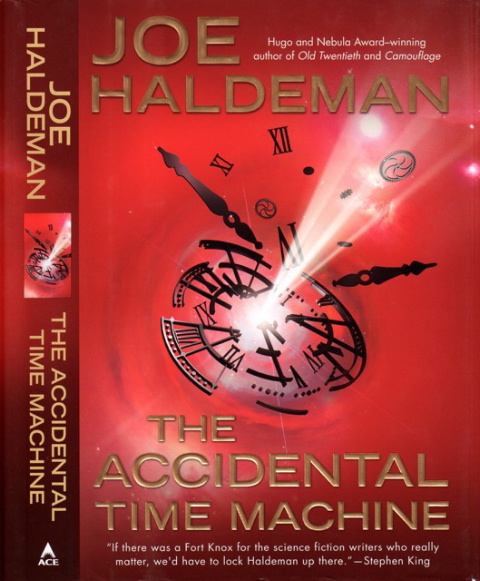
"Grad-school dropout Matt Fuller is toiling as a lowly research assistant at MIT when, while measuring subtle quantum forces that relate to time changes in gravity and electromagnetic force, his calibrator turns into a time machine. With a dead-end job and a girlfriend who has left him for another man, Matt has nothing to lose taking a time machine trip himself - or so he thinks."
- Homecoming (Orson Scott Card)
series5 books1992
similar byscience fiction+3 more
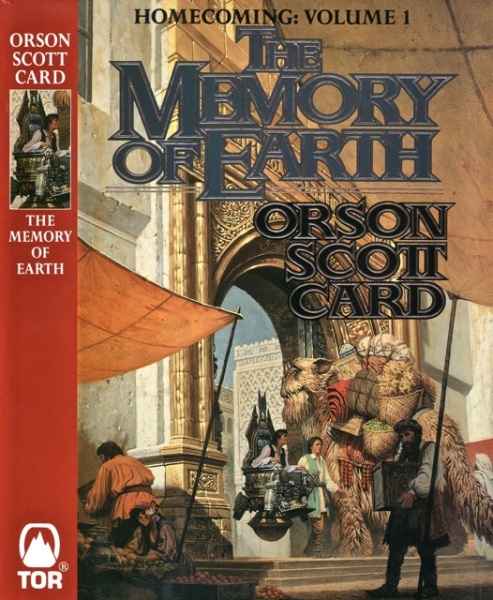
The Homecoming Saga is a science fiction series by Orson Scott Card. The series is patterned on the Book of Mormon. Some of the names also come from the Book of Mormon.
- Darwinia
Robert Charles Wilsonstandalone novel1998
similar byscience fictionadventurous+2 more
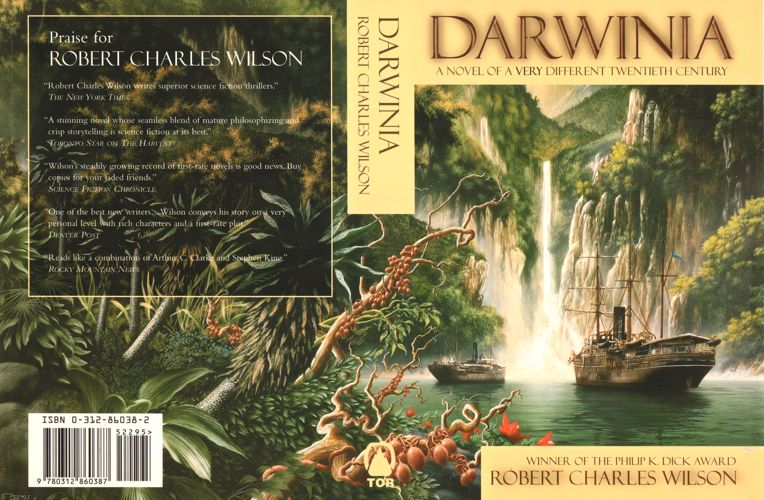
From the front flap of the Tor first edition: In 1912, history was changed by the Miracle, when the old world of Europe was replaced by Darwinia, a strange land of nightmarish jungle and antediluvian monsters. To some, the Miracle is an act of divine retribution; to others, it is an opportunity to carve out a new empire. Leaving an America now ruled by religious fundamentalists, young Guilford Law travels to Darwinia on a mission of discovery that will take him further than he can possibly imagine...to a shattering revelation about mankind's destiny in the universe.
- The Computer Connection
Alfred Besterstandalone novel1975
similar byartificial intelligencescience fictionadventurousour world
The Computer Connection is a science fiction novel by American writer Alfred Bester. It was originally published as a serial in Analog Science Fiction magazine in November and December 1974, and in January 1975 under the title The Indian Giver; the novel appeared in book form in 1975. Some editions use the title Extro. The novel was nominated for the Nebula Award for Best Novel in 1975 and the Hugo Award for Best Novel in 1976.
- Void Trilogy
series4 books2007
part of Commonwealth Universe
similar byscience fictionadventurous+2 more
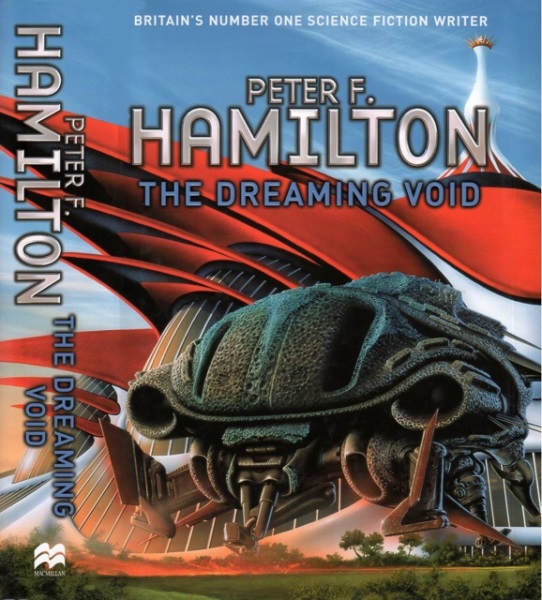
The Void Trilogy is a space opera series by British author Peter F. Hamilton. The series is set in the same universe as The Commonwealth Saga, 1,200 years after the end of Judas Unchained.