Loreful
HomeDiscover
Search series, authors…⌘K
Loreful

Series-first reading tracker: what you've read, what's next, and what you're missing.

Explore

UniversesSeriesWorksAuthorsAtlas

Help

FAQAboutSite map

Account & legal

Sign inCreate accountPrivacyTerms

Data

Built on ISFDB, Wikipedia, Wikidata and Open Library. Every reading order is hand-picked, with a rationale on the page. Data sources & licenses

© Loreful · data: ISFDB · CC BY

More like Appendix A: Postscript

anchored on:sword and sorcerysecondary worldreflectivefantasymetafiction

but

Mood

The mood the book leaves you in.

  • The reading experience is propelled by journeys, exploration, and physical risk; excitement and forward momentum dominate over dread or introspection.
  • Joy and loss are deliberately mixed; the resolution grants characters something real while taking something else away, leaving warmth and sorrow together.
  • The book demands work from the reader — dense prose, difficult structure, unfamiliar ideas, or morally uncomfortable material — as part of its intended effect.
  • Grim events, cruelty, or despair dominate the atmosphere, and the book does not soften them with comfort or comic relief.
  • The atmosphere is quietly unsettling — wrongness, unease, and the uncanny pervade the book without necessarily escalating into overt horror.
  • The book is built to move the reader; character feeling is foregrounded and major scenes aim at a strong emotional response.
  • Humor is a primary aim and the prose plays for laughs — comic situations, wit, or dialogue produce sustained comedy, not occasional levity.
  • The book insists that things can improve; effort and decency are shown to matter, and the arc bends toward better outcomes even through hardship.
  • The book teaches as it goes — real facts, history, science, or craft are conveyed in enough depth that learning is part of the reading experience.
  • The book is designed to uplift and motivate, presenting perseverance or achievement in a way that invites the reader to aspire or act.
  • The overall register is cheerful and easygoing; stakes are kept gentle and the book avoids dwelling on pain or dread.
  • Withheld information drives the experience; the book sustains enigmas and secrets the reader wants resolved, whatever its genre.
  • The book is contemplative and inward-looking, giving more weight to thought, memory, and meaning than to external events.
  • The book works as comfort reading — low tension, a soothing pace, and an atmosphere the reader can unwind in.
  • Grief, loss, or melancholy set the dominant register, and the book lets sorrow stand rather than resolving it into comfort.
  • Sustained suspense is the point; the book keeps the reader braced for what happens next through danger, pressure, or impending revelation.
  • Playful invention and charm define the register — fanciful conceits, light absurdity, and a narration that delights in its own oddity.

About

What the story runs on.

  • Stories centered on witches and the practice of witchcraft — covens, hedge magic, familiars, and the witch's place in her community.
  • Stories in which gods and deities act as characters — walking the world, meddling in mortal lives, or dying.
  • Stories structured as a quest — a journey undertaken to find, deliver, or destroy something of great import.
  • Stories in which staying alive against nature, catastrophe, or scarcity is the central problem.
  • Stories of lovers kept apart by law, family, faith, or station, where the obstacle to love is the plot.
  • Stories in which a friendship — its making, testing, or loss — is the emotional center.
  • Stories of growing up — a young protagonist crossing from childhood into adult knowledge and responsibility.
  • Stories about who a character truly is — self-discovery, doubled lives, and the search for a self.
  • Stories about mourning — living through the death of a loved one and what loss does to the survivors.
  • Stories in which a buried family truth — hidden parentage, crimes, or shames — surfaces and reorders the present.
  • Stories driven by maneuvering for power — factions, conspiracies, and statecraft conducted in shadow.
  • Stories in which war itself is the subject — combat, occupation, and what warfare does to soldiers and civilians.

Shelf

Where it sits in the library.

    • Fiction built on magic or other supernatural elements that have no scientific explanation.
    • Secondary-world fantasy at large scale, where the fate of nations or the world turns on the protagonists' struggle.
    • Fantasy set in a recognizably modern city or contemporary world where the supernatural intrudes on everyday life.
    • Fantasy that blends in horror's atmosphere and imagery, keeping a fantastical frame around grim or frightening material.
    • Action-driven fantasy following warriors or rogues with personal stakes against sorcerous threats, rather than world-spanning conflicts.
    • Fantasy set in a real historical period or a close analogue of one, with magic woven into the era.
    • Fantasy in which protagonists cross from the ordinary world into another world through a portal or similar passage.
    • Fiction that retells or reworks a traditional fairy tale in a new form or setting.
    • Fantasy drawing directly on myths, legends, and folklore, retelling them or building on their figures and logic.
    • Fantasy of ghosts, vampires, shapeshifters, psychics, and similar phenomena, usually set in an otherwise ordinary world.
    • Fiction mixing science-fictional trappings with overtly magical or impossible elements in one setting.
    • Low-stakes fantasy emphasizing comfort, community, and everyday pleasures over conflict and peril.
    • Speculative fiction of pervasive moral ambiguity, violence, and cynicism that rejects heroic conventions — fantasy and SF alike.
      • Fiction that extrapolates from science and technology — future societies, space travel, or speculative inventions — within at least nominally natural laws.
      • Science fiction of interstellar scope — starships, galactic polities, and adventure across star systems.
      • Science fiction committed to scientific rigor, where technical plausibility constrains the story.
      • Science fiction centered on armed forces and warfare, told largely from a military point of view.
      • Science fiction of networked, corporate-dominated near futures, pairing high technology with social decay.
      • Science fiction styled on nineteenth-century steam-powered technology, often in a Victorian or pseudo-Victorian setting.
      • Fiction depicting an oppressive or catastrophic society, presented as a warning.
      • Fiction set after civilization's collapse, following survivors in the ruins of the old world.
      • Fiction in which characters move between past and future, and the mechanics or consequences of that travel drive the plot.
      • Fiction exploring a world where a historical event went differently and history diverged from ours.
      • Science fiction about humanity's first encounter and communication with an alien intelligence.
      • Science fiction in which extraterrestrial forces attack or occupy Earth and humanity resists.
      • Fiction whose primary aim is to frighten or unsettle the reader through dread, menace, or the monstrous.
      • Horror of vast, indifferent, incomprehensible entities before which humanity is insignificant, in the Lovecraft tradition.
      • Horror of decaying houses, buried family secrets, and oppressive atmosphere in the Gothic literary tradition.
      • Horror centered on hauntings and the returning dead.
      • Horror located in the mind — paranoia, obsession, and unreliable perception rather than external monsters.
      • Horror built around the reanimated dead and survival amid their outbreaks.
      • Horror defined by explicit, transgressive gore that refuses to cut away from violence.
      • Speculative fiction of the strange and uncanny that resists both natural explanation and standard genre categories.
      • Fiction organized around solving a crime or puzzle, typically following an investigator toward the identification of a culprit.
      • A puzzle-first mystery that lays out clues so the culprit's identity can be deduced before the reveal.
      • Crime fiction of moral ambiguity, fatalism, and hard-edged style, set among the corrupt and the doomed.
      • A mystery following the realistic routines of police work — forensics, interviews, and case-building.
      • A gentle mystery with an amateur sleuth, a small community, and violence kept off the page.
      • A mystery set in a past era, where the investigation works within that period's methods and society.
      • Fast-paced fiction driven by imminent danger, pursuit, or high-stakes conspiracy, built to sustain tension.
      • A thriller of espionage — agents, tradecraft, and intelligence services in conflict.
      • A thriller driven by detailed contemporary or near-future technology, often military or scientific.
      • A thriller whose tension comes from mental states and manipulation between characters rather than external action.
      • Fiction whose central plot is a romantic relationship and its development toward an emotionally satisfying resolution.
      • Romance in which one or both partners are supernatural beings, blending fantasy elements into the love story.
      • A fantasy-romance hybrid in which the romantic arc and the fantasy plot carry equal weight.
      • Romance set in a past era, with courtship shaped by the period's society and manners.
      • Romance set in the present day, without supernatural or historical elements.
      • Fiction set in a real past period, where the historical setting materially shapes characters and events.
        • General and literary fiction emphasizing prose style, character interiority, or formal ambition over genre plot conventions.
        • Fiction in a realistic world where magical events occur and are treated as ordinary, in the tradition of Latin American literature.
        • Fiction that ridicules people, institutions, or society in order to criticize them.
        • Fiction of dreamlike, irrational imagery and logic that breaks from realistic representation.
        • Fiction that plays with narrative convention through metafiction, fragmentation, and self-reference.
        • Fiction propelled by journeys, exploration, and physical peril, where action and survival carry the plot.
        • Adventure fiction of ships and seafaring — naval engagements, voyages, and life at sea.
        • Fiction of the American frontier West — gunmen, ranchers, and lawmen, typically in the late nineteenth century.
        • Fiction centered on soldiers, campaigns, and the experience of warfare, historical or imagined.
          • Fiction written primarily to amuse, using comedic situations, wit, or parody as its organizing principle.
            • Multi-generational fiction following a family or dynasty across decades, with inheritance and kinship as the through-line.
              • Fiction whose world runs on explicit game mechanics — levels, stats, and skills that characters can see and exploit.
                • Fiction about costumed or superpowered heroes and their conflicts with comparable villains.

                Practical

                How long a commitment, whether it stands alone, and whether it has finished.

                Tap a chip to ask for it · tap again to rule it out · once more to clear. Numbers show what would be left.

                • Earthsea Cycle

                  series · 18 books · 1964

                  completed

                  part of Earthsea

                  similar byreflectivesecondary worldfantasy

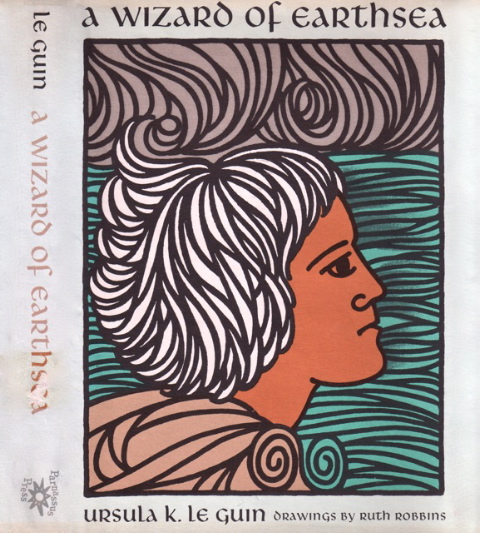
                  The Earthsea Cycle, also known as Earthsea, is a series of high fantasy books written by American author Ursula K. Le Guin. Beginning with A Wizard of Earthsea (1968), The Tombs of Atuan (1970), and The Farthest Shore (1972), the series was continued in Tehanu (1990), and Tales from Earthsea and The Other Wind. In 2018, all the novels and short stories were published in a single volume, The Books of Earthsea: The Complete Illustrated Edition, with artwork by Charles Vess.

                • Neveryon

                  series · 19 books · 1979

                  similar bysecondary worldreflectivesword and sorcery+1 more

                  Return to Nevèrÿon is a series of eleven sword and sorcery stories by Samuel R. Delany, originally published in four volumes during the years 1979–1987. Those volumes are:Tales of Nevèrÿon Neveryóna, or: The Tale of Signs and Cities Flight from Nevèrÿon Return to Nevèrÿon

                • Zimiamvian Trilogy

                  series · 4 books · 1922

                  completed

                  similar bysecondary worldfantasy+1 more

                  The Zimiamvian Trilogy is a series of fantasy novels by English author E. R. Eddison.Mistress of Mistresses (1935) A Fish Dinner in Memison (1941) The Mezentian Gate (1958)

                • The Buried Giant

                  Kazuo Ishiguro · standalone novel · 2015

                  similar byreflectivesecondary worldfantasy

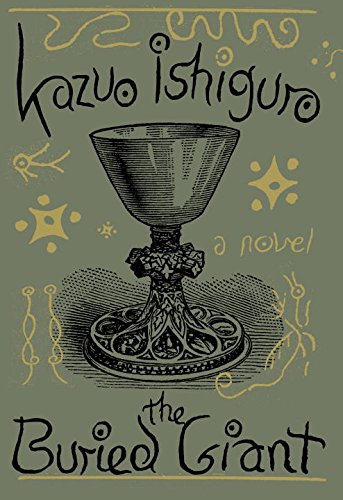
                  The Buried Giant is a fantasy novel by the Nobel Prize–winning British writer Kazuo Ishiguro, published in March 2015.

                • The Forgotten Beasts of Eld

                  Patricia A. McKillip · standalone novel · 1974

                  similar byreflectivesecondary worldfantasy

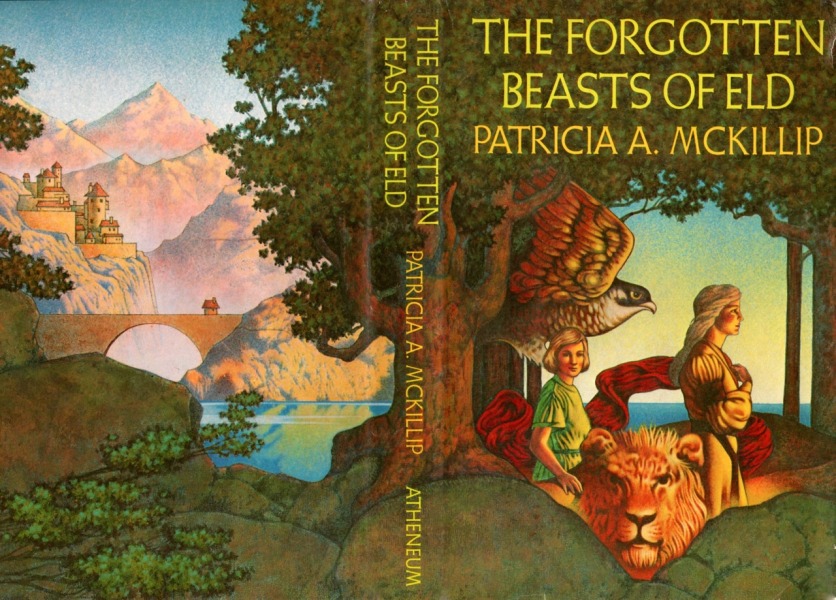
                  The Forgotten Beasts of Eld is a fantasy novel by American writer Patricia A. McKillip, and illustrators Peter Schaumann in 1974, and Alicia Austin in 1981, first published by Atheneum Publishers in 1974, and by Magic Carpet Books in 1996. It is the winner of the 1975 World Fantasy Award for Best Novel. The book centers on Sybel, a woman previously cut off from the rest of the world of Eldwold, as she learns to live and love in the world outside of the one she once knew.

                • Conan Universe

                  series · 205 books · 1932

                  part of Hyborian Age

                  similar bysecondary worldsword and sorceryfantasy

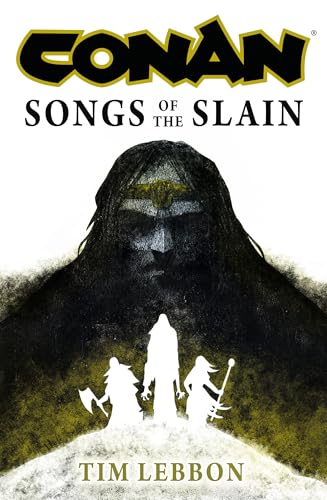
                  The Conan books are sword and sorcery fantasies featuring the character of Conan the Cimmerian originally created by Robert E. Howard. Written by numerous authors and issued by numerous publishers, they include both novels and short stories, the latter assembled in various combinations over the years by the several publishers. The character has proven durably popular, resulting in Conan stories being produced after Howard's death by such later writers as Poul Anderson, Leonard Carpenter, Lin Carter, L. Sprague de Camp, Roland J. Green, John C. Hocking, Robert Jordan, Sean A. Moore, Björn Nyberg, Andrew J. Offutt, Steve Perry, John Maddox Roberts, Harry Turtledove, and Karl Edward Wagner. Some of these writers finished incomplete Conan manuscripts by Howard, or rewrote Howard stories which originally featured different characters. Most post-Howard Conan stories, however, are completely original works. In total, more than fifty novels and dozens of short stories featuring the Conan character have been written by authors other than Howard. This article describes and discusses notable book editions of the Conan stories.

                • Erewhon

                  series · 4 books · 1872

                  completed

                  similar byreflectivesecondary world+1 more

                • The Lord of the Rings

                  series · 13 books · 1954

                  part of Tolkien's legendarium

                  similar bysecondary world+1 more

                  The Lord of the Rings is an epic high fantasy novel written by the English author and scholar J. R. R. Tolkien. Set in Middle-earth, the story began as a sequel to Tolkien's 1937 children's book The Hobbit but eventually developed into a much larger work. Written in stages between 1937 and 1949, The Lord of the Rings is one of the best-selling books ever written, with over 150 million copies sold.

                • Soldier Son

                  series · 3 books · 2005

                  similar bysecondary worldreflectivefantasy

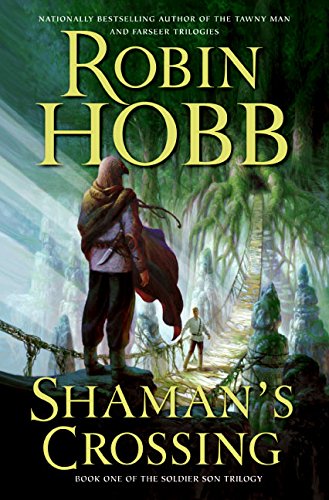
                  The Soldier Son trilogy is a fantasy novel series by Robin Hobb. Set in a new world unrelated to her previous trilogies, the Soldier Son trilogy follows the life of Nevare Burvelle, the second son of a newly elevated Lord of the Kingdom of Gernia.

                • The Princess Bride

                  William Goldman · standalone novel · 1973

                  similar bysecondary worldfantasymetafiction

                  The Princess Bride: S. Morgenstern's Classic Tale of True Love and High Adventure, The "Good Parts" Version is a 1973 fantasy romance novel by American writer William Goldman. The book combines elements of comedy, adventure, fantasy, drama, romance, and fairy tale. It is metafictionally presented as an abridgment of a longer work by the fictional S. Morgenstern, and Goldman's commentary asides are constant throughout. It was originally published in the United States by Harcourt Brace, then later by Random House, while in the United Kingdom it was later published by Bloomsbury.

                • Chalice

                  Robin McKinley · standalone novel · 2008

                  similar byreflectivesecondary worldfantasy

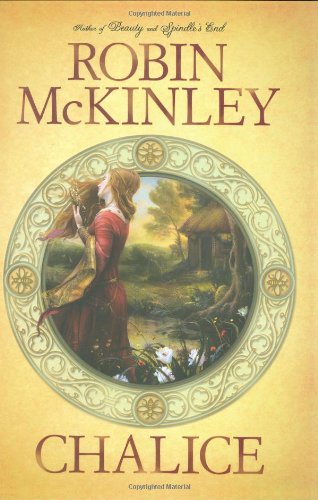
                  Chalice is a fantasy novel by American writer Robin McKinley. It was published in 2008 by G. P. Putnam's Sons.

                • Kull of Valusia

                  series · 26 books · 1929

                  completed

                  part of Hyborian Age

                  similar bysecondary worldsword and sorceryfantasy

                  Kull of Atlantis or Kull the Conqueror is a fictional character created by American writer Robert E. Howard. The character was more introspective than Howard's subsequent creation, Conan the Barbarian, whose first appearance was in a rewritten version of a rejected Kull story.

                • The Kingkiller Chronicle

                  series · 8 books · 2002

                  similar bysecondary worldfantasy+2 more

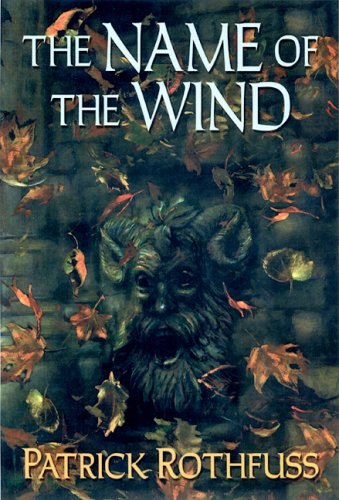
                  The Kingkiller Chronicle is a planned fantasy trilogy by the American writer Patrick Rothfuss. The first two books, The Name of the Wind and The Wise Man's Fear, were released in 2007 and 2011. The books released in the series have sold over 10 million copies.

                • The History of Middle Earth

                  series · 14 books · 1983

                  completed

                  part of Tolkien's legendarium

                  similar bysecondary worldfantasy+1 more

                  The History of Middle-earth is a 12-volume series of books published between 1983 and 1996 by George Allen & Unwin in the UK and by Houghton Mifflin in the US. They collect and analyse much of J. R. R. Tolkien's legendarium, compiled and edited by his son Christopher Tolkien. The series shows the development over time of Tolkien's conception of Middle-earth as a fictional place with its own peoples, languages, and history, from his earliest notions of "a mythology for England" through to the development of the stories that make up The Silmarillion and The Lord of the Rings. It is not a "history of Middle-earth" in the sense of being a chronicle of events in Middle-earth written from an in-universe perspective; it is instead an out-of-universe history of Tolkien's creative process. In 2000, the twelve volumes were republished in three limited edition omnibus volumes.

                • The Well at the World's End

                  William Morris · standalone novel · 1896

                  similar bysecondary worldfantasy+1 more

                  The Well at the World's End is a high fantasy novel by the British textile designer, poet, and author William Morris. It was first published in 1896 and has been reprinted repeatedly since, most notably in two parts as the 20th and 21st volumes of the Ballantine Adult Fantasy series, in August and September 1970.

                • Pusadian

                  series · 9 books · 1951

                  completed

                  similar bysecondary worldsword and sorceryfantasy

                  The Pusadian series is a sequence of fantasy stories by L. Sprague de Camp, begun in the early 1950s and written under the influence of Robert E. Howard's Conan stories. The series, also known as the Poseidonis series, prefigured the numerous sword & sorcery settings of the 1960s and 1970s.

                • The Hobbit

                  series · 2 books · 1937

                  completed

                  part of Tolkien's legendarium

                  similar bysecondary worldfantasy

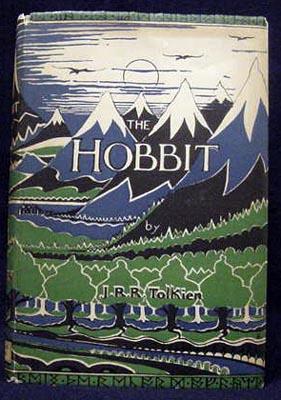
                  The Hobbit (1937) is J. R. R. Tolkien's children's fantasy novel following the reluctant burglar Bilbo Baggins, who joins a company of dwarves and the wizard Gandalf on a journey to reclaim treasure guarded by the dragon Smaug. It stands as a complete adventure on its own, but shares its setting with the rest of Tolkien's legendarium and leads into the events of The Lord of the Rings.

                • The Wood Beyond the World

                  William Morris · standalone novel · 1894

                  similar bysecondary worldfantasy+1 more

                  Young Walter, running away from an unhappy love story, starts a voyage towards unknown faraway countries, where visions lead him into a mysterious world beyond a wood. To try to break the enchantments Walter will have to rely, more than on strength, on cleverness and the help of a girl. [translated from uraniamania.com]

                • Tiger and Del

                  series · 10 books · 1985

                  similar bysecondary worldsword and sorceryfantasy

                  Jennifer Roberson's fantasy series pairs Tiger, a desert-born sword-dancer from the south, with Del, a Northern swordswoman trained in her own tradition of blade-magic, as reluctant partners across a hostile borderland. Beginning with Sword-Dancer and continuing across six numbered novels, the series follows their partnership, and eventual romance, through decades of adventures and shifting political stakes.

                • The Book of Atrix Wolfe

                  Patricia A. McKillip · standalone novel · 1995

                  similar byreflectivesecondary worldfantasy

                  The Book of Atrix Wolfe is a fantasy novel written by American author Patricia A. McKillip, published in 1995. It was a finalist for the 1996 Mythopoeic Fantasy Award for Adult Literature.

                • Annals of the Western Shore

                  series · 3 books · 2004

                  completed

                  similar byreflectivesecondary worldfantasy

                  Annals of the Western Shore is a young adult fantasy series by Ursula K. Le Guin. It consists of three books: Gifts (2004), Voices (2006), and Powers (2007). Each book has different main characters and settings, but the books are linked by some recurring characters and locations. Gifts won the PEN Center USA 2005 Children's literature award. Powers won the 2008 Nebula Award for Best Novel.

                • The Chronicles of Tornor

                  series · 3 books · 1979

                  similar bysecondary worldfantasy+1 more

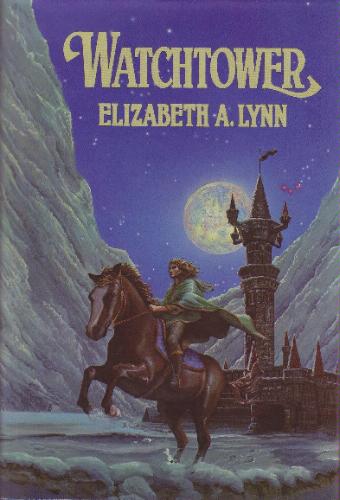
                  The Chronicles of Tornor is a fantasy series by American author Elizabeth A. Lynn. The first book in the series, Watchtower (1979), won a World Fantasy Award for Best Novel; its sequel, The Dancers of Arun (1979) was nominated for a World Fantasy Award in the same year. It is one of the earliest fantasy series to feature positive gay protagonists whose relationships are an unremarkable part of the cultural background, as well as to present explicit and sympathetic depictions of same-sex love. The third title in the series is ''The Northern Girl'' (1980).

                • Corbenic

                  Catherine Fisher · standalone novel · 2002

                  similar byreflectivesecondary worldfantasy

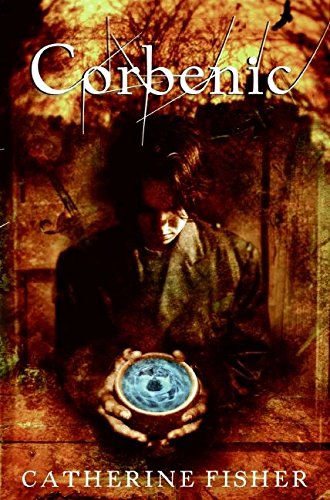
                  It starts when Cal gets off the train at the wrong stop in the middle of the night, in the middle of nowhere. He's stranded. Following a muddy path leads him to a castle that appears to be deserted. But inside is Corbenic, a magnificent hotel filled with rich people preparing for a banquet—and Cal is their guest of honor. During the meal, he experiences a disturbing vision, but when he is asked to talk about what he has seen, he denies it. What if he's becoming crazy, like his mother? When Cal wakes the next morning, the elegant castle turns out to be nothing more than an abandoned ruin. But something inside him has changed—he now knows he needs to right the wrongs in his life. It will be a difficult journey, and if Cal achieves his goal, it will not be without cost. The first step—he must return to Corbenic.

                • The Dragon's Boy

                  Jane Yolen · standalone novel · 1990

                  similar byreflectivesecondary worldfantasy

                  Young Arthur meets a dragon and comes to accept him as a friend and mentor.