More like Artifact Found
anchored on:science fictionfar futureother star systems
but
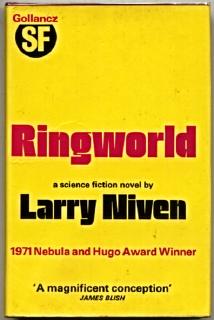
- Ringworld
series5 books1970
part of Known Space
similar byadventurousscience fictionfar futureother star systemsspace operaspace
The Ringworld series is a series of science fiction novels written by American author Larry Niven. It is part of his Known Space series of stories. Its backdrop is the Ringworld, a giant artifact 3 million times the surface area of Earth circling a star. The series is composed of four standalone science fiction novels, the original award-winning book and its three sequels:1970: Ringworld 1979: The Ringworld Engineers 1996: The Ringworld Throne 2004: Ringworld's Children
- Heechee
series19 books1972
completed
similar byscience fictionfar futureother star systemsspace operaspace+2 more
The Heechee Saga, also known as the Gateway series, is a series of science fiction novels and short stories by Frederik Pohl. The Heechee are an advanced alien race that visited the Solar System hundreds of millennia ago and then mysteriously disappeared. They left behind bases containing artifacts, including working starships, which are discovered and exploited by humanity.
- Across a Billion Years
Robert Silverbergstandalone novel1969
similar byadventurousexpeditionsscience fictionfar futureother star systemsspace
Across a Billion Years is a 1969 science fiction novel by American writer Robert Silverberg.
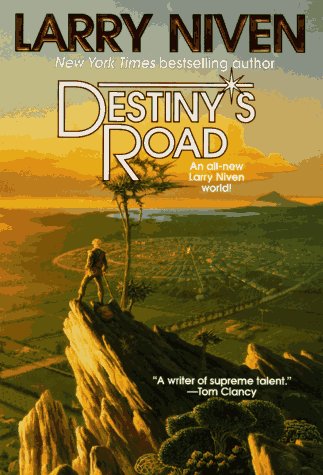
- Destiny's Road
Larry Nivenstandalone novel1997
similar byadventurousexpeditionsscience fictionfar futureother star systems
Destiny's Road is a science fiction novel by American writer Larry Niven, first published in 1998. It follows Jemmy Bloocher's exploration of Destiny's Road, a long scar of once-melted rock seared onto the planet's surface by a spaceship's fusion drive. Jemmy is descended from the original Destiny colonists, who were stranded when their landing craft deserted them.
- Dune
series20 books1963
part of Dune Universe
similar byscience fictionfar futureother star systemsspace opera
Frank Herbert's Dune Chronicles opens with 1965's Dune, set on the desert planet Arrakis where House Atreides takes control of the only source of the vital spice melange and young Paul Atreides is pulled into a struggle over its politics and religion. Herbert carried the story forward across five further novels — Dune Messiah, Children of Dune, God Emperor of Dune, Heretics of Dune, and Chapterhouse: Dune — following Paul's line over the following millennia, before Brian Herbert and Kevin J. Anderson later extended the saga. Many other editions of these six novels are omnibus and box-set repackagings rather than separate stories.
- Icerigger Trilogy
series3 books1974
part of Humanx Commonwealth
similar byadventurousscience fictionfar futureother star systems+3 more
Alan Dean Foster's Icerigger trilogy, set in his Humanx Commonwealth universe, strands a group of characters on the frozen world of Tran-Ky-Ky, where they get pulled into the local population's fight against a destructive nomadic force. Much of the trilogy follows their overland journey by ice-sailing craft toward the planet's one interstellar outpost, a trek of roughly a year across the ice, as they help the natives survive along the way.
- The X Factor
Andre Nortonstandalone novel1965
similar byadventurousscience fictionfar futureother star systems+2 more
"Diskan Fentress was a mutant. And when he could no longer bear the shame of being an outsider among his own people, he stole a spaceship and jumped to an uncharted, frozen planet. There Diskan met the alien Brothers-in-Fur, who led him to the galaxy ruins where long ago a great civilization had ruled..." (Source: Back of Del Rey / Ballantine edition, 1984)
- Uncharted Territory
Connie Willisstandalone novel1994
similar byexpeditionsscience fictionfar futureother star systems+1 more
Uncharted Territory is a science fiction novella by Connie Willis. Published in 1994, it follows three humans sent to explore an alien world, accompanied by a native guide, in an "archly written satire... of political correctness."
- Riverworld
series37 books1965
similar byscience fictionfar futureother star systems+1 more
The Riverworld series consists of five science fiction novels (1971–1983) by American author Philip José Farmer (1918–2009). The Riverworld is an artificial, or heavily terraformed, planet where all humans who ever lived throughout history have been resurrected. The novels explore interactions of resurrected individuals from many different cultures and time periods. The underlying theme is quasi-religious. The motivations and ethics of the unknown intelligences that created the Riverworld and its inhabitants are explored.
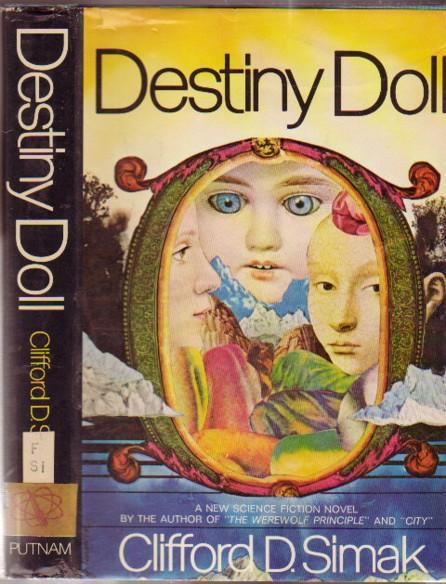
- Destiny Doll
Clifford D. Simakstandalone novel1971
similar byadventurousscience fictionfar futureother star systems+1 more
A group of space travelers is trapped on a planet that lured them to land. The story involves their adventures on the planet and the discovery of friendly aliens, robots, and not-so-friendly life forms. There is the alternate reality possibility toward the end of the story.
- Moties
series4 books1974
part of CoDominium
similar byscience fictionfar futureother star systemsspace operaspace+1 more
Larry Niven and Jerry Pournelle's The Mote in God's Eye (1974) depicts humanity's first contact with an alien species, the Moties, set within the far-future interstellar setting of Pournelle's codominium future history. The Gripping Hand continues that first-contact crisis years later, and Outies, written by J. R. Pournelle, carries the story forward into a new generation. Together the three books trace an escalating encounter between human and Motie civilizations within the codominium universe.
- The Haunted Stars
Edmond Hamiltonstandalone novel1960
similar byadventurousexpeditionsscience fictionfar futureother star systemsspace opera
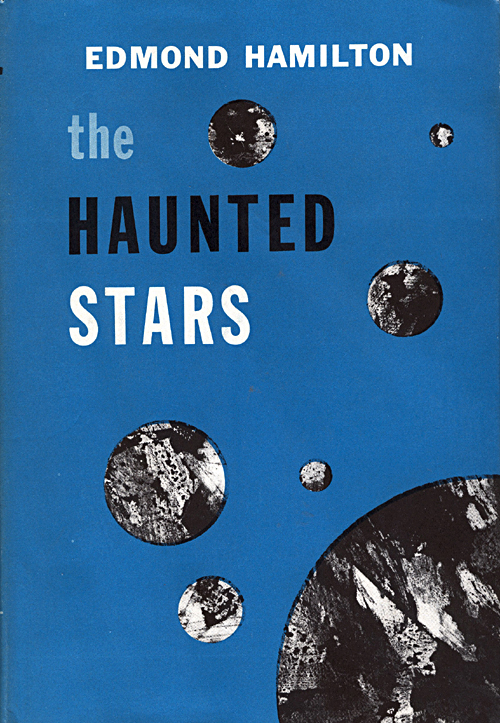
The Haunted Stars is a science fiction novel by American writer Edmond Hamilton. It tells the story of an expedition from Earth to a planet of the star Altair — a planet called Ryn, inhabited by humans like those on Earth. Against the wishes of Ryn's inhabitants, the team from Earth seek information about weapons technology used in an ancient space war. Their unsuccessful search ends in dramatic contact with another species, the ancient enemy of Ryn.
- Starman Jones
Robert A. Heinleinstandalone novel1953
similar byadventurousscience fictionfar futureother star systemsspace operaspace
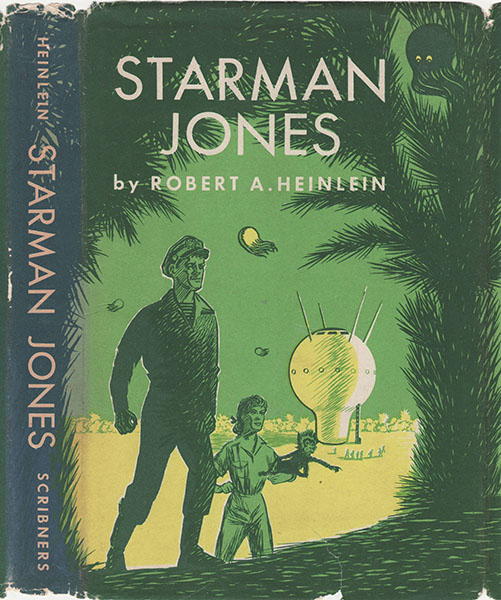
Starman Jones, a 1953 science fiction novel by Robert A. Heinlein, features a farm boy who wants to go to the stars. Charles Scribner's Sons published the book as part of the Heinlein juveniles series.
- Dune Universe
universe78 books1963
Start hereDune · Start here
similar byscience fictionfar futureother star systemsspace opera
Arrakis. Dune. The desert planet, where empire runs on a single substance: the spice melange, which folds space, prolongs life, and unlocks prescience, and which exists nowhere else in the known universe. Frank Herbert's saga is a meditation dressed as an adventure — feudal houses and a secret sisterhood, engineered messiahs and the patient ecology of a world without water, all turning on the terrible gravity of who commands the spice. It reads like scripture and schemes like a war room, ten thousand years hence, among people who have outlawed the thinking machine and made instruments of themselves instead. At its heart stand Herbert's original six — Dune, Dune Messiah, Children of Dune, God Emperor of Dune, Heretics of Dune, Chapterhouse: Dune — a single deepening arc across millennia, arguing the whole way between prophecy and free will. Around that spine his son Brian Herbert and Kevin J. Anderson have raised a vast prequel architecture: Prelude to Dune, tracing the great houses a generation before Paul; Legends of Dune, reaching back to the crusade that broke the machines; the Schools of Dune cycle on the founding of Bene Gesserit, Mentat, and Navigator; the Caladan Trilogy and Heroes of Dune filling years the originals left in shadow. Many hands, dozens of volumes, one desert. What sets Dune apart is its refusal of the simple: religion is manufactured, heroes are hazards, and the sand itself — worm, water, ecology — acts as a political power. Begin where the universe did, with Frank Herbert's Dune (1965), and read the original six in order; you need nothing else to feel the full weight. The prequels are a country to explore afterward, taken by era. Beginnings are delicate times.
- Mesklin
series6 books1954
completed
similar byadventurousscience fictionfar futureother star systems
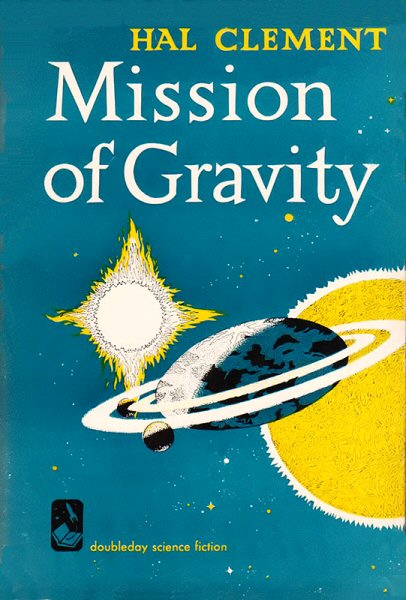
Mesklin is a fictional planet created by Hal Clement and used in a number of his hard science fiction stories, starting with Mission of Gravity (1954). Alongside the novel's original 1953 serialization in Astounding Science Fiction, Clement published an essay titled "Whirligig World" on how he designed the planet to have the properties he wanted. The idea came from an object that was at the time believed to exist in the 61 Cygni system, and which might represent an extrasolar planet.
- The Big Jump
Leigh Brackettstandalone novel1955
similar byadventurousexpeditionsscience fictionfar futureother star systemsspace operaspace
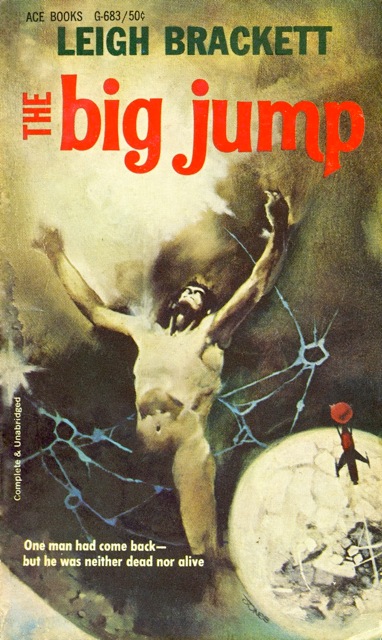
The Big Jump is a science fiction novel by American writer Leigh Brackett, centered on the first crewed expedition to Barnard's Star.
- Against a Dark Background
Iain M. Banksstandalone novel1993
similar byadventurousscience fictionfar futureother star systemsmagical artifactsspace operaspace
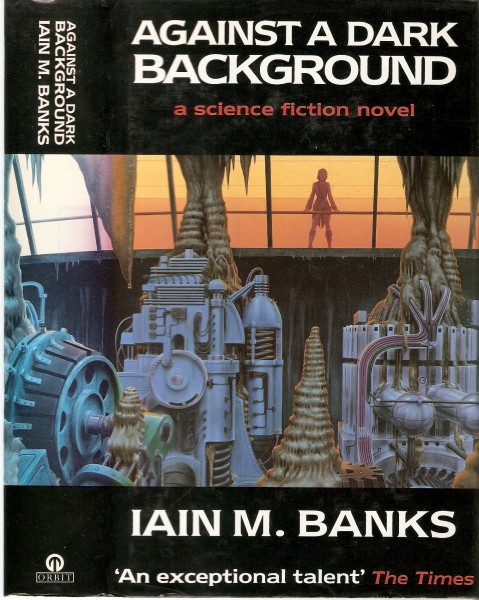
The daughter of an impoverished noble house and her squad of soldiers become thieves of antiquities; long after their retirement and separation she must assemble them again in order to find and steal the most powerful weapon ever created, or pay with her life.
- Of Man and Manta
series3 books1968
similar byadventurousscience fictionother star systemsfar future+2 more
Of Man and Manta is a trilogy of science fiction novels written by Piers Anthony. It consists of the three books: Omnivore (1968), Orn (1970), and 0X (1975).
- Citizen of the Galaxy
Robert A. Heinleinstandalone novel1957
similar byadventurousscience fictionfar futureother star systemsspace operaspace
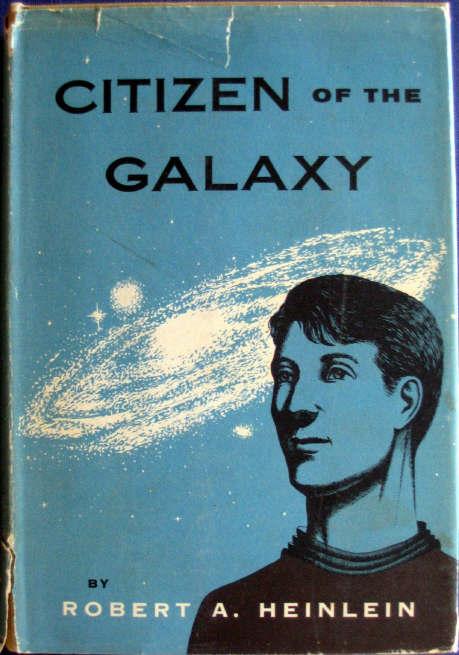
On a planet far distant from Earth, a lame beggar buys a young boy slave who has forgotten his origins. The beggar is more than he seems, and gives the boy an extensive education while employing him as an observer of activity in their city. Years later, the beggar is captured by the government, and the youth must escape the planet.
- Beast Master
series5 books1959
similar byscience fictionfar futureother star systems+1 more
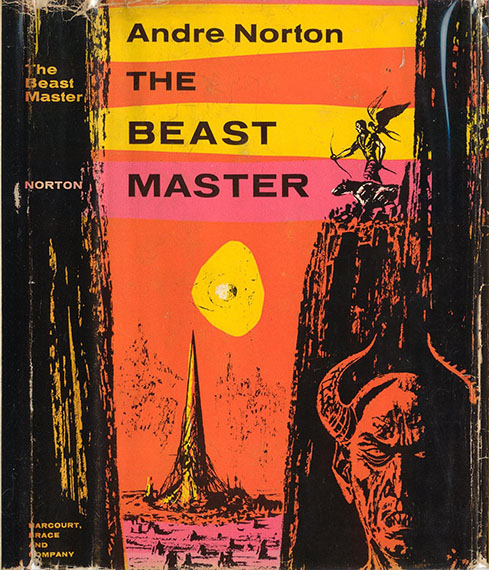
Andre Norton's Beast Master series follows Hosteen Storm, a Navajo veteran of an interstellar war who resettles an alien frontier world with a team of specially trained animals bonded to him by touch-telepathy. The original novels came from Norton in the late 1950s-60s; Lyn McConchie added further installments decades later, extending Storm's story on the frontier planet Arzor. It's frontier-adventure science fiction built around an unusual human-animal partnership.
- Tower and the Hive
series7 books1959
completed
part of The Talents
similar byscience fictionfar futureother star systemsspace operaspace+1 more
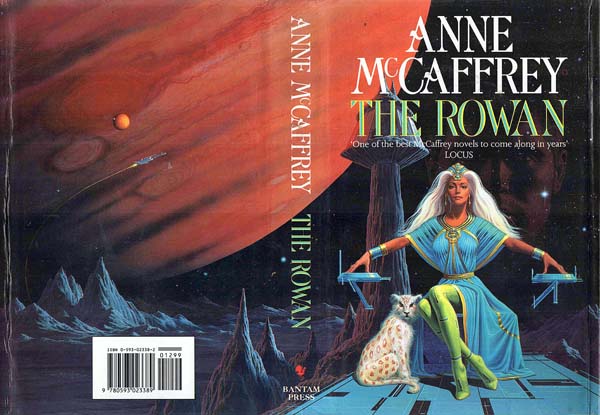
The Tower and the Hive series opens with The Rowan (1990), following an isolated but powerful telepath who is drawn out of her loneliness by a psychic call for help from a distant Talent facing an alien threat. Anne McCaffrey continued the story across four more novels, Damia, Damia's Children, Lyon's Pride, and the concluding The Tower and the Hive (1999), following later generations of a telepathic family staffing the Prime Towers that give a starfaring human civilization instant communication. The series is set later in the same Talents universe as McCaffrey's earlier Pegasus books.
- Academy / Priscilla (Hutch) Hutchins
series16 books1983
similar byscience fictionother star systemsfar futurespace+2 more
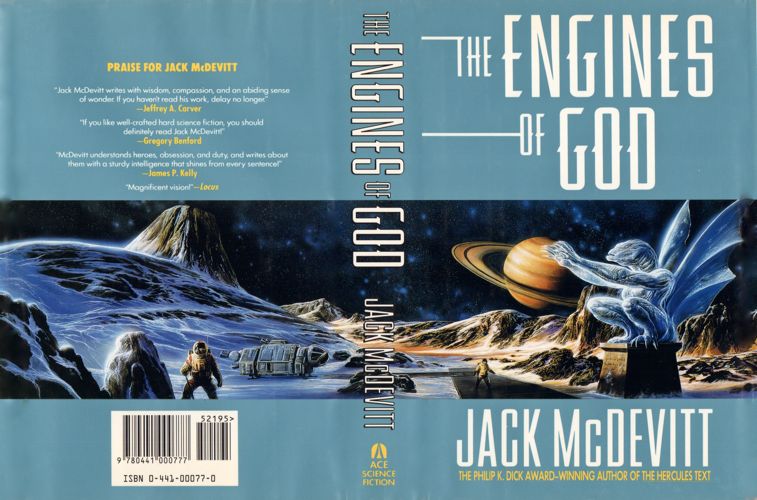
Jack McDevitt's Academy novels follow Priscilla 'Hutch' Hutchins, a starship pilot turned administrator, across a series of archaeological mysteries involving vanished alien civilizations and inexplicable ancient artifacts scattered through human space. Beginning with The Engines of God, the series treats deep time and the near-total absence of intelligent alien life as its central mystery, favoring slow-burn discovery over action. McDevitt returned to Hutch across three decades of publication.
- Uplift
series5 books1980
part of Uplift Universe
similar byadventurousscience fictionfar futureother star systemsspace operaspace
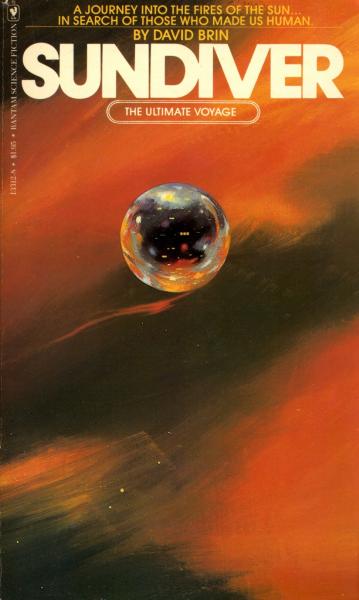
David Brin's Uplift trilogy opens with Sundiver, sending human explorers into the Sun itself, then follows a dolphin-crewed starship on the run from hostile aliens in Startide Rising and a fight over the colony world Garth in The Uplift War. The books sit inside Brin's wider Uplift Universe, built on the idea that spacefaring "patron" species genetically engineer younger "client" species into full sapience, with humanity an anomaly that reached the stars without a patron of its own.
- Uplift Universe
universe13 books1980
Start hereUplift · Start here
similar byadventurousscience fictionfar futureother star systemsspace operaspace
No species, the Galactics insist, ever climbs to sapience alone. For a billion years the elder races have "uplifted" their chosen clients — reshaping some promising animal, gene by patient gene, into a thinking being, then binding it through long ages of indenture. Patron lifts client; client one day becomes patron; and every lineage traces back through the vast Galactic Library to the vanished Progenitors who began it all. Then a ragged band of primates arrives at the stars with no patron to claim them — wolflings, self-made, an affront to a hundred thousand years of law — and worse, these humans have already started uplifting neighbors of their own: the neo-dolphins and neo-chimpanzees of Earthclan. David Brin builds this galaxy across two trilogies. The first — Sundiver, the Hugo- and Nebula-winning Startide Rising, and the Hugo-winning The Uplift War — sends an expedition into the Sun, then follows the dolphin-crewed survey ship Streaker as it flees a discovery that sets fanatical star-clans at war, and a chimp-led resistance on an invaded colony world. The second sequence, Uplift Storm — Brightness Reef, Infinity's Shore, Heaven's Reach — descends to Jijo, a forbidden world where six fallen races hide as illegal settlers, and draws every loose thread toward a reckoning. Short fiction fills the margins. This is space opera with an ecologist's conscience: teeming with invented biologies, wry cross-species banter, and real unease about what we owe the minds we make. Begin with Startide Rising — the saga's beating heart, and readable on its own — or take Sundiver first and read straight through in publication order.