More like Artificial Condition
anchored on:science fictionartificial intelligencerobotsfar futurefirst personamnesia+4 more
but
- Imperial Radch
series7 books2012
part of Radchaai Universe
similar byscience fictionfar futurespaceartificial intelligenceidentityfirst person+1 more
Ann Leckie's Imperial Radch trilogy (Ancillary Justice, Ancillary Sword, Ancillary Mercy, 2013-2015) follows Breq, the sole surviving fragment of an AI that once inhabited both a troop-transport starship and dozens of soldier bodies, now alone and hunting for revenge inside the vast, expansionist Radch empire. Breq's quest widens across the trilogy into a conflict with the empire's own fractured ruler, and the books use her alien difficulty perceiving gender to unsettle the space-opera conventions around her.
- The City and the Stars
Arthur C. Clarkestandalone novel1956
similar byscience fictionreflectivefar future+2 more
The City and the Stars is a science fiction novel by British writer Arthur C. Clarke, published in 1956. This novel is a complete rewrite of Clarke's earlier Against the Fall of Night, his first novel, which had been published in Startling Stories magazine in 1948 after being rejected by the editor of Astounding Science-Fiction, according to the author.
- 2312
Kim Stanley Robinsonstandalone novel2012
similar byscience fictionreflectivefar futurespace+2 more
In the eponymous year, when Earth's ecology is degraded and humanity has settled throughout the solar system by terraforming and genetic engineering, mysterious disasters strike some human communities and an assortment of human types from throughout the system seek to find and eliminate the cause.
- A Time of Changes
Robert Silverbergstandalone novel1971
similar byscience fictionreflectivefar futureidentityfirst person
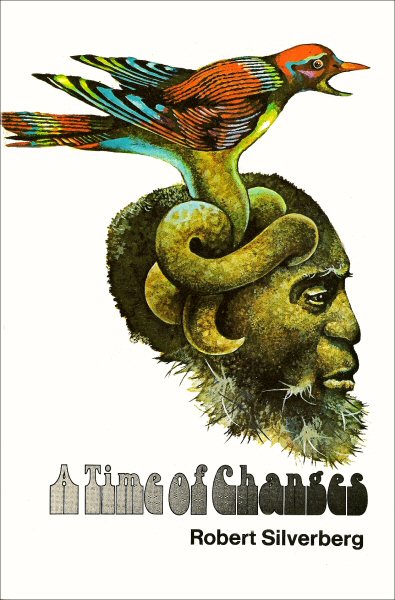
A Time of Changes is a 1971 science fiction novel by American writer Robert Silverberg. It won the Nebula Award for that year, and was also nominated for the 1972 Hugo and Locus Awards.
- Imperial Earth
Arthur C. Clarkestandalone novel1975
similar byscience fictionreflectivefar futurespace
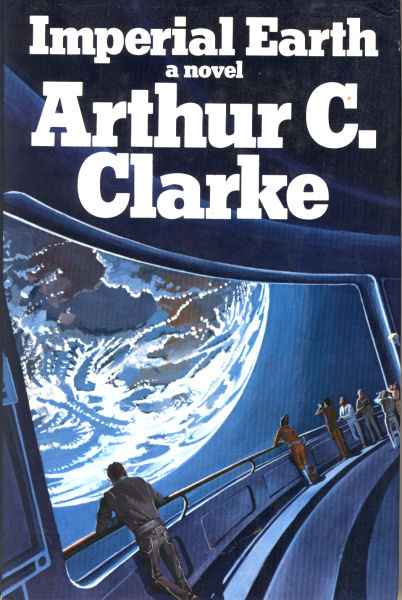
Imperial Earth is a science fiction novel by British writer Sir Arthur C. Clarke, published in 1975 by Gollancz Books. The plot follows the protagonist, Duncan Makenzie, on a trip to Earth from his home on Titan, in large part as a diplomatic visit to the U.S. for its quincentennial in 2276, but also to have a clone of himself produced. The book was published in time for the U.S. bicentennial in 1976.
- Mockingbird
Walter Tevisstandalone novel1980
similar byscience fictionreflectivefar futureartificial intelligencerobots
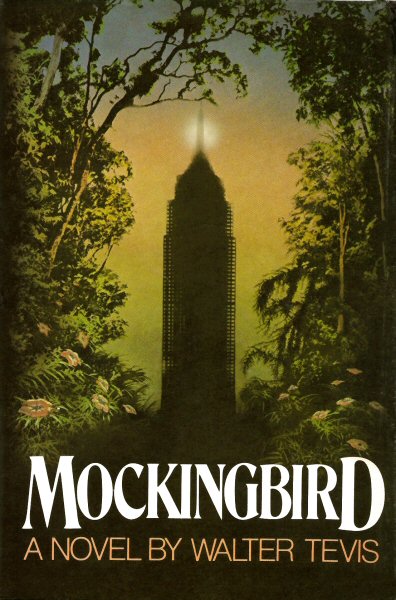
WorldCat: In a future world where mankind is dying, humans wander through life in a drugged electronic bliss. Quick sex is the norm, and some people would rather commit suicide than live in hopelessness. Humanity's salvation rests with an android who has no desire to live, and a man and a woman who must discover love, hope, and dreams of a world reborn.
- Aurora
Kim Stanley Robinsonstandalone novel2015
similar byscience fictionreflectivefar futureartificial intelligencespaceship
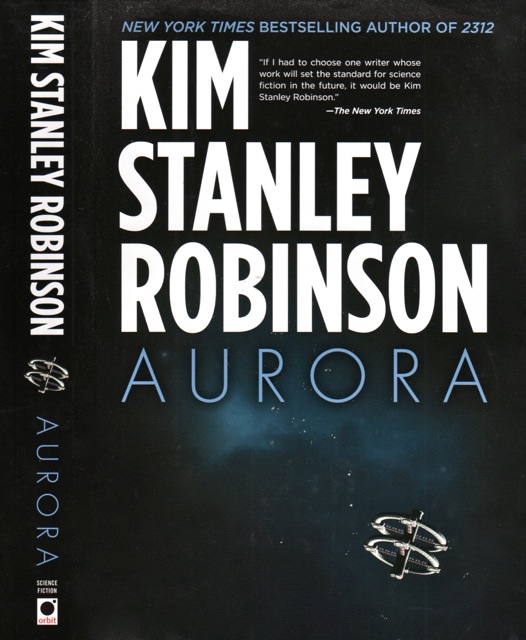
Aurora is a 2015 novel by American science fiction author Kim Stanley Robinson. The novel concerns a generation ship built in the style of a Stanford torus, traveling to Tau Ceti to start a human colony. The novel's primary narrative voice is that of the starship's artificial intelligence. Aurora was well received by critics.
- Tau Zero
Poul Andersonstandalone novel1970
similar byscience fictionreflectivefar futurespaceship
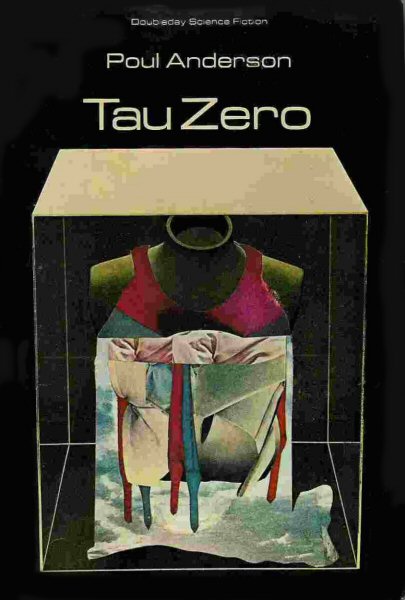
During an epic voyage to a planet 30 light years away, the engines of the starship the 'Leonora Christine' are damaged. Unable to slow down, it attains light speed (the tau zero of the title). The disparity between time for those on board and external time becomes impossibly great. Eons and galaxies hurtle by, as the crew speed helplessly into the great unknown.
- Beyond This Horizon
Robert A. Heinleinstandalone novel1948
similar byscience fictionreflectivefar future+1 more
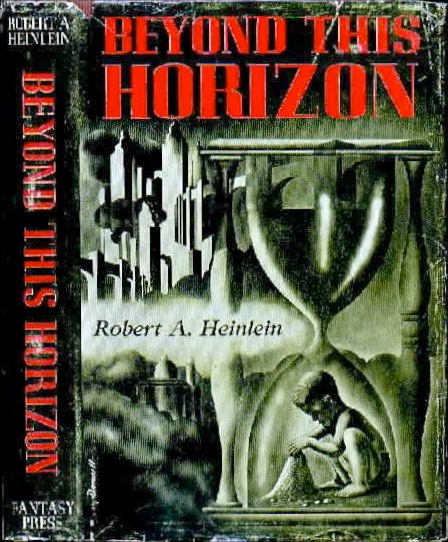
From the front flap of a 2001 Baen reprint: "Utopia has been achieved. For centuries, disease, hunger, poverty, and war have been things found only in the history tapes. And applied genetics has given men and women the bodies of athletes and a lifespan of over a century. They should all have been very happy... But Hamilton Felix is bored. And he is the culmination of a star line, each of his last thirty ancestors chosen for superior genes. Hamilton is, as far as genetics can produce one, the ultimate man. And this ultimate man can see no reason why the human race should survive, and has no intention of continuing the pointless comedy. However, Hamilton's life is about to become less boring. A secret cabal of revolutionaries who find utopia not just boring, but desperately in need of leaders who know just What Needs to be Done, are planning to revolt and put themselves in charge. Knowing of Hamilton's disenchantment with the modern world, they have recruited him to join their Glorious Revolution. Big mistake! The revolutionaries are about to find out that recruiting a superman was definitely not a good idea..."
- Implied Spaces
Walter Jon Williamsstandalone novel2008
similar byscience fictionreflectivefar futureartificial intelligencespace+1 more
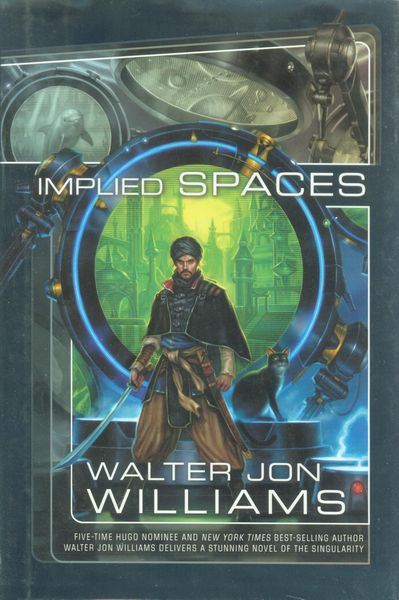
Implied Spaces is a 2008 space opera novel by American author Walter Jon Williams. It explores themes of transhumanism, artificial intelligence and ontology.
- Teixcalaan
series2 books2019
similar byscience fictionreflectivefar futureidentity+2 more
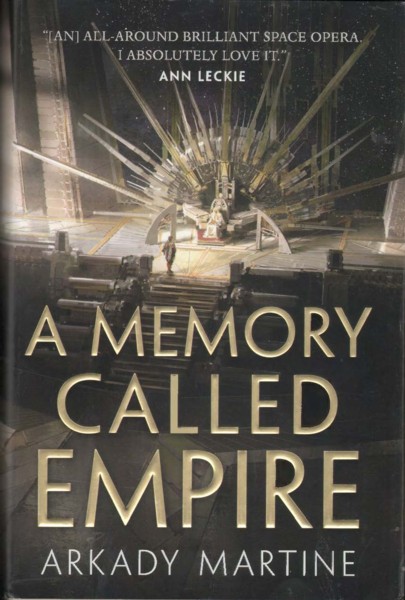
Arkady Martine's space opera duology follows Mahit Dzmare, ambassador from the small, independent Lsel Station, as she arrives in the vast Teixcalaanli Empire to investigate her predecessor's death and finds herself caught up in the empire's own succession crisis. A Memory Called Empire and A Desolation Called Peace pair court intrigue with Mahit's conflicted, outsider fascination with an empire she can't help admiring.
- Project Pope
Clifford D. Simakstandalone novel1981
similar byscience fictionreflectivefar futureartificial intelligencerobots
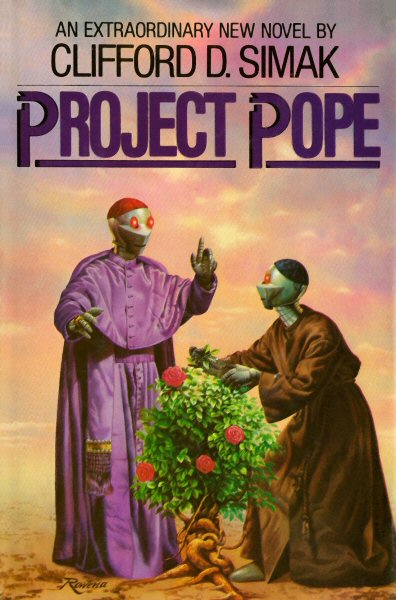
Project Pope is a science fiction novel by the American author Clifford Simak, published in 1981 by Ballantine Books. The novel is about a group of robots and humans living on a planet called the End of Nothing. Their mission is to search the universe and other dimensions to seek out true religion and knowledge. They add the information they gather to their Pope, a robotic supercomputer, in order to make an infallible authority of all knowledge and religion. The novel was nominated for both a Hugo Award for Best Novel and a Locus Award for Best SF novel in 1982.
- City
series19 books1944
completed
similar byscience fictionreflectivefar future+1 more
City is Clifford D. Simak's fix-up novel, assembling eight linked stories originally published in Astounding Science Fiction during the 1940s and framed as legends dogs tell about a half-mythical creature called Man. It follows humanity's gradual abandonment of its cities and eventual departure from Earth, while the dogs left behind are surgically uplifted into a peaceable, speaking civilization of their own. The book won the International Fantasy Award in 1952.
- Rite of Passage
Alexei Panshinstandalone novel1968
similar byscience fictionreflectivefar futurespaceship
Rite of Passage is a science fiction novel by American writer Alexei Panshin. Published in 1968 as an Ace Science Fiction Special, this novel about a shipboard teenager's coming of age won that year's Nebula Award, and was nominated for the Hugo Award for Best Novel in 1969.
- The Chrysalids
John Wyndhamstandalone novel1955
similar byscience fictionreflectivefar future
The Chrysalids is a science fiction novel by British writer John Wyndham, first published in 1955 by Michael Joseph. It is the least typical of Wyndham's major novels, but regarded by some as his best. An early manuscript version was entitled Time for a Change.
- Hainish
series33 books1964
completed
similar byscience fictionreflectivefar future
The Hainish Cycle consists of a number of science fiction novels and stories by Ursula K. Le Guin. The cycle is set in a future history that features civilizations of human beings on planets orbiting a number of nearby stars, including Terra ("Earth"); these humans are contacting each other for the first time and establishing diplomatic relations, as well as setting up a confederacy under the guidance of the oldest of the human worlds, the peaceful planet Hain. In this history, human beings did not evolve on Earth, but they were instead the result of interstellar colonies planted by Hain in the distant past, after which interstellar travel ceased for an extended period. Some of the human races have new genetic traits, a result of ancient Hainish experiments in genetic engineering; this includes people who can dream while awake, and a world of hermaphroditic people who only enter active sexuality once per month, not knowing which sex will manifest in them. In keeping with Le Guin's narrative approach, she uses varied social and environmental settings to explore the anthropological and sociological outcomes of human evolution in those environments. The author often discounted the characterization of a so-called "Hainish Cycle".
- Learning the World
Ken MacLeodstandalone novel2005
similar byscience fictionreflectivefar futurespacespaceship
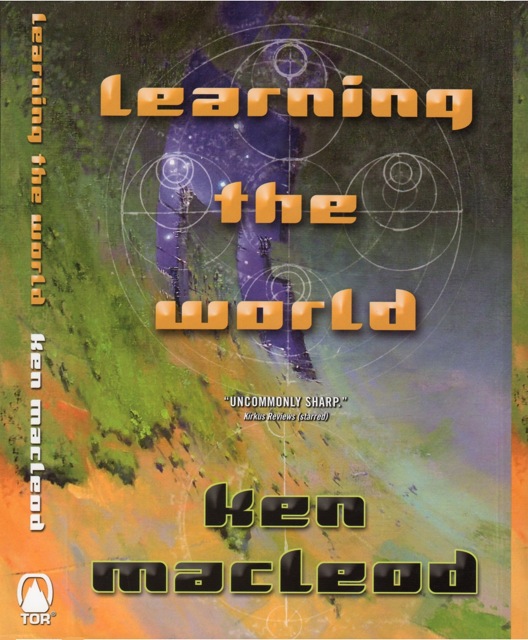
From the front flap of the Tor first printing: "Humanity has spread to every star within 500 light-years of its half-forgotten origin, coloring the sky with a haze of habitats. Societies rise and fall. Incautious experiments burn fast and fade. On the fringes, less modified humans get on with the job of settling a universe that has, so far, been empty of intelligent life. The ancient starship But the Sky, My Lady! The Sky! is entering orbit around a promising new system after a four hundred year journey. For its long-lived inhabitants, the centuries have been busy. Now a younger generation is eager to settle the system. The ship is a seed-pod ready to burst. Then they detect curious electromagnetic emissions from the system's Earth-like world. As the nature of the signals becomes clear, the choices facing the humans become stark. On Ground, second world from the sun, a young astronomer searches for his system's outermost planet. A moving point of light thrills, then disappoints him. It's only a comet. His physicist colleague Orro takes time off from trying to invent a flying-machine to calculate the comet's trajectory. Something is very odd about that comet's path. They are not the only ones for whom the world has changed. "We are not living in the universe we thought we lived in yesterday. We have to start learning the world all over again.""
- The Man in the Maze
Robert Silverbergstandalone novel1969
similar byscience fictionreflectivefar futureidentity
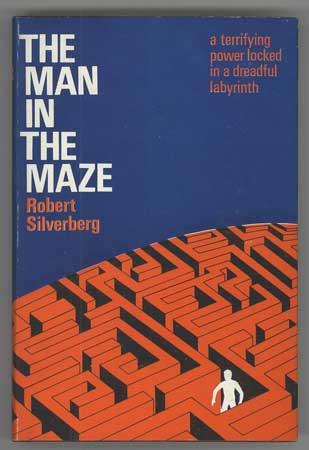
The Man in the Maze is a science fiction novel by American writer Robert Silverberg, originally serialized in the magazine Worlds of If in April and May 1968, and published in bookstores the following year. It tells the tale of a man rendered incapable of interacting normally with other human beings by his uncontrollable psychic abilities. The novel is inspired by Sophocles' play Philoctetes, with the roles of Odysseus, Neoptolemus and Philoctetes played by Boardman, Rawlins, and Muller, respectively.
- Memoirs of a Spacewoman
Naomi Mitchisonstandalone novel1962
similar byscience fictionreflectivefar futurespacefirst person
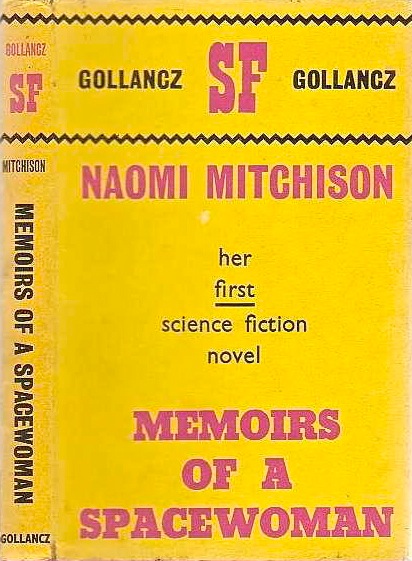
Memoirs of a Spacewoman is a science fiction novel by Scottish novelist and poet Naomi Mitchison published in 1962 by Victor Gollancz Ltd.
- How to Live Safely in a Science Fictional Universe
Charles Yustandalone novel2010
similar byscience fictionreflectivefar futureidentityfirst person
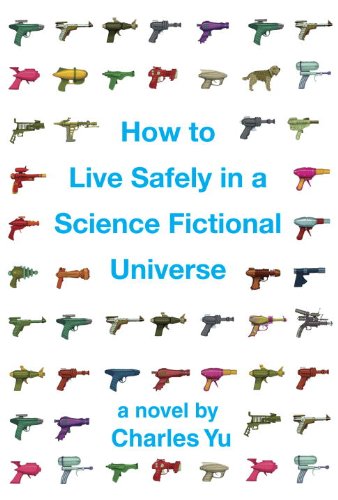
How to Live Safely in a Science Fictional Universe is a 2010 novel by Taiwanese-American writer Charles Yu. The novel revolves around a search for a father and the father-son relationship. It also includes themes about life and how we live especially with respect to time, memories, and creation of the self.
- Triton
Samuel R. Delanystandalone novel1976
similar byscience fictionreflectivefar futureidentity
Trouble on Triton: An Ambiguous Heterotopia (1976) is a science fiction novel by American writer Samuel R. Delany. It was nominated for the 1976 Nebula Award for Best Novel, and was shortlisted for a retrospective James Tiptree, Jr. Award in 1995. It was originally published under the shorter title Triton.
- Manseed
Jack Williamsonstandalone novel1982
similar byscience fictionreflectivefar futurespacerobots
In the decades since i've read this novel somehow i forgot almost everything about it, except the powerful force it had on me. However, the the following description from http://www.fictiondb.com/author/jack-williamson~manseed~117359~b.htm seems to match my long ago reading experience: Egan Drake was a wealthy but unhappy visionary who died early and left behind only a powerful dream. He proposed to spread Mankind among the stars. Then there was Megan Drake. She took her brother's vision and made it real. At the Raven Foundation's New Mexico headquarters, she gathered around her experts in astronautics, biology, computer science, defense, and fusion propulsion. The project was simple in design yet grandiose in its aim: a thousand tiny ships would crawl to the stars; each that landed on an Earth-type planet would produce several dozen colonists; each colonist would be a product of the genes derived from Megan and her experts. Every ship would manufacture cyborgs for repairs and self-protection. But much of the technology was new and untried; no one could predict what might really occur at a millennia-long journey's end if, say, a cyborg fell in love or aliens were met or...
- Stranger in a Strange Land
Robert A. Heinleinstandalone novel1961
similar byscience fictionreflectiveidentity
Stranger in a Strange Land is a 1961 science fiction novel by the American author Robert A. Heinlein. It tells the story of Valentine Michael Smith, a human who comes to Earth in early adulthood after being born on the planet Mars and raised by Martians, and explores his interaction with and eventual transformation of Terran culture.
- This Immortal
series2 books1966
similar byscience fictionreflectivefar future
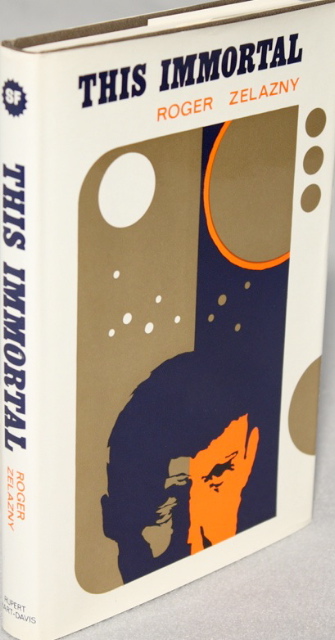
This Immortal is a single science fiction novel by Roger Zelazny, expanded from his 1965 serial ...And Call Me Conrad. In a depopulated future Earth largely toured by an alien race, its long-lived, secretive protagonist Conrad Nomikos is assigned to guide and protect a visiting alien across the ruins of Greece and Egypt, uncovering old grudges and assassination plots along the way. The novel shared the 1966 Hugo Award for Best Novel with Frank Herbert's Dune.