Loreful
HomeDiscover
Search series, authors…⌘K
Loreful

Reading orders for SF/F series and shared universes — with your place kept in every one.

Explore

UniversesSeriesWorksAuthorsAtlas

Help

FAQAboutSite map

Account & legal

Sign inCreate accountPrivacyTerms

Data

Built on ISFDB, Wikipedia, Wikidata and Open Library. Curated reading orders carry their reasoning on the page; the rest follow publication order. Data sources & licenses

© Loreful · data: ISFDB · CC BY

More like Assemblage Point

but

Mood

The mood the book leaves you in.

  • The reading experience is propelled by journeys, exploration, and physical risk; excitement and forward momentum dominate over dread or introspection.
  • Joy and loss are deliberately mixed; the resolution grants characters something real while taking something else away, leaving warmth and sorrow together.
  • The book demands work from the reader — dense prose, difficult structure, unfamiliar ideas, or morally uncomfortable material — as part of its intended effect.
  • Grim events, cruelty, or despair dominate the atmosphere, and the book does not soften them with comfort or comic relief.
  • The atmosphere is quietly unsettling — wrongness, unease, and the uncanny pervade the book without necessarily escalating into overt horror.
  • Humor is a primary aim and the prose plays for laughs — comic situations, wit, or dialogue produce sustained comedy, not occasional levity.
  • Withheld information drives the experience; the book sustains enigmas and secrets the reader wants resolved, whatever its genre.
  • The book is contemplative and inward-looking, giving more weight to thought, memory, and meaning than to external events.
  • Grief, loss, or melancholy set the dominant register, and the book lets sorrow stand rather than resolving it into comfort.
  • Sustained suspense is the point; the book keeps the reader braced for what happens next through danger, pressure, or impending revelation.
  • Playful invention and charm define the register — fanciful conceits, light absurdity, and a narration that delights in its own oddity.

About

What the story runs on.

  • Stories in which extraterrestrial beings are central — as characters, cultures, or the object of the plot.
  • Stories in which demons or devils — infernal beings, their bargains, possessions, and hierarchies — drive the plot.
  • Stories about the raised or restless dead — necromancers and their arts, liches, skeletons, and revenants.
  • Stories in which gods and deities act as characters — walking the world, meddling in mortal lives, or dying.
  • Stories about those who track and kill monsters for a living or a calling, and the cost of the trade.
  • Stories in which staying alive against nature, catastrophe, or scarcity is the central problem.
  • Stories about mental unraveling — descent into madness, delusion, and minds at war with themselves.
  • Stories driven by the pursuit of vengeance for a wrong, and what the pursuit costs the avenger.
  • Stories in which a buried family truth — hidden parentage, crimes, or shames — surfaces and reorders the present.
  • Stories driven by maneuvering for power — factions, conspiracies, and statecraft conducted in shadow.
  • Stories in which war itself is the subject — combat, occupation, and what warfare does to soldiers and civilians.
  • Stories following an expedition into the unknown — uncharted lands, lost cities, and the discovery or ruin waiting at the end.

Shelf

Where it sits in the library.

    • Fiction built on magic or other supernatural elements that have no scientific explanation.
    • Secondary-world fantasy at large scale, where the fate of nations or the world turns on the protagonists' struggle.
    • Fantasy set in a recognizably modern city or contemporary world where the supernatural intrudes on everyday life.
    • Fantasy that blends in horror's atmosphere and imagery, keeping a fantastical frame around grim or frightening material.
    • Action-driven fantasy following warriors or rogues with personal stakes against sorcerous threats, rather than world-spanning conflicts.
    • Fantasy set in a real historical period or a close analogue of one, with magic woven into the era.
    • Fantasy in which protagonists cross from the ordinary world into another world through a portal or similar passage.
    • Fantasy of ghosts, vampires, shapeshifters, psychics, and similar phenomena, usually set in an otherwise ordinary world.
    • Fiction mixing science-fictional trappings with overtly magical or impossible elements in one setting.
    • Fiction that extrapolates from science and technology — future societies, space travel, or speculative inventions — within at least nominally natural laws.
    • Science fiction of interstellar scope — starships, galactic polities, and adventure across star systems.
    • Science fiction committed to scientific rigor, where technical plausibility constrains the story.
    • Science fiction centered on armed forces and warfare, told largely from a military point of view.
    • Fiction depicting an oppressive or catastrophic society, presented as a warning.
    • Fiction set after civilization's collapse, following survivors in the ruins of the old world.
    • Fiction in which characters move between past and future, and the mechanics or consequences of that travel drive the plot.
    • Fiction exploring a world where a historical event went differently and history diverged from ours.
    • Science fiction about humanity's first encounter and communication with an alien intelligence.
    • Science fiction in which extraterrestrial forces attack or occupy Earth and humanity resists.
    • Fiction whose primary aim is to frighten or unsettle the reader through dread, menace, or the monstrous.
    • Horror of vast, indifferent, incomprehensible entities before which humanity is insignificant, in the Lovecraft tradition.
    • Horror of decaying houses, buried family secrets, and oppressive atmosphere in the Gothic literary tradition.
    • Horror centered on hauntings and the returning dead.
    • Horror located in the mind — paranoia, obsession, and unreliable perception rather than external monsters.
    • Horror built around the reanimated dead and survival amid their outbreaks.
    • Horror defined by explicit, transgressive gore that refuses to cut away from violence.
    • Speculative fiction of the strange and uncanny that resists both natural explanation and standard genre categories.
    • Fiction organized around solving a crime or puzzle, typically following an investigator toward the identification of a culprit.
      • Fast-paced fiction driven by imminent danger, pursuit, or high-stakes conspiracy, built to sustain tension.
      • A thriller of espionage — agents, tradecraft, and intelligence services in conflict.
      • A thriller driven by detailed contemporary or near-future technology, often military or scientific.
      • A thriller whose tension comes from mental states and manipulation between characters rather than external action.
      • Fiction set in a real past period, where the historical setting materially shapes characters and events.
        • General and literary fiction emphasizing prose style, character interiority, or formal ambition over genre plot conventions.
        • Fiction that ridicules people, institutions, or society in order to criticize them.
        • Fiction propelled by journeys, exploration, and physical peril, where action and survival carry the plot.
        • Fiction of the American frontier West — gunmen, ranchers, and lawmen, typically in the late nineteenth century.
        • Fiction written primarily to amuse, using comedic situations, wit, or parody as its organizing principle.
          • Fiction about costumed or superpowered heroes and their conflicts with comparable villains.

          Practical

          How long a commitment, whether it stands alone, and whether it has finished.

          Tap a chip to ask for it · tap again to rule it out · once more to clear. Numbers show what would be left.

          • Cover of Dream Cycle
            Dream Cycle

            series · 26 books · 1919

            similar by+1 more

            The Dream Cycle is a series of short stories and novellas by author H. P. Lovecraft (1890–1937). Written between 1918 and 1932, they are about the "Dreamlands", a vast alternate dimension that can only be entered via dreams. The Dreamlands are described as lying deeper than space, matter and time, and are a "limitless vacua beyond all thought and entity".

          • Cover of Laundry Files
            Laundry Files

            series · 22 books · 2004

            similar by+1 more

            The Laundry Files is a series of novels by British writer Charles Stross. They mix the genres of Lovecraftian horror, spy thriller, science fiction, and workplace humour. Their main character for the first five novels is "Bob Howard", a one-time I.T. consultant turned occult field agent. Howard is recruited to work for the Q-Division of SOE, otherwise known as "the Laundry", the British government agency which deals with occult threats. "Magic" is described as being a branch of applied computation (mathematics), therefore computers and equations are just as useful as, and perhaps more potent than, classical spellbooks, pentagrams, and sigils for the purpose of influencing ancient powers and opening gates to other dimensions. These occult struggles happen largely out of view of the public, as the Laundry seeks to keep the methods for contacting such powers under wraps. There are also elements of dry humour and satirisation of bureaucracy.

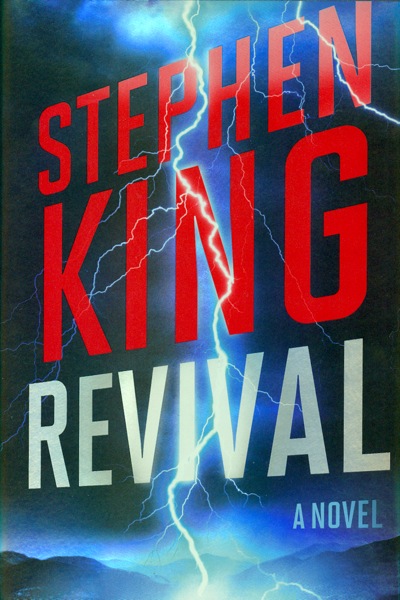
          • Cover of Revival
            Revival

            Stephen King · standalone novel · 2014

            similar bycosmic horror

            The protagonist details how his life keeps intersecting with that of the man he first met as the pastor of his church in childhood, whose experiments with electricity lead to mastery of a cosmic power which he uses to help people, until his obsession leads to physical and spiritual disaster for all.

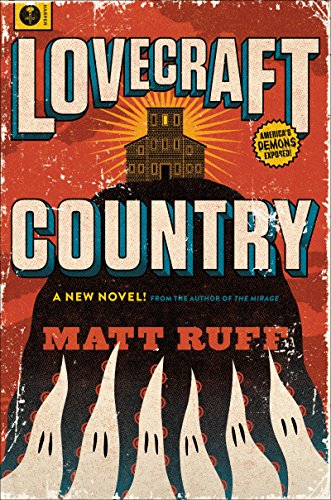
          • Cover of Lovecraft Country
            Lovecraft Country

            series · 2 books · 2016

            similar bycosmic horror

            Matt Ruff's Lovecraft Country follows Atticus Turner, a Black Korean War veteran and science-fiction fan, and his extended family as they navigate both cosmic horror and the everyday terror of Jim Crow-era America in the 1950s. Structured as eight interlinked stories rather than one continuous plot, it moves between sorcerous lodges, haunted houses, and cursed heirlooms, all set in motion by the manipulative occultist Caleb Braithwhite. A 2023 sequel novel, The Destroyer of Worlds, returns to the same characters.

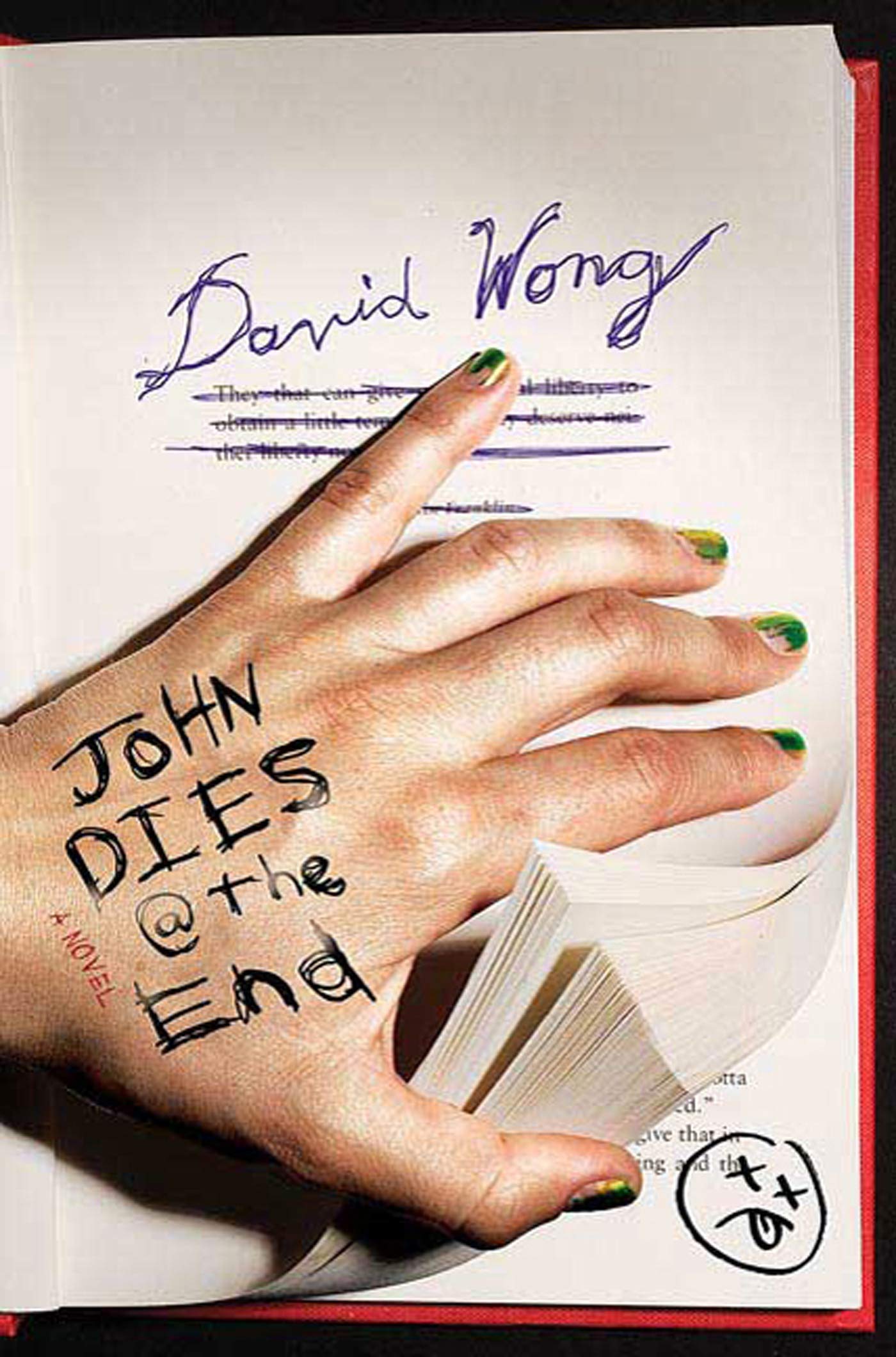
          • Cover of John and Dave
            John and Dave

            series · 4 books · 2007

            similar bycosmic horror

            Jason Pargin, writing as David Wong, began the John Dies at the End series as a free horror-comedy webserial in 2001 before print publication turned it into a franchise. The Lovecraftian adventures of narrator John and his friend Dave continue across This Book Is Full of Spiders, What the Hell Did I Just Read, and If This Book Exists, You're in the Wrong Universe, and the original novel was adapted into a 2012 film.

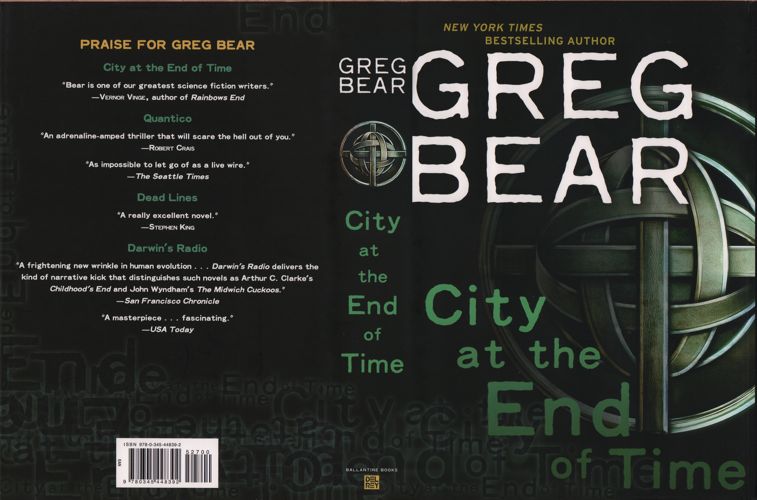
          • Cover of City at the End of Time
            City at the End of Time

            Greg Bear · standalone novel · 2008

            similar bycosmic horror

            City at the End of Time is a 2008 science fiction novel by American writer Greg Bear. It was published in August 2008 by Del Rey in the United States, and Gollancz in the United Kingdom. The story follows three drifters in present-day Seattle who are tormented by strange dreams of the Kalpa, a city one hundred trillion years in the future. The Kalpa is attempting to ward off the Typhon, an inexplicable entity that has consumed the rest of the ancient universe and broken down the laws of physics.

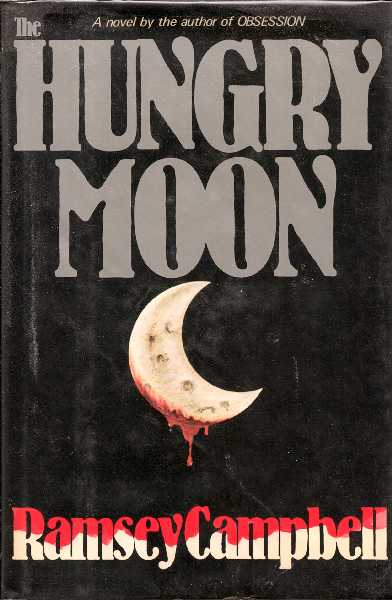
          • Cover of The Hungry Moon
            The Hungry Moon

            Ramsey Campbell · standalone novel · 1986

            similar bycosmic horror

            The Hungry Moon is a novel by Ramsey Campbell published in 1986.

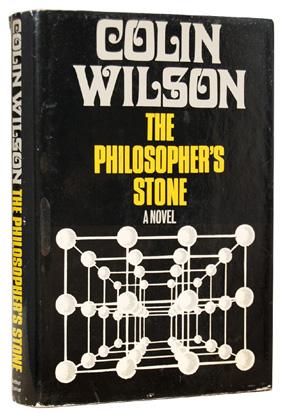
          • Cover of The Philosopher's Stone
            The Philosopher's Stone

            Colin Wilson · standalone novel · 1969

            similar bycosmic horror

            The Philosopher's Stone is a 1969 horror novel by the English writer Colin Wilson. It tells the story of two researchers who find a way to reach a higher state of consciousness, which leads to frightening revelations about humanity's distant history. Like Wilson's 1967 novel The Mind Parasites, The Philosopher's Stone uses motifs from H. P. Lovecraft's Cthulhu Mythos.

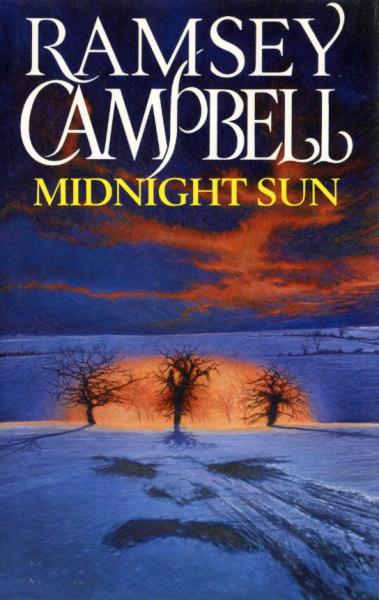
          • Cover of Midnight Sun
            Midnight Sun

            Ramsey Campbell · standalone novel · 1990

            similar by+1 more

            Las viejas leyendas de los pueblos de las llanuras árticas refieren la necesidad de evitar que desaparezca el sol de medianoche, esa pálida luz que mantiene dormidos al os espíritus maléficos del frío. Un frío que en esos parajes sombríos es implacable, letal, en el que se ocultan misterios insondables. Ben, biznieto del folclorista Edward Sterling, empezó a sentirse atraído por el misterio del niño. Y la fascinación se reavivó cuando, de adulto, decidió irse a vivir con su familia al mismo caserón en que había pasado su infancia. Un lugar demasiado cercano al cementerio; demasiado cercano al bosque plantado en memoria de su bisabuelo; en el que no hay ninguna puerta que impida que responda a laimperiosa llamada que surge de la espesura, sobre todo cuando el frío se hace insoportable… Ramsey Cambell es uno de los pocos autores de novelas de terror que consiguen que las más escalofriantes pesadillas abandonen el territorio de lo soñado y asalten la vigilia del lector.

          • OU
            OEI Universe

            series · 4 books · 2019

            similar by+1 more

          • Cover of Penguin Classics Lovecraft
            Penguin Classics Lovecraft

            series · 3 books · 1999

            completed

            similar bycosmic horror

          • Cover of There Is No Antimemetics Division
            There Is No Antimemetics Division

            qntm · standalone novel · 2025

            similar by+1 more

          • Cover of Lone Women
            Lone Women

            Victor LaValle · standalone novel · 2023

            similar by+1 more

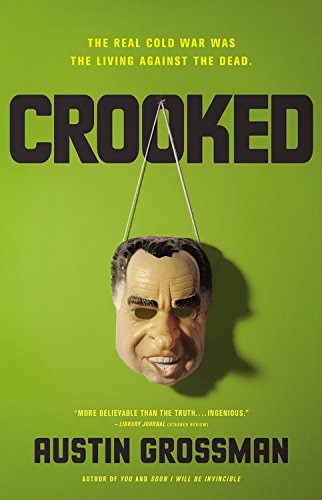
          • Cover of Crooked
            Crooked

            Austin Grossman · standalone novel · 2015

            similar bycosmic horror

            Crooked is a novel by author Austin Grossman, published in 2015 by Mulholland Books. It is a cosmic horror fantasy and secret history of the Cold War and the Watergate scandal, narrated by a fictional version of Richard Nixon.

          • Cover of The King in Yellow
            The King in Yellow

            series · 44 books · 1895

            similar by+1 more

          • Cover of Fraternity
            Fraternity

            Andy Mientus · standalone novel · 2022

            similar bycosmic horror

            In the fall of 1991, Zooey Orson transfers to the Blackfriars School for Boys hoping for a fresh start following a scandal at his last school. However, he quickly learns that he isn’t the only student keeping a secret. Before he knows it, he’s fallen in with a group of boys who all share the same secret, one which they can only express openly within the safety of the clandestine gatherings of the Vicious Circle––the covert club for gay students going back decades. But when the boys unwittingly happen upon the headmaster’s copy of an arcane occult text, they unleash an eldritch secret so terrible, it threatens to consume them all.

          • Cover of H. P. Lovecraft Omnibus
            H. P. Lovecraft Omnibus

            series · 2 books · 1985

            completed

            similar bycosmic horror

          • Cover of Fungi from Yuggoth
            Fungi from Yuggoth

            series · 1 book · 1943

            similar bycosmic horror

            Fungi from Yuggoth is a sequence of 36 sonnets by cosmic horror writer H. P. Lovecraft. Most of the sonnets were written between 27 December 1929 – 4 January 1930; thereafter individual sonnets appeared in Weird Tales and other genre magazines. The sequence was published complete in Beyond the Wall of Sleep and The Ancient Track: The Complete Poetical Works of H. P. Lovecraft. Ballantine Books' mass paperback edition, Fungi From Yuggoth & Other Poems included other poetic works.

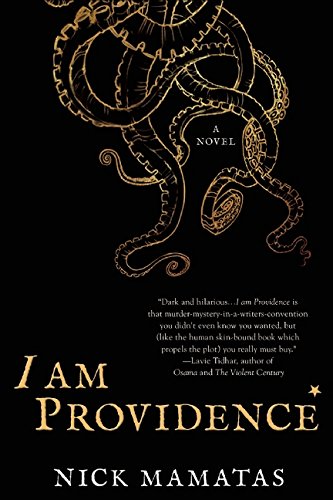
          • Cover of I Am Providence
            I Am Providence

            Nick Mamatas · standalone novel · 2016

            similar by+1 more

            I Am Providence is a 2016 murder mystery novel by American author Nick Mamatas. It was first published in paperback on August 9, 2016 through Night Shade Books in the United States and United Kingdom. The work alternately follows two writers both before and after one of them is murdered.

          • Cover of The Great White Space
            The Great White Space

            Basil Copper · standalone novel · 1974

            similar bycosmic horror

          • Cover of Erich Zann
            Erich Zann

            series · 3 books · 1922

            similar bycosmic horror

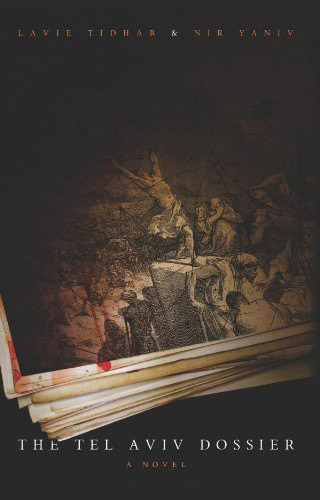
          • Cover of The Tel Aviv Dossier
            The Tel Aviv Dossier

            Lavie Tidhar & Nir Yaniv · standalone novel · 2009

            similar bycosmic horror

            Through a city torn apart by a violence they cannot comprehend, three disparate people—a documentary film-maker, a yeshiva student, and a psychotic fireman—must try to survive, and try to find meaning: even if it means being lost themselves. As Tel Aviv is consumed, a strange mountain rises at the heart of the city, and shows the outline of what may be another, alien world beyond. Can there be redemption there? Can the fevered rumours of a coming messiah be true? As the city loses contact with the outside world and closes in on itself, as the few surviving children play and scavenge in the ruins, can innocence survive, and is it possible for hope to spring amid such chaos? A potent mixture of biblical allusions, Lovecraftian echoes, and contemporary culture, The Tel Aviv Dossier is part supernatural thriller, part meditation on the nature of belief—an original and involving novel painted on a vast canvas in which, beneath the despair, humour is never absent. Experience the last days of Tel Aviv...

          • Cover of Dagon
            Dagon

            Fred Chappell · standalone novel · 1968

            similar bycosmic horror

            Dagon is a novel by author Fred Chappell published in 1968. The novel is a psychological thriller with supernatural elements, attempting to tell a Cthulhu Mythos story as a psychologically realistic Southern Gothic novel. It was awarded the Best Foreign Book of the Year prize by the French Academy in 1972.

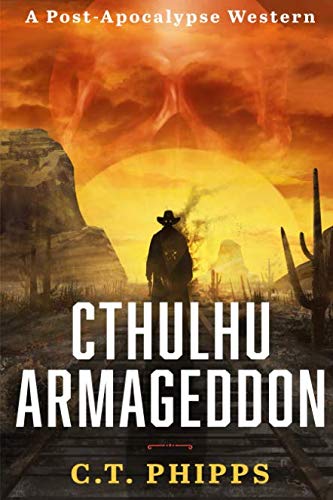
          • Cover of Cthulhu Armageddon
            Cthulhu Armageddon

            series · 19 books · 2015

            similar bycosmic horror