More like Assignment: Earth
anchored on:science fictionlate 20th centuryspace operatime travelalienspolitical intrigue+4 more
but
- The Masks of Time
Robert Silverbergstandalone novel1968
similar bylate 20th centurypolitical intriguemysterioustensescience fictionour worldtime travel
From the back cover of the Ballantine first edition: "The year is 1999. The century is about to turn. The civilized world is prosperous but tense with fear about the still existing possibility of a major war. While in the large area that used called "underdeveloped" there is a hysterical conviction that the world will cone to an end with the arrival of the new century Into this explosive situation floats a creature calling himself Vornam-19 - and claiming to be a visitor from 1000 years in the future... The world is ready, indeed ripe, for a sign, an omen, a new cult. But no one realizes exactly what Vornaa-19 is in his own right."
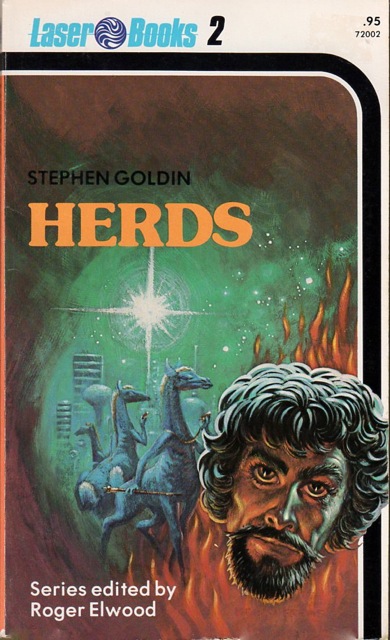
- Herds
Stephen Goldinstandalone novel1975
similar bylate 20th centuryaliensmysterioustensescience fictionnorth america+1 more
The wife of a powerful figure in California is found brutally murdered in the couple's lonely mountain retreat. Wesley Stoneham made certain that all the evidence concerning the murderer of his wife pointed to a nearby hippie community. He had three goals in mind: to get rid of his wife, to drive out the hippie commune and to enhance his own power in the state. He was at the point of achieving them all when Garnna, from the peaceful planet of Zartic finally made contact with Debby, a hippie from the commune, who had problems of her own. Then Stoneham's troubles began. (from the back cover of the Laser Books first edition)
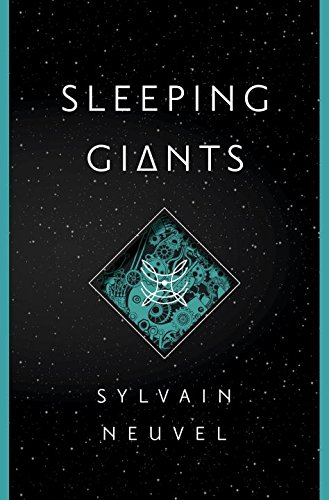
- The Themis Files
series3 books2015
similar byalienstensescience fictionmysteriousour world+2 more
Sylvain Neuvel's Themis Files opens when a girl falls into a hole in South Dakota and lands on the palm of a giant metal hand buried underground; the trilogy picks up years later as she leads the team trying to determine what the hand is part of and why it's there. Sleeping Giants and its sequels are told almost entirely through interview transcripts conducted by an unnamed, evasive interrogator, giving the series a documentary, oral-history feel unusual for first-contact SF. The mystery escalates from an archaeological puzzle into a question of who else is looking for the same answer.
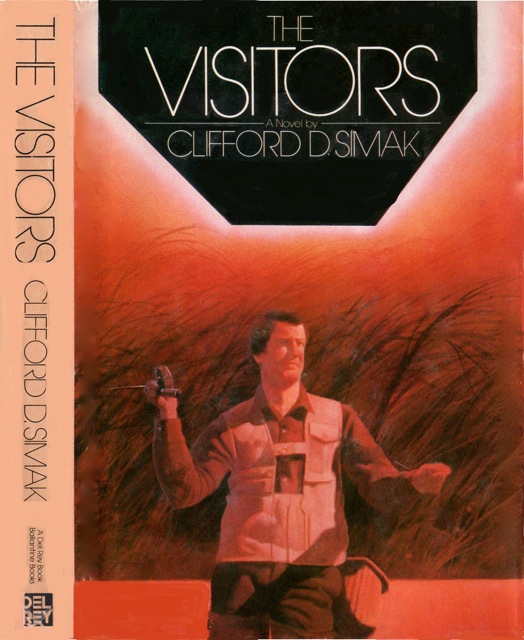
- The Visitors
Clifford D. Simakstandalone novel1980
similar byaliensmysterioustensescience fictionour worldnorth america
WorldCat: Intelligent, alien creatures arrive on Earth from outer space, threatening world stability and presaging the destruction of civilization.
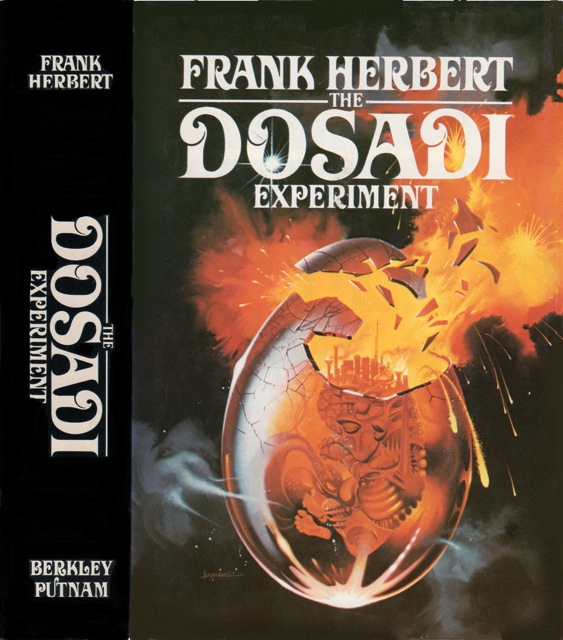
- The Dosadi Experiment
Frank Herbertstandalone novel1977
similar byalienspolitical intriguetensescience fictionspace opera
From the flaps of the Berkley Putnam first edition: "In his first new work of science fiction since the best-selling Children of Dune, Frank Herbert returns to his world of Whipping Star, and involves Jorj X. McKie, Saboteur Extraordinary, in a new intrigue. In Whipping Star, McKie discovered that some of the stars in the universe are actually intelligent, super-powerful beings, and was able to befriend one of them, the star Alcyone - affectionately known as Fannie Mae. As The Dosadi Experiment opens, McKie is assigned to investigate the planet Dosadi, which is isolated from the rest of the galaxy by a "god-wall," a barrier set up by one of the intelligent stars. Dosadi is rumored to be an experimental planet, and the experimenters are the froglike Gowachin, whose culture is founded upon a strange legal system in which McKie is the only human ever trained. He learns that humans and Gowachin have been placed on Dosadi, without their consent, for an experiment that could last centuries: an experiment in extreme overcrowding. But this monstrous plot is apparently out of control, and it seems the Gowachin may be prepared to destroy Dosadi rather than expose its secret, thus breaking the peace among the races, and starting the first interstellar war. But this is just the beginning. When McKie finally reaches Dosadi he discovers that the Dosadis have taken control of their own evolution and produced a competitive, highly evolved elite, of both humans and Gowachin, who have been able to extrapolate the existence of a universe beyond the god-wall and hate whoever has imprisoned them like this. They plan to break out and avenge themselves on the galaxy."
- Galactic Milieu
series10 books1981
completed
similar byalienstensescience fiction+4 more
Galactic Milieu is a series of science fiction novels by Julian May. It is linked to her previously published series, the Saga of Pliocene Exile; and through the fantastical device of time-travel, acts as both a prequel and a sequel to this earlier series. The "Galactic Milieu" of the title is an interplanetary federation, and Earth's membership of it is a central plot concern.
- Quadrail
series5 books2005
similar byalienspolitical intriguemysteriousscience fictionspace opera+1 more
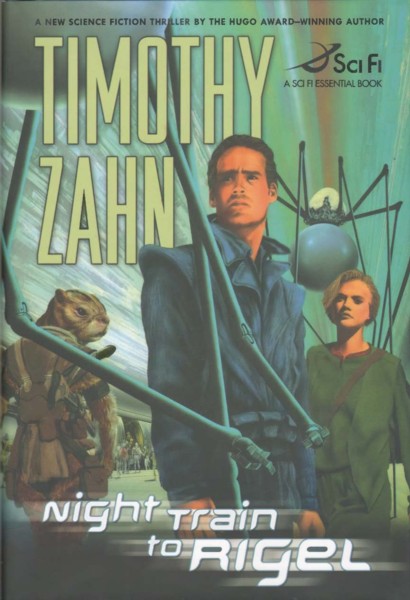
Timothy Zahn's Quadrail series follows ex-intelligence operative Frank Compton, recruited by the enigmatic Spider caretakers of the Quadrail, an interstellar train network that lets a dozen alien empires travel between worlds at a light-year a minute. Paired with the telepathically gifted Bayta, Compton investigates and fights the Modhri, a parasitic group-mind quietly seizing control of galactic leaders from within. The five novels, published 2005-2012, follow one continuous investigation from first contact with the threat to its final confrontation.
- The Night the Heads Came
William Sleatorstandalone novel1996
similar bylate 20th centuryaliensmysterioustensescience fictionour world+1 more
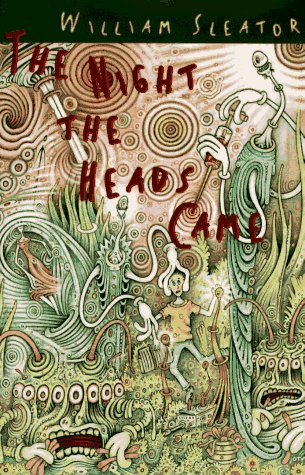
"There's no such thing as an alien—at least that's what Leo thinks, until he and his friend Tim are abducted late one night on a deserted road. When Leo comes to, Tim is gone, and no one believes his story. After he sees a psychiatrist and undergoes hypnosis, even he doesn't believe his story. But then memories begin to surface—memories he can't push away—and when Time suddenly returns, Le knows they are in otherworldly extraterrestrial danger." — quoted from the back cover of the third printing of the Penguin paperback edition.
- Moties
series4 books1974
part of CoDominium
similar byalienspolitical intriguescience fictionspace opera+1 more
Larry Niven and Jerry Pournelle's The Mote in God's Eye (1974) depicts humanity's first contact with an alien species, the Moties, set within the far-future interstellar setting of Pournelle's codominium future history. The Gripping Hand continues that first-contact crisis years later, and Outies, written by J. R. Pournelle, carries the story forward into a new generation. Together the three books trace an escalating encounter between human and Motie civilizations within the codominium universe.
- The Coming
Joe Haldemanstandalone novel2000
similar byalienspolitical intriguetensescience fictionour worldnorth america
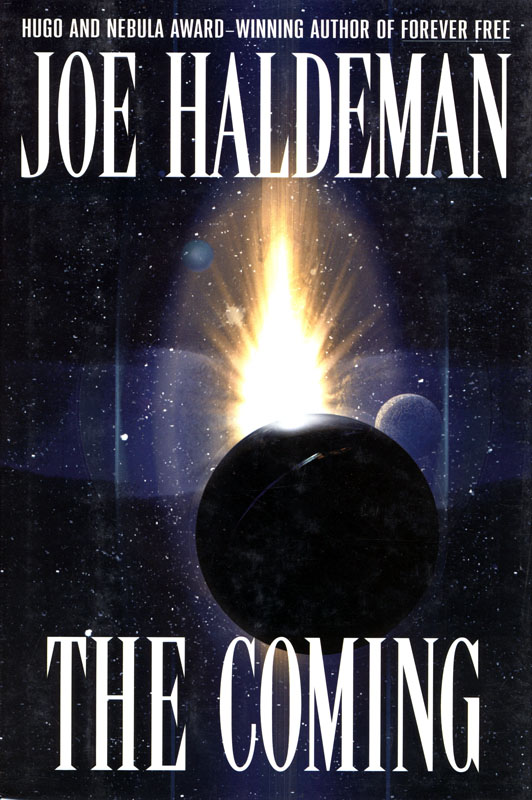
An astronomy professor in Florida in a mid-21st century suffering from climate change and international hostilities detects an apparent interstellar vehicle headed directly for earth at near light speed but decelerating dramatically; it transmits the message "We're coming". The effect this discovery has on her, those close to her, and the surrounding circles of contacts is followed, as the impending event plays out on the larger stage of national and international affairs until it comes to an unpredictable ending. The dedication page says in part "The author gratefully acknowledges the influence of James Gunn's beautiful novel The Listeners, on this book."
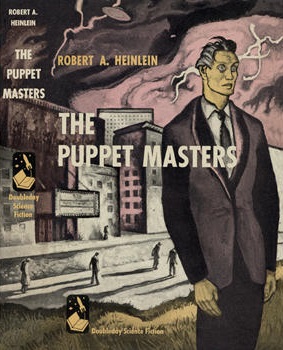
- The Puppet Masters
Robert A. Heinleinstandalone novel1951
similar byalienstensescience fictionnorth america+1 more
Parasitical aliens attach themselves to human hosts and take over their bodies. Two spies are sent to find out what's happening, but the extent is much farther than they knew. With access to the humans' memories, the aliens quietly invade the government and start taking over.
- Chanur
series7 books1982
part of Alliance-Union Universe
similar byalienspolitical intriguetensescience fictionspace opera
The Chanur novels are a series of five science fiction novels, forming three separate stories, written by American author C. J. Cherryh and published by DAW Books between 1982 and 1992. The first novel in the series is The Pride of Chanur (1982), which was nominated for both the Hugo and Locus Awards in 1983. The Pride of Chanur, originally a stand-alone story, was followed by the Chanur's Venture trilogy, Chanur's Venture (1984), which was shortlisted for a Locus Award in 1985; The Kif Strike Back (1985) and Chanur's Homecoming (1986). These were followed by a later sequel, Chanur's Legacy (1992). The five novels were also published in two omnibus editions: the first three in The Chanur Saga in 2000 and the next two in Chanur's Endgame in 2007.
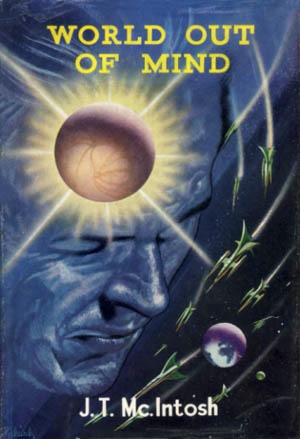
- World Out of Mind
J. T. McIntoshstandalone novel1953
similar byalienspolitical intriguetensescience fictionour worldnorth america+1 more
"An alien hostile take-over of Earth is planned by placing 50,000 espionage agents in strategically important positions, including the President of the United States." (cited from {{A|Peter Young}}'s review in Big Sky #2)
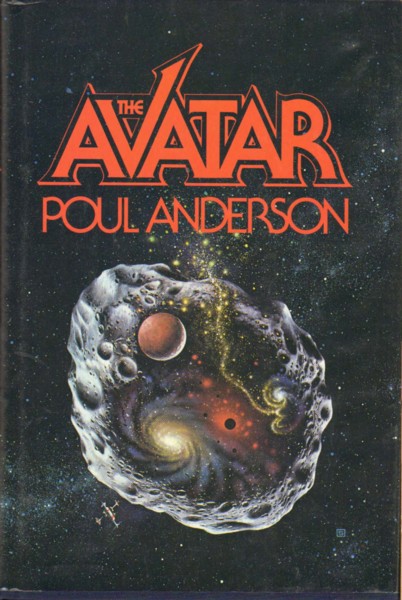
- The Avatar
Poul Andersonstandalone novel1978
similar byalienspolitical intriguemysteriousscience fictionspace opera
After humanity discovers portals that transport a space vessel through time and space, a crew which has visited the planet of another species returns to Earth, only to find a political faction in power which seeks to conceal this knowledge in the name of social stability. With the aid of the political opposition, they escape and journey through the portal in search of knowledge, and perhaps even to meet those who created the portal system.
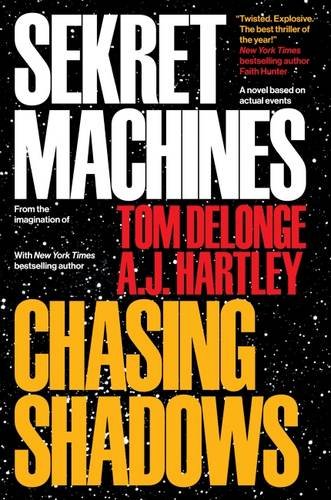
- Sekret Machines
series2 books2016
similar byaliensmysterioustensepolitical intriguescience fictionour worldnorth america
- Our Children's Children
Clifford D. Simakstandalone novel1974
similar byalienstensescience fictionour worldtime travel+2 more
From the back cover of the first DAW printing: "They were our children's children, and they came one day from nowhere - walking through holes in the air into our world. By means of one-way time tunnels, they fled the ravening beasts with teeth, claws and tentacles, that reproduced like bacteria and were intelligent. They fled to escape the uncontrolled horror of their own far future, and we, their distant ancestors, housed and fed and comforted them, content in their assurance that the tunnel was securely guarded from the beasts, whatever or whoever they were. But then somebody up there slipped and the beasts were abroad..."
- Starplex
Robert J. Sawyerstandalone novel1996
similar byaliensmysterioustensescience fictionspace opera+1 more
The only novel of its year to be nominated for both the Hugo and Nebula Awards. Starplex won Canada's Aurora Award for best novel of the year. For nearly twenty years Earth's space exploration had exploded outward, thanks to a series of mysterious, artificial wormholes. No one knows who created these interstellar passages, yet they have brought the far reaches of space immediately close. For Starplex Director Keith Lansing, too close. Discovery is superseding understanding. And when an unknown vessel — with no windows, no seams, and no visible means of propulsion — arrives through a new wormhole, an already battle-scarred Starplex could be the starting point of a new interstellar war . . . ROBERT J. SAWYER has won the Hugo, Nebula, John W. Campbell Memorial, Seiun, and Aurora Awards, all for best science fiction novel of the year. His novels include Hominids, Rollback, Wake, and FlashForward (basis for the TV series).
- Ossian's Ride
Fred Hoylestandalone novel1959
similar byaliensmysterioustensescience fiction+2 more
Ossian's Ride is a science fiction novel by British astrophysicist Fred Hoyle, published in 1959.
- Carrion Comfort
Dan Simmonsstandalone novel1989
similar bylate 20th centurytenseour worldnorth americascience fiction+1 more
Carrion Comfort is a science fiction/horror novel by American writer Dan Simmons, published in 1989 in hardcover by Dark Harvest and in 1990 in paperback by Warner Books. It won the Bram Stoker Award, the Locus Poll Award for Best Horror Novel, and the August Derleth Award for Best Novel. It is based on a novelette of the same title, published in 1983 in the magazine Omni. The first half of the novelette makes up chapter 1 of the novel, while the second half forms chapter 3.
- Wolfling
Gordon R. Dicksonstandalone novel1969
similar byalienspolitical intriguetensescience fictionspace opera
From the flaps of the Baen/SFBC edition: "Is Earth merely the lost colony of a superior race? - She was well over six feet tall, and beautiful in a sculpted, abstract way. She had skin the color of white onyx, and her eyes... her eyes were large and feline - a startling lemon yellow in color. She was the Princess Afuan, one of the High-born, and she had chosen the Earthman Kim Keil to return to the Throne World with her - for she had decided that his performance in the bull-ring might amuse the Emperor. She didn't know that Jim was a bull-fighter only by virtue of six months' intensive training, nor that the bull was programmed - his behavior following and impressively fierce but unswerving pattern. Jim was just another wolfling to Afuan - a lesser being from a backward colony world. Jim, however, was keenly aware that he was playing a role, one which might prove to be extremely dangerous. Up until 10 years earlier, when their first ship had reached Alpha Centauri, the people of Earth hadn't even known that the vast Empire of human-occupied worlds existed. The discovery had been a profound shock. Had we evolved independently? Or were we merely descendants of the Empire's first space pioneers - a lost colony found at last, perhaps with devastating consequences? That's what Jim Keil had to find out. Chosen from among numerous highly qualified candidates - an anthropologist trained, mentally and physically, beyond the limits of his profession - it was his mission to observe the Throne World and the High-born... to determine whether or not they posed a threat to Earth. One thing was apparent from the start. The High-born were superior beings - physically taller and stronger than other humans, endowed with faster reflexes, superior mental capacity... and extraordinary technological resources. Their contempt for the new wolfling in their midst was open, their intrigues complex. An enormous gulf separated the people of the Throne World from Earthlings. But that gulf was not so wide that Jim couldn't recognize an enemy when he met one. Clearly, if he remained merely a passive observer of the High-born, he'd never survive among them."
- Ancient Shores
series3 books1996
similar byaliensmysteriouspolitical intriguescience fictionnorth america+1 more
- Noumena
series3 books2020
similar byaliensscience fictionnorth america+4 more
Lindsay Ellis' Noumena series began with Axiom's End (2020), an alternate-history science-fiction novel set in 2007 about a US government cover-up of contact with extraterrestrial life, centered on a young woman named Cora. It continues through Truth of the Divine (2021) and Apostles of Mercy (2024), the third of five planned volumes, following the fallout of that first contact.
- The Oracle Year
Charles Soulestandalone novel2018
similar bypolitical intriguemysterioustensescience fictionour worldnorth america
Awakening from a dream with more than one hundred predictions about the future in his head, an unassuming Manhattan bassist becomes one of the world's most powerful men and hides his identity behind an online persona that is targeted by greedy corporations and dangerous enemies.
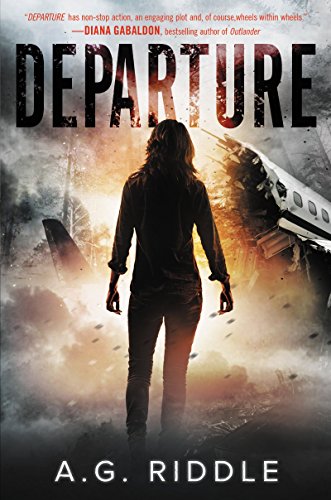
- Departure
A. G. Riddlestandalone novel2014
similar bypolitical intriguemysterioustenseour worldscience fictiontime travel
"The world's past and future rests in the hands of five unwitting strangers in this definitive edition of A. G. Riddle's time-traveling, mind-bending speculative thriller. En route to London from New York, Flight 305 suddenly loses power and crash-lands in the English countryside, plunging a group of strangers into a mysterious adventure that will have repercussions for all of humankind.Struggling to stay alive, the survivors soon realize that the world they've crashed in is very different from the one they left. But where are they? Why are they here? And how will they get back home? Five passengers seem to hold clues about what's really going on: writer Harper Lane, venture capitalist Nick Stone, German genetic researcher Sabrina Schroeder, computer scientist Yul Tan, and Grayson Shaw, the son of a billionaire philanthropist.As more facts about the crash emerge, it becomes clear that some in this group know more than they're letting on--answers that will lead Harper and Nick to uncover a far-reaching conspiracy involving their own lives. As they begin to piece together the truth, they discover they have the power to change the future and the past--to save our world. or end it. A wildly inventive and propulsive adventure full of hairpin twists, Departure is a thrilling tale that weaves together power, ambition, fate, memory, and love, from a bold and visionary talent"--