More like Bard's Tale
but
- Earthsea Cycle
series18 books1964
completed
part of Earthsea
similar bysecondary worldfantasywizards+1 more
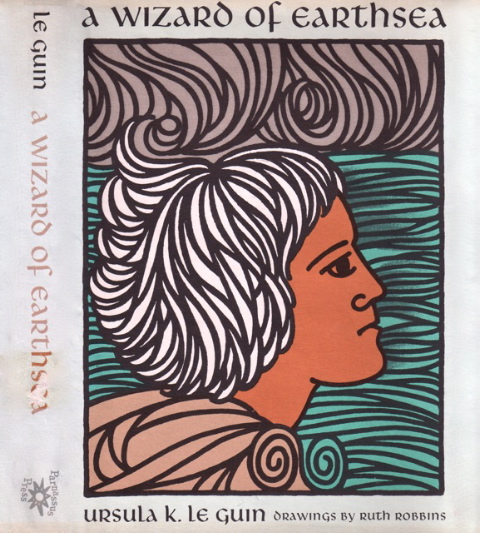
The Earthsea Cycle, also known as Earthsea, is a series of high fantasy books written by American author Ursula K. Le Guin. Beginning with A Wizard of Earthsea (1968), The Tombs of Atuan (1970), and The Farthest Shore (1972), the series was continued in Tehanu (1990), and Tales from Earthsea and The Other Wind. In 2018, all the novels and short stories were published in a single volume, The Books of Earthsea: The Complete Illustrated Edition, with artwork by Charles Vess.
- Fionavar Universe
series5 books1984
similar bysecondary worldfantasy+2 more
Ysabel is a 2007 standalone contemporary fantasy novel by Guy Gavriel Kay, following teenager Ned Marriner as he stumbles into a centuries-old rivalry playing out around the cathedral of Aix-en-Provence. It marked Kay's turn toward urban fantasy and briefly brings back two adult characters from his earlier Fionavar Tapestry trilogy, though it is not itself part of that trilogy and can be read on its own.
- The Black Magician Trilogy
series3 books2001
part of Kyralia series
similar bymagic schoolssecondary worldfantasy+2 more
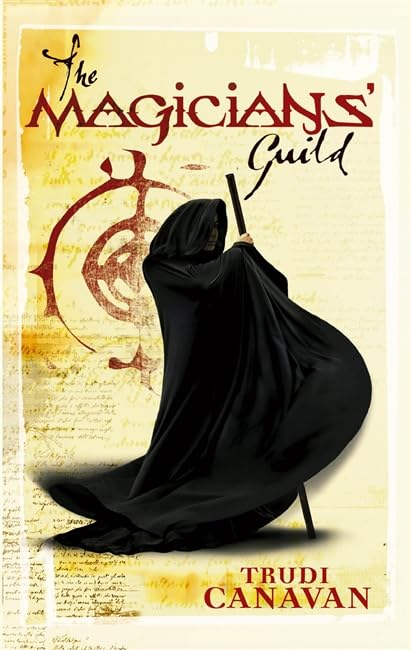
Trudi Canavan's Black Magician Trilogy (The Magicians' Guild, The Novice, The High Lord, 2001-2003) opens in the city of Imardin, where the ruling magicians' guild's annual purge of the slums goes wrong when a street girl named Sonea unknowingly shatters their protective shield with raw, untrained power. The guild must hunt her down and decide whether to control her or train her, and the trilogy follows Sonea's forced initiation into magical society and the guild's internal politics. It's Canavan's best-known trilogy and the founding story of her Kyralia setting.
- The Kingkiller Chronicle
series8 books2002
similar bysecondary worldfantasy+3 more
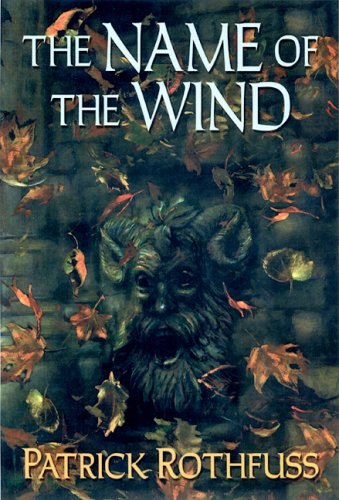
The Kingkiller Chronicle is a planned fantasy trilogy by the American writer Patrick Rothfuss. The first two books, The Name of the Wind and The Wise Man's Fear, were released in 2007 and 2011. The books released in the series have sold over 10 million copies.
- The Quest of the Riddle-Master
series3 books1976
completed
similar byadventuroussecondary worldfantasy+2 more
Patricia A. McKillip's Riddle-Master trilogy follows Morgon, prince of the small island of Hed, whose discovery of three star-shaped birthmarks on his forehead draws him into a search for his own hidden identity and a confrontation with ancient, shape-shifting powers. Drawing on Celtic myth, the three books are prized for their lyrical prose and riddle-based magic, and are often cited among the best high fantasy of the 1970s.
- Narnia
series26 books1950
part of Narnia Universe
similar byadventuroussecondary worldfantasy
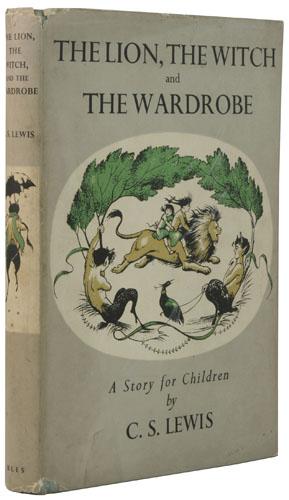
The Chronicles of Narnia is a series of seven portal fantasy novels by British author C. S. Lewis. Illustrated by Pauline Baynes and originally published between 1950 and 1956, the series is set in the fictional realm of Narnia, a fantasy world of magic, mythical beasts, and talking animals. It narrates the adventures of various children who play central roles in the unfolding history of the Narnian world. Except in The Horse and His Boy, the protagonists are all children from the real world who are magically transported to Narnia, where they are sometimes called upon by the lion Aslan to protect Narnia from evil. The books span the entire history of Narnia, from its creation in The Magician's Nephew to its eventual destruction in The Last Battle.
- The Lord of the Rings
series13 books1954
part of Tolkien's legendarium
similar bysecondary world+3 more
The Lord of the Rings is an epic high fantasy novel written by the English author and scholar J. R. R. Tolkien. Set in Middle-earth, the story began as a sequel to Tolkien's 1937 children's book The Hobbit but eventually developed into a much larger work. Written in stages between 1937 and 1949, The Lord of the Rings is one of the best-selling books ever written, with over 150 million copies sold.
- Three Hearts and Three Lions
series3 books1961
similar byadventuroussecondary worldfantasy+1 more
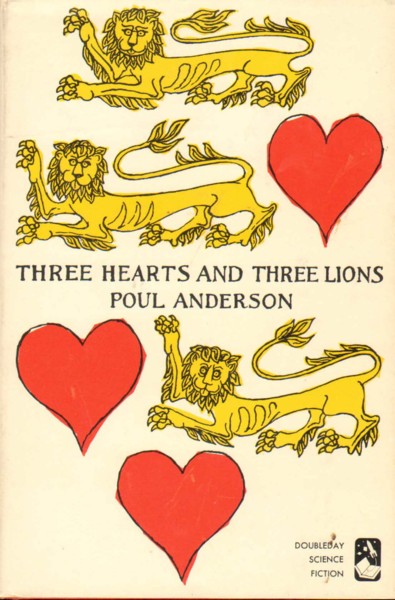
Three Hearts and Three Lions (1961, expanded from a 1953 novella) follows Holger Carlsen, a Danish resistance fighter wounded fighting the Nazis, who wakes in a medieval world of knights, dragons, and sorcery drawn from Carolingian legend. Poul Anderson wrote it as a self-contained portal fantasy; the later story Three Lilies and Three Leopards, by Harry Turtledove and Tad Williams, is a tribute piece published in an anniversary anthology rather than a true narrative sequel.
- Fillory
series7 books2009
similar bymagic schoolssecondary worldfantasy+2 more
Lev Grossman's Magicians trilogy (The Magicians, The Magician King, The Magician's Land, 2009-2014) follows Quentin Coldwater from a secretive college of magic in upstate New York into Fillory, a fantasy world he grew up reading about in a series of children's books that turns out to be real. As Quentin, his classmates, and his old friend Julia become entangled in ruling and defending Fillory, the trilogy pushes past the wish-fulfillment of a classic portal fantasy to ask what happens once getting everything you wanted stops being enough.
- The Hobbit
series2 books1937
completed
part of Tolkien's legendarium
similar byadventuroussecondary worldfantasy+1 more
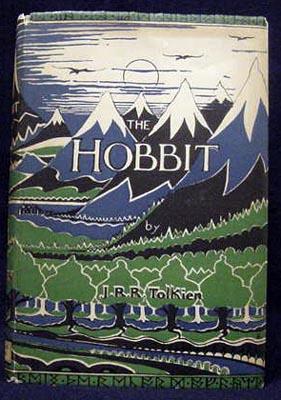
The Hobbit (1937) is J. R. R. Tolkien's children's fantasy novel following the reluctant burglar Bilbo Baggins, who joins a company of dwarves and the wizard Gandalf on a journey to reclaim treasure guarded by the dragon Smaug. It stands as a complete adventure on its own, but shares its setting with the rest of Tolkien's legendarium and leads into the events of The Lord of the Rings.
- Magic Goes Away
series22 books1969
similar bysecondary worldfantasy+4 more
The Magic Goes Away began as a Larry Niven novella imagining a prehistoric Earth where magic is a finite, minable resource — an explicit response, by Niven's own account, to the 1973 oil shock — in which sorcerers who draw too hard on the world's dwindling mana bring on catastrophe. Niven opened the setting to other writers for follow-up anthologies (The Magic May Return, More Magic) and let Fred Saberhagen write a solo novel in it, The Time of the Warlock, making it a shared-world series about the last age of magic rather than one continuous story.
- Howl's Castle
series3 books1986
completed
similar byadventuroussecondary worldfantasy+2 more
Howl's Moving Castle (1986) follows Sophie Hatter, cursed by the Witch of the Waste into an old woman's body, who takes refuge in the wandering castle of the wizard Howl and strikes an uneasy bargain with his fire demon Calcifer while trying to break the spell. Diana Wynne Jones returned to the same magical kingdom in Castle in the Air (1990), following a new lead character, Abdullah, with Sophie and Howl appearing in supporting roles, and again in House of Many Ways (2008).
- Watership Down
series21 books1972
completed
similar byadventurousfantasy+2 more
Watership Down is Richard Adams's 1972 novel following a group of rabbits who flee the destruction of their warren and cross the English countryside of Hampshire in search of a new home, developing over the journey a full rabbit culture of language, proverbs, and mythology. Adams returned to the same world in 1996 with Tales from Watership Down, a collection of nineteen short stories mixing rabbit folklore with further adventures of characters from the novel.
- Circle of Magic (Tamora Pierce)
series4 books1997
part of Circle of Magic
similar bymagic schoolssecondary worldfantasy+2 more
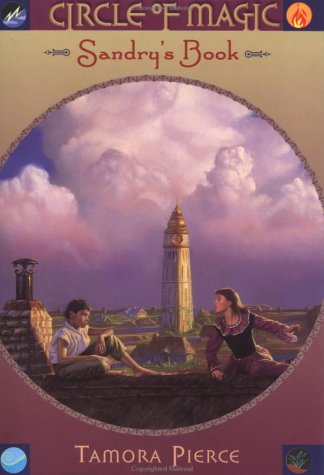
Four children who don't fit in anywhere else -- Sandry, Tris, Daja, and Briar -- are brought together at the Winding Circle temple community, where each discovers a form of magic no one recognized in them: thread, weather, smithcraft, and plants. Tamora Pierce's Circle of Magic quartet follows their training under unconventional teachers and their growing bond as chosen family, as they learn to turn overlooked, everyday skills into real power. Set in the world of Emelan, it treats craft-based magic as seriously as any wizard's spellbook.
- The Circle Opens
series4 books2000
part of Circle of Magic
similar bymagic schoolssecondary worldfantasywizards+1 more
The Circle Opens is a quartet of novels written by Tamora Pierce and set in a pseudo-medieval/renaissance era. It mainly revolves around four teenage mages, each specializing in a different kind of magic, as they find that they are forced to deal with mages whose powers are similarly unusual to their own. The series consists of the books Magic Steps (2000), Street Magic (2001), Cold Fire (2002), and Shatterglass (2003). The Circle Opens Quartet is the sequel quartet to The Circle Of Magic Quartet, and is followed by "Battle Magic" and The Will of the Empress.
- Riftwar Saga
series7 books1982
part of The Riftwar Universe
similar byadventuroussecondary worldfantasy+2 more
The Riftwar Saga is Raymond E. Feist's debut fantasy trilogy, opening with Magician, in which an orphaned apprentice named Pug is swept up when otherworldly invaders emerge through a dimensional rift into the frontier kingdom of Midkemia. Silverthorn and A Darkness at Sethanon carry the resulting war to its close, and the trilogy became the founding entry of Feist's much larger Riftwar Cycle.
- The Sea of Trolls
series3 books2004
similar byadventuroussecondary worldfantasymythic fantasy+1 more
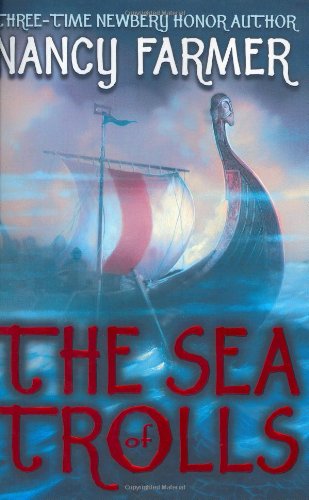
The Sea of Trolls follows Jack, a farm boy taken on as a Bard's apprentice in Anglo-Saxon England, after Viking raiders kidnap him and his young sister and carry them toward Scandinavia, forcing Jack to use his half-learned magic to try to save her. Nancy Farmer's trilogy, continuing through The Land of the Silver Apples and The Islands of the Blessed, sends Jack further into Norse myth, eventually as far as the realm of the giants, Jötunheimr.
- Book of the Isle
series7 books1977
similar bysecondary worldfantasy+2 more
Nancy Springer's Book of Isle sequence is set in a kingdom ruled by Sun Kings who draw their authority from the Book of Suns, following blood brothers Hal and Alan as they're sent to hunt down the many forms an ancient evil takes across the land. Later volumes widen the cast and the kingdom's history while keeping the same mythic, quest-driven register. It's 1970s heroic fantasy built on chosen champions and inherited destiny.
- Shannara
universe50 books1977
Start hereWord and the Void · The very beginning of the timeline
similar bysecondary worldfantasy+1 more
Long after the world we know has burned itself to slag in the Great Wars, the Four Lands rise green over the bones of the old age. Science is a forbidden memory; magic has come back into the world, and with it the old divisions — Men, Elves, Dwarves, Trolls, and Gnomes, each Race a splinter of what humanity became. This is the far-future Earth of Shannara, where the ruins buried beneath the soil are ours, and the only keepers of the vanished knowledge are the Druids of Paranor, who wake once a generation to meet the darkness rising again. Terry Brooks opened the Four Lands in 1977 with The Sword of Shannara and has charted its history for four decades since — a legendarium ordered not by throne but by a single bloodline, the Ohmsfords, each generation inheriting an Elfstone, a blade, or a wishsong when the age demands a hero. The original trilogy gives way to the Heritage of Shannara, the Voyage of the Jerle Shannara, the High Druid, Dark Legacy, Defenders, and the concluding Fall of Shannara; the Genesis of Shannara books reach back to the apocalypse itself, and the Word and the Void trilogy back further still, into a demon-haunted version of our own present that is the root of everything after. In 2025 Brooks passed the histories to Delilah S. Dawson to carry forward. What sets these books apart is their long memory: a world where every triumph is provisional, where the same evil returns wearing a fresh shape each age, and magic always exacts its price. The reading is warm and headlong — questing companies, old talismans, journeys across a mapped and named wilderness — shadowed by the knowledge that all of it stands on the wreckage of a former world. Enter as readers first did: with The Sword of Shannara, then onward in publication order. The chronological path, beginning with Word and the Void, rewards a second journey, once the Four Lands already feel like home.
- Discworld
universe84 books1983
Start hereGuards! Guards! · Start here
similar bysecondary worldfantasy
The Disc is flat. It rides on the backs of four elephants, who in turn stand on the shell of Great A'Tuin, a turtle ten thousand miles long, swimming through space toward nowhere in particular. Magic works here, usually badly. Death speaks IN SMALL CAPITALS and rides a horse called Binky. It looks like a fantasy world and behaves like ours with the safety catch off: a mirror held up to bureaucracy, belief, newspapers, money, war, and the ridiculous, stubborn business of being a person. One hand shaped all of it — Terry Pratchett — across forty-one novels and a shelf of companions, maps, and the Science of Discworld books. The world is braided from strands you can pick up on their own. Rincewind, the cowardly wizard, flees across the Disc (The Colour of Magic). The witches of Lancre, led by the formidable Granny Weatherwax, mind everyone's business (Equal Rites, Wyrd Sisters). Death takes on an apprentice (Mort). The City Watch polices grimy Ankh-Morpork under Commander Vimes (Guards! Guards!). A reformed swindler is given honest work at swordpoint (Going Postal), and young Tiffany Aching learns witching alongside the tiny, larcenous Nac Mac Feegle (The Wee Free Men). Standalones like Small Gods sit apart. The trick of it is that the farce turns, mid-joke, into something that catches in the throat, with footnotes that argue back at the page. Newcomers are gently steered away from the beginning: the early Rincewind books spoof a genre you needn't have read. Enter instead by whichever strand calls — Guards! Guards! for the Watch, Mort for Death, Wyrd Sisters for the witches, Small Gods entirely alone, or The Wee Free Men for the sharpest single thread. Open any door and the whole Disc opens with it.
- Song of the Lioness
series5 books1983
part of Tortall
similar byadventuroussecondary worldfantasy
The Song of the Lioness is a young adult series of fantasy novels published in the 1980s by Tamora Pierce. The series consists of four books: Alanna: The First Adventure (1983), In the Hand of the Goddess (1984), The Woman Who Rides Like a Man (1986) and Lioness Rampant (1988).
- Jack of Shadows
series4 books1971
similar byadventuroussecondary worldfantasy+1 more
Roger Zelazny's Jack of Shadows (1971) is a single novel set on a tidally locked world split between a permanently lit hemisphere ruled by science and a permanently dark one ruled by magic. Its protagonist, Jack of Shadows, draws his power from shadow itself and is nearly helpless in full light or full darkness but formidable wherever shadows fall; the book follows his quest to recover a lost artifact, the Key called Kolwynia, and the power -- and responsibility -- that comes with finding it.