More like Be Afraid!
anchored on:horrornorth americacontemporarydarkeerieshort story cycle
but
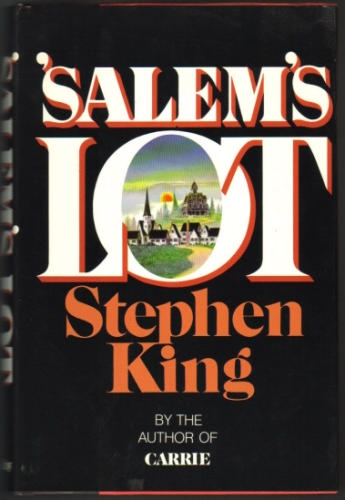
- Jerusalem's Lot
series3 books1975
similar byhorrorcontemporarydarknorth americaeerie+1 more
Stephen King's 1975 novel 'Salem's Lot follows writer Ben Mears as he returns to his childhood town of Jerusalem's Lot, Maine, only to discover that its residents are being turned into vampires by a newly arrived stranger. It transplants Gothic vampire horror into a small New England community, tracking that community's collapse under a supernatural siege. It is a single, self-contained novel.
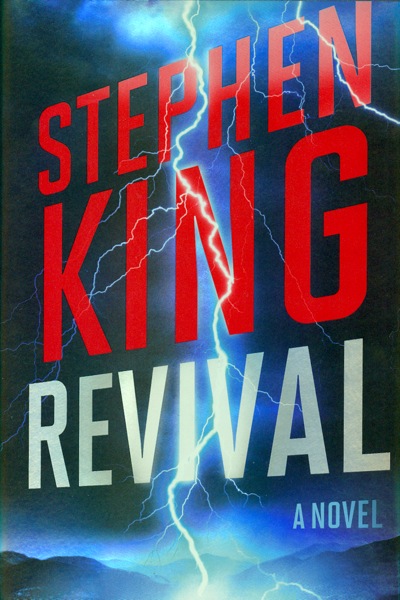
- Revival
Stephen Kingstandalone novel2014
similar byhorrornorth americacontemporarydarkeeriemadness
The protagonist details how his life keeps intersecting with that of the man he first met as the pastor of his church in childhood, whose experiments with electricity lead to mastery of a cosmic power which he uses to help people, until his obsession leads to physical and spiritual disaster for all.
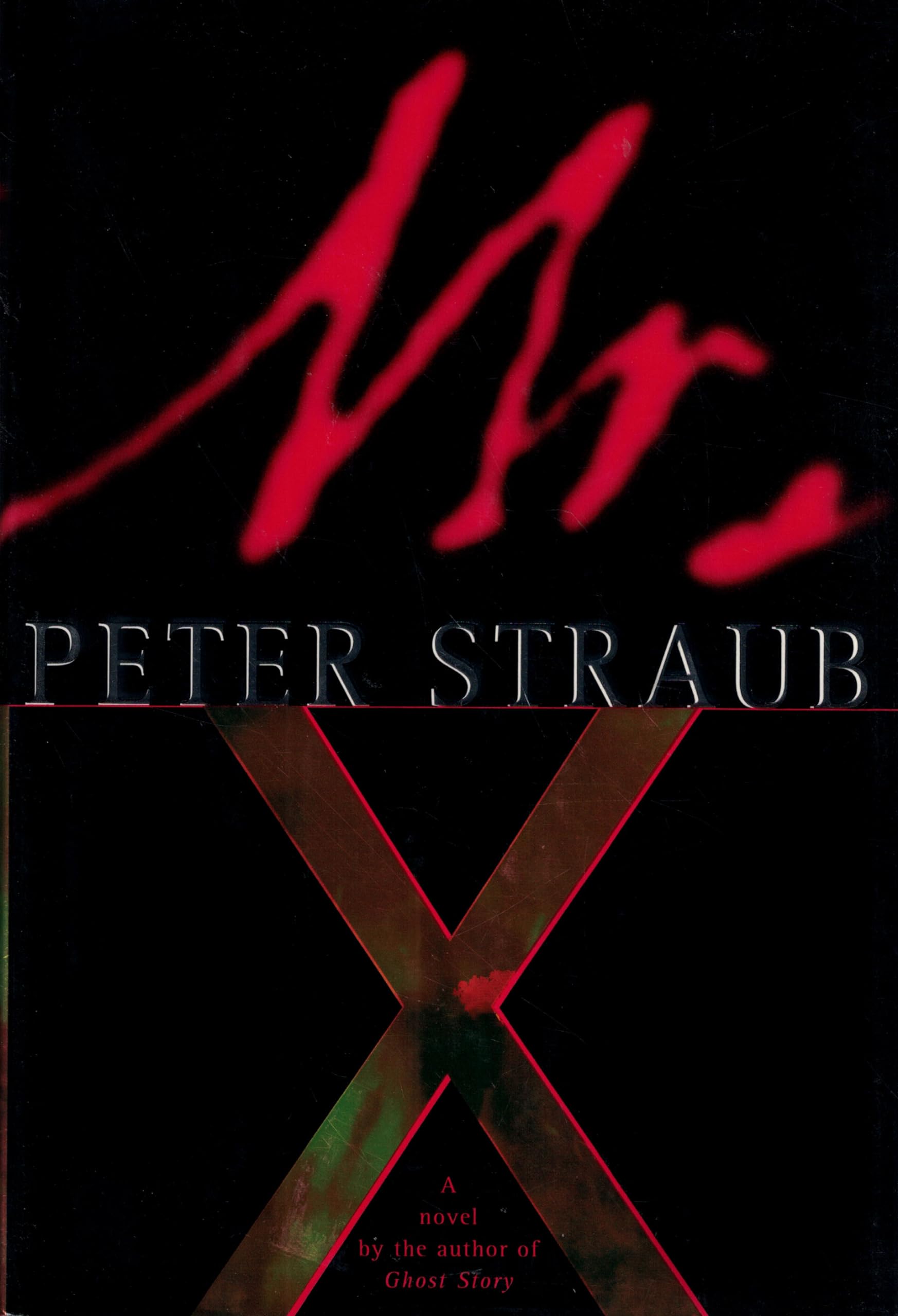
- Mr. X
Peter Straubstandalone novel1999
similar byhorrornorth americacontemporarydarkeerieidentitymadness
Mr. X is a 1999 horror mystery novel by American writer Peter Straub. The book won the 1999 Bram Stoker Award for Best Novel and was shortlisted for the 2001 British Fantasy Award for Best Novel.
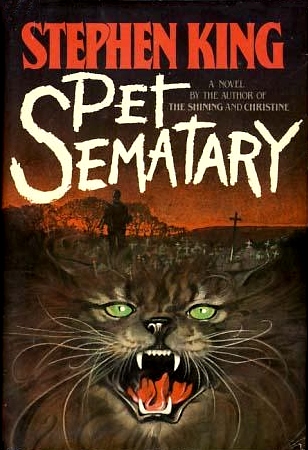
- Pet Sematary
Stephen Kingstandalone novel1983
similar byhorrornorth americacontemporarydarkeerie
Pet Sematary is a 1983 horror novel by American writer Stephen King. It tells the story of a family moving to Maine and settling closer to a pet cemetery in the woods, which is home to a terrifying force that brings death and sorrow. The novel was nominated for a World Fantasy Award for Best Novel in 1984, and adapted into two films: one in 1989 and another in 2019 as well as several spinoffs.
- Harvest Home
Thomas Tryonstandalone novel1973
similar byhorrornorth americacontemporarydarkeerie+1 more
What is the dark secret the people (especially the women!) of Harvest Home are hiding? A family tries to get out of the City and finds the perfect home for their young daughter complete with folk remedies for her allergies and sensitivities in the local wisewoman. But is there something sinister under the surface of the charming little town?
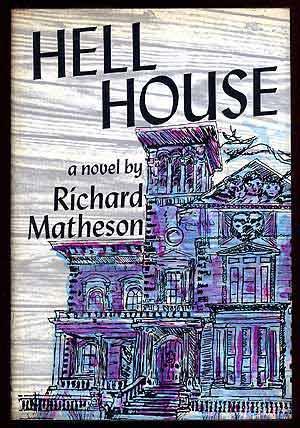
- Hell House
Richard Mathesonstandalone novel1971
similar byhorrornorth americacontemporarydarkeeriemadness
A dying millionaire wants proof, once and for all, of what happens after death, and hires physicist-turned-parapsychologist Dr. Lionel Barrett to spend a week investigating the Belasco House in Maine -- a mansion so thoroughly associated with atrocity that it's known simply as Hell House, where every previous investigation has ended in death or madness. Barrett brings his wife Edith along with two mediums, the spiritualist Florence Tanner and Benjamin Franklin Fischer, survivor of an earlier disastrous visit, whose scientific skepticism and spiritualist convictions clash from the first night inside. Richard Matheson's haunted-house novel, later filmed as The Legend of Hell House.
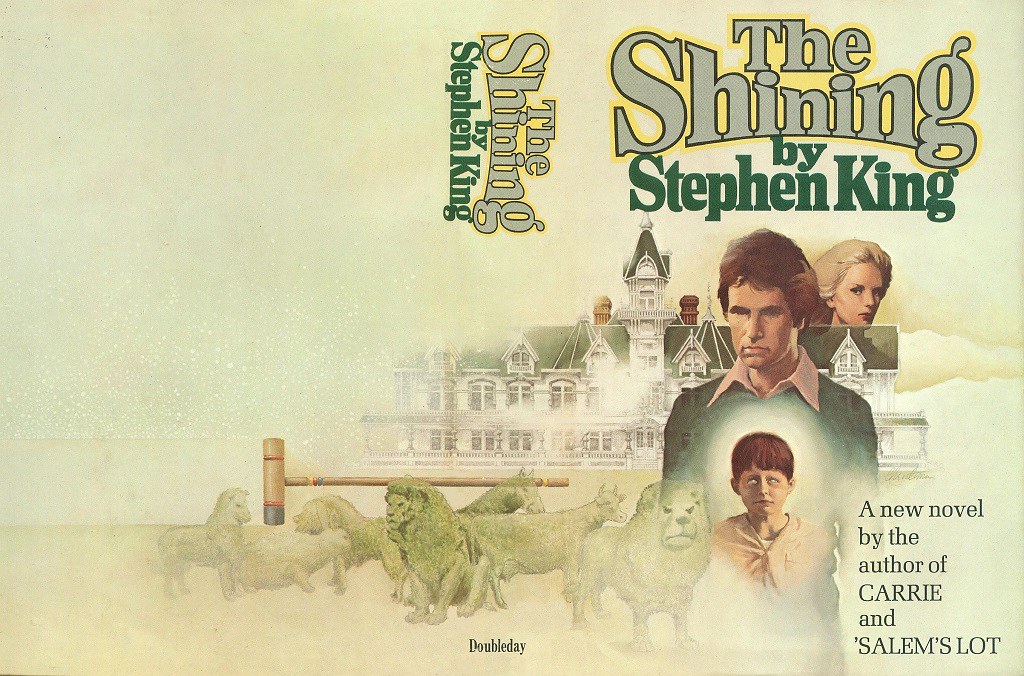
- The Shining
series5 books1977
similar byhorrornorth americacontemporarydark+1 more
Stephen King's 1977 novel The Shining follows the Torrance family as winter caretakers of the isolated, malevolent Overlook Hotel, where father Jack is gradually consumed by the hotel's influence while his young son Danny's psychic "shining" draws its attention. Doctor Sleep (2013) picks up the story decades later, following Danny as an adult still marked by that childhood ordeal. Together the two form a horror duology spanning nearly forty years of real-world publication.
- Carrie
Stephen Kingstandalone novel1974
similar byhorrorcontemporarynorth americadark+1 more
In one way or another, everybody abused Carrie. This sixteen-year-old misfit was forbidden everything that was young and fun by her fanatical mother. She was teased and taunted by her classmates, misunderstood by her teachers, and given up as hopeless by almost everyone. But Carrie had a secret: She possessed terrifying telekinetic powers that could make inanimate objects move, a lighted candle fall, or a door lock. Carrie could make all kinds of startling bizarre, and malevolent things happen. (WorldCat)
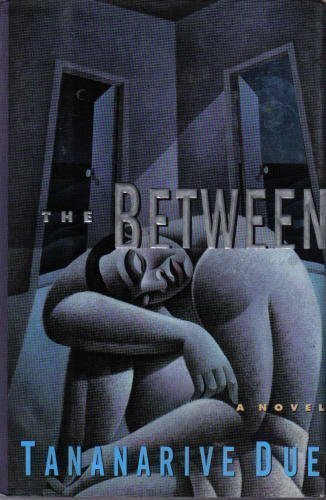
- The Between
Tananarive Duestandalone novel1995
similar byhorrornorth americacontemporarydarkeeriemadness
The Between is a 1995 horror novel by Tananarive Due and her debut novel. It follows a middle-class African-American husband and father who has lived with the belief that he cheated death as a child. When his family becomes the target of racist threats, he suffers a psychological breakdown intertwined with supernatural elements that blur the boundary between reality and death. It was nominated for the 1996 Bram Stoker Award.
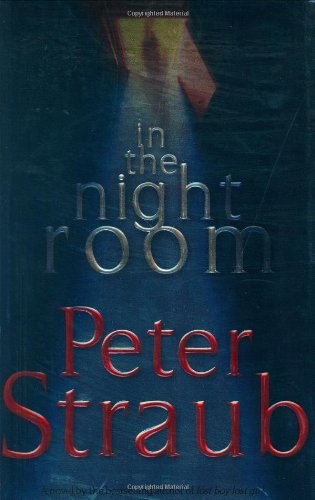
- In the Night Room
Peter Straubstandalone novel2004
similar byhorrorcontemporarydarknorth americaidentitymadness+1 more
In the Night Room is a 2004 horror-thriller novel by American author Peter Straub, a sequel to his 2003 book Lost Boy, Lost Girl. The work was first published in hardback on October 26, 2004, through Random House and it won the 2004 Bram Stoker Award for Novel. Straub encountered some difficulties while writing In the Night Room and had written several different passages for the work before growing bored with each version before writing it using the same technique he used for its predecessor in which he "reached down inside the book and turned it inside out."
- The Dead Girls of Hysteria Hall
Katie Alenderstandalone novel2015
similar byhorrornorth americacontemporarydarkeerieyoung adult+2 more
Delia's new house isn't just a house. Long ago, it was the Piven Institute for the Care and Correction of Troubled Females -- an insane asylum nicknamed "Hysteria Hall." However, many of the inmates were not insane, just defiant and strong willed. Kind of like Delia herself.
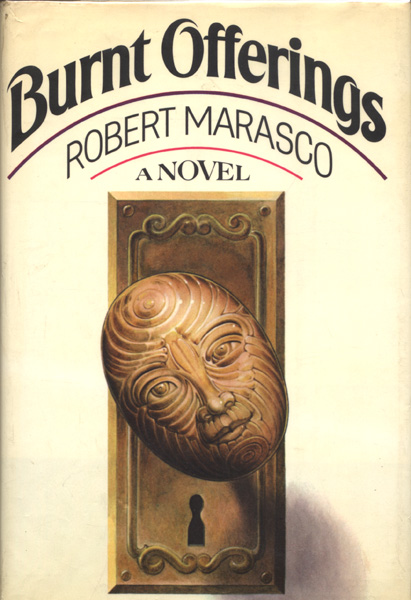
- Burnt Offerings
Robert Marascostandalone novel1973
similar byhorrornorth americacontemporarydarkeeriemadness
Burnt Offerings is a 1973 American horror novel by Robert Marasco. Its plot follows a family who move into a summer home where each member is plagued by unusual experiences and personality changes. Published by Delacorte Press, the novel had originally been conceived as a screenplay before Marasco rewrote it into a novel. It was adapted into a film of the same name in 1976. The novel was reprinted in 2015 by Valancourt Press.
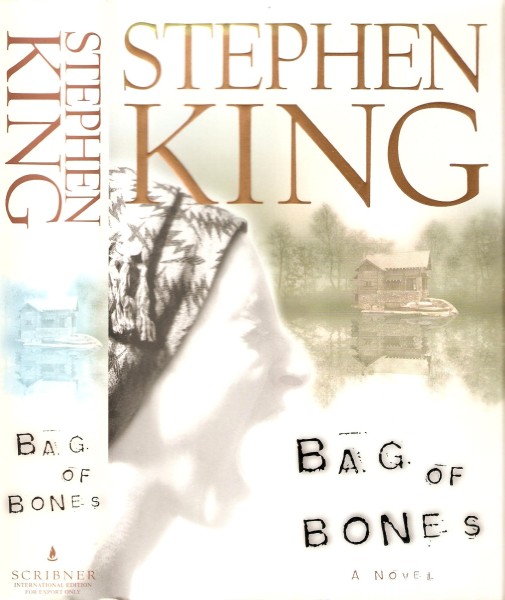
- Bag of Bones
Stephen Kingstandalone novel1998
similar byhorrornorth americacontemporarydarkmadness
Bag of Bones is a 1998 horror novel by American writer Stephen King. It focuses on an author who suffers severe writer's block and delusions at an isolated lake house four years after the death of his wife. It won the 1999 Bram Stoker Award for Best Novel, the 1999 British Fantasy Award for Best Novel, and the 1999 Locus Award for Best Dark Fantasy/Horror Novel.
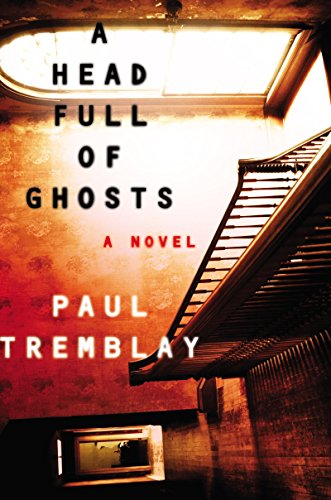
- A Head Full of Ghosts
Paul Tremblaystandalone novel2015
similar byhorrornorth americacontemporarydarkeeriemadness
A Head Full of Ghosts is a 2015 horror novel by American writer Paul Tremblay. The plot involves a Massachusetts family under financial and emotional strain while their fourteen-year-old daughter, Marjorie Barrett, exhibits signs of severe mental illness. The Barretts come to believe she is possessed by a demon, and her behavior is publicized when the family stars in a reality TV show. Marjorie's younger sister, Merry Barrett, relays the experiences of her childhood fifteen years later. Themes include elements of Catholic exorcism and reality television exploitation.
- Dead Lines
Greg Bearstandalone novel2004
similar byhorrorcontemporarydarkeerienorth americamadness
From the flaps of the Ballantine first edition: "For the last two years, Peter Russell has mourned the death of one of his twin daughters - who was just ten when she was murdered. Recent news of his best friend's fatal heart attack has now come as another devastating blow. Divorced, despondent, and going nowhere in his career, Peter fears his life is circling the drain. Then Trans comes along. The brainchild of an upstart telecom company, Trans is (as its name suggests) a transcendent marvel, a sleek, handheld interpersonal communication device capable of flawless operation anywhere in the world, at any time. "A cell phone, but not" - transmitting with crystal clarity across a newly discovered, never-utilized bandwidth... and poised to spark a new-technology revolution. When its creators offer Peter a position on their team, it should be a golden opportunity for him. If only he wasn't seemingly going mad. Everywhere Peter turns, inexplicable apparitions are walking before him or reaching out in torment. After a chilling encounter with his own lost child he begins to grasp the terrifying truth: Trans is a Pandora's box that has tapped into a frequency not of this world... but of the next. And now, via this open channel to oblivion, the dead have gained access to the living. For Peter, and for humankind, a long shadowy night of the soul has descended, bringing with it the stuff of a horrifying nightmare from which they may never awaken."
- Shadowland
Peter Straubstandalone novel1980
similar byhorrornorth americacontemporarydarkeerie+1 more
WorldCat: Two apprentices studying under a master magician spend a season residing in a dark house located in the deep recesses of the Vermont forest. Learning secrets best left unlearned, they enter a world of incalculable evil and terror. Only one of them will survive the ordeal.
- The Tommyknockers
Stephen Kingstandalone novel1987
similar byhorrornorth americacontemporarydarkeerie
The Tommyknockers is a 1987 science fiction horror novel by Stephen King. The novel is an excursion into the realm of science fiction for King, as the residents of the Maine town of Haven gradually fall under the influence of a mysterious object buried in the woods. King has since soured on The Tommyknockers, describing it as "an awful book", due to his drug addiction while writing the novel, though acknowledges the story's potential: "There's really a good book in here, underneath all the sort of spurious energy that cocaine provides, and I ought to go back." A miniseries adaptation was released in 1993.
- A Choir of Ill Children
Tom Piccirillistandalone novel2003
similar byhorrornorth americacontemporarydarkeerie+2 more
This lyrical tale of evil, loss, and redemption is a stunning addition to the Southern gothic tradition of Flannery O'Connor and Harry Crews.A Choir of Ill Children is the startling story of Kingdom Come, a decaying, swamp backwater that draws the lost, ill-fated, and damned. Since his mother's disappearance and his father's suicide, Thomas has cared for his three brothers--conjoined triplets with separate bodies but one shared brain--and the town's only industry, the Mill.Because of his family's prominence, Thomas is feared and respected by the superstitious swamp folk. Granny witches cast hexes while Thomas's childhood sweetheart drifts through his life like a vengeful ghost and his best friend, a reverend suffering from the power of tongues, is overcome with this curse as he tries to warn of impending menace. All Thomas learns is that "the carnival is coming."Torn by responsibility and rage, Thomas must face his tormented past as well as the mysterious forces surging toward the town he loves and despises.From the Paperback edition.
- Conjure Wife
Fritz Leiberstandalone novel1943
similar byhorroreerienorth americawitches+2 more
From the front cover of the Lion first paperback: "Potions in the house... evil in the air... and a witch in his bed." From the back cover of the Lion first paperback: ""Conjure Wife... is easily the most frightening (and necessarily) the most thoroughly convincing of all modern horror stories. Its premise is that witchcraft still flourishes, or at any rate survives, an open secret among women, a closed book to men. Under the rational overlay of 20th-century civilization this sickly growth, uncultivated, unsuspected, still manages to propagate itself. Leiber develops this theme with the utmost dexterity, piling up alternate layers of the mundane and outre, until at the story's real climax, the shocker at the end of chapter 14, I am not ashamed to say that I jumped an inch out of my seat. From that point onward the story anticlimax so skillfully managed that I am not really certain I touched the slipcover again until after the last page. Leiber has never written anything better... which perhaps is all that needed to be said." Damon Knight, Science Fiction Adventures"
- The Mayfair Witches Saga
series3 books1990
completed
similar byhorrorcontemporarynorth americadarkeeriewitches
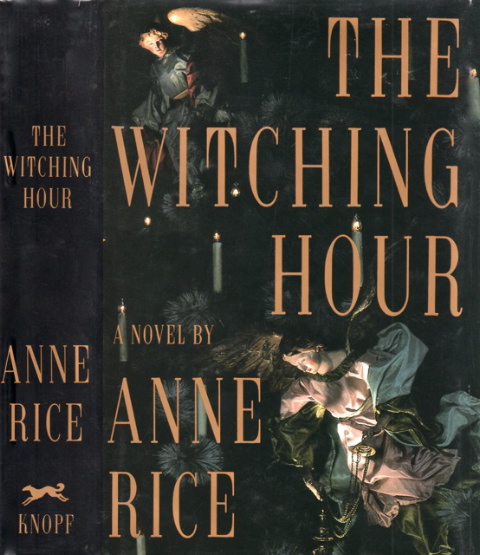
Lives of the Mayfair Witches is a trilogy of Gothic supernatural horror fantasy novels by American author Anne Rice. It centers on a family of witches whose fortunes have been guided for generations by a spirit named Lasher. The series began in 1990 with The Witching Hour, which was followed by the sequels Lasher (1993) and Taltos (1994). All three novels debuted at No. 2 on The New York Times Best Seller list.
- The Book of Accidents
Chuck Wendigstandalone novel2021
similar byhorrornorth americacontemporarydarkeerie+1 more
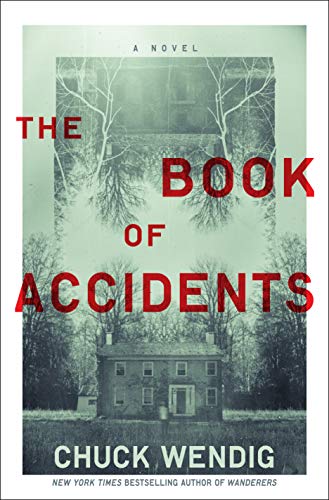
Long ago, Nathan lived in a house in the country with his abusive father—and has never told his family what happened there. Long ago, Maddie was a little girl making dolls in her bedroom when she saw something she shouldn’t have—and is trying to remember that lost trauma by making haunting sculptures. Long ago, something sinister, something hungry, walked in the tunnels and the mountains and the coal mines of their hometown in rural Pennsylvania. Now, Nate and Maddie Graves are married, and they have moved back to their hometown with their son, Oliver. And now what happened long ago is happening again . . . and it is happening to Oliver. He meets a strange boy who becomes his best friend, a boy with secrets of his own and a taste for dark magic. This dark magic puts them at the heart of a battle of good versus evil and a fight for the soul of the family—and perhaps for all of the world. But the Graves family has a secret weapon in this battle: their love for one another.
- Insomnia
Stephen Kingstandalone novel1994
similar byhorrornorth americacontemporaryeeriemadness
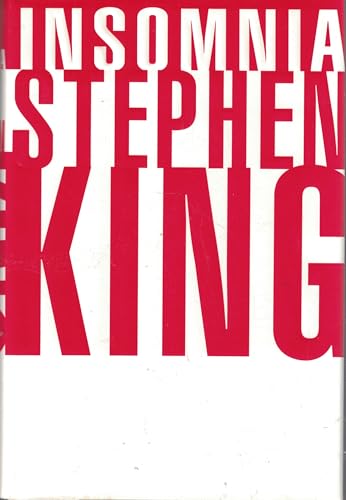
When an elderly widower in Maine finds himself with sleep maintenance insomnia, awakening early every morning, this state of exhaustion allows him to perceive a higher state of reality, where he learns of an impending disaster which will shake not just the Earthly reality. but all the higher realities, and which he has been recruited to prevent.
- Homebody
Orson Scott Cardstandalone novel1998
similar byhorrornorth americacontemporarydarkeeriemadness
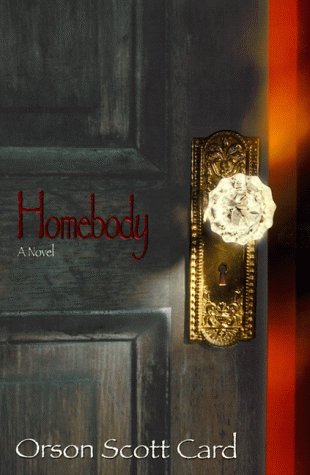
Homebody (1998) is a horror novel by American writer Orson Scott Card. It takes place in modern-day America.