More like Behemoth 2
anchored on:science fictionour worldcontemporarygenetic engineeringsurvivalat sea+1 more
but
- The Andromeda Strain
series2 books1969
similar byscience fictiontensecontemporarysurvival+2 more
Michael Crichton's 1969 novel The Andromeda Strain follows a team of scientists racing to contain a lethal extraterrestrial microorganism that crash-lands in Arizona, told in the clinical, document-driven style that helped establish the techno-thriller genre. Daniel H. Wilson's authorized 2019 sequel The Andromeda Evolution revisits the same threat five decades later. Together the two books form a two-part outbreak story separated by a fifty-year gap in publication.
- Prey
Michael Crichtonstandalone novel2002
similar byscience fictiontensecontemporarygenetic engineeringsurvivalour world
Prey is the thirteenth novel by Michael Crichton under his own name and his twenty-third novel overall. It was first published in November 2002, making it his first novel of the twenty-first century. An excerpt was first published in the January–February 2003 issue of Seed magazine. Prey brings together themes from two earlier Crichton best-selling novels, Jurassic Park and The Andromeda Strain, and serves as a cautionary tale about developments in science and technology: in particular, nanotechnology, genetic engineering, and distributed artificial intelligence.
- Footfall
Larry Niven & Jerry Pournellestandalone novel1985
similar byscience fictiontensecontemporarysurvivalour worldnorth america
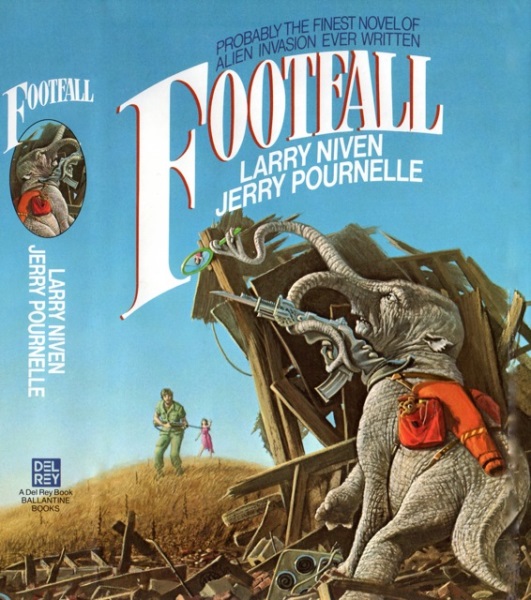
When aliens travel to Earth from Alpha Centauri, differences between alien and human psychology result in an unprovoked invasion, and the resulting resistance results in the aliens' use of a devastating weapon.
- The Chrysalids
John Wyndhamstandalone novel1955
similar byscience fictiontensegenetic engineeringsurvival+1 more
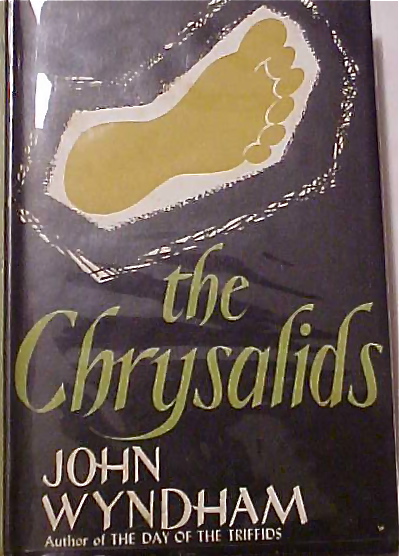
The Chrysalids is a science fiction novel by British writer John Wyndham, first published in 1955 by Michael Joseph. It is the least typical of Wyndham's major novels, but regarded by some as his best. An early manuscript version was entitled Time for a Change.
- Micro
Michael Crichton & Richard Prestonstandalone novel2011
similar bytensescience fictioncontemporarygenetic engineeringsurvivalour world
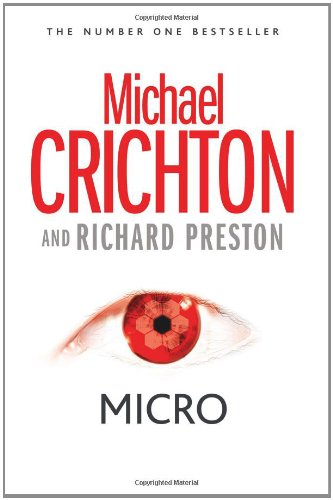
Micro is a techno-thriller novel by Michael Crichton, the seventeenth under his own name and second to be published after his death, published in 2011. Upon his death in 2008, an untitled, unfinished manuscript was found on his computer, which would become Micro. Publisher HarperCollins chose science writer Richard Preston to complete the novel from Crichton's remaining notes and research, and it was finally published in 2011. Micro followed the historical thriller Pirate Latitudes, which was also found on his computer and published posthumously in 2009.
- Watchers
Dean R. Koontzstandalone novel1987
similar byscience fictiontensecontemporarygenetic engineeringsurvivalnorth america
This probably qualifies as a science-based adventure rather than a science fiction novel. The premise, and only speculative fiction element, is that a U.S. government funded laboratory creates a golden retriever that's as intelligent as a human for use in intelligence gathering and also creates a monkey hybrid that's intended for a military police dog role and as a killing machine on battlefields. The animals escape and the story plays out as a straight adventure novel with a good chunk of romance thrown in.
- Invasion
Robin Cookstandalone novel1997
similar byscience fictiontensecontemporarygenetic engineeringour worldnorth america+1 more
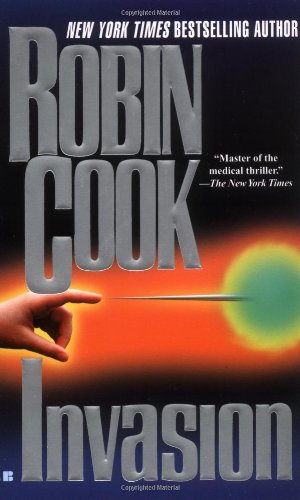
Earth is bombarded from space by small disks which, in addition to having powerful physical armaments, when handled activate latent viral DNA which causes humans to mutate into alien beings; a small group recognize the danger and attempt to develop a biological counterweapon.
- Midnight
Dean R. Koontzstandalone novel1989
similar byscience fictiontensecontemporarygenetic engineeringsurvivalnorth america
A wealthy tech entrepreneur, intending to create superhumans by infecting them with nanotech to assist their physical and mental abilities, picks a California town as his secret pilot project, but things go terribly wrong.
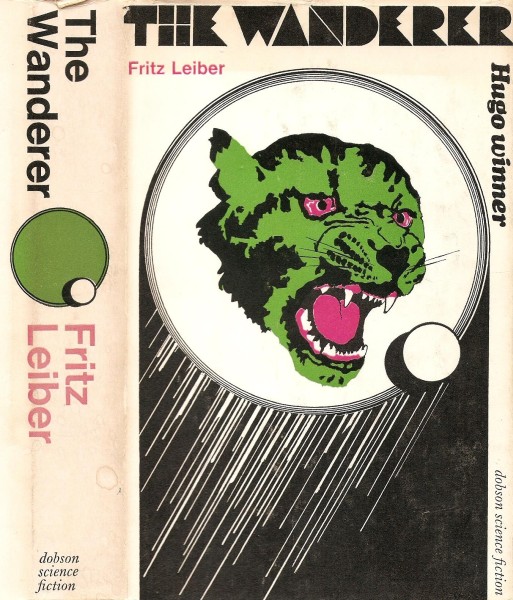
- The Wanderer
Fritz Leiberstandalone novel1964
similar byscience fictiontensecontemporarysurvivalour world
The Wanderer is a science fiction novel by American writer Fritz Leiber, published as a paperback original by Ballantine Books in 1964. It won the 1965 Hugo Award for Best Novel.
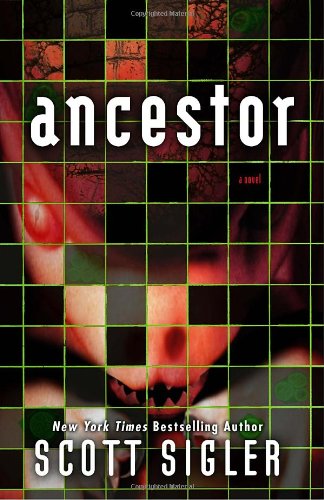
- Ancestor
Scott Siglerstandalone novel2007
similar byscience fictiontensecontemporarygenetic engineeringsurvivalour world
Ancestor is a science fiction thriller novel by American writer Scott Sigler. The novel was released in podcast format in 2006, with it also being released in print via Dragon Moon Press in 2007. Ancestor was later re-released by Crown Publishing in 2010.
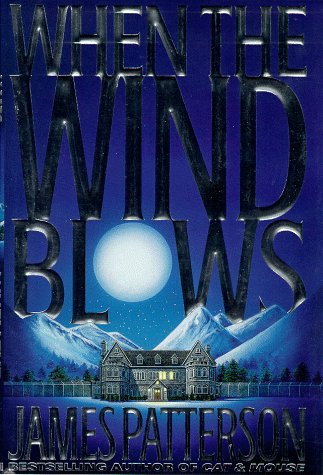
- When the Wind Blows
series2 books1998
similar byscience fictiontensecontemporarygenetic engineeringsurvivalnorth america+1 more
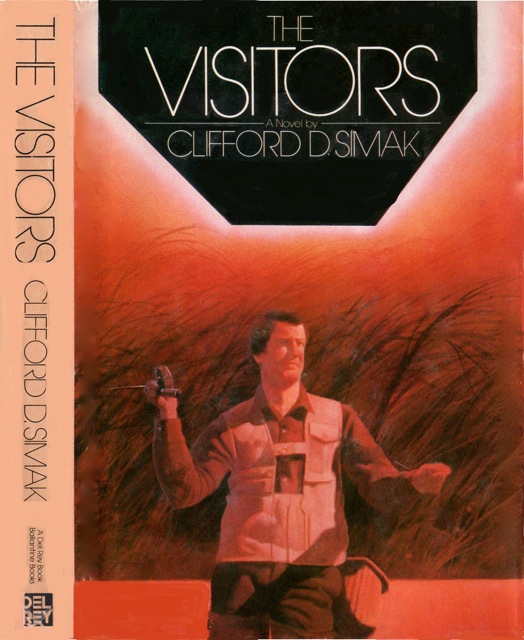
- The Visitors
Clifford D. Simakstandalone novel1980
similar byscience fictiontensecontemporarysurvivalour worldnorth america
WorldCat: Intelligent, alien creatures arrive on Earth from outer space, threatening world stability and presaging the destruction of civilization.
- Hellstrom's Hive
Frank Herbertstandalone novel1973
similar byscience fictiontensecontemporarynorth america+2 more
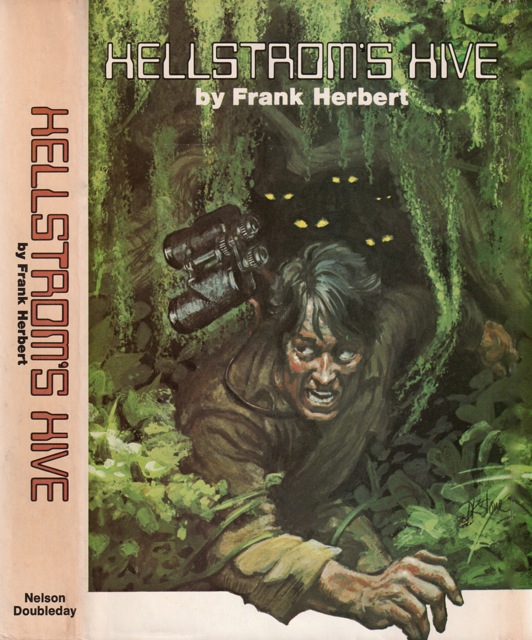
Hellstrom's Hive is a 1973 science fiction novel by Frank Herbert. It is about a secret group of humans who model their lives upon social insects and the unsettling events that unfold after they are discovered by a deep undercover agency of the U.S. government.
- Cell
Stephen Kingstandalone novel2006
similar bytensescience fictioncontemporarysurvivalour worldnorth america
In Cell, King taps into readers fears of technological warfare and terrorism. Mobile phones deliver the apocalypse to millions of unsuspecting humans by wiping their brains of any humanity, leaving only aggressive and destructive impulses behind. Those without cell phones, like illustrator Clayton Riddell and his small band of "normies," must fight for survival, and their journey to find Clayton's estranged wife and young son rockets the book toward resolution.
- Vitals
Greg Bearstandalone novel2002
similar byscience fictiontensecontemporarygenetic engineeringour worldnorth america
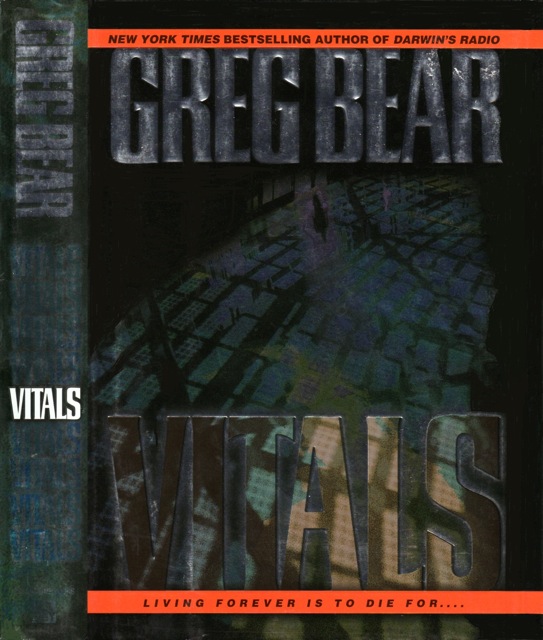
From the flaps of the Del Rey first edition: "Hal Cousins is one of a handful of scientists nearing the most sought after discovery in human history: the key to short-circuiting the aging process. Fueled by a wealth of research, an overdose of self-confidence, and the money of influential patrons to whom he makes outrageous promises, Hal experiments with organisms living in the hot thermal plumes in the ocean depths. But as he journeys beneath the sea, his other world is falling apart. Across the country, scientists are being inexplicably murdered - including Hal's identical twin brother, who is also working to unlock the key to immortality. Hal himself barely eludes a cold-blooded attack at sea, and when he returns home to Seattle, he finds himself walking into an eerie realm where voices speak to him from the dead ... where a once-brilliant historian turned crackpot is leading him on a deadly game of hide-and-seek ... and where the beautiful, rich widow of his twin is more than willing to pick up the pieces of Hal's life-and take him places he's never been before. Suddenly Hal is trapped inside an ever-twisting maze of shocking revelations. For he is not the first person to come close to ending aging forever - and those who came before him will stop at nothing to keep the secret to themselves. Now every person on earth is at risk of being made an unsuspecting player in one man's spectacular and horrifying master plan. From the bottom of Russia's Lake Baikal to a billionaire's bionic house built into the cliffs of the Washington seashore, from the darkest days of World War II and the reign of Josef Stalin to the capitalist free-for-all that is the United States, Vitals tells an astounding tale of the most unimaginable scientific secret of all - exposed by the quest for immortality itself..."
- Our Children's Children
Clifford D. Simakstandalone novel1974
similar byscience fictiontensecontemporarysurvivalour world+1 more
From the back cover of the first DAW printing: "They were our children's children, and they came one day from nowhere - walking through holes in the air into our world. By means of one-way time tunnels, they fled the ravening beasts with teeth, claws and tentacles, that reproduced like bacteria and were intelligent. They fled to escape the uncontrolled horror of their own far future, and we, their distant ancestors, housed and fed and comforted them, content in their assurance that the tunnel was securely guarded from the beasts, whatever or whoever they were. But then somebody up there slipped and the beasts were abroad..."
- The Kraken Wakes
John Wyndhamstandalone novel1953
similar byscience fictiontensesurvivalour worldat sea
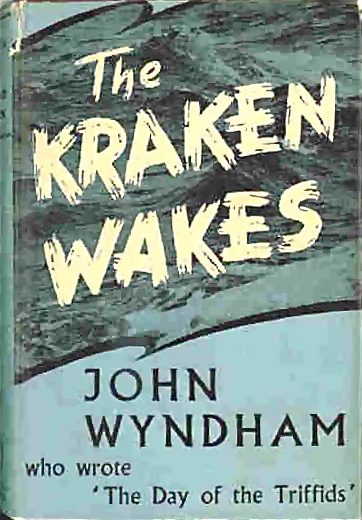
" Behind a spectacular meteor shower actually hides the beginning of an invasion by a mysterious and powerful alien race. Earth's life is disrupted by the attacks of extraterrestrials whose war machines, emerging from the depths of the oceans, seem indestructible. The coalitioned forces of the whole world are worthless, powerless in the face of the indecipherable and deadly plans of a superior intelligence, capable of bringing the entire planet to the brink of catastrophe" Goodreads May 20, 2022
- White Shark
Peter Benchleystandalone novel1994
similar bytensescience fictioncontemporarygenetic engineeringsurvivalour worldat sea
White Shark is a 1994 novel by author Peter Benchley, famous for Jaws, The Island, Beast, and The Deep. White Shark is similar to Jaws but does not feature a shark, let alone a white shark, despite what the title suggests; the phrase is the codename of a weapon. To avoid confusion and to capitalize on the miniseries adaptation, the book was republished as Creature in 1997.
- Dreamcatcher
Stephen Kingstandalone novel2001
similar byscience fictiontensecontemporarysurvivalnorth america
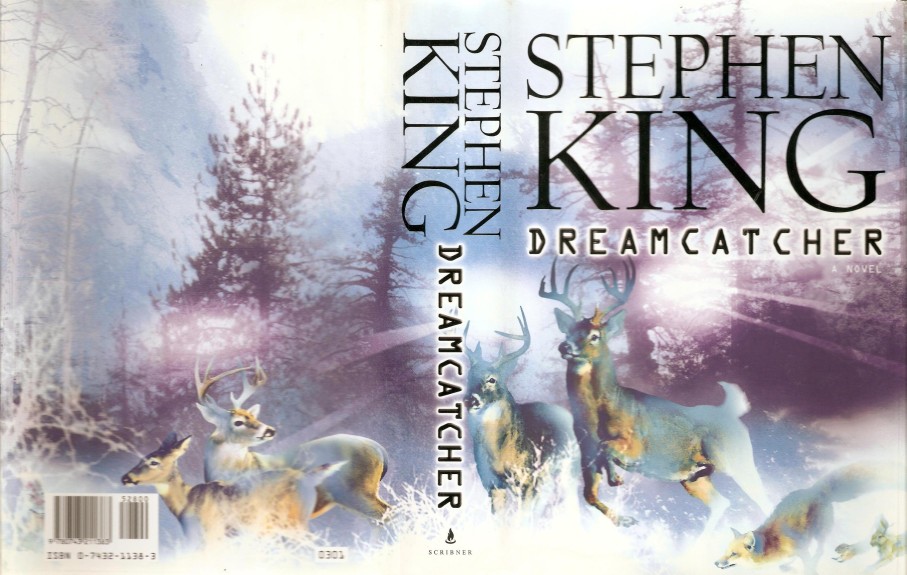
Dreamcatcher is a 2001 science fiction horror novel by American writer Stephen King, featuring elements of body horror, suspense and alien invasion. The book, written in longhand, helped the author recuperate from a 1999 car crash, and was completed in half a year. According to the author in his afterword, the working title was Cancer. His wife, Tabitha King, persuaded him to change the title. A film adaptation was released in 2003.
- The Swarm
Frank Schätzingstandalone novel2004
similar byscience fictiontensecontemporarysurvivalour worldat sea
The Swarm is a science fiction novel by German author Frank Schätzing. It was first published in 2004 and soon became a bestseller.
- Mount Dragon
Lincoln Child & Douglas Prestonstandalone novel1996
similar byscience fictiontensecontemporarygenetic engineeringour world+1 more
A tech tycoon recruits a scientist to perfect a genetically engineered vaccine against all strains of influenza, but when he discovers a disastrous flaw he becomes the target of multiple attacks.
- Seveneves
Neal Stephensonstandalone novel2015
similar byscience fictiontensegenetic engineeringsurvivalour world
Seveneves is a science fiction novel by Neal Stephenson published in 2015. The story tells of the desperate efforts to preserve Homo sapiens in the wake of apocalyptic events on Earth after the unexplained disintegration of the Moon and the remaking of human society as a space-based civilization after a severe genetic bottleneck.
- The Extinction Files
series2 books2017
similar byscience fictiontensecontemporarygenetic engineeringour world
- Darwin
series2 books1999
completed
similar byscience fictiontensegenetic engineeringnorth america+2 more
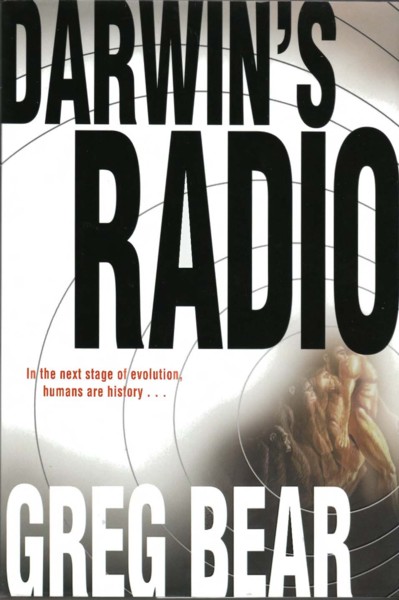
Greg Bear's Darwin's Radio imagines a dormant retrovirus in human DNA activating worldwide, triggering an accelerated leap in human evolution that governments respond to as a plague. The 1999 novel won the Nebula Award; its sequel Darwin's Children follows the first generation of changed children as society decides what to do with them. Together they're speculative near-future science fiction grounded in genetics rather than space opera.