More like Beloved Enemy
but
- Ender Wiggin
series14 books1977
part of Ender's Game Universe
similar byaliensfar futurescience fictionother star systems+3 more
Orson Scott Card's Ender's Game (1985, expanded from his 1977 novella) follows child prodigy Andrew "Ender" Wiggin as he is recruited into a military training program built to prepare Earth's defenses for an anticipated third war against an insectoid alien species known as the Formics. The saga continues years later through Speaker for the Dead and Xenocide, following an older Ender as he confronts the moral weight of his role in that earlier conflict, and concludes the core arc in Children of the Mind, with Ender in Exile filling in the years between the first two books. Set within the wider Ender's Game universe, the series shifts from military coming-of-age story to slower, more philosophical science fiction as it progresses.
- Starship Troopers
Robert A. Heinleinstandalone novel1959
similar byaliensfar futurescience fictionspaceother star systemsadventurous+1 more
Starship Troopers is a military science fiction novel by American writer Robert A. Heinlein. Written in a few weeks in reaction to the US suspending nuclear tests, the story was first published as a two-part serial in The Magazine of Fantasy & Science Fiction as Starship Soldier, and published as a book by G. P. Putnam's Sons on November 5, 1959.
- Barsoom
series53 books1917
similar byscience fictionadventurous+2 more
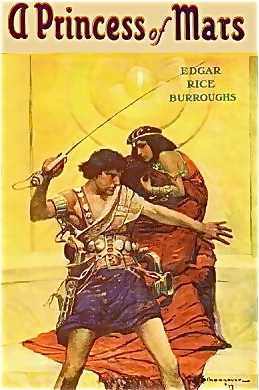
Barsoom is a fictional representation of the planet Mars created by American pulp fiction author Edgar Rice Burroughs. The first Barsoom tale was serialized as Under the Moons of Mars in pulp magazine The All-Story from February to July 1912 and published compiled as a novel as A Princess of Mars in 1917. It features John Carter, a late-19th-century American Confederate veteran who is mysteriously transported from Earth to the dying world of Mars where he meets and romances the beautiful Martian princess Dejah Thoris. Ten sequels followed over the next three decades, further extending his vision of Barsoom and adding other characters.
- Ringworld
series5 books1970
part of Known Space
similar byaliensfar futurescience fictionspace operaspaceother star systemsadventurous
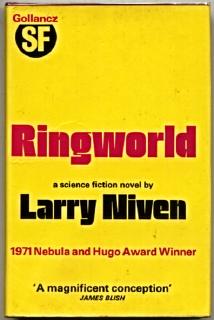
The Ringworld series is a series of science fiction novels written by American author Larry Niven. It is part of his Known Space series of stories. Its backdrop is the Ringworld, a giant artifact 3 million times the surface area of Earth circling a star. The series is composed of four standalone science fiction novels, the original award-winning book and its three sequels:1970: Ringworld 1979: The Ringworld Engineers 1996: The Ringworld Throne 2004: Ringworld's Children
- The Xenith Trilogy
series3 books2017
similar byaliensfar futurescience fictionspace operaromancespaceother star systems+3 more
- Lunar Chronicles
series15 books2011
similar byfar futurescience fictionother star systemsadventurous+2 more
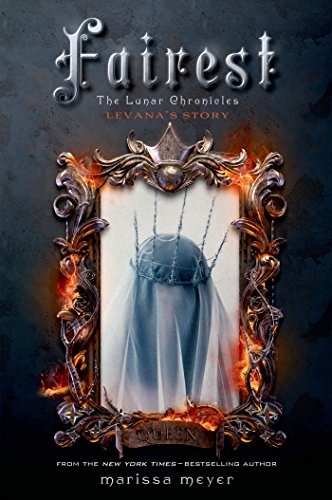
The Lunar Chronicles is a series of four young adult science fiction novels, a novella, and a short story collection written by American author Marissa Meyer and published by Feiwel & Friends. Each book entails a science fictional twist on a classic fairy tale, including "Cinderella", "Little Red Riding Hood", "Rapunzel", and "Snow White". Set in a futuristic world inhabited by various species and creatures, tensions are rising between Earth and its former colony Luna, while both attempt to manage an ongoing pandemic.
- Moties
series4 books1974
part of CoDominium
similar byaliensfar futurescience fictionspace operaspaceother star systems+1 more
Larry Niven and Jerry Pournelle's The Mote in God's Eye (1974) depicts humanity's first contact with an alien species, the Moties, set within the far-future interstellar setting of Pournelle's codominium future history. The Gripping Hand continues that first-contact crisis years later, and Outies, written by J. R. Pournelle, carries the story forward into a new generation. Together the three books trace an escalating encounter between human and Motie civilizations within the codominium universe.
- Tower and the Hive
series7 books1959
completed
part of The Talents
similar byfar futurescience fictionspace operaspaceother star systems+2 more
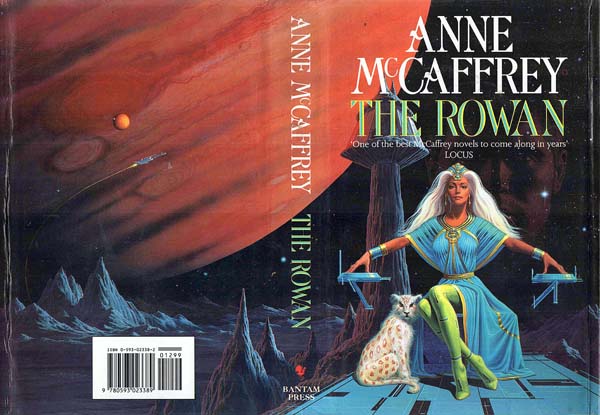
The Tower and the Hive series opens with The Rowan (1990), following an isolated but powerful telepath who is drawn out of her loneliness by a psychic call for help from a distant Talent facing an alien threat. Anne McCaffrey continued the story across four more novels, Damia, Damia's Children, Lyon's Pride, and the concluding The Tower and the Hive (1999), following later generations of a telepathic family staffing the Prime Towers that give a starfaring human civilization instant communication. The series is set later in the same Talents universe as McCaffrey's earlier Pegasus books.
- Xeno Relations
series5 books2014
similar byaliensfar futurescience fictionspace operaspaceother star systemsadventurous+2 more
- Anna Nestor-Sigrid / The Aighors
series4 books1975
completed
similar byaliensfar futurescience fictionspaceother star systemsadventurous+2 more
Beyond Heaven's River follows Yoshio Kawashita, a soldier abducted mid-battle during World War II and stranded by unknown aliens on a distant world he can never leave, whose only tie back to meaning is Anna Nestor, a ruthless interstellar power broker who first treats him as a curiosity before the two are forced to confront who took him and why. Greg Bear wrote it as a standalone 1980 novel rather than the start of a series.
- Heechee
series19 books1972
completed
similar byaliensfar futurescience fictionspace operaspaceother star systems+1 more
The Heechee Saga, also known as the Gateway series, is a series of science fiction novels and short stories by Frederik Pohl. The Heechee are an advanced alien race that visited the Solar System hundreds of millennia ago and then mysteriously disappeared. They left behind bases containing artifacts, including working starships, which are discovered and exploited by humanity.
- Uplift Universe
universe13 books1980
Start hereUplift · Start here
similar byaliensfar futurescience fictionspace operaspaceother star systemsadventurous
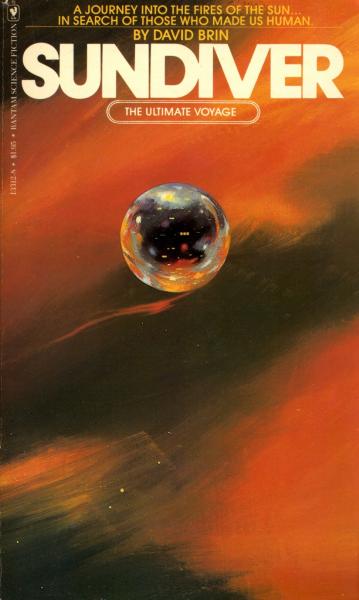
No species, the Galactics insist, ever climbs to sapience alone. For a billion years the elder races have "uplifted" their chosen clients — reshaping some promising animal, gene by patient gene, into a thinking being, then binding it through long ages of indenture. Patron lifts client; client one day becomes patron; and every lineage traces back through the vast Galactic Library to the vanished Progenitors who began it all. Then a ragged band of primates arrives at the stars with no patron to claim them — wolflings, self-made, an affront to a hundred thousand years of law — and worse, these humans have already started uplifting neighbors of their own: the neo-dolphins and neo-chimpanzees of Earthclan. David Brin builds this galaxy across two trilogies. The first — Sundiver, the Hugo- and Nebula-winning Startide Rising, and the Hugo-winning The Uplift War — sends an expedition into the Sun, then follows the dolphin-crewed survey ship Streaker as it flees a discovery that sets fanatical star-clans at war, and a chimp-led resistance on an invaded colony world. The second sequence, Uplift Storm — Brightness Reef, Infinity's Shore, Heaven's Reach — descends to Jijo, a forbidden world where six fallen races hide as illegal settlers, and draws every loose thread toward a reckoning. Short fiction fills the margins. This is space opera with an ecologist's conscience: teeming with invented biologies, wry cross-species banter, and real unease about what we owe the minds we make. Begin with Startide Rising — the saga's beating heart, and readable on its own — or take Sundiver first and read straight through in publication order.
- Heaven Chronicles / Zones of Thought
series8 books1976
similar byfar futurescience fictionspace operaspace+2 more
- Uplift
series5 books1980
part of Uplift Universe
similar byaliensfar futurescience fictionspace operaspaceother star systemsadventurous
David Brin's Uplift trilogy opens with Sundiver, sending human explorers into the Sun itself, then follows a dolphin-crewed starship on the run from hostile aliens in Startide Rising and a fight over the colony world Garth in The Uplift War. The books sit inside Brin's wider Uplift Universe, built on the idea that spacefaring "patron" species genetically engineer younger "client" species into full sapience, with humanity an anomaly that reached the stars without a patron of its own.
- LySanTer (Future Fantasy Romance)
series3 books1990
completed
similar byfar futureromanceother star systems+7 more
- Hitchhiker's Guide to the Galaxy
series16 books1979
part of The Hitchhiker's Guide to the Galaxy Universe
similar byfar futurescience fictionspace+3 more
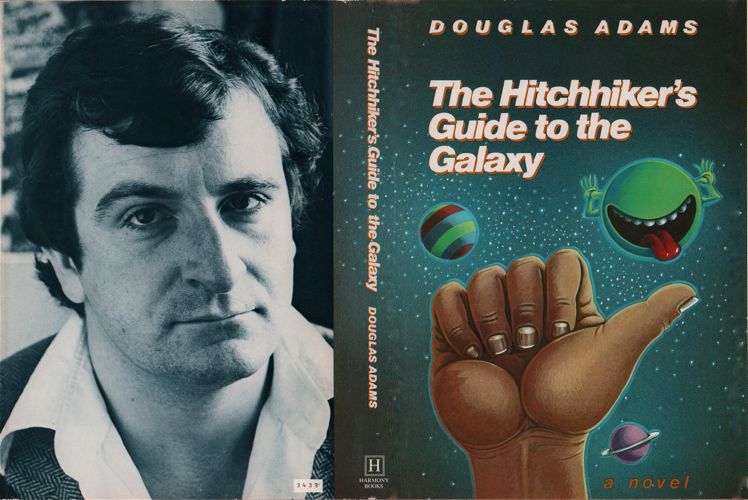
The Hitchhiker's Guide to the Galaxy is a comedy science fiction franchise created by Douglas Adams. Originally a radio sitcom broadcast over two series on BBC Radio 4 between 1978 and 1980, it was soon adapted to other formats, including both novels and comic books, a 1981 BBC television series, a 1984 text adventure game, stage shows and a 2005 feature film.
- Pip & Flinx
series18 books1972
part of Humanx Commonwealth
similar byaliensfar futurescience fictionspace operaspaceother star systemsadventurous
The Pip & Flinx novels follow Flinx, a young man with an unusual, mysterious origin, and his ever-present animal companion Pip, across Alan Dean Foster's Humanx Commonwealth setting. Beginning with The Tar-Aiym Krang (1972) — chronologically the second entry, since Foster later filled in Flinx's earlier life — the series grew to fifteen novels published between 1972 and 2017, mixing planetary adventure with a slowly unfolding personal mystery.
- Alliance-Union Universe
universe173 books1976
Start hereCompany Wars · The central sequence
similar byfar futurescience fiction+5 more
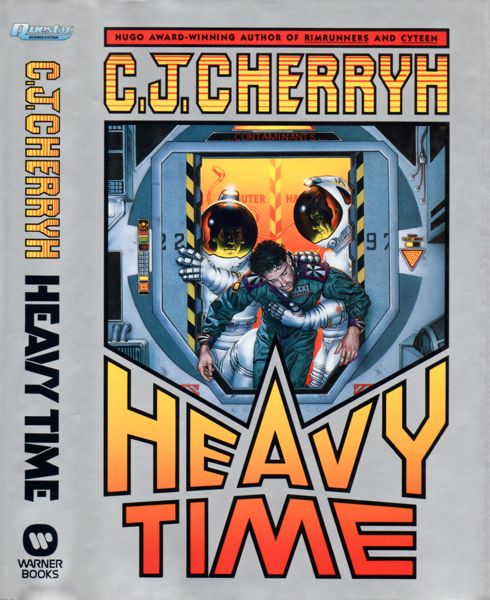
The dark between the stars belongs to no one, and everyone who lives out here knows it: the merchanter Families hauling cargo between stations that cannot feed themselves, the Earth Company clutching at colonies it can no longer supply, the Union breeding its cloned azi to settle worlds faster than birth allows. C. J. Cherryh's Alliance-Union is a future history of humankind's spread across the third and fourth millennia, told from inside the pressure — no clean empires, only stations, ships, treaties, and the people caught in the machinery of who holds the jump-points. The sequence runs from the first laborious pre-FTL stations through the Company Wars, the independence struggle that breaks over Pell in Downbelow Station (Hugo, 1981), to the genetics and cold politics of Union's homeworld in Cyteen (Hugo, 1988) and its sequel Regenesis. Around that spine cluster the merchanter novels of trader Families, the Faded Sun trilogy of human envoys among the martial alien Mri, and the Chanur books, narrated from the hierarchical, whiskered viewpoint of the hani. On the isolated world of Merovin, the Merovingen Nights anthologies open the setting to other hands — Mercedes Lackey, Janet and Chris Morris, Nancy Asire — a shared world braided into the whole. What sets it apart is intimacy at scale. Cherryh drops you without a map into a single skull and lets you assemble the politics from what that person fears and bargains for; the aliens are genuinely alien, loyalty is always provisional, and the real antagonist is usually logistics. Most books stand alone, in her words, "like real history." The surest way in is Downbelow Station — the war seen from one besieged station — then Cyteen, for the mind that shaped the other side.
- The Alliance (S. E. Smith)
series6 books2014
similar byfar futurescience fictionother star systems+2 more