More like Beyond Rejection
anchored on:science fictionfar futureidentityother star systems
but
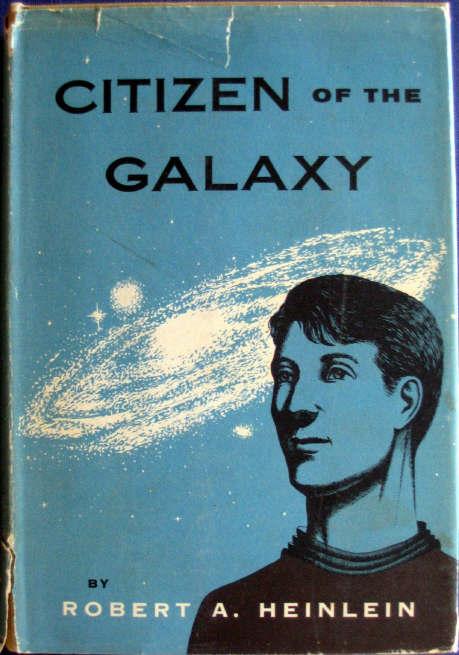
- Citizen of the Galaxy
Robert A. Heinleinstandalone novel1957
similar byscience fictionidentityfar futureother star systems
On a planet far distant from Earth, a lame beggar buys a young boy slave who has forgotten his origins. The beggar is more than he seems, and gives the boy an extensive education while employing him as an observer of activity in their city. Years later, the beggar is captured by the government, and the youth must escape the planet.
- The Stars My Destination
Alfred Besterstandalone novel1956
similar byscience fictionidentityfar futureother star systems
When a passing spaceship refuses to rescue the lone survivor from the drifting wreck of another ship, he dedicates his life to discovering who made that decision and exacting his revenge, in the process altering human history and his own character.
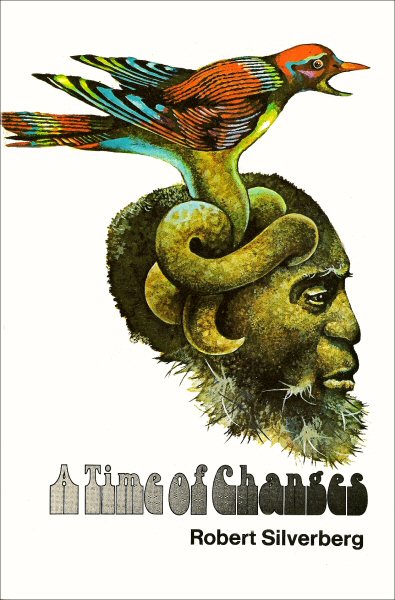
- A Time of Changes
Robert Silverbergstandalone novel1971
similar byscience fictionidentityfar futureother star systems
A Time of Changes is a 1971 science fiction novel by American writer Robert Silverberg. It won the Nebula Award for that year, and was also nominated for the 1972 Hugo and Locus Awards.
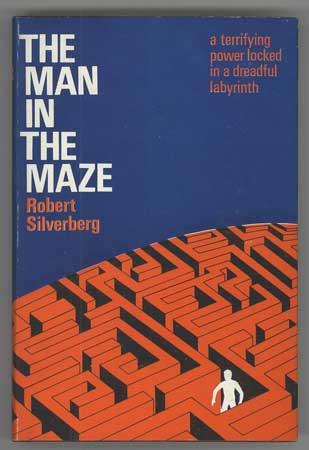
- The Man in the Maze
Robert Silverbergstandalone novel1969
similar byscience fictionidentityfar futureother star systems
The Man in the Maze is a science fiction novel by American writer Robert Silverberg, originally serialized in the magazine Worlds of If in April and May 1968, and published in bookstores the following year. It tells the tale of a man rendered incapable of interacting normally with other human beings by his uncontrollable psychic abilities. The novel is inspired by Sophocles' play Philoctetes, with the roles of Odysseus, Neoptolemus and Philoctetes played by Boardman, Rawlins, and Muller, respectively.
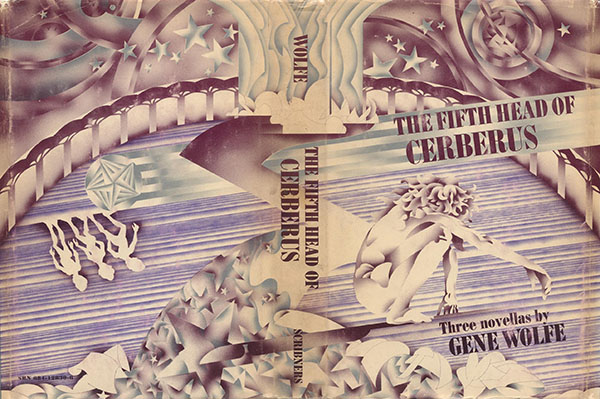
- The Fifth Head of Cerberus
series4 books1972
similar byscience fictionidentityfar futureother star systems
- Triton
Samuel R. Delanystandalone novel1976
similar byscience fictionidentityfar futureother star systems
Trouble on Triton: An Ambiguous Heterotopia (1976) is a science fiction novel by American writer Samuel R. Delany. It was nominated for the 1976 Nebula Award for Best Novel, and was shortlisted for a retrospective James Tiptree, Jr. Award in 1995. It was originally published under the shorter title Triton.
- Takeshi Kovacs
series3 books2002
similar byscience fictionidentityfar futureother star systems
Takeshi Kovacs is a former elite soldier turned freelance troubleshooter in a future where human consciousness can be digitized and transferred between bodies, or sleeves, making death an inconvenience for those who can afford new ones. Richard Morgan's trilogy - Altered Carbon, Broken Angels, Woken Furies - moves Kovacs through noir-inflected mysteries on different worlds, using the resleeving premise to interrogate class, violence, and what, if anything, survives a person's original body. It became the basis for a Netflix series.
- Vacuum Flowers
Michael Swanwickstandalone novel1987
similar byscience fictionidentityfar futureother star systems+1 more
Vacuum Flowers is a science fiction novel by American writer Michael Swanwick, published in 1987. It is an early example of the cyberpunk genre, and features one of the earliest uses of the concept of wetware.
- Imperial Galaxy
series2 books2012
similar byscience fictionidentityfar futureother star systems
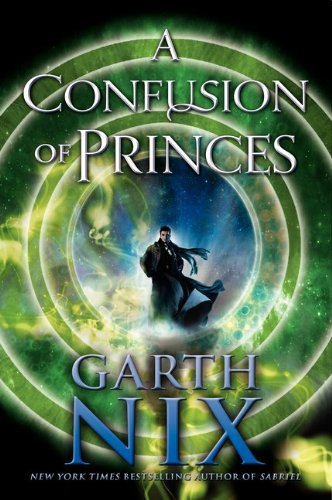
Prince Khemri has spent his life as one of ten thousand princes bred and trained by a sprawling galactic empire, expecting eventual rule -- until he learns just how disposable princes actually are, and how routinely they're assassinated by their own siblings. Garth Nix's A Confusion of Princes follows Khemri through the empire's ruthless military, its secret intelligence service, and a deadly, decades-long competition to determine who might one day take the throne. It's a single, self-contained space opera rather than an ongoing series.
- Dreaming in Smoke
Tricia Sullivanstandalone novel1998
similar byscience fictionidentityfar futureother star systemsvirtual reality
Dreaming in Smoke is a science fiction novel by American writer Tricia Sullivan. The book is Sullivan's third science fiction novel and was first published as a hardcover by Millennium in January 1998. The novel won the 1999 Arthur C. Clarke Award for best novel.
- Imperial Radch
series7 books2012
part of Radchaai Universe
similar byscience fictionidentityfar futureother star systems
Ann Leckie's Imperial Radch trilogy (Ancillary Justice, Ancillary Sword, Ancillary Mercy, 2013-2015) follows Breq, the sole surviving fragment of an AI that once inhabited both a troop-transport starship and dozens of soldier bodies, now alone and hunting for revenge inside the vast, expansionist Radch empire. Breq's quest widens across the trilogy into a conflict with the empire's own fractured ruler, and the books use her alien difficulty perceiving gender to unsettle the space-opera conventions around her.
- Wyrms
Orson Scott Cardstandalone novel1987
similar byscience fictionidentityfar futureother star systems
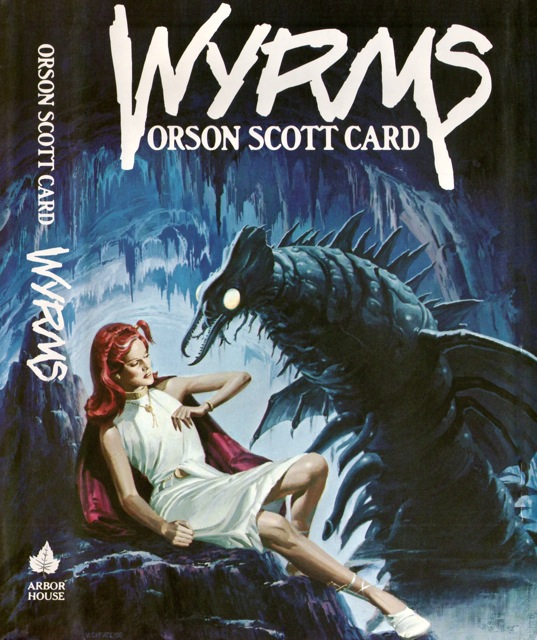
Wyrms (1987) is a science fiction novel by American writer Orson Scott Card. The story examines desire, wisdom, and human will. Card describes a version of the tri-partite soul, similar to that articulated by Plato in the Republic.
- Babel-17
Samuel R. Delanystandalone novel1966
similar byscience fictionidentityfar future+1 more
Babel-17 is a 1966 science fiction novel by American writer Samuel R. Delany. Published by Ace Books in May 1966, it follows Rydra Wong, a poet and linguist recruited during an interstellar war to decipher a language connected to enemy sabotage. Her investigation reveals a language that shapes thought and can make its speakers unwitting saboteurs. Through Rydra's effort to understand and revise it, the novel explores communication, perception, identity, and translation.
- The Four Lords of the Diamond
series4 books1981
completed
similar byscience fictionidentityfar futureother star systems
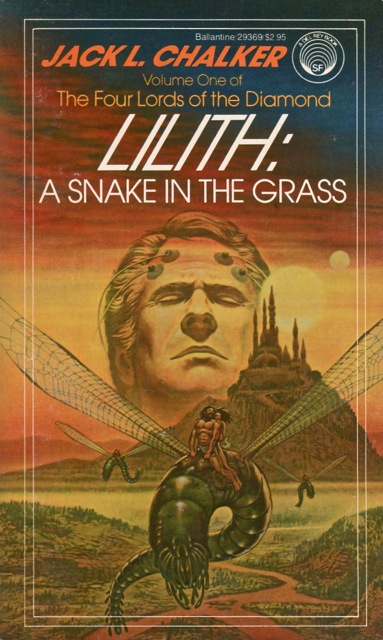
Jack L. Chalker's Four Lords of the Diamond sends a single infiltrator, reconstructed with a new identity each time, onto four different prison planets ruled by despotic 'Lords' within a star system called the Warden Diamond, hunting a traitor who could be hiding as any one of them. Each novel follows the same mission through a different one of the four worlds before the tetralogy's conclusion.
- Teixcalaan
series2 books2019
similar byscience fictionidentityfar futureother star systems
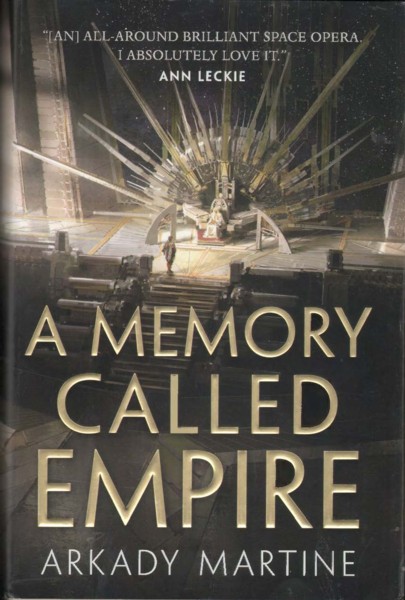
Arkady Martine's space opera duology follows Mahit Dzmare, ambassador from the small, independent Lsel Station, as she arrives in the vast Teixcalaanli Empire to investigate her predecessor's death and finds herself caught up in the empire's own succession crisis. A Memory Called Empire and A Desolation Called Peace pair court intrigue with Mahit's conflicted, outsider fascination with an empire she can't help admiring.
- Today We Choose Faces
Roger Zelaznystandalone novel1973
similar byscience fictionidentityfar futureother star systems
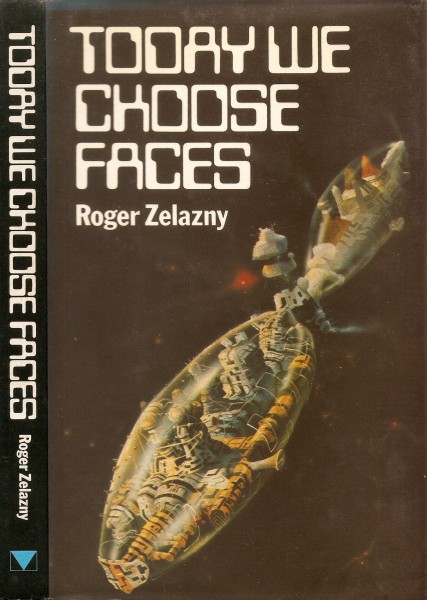
Today We Choose Faces is a 1973 science fiction novel by American writer Roger Zelazny. As originally constructed, Part 1 was an extensive flashback that followed Part 2; but the order of the sections was changed at the request of editor David Hartwell, who felt that the novel worked better in chronological order. Zelazny later wrote, “I was younger then & more in need of the money at the time & couldn’t afford to argue [with] him about it. I still prefer it the way I wrote it.”
- Embassytown
China Miévillestandalone novel2011
similar byscience fictionidentityfar futureother star systems
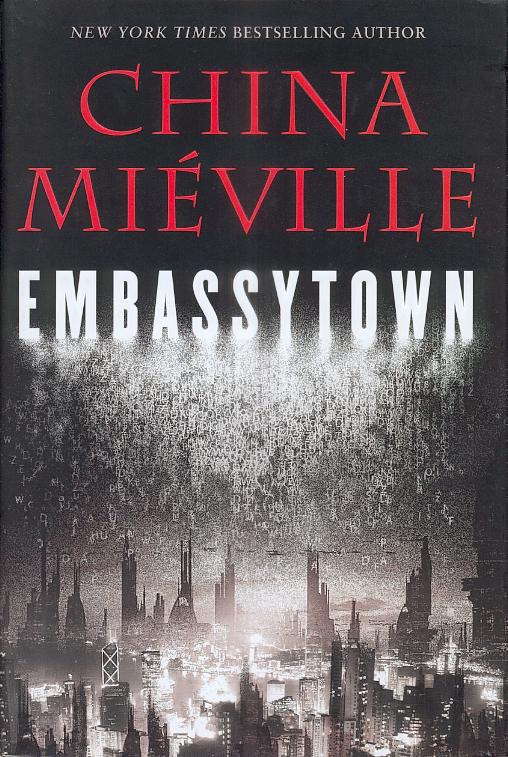
In the far future, humans have colonized a distant planet, home to the enigmatic Ariekei, sentient beings famed for a language unique in the universe, one that only a few altered human ambassadors can speak. Avice Benner Cho, a human colonist, has returned to Embassytown after years of deep-space adventure. She cannot speak the Ariekei tongue, but she is an indelible part of it, having long ago been made a figure of speech, a living simile in their language. When distant political machinations deliver a new ambassador to Arieka, the fragile equilibrium between humans and aliens is violently upset. Catastrophe looms, and Avice is torn between competing loyalties—to a husband she no longer loves, to a system she no longer trusts, and to her place in a language she cannot speak yet speaks through her.
- Hainish
series33 books1964
completed
similar byscience fictionfar futureother star systems
The Hainish Cycle consists of a number of science fiction novels and stories by Ursula K. Le Guin. The cycle is set in a future history that features civilizations of human beings on planets orbiting a number of nearby stars, including Terra ("Earth"); these humans are contacting each other for the first time and establishing diplomatic relations, as well as setting up a confederacy under the guidance of the oldest of the human worlds, the peaceful planet Hain. In this history, human beings did not evolve on Earth, but they were instead the result of interstellar colonies planted by Hain in the distant past, after which interstellar travel ceased for an extended period. Some of the human races have new genetic traits, a result of ancient Hainish experiments in genetic engineering; this includes people who can dream while awake, and a world of hermaphroditic people who only enter active sexuality once per month, not knowing which sex will manifest in them. In keeping with Le Guin's narrative approach, she uses varied social and environmental settings to explore the anthropological and sociological outcomes of human evolution in those environments. The author often discounted the characterization of a so-called "Hainish Cycle".
- Night Walk
Bob Shawstandalone novel1967
similar byscience fictionidentityfar futureother star systems
Night Walk is a science fiction novel by Bob Shaw, first published in 1967. It was his first novel.
- Dune Universe
universe78 books1963
Start hereDune · Start here
similar byscience fictionfar futureother star systems
Arrakis. Dune. The desert planet, where empire runs on a single substance: the spice melange, which folds space, prolongs life, and unlocks prescience, and which exists nowhere else in the known universe. Frank Herbert's saga is a meditation dressed as an adventure — feudal houses and a secret sisterhood, engineered messiahs and the patient ecology of a world without water, all turning on the terrible gravity of who commands the spice. It reads like scripture and schemes like a war room, ten thousand years hence, among people who have outlawed the thinking machine and made instruments of themselves instead. At its heart stand Herbert's original six — Dune, Dune Messiah, Children of Dune, God Emperor of Dune, Heretics of Dune, Chapterhouse: Dune — a single deepening arc across millennia, arguing the whole way between prophecy and free will. Around that spine his son Brian Herbert and Kevin J. Anderson have raised a vast prequel architecture: Prelude to Dune, tracing the great houses a generation before Paul; Legends of Dune, reaching back to the crusade that broke the machines; the Schools of Dune cycle on the founding of Bene Gesserit, Mentat, and Navigator; the Caladan Trilogy and Heroes of Dune filling years the originals left in shadow. Many hands, dozens of volumes, one desert. What sets Dune apart is its refusal of the simple: religion is manufactured, heroes are hazards, and the sand itself — worm, water, ecology — acts as a political power. Begin where the universe did, with Frank Herbert's Dune (1965), and read the original six in order; you need nothing else to feel the full weight. The prequels are a country to explore afterward, taken by era. Beginnings are delicate times.
- Double Star
Robert A. Heinleinstandalone novel1956
similar byscience fictionidentityfar future
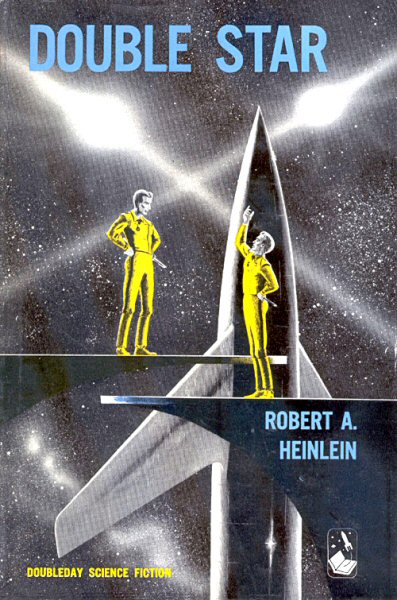
Lorenzo Smythe, the excellent yet unemployed actor, meets Dak Broadbent in a bar. Broadbent hires Lorenzo for an unspecified role, and hustles him onto a rocket ship. Broadbent turns out to be an assistant to the famous interplanetary politician and leader of the Expansionist party: John J. Bonforte. Bonforte, however, has been kidnapped by the political opposition on Mars, and due to Lorenzo's physical similarity to Bonforte, his staff wants Lorenzo to impersonate the politician for an important Martian ceremony.
- Dune
series20 books1963
part of Dune Universe
similar byscience fictionfar futureother star systems
Frank Herbert's Dune Chronicles opens with 1965's Dune, set on the desert planet Arrakis where House Atreides takes control of the only source of the vital spice melange and young Paul Atreides is pulled into a struggle over its politics and religion. Herbert carried the story forward across five further novels — Dune Messiah, Children of Dune, God Emperor of Dune, Heretics of Dune, and Chapterhouse: Dune — following Paul's line over the following millennia, before Brian Herbert and Kevin J. Anderson later extended the saga. Many other editions of these six novels are omnibus and box-set repackagings rather than separate stories.
- Glasshouse
Charles Strossstandalone novel2006
similar byscience fictionidentityfar futurevirtual reality
Robin wakes in a rehabilitation clinic with his memory deliberately erased, convinced that whoever tried to kill him before is still out there. To disappear completely, he volunteers for an experimental study recreating a vanished slice of 20th/21st-century society inside a closed habitat called the glasshouse -- a former high-security detention facility for war criminals -- and is assigned a female body and a new name, Reeve. As the simulation's rules of gender and conformity close in, Reeve starts to suspect the experiment's organizers are running something considerably darker than sociology. A standalone posthuman-future novel by Charles Stross.